Custom Walk in Copenhagen, Denmark by jroos_9fbbbb created on 2026-02-05
Guide Location: Denmark » Copenhagen
Guide Type: Custom Walk
# of Sights: 8
Tour Duration: 2 Hour(s)
Travel Distance: 4.4 Km or 2.7 Miles
Share Key: PHZEL
Guide Type: Custom Walk
# of Sights: 8
Tour Duration: 2 Hour(s)
Travel Distance: 4.4 Km or 2.7 Miles
Share Key: PHZEL
How It Works
Please retrieve this walk in the GPSmyCity app. Once done, the app will guide you from one tour stop to the next as if you had a personal tour guide. If you created the walk on this website or come to the page via a link, please follow the instructions below to retrieve the walk in the app.
Retrieve This Walk in App
Step 1. Download the app "GPSmyCity: Walks in 1K+ Cities" on Apple App Store or Google Play Store.



Step 2. In the GPSmyCity app, download(or launch) the guide "Copenhagen Map and Walking Tours".
Step 3. Tap the menu button located at upper right corner of the "Walks" screen and select "Retrieve custom walk". Enter the share key: PHZEL

1) City Hall (Radhus) (must see)
Copenhagen City Hall, designed by famous architect Martin Nyrop and inspired by Siena's Town Hall in Italy, stands prominently on City Hall Square. The hall was inaugurated in 1905, showcasing the pinnacle of national romanticism in Denmark.
The building is marked by a striking facade decorated in rich ornamental style, featuring among other elements the roof statues of polar bears symbolizing the giant Danish protectorate of Greenland. A golden statue of Bishop Absalon, the city's founder, presides over the central balcony, while the clock tower, reaching 105.6 meters, marks one of Copenhagen's tallest structures. The tower clock, a notable feature, chimes daily at noon and during New Year's Eve at midnight.
The City Hall's architectural complex comprises three aligned buildings connected by longitudinal structures. The hall is linked via tunnels to the nearby buildings, ensuring a blend of historical elegance and modern functionality.
The interior layout includes meeting rooms, a wedding hall, and a banquet hall used by the municipality. At its heart lies the Town Hall Garden, open to the public during summer months and accessible from Hans Christian Andersen Boulevard. The front entrance boasts a glass mosaic depicting Copenhagen's coat of arms, commemorating the city's historical privileges and the City Hall's inauguration.
Inside the building, looking down on the inner grand hall (which is open to the public) are the marble busts of four celebrated locals: fairy-tale writer Hans Christian Andersen, sculptor Bertel Thorvaldsen, physicist Niels Bohr, and the building's architect Martin Nyrop. Downstairs are the national archives dating back to the 1270s.
As you leave, check out the amazing World Clock (opposite the info desk), the supreme mechanical astronomical chronometer in terms of function and precision. Built between 1943 and 1955, its displays include lunar and solar eclipses, positions of the stellar bodies, and a perpetual calendar, in addition to the time across the world's time zones. The clock's fastest gear completes a revolution every ten seconds, while the slowest – every 25,753 years!
Tip:
The main hall is free to enter, whereas to go up the tower you'll have to pay a small fee.
They escort you in groups at 11 am / 12:30 pm and 2 pm on weekdays and noon on Saturdays. You can join a guided English tour at 1 pm (on weekdays) and 10 am (on Saturdays).
As the building is central, the views are great and the viewing platform is square and large.
The building is marked by a striking facade decorated in rich ornamental style, featuring among other elements the roof statues of polar bears symbolizing the giant Danish protectorate of Greenland. A golden statue of Bishop Absalon, the city's founder, presides over the central balcony, while the clock tower, reaching 105.6 meters, marks one of Copenhagen's tallest structures. The tower clock, a notable feature, chimes daily at noon and during New Year's Eve at midnight.
The City Hall's architectural complex comprises three aligned buildings connected by longitudinal structures. The hall is linked via tunnels to the nearby buildings, ensuring a blend of historical elegance and modern functionality.
The interior layout includes meeting rooms, a wedding hall, and a banquet hall used by the municipality. At its heart lies the Town Hall Garden, open to the public during summer months and accessible from Hans Christian Andersen Boulevard. The front entrance boasts a glass mosaic depicting Copenhagen's coat of arms, commemorating the city's historical privileges and the City Hall's inauguration.
Inside the building, looking down on the inner grand hall (which is open to the public) are the marble busts of four celebrated locals: fairy-tale writer Hans Christian Andersen, sculptor Bertel Thorvaldsen, physicist Niels Bohr, and the building's architect Martin Nyrop. Downstairs are the national archives dating back to the 1270s.
As you leave, check out the amazing World Clock (opposite the info desk), the supreme mechanical astronomical chronometer in terms of function and precision. Built between 1943 and 1955, its displays include lunar and solar eclipses, positions of the stellar bodies, and a perpetual calendar, in addition to the time across the world's time zones. The clock's fastest gear completes a revolution every ten seconds, while the slowest – every 25,753 years!
Tip:
The main hall is free to enter, whereas to go up the tower you'll have to pay a small fee.
They escort you in groups at 11 am / 12:30 pm and 2 pm on weekdays and noon on Saturdays. You can join a guided English tour at 1 pm (on weekdays) and 10 am (on Saturdays).
As the building is central, the views are great and the viewing platform is square and large.
2) H. C. Andersen Fairy-Tale House
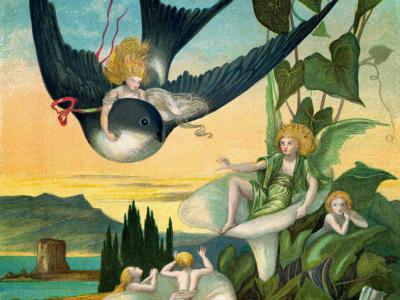
Just a skip away from Copenhagen’s City Hall Square and the ever-whimsical Tivoli Gardens, step right up to the Hans Christian Andersen Fairy-Tale House. This is where cobblestones meet fairy dust, and the world's most beloved storyteller gets his time in the spotlight-with just a dash of Ripley’s “Believe It or Not!” weirdness for flavor.
Think of this place as a time machine dressed as a storybook structured in two main parts. The first part focuses on Andersen’s real life. It details his upbringing and modest beginnings in Odense, followed by a move to Copenhagen, and his globe-trotting adventures with all the drama in between (rejections, fame, a few heartbreaks, rinse and repeat). This section spills the tea on the man behind the magic, contextualizing the origins of his inspirations and providing insight into his character and experiences.
Then-the second part-plunges you into the fairy tales themselves. "The Little Mermaid," "Thumbelina," "The Ugly Duckling," "The Steadfast Tin Soldier"-they're all here, brought to life with lights, sounds, and even smells. (Yes, your nose is now part of the experience, too.) Push a button, and storytime becomes showtime, complete with multilingual narration on oversized story cards and theatrical displays that would make even Andersen raise an eyebrow.
You can also check out the rare Andersen autograph manuscript. And to further enhance the experience, there are engaging live storytelling sessions. If you prefer something Instagrammable, snap a pic with the man himself-or at least his eerily lifelike model.
So, if you’ve ever wanted to walk straight into a fairy tale and maybe walk out with a selfie next to a literary legend, this is your spot. End of tale. Or is it just the beginning?
Tip:
If you want more bang for your krone, combo tickets are available for Ripley's, Guinness World Records, and The Mystic Exploratorium on Strøget-just a 15-minute stroll away. Even better, Copenhagen Card holders can get in free (you clever duckling, you!).
Think of this place as a time machine dressed as a storybook structured in two main parts. The first part focuses on Andersen’s real life. It details his upbringing and modest beginnings in Odense, followed by a move to Copenhagen, and his globe-trotting adventures with all the drama in between (rejections, fame, a few heartbreaks, rinse and repeat). This section spills the tea on the man behind the magic, contextualizing the origins of his inspirations and providing insight into his character and experiences.
Then-the second part-plunges you into the fairy tales themselves. "The Little Mermaid," "Thumbelina," "The Ugly Duckling," "The Steadfast Tin Soldier"-they're all here, brought to life with lights, sounds, and even smells. (Yes, your nose is now part of the experience, too.) Push a button, and storytime becomes showtime, complete with multilingual narration on oversized story cards and theatrical displays that would make even Andersen raise an eyebrow.
You can also check out the rare Andersen autograph manuscript. And to further enhance the experience, there are engaging live storytelling sessions. If you prefer something Instagrammable, snap a pic with the man himself-or at least his eerily lifelike model.
So, if you’ve ever wanted to walk straight into a fairy tale and maybe walk out with a selfie next to a literary legend, this is your spot. End of tale. Or is it just the beginning?
Tip:
If you want more bang for your krone, combo tickets are available for Ripley's, Guinness World Records, and The Mystic Exploratorium on Strøget-just a 15-minute stroll away. Even better, Copenhagen Card holders can get in free (you clever duckling, you!).
3) Tivoli Gardens (must see)
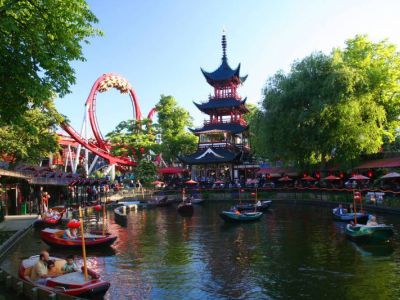
Conveniently located in central Copenhagen, very close to the train station (for those traveling into town), Tivoli Gardens is the original inspiration for Walt Disney World – and it shows. The lovingly tended grounds – a wonderland of rides, games, restaurants, marching bands, funny mirrors, and roulette wheels – are picturesque and equally friendly for both kids and adults.
Tivoli is actually the second oldest, still operational amusement park in the world; the oldest one is also in Denmark. The wooden "Mountain" Roller Coaster (Bjergbanen or Rutschebanen) was built in 1914; its operator actually controls the ride by braking, so that it does not gain too much speed while descending the hills! Another roller coaster, The Demon (Dæmonen), features an “Immelmann” vertical loop and a zero-gravity roll – all in one ride that lasts one minute and 46 seconds. Also of note is The Star Flyer swing ride, opened in 2006, offering panoramic views of the city from an 80-meter (260-foot) elevation.
Apart from these exciting rides and a few thrilling towers, Tivoli is a venue for performing arts, counting among the major cultural hubs in Copenhagen. So even if you are not interested in the rides, there is plenty of space just to walk around, admire the prodigious flowers and large fountains, catch a free concert, or try a wide range of different foods: Mexican, Asian, Japanese, Italian, French, Danish, or regular street food like sandwiches/burgers, etc.
Tickets are both "pay as you go" and "pay once for all", which is affordable for every budget and worth it just to see the Danes – both young and old – at play. In the summer months they have fireworks displays every Saturday at 11:45 pm and if you don't want to stay all day, just have your hand stamped so you can re-enter at a later time.
Why You Should Visit:
Supposedly, this was the template that inspired Walt Disney to create his theme parks!
Fun to walk around in even if you don't go on any rides – a lovely way to spend time with friends.
Tip:
Great to come a bit before sunset, so you can see the place both in daylight and illuminated in the evening.
You can also take your own food and drink in a bag (they don't check them), as it's rather expensive inside.
Tivoli is actually the second oldest, still operational amusement park in the world; the oldest one is also in Denmark. The wooden "Mountain" Roller Coaster (Bjergbanen or Rutschebanen) was built in 1914; its operator actually controls the ride by braking, so that it does not gain too much speed while descending the hills! Another roller coaster, The Demon (Dæmonen), features an “Immelmann” vertical loop and a zero-gravity roll – all in one ride that lasts one minute and 46 seconds. Also of note is The Star Flyer swing ride, opened in 2006, offering panoramic views of the city from an 80-meter (260-foot) elevation.
Apart from these exciting rides and a few thrilling towers, Tivoli is a venue for performing arts, counting among the major cultural hubs in Copenhagen. So even if you are not interested in the rides, there is plenty of space just to walk around, admire the prodigious flowers and large fountains, catch a free concert, or try a wide range of different foods: Mexican, Asian, Japanese, Italian, French, Danish, or regular street food like sandwiches/burgers, etc.
Tickets are both "pay as you go" and "pay once for all", which is affordable for every budget and worth it just to see the Danes – both young and old – at play. In the summer months they have fireworks displays every Saturday at 11:45 pm and if you don't want to stay all day, just have your hand stamped so you can re-enter at a later time.
Why You Should Visit:
Supposedly, this was the template that inspired Walt Disney to create his theme parks!
Fun to walk around in even if you don't go on any rides – a lovely way to spend time with friends.
Tip:
Great to come a bit before sunset, so you can see the place both in daylight and illuminated in the evening.
You can also take your own food and drink in a bag (they don't check them), as it's rather expensive inside.
4) Hans Christian Andersen Statue
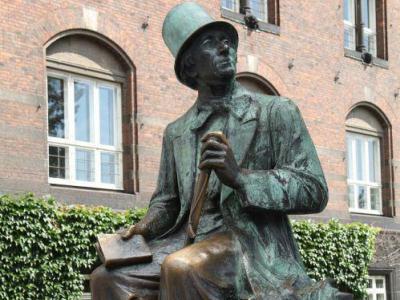
Right in the beating heart of Copenhagen, perched like a literary lighthouse in City Hall Square, sits Hans Christian Andersen. Sculpted in bronze in 1965 by Henry Luckow-Nielsen, this statue isn’t just casually hanging out-it’s strategically facing H.C. Andersens Boulevard.
The placement of the statue is symbolic, with Andersen casting a wistful gaze toward Tivoli Gardens, the whimsical amusement park that may or may not have inspired some of his magical stories.
The statue itself is a full-on cultural power move. Andersen’s pose-book in his lap-is casual, sure, but also deeply photogenic, making him perhaps the most approachable celebrity in Denmark. So many enthusiastic people have climbed up him over the years to take a photo that the poor guy’s knee is now smooth-polished shinier than a new krone.
And because this is Denmark, land of design and digital-savvy thinkers, there's even a QR code at the base, allowing visitors to engage further. Scan it and-voilà!-you're transported into Andersen’s interactive world through a short video exploring the life and works of Denmark's most celebrated son.
So, ultimately, it's more than just bronze-but legacy cast in metal, humor, and heart.
The placement of the statue is symbolic, with Andersen casting a wistful gaze toward Tivoli Gardens, the whimsical amusement park that may or may not have inspired some of his magical stories.
The statue itself is a full-on cultural power move. Andersen’s pose-book in his lap-is casual, sure, but also deeply photogenic, making him perhaps the most approachable celebrity in Denmark. So many enthusiastic people have climbed up him over the years to take a photo that the poor guy’s knee is now smooth-polished shinier than a new krone.
And because this is Denmark, land of design and digital-savvy thinkers, there's even a QR code at the base, allowing visitors to engage further. Scan it and-voilà!-you're transported into Andersen’s interactive world through a short video exploring the life and works of Denmark's most celebrated son.
So, ultimately, it's more than just bronze-but legacy cast in metal, humor, and heart.
5) City Hall Square (Radhuspladsen)
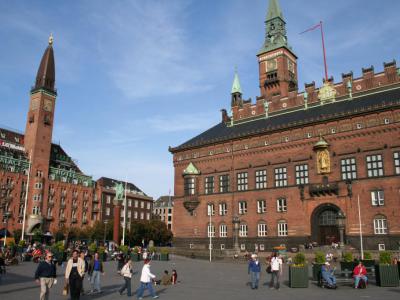
City Hall Square (Rådhuspladsen), situated in the heart of the Danish capital, fronts the striking Copenhagen City Hall. As a prime venue for a myriad of events taking place in the city, this is a favored gathering spot for street performers and international folk visiting the capital. The square is notably used as a reference point for measuring distances from Copenhagen much as for many miles of beautiful pedestrian streets within the city. Just as in so many other places throughout Denmark, English is spoken here widely and, surprisingly so, often of better quality than you would hear in many English-speaking destinations.
The square's historical relevance dates back to the times when it was a hay market and housed the Western Gate of the city's fortifications. Back then, the area was overcrowded (housing as many as 150,000 people), which quite naturally led to hygiene problems. So, eventually, the walls had to come down.
Following the removal of fortifications in the 1850s, the area transitioned into an exhibition space. The late 19th century brought further transformative changes with plans to construct a new city hall, thus turning the square into a significant urban space. Subsequent redesigns in 1996 and more recently, in 2010, with the introduction of a metro station, enhanced its utility and accessibility.
Today, the square hosts, among other attractions, significant buildings like Politiken's House, home to the national newspaper 'Politiken', and the rather peculiar Dansk Industri building containing a showroom for green technologies (the House of Green), plus a series of two-story flagship stores and restaurants on the adjacent Vesterbro Street. Also nearby is the Radisson Blu Royal Hotel, Copenhagen's only skyscraper, built in 1960 as the world's first design hotel that focuses on visual appearance such as architecture, interior decor, or aesthetics style.
Among the artistic highlights in the square are the Dragon Fountain, installed in 1904, depicting a mythical battle between a bull and a dragon, and the Weather Girl sculpture, perched atop the Richs Building, which provides a whimsical weather forecast. Other notable additions to the square's cultural landscape include the statue of Hans Christian Andersen, the most popular Danish writer, and the bronze depiction of Lur Blowers mounted atop a tall terracotta column. The latter was a gift to the city from the Carlsberg Foundation on the occasion of the centenary of its founder, Jacob Christian Jacobsen.
In addition to being a dynamic venue for public expression, the square is surrounded by multiple bars and nightclubs and serves as a central transportation hub, continuing its legacy as a pivotal city landmark.
The square's historical relevance dates back to the times when it was a hay market and housed the Western Gate of the city's fortifications. Back then, the area was overcrowded (housing as many as 150,000 people), which quite naturally led to hygiene problems. So, eventually, the walls had to come down.
Following the removal of fortifications in the 1850s, the area transitioned into an exhibition space. The late 19th century brought further transformative changes with plans to construct a new city hall, thus turning the square into a significant urban space. Subsequent redesigns in 1996 and more recently, in 2010, with the introduction of a metro station, enhanced its utility and accessibility.
Today, the square hosts, among other attractions, significant buildings like Politiken's House, home to the national newspaper 'Politiken', and the rather peculiar Dansk Industri building containing a showroom for green technologies (the House of Green), plus a series of two-story flagship stores and restaurants on the adjacent Vesterbro Street. Also nearby is the Radisson Blu Royal Hotel, Copenhagen's only skyscraper, built in 1960 as the world's first design hotel that focuses on visual appearance such as architecture, interior decor, or aesthetics style.
Among the artistic highlights in the square are the Dragon Fountain, installed in 1904, depicting a mythical battle between a bull and a dragon, and the Weather Girl sculpture, perched atop the Richs Building, which provides a whimsical weather forecast. Other notable additions to the square's cultural landscape include the statue of Hans Christian Andersen, the most popular Danish writer, and the bronze depiction of Lur Blowers mounted atop a tall terracotta column. The latter was a gift to the city from the Carlsberg Foundation on the occasion of the centenary of its founder, Jacob Christian Jacobsen.
In addition to being a dynamic venue for public expression, the square is surrounded by multiple bars and nightclubs and serves as a central transportation hub, continuing its legacy as a pivotal city landmark.
6) Frederiksberg Palace
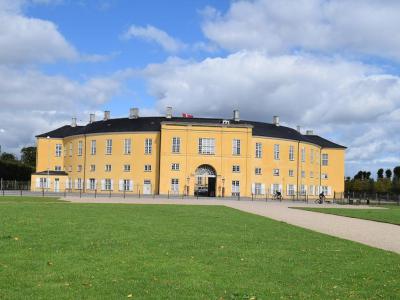
Frederiksberg Palace in Copenhagen is a remarkable example of Baroque architecture, with a storied history and architectural significance. Initially constructed between 1699 and 1735, this palace was intended as a summer residence for the Danish royal family. The palace’s design includes a hidden chapel within the east wing, which, interestingly, shows no external signs of its existence but occupies the space behind six central ground-floor windows.
Situated in the heart of Frederiksberg and overlooking the expansive Frederiksberg Gardens, the palace is an architectural marvel with its imposing stucco work, intricate ceiling paintings, and an elegantly designed marble bathroom featuring a secret staircase. Notably, the palace also houses the unique feature of the Princesses' pancake kitchen, adding a quaint touch to its historical grandeur.
The gardens themselves, originally designed in the Baroque style by H.H. Scheel with J.C. Krieger’s assistance, were transformed into an English landscape garden from 1795 to 1804 under the direction of Peter Pedersen. This redesign introduced winding paths, lakes, islands, and canals, enriching the landscape with diverse structures such as the Chinese Summerhouse and the Apis Temple, enhancing both the functionality and the aesthetic appeal of the gardens.
After ceasing to be a royal residence in the mid-19th century, Frederiksberg Palace found a new purpose in 1869 when it became home to the Royal Danish Military Academy. Since 1932, the chapel has served the dual function of the local parish church, further embedding the palace in the community’s cultural and spiritual life.
Today, Frederiksberg Palace is not only a center of military education but also a cultural landmark open to visitors, offering a glimpse into Denmark’s royal history and Baroque artistry, set against the lush backdrop of redesigned historic gardens.
Situated in the heart of Frederiksberg and overlooking the expansive Frederiksberg Gardens, the palace is an architectural marvel with its imposing stucco work, intricate ceiling paintings, and an elegantly designed marble bathroom featuring a secret staircase. Notably, the palace also houses the unique feature of the Princesses' pancake kitchen, adding a quaint touch to its historical grandeur.
The gardens themselves, originally designed in the Baroque style by H.H. Scheel with J.C. Krieger’s assistance, were transformed into an English landscape garden from 1795 to 1804 under the direction of Peter Pedersen. This redesign introduced winding paths, lakes, islands, and canals, enriching the landscape with diverse structures such as the Chinese Summerhouse and the Apis Temple, enhancing both the functionality and the aesthetic appeal of the gardens.
After ceasing to be a royal residence in the mid-19th century, Frederiksberg Palace found a new purpose in 1869 when it became home to the Royal Danish Military Academy. Since 1932, the chapel has served the dual function of the local parish church, further embedding the palace in the community’s cultural and spiritual life.
Today, Frederiksberg Palace is not only a center of military education but also a cultural landmark open to visitors, offering a glimpse into Denmark’s royal history and Baroque artistry, set against the lush backdrop of redesigned historic gardens.
7) Copenhagen Zoo (must see)
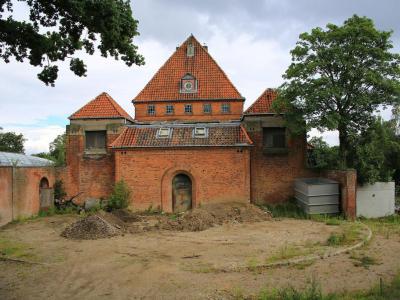
Copenhagen Zoo, nestled in the heart of Denmark's capital, is not only one of the oldest zoological gardens in Europe, having been founded in 1859, but also one of its most progressive. Located on 11 hectares within the municipality of Frederiksberg, the zoo is uniquely positioned between Frederiksberg Gardens and Søndermarken, attracting over 1.57 million visitors annually, making it the most visited zoo and a leading tourist attraction in Denmark.
The zoo was originally established by ornithologist Niels Kjærbølling with a modest collection of animals in "Princess Vilhelmines Have," a garden area donated by Copenhagen's chief directorate. From eagles and chickens to more exotic inhabitants like a seal in a bathtub and a turtle in a bucket, the zoo has dramatically evolved from showcasing a wide variety of animals to focusing on enhanced animal welfare and spacious enclosures.
A significant part of this evolution is evident in its architectural innovation, notably the Elephant House designed by the renowned British architect Sir Norman Foster. This structure is part of a broader movement within the zoo, started in the early 1980s, to replace traditional cages with enclosures that mimic natural habitats, thereby improving the quality of life for the animals and the authenticity of the visitor experience. The 1.5-hectare Savanna area and the underwater viewing features at the Hippopotamus House are prime examples of these efforts.
Copenhagen Zoo has also made strides in conservation, participating actively in European breeding programs to help preserve endangered species. Furthermore, the zoo has preserved several of its historical buildings which add a rich historical texture to the visitor experience. For example, the oldest building still in use dates back to 1872-a stable that now houses Bactrian camels-and a Herbivore House from 1875 still accommodating tapirs.
A standout feature of the zoo is its wooden observation tower, standing 43.5 meters high, which was built in 1905. This tower offers panoramic views of the surrounding parks and cityscape, resembling the architectural style of the Eiffel Tower. This is just one of the many features that make Copenhagen Zoo a unique blend of historical charm and modern zoological practice.
The zoo was originally established by ornithologist Niels Kjærbølling with a modest collection of animals in "Princess Vilhelmines Have," a garden area donated by Copenhagen's chief directorate. From eagles and chickens to more exotic inhabitants like a seal in a bathtub and a turtle in a bucket, the zoo has dramatically evolved from showcasing a wide variety of animals to focusing on enhanced animal welfare and spacious enclosures.
A significant part of this evolution is evident in its architectural innovation, notably the Elephant House designed by the renowned British architect Sir Norman Foster. This structure is part of a broader movement within the zoo, started in the early 1980s, to replace traditional cages with enclosures that mimic natural habitats, thereby improving the quality of life for the animals and the authenticity of the visitor experience. The 1.5-hectare Savanna area and the underwater viewing features at the Hippopotamus House are prime examples of these efforts.
Copenhagen Zoo has also made strides in conservation, participating actively in European breeding programs to help preserve endangered species. Furthermore, the zoo has preserved several of its historical buildings which add a rich historical texture to the visitor experience. For example, the oldest building still in use dates back to 1872-a stable that now houses Bactrian camels-and a Herbivore House from 1875 still accommodating tapirs.
A standout feature of the zoo is its wooden observation tower, standing 43.5 meters high, which was built in 1905. This tower offers panoramic views of the surrounding parks and cityscape, resembling the architectural style of the Eiffel Tower. This is just one of the many features that make Copenhagen Zoo a unique blend of historical charm and modern zoological practice.
8) The Cisterns
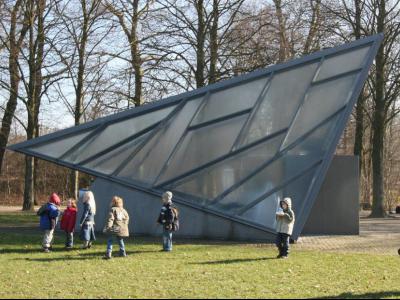
The Cisterns is a captivating museum located in Copenhagen. Situated within the Frederiksberg Museums, it serves as a distinctive venue for art exhibitions and various events, capitalizing on its unique architectural features and atmospheric allure.
Originally constructed in 1856 and completed in just three years, The Cisterns were designed to address the pressing water supply issues of Copenhagen by providing a substantial reservoir that could store up to 16 million liters of clean water. This underground facility functioned as a critical water source for the city until 1933, after which it was eventually decommissioned and drained in 1981.
In a transformative reimagining of its space, The Cisterns reopened in 1996, coinciding with Copenhagen’s recognition as the European City of Culture. This redevelopment was a collaborative effort between the City of Frederiksberg and Max Seidenfaden, a gallery owner who later managed the site as a museum of modern glass art from 2001 to 2013.
Notably, The Cisterns is distinguished as Denmark’s sole dripstone cave. It features a natural display of stalactites and stalagmites-an unusual phenomenon in concrete structures that showcases an extraordinary scale and diversity not found elsewhere.
Adding to its intrigue, The Cisterns was listed by Forbes in February 2009 as one of Europe’s most unusual exhibition spaces, a testament to its striking transformation from a functional reservoir to a cultural and artistic haven. The site continues to draw visitors not only for its art exhibitions but also for the singular experience offered by its historical and geologically significant surroundings.
Originally constructed in 1856 and completed in just three years, The Cisterns were designed to address the pressing water supply issues of Copenhagen by providing a substantial reservoir that could store up to 16 million liters of clean water. This underground facility functioned as a critical water source for the city until 1933, after which it was eventually decommissioned and drained in 1981.
In a transformative reimagining of its space, The Cisterns reopened in 1996, coinciding with Copenhagen’s recognition as the European City of Culture. This redevelopment was a collaborative effort between the City of Frederiksberg and Max Seidenfaden, a gallery owner who later managed the site as a museum of modern glass art from 2001 to 2013.
Notably, The Cisterns is distinguished as Denmark’s sole dripstone cave. It features a natural display of stalactites and stalagmites-an unusual phenomenon in concrete structures that showcases an extraordinary scale and diversity not found elsewhere.
Adding to its intrigue, The Cisterns was listed by Forbes in February 2009 as one of Europe’s most unusual exhibition spaces, a testament to its striking transformation from a functional reservoir to a cultural and artistic haven. The site continues to draw visitors not only for its art exhibitions but also for the singular experience offered by its historical and geologically significant surroundings.
