Custom Walk in Reykjavik, Iceland by ntcarrier_f77b4 created on 2026-02-06
Guide Location: Iceland » Reykjavik
Guide Type: Custom Walk
# of Sights: 16
Tour Duration: 4 Hour(s)
Travel Distance: 7.5 Km or 4.7 Miles
Share Key: MESEH
Guide Type: Custom Walk
# of Sights: 16
Tour Duration: 4 Hour(s)
Travel Distance: 7.5 Km or 4.7 Miles
Share Key: MESEH
How It Works
Please retrieve this walk in the GPSmyCity app. Once done, the app will guide you from one tour stop to the next as if you had a personal tour guide. If you created the walk on this website or come to the page via a link, please follow the instructions below to retrieve the walk in the app.
Retrieve This Walk in App
Step 1. Download the app "GPSmyCity: Walks in 1K+ Cities" on Apple App Store or Google Play Store.



Step 2. In the GPSmyCity app, download(or launch) the guide "Reykjavik Map and Walking Tours".
Step 3. Tap the menu button located at upper right corner of the "Walks" screen and select "Retrieve custom walk". Enter the share key: MESEH
1) Hallgrímskirkja (Church of Hallgrímur) (must see)
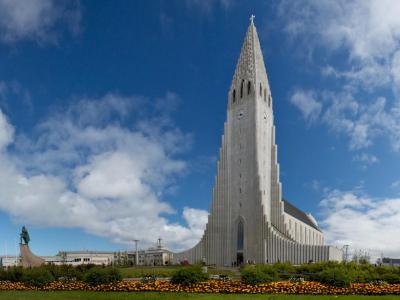
The Church of Hallgrímur is one of the country’s most recognizable landmarks and a symbol of modern Icelandic identity. Designed in 1937, the church was conceived as a reflection of Iceland’s unique geography. Volcanic activity across the island produces lava flows that cool into grey, hexagonal basalt columns, and these dramatic, jagged formations directly inspired the building’s form. Construction began in 1945 and continued for more than four decades, with the church finally consecrated in 1986.
It is named after Hallgrímur Pétursson, a 17th-century figure best known for his devotional work Hymns of the Passion. As a Lutheran place of worship belonging to the Church of Iceland, its imposing height—over 74 meters—was also intended to rival the nearby Catholic cathedral.
The architecture immediately stands out. Its stepped concrete façade resembles cooled lava or a cluster of organ pipes rising upward, giving the church a sculptural, almost geological presence visible from across the city.
Inside, the atmosphere becomes more restrained, with a bright, minimalist interior that emphasizes space and light. The main focal point is the monumental pipe organ, rising about 15 meters tall and composed of 5,275 pipes. Located directly above the main entrance inside the nave, visitors should turn around as they enter the church to see this gargantuan instrument, which weighs over 25 tons. The organ features four manuals and 72 stops; the instrument's sheer power is meant to fill the massive, minimalist hall with sound. Its electronic action system allows the pipes to be operated remotely from the console, and the instrument is frequently used for concerts, especially during summer, when performances are held several times a week.
Visitors are often drawn to the tower, where a lift leads to an observation deck with wide views over the city’s colorful rooftops, the coastline, and surrounding mountains. To reach this highlight at the uppermost level of the 74.5-meter steeple—the highest viewpoint in the city center—take the elevator located in the lobby to the 8th floor, then ascend a final short staircase to the open-air viewing platform. From here, you get a 360-degree view of the colorful corrugated iron roofs of Reykjavík, the Faxaflói Bay, and Mount Esja; on a clear day, you can even spot glaciers.
Outside the entrance stands a statue of Leif Erikson, gifted by the United States in the 1930s to mark the 1,000th anniversary of the Icelandic Parliament, first convened in 930 AD. A small local detail adds character: the large clock on the tower is often inaccurate, as strong Icelandic winds can shift its hands.
It is named after Hallgrímur Pétursson, a 17th-century figure best known for his devotional work Hymns of the Passion. As a Lutheran place of worship belonging to the Church of Iceland, its imposing height—over 74 meters—was also intended to rival the nearby Catholic cathedral.
The architecture immediately stands out. Its stepped concrete façade resembles cooled lava or a cluster of organ pipes rising upward, giving the church a sculptural, almost geological presence visible from across the city.
Inside, the atmosphere becomes more restrained, with a bright, minimalist interior that emphasizes space and light. The main focal point is the monumental pipe organ, rising about 15 meters tall and composed of 5,275 pipes. Located directly above the main entrance inside the nave, visitors should turn around as they enter the church to see this gargantuan instrument, which weighs over 25 tons. The organ features four manuals and 72 stops; the instrument's sheer power is meant to fill the massive, minimalist hall with sound. Its electronic action system allows the pipes to be operated remotely from the console, and the instrument is frequently used for concerts, especially during summer, when performances are held several times a week.
Visitors are often drawn to the tower, where a lift leads to an observation deck with wide views over the city’s colorful rooftops, the coastline, and surrounding mountains. To reach this highlight at the uppermost level of the 74.5-meter steeple—the highest viewpoint in the city center—take the elevator located in the lobby to the 8th floor, then ascend a final short staircase to the open-air viewing platform. From here, you get a 360-degree view of the colorful corrugated iron roofs of Reykjavík, the Faxaflói Bay, and Mount Esja; on a clear day, you can even spot glaciers.
Outside the entrance stands a statue of Leif Erikson, gifted by the United States in the 1930s to mark the 1,000th anniversary of the Icelandic Parliament, first convened in 930 AD. A small local detail adds character: the large clock on the tower is often inaccurate, as strong Icelandic winds can shift its hands.
2) Fríkirkjan (Free Church)
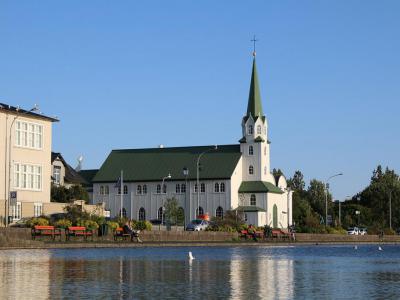
The Free Church in Reykjavik (Fríkirkjan í Reykjavík) is a separate Lutheran church from Iceland's main church, the Church of Iceland. It's located right in the heart of Iceland's capital city, next to the Tjörnin lake.
This church started in Reykjavik back in the fall of 1899. Initially, around 600 people joined, and this number quickly increased. The Free Church took inspiration from similar churches in Norway and ones set up by Icelanders who moved to North America. They wanted a church that felt more connected to everyday people. Also, Reykjavik was rapidly growing with new neighborhoods and more residents, but the Reykjavik Cathedral couldn't keep up with the needs of the expanding community, especially as more craftsmen and tradespeople settled in.
Not long after this new church group got started, they picked a spot for their church near the lake's eastern side. The church was officially opened on February 22, 1903. Just two years later, they had to make it bigger, following a design by an architect named Rögnvaldur Ólafsson. Then, in 1924, they expanded it again. They added a chancel made of concrete on the east side and made some other changes to the building. All of this was overseen by a master builder, Guðmundur H. Þorláksson.
This church started in Reykjavik back in the fall of 1899. Initially, around 600 people joined, and this number quickly increased. The Free Church took inspiration from similar churches in Norway and ones set up by Icelanders who moved to North America. They wanted a church that felt more connected to everyday people. Also, Reykjavik was rapidly growing with new neighborhoods and more residents, but the Reykjavik Cathedral couldn't keep up with the needs of the expanding community, especially as more craftsmen and tradespeople settled in.
Not long after this new church group got started, they picked a spot for their church near the lake's eastern side. The church was officially opened on February 22, 1903. Just two years later, they had to make it bigger, following a design by an architect named Rögnvaldur Ólafsson. Then, in 1924, they expanded it again. They added a chancel made of concrete on the east side and made some other changes to the building. All of this was overseen by a master builder, Guðmundur H. Þorláksson.
3) National Gallery of Iceland
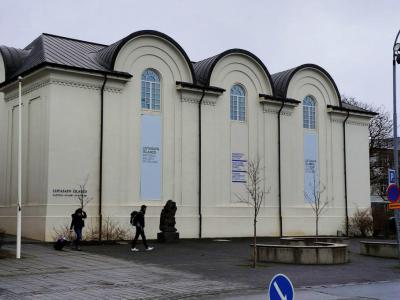
The National Gallery of Iceland, located in Reykjavík, is a prominent art museum showcasing a vast array of Icelandic art. This gallery is well-known for presenting works by renowned Icelandic artists and pieces that vividly illustrate Iceland's traditional culture.
Established in 1884 in Copenhagen, Denmark, by Björn Bjarnarson, the gallery initially featured a collection predominantly composed of artworks donated by Danish artists.
From its founding until 1916, the museum operated independently. However, in 1916, Iceland's Parliament transformed it into a branch of the National Museum of Iceland. The National Gallery was placed under council oversight in 1928.
The museum's collection was initially exhibited at the House of Parliament from 1885. In 1950, it was moved to the premises of the National Museum of Iceland in Reykjavík, where it was officially opened to the public in 1951. A 1961 legislation granted the museum full independence.
The National Gallery of Iceland regularly hosts various exhibitions that either highlight selections from its own collection or showcase works by both Icelandic and international artists. Notably, pieces from the National Gallery's collection are part of the first stage of the "Millennium" exhibition at the Culture House.
The Gallery's facility includes multiple exhibition halls across three floors, an art store, and a café. Additionally, it houses a specialized research library focusing on the conservation and dissemination of resources related to Icelandic art.
Why You Should Visit:
Over 200 years of Iceland-inspired art with great names like Münch and Vasarely and also more local artists. The museum building itself is a work of art.
Tip:
The entry fee comes with tickets for the two companion museums; ask the staff to indicate where those are on your map. Also, ask if you can take photographs – sometimes you can.
Established in 1884 in Copenhagen, Denmark, by Björn Bjarnarson, the gallery initially featured a collection predominantly composed of artworks donated by Danish artists.
From its founding until 1916, the museum operated independently. However, in 1916, Iceland's Parliament transformed it into a branch of the National Museum of Iceland. The National Gallery was placed under council oversight in 1928.
The museum's collection was initially exhibited at the House of Parliament from 1885. In 1950, it was moved to the premises of the National Museum of Iceland in Reykjavík, where it was officially opened to the public in 1951. A 1961 legislation granted the museum full independence.
The National Gallery of Iceland regularly hosts various exhibitions that either highlight selections from its own collection or showcase works by both Icelandic and international artists. Notably, pieces from the National Gallery's collection are part of the first stage of the "Millennium" exhibition at the Culture House.
The Gallery's facility includes multiple exhibition halls across three floors, an art store, and a café. Additionally, it houses a specialized research library focusing on the conservation and dissemination of resources related to Icelandic art.
Why You Should Visit:
Over 200 years of Iceland-inspired art with great names like Münch and Vasarely and also more local artists. The museum building itself is a work of art.
Tip:
The entry fee comes with tickets for the two companion museums; ask the staff to indicate where those are on your map. Also, ask if you can take photographs – sometimes you can.
4) National Museum of Iceland (must see)
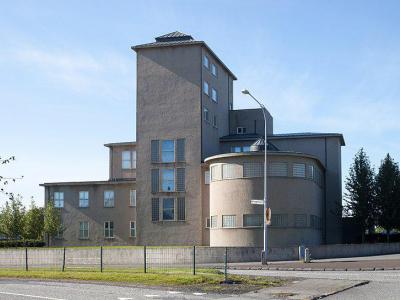
The National Museum of Iceland was founded on February 24, 1863, and its first curator was Jón Árnason. This museum housed the Icelandic collection, which had previously been kept in Danish museums. The second curator, Sigurður Guðmundsson, pushed for the establishment of an antiquarian collection. Initially, the museum was known as the Antiquarian Collection, but in 1911, its name was changed to the National Museum of Iceland. It didn't have a permanent location until 1950 when it moved to Suðurgata. Prior to that, it was located in various attics in Reykjavík, including the Culture House attic, where it stayed for 40 years.
The museum's permanent exhibition focuses on Icelandic history and boasts approximately 2,000 artifacts. One standout piece in this exhibition is the Valþjófsstaður door, which features a famous carving depicting a version of the Lion-Knight legend. In this legend, a knight defeats a dragon, ultimately freeing a lion that becomes his loyal companion.
The National Museum of Iceland provides a comprehensive look at Iceland's history, spanning from ancient times to the present day, presented in an engaging and visually appealing manner. The museum's collection includes Viking weaponry, sailing vessels, clothing, religious artifacts, and even a recreated Icelandic house. For those interested in more recent history, there is a collection of modern items, including a copy of Bjork's very first album, recorded when she was just 11 years old. Visitors can also have some fun in the costume room, where they can try on clothing from different periods in Icelandic history.
Tip:
Free entry included with Reykjavik City Card; there are free lockers; set aside 1.5-2.5 hours here.
There are free guided tours at 11am each Saturday, and it is recommended that you join one of these tours to gain a better understanding.
The museum's permanent exhibition focuses on Icelandic history and boasts approximately 2,000 artifacts. One standout piece in this exhibition is the Valþjófsstaður door, which features a famous carving depicting a version of the Lion-Knight legend. In this legend, a knight defeats a dragon, ultimately freeing a lion that becomes his loyal companion.
The National Museum of Iceland provides a comprehensive look at Iceland's history, spanning from ancient times to the present day, presented in an engaging and visually appealing manner. The museum's collection includes Viking weaponry, sailing vessels, clothing, religious artifacts, and even a recreated Icelandic house. For those interested in more recent history, there is a collection of modern items, including a copy of Bjork's very first album, recorded when she was just 11 years old. Visitors can also have some fun in the costume room, where they can try on clothing from different periods in Icelandic history.
Tip:
Free entry included with Reykjavik City Card; there are free lockers; set aside 1.5-2.5 hours here.
There are free guided tours at 11am each Saturday, and it is recommended that you join one of these tours to gain a better understanding.
5) National and University Library of Iceland
The National and University Library of Iceland serves as both the national library for Iceland and the University of Iceland's library. It was established in Reykjavík on December 1, 1994, following the merger of the previous national library and the university library. This library is the largest in Iceland, boasting a diverse collection of approximately one million items.
Its most significant collection is the national collection, encompassing nearly all published works from Iceland and related materials published elsewhere. Furthermore, it serves as Iceland's primary legal deposit library. The library also possesses an extensive manuscript collection, primarily consisting of early modern and modern manuscripts. Additionally, there is a collection of published Icelandic music and other audio materials, which have been legally deposited since 1977.
The library houses the most extensive academic collection in Iceland, much of which is available for off-site borrowing by individuals holding library cards. University students can obtain library cards at no cost, while others can acquire them for a nominal fee. The library is open to the public.
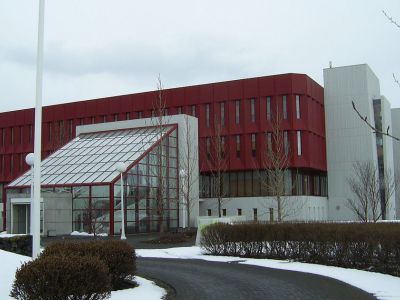
Situated near the University of Iceland's main campus and the National Museum of Iceland, the library's main building is a prominent structure spanning 13,000 square meters (140,000 square feet). This building, which took 16 years to complete and opened in 1994, coinciding with the 50th anniversary of the Icelandic republic, features distinctive red and white architecture.
Its most significant collection is the national collection, encompassing nearly all published works from Iceland and related materials published elsewhere. Furthermore, it serves as Iceland's primary legal deposit library. The library also possesses an extensive manuscript collection, primarily consisting of early modern and modern manuscripts. Additionally, there is a collection of published Icelandic music and other audio materials, which have been legally deposited since 1977.
The library houses the most extensive academic collection in Iceland, much of which is available for off-site borrowing by individuals holding library cards. University students can obtain library cards at no cost, while others can acquire them for a nominal fee. The library is open to the public.
Situated near the University of Iceland's main campus and the National Museum of Iceland, the library's main building is a prominent structure spanning 13,000 square meters (140,000 square feet). This building, which took 16 years to complete and opened in 1994, coinciding with the 50th anniversary of the Icelandic republic, features distinctive red and white architecture.
6) Reykjavik City Hall
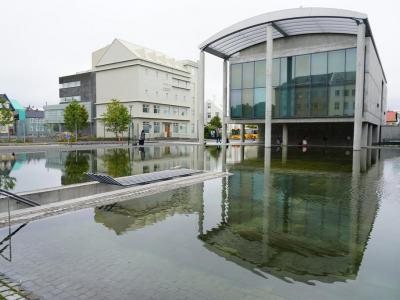
Reykjavík's City Hall, designed by architects Margrét Harðardóttir and Steve Christer, stands on Tjörnin lake's northern shore, at the heart of the city. This building uniquely blends nature and urban elements, reflecting its dual purpose. The City Council Building, located on the north side, is solid and structured, mirroring the Kvos district's architectural style. In contrast, the south-facing Office Building, where administrative work happens, has a more fluid and open design, with workspaces and meeting rooms overlooking the lake. A notable feature outside is a moss-covered wall, reminiscent of Iceland's natural mossy rock formations.
The concept of a city hall in Reykjavík dates back to the city's early days. After years of planning and an open competition in 1986, the winning design by Harðardóttir and Christer, both London Architectural Association School graduates, was chosen from 38 entries. The construction began in 1988 and the hall was inaugurated in 1992.
A key attraction inside is a large 3D map of Iceland, located in the main hall. This detailed map, crafted from 1 millimeter thick cardboard cut to represent Iceland's topography and mounted on a wooden and aluminum frame, spans 76.4 square meters. The map, built by the city's carpenters and painted by Sigurður Pálsson, is designed at a 1:50,000 scale but with an exaggerated elevation scale of 1:25,000 for better visual impact. This map, along with the building's design, symbolizes the fusion of Reykjavík's urban fabric and natural environment.
The concept of a city hall in Reykjavík dates back to the city's early days. After years of planning and an open competition in 1986, the winning design by Harðardóttir and Christer, both London Architectural Association School graduates, was chosen from 38 entries. The construction began in 1988 and the hall was inaugurated in 1992.
A key attraction inside is a large 3D map of Iceland, located in the main hall. This detailed map, crafted from 1 millimeter thick cardboard cut to represent Iceland's topography and mounted on a wooden and aluminum frame, spans 76.4 square meters. The map, built by the city's carpenters and painted by Sigurður Pálsson, is designed at a 1:50,000 scale but with an exaggerated elevation scale of 1:25,000 for better visual impact. This map, along with the building's design, symbolizes the fusion of Reykjavík's urban fabric and natural environment.
7) Dómkirkjan (Reykjavík Cathedral)
Standing beside Austurvöllur Square, Reykjavík Cathedral is one of the city’s most historically significant religious buildings and a central part of Iceland’s civic life. The site has been dedicated to churches since the 13th century, while the present neoclassical structure was designed by Andreas Kirkerup in the late 18th century. Construction began in 1788, and the cathedral was consecrated in 1796, becoming the first building completed with the idea that Reykjavík would develop into the nation’s capital.
Today, it serves as the seat of the Bishop of Iceland, the Evangelical Lutheran Church of Iceland, and the parish church for the city centre. Since 1845, each parliamentary session traditionally begins with a mass here, before members proceed together to the parliament house. The central altar area where this occurs is located at the front of the nave, serving as the spiritual heart of the building; to find it, walk straight down the center aisle toward the east end of the church to see the focal point of the chancel—the altarpiece—where the Althingi gathers.
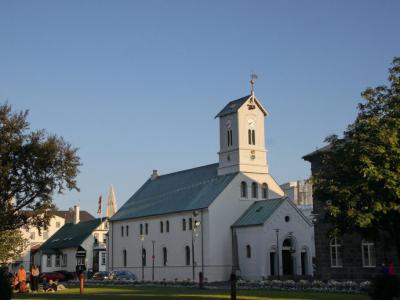
Architecturally, the cathedral remains modest in scale. Its white façade, clean lines, and restrained neoclassical design blend naturally into the square rather than dominating it. Inside, the atmosphere is calm and intimate, with simple wooden elements and soft light. Directly in front of the altar stands the masterpiece by Thorvaldsen; once you find yourself at the front of the nave, look for the delicate carvings on this white marble baptismal font, which was a gift from the world-renowned Danish-Icelandic sculptor.
Additionally, the monumental Schuke pipe organ represents a peak of the cathedral's musical life; to find this highlight, turn around immediately after entering the main doors and look upward toward the rear gallery to see the instrument. It features 31 voices and three manuals and it was built in 1985 by the Karl Schuke factory.
National traditions remain closely tied to the building: Christmas mass is broadcast across the country, and new presidents are inaugurated here. Set among cafés and government buildings, it reflects the close relationship between religion, history, and public life in Reykjavík.
Today, it serves as the seat of the Bishop of Iceland, the Evangelical Lutheran Church of Iceland, and the parish church for the city centre. Since 1845, each parliamentary session traditionally begins with a mass here, before members proceed together to the parliament house. The central altar area where this occurs is located at the front of the nave, serving as the spiritual heart of the building; to find it, walk straight down the center aisle toward the east end of the church to see the focal point of the chancel—the altarpiece—where the Althingi gathers.
Architecturally, the cathedral remains modest in scale. Its white façade, clean lines, and restrained neoclassical design blend naturally into the square rather than dominating it. Inside, the atmosphere is calm and intimate, with simple wooden elements and soft light. Directly in front of the altar stands the masterpiece by Thorvaldsen; once you find yourself at the front of the nave, look for the delicate carvings on this white marble baptismal font, which was a gift from the world-renowned Danish-Icelandic sculptor.
Additionally, the monumental Schuke pipe organ represents a peak of the cathedral's musical life; to find this highlight, turn around immediately after entering the main doors and look upward toward the rear gallery to see the instrument. It features 31 voices and three manuals and it was built in 1985 by the Karl Schuke factory.
National traditions remain closely tied to the building: Christmas mass is broadcast across the country, and new presidents are inaugurated here. Set among cafés and government buildings, it reflects the close relationship between religion, history, and public life in Reykjavík.
8) Althingishus (The Parliament House)
The Parliament House is one of the most historically and politically significant buildings in Reykjavík. Designed by Danish architect Ferdinand Meldahl and completed in 1881, the building was constructed to house the Althingi, an institution first established in 930 AD and among the oldest parliamentary bodies in the world. Over the centuries, as meetings have been held here since 1884, the structure itself has been repurposed at different times—also housing the University of Iceland and the offices of the President—before focusing solely on parliamentary functions.
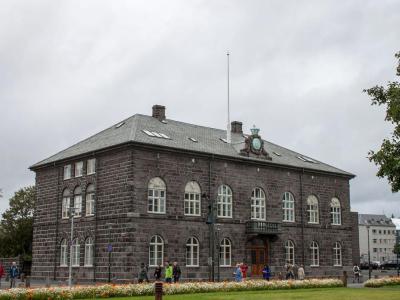
The building itself is modest in scale, reflecting Iceland’s preference for restraint. Constructed from hewn dolerite, a subvolcanic rock, it is one of the oldest stone buildings in the country. Its symmetrical, classical façade is enriched with the first major highlight: the Land Spirits reliefs. To find these, look specifically at the tympanums above the windows, which reveal Iceland’s four legendary protectors—a dragon, an eagle, a bull, and a giant—drawn from Norse tradition. On the north side, you can also spot the crown and crest of King Christian IX, linking the structure to Iceland’s period under Danish rule.
Inside, the parliament continues to function as the center of Iceland’s political life. The central debating chamber is located on the upper floor of the building, serving as the heart of the nation's legislative work. To find this highlight, visitors usually access the public gallery during sessions; it reveals the semi-circular seating where the Althingi convenes. Once you find yourself inside, look for the historic woodwork and the large windows that face out toward the square.
Beneath the main levels and behind the building lies a small garden, which represents the oldest public garden in Iceland. To find this highlight, walk around the side of the main stone structure to the rear of the property. Once you find yourself in this quiet space, look for the original 19th-century layout and the small pond once used as a peaceful retreat for parliamentarians.
Facing the building's entrance in Austurvöllur Square stands a bronze statue of Jón Sigurðsson, the revered leader of Iceland’s 19th-century independence movement.
Visitors should note that while the exterior is always accessible, interior access for the public is generally limited to scheduled tours or gallery sessions, so checking the session calendar ahead of time is advisable.
The building itself is modest in scale, reflecting Iceland’s preference for restraint. Constructed from hewn dolerite, a subvolcanic rock, it is one of the oldest stone buildings in the country. Its symmetrical, classical façade is enriched with the first major highlight: the Land Spirits reliefs. To find these, look specifically at the tympanums above the windows, which reveal Iceland’s four legendary protectors—a dragon, an eagle, a bull, and a giant—drawn from Norse tradition. On the north side, you can also spot the crown and crest of King Christian IX, linking the structure to Iceland’s period under Danish rule.
Inside, the parliament continues to function as the center of Iceland’s political life. The central debating chamber is located on the upper floor of the building, serving as the heart of the nation's legislative work. To find this highlight, visitors usually access the public gallery during sessions; it reveals the semi-circular seating where the Althingi convenes. Once you find yourself inside, look for the historic woodwork and the large windows that face out toward the square.
Beneath the main levels and behind the building lies a small garden, which represents the oldest public garden in Iceland. To find this highlight, walk around the side of the main stone structure to the rear of the property. Once you find yourself in this quiet space, look for the original 19th-century layout and the small pond once used as a peaceful retreat for parliamentarians.
Facing the building's entrance in Austurvöllur Square stands a bronze statue of Jón Sigurðsson, the revered leader of Iceland’s 19th-century independence movement.
Visitors should note that while the exterior is always accessible, interior access for the public is generally limited to scheduled tours or gallery sessions, so checking the session calendar ahead of time is advisable.
9) The Settlement Exhibition (must see)
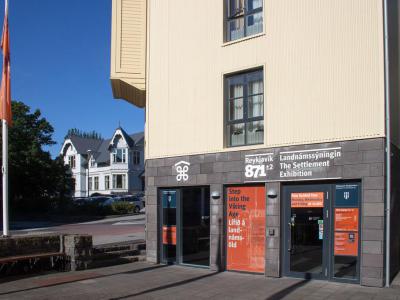
The Settlement Exhibition Reykjavík 871±2 is a showcase dedicated to the early history of Reykjavík, curated by the Reykjavik City Museum. This exhibition draws its content from the results of archaeological excavations conducted on the remains of one of the earliest houses in Iceland, along with discoveries from other dig sites within the city center.
The main focus of this exhibit revolves around the remnants of a hall from the Settlement Age, unearthed during excavations in 2001. This hall was inhabited from approximately 930 to 1000 AD. Adjacent to the hall, there are two pieces of turf that are remnants of a wall constructed prior to the year 871±2, hence the exhibition's name. This precise dating is made possible by analyzing the fallout of volcanic ash from a significant eruption in the Torfajökull area, which left its mark across the region. Researchers can accurately date this event by studying glacial ice in Greenland. Notably, this hall ranks among the oldest human-made structures discovered in Iceland. The exhibit also showcases artifacts from the Viking Age that were uncovered in central Reykjavík and on the island of Viðey.
The main focus of this exhibit revolves around the remnants of a hall from the Settlement Age, unearthed during excavations in 2001. This hall was inhabited from approximately 930 to 1000 AD. Adjacent to the hall, there are two pieces of turf that are remnants of a wall constructed prior to the year 871±2, hence the exhibition's name. This precise dating is made possible by analyzing the fallout of volcanic ash from a significant eruption in the Torfajökull area, which left its mark across the region. Researchers can accurately date this event by studying glacial ice in Greenland. Notably, this hall ranks among the oldest human-made structures discovered in Iceland. The exhibit also showcases artifacts from the Viking Age that were uncovered in central Reykjavík and on the island of Viðey.

10) Aurora Reykjavik (must see)
Aurora Reykjavík is a relatively recent addition to the cultural landscape of Reykjavík, created to focus entirely on one of the country’s most iconic natural phenomena: the aurora borealis. Founded and run by a team of local northern lights experts and award-winning photographers, the centre was conceived as both an educational space and a visual archive, bringing together years of field experience, photography, and research into a single, accessible exhibition. It also offers a reliable, year-round way to experience the northern lights, regardless of weather conditions.
The exhibition explains how the aurora forms—from solar activity to its interaction with Earth’s atmosphere—while also presenting the myths and beliefs different cultures have attached to the lights over centuries. Interactive displays and touchscreens allow visitors to explore how the colors change depending on altitude, while weather screens provide current aurora forecasts. Throughout the space, staff are available to help plan a northern lights outing and offer practical advice on when and where to go.
One of the main highlights is the visual component. A dedicated cinema presents a 30-minute film projected on a seven-meter-wide screen, with footage captured across Iceland over seven years by leading photographers and videographers. Visitors can watch from bean bags, wrapped in sheep fur, creating a relaxed, immersive setting. Complementing this is a 360-degree virtual reality experience that places visitors directly beneath the lights.
The centre also includes a photography section with a hands-on simulator, where visitors can test camera settings and learn how to capture the aurora effectively before heading outdoors. Located in the Grandi harbour district—an area known for its transformation from an industrial zone to a cultural hub—the museum fits naturally into Reykjavík’s evolving streetscape, with most visits lasting around an hour.
The exhibition explains how the aurora forms—from solar activity to its interaction with Earth’s atmosphere—while also presenting the myths and beliefs different cultures have attached to the lights over centuries. Interactive displays and touchscreens allow visitors to explore how the colors change depending on altitude, while weather screens provide current aurora forecasts. Throughout the space, staff are available to help plan a northern lights outing and offer practical advice on when and where to go.
One of the main highlights is the visual component. A dedicated cinema presents a 30-minute film projected on a seven-meter-wide screen, with footage captured across Iceland over seven years by leading photographers and videographers. Visitors can watch from bean bags, wrapped in sheep fur, creating a relaxed, immersive setting. Complementing this is a 360-degree virtual reality experience that places visitors directly beneath the lights.
The centre also includes a photography section with a hands-on simulator, where visitors can test camera settings and learn how to capture the aurora effectively before heading outdoors. Located in the Grandi harbour district—an area known for its transformation from an industrial zone to a cultural hub—the museum fits naturally into Reykjavík’s evolving streetscape, with most visits lasting around an hour.
11) Whales of Iceland Exhibition (must see)
Whales of Iceland Exhibition is a modern museum dedicated to the marine giants that inhabit the waters around Iceland. Opened in 2015 in the Grandi harbour district, the exhibition was created to bring together scientific knowledge, conservation awareness, and visual storytelling in a single indoor space.
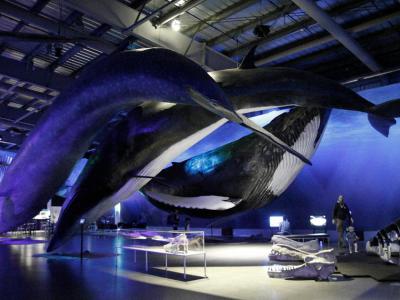
The exhibition is best known for its 23 full-scale whale models, representing every whale species found in Icelandic waters. Suspended within a large, dimly lit hall, these life-size replicas include a 25-meter-long blue whale, alongside species such as the humpback whale, sperm whale, orca, and the critically endangered Atlantic right whale.
Unlike traditional displays, the models are designed to be touched, with soft, flexible surfaces that allow visitors to better understand the size and texture of these animals. Informational panels and interactive stands provide clear explanations of anatomy, behavior, migration patterns, and feeding habits, encouraging visitors of all ages to engage more deeply.
Beyond the visual impact, the exhibition incorporates sound and atmosphere to recreate an underwater environment. Gentle ambient lighting, paired with recorded whale calls, creates a calm setting, while the black-and-yellow floor reflects Iceland’s coastal landscape. Interactive elements explore communication, echolocation, and conservation challenges, while also addressing the history of whaling in Iceland.
Visitors can use virtual reality glasses to explore an underwater world, simulating a walk along the seafloor among whales while learning about different species. An audio guide, available in English, German, and Icelandic, and daily guided tours are included at no extra cost.
The exhibition is best known for its 23 full-scale whale models, representing every whale species found in Icelandic waters. Suspended within a large, dimly lit hall, these life-size replicas include a 25-meter-long blue whale, alongside species such as the humpback whale, sperm whale, orca, and the critically endangered Atlantic right whale.
Unlike traditional displays, the models are designed to be touched, with soft, flexible surfaces that allow visitors to better understand the size and texture of these animals. Informational panels and interactive stands provide clear explanations of anatomy, behavior, migration patterns, and feeding habits, encouraging visitors of all ages to engage more deeply.
Beyond the visual impact, the exhibition incorporates sound and atmosphere to recreate an underwater environment. Gentle ambient lighting, paired with recorded whale calls, creates a calm setting, while the black-and-yellow floor reflects Iceland’s coastal landscape. Interactive elements explore communication, echolocation, and conservation challenges, while also addressing the history of whaling in Iceland.
Visitors can use virtual reality glasses to explore an underwater world, simulating a walk along the seafloor among whales while learning about different species. An audio guide, available in English, German, and Icelandic, and daily guided tours are included at no extra cost.
12) Bæjarins beztu (The Town's Best Hot Dogs)
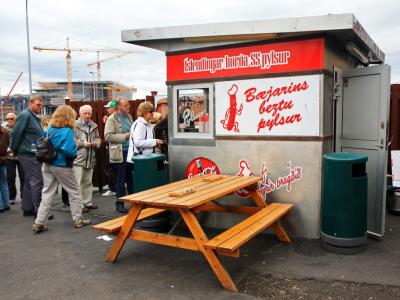
"The Town's Best Hot Dogs" (Bæjarins Beztu Pylsur) is a small chain of hot dog stands in Reykjavík. This chain has been in continuous operation since 1937 when it was originally established on Austurstræti street, right at the heart of the city. It was founded by the grandfather of the current owner, Guðrún Kristmundsdóttir. In the 1960s, the stand relocated a couple of streets north to Tryggvagata, right across from the Harpa Concert Hall, where the main flagship stand still operates today.
In August 2004, the stand gained widespread attention when it was visited by the former President of the United States, Bill Clinton, during his trip to Iceland for a UNICEF conference. This high-profile visit significantly boosted the stand's popularity, leading to its inclusion in various tourist guidebooks about Iceland. Just two years later, in August 2006, the renowned British newspaper, The Guardian, declared Bæjarins Beztu as the best hot dog stand in Europe.
Today, this chain is a favorite among both tourists and local residents alike. There are three more locations within the city, collectively selling over a thousand hot dogs on a bustling day.
The hot dogs offered by Bæjarins Beztu are primarily lamb-based but also contain pork and beef. They are served in a bun and come with a variety of condiment options, including ketchup, sweet mustard, remoulade, crispy fried onions, and raw onions. Customers who wish to have all the available toppings often use the Icelandic phrase "eina með öllu," which translates to "one with everything" in English.
In August 2004, the stand gained widespread attention when it was visited by the former President of the United States, Bill Clinton, during his trip to Iceland for a UNICEF conference. This high-profile visit significantly boosted the stand's popularity, leading to its inclusion in various tourist guidebooks about Iceland. Just two years later, in August 2006, the renowned British newspaper, The Guardian, declared Bæjarins Beztu as the best hot dog stand in Europe.
Today, this chain is a favorite among both tourists and local residents alike. There are three more locations within the city, collectively selling over a thousand hot dogs on a bustling day.
The hot dogs offered by Bæjarins Beztu are primarily lamb-based but also contain pork and beef. They are served in a bun and come with a variety of condiment options, including ketchup, sweet mustard, remoulade, crispy fried onions, and raw onions. Customers who wish to have all the available toppings often use the Icelandic phrase "eina með öllu," which translates to "one with everything" in English.
13) Icelandic Punk Museum
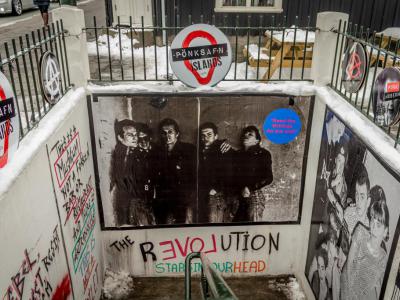
The Icelandic Punk Museum in Reykjavik is a unique attraction that tells the story of Iceland's punk scene from its origins in the late 1970s to the early '90s. Located in a former public toilet that was once known as "ground zero" to locals, the museum opened in November 2016 to celebrate and showcase the country's punk culture.
The exhibits are packed into the former toilets and washbasins, with an impressive collection of photos, posters, handbills, instruments, and stage equipment. Visitors can also enjoy streaming videos of classic club shows, covering both visiting bands and homegrown talent like Sigur Ros. For an even more immersive experience, visitors can listen to Icelandic punk records through pull-down headphones or try on some jackets and strike a pose with the guitars and drum set.
The museum has some notable moments in its history, including the opening event attended by Sex Pistols frontman Johnny Rotten himself. Photos of this event are on display, adding to the museum's unique atmosphere.
Located below Bankastræti, not far from the harbor docks, the Icelandic Punk Museum is a must-visit attraction for anyone interested in Iceland's punk culture. The collection is packed with memorabilia, giving visitors an insight into the country's music scene and its significance.
The exhibits are packed into the former toilets and washbasins, with an impressive collection of photos, posters, handbills, instruments, and stage equipment. Visitors can also enjoy streaming videos of classic club shows, covering both visiting bands and homegrown talent like Sigur Ros. For an even more immersive experience, visitors can listen to Icelandic punk records through pull-down headphones or try on some jackets and strike a pose with the guitars and drum set.
The museum has some notable moments in its history, including the opening event attended by Sex Pistols frontman Johnny Rotten himself. Photos of this event are on display, adding to the museum's unique atmosphere.
Located below Bankastræti, not far from the harbor docks, the Icelandic Punk Museum is a must-visit attraction for anyone interested in Iceland's punk culture. The collection is packed with memorabilia, giving visitors an insight into the country's music scene and its significance.
14) Culture House
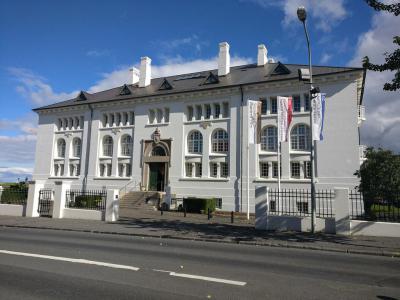
The Culture House, constructed from 1906 to 1908, served as the initial location for Iceland's National Library and Archives, officially opening in 1909. Originally, it also housed the National Museum and the Icelandic Museum of Natural History, leading to its informal name, the Culture House, though this wasn't its official title. Since the 2000s, various institutions, including the Árni Magnússon Institution for Icelandic Studies, the National Gallery, and the Icelandic Museum of Natural History, have utilized the space for exhibitions. In 2013, the building, now a protected historical site, joined forces with the National Museum of Iceland.
Widely regarded as one of Iceland's architectural gems, the Culture House reflects meticulous attention to both interior and exterior design. Danish architect Johannes Magdahl Nielsen conceptualized it, while Icelandic artisans brought it to life, showcasing their skill. Its interior houses the original reading hall, a remarkable feature of the building. The oak furniture, designed by the building's caretaker Frederick Kiörboe, remains a highlight. A notable historical aspect is the building's cornerstone, placed on September 23rd, 1906, visible beneath the front steps.
Tip:
Free with your National Museum ticket or the Reykjavik City Card; there are free lockers.
Widely regarded as one of Iceland's architectural gems, the Culture House reflects meticulous attention to both interior and exterior design. Danish architect Johannes Magdahl Nielsen conceptualized it, while Icelandic artisans brought it to life, showcasing their skill. Its interior houses the original reading hall, a remarkable feature of the building. The oak furniture, designed by the building's caretaker Frederick Kiörboe, remains a highlight. A notable historical aspect is the building's cornerstone, placed on September 23rd, 1906, visible beneath the front steps.
Tip:
Free with your National Museum ticket or the Reykjavik City Card; there are free lockers.
15) Sólfar (Sun Voyager) (must see)
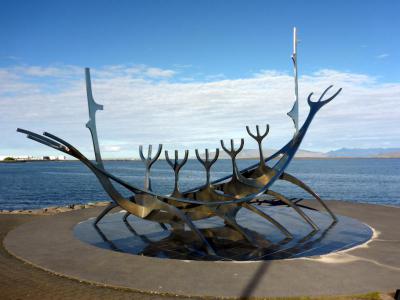
Sun Voyager is a sculpture crafted by the artist Jón Gunnar Árnason (1931-1989) and is situated alongside the Sæbraut road in Reykjavík. This artistic creation is often characterized as a representation of either a dreamboat or an homage to the sun. Jón Gunnar Árnason's intention behind this sculpture was to convey a sense of promise associated with uncharted territories, a dream symbolizing hope, progress, and freedom.
In 1986, the west district association of Reykjavík decided to sponsor a competition to commission a new outdoor sculpture in commemoration of the 200th anniversary of the city. Jón Gunnar's Sun Voyager emerged as the winning design in the competition, leading to the creation of a scaled-up aluminum model, which was later presented to the city for enlargement. The full-sized Sun Voyager was officially unveiled on Sæbraut, coinciding with the birthday of Reykjavík on August 18, 1990.
The sculpture is crafted from high-quality stainless steel and is positioned upon a circle formed by granite slabs, encircled by a material known as "town-hall concrete." Its construction meticulously followed Jón Gunnar Árnason's detailed full-scale drawing of the Sun Voyager and was supervised by the artist Kristinn E. Hrafnsson, who served as Jón Gunnar's assistant.
Why You Should Visit:
Great subject for photographs as it provides a nice vantage point to look out into the waters and think of very deep things.
In 1986, the west district association of Reykjavík decided to sponsor a competition to commission a new outdoor sculpture in commemoration of the 200th anniversary of the city. Jón Gunnar's Sun Voyager emerged as the winning design in the competition, leading to the creation of a scaled-up aluminum model, which was later presented to the city for enlargement. The full-sized Sun Voyager was officially unveiled on Sæbraut, coinciding with the birthday of Reykjavík on August 18, 1990.
The sculpture is crafted from high-quality stainless steel and is positioned upon a circle formed by granite slabs, encircled by a material known as "town-hall concrete." Its construction meticulously followed Jón Gunnar Árnason's detailed full-scale drawing of the Sun Voyager and was supervised by the artist Kristinn E. Hrafnsson, who served as Jón Gunnar's assistant.
Why You Should Visit:
Great subject for photographs as it provides a nice vantage point to look out into the waters and think of very deep things.
16) Laugavegur Street (must see)
Laugavegur is Reykjavík’s principal commercial street and one of the city’s oldest thoroughfares, stretching just over two kilometers through the heart of the capital. Its name translates to “Wash Road,” a reference to the route once used by local women carrying laundry to the geothermal pools of Laugardalur. Established in the late 19th century, the street gradually developed into a centre of trade and daily life.
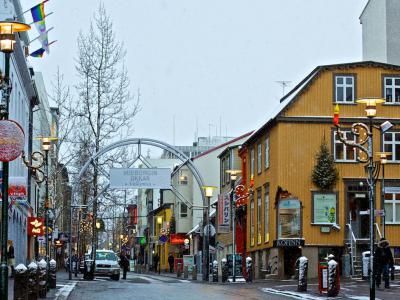
Today, Laugavegur forms the backbone of the city centre, lined with colorful, low-rise buildings and a steady flow of pedestrian activity. Visitors will find a wide range of boutique shops, many showcasing Icelandic design, fashion, and craftsmanship, alongside bookstores and souvenir shops offering everything from locally produced goods to familiar keepsakes. The street also has a noticeable mix of vintage stores and second-hand shops, adding variety to the shopping experience.
Food and drink are central to the street’s appeal. Restaurants, cafés, and bars line the route, offering both traditional Icelandic dishes and a range of international options, including vegan cuisine. As evening approaches, Laugavegur shifts into one of Reykjavík’s main nightlife areas, with venues hosting live music and late-night gatherings. Spots like Lebowski Bar add a more playful atmosphere, combining themed interiors with food, drinks, and interactive elements.
Today, Laugavegur forms the backbone of the city centre, lined with colorful, low-rise buildings and a steady flow of pedestrian activity. Visitors will find a wide range of boutique shops, many showcasing Icelandic design, fashion, and craftsmanship, alongside bookstores and souvenir shops offering everything from locally produced goods to familiar keepsakes. The street also has a noticeable mix of vintage stores and second-hand shops, adding variety to the shopping experience.
Food and drink are central to the street’s appeal. Restaurants, cafés, and bars line the route, offering both traditional Icelandic dishes and a range of international options, including vegan cuisine. As evening approaches, Laugavegur shifts into one of Reykjavík’s main nightlife areas, with venues hosting live music and late-night gatherings. Spots like Lebowski Bar add a more playful atmosphere, combining themed interiors with food, drinks, and interactive elements.
