Custom Walk in Copenhagen, Denmark by oma7626_768cd2 created on 2026-02-07
Guide Location: Denmark » Copenhagen
Guide Type: Custom Walk
# of Sights: 8
Tour Duration: 3 Hour(s)
Travel Distance: 6 Km or 3.7 Miles
Share Key: QJ62H
Guide Type: Custom Walk
# of Sights: 8
Tour Duration: 3 Hour(s)
Travel Distance: 6 Km or 3.7 Miles
Share Key: QJ62H
How It Works
Please retrieve this walk in the GPSmyCity app. Once done, the app will guide you from one tour stop to the next as if you had a personal tour guide. If you created the walk on this website or come to the page via a link, please follow the instructions below to retrieve the walk in the app.
Retrieve This Walk in App
Step 1. Download the app "GPSmyCity: Walks in 1K+ Cities" on Apple App Store or Google Play Store.



Step 2. In the GPSmyCity app, download(or launch) the guide "Copenhagen Map and Walking Tours".
Step 3. Tap the menu button located at upper right corner of the "Walks" screen and select "Retrieve custom walk". Enter the share key: QJ62H
1) Marble Bridge (Marmorbro)
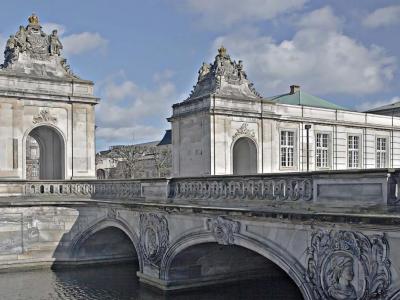
Perhaps Copenhagen’s most photogenic overachiever, the Marble Bridge is undoubtedly the most notable of the four bridges crossing Frederiksholms Kanal. Built in 1744 as part of the original Christiansborg Palace complex, it was meant to impress guests heading to the royal riding grounds. And it certainly did.
Despite the palace burning down not once, but twice, throughout its history, this elegant rococo beauty survived both firestorms with all the grace of a period drama heroine. Today, it remains one of the few original features still standing, looking like it just walked out of the 18th century and refused to age.
Built with Norwegian marble (because, obviously, only the finest materials would fit the purpose) and dressed up with sandstone from Saxony, this bridge is no minimalist. Its creator, Johan Christof Petzoldt, added the royal couple’s monograms and symbolic rooftop figures emphasizing royal virtues. Throw in some lantern-topped columns, marble balustrades, and refined arches, and you’ve got the bridge that was meant to dazzle-and it still does.
Visually striking, the bridge looks like it belongs on a vintage postcard. With the picturesque views of Christiansborg Palace and those charming copper rooftops, it’s a hotspot for tourists, romantics, and anyone who enjoys watching canal boats attempt the very tight squeeze under its arches-some barely make the turn, thus adding a bit of light entertainment for viewers.
However, the bridge is not just about looks-it is part of a richly historical setting. Within a short stroll, you’ve got Christian IV’s Brewhouse, the Danish War Museum, and the royal stables. And if you’re lucky, a horse-drawn carriage might occasionally trot by, contributing to the old-world charm of the area.
In essence, although not massive or flashy, the Marble Bridge holds an iconic presence in Copenhagen. It’s all about quiet confidence, old-world elegance, and some really terrific photo ops. So whenever you’re near Castle Island, make the detour for this perfect pause in your Copenhagen adventure-your camera will thank you.
Despite the palace burning down not once, but twice, throughout its history, this elegant rococo beauty survived both firestorms with all the grace of a period drama heroine. Today, it remains one of the few original features still standing, looking like it just walked out of the 18th century and refused to age.
Built with Norwegian marble (because, obviously, only the finest materials would fit the purpose) and dressed up with sandstone from Saxony, this bridge is no minimalist. Its creator, Johan Christof Petzoldt, added the royal couple’s monograms and symbolic rooftop figures emphasizing royal virtues. Throw in some lantern-topped columns, marble balustrades, and refined arches, and you’ve got the bridge that was meant to dazzle-and it still does.
Visually striking, the bridge looks like it belongs on a vintage postcard. With the picturesque views of Christiansborg Palace and those charming copper rooftops, it’s a hotspot for tourists, romantics, and anyone who enjoys watching canal boats attempt the very tight squeeze under its arches-some barely make the turn, thus adding a bit of light entertainment for viewers.
However, the bridge is not just about looks-it is part of a richly historical setting. Within a short stroll, you’ve got Christian IV’s Brewhouse, the Danish War Museum, and the royal stables. And if you’re lucky, a horse-drawn carriage might occasionally trot by, contributing to the old-world charm of the area.
In essence, although not massive or flashy, the Marble Bridge holds an iconic presence in Copenhagen. It’s all about quiet confidence, old-world elegance, and some really terrific photo ops. So whenever you’re near Castle Island, make the detour for this perfect pause in your Copenhagen adventure-your camera will thank you.
2) Hans Christian Andersen Statue
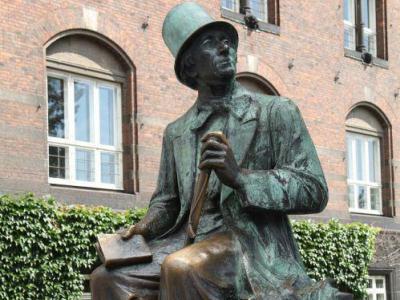
Right in the beating heart of Copenhagen, perched like a literary lighthouse in City Hall Square, sits Hans Christian Andersen. Sculpted in bronze in 1965 by Henry Luckow-Nielsen, this statue isn’t just casually hanging out-it’s strategically facing H.C. Andersens Boulevard.
The placement of the statue is symbolic, with Andersen casting a wistful gaze toward Tivoli Gardens, the whimsical amusement park that may or may not have inspired some of his magical stories.
The statue itself is a full-on cultural power move. Andersen’s pose-book in his lap-is casual, sure, but also deeply photogenic, making him perhaps the most approachable celebrity in Denmark. So many enthusiastic people have climbed up him over the years to take a photo that the poor guy’s knee is now smooth-polished shinier than a new krone.
And because this is Denmark, land of design and digital-savvy thinkers, there's even a QR code at the base, allowing visitors to engage further. Scan it and-voilà!-you're transported into Andersen’s interactive world through a short video exploring the life and works of Denmark's most celebrated son.
So, ultimately, it's more than just bronze-but legacy cast in metal, humor, and heart.
The placement of the statue is symbolic, with Andersen casting a wistful gaze toward Tivoli Gardens, the whimsical amusement park that may or may not have inspired some of his magical stories.
The statue itself is a full-on cultural power move. Andersen’s pose-book in his lap-is casual, sure, but also deeply photogenic, making him perhaps the most approachable celebrity in Denmark. So many enthusiastic people have climbed up him over the years to take a photo that the poor guy’s knee is now smooth-polished shinier than a new krone.
And because this is Denmark, land of design and digital-savvy thinkers, there's even a QR code at the base, allowing visitors to engage further. Scan it and-voilà!-you're transported into Andersen’s interactive world through a short video exploring the life and works of Denmark's most celebrated son.
So, ultimately, it's more than just bronze-but legacy cast in metal, humor, and heart.
3) H. C. Andersen Fairy-Tale House
Just a skip away from Copenhagen’s City Hall Square and the ever-whimsical Tivoli Gardens, step right up to the Hans Christian Andersen Fairy-Tale House. This is where cobblestones meet fairy dust, and the world's most beloved storyteller gets his time in the spotlight-with just a dash of Ripley’s “Believe It or Not!” weirdness for flavor.
Think of this place as a time machine dressed as a storybook structured in two main parts. The first part focuses on Andersen’s real life. It details his upbringing and modest beginnings in Odense, followed by a move to Copenhagen, and his globe-trotting adventures with all the drama in between (rejections, fame, a few heartbreaks, rinse and repeat). This section spills the tea on the man behind the magic, contextualizing the origins of his inspirations and providing insight into his character and experiences.
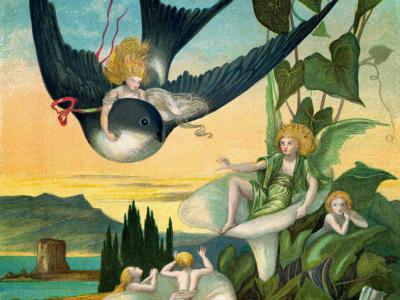
Then-the second part-plunges you into the fairy tales themselves. "The Little Mermaid," "Thumbelina," "The Ugly Duckling," "The Steadfast Tin Soldier"-they're all here, brought to life with lights, sounds, and even smells. (Yes, your nose is now part of the experience, too.) Push a button, and storytime becomes showtime, complete with multilingual narration on oversized story cards and theatrical displays that would make even Andersen raise an eyebrow.
You can also check out the rare Andersen autograph manuscript. And to further enhance the experience, there are engaging live storytelling sessions. If you prefer something Instagrammable, snap a pic with the man himself-or at least his eerily lifelike model.
So, if you’ve ever wanted to walk straight into a fairy tale and maybe walk out with a selfie next to a literary legend, this is your spot. End of tale. Or is it just the beginning?
Tip:
If you want more bang for your krone, combo tickets are available for Ripley's, Guinness World Records, and The Mystic Exploratorium on Strøget-just a 15-minute stroll away. Even better, Copenhagen Card holders can get in free (you clever duckling, you!).
Think of this place as a time machine dressed as a storybook structured in two main parts. The first part focuses on Andersen’s real life. It details his upbringing and modest beginnings in Odense, followed by a move to Copenhagen, and his globe-trotting adventures with all the drama in between (rejections, fame, a few heartbreaks, rinse and repeat). This section spills the tea on the man behind the magic, contextualizing the origins of his inspirations and providing insight into his character and experiences.
Then-the second part-plunges you into the fairy tales themselves. "The Little Mermaid," "Thumbelina," "The Ugly Duckling," "The Steadfast Tin Soldier"-they're all here, brought to life with lights, sounds, and even smells. (Yes, your nose is now part of the experience, too.) Push a button, and storytime becomes showtime, complete with multilingual narration on oversized story cards and theatrical displays that would make even Andersen raise an eyebrow.
You can also check out the rare Andersen autograph manuscript. And to further enhance the experience, there are engaging live storytelling sessions. If you prefer something Instagrammable, snap a pic with the man himself-or at least his eerily lifelike model.
So, if you’ve ever wanted to walk straight into a fairy tale and maybe walk out with a selfie next to a literary legend, this is your spot. End of tale. Or is it just the beginning?
Tip:
If you want more bang for your krone, combo tickets are available for Ripley's, Guinness World Records, and The Mystic Exploratorium on Strøget-just a 15-minute stroll away. Even better, Copenhagen Card holders can get in free (you clever duckling, you!).
4) Round Tower (Rundetarn) (must see)
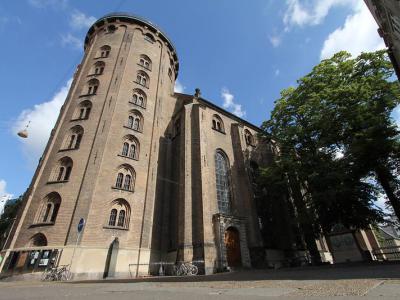
The Round Tower – Copenhagen’s answer to the question: “What if we made a giant architectural cinnamon roll… but for science?” This 17th-century spiral of brick in the heart of the Danish capital was “cooked up” by King Christian IV as part of his grand architectural project, originally intended as an observatory for the astronomer genius Tycho Brahe.
Back in the 1600s, Europe was getting really into astronomy. The Round Tower came with its own academic library, the Trinitatis Church, and a university chapel. The spiral ramp was so strong and wide that one could easily ride a horse or even drive a carriage up and down it. Apparently, some kings did actually, including Russian Tsar Peter the Great. Because stairs are for the common folk...
Now, if you're a fan of Hans Christian Andersen, you're gonna love this. The Round Tower pops up in “The Tinderbox.” That’s the one where a soldier meets a witch, climbs into a hollow tree, and finds three coin-filled vaults guarded by increasingly horrifying dogs. The biggest of which has eyes “the size of the Round Tower.” Subtle product placement, Hans...
Today, tourists from all corners of the Earth climb its 7.5-turn helical corridor just to snap that perfect panoramic selfie of the city. Because it’s not just a tower but a slow-motion ascent into Danish history, science, and surprisingly chic art installations.
As you wind your way up, your first pitstop is a gallery space featuring contemporary art that occasionally makes you question your understanding of gravity. Then it’s on to the bell loft – because what's a tower without a good ol’ bell room? And finally, the key attraction: the observatory itself, complete with a 360-degree view of Copenhagen. There’s even a thick glass platform near the top – for the brave souls who enjoy standing on transparent floors and peering into the abyss.
Tip:
There’s a cozy café nearby for a crowd-free coffee break, a blessedly clean toilet halfway up, and a souvenir shop with actual quality stuff – not your usual tourist tat. So take your time, bring your curiosity, and maybe leave the horse at home...
Back in the 1600s, Europe was getting really into astronomy. The Round Tower came with its own academic library, the Trinitatis Church, and a university chapel. The spiral ramp was so strong and wide that one could easily ride a horse or even drive a carriage up and down it. Apparently, some kings did actually, including Russian Tsar Peter the Great. Because stairs are for the common folk...
Now, if you're a fan of Hans Christian Andersen, you're gonna love this. The Round Tower pops up in “The Tinderbox.” That’s the one where a soldier meets a witch, climbs into a hollow tree, and finds three coin-filled vaults guarded by increasingly horrifying dogs. The biggest of which has eyes “the size of the Round Tower.” Subtle product placement, Hans...
Today, tourists from all corners of the Earth climb its 7.5-turn helical corridor just to snap that perfect panoramic selfie of the city. Because it’s not just a tower but a slow-motion ascent into Danish history, science, and surprisingly chic art installations.
As you wind your way up, your first pitstop is a gallery space featuring contemporary art that occasionally makes you question your understanding of gravity. Then it’s on to the bell loft – because what's a tower without a good ol’ bell room? And finally, the key attraction: the observatory itself, complete with a 360-degree view of Copenhagen. There’s even a thick glass platform near the top – for the brave souls who enjoy standing on transparent floors and peering into the abyss.
Tip:
There’s a cozy café nearby for a crowd-free coffee break, a blessedly clean toilet halfway up, and a souvenir shop with actual quality stuff – not your usual tourist tat. So take your time, bring your curiosity, and maybe leave the horse at home...
5) Rosenborg Castle (must see)
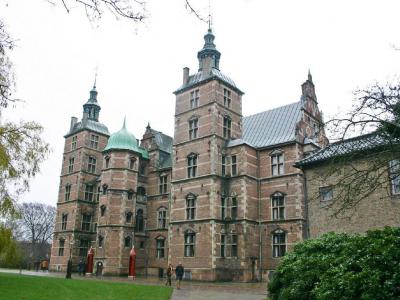
One of the most popular tourist attractions in Copenhagen, Rosenborg Castle reflects the very essence of the Dutch Renaissance style. This caste was constructed in 1606 and served as a summer house. It was a part of many interesting architectural projects initiated by Christian IV.
The castle has since been expanded many times and its present version was built in 1624. Rosenborg Castle was structurally planned by architects Hans van Steenwincke and Bertel Lange.
Until 1710, the castle was a royal residence. On the third floor, you will find the Long Hall. It was built in 1624 to serve as the royal ballroom. In the 1700s, it was used as the banquet hall and the Royal Reception Room. It came to be known as the “Knight’s Hall” from the latter half of the 19th century.
Here you will find a dozen impressive tapestries that depict the victories of the king in the Scanian War. Do not miss out the stucco ceiling that was created in the early 18th century. The main attractions at this castle include the throne of queens and absolutist king’s coronation chair. At the Large Hall, you will find an exquisite collection of 17th-century silver furniture.
Join one of the public tours organized at this castle. The tour will take you through the museum where you can view artifacts from the Royal Collections.
Why You Should Visit:
There's lots of history here and it is well presented. It is not too cluttered so you are not overburdened.
The castle interior is splendid with wonderfully preserved artwork and furnishings – especially the tapestries in the throne room.
Tip:
Make sure you visit all the levels, taking time to walk around and not be too rushed. Plan on at least 2-3 hours here if you can. You need a coin for the locker to leave bags, however.
Tickets are timed entry to ensure the smallish rooms don't get overcrowded. Pre-book online if you can; otherwise, you can walk around the relaxing gardens while you wait for your time slot.
Keep your ticket to go to the basement and see the crown jewels! There's a separate entrance to the basement from outside the castle (you can't get to the basement from inside the castle itself).
The castle has since been expanded many times and its present version was built in 1624. Rosenborg Castle was structurally planned by architects Hans van Steenwincke and Bertel Lange.
Until 1710, the castle was a royal residence. On the third floor, you will find the Long Hall. It was built in 1624 to serve as the royal ballroom. In the 1700s, it was used as the banquet hall and the Royal Reception Room. It came to be known as the “Knight’s Hall” from the latter half of the 19th century.
Here you will find a dozen impressive tapestries that depict the victories of the king in the Scanian War. Do not miss out the stucco ceiling that was created in the early 18th century. The main attractions at this castle include the throne of queens and absolutist king’s coronation chair. At the Large Hall, you will find an exquisite collection of 17th-century silver furniture.
Join one of the public tours organized at this castle. The tour will take you through the museum where you can view artifacts from the Royal Collections.
Why You Should Visit:
There's lots of history here and it is well presented. It is not too cluttered so you are not overburdened.
The castle interior is splendid with wonderfully preserved artwork and furnishings – especially the tapestries in the throne room.
Tip:
Make sure you visit all the levels, taking time to walk around and not be too rushed. Plan on at least 2-3 hours here if you can. You need a coin for the locker to leave bags, however.
Tickets are timed entry to ensure the smallish rooms don't get overcrowded. Pre-book online if you can; otherwise, you can walk around the relaxing gardens while you wait for your time slot.
Keep your ticket to go to the basement and see the crown jewels! There's a separate entrance to the basement from outside the castle (you can't get to the basement from inside the castle itself).
6) Amalienborg Palace and Museum (must see)
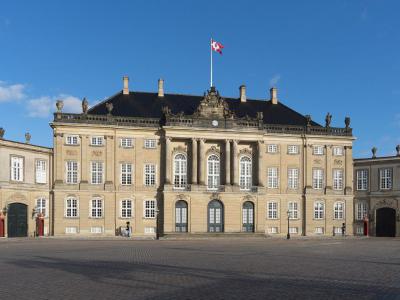
Amalienborg Palace is the official residence of the Danish Royal Family. This palace complex features four rococo palaces constructed between 1750 and 1758. All are built around the octagonal square where you will find King Frederik’s equestrian statue. King Frederik ruled Norway and Denmark between 1723 and 1766 and was instrumental in the construction of Frederiksstad of which Amalienborg palace is a part.
Land for the palace was acquired by King Christian IV who ruled Norway and Denmark between 1577 and 1648. Queen Sophie Amalie, King Frederik III’s consort constructed the first palace in this waterfront area between 1669 and 1673. This palace was destroyed by fire in 1689.
King Frederik IV constructed the second royal palace at Amalienborg during his rule between 1671 and 1730. This was a two-storied small summer residence that featured a charming French garden. It was named Sophie Amalienborg.
In the 1980s the palace was restored as residence for the Crown Prince, storage facilities for the Queen’s Reference Library and a museum for the Royal House of Glücksborg. The museum features private royal apartments from 1863 to 1947 including original fittings and furnishings.
King Frederik V, in his effort to create a separate city outside Copenhagen, constructed Frederik’s City or Frederiksstad that featured exclusive homes for the noble families and aristocrats. All buildings were in Baroque style. Later on, additions were made to these buildings in rococo architectural style. Make sure you include Amalienborg Palace in your itinerary when you visit Copenhagen.
Why You Should Visit:
Considered as one of the best examples of the Rococo architecture style, this complex is beautifully preserved and feels more intimate than its European counterparts.
Tip:
Arrive at midday for the changing of the guard, an interesting display that takes around 10 minutes.
Land for the palace was acquired by King Christian IV who ruled Norway and Denmark between 1577 and 1648. Queen Sophie Amalie, King Frederik III’s consort constructed the first palace in this waterfront area between 1669 and 1673. This palace was destroyed by fire in 1689.
King Frederik IV constructed the second royal palace at Amalienborg during his rule between 1671 and 1730. This was a two-storied small summer residence that featured a charming French garden. It was named Sophie Amalienborg.
In the 1980s the palace was restored as residence for the Crown Prince, storage facilities for the Queen’s Reference Library and a museum for the Royal House of Glücksborg. The museum features private royal apartments from 1863 to 1947 including original fittings and furnishings.
King Frederik V, in his effort to create a separate city outside Copenhagen, constructed Frederik’s City or Frederiksstad that featured exclusive homes for the noble families and aristocrats. All buildings were in Baroque style. Later on, additions were made to these buildings in rococo architectural style. Make sure you include Amalienborg Palace in your itinerary when you visit Copenhagen.
Why You Should Visit:
Considered as one of the best examples of the Rococo architecture style, this complex is beautifully preserved and feels more intimate than its European counterparts.
Tip:
Arrive at midday for the changing of the guard, an interesting display that takes around 10 minutes.
7) Charlottenborg Palace
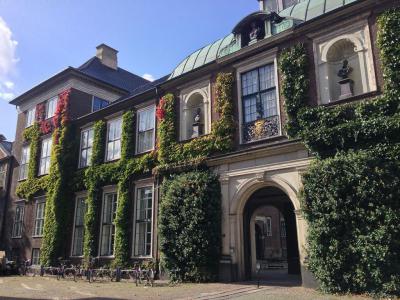
Charlottenborg is a Dutch Baroque style palace constructed for Ulrik Frederik Gyldenlve between 1672 and 1683. In 1700, the palace was bought by Charlotte Amalie, Queen Dowager. As you visit the palace, you will find that the main building faces Kongens Nytorv. It was constructed by C. F. Hansen in 1827 and features the Antiksalen and Fest Halls.
Today, Charlottenborg, named after the famous widow Queen Charlotte Amalie, has an extensive collection of art and literature displayed in its library. It is also where the Royal Danish Academy of Art operates from. Established and emerging artists aspiring to showcase their talent hold exhibitions here.
One of the most famous exhibitions held at Charlottenborg is Forårsudstillint, the spring show. This exhibition is a host to artists who display their crafts, paintings and architecture. Artists from around the nation send their work here which is reviewed and if chosen, displayed at this exhibition.
Another art show, namely the Efterårsudstillingen, is held in autumn. This exhibition displays works of eminent artists who are specially invited. Charlottenborg holds curated shows and at least five exhibitions each year. Do not miss a visit to this popular tourist attraction on your trip to Copenhagen.
Today, Charlottenborg, named after the famous widow Queen Charlotte Amalie, has an extensive collection of art and literature displayed in its library. It is also where the Royal Danish Academy of Art operates from. Established and emerging artists aspiring to showcase their talent hold exhibitions here.
One of the most famous exhibitions held at Charlottenborg is Forårsudstillint, the spring show. This exhibition is a host to artists who display their crafts, paintings and architecture. Artists from around the nation send their work here which is reviewed and if chosen, displayed at this exhibition.
Another art show, namely the Efterårsudstillingen, is held in autumn. This exhibition displays works of eminent artists who are specially invited. Charlottenborg holds curated shows and at least five exhibitions each year. Do not miss a visit to this popular tourist attraction on your trip to Copenhagen.
8) Stork Fountain
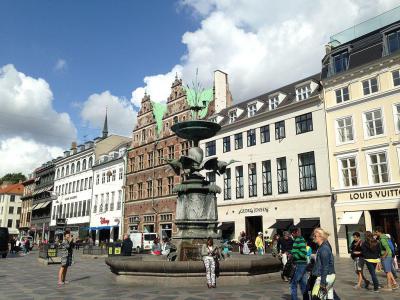
Copenhagen has no shortage of statues, but when it comes to fountains, it isn’t exactly “drowning” in them. This is why the Stork Fountain on Amager Square stands out like a bird in a bathhouse.
This eye-catching splash zone is set in stone-Italian granite, to be exact-surrounded by dignified old buildings, one of which has been standing there quietly since as far back as the year 1600.
Now, the fountain wasn’t just plopped there randomly. It was a silvery little gift to Crown Prince Frederik and Crown Princess Louise for their 25th wedding anniversary. Unveiled in 1894, it is basically the royal equivalent of a really, really fancy anniversary card. With plumbing...
The design features three storks caught mid-flap, as if about to deliver... babies, if you believe Hans Christian Andersen’s iconic tale from 1838. Around their feet: decorative aquatic plants and cheeky bronze frogs perched on dock leaves, doing their best impression of water cannons.
For years, locals whispered that the birds might be, in fact, herons-scandal! But in 2008, the Danish Ornithological Society set the record straight: definitely storks. Case closed.
Another peculiar fact associated with this place is the midwife dance. Yes, that’s the thing. Since 1950, newly-minted Danish midwives have been celebrating their graduation by dancing, wading, and sometimes full-on splashing in the fountain. If you want to see it with your own eyes, show up in mid-summer, claim a table at a nearby café with a good view, and prepare for a delightfully soggy spectacle. Champagne optional.
This eye-catching splash zone is set in stone-Italian granite, to be exact-surrounded by dignified old buildings, one of which has been standing there quietly since as far back as the year 1600.
Now, the fountain wasn’t just plopped there randomly. It was a silvery little gift to Crown Prince Frederik and Crown Princess Louise for their 25th wedding anniversary. Unveiled in 1894, it is basically the royal equivalent of a really, really fancy anniversary card. With plumbing...
The design features three storks caught mid-flap, as if about to deliver... babies, if you believe Hans Christian Andersen’s iconic tale from 1838. Around their feet: decorative aquatic plants and cheeky bronze frogs perched on dock leaves, doing their best impression of water cannons.
For years, locals whispered that the birds might be, in fact, herons-scandal! But in 2008, the Danish Ornithological Society set the record straight: definitely storks. Case closed.
Another peculiar fact associated with this place is the midwife dance. Yes, that’s the thing. Since 1950, newly-minted Danish midwives have been celebrating their graduation by dancing, wading, and sometimes full-on splashing in the fountain. If you want to see it with your own eyes, show up in mid-summer, claim a table at a nearby café with a good view, and prepare for a delightfully soggy spectacle. Champagne optional.
