Custom Walk in Antwerp, Belgium by rahkshi96_8d8582 created on 2026-02-10
Guide Location: Belgium » Antwerp
Guide Type: Custom Walk
# of Sights: 14
Tour Duration: 3 Hour(s)
Travel Distance: 5.7 Km or 3.5 Miles
Share Key: JUCUW
Guide Type: Custom Walk
# of Sights: 14
Tour Duration: 3 Hour(s)
Travel Distance: 5.7 Km or 3.5 Miles
Share Key: JUCUW
How It Works
Please retrieve this walk in the GPSmyCity app. Once done, the app will guide you from one tour stop to the next as if you had a personal tour guide. If you created the walk on this website or come to the page via a link, please follow the instructions below to retrieve the walk in the app.
Retrieve This Walk in App
Step 1. Download the app "GPSmyCity: Walks in 1K+ Cities" on Apple App Store or Google Play Store.



Step 2. In the GPSmyCity app, download(or launch) the guide "Antwerp Map and Walking Tours".
Step 3. Tap the menu button located at upper right corner of the "Walks" screen and select "Retrieve custom walk". Enter the share key: JUCUW
1) Antwerpen-Centraal (Antwerp Central Station) (must see)
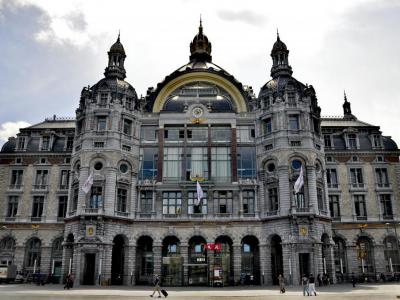
Antwerp is a perfect blend of old and new, renowned for its great effort in preserving historic buildings. One such building is the Antwerp Central Station, aka Middenstatie (Middle station). The latter name – now an antiquated expression in Dutch – is seen on the plaque fixed on the north wall of the Station.
A key landmark in the city, this mighty edifice is one of the finest examples of railway architecture in Belgium. It's been repeatedly voted among the world’s most impressive railway stations, including number four in 2009 by the U.S. Newsweek magazine, and number one in 2014 by the British-American magazine Mashable.
The original stone-clad structure, with a steel platform covering, was designed by Louis Delacenserie. It was built between 1895 and 1905 as a replacement for the first terminus of the Brussels-Mechelen-Antwerp railway.
Because of its unique architecture, historians still struggle to attribute the Antwerpen-Centraal to any particular style. The eclectic mix features a Neo-Gothic front, a massive dome over the iron-glass waiting hall, for which the building has been colloquially referred to as the "spoorwegkathedraal" ("railroad cathedral"), and a modern multilevel platform system. Another notable element, the viaduct leading into the Station, was designed by local architect, Jan Van Asperen.
During WWII, the train hall sustained severe damage by V-2 rockets, which is still visible today due to a lasting wave-distortion in the roof.
Recently, the Station was completely renovated, and in 2007 had an underground tunnel opened. Today it operates 14 railways tracts at four different terminals and plays a vital role in connecting various parts of Belgium.
If you're an architecture buff or railway enthusiast, having the Antwerpen-Centraal on your list of things to see is a must! But even if you're neither of these, we still recommend visiting it, just for the spectacle.
A key landmark in the city, this mighty edifice is one of the finest examples of railway architecture in Belgium. It's been repeatedly voted among the world’s most impressive railway stations, including number four in 2009 by the U.S. Newsweek magazine, and number one in 2014 by the British-American magazine Mashable.
The original stone-clad structure, with a steel platform covering, was designed by Louis Delacenserie. It was built between 1895 and 1905 as a replacement for the first terminus of the Brussels-Mechelen-Antwerp railway.
Because of its unique architecture, historians still struggle to attribute the Antwerpen-Centraal to any particular style. The eclectic mix features a Neo-Gothic front, a massive dome over the iron-glass waiting hall, for which the building has been colloquially referred to as the "spoorwegkathedraal" ("railroad cathedral"), and a modern multilevel platform system. Another notable element, the viaduct leading into the Station, was designed by local architect, Jan Van Asperen.
During WWII, the train hall sustained severe damage by V-2 rockets, which is still visible today due to a lasting wave-distortion in the roof.
Recently, the Station was completely renovated, and in 2007 had an underground tunnel opened. Today it operates 14 railways tracts at four different terminals and plays a vital role in connecting various parts of Belgium.
If you're an architecture buff or railway enthusiast, having the Antwerpen-Centraal on your list of things to see is a must! But even if you're neither of these, we still recommend visiting it, just for the spectacle.
2) Van Wesenbeke Street and Chinatown
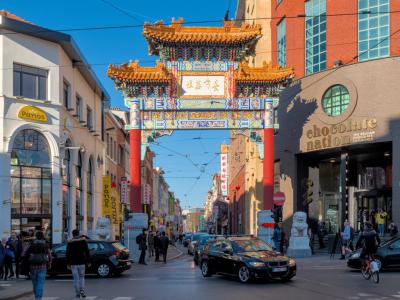
Antwerp's Chinatown, centered along Van Wesenbeke Street (Van Wesenbekestraat), offers a vibrant and multicultural slice of Asia in the heart of Belgium. This district began shaping its identity post-World War II with the settlement of the Chinese community and has since evolved into a dynamic pan-Asian hub. Today, it not only retains a strong Chinese influence but also celebrates a rich tapestry of Asian cultures.
The street is renowned for its diverse culinary scene, with restaurants serving an array of Asian cuisines including Chinese, Japanese, Thai, Indian, Pakistani, and Nepali. This culinary diversity is a testament to the broad Asian representation in the area. Additionally, Van Wesenbeke Street features Belgium's largest Asian supermarket, Sun Wah, which serves as a community hub with a diverse array of products from China, Japan, Korea, Thailand, the Philippines, Malaysia, Singapore, Vietnam, and Indonesia.
Chinatown in Antwerp is also a cultural and community center. It hosts numerous organizations and businesses that support not only the Chinese but also Nepali, Indonesian, and Filipino communities. Significant landmarks include a Buddhist temple and a school dedicated to teaching kung fu, enhancing the cultural richness of the district.
Architecturally, the district is marked by significant symbols of its heritage. At both the entrance and the end of Van Wesenbeke Street, majestic Chinese lions stand guard, symbolizing protection and strength. Moreover, the "Pagodepoort" or Pagoda Gate, a pairing erected in 2010 at the southern entrance, adds a monumental touch to the street, celebrating its Asian cultural identity.
Despite its origins as a Chinatown, the area has seen an influx of people from across Asia, leading some to refer to it as "Asiatown." This reflects the changing demographics and the inclusive spirit that characterizes the district today, making it a true melting pot of Asian cultures in Belgium.
The street is renowned for its diverse culinary scene, with restaurants serving an array of Asian cuisines including Chinese, Japanese, Thai, Indian, Pakistani, and Nepali. This culinary diversity is a testament to the broad Asian representation in the area. Additionally, Van Wesenbeke Street features Belgium's largest Asian supermarket, Sun Wah, which serves as a community hub with a diverse array of products from China, Japan, Korea, Thailand, the Philippines, Malaysia, Singapore, Vietnam, and Indonesia.
Chinatown in Antwerp is also a cultural and community center. It hosts numerous organizations and businesses that support not only the Chinese but also Nepali, Indonesian, and Filipino communities. Significant landmarks include a Buddhist temple and a school dedicated to teaching kung fu, enhancing the cultural richness of the district.
Architecturally, the district is marked by significant symbols of its heritage. At both the entrance and the end of Van Wesenbeke Street, majestic Chinese lions stand guard, symbolizing protection and strength. Moreover, the "Pagodepoort" or Pagoda Gate, a pairing erected in 2010 at the southern entrance, adds a monumental touch to the street, celebrating its Asian cultural identity.
Despite its origins as a Chinatown, the area has seen an influx of people from across Asia, leading some to refer to it as "Asiatown." This reflects the changing demographics and the inclusive spirit that characterizes the district today, making it a true melting pot of Asian cultures in Belgium.
3) University of Antwerp
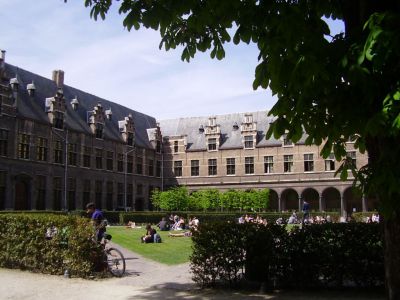
The University of Antwerp came into existence in the year 2003 after the merger of three major universities of the region which have existed since as early as 1852. Offering Bachelors, Masters and PhD opportunities across 7 faculties, the University is the place of learning for over 14,000 students. Known for its world class education system and high quality research facilities, the University has 4 campus locations in the city of Antwerp. The University shares a ranking between 80 and 125 in the list of Top 500 European universities. It also boasts of a long list of notable alumni in each of its faculties who have made significant contributions in their field.
Attracting students from all over Europe and most parts of the world, the University has a buzzing night life. Special discounts in the form of ‘Culture Vouchers’ are available to students to help them step out and experience the city. The University has good facilities for sports and has regularly organized university level championships for the European and global platforms. For its own students, the University provides sports insurance when using its facilities. Most campus locations are also destinations to buy a warm meal that is filling and yet not very expensive for the pocket.
The University adds to the cosmopolitan culture of Antwerp and makes it even more pleasant to visit.
Attracting students from all over Europe and most parts of the world, the University has a buzzing night life. Special discounts in the form of ‘Culture Vouchers’ are available to students to help them step out and experience the city. The University has good facilities for sports and has regularly organized university level championships for the European and global platforms. For its own students, the University provides sports insurance when using its facilities. Most campus locations are also destinations to buy a warm meal that is filling and yet not very expensive for the pocket.
The University adds to the cosmopolitan culture of Antwerp and makes it even more pleasant to visit.
4) Church of Carolus Borromeus
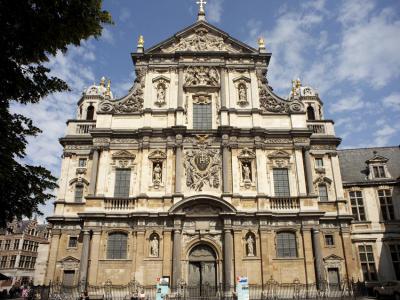
The Spanish invasion of 1584 brought in a wave of forced Catholicism to Antwerp. Protestants either left the city or were converted to Catholicism. The Jesuits decided to counter this reformation and François d'Aguilon, a Jesuit mathematician began work on a Baroque styled church. Similar to the Chiesa del Gesù in Rome, this new church in Antwerp was completed in 1621 and was called the Ignatius Church. Much of the interiors including many ceiling paintings were completed by the local artist, P.P.Rubens. A unique feature of the Church is the mechanism to change the painting at the altar.
The Fire of 1718 destroyed most of Rubens’ work but the mechanism to change paintings survives to this day. The structure became a Parish Church in 1803 when it was given its current name. Today, it stands neatly tucked away behind some modern buildings at the Hendrik Conscience Square. Several protests during the 1960s and 70s have made this area a pedestrian zone which gives the area its instantly appreciated serenity. During your walk to the Church you might come across the soothing notes of violin being played to make your visit very special. We request you to please check the open hours of the Church before visiting. The Artist’s mass on Sundays and other holidays should not be missed.
The Fire of 1718 destroyed most of Rubens’ work but the mechanism to change paintings survives to this day. The structure became a Parish Church in 1803 when it was given its current name. Today, it stands neatly tucked away behind some modern buildings at the Hendrik Conscience Square. Several protests during the 1960s and 70s have made this area a pedestrian zone which gives the area its instantly appreciated serenity. During your walk to the Church you might come across the soothing notes of violin being played to make your visit very special. We request you to please check the open hours of the Church before visiting. The Artist’s mass on Sundays and other holidays should not be missed.
5) Silvius Brabo Statue
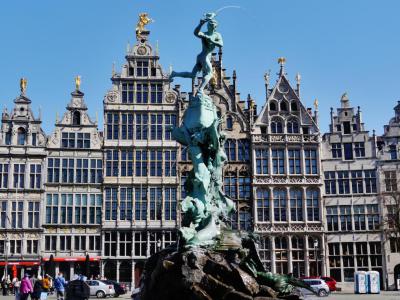
The Silvius Brabo statue is located at Oude Beurs 4 in the city of Antwerp and stands right in front of the Antwerp City Hall. The statue is the result of the mythological story that is believed to give the city its name.
Legend has it that a giant named Druon Antigoon lived near the bridge over the river Scheldt. The giant would forcibly charge the people for using the bridge or else would cut off hands of people who either could not or refused to pay him. According to the story, Silvius Brabo was a Roman soldier who came to the city. Antigoon’s restrictions over using the bridge on the Scheldt were hurting the city’s business and therefore, Brabo decided to bring an end to Antigoon’s tyranny. Brabo killed Antigoon and as a fitting reply to his oppression, tossed the giant’s hand into the river. The statue in front of the City Hall captures the moment when the brave Brabo was about to throw away the giant’s hand. The name Antwerp is corruption of ‘An twerp’ or hand throwing committed by Brabo. The term ‘Brabant’ is also believed to have originated with Brabo.
You can enjoy the statue while relishing a coffee on one of the café terraces located in the area.
Legend has it that a giant named Druon Antigoon lived near the bridge over the river Scheldt. The giant would forcibly charge the people for using the bridge or else would cut off hands of people who either could not or refused to pay him. According to the story, Silvius Brabo was a Roman soldier who came to the city. Antigoon’s restrictions over using the bridge on the Scheldt were hurting the city’s business and therefore, Brabo decided to bring an end to Antigoon’s tyranny. Brabo killed Antigoon and as a fitting reply to his oppression, tossed the giant’s hand into the river. The statue in front of the City Hall captures the moment when the brave Brabo was about to throw away the giant’s hand. The name Antwerp is corruption of ‘An twerp’ or hand throwing committed by Brabo. The term ‘Brabant’ is also believed to have originated with Brabo.
You can enjoy the statue while relishing a coffee on one of the café terraces located in the area.
6) Grote Markt (Great Market Square) (must see)
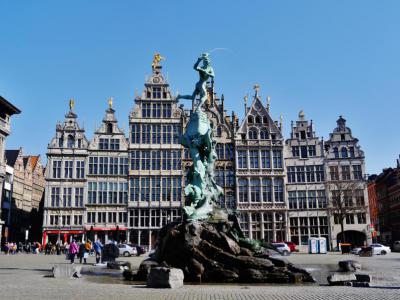
Right in the heart of the city, the Great Market Square is one of the favorite locations for locals as well as tourists. Filled with cafés and restaurant, the Great Market Square is a popular destination if you want to just kick back, bask in the sun with a chilled glass of beer or stroll around lazily admiring the architecture of the city. Dominated by the elegant and grant Renaissance style City Hall on one side and a row of guild houses and old patrician houses on the other, the Great Market Square is a magnet for those who love studying city architecture.
The center of the square holds the magnificent fountain that bears the well sculpted statue of Silvius Brabo, the local mythical hero. As legend has it, the water way was once governed by a giant who demanded a high toll from those who wanted to enter the city. Those failing to meet the requirements, were punished by having their hand cut off. It was Brabo, who fought the giant and cut off his hand and threw it in the Scheldt river.
One of the best ways to enjoy a perfect day in Antwerp is to sit in an open terrace restaurant amidst the elegantly constructed buildings of the Great Market Square, have an authentic Belgian meal on the table and admire the city as it moves past you.
The center of the square holds the magnificent fountain that bears the well sculpted statue of Silvius Brabo, the local mythical hero. As legend has it, the water way was once governed by a giant who demanded a high toll from those who wanted to enter the city. Those failing to meet the requirements, were punished by having their hand cut off. It was Brabo, who fought the giant and cut off his hand and threw it in the Scheldt river.
One of the best ways to enjoy a perfect day in Antwerp is to sit in an open terrace restaurant amidst the elegantly constructed buildings of the Great Market Square, have an authentic Belgian meal on the table and admire the city as it moves past you.
7) Het Steen (Steen Castle)
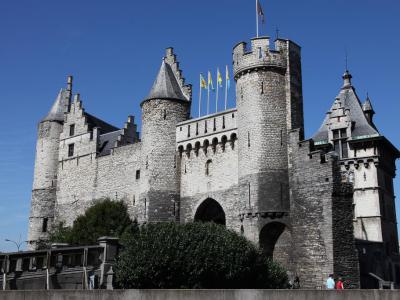
Steen Castle (Het Steen), nestled in the historic center of Antwerp, is a medieval fortress with roots extending back to the early 13th century. Originally constructed between 1200 and 1225, it served as a gateway to a more extensive castle complex belonging to the Dukes of Brabant, which unfortunately was demolished in the 19th century. This makes Steen Castle the oldest surviving building in Antwerp and a rare remnant of the city’s earliest stone fortifications.
The fortress's primary role was to control access to the Scheldt River, a crucial economic and strategic waterway for the city, which was one of Europe's largest ports. Steen Castle has undergone several transformations through the centuries. Initially known as Antwerp Castle and later renamed around 1520 following significant renovations under Charles V, it evolved from a royal residence to a local administrative hub. From 1303 to 1827, it functioned as a prison and later housed the city's Alderman's house and court of justice.
By the 19th century, much of the original fortress was demolished for urban development and to prevent the silting of the Scheldt, leaving only part of the structure that was turned into a shipping museum. In 1890, it became an archaeological museum, and by 1952, an annex was added to highlight Antwerp's maritime history. This collection moved to the Museum Aan de Stroom in 2011. The site also features a war memorial dedicated to Canadian soldiers from World War II.
The cultural heritage continues to be celebrated at Steen Castle, evident in the bas-relief of Semini, a Scandinavian god of youth and fertility, positioned above the entrance archway. Additionally, a nearby statue portrays the folklore giant Lange Wapper, who is said to have terrorized medieval Antwerp.
Recently, in October 2021, Steen Castle underwent significant renovations, reopening as a modern visitor center that blends its ancient architecture with contemporary design. This revitalization aims to enhance the visitor experience while preserving the historical and cultural significance of one of Antwerp’s most storied landmarks.
The fortress's primary role was to control access to the Scheldt River, a crucial economic and strategic waterway for the city, which was one of Europe's largest ports. Steen Castle has undergone several transformations through the centuries. Initially known as Antwerp Castle and later renamed around 1520 following significant renovations under Charles V, it evolved from a royal residence to a local administrative hub. From 1303 to 1827, it functioned as a prison and later housed the city's Alderman's house and court of justice.
By the 19th century, much of the original fortress was demolished for urban development and to prevent the silting of the Scheldt, leaving only part of the structure that was turned into a shipping museum. In 1890, it became an archaeological museum, and by 1952, an annex was added to highlight Antwerp's maritime history. This collection moved to the Museum Aan de Stroom in 2011. The site also features a war memorial dedicated to Canadian soldiers from World War II.
The cultural heritage continues to be celebrated at Steen Castle, evident in the bas-relief of Semini, a Scandinavian god of youth and fertility, positioned above the entrance archway. Additionally, a nearby statue portrays the folklore giant Lange Wapper, who is said to have terrorized medieval Antwerp.
Recently, in October 2021, Steen Castle underwent significant renovations, reopening as a modern visitor center that blends its ancient architecture with contemporary design. This revitalization aims to enhance the visitor experience while preserving the historical and cultural significance of one of Antwerp’s most storied landmarks.
8) Vlaeykensgang Historic Alley
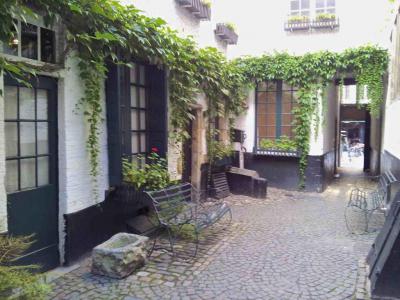
Great Market Square in itself gives you a glimpse of life in Antwerp as it was a few centuries ago. Parallel to the Square are several alleys that manage to reflect the lifestyle, ambiance and feel of the years gone by as they are still preserved and almost untouched by the hands of time. One such place is Vlaeykensgang, and the entrance to this alley is through a small doorway.
Easy to overlook, once found this alley will transport you to the 16th century. A perfect place to walk and get the true feel of the city, the Vlaeykensgang is filled with authentic peasant houses and residential complexes.
Although today, these may seem like the perfect refuge from the urbanization and the pace of city life, back in those days, these alleys were not considered as places suitable for living. Cramped up and over populated with large families, poor sanitation are just some of the problems one faced here. However today, Vlaeykensgang is looked at as an idealistic and artistic refuge from the hectic city life.
Easy to overlook, once found this alley will transport you to the 16th century. A perfect place to walk and get the true feel of the city, the Vlaeykensgang is filled with authentic peasant houses and residential complexes.
Although today, these may seem like the perfect refuge from the urbanization and the pace of city life, back in those days, these alleys were not considered as places suitable for living. Cramped up and over populated with large families, poor sanitation are just some of the problems one faced here. However today, Vlaeykensgang is looked at as an idealistic and artistic refuge from the hectic city life.
9) Cathedral of Our Lady (must see)
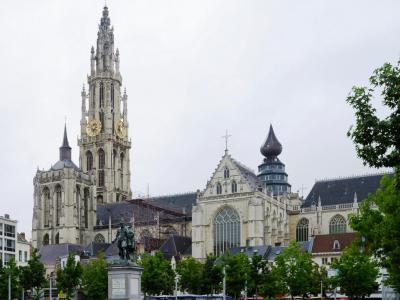
Overlooking the city of Antwerp since the 14th century is the beautiful Cathedral of Our Lady, which till date dominates the city’s skyline. Built by architects Jan and Pieter Appelmans, the Cathedral boasts a magnificent Gothic structure with hints of Baroque style complementing the interiors of the building.
Whether you are a history buff or an admirer of architecture, the Cathedral of Our Lady is one structure that has something to offer every visitor. The structure stands as the epitome of the perfect combination of artistic architecture, breathtaking interiors and a dramatic past making it a tantalizing site to visit.
Although the construction of the structure began in 1352, it took more than a century to complete the entire construction. The Cathedral that stands today rests on the same site where once stood a small chapel dedicated to Our Lady. The chapel traced its history to early 10th century and it was subsequently followed by the construction of a Romanesque Church.
The Gothic Cathedral that took its place was considered one of the most magnificent structures of its time and one of the largest cathedrals in the whole of Benelux. However despite all its glories, the Cathedral of Our Lady has faced a very turbulent past. From natural fires to raids, plunders and assault by iconoclasts, the structure has born tremendous damage over the years. But it has stood the test of time and stands proudly today in the city of Antwerp.
Whether you are a history buff or an admirer of architecture, the Cathedral of Our Lady is one structure that has something to offer every visitor. The structure stands as the epitome of the perfect combination of artistic architecture, breathtaking interiors and a dramatic past making it a tantalizing site to visit.
Although the construction of the structure began in 1352, it took more than a century to complete the entire construction. The Cathedral that stands today rests on the same site where once stood a small chapel dedicated to Our Lady. The chapel traced its history to early 10th century and it was subsequently followed by the construction of a Romanesque Church.
The Gothic Cathedral that took its place was considered one of the most magnificent structures of its time and one of the largest cathedrals in the whole of Benelux. However despite all its glories, the Cathedral of Our Lady has faced a very turbulent past. From natural fires to raids, plunders and assault by iconoclasts, the structure has born tremendous damage over the years. But it has stood the test of time and stands proudly today in the city of Antwerp.
10) Plantin-Moretus Museum (must see)
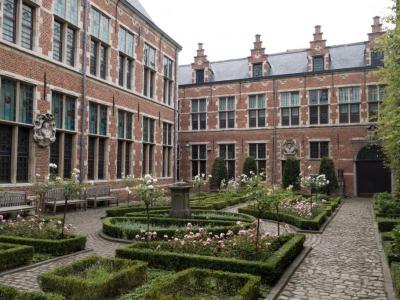
One of the most fascinating museums one can encounter in Antwerp is the Plantin-Moretus Museum. Home to one of the most prolific printing presses of the 16th and 17th century, the Platin–Moretus Museum is a must visit in Antwerp.
Founded by Christoffel Plantin, a Frenchman who from being a mere bookbinder became the most noted publisher and printer of the Renaissance period, the printing press was one of the key factors in establishing Antwerp as one of Europe’s leading cities with regard to the spread of typography and inventions in printing technology. Plantin’s son-in-law, Jan Moretus, played a vital role in bringing newer technologies and inventions to the press after the death of Plantin.
After running successfully for over two centuries the company was sold to the city of Antwerp in 1876. The Museum is located in the former residence and printing establishment of the Platin–Moretus family. Its location is listed as a World Heritage Site by UNESCO.
The Museum houses some of the world’s oldest surviving printing presses and some extraordinary tools, dyes and matrices that were in use. The most prized possession of the Museum remains the extensive library and antique books that are a century or two old. Also noteworthy are the rich and elaborate interiors and the architecture of the building that speak of the opulence of the Platin-Moretus family.
Founded by Christoffel Plantin, a Frenchman who from being a mere bookbinder became the most noted publisher and printer of the Renaissance period, the printing press was one of the key factors in establishing Antwerp as one of Europe’s leading cities with regard to the spread of typography and inventions in printing technology. Plantin’s son-in-law, Jan Moretus, played a vital role in bringing newer technologies and inventions to the press after the death of Plantin.
After running successfully for over two centuries the company was sold to the city of Antwerp in 1876. The Museum is located in the former residence and printing establishment of the Platin–Moretus family. Its location is listed as a World Heritage Site by UNESCO.
The Museum houses some of the world’s oldest surviving printing presses and some extraordinary tools, dyes and matrices that were in use. The most prized possession of the Museum remains the extensive library and antique books that are a century or two old. Also noteworthy are the rich and elaborate interiors and the architecture of the building that speak of the opulence of the Platin-Moretus family.
11) Groenplaats (Green Square)
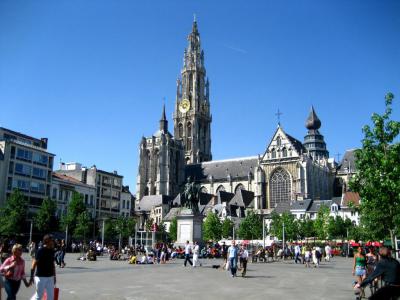
Antwerp is the perfect destination if you love to laze around on a warm summer’s day under the sun or enjoy watching the city from the comfort of a cozy café. Yet another famous square in Antwerp is the Green Square. Although not as green as the name suggests, the Green Square, is a popular destination amongst both tourists and locals during summer and on weekends.
Overlooking the Square in the north is the elegant Cathedral of Our Lady. Back in the medieval times, the Green Square was used as a cemetery that was attached to the Cathedral. With the Austrian occupation of Antwerp in the 18th century, Emperor Joseph II abolished cemeteries within the walls of the city. Although the premises were then converted to a square for town use, the age old name couldn’t get converted and locals still call it Green Place.
Today the center of the square is dominated by the statue of the much loved Flemish painter Sir Peter Paul Rubens. Installed in 1843, this bronze statue replaced a crucifix that overlooked the cemetery. Created by sculptor Willem Geefs, the statue commemorated death bicentenary of the city’s beloved artist.
Overlooking the Square in the north is the elegant Cathedral of Our Lady. Back in the medieval times, the Green Square was used as a cemetery that was attached to the Cathedral. With the Austrian occupation of Antwerp in the 18th century, Emperor Joseph II abolished cemeteries within the walls of the city. Although the premises were then converted to a square for town use, the age old name couldn’t get converted and locals still call it Green Place.
Today the center of the square is dominated by the statue of the much loved Flemish painter Sir Peter Paul Rubens. Installed in 1843, this bronze statue replaced a crucifix that overlooked the cemetery. Created by sculptor Willem Geefs, the statue commemorated death bicentenary of the city’s beloved artist.
12) Rubenshuis (Rubens House) (must see)
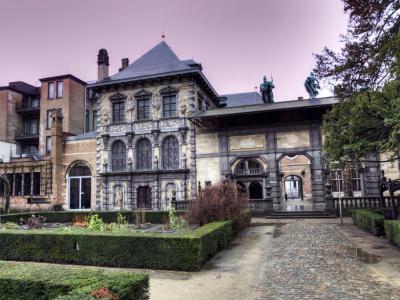
Known for his Counter Reformation portraits, landscapes and paintings, Sir Peter Paul Rubens was a Baroque painter, book illustrator and a diplomat during the early 1600s. The Rubens House is a city of Antwerp-owned and curated building that Rubens designed himself and spent most of his lifetime in.
Located on Wapper Street, Rubens purchased this house in 1610 and added a gallery, porch and a large studio in Greco-Roman classic styles and a hint of Italian Renaissance to the structure. Within the walls of this house, Rubens and his students, such as Anthony Van Dyck and Jacob Jordaens, created most of their works. Rubens’ work is categorized by various stages of productivity of his own life. However, all of Rubens’ work that is on display in the House today came back only after great efforts were put in by the people of Antwerp once it was decided to make the building into a monument in 1937.
The Rubens House is home to paintings such as Saint Claire of Assisi, The Annunciation and Adam and Eve made by the great painter himself in addition to the works of other contemporaries of his time. The House also displays various objects of art from the 17th century giving visitor a peek at the lavish lifestyles of those times. The Renaissance Garden which was renovated in 1993 takes inspiration from Rubens’ paintings and should not be missed.
Located on Wapper Street, Rubens purchased this house in 1610 and added a gallery, porch and a large studio in Greco-Roman classic styles and a hint of Italian Renaissance to the structure. Within the walls of this house, Rubens and his students, such as Anthony Van Dyck and Jacob Jordaens, created most of their works. Rubens’ work is categorized by various stages of productivity of his own life. However, all of Rubens’ work that is on display in the House today came back only after great efforts were put in by the people of Antwerp once it was decided to make the building into a monument in 1937.
The Rubens House is home to paintings such as Saint Claire of Assisi, The Annunciation and Adam and Eve made by the great painter himself in addition to the works of other contemporaries of his time. The House also displays various objects of art from the 17th century giving visitor a peek at the lavish lifestyles of those times. The Renaissance Garden which was renovated in 1993 takes inspiration from Rubens’ paintings and should not be missed.
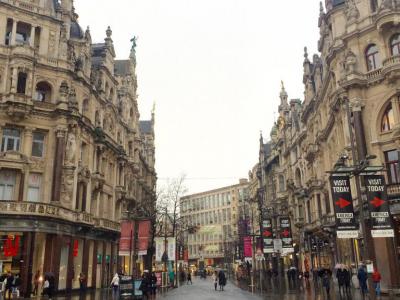
13) Meir Shopping Street (must see)
Meir is a famous shopping destination for the city of Antwerp and, along with the New Street in Brussels, one of the most important shopping areas in Belgium. The Meir shopping district encompasses the streets surrounding Our Lady’s Cathedral all the way to the Central Station. Once used to store wet wood for furniture, the area has come a long way to be recognized as one of the prime areas for shopping in the country. Once being a small street on the outskirts of the city, today Meir is an integral part of the city center.
With the opening of the Stadsfeestzaal Shopping Centre in 2007, the Meir has become the most expensive shopping destination in the economic union of Benelux. The area is home to all major shopping brands and attracts over 200,000 visitors from neighboring states and other European countries.
Along with being a shopping capital, the Meir has also seen the richness of architecture and the lavishness of the rich. It is home to some exquisite buildings such as ‘Osterrieth House’ at number 85 and the Royal Residence of the Belgian Kings, both built in the old Rococo style by architect Van Baurscheit. Whether for a shopping experience or just visiting to catch a glimpse of the past, Meir is a place that all must visit.
With the opening of the Stadsfeestzaal Shopping Centre in 2007, the Meir has become the most expensive shopping destination in the economic union of Benelux. The area is home to all major shopping brands and attracts over 200,000 visitors from neighboring states and other European countries.
Along with being a shopping capital, the Meir has also seen the richness of architecture and the lavishness of the rich. It is home to some exquisite buildings such as ‘Osterrieth House’ at number 85 and the Royal Residence of the Belgian Kings, both built in the old Rococo style by architect Van Baurscheit. Whether for a shopping experience or just visiting to catch a glimpse of the past, Meir is a place that all must visit.
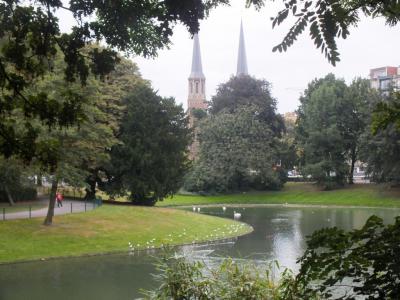
14) Stadspark (City Park)
The Stadspark is an English styled park laid out over 35 acres of land not very far from Antwerp Centraal Station. This triangular park located between Rubenslei, Van Eycklei and Quinten Matsijslei is the only park located in the city center of Antwerp. Constructed in the late 1860s by architect E. Van Cuyck, the Park is a conversion of an old Spanish fortification.
A pond in the Park adds to the scenery while also playing host to some common water birds. A white pedestrian bridge was constructed over the pond which makes it even more picturesque. Various statues decorate the Park along with war memorials. A World War II bunker has remained a part of the Park since it was created. Today, the Park is a destination for joggers, rollerbladers and elderly walkers. You can often see rabbits around the Park who are more than willing to jog (or hop) along with you. However, the Park is too centrally located and cannot manage to take you completely away from the traffic noises arising from the city.
The Park is filled with different kinds of trees, some of which are not even native to the land. Open all times of the day, you can visit the park anytime you prefer although a day light visit is recommended. Once here, you can always go back to shopping areas which are located just outside the Park.
A pond in the Park adds to the scenery while also playing host to some common water birds. A white pedestrian bridge was constructed over the pond which makes it even more picturesque. Various statues decorate the Park along with war memorials. A World War II bunker has remained a part of the Park since it was created. Today, the Park is a destination for joggers, rollerbladers and elderly walkers. You can often see rabbits around the Park who are more than willing to jog (or hop) along with you. However, the Park is too centrally located and cannot manage to take you completely away from the traffic noises arising from the city.
The Park is filled with different kinds of trees, some of which are not even native to the land. Open all times of the day, you can visit the park anytime you prefer although a day light visit is recommended. Once here, you can always go back to shopping areas which are located just outside the Park.
