Custom Walk in Addis Ababa, Ethiopia by tray_trawl1e_62b7fd created on 2026-02-13
Guide Location: Ethiopia » Addis Ababa
Guide Type: Custom Walk
# of Sights: 6
Tour Duration: 6 Hour(s)
Travel Distance: 16 Km or 9.9 Miles
Share Key: CXLRQ
Guide Type: Custom Walk
# of Sights: 6
Tour Duration: 6 Hour(s)
Travel Distance: 16 Km or 9.9 Miles
Share Key: CXLRQ
How It Works
Please retrieve this walk in the GPSmyCity app. Once done, the app will guide you from one tour stop to the next as if you had a personal tour guide. If you created the walk on this website or come to the page via a link, please follow the instructions below to retrieve the walk in the app.
Retrieve This Walk in App
Step 1. Download the app "GPSmyCity: Walks in 1K+ Cities" on Apple App Store or Google Play Store.



Step 2. In the GPSmyCity app, download(or launch) the guide "Addis Ababa Map and Walking Tours".
Step 3. Tap the menu button located at upper right corner of the "Walks" screen and select "Retrieve custom walk". Enter the share key: CXLRQ
1) Ethnological Museum (must see)
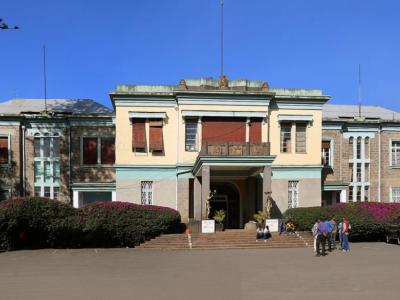
The Ethnological Museum is housed in a former imperial palace that once belonged to Emperor Haile Selassie. Built in the early 20th century, the building later became part of the national university campus. Visitors walk through rooms that mix the original palace layout with museum displays, showing how political history, education, and cultural study became connected in the modern period.
The museum focuses on Ethiopia’s many ethnic groups and ways of life. Displays cover topics such as farming, food preparation, clothing, housing, religion, and social customs. Everyday objects like tools, baskets, pottery, and musical instruments are shown with clear explanations. Exhibits are organized by theme rather than by region, which helps visitors compare traditions across different communities. Short texts and photographs explain how climate, geography, and belief systems shape daily life.
One section of the museum looks at life stages, including birth, childhood, marriage, and death. These displays explain rituals, family roles, and community responsibilities in a direct and easy-to-follow way. Another part focuses on religion and belief, showing how Christianity, Islam, and traditional practices have influenced culture over time. The former bedroom of Emperor Haile Selassie is also open to visitors, preserved with original furniture and personal items.
The museum is quiet and well arranged, making it comfortable to explore at a slow pace. Most visits take about one to one and a half hours. Paths are clearly marked, and information panels are written in simple language. For tourists, the museum offers a clear introduction to cultural diversity and everyday life, supported by a historic setting that adds depth to the experience.
The museum focuses on Ethiopia’s many ethnic groups and ways of life. Displays cover topics such as farming, food preparation, clothing, housing, religion, and social customs. Everyday objects like tools, baskets, pottery, and musical instruments are shown with clear explanations. Exhibits are organized by theme rather than by region, which helps visitors compare traditions across different communities. Short texts and photographs explain how climate, geography, and belief systems shape daily life.
One section of the museum looks at life stages, including birth, childhood, marriage, and death. These displays explain rituals, family roles, and community responsibilities in a direct and easy-to-follow way. Another part focuses on religion and belief, showing how Christianity, Islam, and traditional practices have influenced culture over time. The former bedroom of Emperor Haile Selassie is also open to visitors, preserved with original furniture and personal items.
The museum is quiet and well arranged, making it comfortable to explore at a slow pace. Most visits take about one to one and a half hours. Paths are clearly marked, and information panels are written in simple language. For tourists, the museum offers a clear introduction to cultural diversity and everyday life, supported by a historic setting that adds depth to the experience.
2) National Museum of Ethiopia (must see)
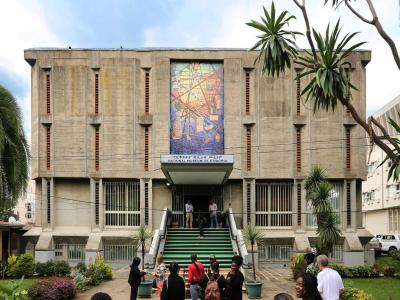
The National Museum of Ethiopia presents the country’s history in a clear and practical way, starting with early human origins and moving toward recent centuries. The museum developed from the Institute of Archaeology founded in 1958 and is best known for its role in paleoanthropology. Its most famous exhibit is “Lucy,” a 3.2-million-year-old Australopithecus afarensis fossil discovered in 1974 at Hadar. Visitors usually see a detailed replica, while the original bones are kept securely and shown only on special occasions.
The basement level focuses on early human history. Fossils, stone tools, and skeletal remains are arranged in a timeline, helping visitors follow how early hominids lived and evolved. Alongside Lucy, the museum also displays “Selam,” a very well-preserved child fossil discovered in 2000. Short labels explain where the finds came from and why they matter, making this section easy to understand without scientific training.
The ground floor covers ancient and medieval history, including objects from the Aksumite and Solomonic periods. Displays include coins, inscriptions, religious items, and artwork that show how early states, trade, and belief systems developed. This section links archaeology with written history and helps place the country within wider regional connections.
The upper floors focus on more recent history and daily life. One level displays royal objects and imperial-era items, including Emperor Haile Selassie’s wooden throne and personal belongings. Higher floors present ethnographic collections, with traditional clothing, tools, household objects, and crafts from different regions. The museum is easy to navigate, and most visits last about one to one and a half hours.
The basement level focuses on early human history. Fossils, stone tools, and skeletal remains are arranged in a timeline, helping visitors follow how early hominids lived and evolved. Alongside Lucy, the museum also displays “Selam,” a very well-preserved child fossil discovered in 2000. Short labels explain where the finds came from and why they matter, making this section easy to understand without scientific training.
The ground floor covers ancient and medieval history, including objects from the Aksumite and Solomonic periods. Displays include coins, inscriptions, religious items, and artwork that show how early states, trade, and belief systems developed. This section links archaeology with written history and helps place the country within wider regional connections.
The upper floors focus on more recent history and daily life. One level displays royal objects and imperial-era items, including Emperor Haile Selassie’s wooden throne and personal belongings. Higher floors present ethnographic collections, with traditional clothing, tools, household objects, and crafts from different regions. The museum is easy to navigate, and most visits last about one to one and a half hours.
3) Holy Trinity Cathedral (must see)
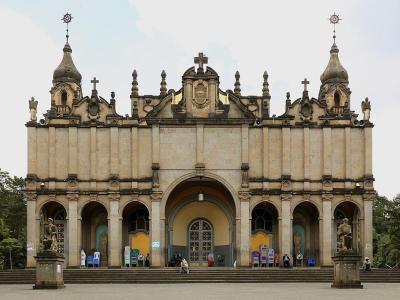
Holy Trinity Cathedral is one of the most important churches in Ethiopia and helps visitors understand the country’s recent history. Construction started in 1931 under Emperor Haile Selassie and was finished in 1942, after the end of the Italian occupation. The cathedral was built to mark Ethiopia’s independence and to remember those who resisted foreign rule. It is the main cathedral of the Ethiopian Orthodox Tewahedo Church and is still used for regular worship today.
The building combines traditional Ethiopian church features with European-style design. The exterior has a large dome, wide arches, and carved stone details. Inside, the space is bright and open, with painted ceilings, murals, and stained-glass windows showing biblical scenes and key figures from Ethiopian history. Changing light during the day highlights different parts of the interior.
The cathedral grounds also serve as a burial place for important figures. Emperor Haile Selassie and Empress Menen Asfaw are buried here, along with members of the imperial family and people known for their role in national resistance. A small museum on the site displays religious objects, church clothing, crowns, manuscripts, and old photographs. These items explain how religion, leadership, and public life were closely connected in the 20th century.
Most visitors spend about 45 to 60 minutes exploring the church and its grounds. Modest dress is expected, and some areas may be quieter during services. For tourists, the cathedral offers a clear and practical introduction to Ethiopian Orthodox traditions, religious art, and modern national history in one visit.
The building combines traditional Ethiopian church features with European-style design. The exterior has a large dome, wide arches, and carved stone details. Inside, the space is bright and open, with painted ceilings, murals, and stained-glass windows showing biblical scenes and key figures from Ethiopian history. Changing light during the day highlights different parts of the interior.
The cathedral grounds also serve as a burial place for important figures. Emperor Haile Selassie and Empress Menen Asfaw are buried here, along with members of the imperial family and people known for their role in national resistance. A small museum on the site displays religious objects, church clothing, crowns, manuscripts, and old photographs. These items explain how religion, leadership, and public life were closely connected in the 20th century.
Most visitors spend about 45 to 60 minutes exploring the church and its grounds. Modest dress is expected, and some areas may be quieter during services. For tourists, the cathedral offers a clear and practical introduction to Ethiopian Orthodox traditions, religious art, and modern national history in one visit.
4) Peacock Park
Addis Zoo Peacock Park is a large park and zoo area created from the former Lion Zoo Park, which was first established in 1948. The original site was small and crowded, so a new park was developed in the early 2020s on a much larger area of about 26 hectares. The goal was to give animals more space and create a park where people could spend more time walking and relaxing.
The park is best known for its Ethiopian black-maned lions, a rare group linked to animals kept during the imperial period. They now live in larger enclosures that allow better movement and care. Other animals include gelada baboons, hyenas, tortoises, and a few domestic animals such as rabbits and ducks. The focus is on space and animal welfare rather than on having many species, and despite the name, peacocks are not always present.
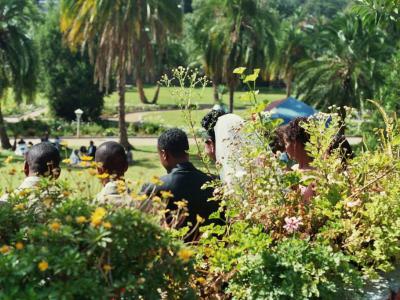
Beyond the animal areas, the park works as a public green space. Lawns, benches, and shaded areas are used for resting, walking, and photos. The park is popular for family visits and wedding photography. Small cafés are usually available, and most visits last one to two hours. Quieter paths exist, so many visitors stay on busier routes.
The park is best known for its Ethiopian black-maned lions, a rare group linked to animals kept during the imperial period. They now live in larger enclosures that allow better movement and care. Other animals include gelada baboons, hyenas, tortoises, and a few domestic animals such as rabbits and ducks. The focus is on space and animal welfare rather than on having many species, and despite the name, peacocks are not always present.
Beyond the animal areas, the park works as a public green space. Lawns, benches, and shaded areas are used for resting, walking, and photos. The park is popular for family visits and wedding photography. Small cafés are usually available, and most visits last one to two hours. Quieter paths exist, so many visitors stay on busier routes.
5) Lion of Judah (must see)
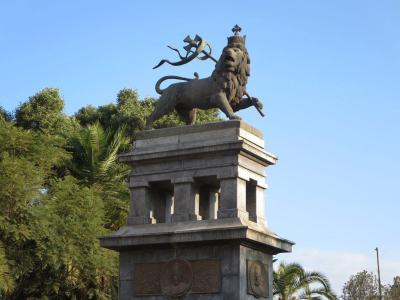
The Lion of Judah is best known through its golden statue created for Emperor Haile Selassie I’s coronation in 1930. The sculpture was made by French artist Georges Gardet and represents the emperor’s full title, Conquering Lion of the Tribe of Judah. For centuries, Ethiopian emperors used this title to claim a biblical link to the Solomonic dynasty, connecting royal authority with religion and history. Because of this, the lion became a strong symbol of imperial power and national identity.
The statue is made of gilded bronze, giving it a golden surface that reflects light clearly. The lion faces forward in a calm, controlled stance, rather than an aggressive one. It stands on a black granite base with relief portraits of Emperor Menelik II, Emperor Haile Selassie I, Empress Zewditu, and Ras Makonnen, linking the monument to the imperial family and early 20th-century leadership.
The statue has a difficult history. It was taken to Rome during the Italian occupation in 1935–1936 and displayed there for almost 30 years. It was returned in the 1960s, though sources differ on the exact year. After the 1974 revolution, the Derg planned to remove it, but Arbegnoch (war veterans) protected the statue, saying it also symbolized resistance to fascist rule.
Today, visitors usually stop for a short time to view the statue and take photographs. Although the visit is brief, the monument helps explain how one image carried religious, political, and historical meaning across changing periods.
The statue is made of gilded bronze, giving it a golden surface that reflects light clearly. The lion faces forward in a calm, controlled stance, rather than an aggressive one. It stands on a black granite base with relief portraits of Emperor Menelik II, Emperor Haile Selassie I, Empress Zewditu, and Ras Makonnen, linking the monument to the imperial family and early 20th-century leadership.
The statue has a difficult history. It was taken to Rome during the Italian occupation in 1935–1936 and displayed there for almost 30 years. It was returned in the 1960s, though sources differ on the exact year. After the 1974 revolution, the Derg planned to remove it, but Arbegnoch (war veterans) protected the statue, saying it also symbolized resistance to fascist rule.
Today, visitors usually stop for a short time to view the statue and take photographs. Although the visit is brief, the monument helps explain how one image carried religious, political, and historical meaning across changing periods.
6) St. George's Cathedral (must see)
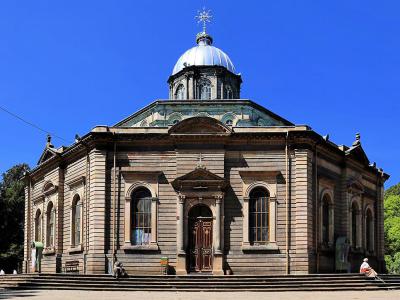
St. George's Cathedral is an important Ethiopian Orthodox church with strong ties to the country’s modern history. It was built in the early 1900s to honor Ethiopia’s victory over Italian forces at the Battle of Adwa in 1896. The church is dedicated to Saint George, who is widely respected in Ethiopia and often seen as a protector in times of struggle. From the start, the cathedral was meant to represent both religious faith and national independence.
The building has an octagonal shape, setting it apart from the more common round churches. Thick stone walls and arched windows give it a strong, balanced form, while a central dome rises above the roof. The design blends traditional Ethiopian church forms with European influences from the imperial period, and the many windows allow daylight to enter from several sides.
Inside, the cathedral is arranged mainly for worship. The inner sanctuary is separated and used only by priests, while worshippers stay in the outer areas. The walls are decorated with painted scenes from the Bible and images of saints, made in the Ethiopian Orthodox style with clear figures and bold colors. Some artworks also reflect the church’s connection to important historical events and leaders.
The cathedral has played a role in major national moments, including the coronation of Emperor Haile Selassie in 1930. It is still an active church today, with regular services and religious celebrations. Visitors are usually welcome outside service times if they dress modestly and remain respectful. A short visit helps explain the close link between religion, history, and public life.
The building has an octagonal shape, setting it apart from the more common round churches. Thick stone walls and arched windows give it a strong, balanced form, while a central dome rises above the roof. The design blends traditional Ethiopian church forms with European influences from the imperial period, and the many windows allow daylight to enter from several sides.
Inside, the cathedral is arranged mainly for worship. The inner sanctuary is separated and used only by priests, while worshippers stay in the outer areas. The walls are decorated with painted scenes from the Bible and images of saints, made in the Ethiopian Orthodox style with clear figures and bold colors. Some artworks also reflect the church’s connection to important historical events and leaders.
The cathedral has played a role in major national moments, including the coronation of Emperor Haile Selassie in 1930. It is still an active church today, with regular services and religious celebrations. Visitors are usually welcome outside service times if they dress modestly and remain respectful. A short visit helps explain the close link between religion, history, and public life.
