Custom Walk in Copenhagen, Denmark by roxyoungblood_afc988 created on 2026-02-15
Guide Location: Denmark » Copenhagen
Guide Type: Custom Walk
# of Sights: 12
Tour Duration: 4 Hour(s)
Travel Distance: 9 Km or 5.6 Miles
Share Key: AJJVG
Guide Type: Custom Walk
# of Sights: 12
Tour Duration: 4 Hour(s)
Travel Distance: 9 Km or 5.6 Miles
Share Key: AJJVG
How It Works
Please retrieve this walk in the GPSmyCity app. Once done, the app will guide you from one tour stop to the next as if you had a personal tour guide. If you created the walk on this website or come to the page via a link, please follow the instructions below to retrieve the walk in the app.
Retrieve This Walk in App
Step 1. Download the app "GPSmyCity: Walks in 1K+ Cities" on Apple App Store or Google Play Store.



Step 2. In the GPSmyCity app, download(or launch) the guide "Copenhagen Map and Walking Tours".
Step 3. Tap the menu button located at upper right corner of the "Walks" screen and select "Retrieve custom walk". Enter the share key: AJJVG
1) H. C. Andersen Fairy-Tale House
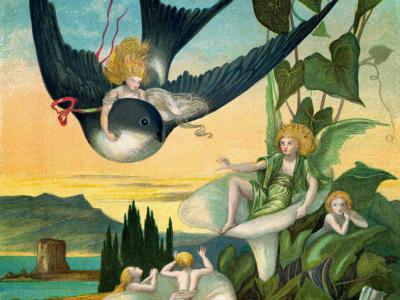
Just a skip away from Copenhagen’s City Hall Square and the ever-whimsical Tivoli Gardens, step right up to the Hans Christian Andersen Fairy-Tale House. This is where cobblestones meet fairy dust, and the world's most beloved storyteller gets his time in the spotlight-with just a dash of Ripley’s “Believe It or Not!” weirdness for flavor.
Think of this place as a time machine dressed as a storybook structured in two main parts. The first part focuses on Andersen’s real life. It details his upbringing and modest beginnings in Odense, followed by a move to Copenhagen, and his globe-trotting adventures with all the drama in between (rejections, fame, a few heartbreaks, rinse and repeat). This section spills the tea on the man behind the magic, contextualizing the origins of his inspirations and providing insight into his character and experiences.
Then-the second part-plunges you into the fairy tales themselves. "The Little Mermaid," "Thumbelina," "The Ugly Duckling," "The Steadfast Tin Soldier"-they're all here, brought to life with lights, sounds, and even smells. (Yes, your nose is now part of the experience, too.) Push a button, and storytime becomes showtime, complete with multilingual narration on oversized story cards and theatrical displays that would make even Andersen raise an eyebrow.
You can also check out the rare Andersen autograph manuscript. And to further enhance the experience, there are engaging live storytelling sessions. If you prefer something Instagrammable, snap a pic with the man himself-or at least his eerily lifelike model.
So, if you’ve ever wanted to walk straight into a fairy tale and maybe walk out with a selfie next to a literary legend, this is your spot. End of tale. Or is it just the beginning?
Tip:
If you want more bang for your krone, combo tickets are available for Ripley's, Guinness World Records, and The Mystic Exploratorium on Strøget-just a 15-minute stroll away. Even better, Copenhagen Card holders can get in free (you clever duckling, you!).
Think of this place as a time machine dressed as a storybook structured in two main parts. The first part focuses on Andersen’s real life. It details his upbringing and modest beginnings in Odense, followed by a move to Copenhagen, and his globe-trotting adventures with all the drama in between (rejections, fame, a few heartbreaks, rinse and repeat). This section spills the tea on the man behind the magic, contextualizing the origins of his inspirations and providing insight into his character and experiences.
Then-the second part-plunges you into the fairy tales themselves. "The Little Mermaid," "Thumbelina," "The Ugly Duckling," "The Steadfast Tin Soldier"-they're all here, brought to life with lights, sounds, and even smells. (Yes, your nose is now part of the experience, too.) Push a button, and storytime becomes showtime, complete with multilingual narration on oversized story cards and theatrical displays that would make even Andersen raise an eyebrow.
You can also check out the rare Andersen autograph manuscript. And to further enhance the experience, there are engaging live storytelling sessions. If you prefer something Instagrammable, snap a pic with the man himself-or at least his eerily lifelike model.
So, if you’ve ever wanted to walk straight into a fairy tale and maybe walk out with a selfie next to a literary legend, this is your spot. End of tale. Or is it just the beginning?
Tip:
If you want more bang for your krone, combo tickets are available for Ripley's, Guinness World Records, and The Mystic Exploratorium on Strøget-just a 15-minute stroll away. Even better, Copenhagen Card holders can get in free (you clever duckling, you!).
2) Hans Christian Andersen Statue
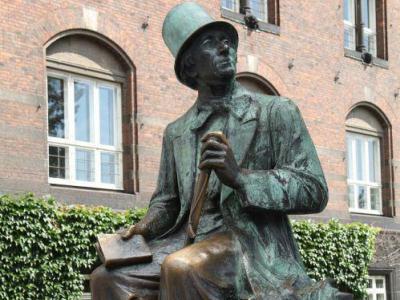
Right in the beating heart of Copenhagen, perched like a literary lighthouse in City Hall Square, sits Hans Christian Andersen. Sculpted in bronze in 1965 by Henry Luckow-Nielsen, this statue isn’t just casually hanging out-it’s strategically facing H.C. Andersens Boulevard.
The placement of the statue is symbolic, with Andersen casting a wistful gaze toward Tivoli Gardens, the whimsical amusement park that may or may not have inspired some of his magical stories.
The statue itself is a full-on cultural power move. Andersen’s pose-book in his lap-is casual, sure, but also deeply photogenic, making him perhaps the most approachable celebrity in Denmark. So many enthusiastic people have climbed up him over the years to take a photo that the poor guy’s knee is now smooth-polished shinier than a new krone.
And because this is Denmark, land of design and digital-savvy thinkers, there's even a QR code at the base, allowing visitors to engage further. Scan it and-voilà!-you're transported into Andersen’s interactive world through a short video exploring the life and works of Denmark's most celebrated son.
So, ultimately, it's more than just bronze-but legacy cast in metal, humor, and heart.
The placement of the statue is symbolic, with Andersen casting a wistful gaze toward Tivoli Gardens, the whimsical amusement park that may or may not have inspired some of his magical stories.
The statue itself is a full-on cultural power move. Andersen’s pose-book in his lap-is casual, sure, but also deeply photogenic, making him perhaps the most approachable celebrity in Denmark. So many enthusiastic people have climbed up him over the years to take a photo that the poor guy’s knee is now smooth-polished shinier than a new krone.
And because this is Denmark, land of design and digital-savvy thinkers, there's even a QR code at the base, allowing visitors to engage further. Scan it and-voilà!-you're transported into Andersen’s interactive world through a short video exploring the life and works of Denmark's most celebrated son.
So, ultimately, it's more than just bronze-but legacy cast in metal, humor, and heart.
3) Round Tower (Rundetarn) (must see)
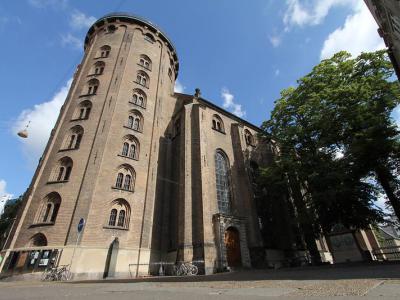
The Round Tower – Copenhagen’s answer to the question: “What if we made a giant architectural cinnamon roll… but for science?” This 17th-century spiral of brick in the heart of the Danish capital was “cooked up” by King Christian IV as part of his grand architectural project, originally intended as an observatory for the astronomer genius Tycho Brahe.
Back in the 1600s, Europe was getting really into astronomy. The Round Tower came with its own academic library, the Trinitatis Church, and a university chapel. The spiral ramp was so strong and wide that one could easily ride a horse or even drive a carriage up and down it. Apparently, some kings did actually, including Russian Tsar Peter the Great. Because stairs are for the common folk...
Now, if you're a fan of Hans Christian Andersen, you're gonna love this. The Round Tower pops up in “The Tinderbox.” That’s the one where a soldier meets a witch, climbs into a hollow tree, and finds three coin-filled vaults guarded by increasingly horrifying dogs. The biggest of which has eyes “the size of the Round Tower.” Subtle product placement, Hans...
Today, tourists from all corners of the Earth climb its 7.5-turn helical corridor just to snap that perfect panoramic selfie of the city. Because it’s not just a tower but a slow-motion ascent into Danish history, science, and surprisingly chic art installations.
As you wind your way up, your first pitstop is a gallery space featuring contemporary art that occasionally makes you question your understanding of gravity. Then it’s on to the bell loft – because what's a tower without a good ol’ bell room? And finally, the key attraction: the observatory itself, complete with a 360-degree view of Copenhagen. There’s even a thick glass platform near the top – for the brave souls who enjoy standing on transparent floors and peering into the abyss.
Tip:
There’s a cozy café nearby for a crowd-free coffee break, a blessedly clean toilet halfway up, and a souvenir shop with actual quality stuff – not your usual tourist tat. So take your time, bring your curiosity, and maybe leave the horse at home...
Back in the 1600s, Europe was getting really into astronomy. The Round Tower came with its own academic library, the Trinitatis Church, and a university chapel. The spiral ramp was so strong and wide that one could easily ride a horse or even drive a carriage up and down it. Apparently, some kings did actually, including Russian Tsar Peter the Great. Because stairs are for the common folk...
Now, if you're a fan of Hans Christian Andersen, you're gonna love this. The Round Tower pops up in “The Tinderbox.” That’s the one where a soldier meets a witch, climbs into a hollow tree, and finds three coin-filled vaults guarded by increasingly horrifying dogs. The biggest of which has eyes “the size of the Round Tower.” Subtle product placement, Hans...
Today, tourists from all corners of the Earth climb its 7.5-turn helical corridor just to snap that perfect panoramic selfie of the city. Because it’s not just a tower but a slow-motion ascent into Danish history, science, and surprisingly chic art installations.
As you wind your way up, your first pitstop is a gallery space featuring contemporary art that occasionally makes you question your understanding of gravity. Then it’s on to the bell loft – because what's a tower without a good ol’ bell room? And finally, the key attraction: the observatory itself, complete with a 360-degree view of Copenhagen. There’s even a thick glass platform near the top – for the brave souls who enjoy standing on transparent floors and peering into the abyss.
Tip:
There’s a cozy café nearby for a crowd-free coffee break, a blessedly clean toilet halfway up, and a souvenir shop with actual quality stuff – not your usual tourist tat. So take your time, bring your curiosity, and maybe leave the horse at home...
4) Kultorvet Square
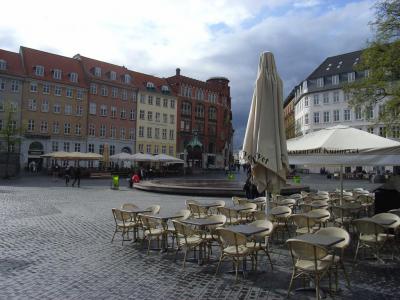
Kultorvet Square, nestled in the Old Town of Copenhagen, stands as a vibrant public space rich in history and culture. The name, which translates to "The Coal Market," evolved from its initial role as a hub for trading charcoal, firewood, and peat, strategically positioned near the Northern City Gate. This location was convenient for colliers, peat gatherers, and farmers from North Zealand.
Over the years, the square expanded from its original, smaller footprint through successive demolitions and new constructions. Its architecture reflects a timeline of rebuilding and stylistic changes, with surviving buildings like No. 14 on the corner with Sankt Gertruds Stræde marking its early post-fire reconstruction from the 1730s. Other notable structures include the 1810 buildings designed by Christian Frederik Hansen, and the Historicist Kultorvet Pharmacy built in 1895 by Valdemar Ingemann, noted for its dismantled spire.
Today, Kultorvet is a pedestrian-friendly zone that stretches from Nørreport station to Amagertorv along Strøget. It is a lively area lined with cafés and shops, renowned for hosting outdoor concerts during the summer. A standout feature is the 2013 renovation that introduced a circular water feature, serving both as a decorative element and a functional bandstand for events. Another point of interest is one of Copenhagen’s old telephone kiosks, adding a touch of historical quaintness to the area.
Art also plays a role in defining the square's character, exemplified by Hanne Varming's bronze statue "The Elder Mother" (Hyldemor), inspired by Hans Christian Andersen's tale and Varming's great grandparents. This statue depicts an elderly couple in contemplation, enriching the square with a sense of history and personal memory.
Over the years, the square expanded from its original, smaller footprint through successive demolitions and new constructions. Its architecture reflects a timeline of rebuilding and stylistic changes, with surviving buildings like No. 14 on the corner with Sankt Gertruds Stræde marking its early post-fire reconstruction from the 1730s. Other notable structures include the 1810 buildings designed by Christian Frederik Hansen, and the Historicist Kultorvet Pharmacy built in 1895 by Valdemar Ingemann, noted for its dismantled spire.
Today, Kultorvet is a pedestrian-friendly zone that stretches from Nørreport station to Amagertorv along Strøget. It is a lively area lined with cafés and shops, renowned for hosting outdoor concerts during the summer. A standout feature is the 2013 renovation that introduced a circular water feature, serving both as a decorative element and a functional bandstand for events. Another point of interest is one of Copenhagen’s old telephone kiosks, adding a touch of historical quaintness to the area.
Art also plays a role in defining the square's character, exemplified by Hanne Varming's bronze statue "The Elder Mother" (Hyldemor), inspired by Hans Christian Andersen's tale and Varming's great grandparents. This statue depicts an elderly couple in contemplation, enriching the square with a sense of history and personal memory.
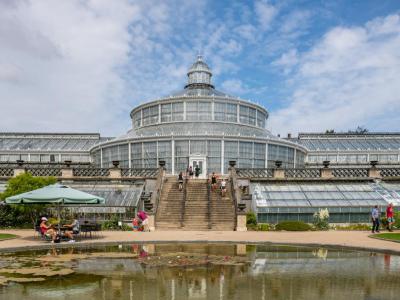
5) Copenhagen Botanical Garden (must see)
If you like plants and wish to know all about their diversity, you must visit the Copenhagen Botanical Garden on your trip to the city. This garden teaches you all about the fungal kingdoms and even about how to conserve nature on a national and global basis. It covers an area of 10 hectares and is particularly noted for its extensive complex of historical glasshouses dating from 1874.
Enter the garden and you will find the area divided into three distinct parts namely the Botanic Garden, Botanical Library and the Botanical Museum. The garden is arranged in different sections including Danish plants (600 species), perennial plants (1,100 species), annual plants (1,100 species), rock gardens with plants from mountainous areas in Central and Southern Europe and Conifer Hill which is planted with coniferous trees.
At the Botanical Museum, you will find a range of fungi and dried plant collections, while Denmark’s botanical literature collection is housed at the Botanical Library (admission by appointment only). The garden, as well as the museum, help develop and maintain scientific collections of dried and living fungi and plants in keeping with international conventions and practice.
Why You Should Visit:
Plenty of open space, trees, water features, and, in the summer, scented flowers and (hopefully) sunshine.
Great place to relax or walk quietly. There's also a café where you can order refreshments.
Tip:
Take a picnic and allow for lots of time. If you're a keen gardener you'll also need a notebook!
Enter the garden and you will find the area divided into three distinct parts namely the Botanic Garden, Botanical Library and the Botanical Museum. The garden is arranged in different sections including Danish plants (600 species), perennial plants (1,100 species), annual plants (1,100 species), rock gardens with plants from mountainous areas in Central and Southern Europe and Conifer Hill which is planted with coniferous trees.
At the Botanical Museum, you will find a range of fungi and dried plant collections, while Denmark’s botanical literature collection is housed at the Botanical Library (admission by appointment only). The garden, as well as the museum, help develop and maintain scientific collections of dried and living fungi and plants in keeping with international conventions and practice.
Why You Should Visit:
Plenty of open space, trees, water features, and, in the summer, scented flowers and (hopefully) sunshine.
Great place to relax or walk quietly. There's also a café where you can order refreshments.
Tip:
Take a picnic and allow for lots of time. If you're a keen gardener you'll also need a notebook!
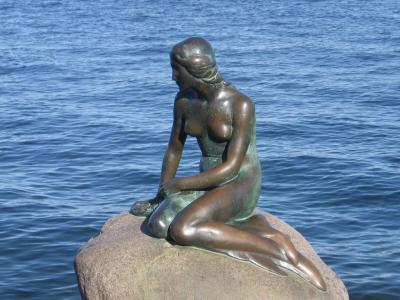
6) Little Mermaid (must see)
On your trip to Copenhagen, take time off to visit the harbor where you will find the Little Mermaid statue. This statue is the icon of Copenhagen and is visited by tourists from across the world. The unimposing statue is based on one of Hans Christian Anderson’s fairy tales.
After enjoying a ballet on this fairy tale at the Royal Theatre, Carlsberg founder’s son Carl Jacobsen commissioned the statue in 1909. It was modeled after none other than Ellen Price, the prima ballerina (well, partly, at least).
The statue is made of bronze and was painstakingly created by expert sculptor, Edvard Eriksen. Unveiled in 1913, the statue has Ellen Price’s head and Eline Eriksen, the sculptor’s wife’s body.
The Little Mermaid statue surprisingly weighs only around 175 kg and is 1.25 meters tall. Its small size is a surprise for first-time visitors who expect to see something grand and huge.
Why You Should Visit:
To watch people fall into the water as they try to get a photo with the statue (this happens more often than you'd think).
Tip:
The perfect spot for taking a picture is from the promenade overlooking the statue to the left. It's a great photo op, not only of the mermaid but the Copenhagen harbour behind.
After enjoying a ballet on this fairy tale at the Royal Theatre, Carlsberg founder’s son Carl Jacobsen commissioned the statue in 1909. It was modeled after none other than Ellen Price, the prima ballerina (well, partly, at least).
The statue is made of bronze and was painstakingly created by expert sculptor, Edvard Eriksen. Unveiled in 1913, the statue has Ellen Price’s head and Eline Eriksen, the sculptor’s wife’s body.
The Little Mermaid statue surprisingly weighs only around 175 kg and is 1.25 meters tall. Its small size is a surprise for first-time visitors who expect to see something grand and huge.
Why You Should Visit:
To watch people fall into the water as they try to get a photo with the statue (this happens more often than you'd think).
Tip:
The perfect spot for taking a picture is from the promenade overlooking the statue to the left. It's a great photo op, not only of the mermaid but the Copenhagen harbour behind.
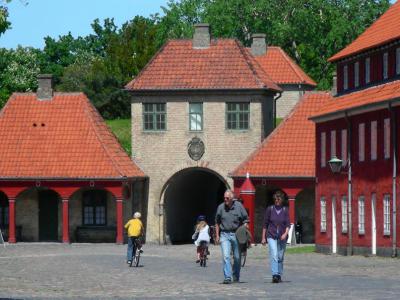
7) Kastellet (must see)
One of the most impressive and well-preserved fortifications in Northern Europe, Kastellet, as it is called, has bastions at the corners and is designed in the form of a pentagram. As you enter its grounds, you will find a number of buildings including a windmill and a church. This historic site which also serves as a public park is frequented by locals and tourists alike.
It was in 1626 that King Christian IV started construction of Kastellet. Economic constraints forced him to drop his grand plans of building a large castle here. King Frederik III, his successor continued with the construction which was later extended by Henrik Ruse, the Dutch engineer after the Swedish siege between 1658 and 1660.
Kastellet was built as an effort by Copenhagen to defend itself against England in the 1807 Battle of Copenhagen. A.P. Moller and Chastine McKinney Mollers General Fund made possible a complete renovation of Kastellet between 1989 and 1999. Currently, it is owned by the Danish Defence Ministry and the area is used by Defence Intelligence, Danish Home Guard, Chief of Staff, Royal Garrison’s Library and the Defence Judge Advocate Corps.
Locals visit Kastellet to enjoy a pleasant walk on a sunny day. Tourists visit this fortification for its rich heritage and children love to play around with the birds and animals here.
Why You Should Visit:
The high walls of the fortress offer a lovely view of the harbor, and the fact that half of it is still a working base means it's kept in tip top shape.
Very pleasant area to take a quiet stroll or run, and with a charming windmill to boot!
Tip:
Can get windy on a cold day so do cover up.
It was in 1626 that King Christian IV started construction of Kastellet. Economic constraints forced him to drop his grand plans of building a large castle here. King Frederik III, his successor continued with the construction which was later extended by Henrik Ruse, the Dutch engineer after the Swedish siege between 1658 and 1660.
Kastellet was built as an effort by Copenhagen to defend itself against England in the 1807 Battle of Copenhagen. A.P. Moller and Chastine McKinney Mollers General Fund made possible a complete renovation of Kastellet between 1989 and 1999. Currently, it is owned by the Danish Defence Ministry and the area is used by Defence Intelligence, Danish Home Guard, Chief of Staff, Royal Garrison’s Library and the Defence Judge Advocate Corps.
Locals visit Kastellet to enjoy a pleasant walk on a sunny day. Tourists visit this fortification for its rich heritage and children love to play around with the birds and animals here.
Why You Should Visit:
The high walls of the fortress offer a lovely view of the harbor, and the fact that half of it is still a working base means it's kept in tip top shape.
Very pleasant area to take a quiet stroll or run, and with a charming windmill to boot!
Tip:
Can get windy on a cold day so do cover up.
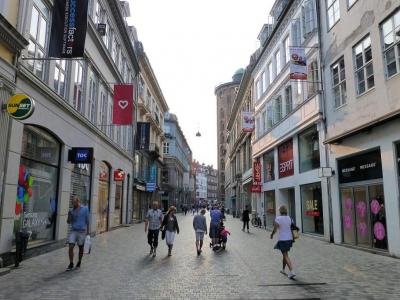
8) Stroget Pedestrian Street (must see)
Stroget, a pedestrian thoroughfare in the heart of Copenhagen, is renowned as one of Europe's longest shopping streets, extending over 1.1 kilometers. Initially known as Ruten until the late 19th century, the street has been a fashionable hub in the Danish capital since its layout was established in 1728 following a major fire. The architecture along Stroget mainly dates from the late 19th and early 20th centuries, with the oldest building erected in 1616.
Stroget is renowned for its extensive shopping opportunities. It hosts a wide range of shops, from international brands to local boutiques, offering fashion, design, jewelry, and more. It's a shopper's paradise and attracts both locals and tourists alike.
Throughout the day, especially during weekends and holidays, Stroget comes alive with street performers, musicians, and entertainers. This adds to the lively atmosphere and creates a festive mood.
Numerous cafés, restaurants, and bars line Stroget, offering a variety of cuisines and refreshments. It's a great place to stop for a meal or a coffee break while soaking in the bustling ambiance.
Stroget is renowned for its extensive shopping opportunities. It hosts a wide range of shops, from international brands to local boutiques, offering fashion, design, jewelry, and more. It's a shopper's paradise and attracts both locals and tourists alike.
Throughout the day, especially during weekends and holidays, Stroget comes alive with street performers, musicians, and entertainers. This adds to the lively atmosphere and creates a festive mood.
Numerous cafés, restaurants, and bars line Stroget, offering a variety of cuisines and refreshments. It's a great place to stop for a meal or a coffee break while soaking in the bustling ambiance.
9) Hay House
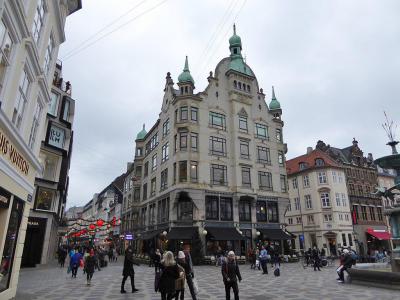
Hay House in Copenhagen is a symbol of contemporary design. It occupies the second and third floors of an apartment building on Østergade Street, which is a prominent part of the Strøget pedestrian shopping street in the city center. This store isn't just another retail space; it's a showcase of the Danish design ethos, brought to life by the design company HAY.
The store's inventory covers a wide array of products, from large furniture pieces to smaller, playful items. Shoppers can find straightforward and functional furniture in unconventional shapes, emphasizing both utility and aesthetic appeal. Beyond furniture, Hay House offers an eclectic mix of home accessories that include designer pillows, towels, wall clocks, and vases, each item contributing to a chic and inviting home atmosphere.
What sets Hay House apart is its unique toy collection, which consists of high-quality wooden toys inspired by the designs of the 1950s and 1960s. These nostalgic items include play shapes, dumper trucks, flutes, cutting circles, and shape makers, all designed to evoke a sense of nostalgia. The store also sells knitted teddy bears, knitted cupcakes and doughnuts, and wooden toys like colts and rifles, along with creative children's accessories such as owl purses and finger puppets.
With its combination of innovative design, a wide range of products, and international appeal, Hay House stands out as one of the most successful Danish design companies of modern times, attracting design enthusiasts from around the globe.
The store's inventory covers a wide array of products, from large furniture pieces to smaller, playful items. Shoppers can find straightforward and functional furniture in unconventional shapes, emphasizing both utility and aesthetic appeal. Beyond furniture, Hay House offers an eclectic mix of home accessories that include designer pillows, towels, wall clocks, and vases, each item contributing to a chic and inviting home atmosphere.
What sets Hay House apart is its unique toy collection, which consists of high-quality wooden toys inspired by the designs of the 1950s and 1960s. These nostalgic items include play shapes, dumper trucks, flutes, cutting circles, and shape makers, all designed to evoke a sense of nostalgia. The store also sells knitted teddy bears, knitted cupcakes and doughnuts, and wooden toys like colts and rifles, along with creative children's accessories such as owl purses and finger puppets.
With its combination of innovative design, a wide range of products, and international appeal, Hay House stands out as one of the most successful Danish design companies of modern times, attracting design enthusiasts from around the globe.
10) Marble Bridge (Marmorbro)
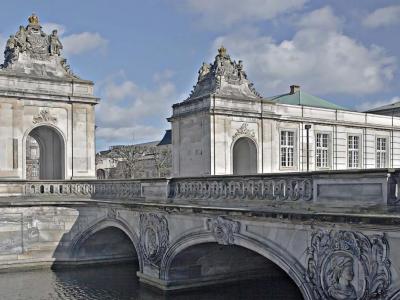
Perhaps Copenhagen’s most photogenic overachiever, the Marble Bridge is undoubtedly the most notable of the four bridges crossing Frederiksholms Kanal. Built in 1744 as part of the original Christiansborg Palace complex, it was meant to impress guests heading to the royal riding grounds. And it certainly did.
Despite the palace burning down not once, but twice, throughout its history, this elegant rococo beauty survived both firestorms with all the grace of a period drama heroine. Today, it remains one of the few original features still standing, looking like it just walked out of the 18th century and refused to age.
Built with Norwegian marble (because, obviously, only the finest materials would fit the purpose) and dressed up with sandstone from Saxony, this bridge is no minimalist. Its creator, Johan Christof Petzoldt, added the royal couple’s monograms and symbolic rooftop figures emphasizing royal virtues. Throw in some lantern-topped columns, marble balustrades, and refined arches, and you’ve got the bridge that was meant to dazzle-and it still does.
Visually striking, the bridge looks like it belongs on a vintage postcard. With the picturesque views of Christiansborg Palace and those charming copper rooftops, it’s a hotspot for tourists, romantics, and anyone who enjoys watching canal boats attempt the very tight squeeze under its arches-some barely make the turn, thus adding a bit of light entertainment for viewers.
However, the bridge is not just about looks-it is part of a richly historical setting. Within a short stroll, you’ve got Christian IV’s Brewhouse, the Danish War Museum, and the royal stables. And if you’re lucky, a horse-drawn carriage might occasionally trot by, contributing to the old-world charm of the area.
In essence, although not massive or flashy, the Marble Bridge holds an iconic presence in Copenhagen. It’s all about quiet confidence, old-world elegance, and some really terrific photo ops. So whenever you’re near Castle Island, make the detour for this perfect pause in your Copenhagen adventure-your camera will thank you.
Despite the palace burning down not once, but twice, throughout its history, this elegant rococo beauty survived both firestorms with all the grace of a period drama heroine. Today, it remains one of the few original features still standing, looking like it just walked out of the 18th century and refused to age.
Built with Norwegian marble (because, obviously, only the finest materials would fit the purpose) and dressed up with sandstone from Saxony, this bridge is no minimalist. Its creator, Johan Christof Petzoldt, added the royal couple’s monograms and symbolic rooftop figures emphasizing royal virtues. Throw in some lantern-topped columns, marble balustrades, and refined arches, and you’ve got the bridge that was meant to dazzle-and it still does.
Visually striking, the bridge looks like it belongs on a vintage postcard. With the picturesque views of Christiansborg Palace and those charming copper rooftops, it’s a hotspot for tourists, romantics, and anyone who enjoys watching canal boats attempt the very tight squeeze under its arches-some barely make the turn, thus adding a bit of light entertainment for viewers.
However, the bridge is not just about looks-it is part of a richly historical setting. Within a short stroll, you’ve got Christian IV’s Brewhouse, the Danish War Museum, and the royal stables. And if you’re lucky, a horse-drawn carriage might occasionally trot by, contributing to the old-world charm of the area.
In essence, although not massive or flashy, the Marble Bridge holds an iconic presence in Copenhagen. It’s all about quiet confidence, old-world elegance, and some really terrific photo ops. So whenever you’re near Castle Island, make the detour for this perfect pause in your Copenhagen adventure-your camera will thank you.
11) Danish War Museum (Krigsmuseet)
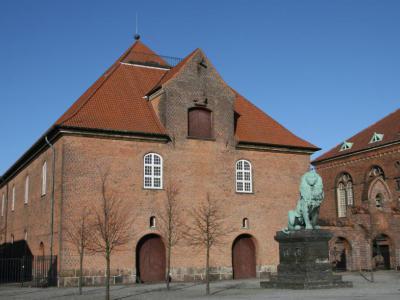
Now here’s a fun twist in Danish history: one of the very few buildings in Denmark still doing exactly what it was built for-minus the explosions. Welcome to the old Arsenal, one of King Christian IV’s many ambitious pet projects. Back in the day, it was a cozy little home for hand weapons and cannons. Today, it is still all about the bang-but with more context and zero casualties. Say hello to the Danish War Museum!
Tucked inside this Renaissance power statement is a treasure trove of military history. Think shiny old swords, grumpy-looking cannons, and a full-scale walk-in diorama of a NATO station in Afghanistan-because who doesn’t want to time travel through global conflict while safely avoiding sand in their shoes?
The building itself is a bit of a show-off. It's a monument to how the Renaissance established itself in Copenhagen and gave royal authority a stylish stone-clad makeover. Step into the grand Arsenal Hall-stretching a jaw-dropping 156 meters long, making it the largest arched Renaissance hall in Europe. Basically a catwalk for antique weaponry, here, you can feast your eyes on more Danish cannons than you can count without getting dizzy.
Elsewhere, you can trace the dramatic glow-up of edged weapons and firearms over the past 500 years. From ornate princely pistols to tough-as-nails war trophies, the collection delivers style and firepower in equal measure.
Oh, and don’t skip the 19th-century military fashion section. We’re talking about banners, uniforms, armor, and saddles that could make even the grumpiest general look fabulous.
So, if you're into history, heavy metal (literally), or just enjoy buildings that know how to age gracefully-this one’s not to be missed.
Tucked inside this Renaissance power statement is a treasure trove of military history. Think shiny old swords, grumpy-looking cannons, and a full-scale walk-in diorama of a NATO station in Afghanistan-because who doesn’t want to time travel through global conflict while safely avoiding sand in their shoes?
The building itself is a bit of a show-off. It's a monument to how the Renaissance established itself in Copenhagen and gave royal authority a stylish stone-clad makeover. Step into the grand Arsenal Hall-stretching a jaw-dropping 156 meters long, making it the largest arched Renaissance hall in Europe. Basically a catwalk for antique weaponry, here, you can feast your eyes on more Danish cannons than you can count without getting dizzy.
Elsewhere, you can trace the dramatic glow-up of edged weapons and firearms over the past 500 years. From ornate princely pistols to tough-as-nails war trophies, the collection delivers style and firepower in equal measure.
Oh, and don’t skip the 19th-century military fashion section. We’re talking about banners, uniforms, armor, and saddles that could make even the grumpiest general look fabulous.
So, if you're into history, heavy metal (literally), or just enjoy buildings that know how to age gracefully-this one’s not to be missed.
12) Christianshavn
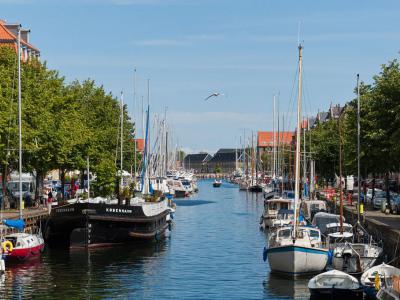
Christianshavn is a vibrant and historic neighborhood in Copenhagen. Situated within the Indre By District, it spans several artificial islands between Zealand and Amager, clearly delineated from the city center by the Inner Harbour. Founded in the early 17th century by King Christian IV, Christianshavn was initially conceived as an independent privileged merchant's town inspired by Dutch cities. However, it was incorporated into Copenhagen by 1674 due to overwhelming competition from the larger city.
The area's development was closely tied to Christian IV's fortification efforts, which began in 1612. Between 1618 and 1623, a series of earthen embankments and bastions were constructed, later expanded in the 1660s and between 1682 and 1692. These fortifications, among Denmark's best-preserved from the 17th century, continued to play a defensive role into the early 20th century, with the last areas opening to the public in 1961.
Over the years, Christianshavn evolved significantly. From a working-class neighborhood in the 20th century, it gained a bohemian reputation in the 1970s and has since transformed into a trendy and diverse community. It mixes a variety of residents from businessmen and students to artists and traditional families, all contributing to its unique and lively atmosphere.
Christianshavn is structured around major landmarks such as the Christianshavn Canal and Torvegade, the main thoroughfare. The canal runs north-south, bisecting the neighborhood, while Torvegade runs east-west, linking it to central Copenhagen across Knippelsbro. At the intersection of these two, Christianshavns Torv marks the geographical heart of the neighborhood. To the east, Christianshavns Vold, part of the old fortifications, now serves as a key green space, enriching the area's scenic and recreational appeal.
The area's development was closely tied to Christian IV's fortification efforts, which began in 1612. Between 1618 and 1623, a series of earthen embankments and bastions were constructed, later expanded in the 1660s and between 1682 and 1692. These fortifications, among Denmark's best-preserved from the 17th century, continued to play a defensive role into the early 20th century, with the last areas opening to the public in 1961.
Over the years, Christianshavn evolved significantly. From a working-class neighborhood in the 20th century, it gained a bohemian reputation in the 1970s and has since transformed into a trendy and diverse community. It mixes a variety of residents from businessmen and students to artists and traditional families, all contributing to its unique and lively atmosphere.
Christianshavn is structured around major landmarks such as the Christianshavn Canal and Torvegade, the main thoroughfare. The canal runs north-south, bisecting the neighborhood, while Torvegade runs east-west, linking it to central Copenhagen across Knippelsbro. At the intersection of these two, Christianshavns Torv marks the geographical heart of the neighborhood. To the east, Christianshavns Vold, part of the old fortifications, now serves as a key green space, enriching the area's scenic and recreational appeal.
