Custom Walk in Dubrovnik, Croatia by j_l_green39_55e853 created on 2026-02-21
Guide Location: Croatia » Dubrovnik
Guide Type: Custom Walk
# of Sights: 10
Tour Duration: 2 Hour(s)
Travel Distance: 2.5 Km or 1.6 Miles
Share Key: PXBDS
Guide Type: Custom Walk
# of Sights: 10
Tour Duration: 2 Hour(s)
Travel Distance: 2.5 Km or 1.6 Miles
Share Key: PXBDS
How It Works
Please retrieve this walk in the GPSmyCity app. Once done, the app will guide you from one tour stop to the next as if you had a personal tour guide. If you created the walk on this website or come to the page via a link, please follow the instructions below to retrieve the walk in the app.
Retrieve This Walk in App
Step 1. Download the app "GPSmyCity: Walks in 1K+ Cities" on Apple App Store or Google Play Store.



Step 2. In the GPSmyCity app, download(or launch) the guide "Dubrovnik Map and Walking Tours".
Step 3. Tap the menu button located at upper right corner of the "Walks" screen and select "Retrieve custom walk". Enter the share key: PXBDS
1) Pile Gate (must see)
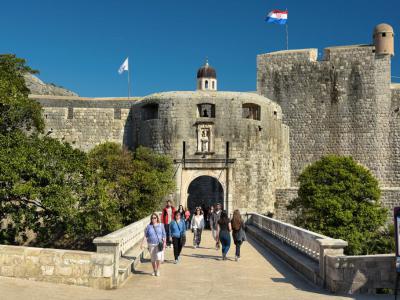
"Kill them, kill them all!" King Joffrey is under attack by an angry mob when he returns to Red Keep. But wait. There is no King Joffrey and there is no Red Keep. This is actually season two, episode 6 of the TV series, "Game of Thrones." The "Red Keep" is Pile Gate, the main entrance to the old walled city of Dubrovnik, Croatia.
The name Pile is derived from the Greek word "pylaj", meaning "gate." Most walking tours of the Old City start at the 15th-century Pile Gate. It is a good starting point for a walk on the city walls as well. The gate is located on the western side of the walls. It leads directly to Stradun Street, the main promenade of Dubrovnik.
Pile Gate is actually made up of two gates. The inner gate was built in 1460. The outer gate dates from 1537. The Pile Gate complex is defended by the Cylindrical Fort Bokar and the formidable moat that ran around the outside of the inner wall. The moat today is dry. It is a ribbon of landscaped parkland between the two walls.
A stone bridge with Gothic arches at each end, designed by architect Paskoje Milicevic in 1471, connects to a wooden drawbridge inserted over the moat. At night, the drawbridge would be raised to block the gateway. A Romanesque statue of the patron Saint Blaise is above the gateway arch. He holds a model of the city in one hand.
The entire Old City is enclosed in a veritable curtain of stone. The walls are 6,373 feet long and as much as 82 feet high in some places. The landside wall is supported by 10 circular bastions and a casemate fortress. The two main entrances to the city are The Pile Gate in the west and the Polce Gate in the east.
*** Game of Thrones Tour ***
The Pile Gate has been featured in a number of episodes of Game of Thrones Seasons 2 and 3, most notably in Season 2, Episode 6 ‘The Old Gods and the New’. In a scene where King Joffrey returns to Red Keep after Marcella is sent away to Dorne, he gets attacked by the angry mob gathered at the entrance and screams ‘Kill them, kill them all’. The Gate also shows in Season 3, Episode 10 ‘Mhysa’ when Jamie Lannister returns to King’s Landing.
The name Pile is derived from the Greek word "pylaj", meaning "gate." Most walking tours of the Old City start at the 15th-century Pile Gate. It is a good starting point for a walk on the city walls as well. The gate is located on the western side of the walls. It leads directly to Stradun Street, the main promenade of Dubrovnik.
Pile Gate is actually made up of two gates. The inner gate was built in 1460. The outer gate dates from 1537. The Pile Gate complex is defended by the Cylindrical Fort Bokar and the formidable moat that ran around the outside of the inner wall. The moat today is dry. It is a ribbon of landscaped parkland between the two walls.
A stone bridge with Gothic arches at each end, designed by architect Paskoje Milicevic in 1471, connects to a wooden drawbridge inserted over the moat. At night, the drawbridge would be raised to block the gateway. A Romanesque statue of the patron Saint Blaise is above the gateway arch. He holds a model of the city in one hand.
The entire Old City is enclosed in a veritable curtain of stone. The walls are 6,373 feet long and as much as 82 feet high in some places. The landside wall is supported by 10 circular bastions and a casemate fortress. The two main entrances to the city are The Pile Gate in the west and the Polce Gate in the east.
*** Game of Thrones Tour ***
The Pile Gate has been featured in a number of episodes of Game of Thrones Seasons 2 and 3, most notably in Season 2, Episode 6 ‘The Old Gods and the New’. In a scene where King Joffrey returns to Red Keep after Marcella is sent away to Dorne, he gets attacked by the angry mob gathered at the entrance and screams ‘Kill them, kill them all’. The Gate also shows in Season 3, Episode 10 ‘Mhysa’ when Jamie Lannister returns to King’s Landing.
2) Fort Bokar
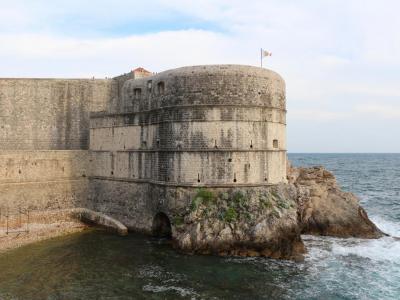
Fort Bokar, also known as Zvjezdan, was conceived as a defensive asset for the Pile Gate of Dubrovnik. Along with Minceta Tower, it is one of the main defense points of the western land approaches to the city. It was designed by Italian architect Michelozzo di Bartolomeo. The fort was started in 1461 and upgraded in 1570.
It is a two-story casemate-type fort. Its shape is cylindrical and it projects its volume almost entirely from the medieval stone walls. Part of the fort stands on arched supports on the jagged, detached rock. The sea washes beneath the fort as it has for more than 500 years.
These days, the fort is open all year round. It is well known as the venue for performances of the Dubrovnik Summer Festival. Every year between July 10th and August 25th the Renaissance-Baroque city provides at least 70 open-air venues for programs of classical music, opera, drama, and ballet. Fort Bokar is one of these venues.
The fortress has been featured in seasons two and three of Game of Thrones. The Fortress is a half-hour walk from the Old City center. An auto ride from the same place lasts about five minutes.
*** Game of Thrones Tour ***
Fort Bokar frequently appears throughout all seasons of Game of Thrones when they show people walk past the city walls of King's Landing. One of the most memorable scenes is in Season 2, Episode 8, where Tyrion and Lord Varys are looking out at sea discussing the defense strategies for King's Landing with the Red Keep visible in the background.
It is a two-story casemate-type fort. Its shape is cylindrical and it projects its volume almost entirely from the medieval stone walls. Part of the fort stands on arched supports on the jagged, detached rock. The sea washes beneath the fort as it has for more than 500 years.
These days, the fort is open all year round. It is well known as the venue for performances of the Dubrovnik Summer Festival. Every year between July 10th and August 25th the Renaissance-Baroque city provides at least 70 open-air venues for programs of classical music, opera, drama, and ballet. Fort Bokar is one of these venues.
The fortress has been featured in seasons two and three of Game of Thrones. The Fortress is a half-hour walk from the Old City center. An auto ride from the same place lasts about five minutes.
*** Game of Thrones Tour ***
Fort Bokar frequently appears throughout all seasons of Game of Thrones when they show people walk past the city walls of King's Landing. One of the most memorable scenes is in Season 2, Episode 8, where Tyrion and Lord Varys are looking out at sea discussing the defense strategies for King's Landing with the Red Keep visible in the background.
3) Kula Sveti Peter (Fort Saint Peter)
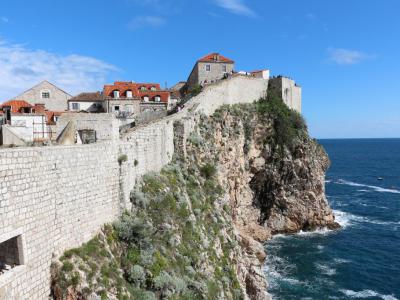
Fort Saint Peter (Kula Sveti Peter) is one of the lesser-known yet historically important fortifications of Dubrovnik. Built in the 14th century, the tower formed part of the city’s elaborate defensive system designed to protect both the land and sea approaches. Positioned at the entrance to the Old Port, it played a crucial role in safeguarding the harbor, ensuring that merchant vessels and fishing boats could enter safely while guarding against potential naval threats.
Like other towers and forts surrounding the Old Town, the Fort Saint Peter was not just a military outpost but also a watchpoint, offering early warnings of danger approaching from the Adriatic. Its simple stone construction reflects the functional character of Dubrovnik’s fortifications, emphasizing durability and strength over decoration. In combination with nearby towers such as Saint Luke’s and Revelin Fortress, it formed a strategic defensive triangle, giving Dubrovnik one of the most formidable harbor defenses in the Mediterranean.
Today, Fort Saint Peter may not carry the grandeur of larger landmarks like Fort Lovrijenac, yet it offers a quieter glimpse into the city’s layered history. Standing beside the harbor, visitors can appreciate the structure as part of the larger ensemble that once protected Dubrovnik’s independence as a maritime republic. It is also a spot where one can pause to take in the lively rhythm of the Old Port, a scene not so different from what sailors would have witnessed centuries ago.
Like other towers and forts surrounding the Old Town, the Fort Saint Peter was not just a military outpost but also a watchpoint, offering early warnings of danger approaching from the Adriatic. Its simple stone construction reflects the functional character of Dubrovnik’s fortifications, emphasizing durability and strength over decoration. In combination with nearby towers such as Saint Luke’s and Revelin Fortress, it formed a strategic defensive triangle, giving Dubrovnik one of the most formidable harbor defenses in the Mediterranean.
Today, Fort Saint Peter may not carry the grandeur of larger landmarks like Fort Lovrijenac, yet it offers a quieter glimpse into the city’s layered history. Standing beside the harbor, visitors can appreciate the structure as part of the larger ensemble that once protected Dubrovnik’s independence as a maritime republic. It is also a spot where one can pause to take in the lively rhythm of the Old Port, a scene not so different from what sailors would have witnessed centuries ago.
4) Fort Saint Margaret
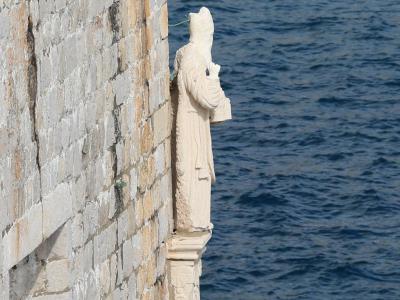
Located at the southernmost point of the formidable Dubrovnik city walls, Fort Saint Margaret extends boldly into the sea, offering visitors an unparalleled vantage point to witness the ebb and flow of boats entering and leaving the bustling port of Dubrovnik. Perched above the guard tower on the fort, you can also spot the Statue of St. Blaise, a beloved symbol of the city's patron saint.
Constructed during the Renaissance in the 16th century, Fort Saint Margaret showcases exquisite architectural design, making it an excellent subject for photographers and a place to capture panoramic views of the historic Old Town. As you gaze from this fortress, you'll also be treated to captivating vistas of Lokrum Island, a destination with its own rich history.
Fort Saint Margaret provides a unique opportunity to pause and absorb the breathtaking scenery during your walk along the city walls. While the rest of the wall might encourage a brisk pace, this location beckons you to linger and appreciate the beauty of Dubrovnik from this remarkable vantage point.
Constructed during the Renaissance in the 16th century, Fort Saint Margaret showcases exquisite architectural design, making it an excellent subject for photographers and a place to capture panoramic views of the historic Old Town. As you gaze from this fortress, you'll also be treated to captivating vistas of Lokrum Island, a destination with its own rich history.
Fort Saint Margaret provides a unique opportunity to pause and absorb the breathtaking scenery during your walk along the city walls. While the rest of the wall might encourage a brisk pace, this location beckons you to linger and appreciate the beauty of Dubrovnik from this remarkable vantage point.
5) Fort Saint Stephen
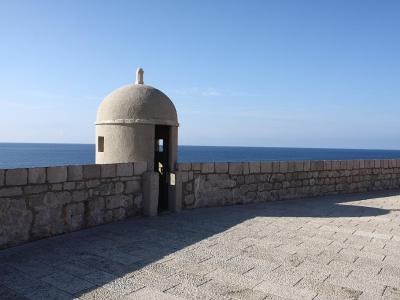
Fort Saint Stephen, though one of the most recent additions to the city's impressive fortifications, still stands as a testament to Dubrovnik's long history of building and maintaining protective walls. Construction of the city walls began all the way back in the 7th century, and this ambitious endeavor continued for almost five centuries.
This 17th-century fortification is a relatively young addition to Dubrovnik's fortifications. While the city's walls have evolved and expanded over centuries, each new addition has been a nod to the importance of safeguarding Dubrovnik from potential threats.
Fort Saint Stephen's more recent construction serves as a reminder of Dubrovnik's enduring dedication to fortifying its walls and protecting its heritage. It is a compelling piece of the city's history and a significant part of its ongoing legacy.
This 17th-century fortification is a relatively young addition to Dubrovnik's fortifications. While the city's walls have evolved and expanded over centuries, each new addition has been a nod to the importance of safeguarding Dubrovnik from potential threats.
Fort Saint Stephen's more recent construction serves as a reminder of Dubrovnik's enduring dedication to fortifying its walls and protecting its heritage. It is a compelling piece of the city's history and a significant part of its ongoing legacy.
6) St. John Fortress
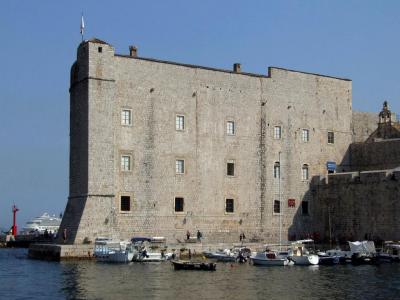
The Saint John Fortress (Croatian: Sveti Ivan), often called Mulo Tower, is a complex monumental building on the southeastern side of the old city port, controlling and protecting its entrance. The first fort was built in the mid 14th century, but it was modified on several occasions in the course of the 15th and 16th centuries, which can be seen in the triptych made by the painter Nikola Božidarević in the Dominican monastery. The painting shows Saint Blaise, the patron saint of Dubrovnik.
Dominant in the port ambiance, the Saint John Fortress prevented access of pirates and other enemy ships. Always cautious at the first sign of danger, the inhabitants of Dubrovnik used to close the entry into the port with heavy chains stretched between the Saint John Fortress and the Kase jetty, and they also used to wall up all the port entries to the Great Arsenal.
Today, the fortress houses an aquarium on the ground floor, stocked with fish from various parts of the Adriatic Sea. On the upper floors there is an ethnographic and a maritime museum devoted to the Republic Maritime Period, the Age of Steam, the Second World War, and the section of techniques of sailing and navigation. There are also some great exhibits on shipbuilding there.
The Pelješac Peninsula has been well known for its maritime industry for centuries, going back to the time of the Roman Empire. The Maritime Museum does a good job of documenting that history in a way that is interesting and informative.
Dominant in the port ambiance, the Saint John Fortress prevented access of pirates and other enemy ships. Always cautious at the first sign of danger, the inhabitants of Dubrovnik used to close the entry into the port with heavy chains stretched between the Saint John Fortress and the Kase jetty, and they also used to wall up all the port entries to the Great Arsenal.
Today, the fortress houses an aquarium on the ground floor, stocked with fish from various parts of the Adriatic Sea. On the upper floors there is an ethnographic and a maritime museum devoted to the Republic Maritime Period, the Age of Steam, the Second World War, and the section of techniques of sailing and navigation. There are also some great exhibits on shipbuilding there.
The Pelješac Peninsula has been well known for its maritime industry for centuries, going back to the time of the Roman Empire. The Maritime Museum does a good job of documenting that history in a way that is interesting and informative.
7) Gate of Ploče
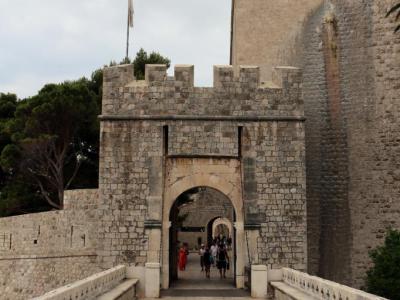
The Gate of Ploče, positioned on the eastern side of Dubrovnik's land walls, is one of the city's significant entrances. This Romanesque-style gate consists of an inner and outer section and is safeguarded by the freestanding Revelin Fortress. The two are connected by a wooden drawbridge and a twin-spanned stone bridge that stretches across a protective ditch.
The construction of the Outer Gate of Ploče was overseen by architect Mihajlo Hranjac in 1628. The two bridges leading to the Revelin Fortress were built in the 15th century by Paskoje Miličević, who also designed the bridges at the Pile Gate. The similarities in design between these bridges are a testament to Miličević's skill and craftsmanship.
Just as it is at the Gate of Pile, a statue of Saint Blaise, the patron saint of Dubrovnik, presides over the Gate of Ploče. This adds a touch of historical and cultural significance to the entrance.
*** Game of Thrones Tour ***
The Gate of Ploče has also gained fame among fans of the popular television series Game of Thrones. It made appearances in Season 2, Episode 5 ('The Ghost of Harrenhal') and Season 5, Episode 10 ('Mother's Mercy'). Notably, it is where Cersei Lannister enters the Red Keep through the Ploče Gate in Season 5 after her Walk of Shame, marking a dramatic moment in the series.
The construction of the Outer Gate of Ploče was overseen by architect Mihajlo Hranjac in 1628. The two bridges leading to the Revelin Fortress were built in the 15th century by Paskoje Miličević, who also designed the bridges at the Pile Gate. The similarities in design between these bridges are a testament to Miličević's skill and craftsmanship.
Just as it is at the Gate of Pile, a statue of Saint Blaise, the patron saint of Dubrovnik, presides over the Gate of Ploče. This adds a touch of historical and cultural significance to the entrance.
*** Game of Thrones Tour ***
The Gate of Ploče has also gained fame among fans of the popular television series Game of Thrones. It made appearances in Season 2, Episode 5 ('The Ghost of Harrenhal') and Season 5, Episode 10 ('Mother's Mercy'). Notably, it is where Cersei Lannister enters the Red Keep through the Ploče Gate in Season 5 after her Walk of Shame, marking a dramatic moment in the series.
8) Revelin Fortress
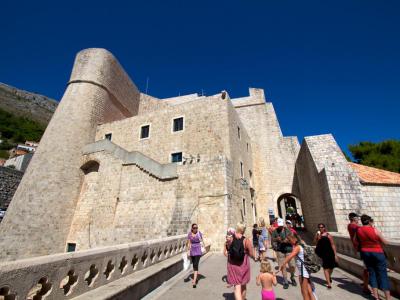
Nestled just outside the eastern edge of Dubrovnik’s old city lies the formidable Revelin Fortress, a striking testament to the city’s centuries-old determination to defend itself. This detached fortress was conceived during a time of imminent regional danger, first erected in 1463 amid rising Ottoman expansion and political uncertainty. Its name comes from the military-engineering term rivelin (or “ravelin”) - a fortress placed opposite a weak point in a city’s defensive perimeter - signifying its role as an extra line of defence for Dubrovnik’s vulnerable eastern gate.
By the early 1500s, new threats loomed - particularly the possibility of Venetian aggression - and the Republic of Ragusa decided to augment and remaster the original structure. In 1538, the Senate approved designs by the Italian engineer Antonio Ferramolino to transform Revelin into a far stronger fortress. Its construction was fast-tracked for more than a decade, which was achieved in 1549.
Revelin today impresses with its irregular quadrilateral layout, its steep drop toward the sea on one side and protective ditches on the others, its thick walls punctuated by embrasures and ventilation channels, and the bridges that once spanned the defensive ditch to connect it to the city and to the outer gate. It weathered the catastrophic earthquake of 1667 virtually unscathed, and in its aftermath, it served as a vital center for Dubrovnik’s government - housing the city’s treasures, administrative offices, and even hosting council sessions.
Today, Revelin offers visitors a powerful mix of history and atmosphere: its wide, paved terrace provides panoramic views, and during summer, its ramparts often host performances as part of the Dubrovnik Summer Festival.
By the early 1500s, new threats loomed - particularly the possibility of Venetian aggression - and the Republic of Ragusa decided to augment and remaster the original structure. In 1538, the Senate approved designs by the Italian engineer Antonio Ferramolino to transform Revelin into a far stronger fortress. Its construction was fast-tracked for more than a decade, which was achieved in 1549.
Revelin today impresses with its irregular quadrilateral layout, its steep drop toward the sea on one side and protective ditches on the others, its thick walls punctuated by embrasures and ventilation channels, and the bridges that once spanned the defensive ditch to connect it to the city and to the outer gate. It weathered the catastrophic earthquake of 1667 virtually unscathed, and in its aftermath, it served as a vital center for Dubrovnik’s government - housing the city’s treasures, administrative offices, and even hosting council sessions.
Today, Revelin offers visitors a powerful mix of history and atmosphere: its wide, paved terrace provides panoramic views, and during summer, its ramparts often host performances as part of the Dubrovnik Summer Festival.
9) Vrata od Buže (Buža Gate)
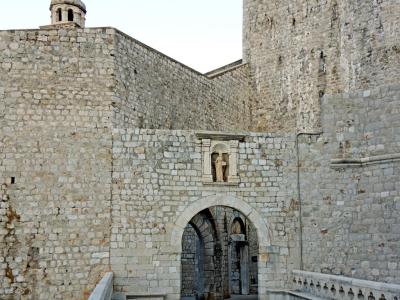
Buža Gate stands as a northern gateway to Dubrovnik's Old Town, offering access from Iza Grada street, traversing Peline, and descending down steps to Prijeko. From there, it leads to Stradun, the primary promenade within the Old Town.
This entrance to the town proves convenient for those who have parked their vehicles in the Iza Grada area or are arriving at the town from Ilijina Glavica or Kono. However, it's worth noting that this route is among the more challenging paths to the heart of the Old Town, characterized by a significant number of steps.
Buža Gate's history is notable. It was established as a gateway to the town during the early 1900s, a period when Dubrovnik was under the rule of the Austro-Hungarian Empire. It remains an important entry point, preserving elements of Dubrovnik's historical past and serving as a reminder of the city's enduring charm.
This entrance to the town proves convenient for those who have parked their vehicles in the Iza Grada area or are arriving at the town from Ilijina Glavica or Kono. However, it's worth noting that this route is among the more challenging paths to the heart of the Old Town, characterized by a significant number of steps.
Buža Gate's history is notable. It was established as a gateway to the town during the early 1900s, a period when Dubrovnik was under the rule of the Austro-Hungarian Empire. It remains an important entry point, preserving elements of Dubrovnik's historical past and serving as a reminder of the city's enduring charm.
10) Minceta Tower (must see)
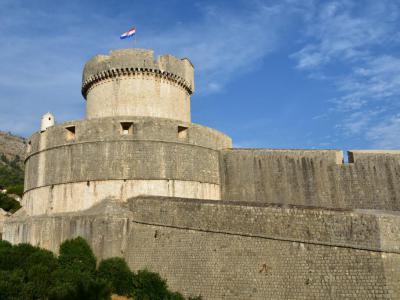
Constructed in 1463, the Minčeta Tower was built during a time when the threat of a Turkish invasion loomed large. Designed by local architect Nicifor Ranjina, with the assistance of Italian engineers sent by Pope Pius II, it initially served as a formidable four-sided fortress. This architectural gem earned its name from the Menčetić family, the original landowners on which the tower was erected.
The tower is not only historically significant but also an architectural marvel. It stands tall as the most prominent point in Dubrovnik's defense system from the land. In the mid-15th century, it underwent renovations by Italian architect and sculptor Michelozzo di Bartolomeo Michelozzi. He transformed it into a new round tower, incorporating cutting-edge warfare techniques and connecting it to a modern system of low scarp walls. The tower's full six-meter thick walls boasted protected gun ports, and further enhancements were made by Giorgio da Sebenico of Zadar. The result was the iconic high narrow round tower that we see today, complete with battlements.
Minčeta Tower stands as a symbol of the city's indomitable spirit and was completed in 1464. It continues to be a symbol of Dubrovnik's resilience and strength. In modern times, the tower serves as a museum, allowing visitors to explore its historical and architectural significance. Beneath it, in Gornji ugao (Upper Tower), a 16th-century cannon foundry was discovered after extensive excavation.
From its vantage point atop the city walls, Minčeta Tower provides visitors with breathtaking panoramic views of the city of Dubrovnik. It's a place where history comes alive and where one can stand in awe of both the city's past and its present.
*** Game of Thrones Tour ***
The Minčeta Tower found its way into popular culture through the television series Game of Thrones. In Season 2, Episode 10, the tower was featured as the House of the Undying in Qarth, where Daenerys Targaryen had her dragons stolen. The tower's unique architecture and seemingly doorless exterior made it an ideal location for the show's magical and enigmatic scenes.
The tower is not only historically significant but also an architectural marvel. It stands tall as the most prominent point in Dubrovnik's defense system from the land. In the mid-15th century, it underwent renovations by Italian architect and sculptor Michelozzo di Bartolomeo Michelozzi. He transformed it into a new round tower, incorporating cutting-edge warfare techniques and connecting it to a modern system of low scarp walls. The tower's full six-meter thick walls boasted protected gun ports, and further enhancements were made by Giorgio da Sebenico of Zadar. The result was the iconic high narrow round tower that we see today, complete with battlements.
Minčeta Tower stands as a symbol of the city's indomitable spirit and was completed in 1464. It continues to be a symbol of Dubrovnik's resilience and strength. In modern times, the tower serves as a museum, allowing visitors to explore its historical and architectural significance. Beneath it, in Gornji ugao (Upper Tower), a 16th-century cannon foundry was discovered after extensive excavation.
From its vantage point atop the city walls, Minčeta Tower provides visitors with breathtaking panoramic views of the city of Dubrovnik. It's a place where history comes alive and where one can stand in awe of both the city's past and its present.
*** Game of Thrones Tour ***
The Minčeta Tower found its way into popular culture through the television series Game of Thrones. In Season 2, Episode 10, the tower was featured as the House of the Undying in Qarth, where Daenerys Targaryen had her dragons stolen. The tower's unique architecture and seemingly doorless exterior made it an ideal location for the show's magical and enigmatic scenes.
