Custom Walk in Dallas, Texas by alison_ives_5a2f8a created on 2026-02-24
Guide Location: USA » Dallas
Guide Type: Custom Walk
# of Sights: 11
Tour Duration: 11 Hour(s)
Travel Distance: 30.5 Km or 19 Miles
Share Key: 8KWJL
Guide Type: Custom Walk
# of Sights: 11
Tour Duration: 11 Hour(s)
Travel Distance: 30.5 Km or 19 Miles
Share Key: 8KWJL
How It Works
Please retrieve this walk in the GPSmyCity app. Once done, the app will guide you from one tour stop to the next as if you had a personal tour guide. If you created the walk on this website or come to the page via a link, please follow the instructions below to retrieve the walk in the app.
Retrieve This Walk in App
Step 1. Download the app "GPSmyCity: Walks in 1K+ Cities" on Apple App Store or Google Play Store.



Step 2. In the GPSmyCity app, download(or launch) the guide "Dallas Map and Walking Tours".
Step 3. Tap the menu button located at upper right corner of the "Walks" screen and select "Retrieve custom walk". Enter the share key: 8KWJL
1) Dallas Arboretum and Botanical Garden (must see)
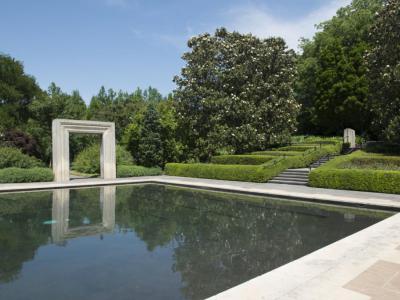
The Dallas Arboretum and Botanical Garden, located on the southeastern shore of White Rock Lake, covers an impressive 66 acres (about 267,000 square meters) and provides a peaceful escape from the urban hustle and bustle. Its array of gardens, fountains, and picturesque views of the lake set against the downtown Dallas skyline make it a truly stunning destination.
Originally part of the 44-acre estate called Rancho Encinal, owned by geophysicist Everette Lee DeGolyer and his wife, Nell, the arboretum has its roots deeply embedded in Mrs. DeGolyer's passion for gardening. Since 1976, it has evolved into a significant attraction, with the addition of the adjacent Alex and Roberta Coke Camp estate, expanding its grounds for showcasing a wide variety of plant life.
One of its notable features is its extensive collection of 2,400 types of azaleas, which draw in both casual visitors and avid plant enthusiasts. Thanks to the favorable climate of Dallas, the arboretum offers a delightful floral experience year-round, ensuring each visit is memorable.
Beyond its natural beauty, the Dallas Arboretum and Botanical Garden also pays homage to the region's rich horticultural history and the enduring legacy of the DeGolyer family's passion for gardening.
Originally part of the 44-acre estate called Rancho Encinal, owned by geophysicist Everette Lee DeGolyer and his wife, Nell, the arboretum has its roots deeply embedded in Mrs. DeGolyer's passion for gardening. Since 1976, it has evolved into a significant attraction, with the addition of the adjacent Alex and Roberta Coke Camp estate, expanding its grounds for showcasing a wide variety of plant life.
One of its notable features is its extensive collection of 2,400 types of azaleas, which draw in both casual visitors and avid plant enthusiasts. Thanks to the favorable climate of Dallas, the arboretum offers a delightful floral experience year-round, ensuring each visit is memorable.
Beyond its natural beauty, the Dallas Arboretum and Botanical Garden also pays homage to the region's rich horticultural history and the enduring legacy of the DeGolyer family's passion for gardening.
2) Leonhardt Lagoon
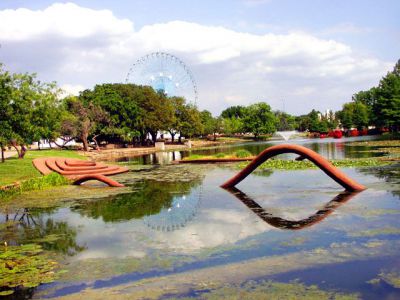
The Leonhardt Lagoon is a very famous part of the Fair Park Midway. It has always been a great place for families to come and visit. Feeding the birds here has been a tradition for kids for years also.
The lagoon was created in 1936 by the Work Progress Administration (also called the WPA). The body of water gets its name from Dorothea Leonhardt, who was a famous philanthropist in the area.
The lagoon underwent a considerable bit of renovation during the 1980s. The whole thing was cleaned out, and access plants were removed. The location was then refilled with native Texas plants. So now, it is a modern day ecological haven for animals. Two serpentine style sculptures were also added in 1986. Designed by the famous Pat Johanson, they create a bridge that can be walked across, which also gives the visitor a great view of the new look of the lagoon.
If you are bringing kids, you may want to do the swan rides across the lagoon. There is also a Nature Walk that has twenty five different stops along the way. It is located between the Museum of Science and Nature and the Cotton Bowl.
The lagoon was created in 1936 by the Work Progress Administration (also called the WPA). The body of water gets its name from Dorothea Leonhardt, who was a famous philanthropist in the area.
The lagoon underwent a considerable bit of renovation during the 1980s. The whole thing was cleaned out, and access plants were removed. The location was then refilled with native Texas plants. So now, it is a modern day ecological haven for animals. Two serpentine style sculptures were also added in 1986. Designed by the famous Pat Johanson, they create a bridge that can be walked across, which also gives the visitor a great view of the new look of the lagoon.
If you are bringing kids, you may want to do the swan rides across the lagoon. There is also a Nature Walk that has twenty five different stops along the way. It is located between the Museum of Science and Nature and the Cotton Bowl.
3) Dallas Farmers Market
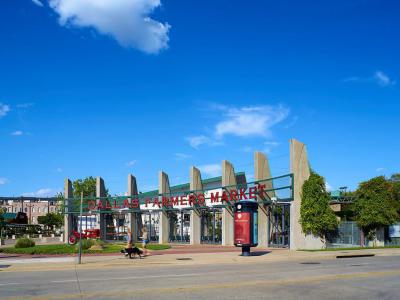
The Dallas Farmers Market, nestled in the heart of the Farmers Market District in downtown Dallas, is a vibrant hub of fresh, farm-to-table produce and goods. Since its inception in 1941, the market has evolved into one of the country's largest public markets, attracting vendors and farmers from within a 150-mile radius to offer a diverse array of products including fresh meat, produce, flowers, and specialty items directly to consumers.
The market is distinguished by its variety of sellers, which includes produce dealers, wholesale dealers, and local farmers, ensuring a wide range of fresh and quality goods. In addition to its primary offerings, the Dallas Farmers Market hosts a plethora of activities throughout the year such as monthly yard sales, cooking classes led by professional chefs for an approximate fee of $25, workshops, and seasonal festivals, enriching the community experience. Furthermore, it features floral and garden vendors in an area adjacent to the market, broadening the scope of products available to visitors.
For those looking to maximize their visit, morning hours are recommended for accessing the highest quality items, while the afternoon presents opportunities for bargain hunters to find deals as the selection varies. Beyond shopping, the market serves as a cultural and educational venue, with events like handcrafter markets and street performances frequently taking place, details of which can be found on the Farmers Market website.
The Dallas Farmers Market not only offers a rich selection of goods but also fosters a sense of community through its events and workshops, making it a cherished institution in Dallas for locals and tourists alike.
The market is distinguished by its variety of sellers, which includes produce dealers, wholesale dealers, and local farmers, ensuring a wide range of fresh and quality goods. In addition to its primary offerings, the Dallas Farmers Market hosts a plethora of activities throughout the year such as monthly yard sales, cooking classes led by professional chefs for an approximate fee of $25, workshops, and seasonal festivals, enriching the community experience. Furthermore, it features floral and garden vendors in an area adjacent to the market, broadening the scope of products available to visitors.
For those looking to maximize their visit, morning hours are recommended for accessing the highest quality items, while the afternoon presents opportunities for bargain hunters to find deals as the selection varies. Beyond shopping, the market serves as a cultural and educational venue, with events like handcrafter markets and street performances frequently taking place, details of which can be found on the Farmers Market website.
The Dallas Farmers Market not only offers a rich selection of goods but also fosters a sense of community through its events and workshops, making it a cherished institution in Dallas for locals and tourists alike.
4) Pioneer Plaza / Cattle Drive (must see)
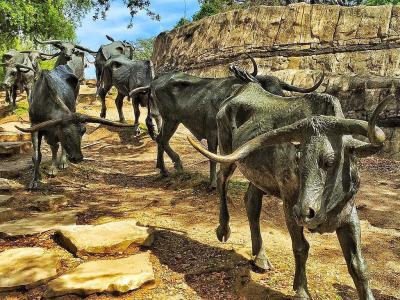
Pioneer Plaza is a 4.2-acre open space – the largest in the central Dallas business district – where a natural setting of native Texan plants, with a flowing stream and waterfall, all combine to memorialize the hundreds of cattle drives that took place at this old junction once known as the Shawnee Cattle Trail. The photo-ops are numerous, and you can wander in through the herd to see how much attention to detail was put into each individual longhorn, from facial expression down to hooves. Created by Robert Summers of Glen Rose, Texas, this is the largest bronze monument of its kind in the world.
The plaza and its accompanying cattle drive were the idea of real estate developer Trammell Crow, who wanted an iconic "Western" sculpture in the city of Dallas and assembled a group to donate the works. The first bronze longhorn was unveiled September 21, 1993, along with the trail boss and his horse; the entire project was completed in 1994. With the striking Dallas skyline as its background, this has become an iconic new landmark in downtown Dallas, and is free to visit.
Tip:
The adjacent Pioneer Cemetery is interesting to walk through, surrounded by tombstones that date back some 150 years.
The plaza and its accompanying cattle drive were the idea of real estate developer Trammell Crow, who wanted an iconic "Western" sculpture in the city of Dallas and assembled a group to donate the works. The first bronze longhorn was unveiled September 21, 1993, along with the trail boss and his horse; the entire project was completed in 1994. With the striking Dallas skyline as its background, this has become an iconic new landmark in downtown Dallas, and is free to visit.
Tip:
The adjacent Pioneer Cemetery is interesting to walk through, surrounded by tombstones that date back some 150 years.
5) Reunion Tower (must see)
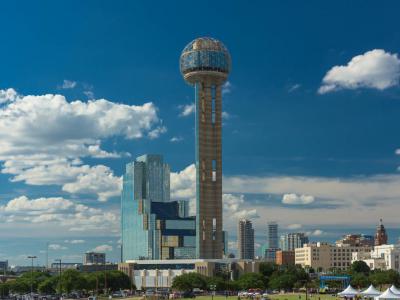
Reunion Tower has been a fixture on the Dallas skyline since 1978. At 561 feet tall, it was one of the tallest structures in Dallas, and it is one of the city's most recognizable features at night. Described by one reporter as a "giant dandelion", the building is surrounded by a superstructure in the shape of a sphere that has over 250 lights placed at all the joints.
Inside the three outside legs that hold up the sphere are elevators that will give visitors a ride to the 50th-floor observatory as well as the restaurant and café that make up the top floors. The ride takes about a minute and the elevators have a windowed front that allows for spectacular city views. The high-end rotating restaurant, called Five Sixty (a nod to the building's height) was opened by Wolfgang Puck in 2009 and the food has a very definite Asian flair.
The Reunion Complex – which consists of Reunion Tower, Reunion Arena, and the Hyatt Regency Hotel – was seen as a tremendous boost to downtown Dallas and civic pride. The long-awaited opening on April 15, 1978, featured a spectacular light show on the tower and a massive fireworks display that brought freeway traffic all over the city to a halt.
Inside the three outside legs that hold up the sphere are elevators that will give visitors a ride to the 50th-floor observatory as well as the restaurant and café that make up the top floors. The ride takes about a minute and the elevators have a windowed front that allows for spectacular city views. The high-end rotating restaurant, called Five Sixty (a nod to the building's height) was opened by Wolfgang Puck in 2009 and the food has a very definite Asian flair.
The Reunion Complex – which consists of Reunion Tower, Reunion Arena, and the Hyatt Regency Hotel – was seen as a tremendous boost to downtown Dallas and civic pride. The long-awaited opening on April 15, 1978, featured a spectacular light show on the tower and a massive fireworks display that brought freeway traffic all over the city to a halt.
6) Margaret Hunt Hill Bridge
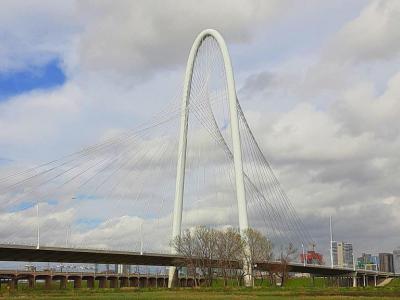
The Margaret Hunt Hill Bridge, situated in Dallas, stretches across the Trinity River. It pays homage to Margaret Hunt Hill, known for her wealth and philanthropic endeavors. This bridge forms part of the larger Trinity River Project. Crafted by the renowned architect Santiago Calatrava, it was intended to be one of three bridges spanning the Trinity; the Margaret McDermott Bridge, the second of the trio, has been completed, while the third has been scrapped. This bridge runs parallel to the Ronald Kirk Bridge, formerly known as the Continental Avenue Bridge, which serves pedestrians.
A cable-stayed design supports the bridge, with a total length of 1,870 feet (570 meters) and a primary span of 1,197 feet (365 meters). Its defining feature is a steel arch reaching a height of 400 feet (122 meters). An intricate network of cables connects the curved pylon beneath the arch to the bridge deck. Fifty-eight (58) white strands extend from the arch and fasten along the platform's centerline. The supporting arch, with a diameter of 16 feet (4.9 meters), consists of 25 individual segments, secured by 20,000 pounds (9,100 kilograms) of bolts and an additional 450 tons (408,233 kilograms) of concrete. The bridge accommodates six lanes of traffic.
Interestingly, this bridge bears a striking resemblance to two other bridges built by Calatrava in 2005-2006 above the Autostrada A1 motorway and its connecting roads in Reggio Emilia, Italy. In 2009, the European Convention for Constructional Steelwork honored these Italian bridges with a European Steel Design Award, praising their unique visual effects from different perspectives, likening them to "huge musical instruments."
A cable-stayed design supports the bridge, with a total length of 1,870 feet (570 meters) and a primary span of 1,197 feet (365 meters). Its defining feature is a steel arch reaching a height of 400 feet (122 meters). An intricate network of cables connects the curved pylon beneath the arch to the bridge deck. Fifty-eight (58) white strands extend from the arch and fasten along the platform's centerline. The supporting arch, with a diameter of 16 feet (4.9 meters), consists of 25 individual segments, secured by 20,000 pounds (9,100 kilograms) of bolts and an additional 450 tons (408,233 kilograms) of concrete. The bridge accommodates six lanes of traffic.
Interestingly, this bridge bears a striking resemblance to two other bridges built by Calatrava in 2005-2006 above the Autostrada A1 motorway and its connecting roads in Reggio Emilia, Italy. In 2009, the European Convention for Constructional Steelwork honored these Italian bridges with a European Steel Design Award, praising their unique visual effects from different perspectives, likening them to "huge musical instruments."
7) John F. Kennedy Memorial
The John F. Kennedy Memorial in Dallas stands as a poignant tribute to the 35th President of the United States, who was tragically assassinated nearby at Dealey Plaza on November 22, 1963. Located just two blocks east of the assassination site, within the Dallas County Historical Plaza, this memorial was dedicated seven years after the event, symbolizing both remembrance and reverence.
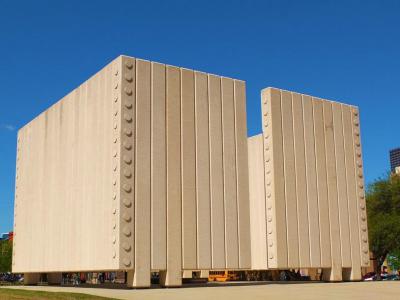
Designed by the renowned American architect and friend of the Kennedy family, Philip Johnson, the memorial is a striking example of architectural minimalism and thoughtful commemoration. Its design is notably marked by a cenotaph structure, an "empty tomb" that serves to honor the memory of President Kennedy while symbolizing the eternal freedom of his spirit. This concept is beautifully embodied through the memorial's key feature: a simple, yet profound, black granite slab inscribed with Kennedy's name in gold letters, all enclosed within an open-roofed concrete pavilion.
Johnson's architectural approach to the memorial was to create something "very humble and spartan," aiming to capture the essence of Kennedy's legacy rather than provide a grandiose monument. This intention is reflected in the monument's design, which is both understated and powerful, with several of its concrete columns ingeniously engineered to appear as though they are floating without visible support. This not only adds to the aesthetic appeal of the structure but also to its symbolic representation of Kennedy's spirit and ideals.
The John F. Kennedy Memorial complements the nearby Sixth Floor Museum, located in the very building from which Lee Harvey Oswald is believed to have fired the fatal shot. Together, these sites offer a comprehensive and deeply moving exploration of one of the most significant and sorrowful events in American history, providing visitors with a space for reflection on the life and legacy of John F. Kennedy.
Designed by the renowned American architect and friend of the Kennedy family, Philip Johnson, the memorial is a striking example of architectural minimalism and thoughtful commemoration. Its design is notably marked by a cenotaph structure, an "empty tomb" that serves to honor the memory of President Kennedy while symbolizing the eternal freedom of his spirit. This concept is beautifully embodied through the memorial's key feature: a simple, yet profound, black granite slab inscribed with Kennedy's name in gold letters, all enclosed within an open-roofed concrete pavilion.
Johnson's architectural approach to the memorial was to create something "very humble and spartan," aiming to capture the essence of Kennedy's legacy rather than provide a grandiose monument. This intention is reflected in the monument's design, which is both understated and powerful, with several of its concrete columns ingeniously engineered to appear as though they are floating without visible support. This not only adds to the aesthetic appeal of the structure but also to its symbolic representation of Kennedy's spirit and ideals.
The John F. Kennedy Memorial complements the nearby Sixth Floor Museum, located in the very building from which Lee Harvey Oswald is believed to have fired the fatal shot. Together, these sites offer a comprehensive and deeply moving exploration of one of the most significant and sorrowful events in American history, providing visitors with a space for reflection on the life and legacy of John F. Kennedy.
8) Fountain Place
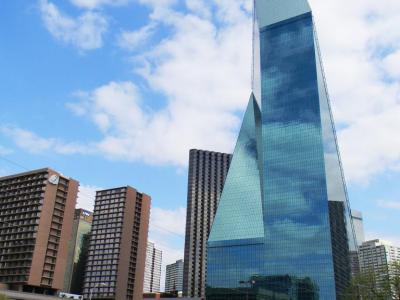
One of the skyline's most familiar features, the 60-story Fountain Place is the fifth-tallest building in Dallas and ranks among the most uniquely shaped buildings anywhere in the world. Though it stands perfectly well on its own, initial plans actually called for twin towers, with the second tower rotated 90 degrees from the original; however, with the collapse of the Texas oil, banking and real estate industry, followed by the savings and loan scandal of the 1980s, the project was never completed. Only recently, four decades later, has a sibling tower been set for completion on an adjacent lot.
Designed by I.M. Pei and Partners, the original high-riser is truly a work of art, reflecting the sky and surrounding structures with its green glass façade. Like an alluring crystal or a multi-faceted prism, it presents a different look from different angles, but what draws people even more is the beautiful water garden at street level, created by the same company that would later built the Fountains of Bellagio in Las Vegas. It's a wonderful, tranquil oasis with plenty of space to sit, read, and/or eat even on the hottest summer days, as the big trees shade piercing summer heat.
Designed by I.M. Pei and Partners, the original high-riser is truly a work of art, reflecting the sky and surrounding structures with its green glass façade. Like an alluring crystal or a multi-faceted prism, it presents a different look from different angles, but what draws people even more is the beautiful water garden at street level, created by the same company that would later built the Fountains of Bellagio in Las Vegas. It's a wonderful, tranquil oasis with plenty of space to sit, read, and/or eat even on the hottest summer days, as the big trees shade piercing summer heat.
9) Perot Museum of Nature and Science (must see)
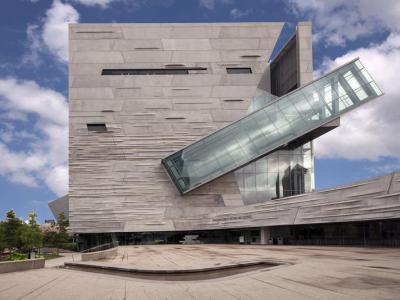
The Perot Museum is what one would imagine happening when elementary school textbooks come to life. Everything one sees here is not only interesting, but also educational – and hands on! It's an educational wonder, with no limit to the amount of learning that can take place. While geared towards children, there is still plenty to catch the attention of adults, from the birth of the solar system to modern technological breakthroughs in engineering and energy harvesting.
The architecture alone draws you in to this multi-story learning experience. Designed by 2005 Pritzker Prize Laureate Thom Mayne, the building was conceived as a large cube floating over a landscaped plinth (or base) and is designed to inspire awareness of science through an immersive and interactive environment. In collaboration with Dallas-based landscape architects, the plinth was landscaped with a 1-acre rolling green roof consisting of rock and native drought-resistant grasses that reflects Texas' indigenous landscape and demonstrates a living system that will evolve naturally over time.
By integrating architecture, nature and technology, the building's design demonstrates scientific principles and is used as a teaching tool that provides living examples of engineering, sustainability and technology at work. It also integrates a variety of sustainable strategies including a rainwater collection system that captures run-off water from the roof and parking lot, satisfying 74% of the museum's non-potable water needs and 100% of its irrigation needs.
The architecture alone draws you in to this multi-story learning experience. Designed by 2005 Pritzker Prize Laureate Thom Mayne, the building was conceived as a large cube floating over a landscaped plinth (or base) and is designed to inspire awareness of science through an immersive and interactive environment. In collaboration with Dallas-based landscape architects, the plinth was landscaped with a 1-acre rolling green roof consisting of rock and native drought-resistant grasses that reflects Texas' indigenous landscape and demonstrates a living system that will evolve naturally over time.
By integrating architecture, nature and technology, the building's design demonstrates scientific principles and is used as a teaching tool that provides living examples of engineering, sustainability and technology at work. It also integrates a variety of sustainable strategies including a rainwater collection system that captures run-off water from the roof and parking lot, satisfying 74% of the museum's non-potable water needs and 100% of its irrigation needs.
10) Klyde Warren Park (must see)
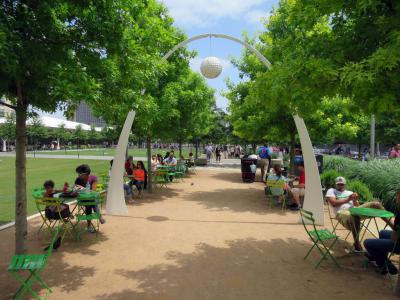
Klyde Warren Park, nestled in the heart of Downtown Dallas, is a 5.2-acre (2.1 hectares) urban oasis built above the Woodall Rodgers Freeway. This public park, which opened its gates in 2012, stands as a testament to community development and urban renewal. Named in honor of Klyde Warren, the young son of billionaire Kelcy Warren who generously donated $10 million towards the park's creation, it represents a significant philanthropic contribution to the city's landscape.
Klyde Warren Park is a prime example of a public-private partnership that enhances urban life. It bridges the vibrant Uptown neighborhood with the Dallas Arts District and the Downtown area, seamlessly integrating the city's cultural and social scenes. This strategic location over a section of the below-grade Woodall Rodgers Freeway, spanning three blocks between Pearl Street and Saint Paul Street, not only serves as a unique architectural feature but also connects various parts of the city, making it a central hub for residents and visitors alike.
The park's design, crafted by the renowned landscape architecture firm The Office of James Burnett, incorporates a blend of active and passive spaces to cater to a diverse range of activities and interests. From children's parks and reading nooks to fountains, game areas, and dog parks, the space is designed to encourage community interaction and outdoor enjoyment. Central to the park is a 6,000-square-foot (560 square meters) restaurant and performance stage, conceived by Thomas Phifer and Partners, which hosts a variety of events and acts as a focal point for gatherings.
Beyond its architectural and design elements, Klyde Warren Park offers an array of amenities and activities. Walking trails adorned with lush greenery provide peaceful escapes, while separate game areas for children and adults, food trucks offering a wide range of culinary delights, and special events contribute to the park's lively atmosphere. The availability of free WiFi and an outdoor library stocked with magazines, books, and newspapers adds to the convenience and enjoyment of visitors.
Why You Should Visit:
Perfect both as an active and social gathering place or simply as one to have a picnic on a beautiful day.
Tip:
Those wanting to add to the adventure may consider taking the FREE McKinney Ave trolley – the city's "secret" transport gem stopping at both ends of the park on its trip through the Arts District and Uptown.
Klyde Warren Park is a prime example of a public-private partnership that enhances urban life. It bridges the vibrant Uptown neighborhood with the Dallas Arts District and the Downtown area, seamlessly integrating the city's cultural and social scenes. This strategic location over a section of the below-grade Woodall Rodgers Freeway, spanning three blocks between Pearl Street and Saint Paul Street, not only serves as a unique architectural feature but also connects various parts of the city, making it a central hub for residents and visitors alike.
The park's design, crafted by the renowned landscape architecture firm The Office of James Burnett, incorporates a blend of active and passive spaces to cater to a diverse range of activities and interests. From children's parks and reading nooks to fountains, game areas, and dog parks, the space is designed to encourage community interaction and outdoor enjoyment. Central to the park is a 6,000-square-foot (560 square meters) restaurant and performance stage, conceived by Thomas Phifer and Partners, which hosts a variety of events and acts as a focal point for gatherings.
Beyond its architectural and design elements, Klyde Warren Park offers an array of amenities and activities. Walking trails adorned with lush greenery provide peaceful escapes, while separate game areas for children and adults, food trucks offering a wide range of culinary delights, and special events contribute to the park's lively atmosphere. The availability of free WiFi and an outdoor library stocked with magazines, books, and newspapers adds to the convenience and enjoyment of visitors.
Why You Should Visit:
Perfect both as an active and social gathering place or simply as one to have a picnic on a beautiful day.
Tip:
Those wanting to add to the adventure may consider taking the FREE McKinney Ave trolley – the city's "secret" transport gem stopping at both ends of the park on its trip through the Arts District and Uptown.
11) Katy Trail
The Katy Trail in Dallas is a recreational path built on the former Missouri-Kansas-Texas Railroad corridor, affectionately known as MKT or the Katy. It caters to various activities such as jogging, walking, inline skating, and bicycling, traversing through the Uptown and Oak Lawn neighborhoods.
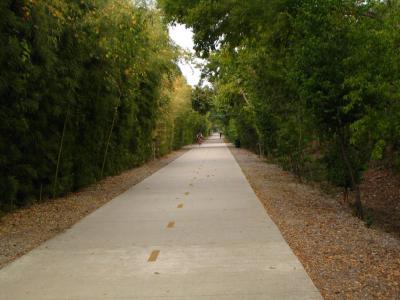
This trail spans 3.5 miles, stretching from Victory Park's American Airlines Center to Mockingbird Station near Southern Methodist University. It features a 12-foot-wide concrete path for pedestrians and cyclists, alongside a soft recycled-rubber track for runners.
Transforming abandoned railway tracks into a vibrant public space, the Katy Trail connects key districts of Dallas, serving as a popular recreational spot for locals and tourists alike. It has contributed to the revitalization of surrounding areas, driving up property values and boosting retail-restaurant sales.
The trail's significance extends beyond recreation; it symbolizes Dallas's transformation and community spirit. As cited by The Dallas Morning News in 2006, the Katy Trail has earned a reputation as one of the city's cherished outdoor spaces, embodying Dallas's evolution from a railroad hub to a modern metropolis focused on health and leisure.
This trail spans 3.5 miles, stretching from Victory Park's American Airlines Center to Mockingbird Station near Southern Methodist University. It features a 12-foot-wide concrete path for pedestrians and cyclists, alongside a soft recycled-rubber track for runners.
Transforming abandoned railway tracks into a vibrant public space, the Katy Trail connects key districts of Dallas, serving as a popular recreational spot for locals and tourists alike. It has contributed to the revitalization of surrounding areas, driving up property values and boosting retail-restaurant sales.
The trail's significance extends beyond recreation; it symbolizes Dallas's transformation and community spirit. As cited by The Dallas Morning News in 2006, the Katy Trail has earned a reputation as one of the city's cherished outdoor spaces, embodying Dallas's evolution from a railroad hub to a modern metropolis focused on health and leisure.
