Custom Walk in Luxembourg, Luxembourg by klmills3455 created on 2026-02-25
Guide Location: Luxembourg » Luxembourg
Guide Type: Custom Walk
# of Sights: 16
Tour Duration: 4 Hour(s)
Travel Distance: 7.9 Km or 4.9 Miles
Share Key: 8249N
Guide Type: Custom Walk
# of Sights: 16
Tour Duration: 4 Hour(s)
Travel Distance: 7.9 Km or 4.9 Miles
Share Key: 8249N
How It Works
Please retrieve this walk in the GPSmyCity app. Once done, the app will guide you from one tour stop to the next as if you had a personal tour guide. If you created the walk on this website or come to the page via a link, please follow the instructions below to retrieve the walk in the app.
Retrieve This Walk in App
Step 1. Download the app "GPSmyCity: Walks in 1K+ Cities" on Apple App Store or Google Play Store.



Step 2. In the GPSmyCity app, download(or launch) the guide "Luxembourg Map and Walking Tours".
Step 3. Tap the menu button located at upper right corner of the "Walks" screen and select "Retrieve custom walk". Enter the share key: 8249N
1) Luxembourg Railway Station
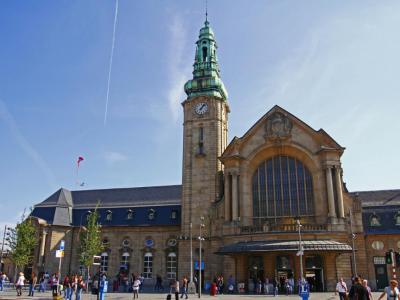
Luxembourg Railway Station (Gare de Luxembourg) is the central hub for national and international rail travel in the Grand Duchy. Located just south of the historic city centre, the station was originally opened in 1859 when Luxembourg joined the European railway network. The current building, completed in 1913, reflects a Neo-Baroque style with a tall clock tower and decorative stonework, designed by German architects in the context of Luxembourg's growing strategic importance. Its impressive façade and functional layout made it a symbol of modernity during the early 20th century.
The station is operated by CFL, the state railway company, and serves as the terminus for several key lines connecting Luxembourg with Belgium, France, and Germany. Frequent high-speed and regional trains link the city with destinations such as Paris, Brussels, and Trier. Inside, the station blends heritage with practicality: large arched windows, a vaulted ceiling, and restored historical details coexist with modern ticketing systems, shops, cafes, and digital information panels.
For tourists, the station is not only a gateway to Luxembourg’s charming towns and cross-border excursions but also a convenient entry point to the capital’s attractions. The nearby Freedom Avenue (Avenue de la Liberté) offers a direct route to the city centre, passing through tree-lined boulevards, historic buildings, and several notable landmarks. Whether arriving or departing, the Luxembourg railway station provides a practical and atmospheric introduction to the country, combining architectural presence, historical context, and efficient travel infrastructure.
The station is operated by CFL, the state railway company, and serves as the terminus for several key lines connecting Luxembourg with Belgium, France, and Germany. Frequent high-speed and regional trains link the city with destinations such as Paris, Brussels, and Trier. Inside, the station blends heritage with practicality: large arched windows, a vaulted ceiling, and restored historical details coexist with modern ticketing systems, shops, cafes, and digital information panels.
For tourists, the station is not only a gateway to Luxembourg’s charming towns and cross-border excursions but also a convenient entry point to the capital’s attractions. The nearby Freedom Avenue (Avenue de la Liberté) offers a direct route to the city centre, passing through tree-lined boulevards, historic buildings, and several notable landmarks. Whether arriving or departing, the Luxembourg railway station provides a practical and atmospheric introduction to the country, combining architectural presence, historical context, and efficient travel infrastructure.
2) Passerelle (Old Bridge) (must see)
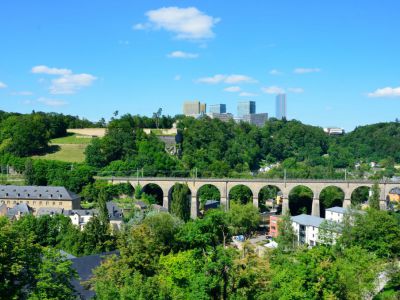
The Passerelle, locally known as the Old Bridge or Luxembourg Viaduct, is a striking mid-19th-century stone viaduct stretching 290 meters across the lush Pétrusse valley at a dramatic height of about 45 meters above the valley floor. Constructed between 1859 and 1861 by the British firm Waring Brothers, under designers Edouard Grenier and Auguste Letellier, the bridge originally replaced an earlier wooden footbridge to connect the Ville Haute with Luxembourg’s newly built railway station.
Visitors walking across its 24 elegant arches, some spanning between 8 and 15 meters, will notice the gentle curve along the bridge-a design choice rooted in military strategy during Luxembourg’s fortress era. In the early 20th century, it earned the affectionate name “Old Bridge” (Vieux Pont) when the Adolphe Bridge was completed in 1903, establishing itself in local history and identity.
Today, the Passerelle remains a central artery for road traffic, linking Avenue de la Gare in the south to Boulevard Franklin Delano Roosevelt in Ville Haute, and accommodating dedicated pedestrian paths, cycling lanes, and a bus corridor added during renovations between 2018 and 2020. Strolling across the bridge offers sweeping panoramic views of the city’s UNESCO-listed old town, the verdant valley, and the picture‑perfect Grund district below.
For tourists, the Passerelle is an ideal spot to begin exploring Luxembourg City. Its vantage point is perfect for photography, especially at sunrise or sunset, and the surrounding pathways of Pétrusse Park invite relaxation and observation. Nearby cafés, shops around Place de la Gare, and close proximity to landmarks such as Saint Michel’s Church and the casemates make the bridge a practical and scenic hub for your adventures.
Why You Should Visit:
For starters, you can explore it for hours without spending a dime. In addition, the views there are nothing short of glorious, especially when the weather is on your side.
It helps with orientation so that you can choose which direction to explore later, and the bridge's features and symmetry are lovely, too.
Tip:
Wear some decent walking shoes, and if you have moderate mobility issues, some hiking sticks are to be considered.
Visitors walking across its 24 elegant arches, some spanning between 8 and 15 meters, will notice the gentle curve along the bridge-a design choice rooted in military strategy during Luxembourg’s fortress era. In the early 20th century, it earned the affectionate name “Old Bridge” (Vieux Pont) when the Adolphe Bridge was completed in 1903, establishing itself in local history and identity.
Today, the Passerelle remains a central artery for road traffic, linking Avenue de la Gare in the south to Boulevard Franklin Delano Roosevelt in Ville Haute, and accommodating dedicated pedestrian paths, cycling lanes, and a bus corridor added during renovations between 2018 and 2020. Strolling across the bridge offers sweeping panoramic views of the city’s UNESCO-listed old town, the verdant valley, and the picture‑perfect Grund district below.
For tourists, the Passerelle is an ideal spot to begin exploring Luxembourg City. Its vantage point is perfect for photography, especially at sunrise or sunset, and the surrounding pathways of Pétrusse Park invite relaxation and observation. Nearby cafés, shops around Place de la Gare, and close proximity to landmarks such as Saint Michel’s Church and the casemates make the bridge a practical and scenic hub for your adventures.
Why You Should Visit:
For starters, you can explore it for hours without spending a dime. In addition, the views there are nothing short of glorious, especially when the weather is on your side.
It helps with orientation so that you can choose which direction to explore later, and the bridge's features and symmetry are lovely, too.
Tip:
Wear some decent walking shoes, and if you have moderate mobility issues, some hiking sticks are to be considered.
3) Notre-Dame Cathedral (must see)
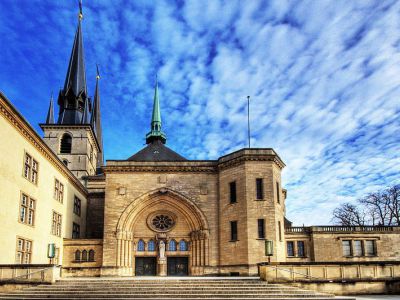
Nestled in the historic quarter of Ville Haute, the Notre-Dame Cathedral is a timeless gem combining architectural elegance and spiritual depth. Originally built as a Jesuit church between 1613 and 1621, under the direction of Brother Jean du Blocq and Ulrich Job, it was granted cathedral status in 1870 and stands today as the only cathedral in the Grand Duchy. Its façade, with three distinct towers added during the 1935–38 expansion, marks a striking silhouette on the city skyline.
This sacred space delights visitors with a rich mix of late Gothic, Renaissance, and Baroque design elements-from the soaring pointed arches and cylindrical pillars to the ornate alabaster carvings and sculpted pulpit that brings biblical stories to life. Inside, the cloistered nave and choir are illuminated by masterful stained‑glass windows, crafted by artists such as Louis Barillet and Josef Oberberger, which bathe the interior in vibrant, multicolored light.
At the heart of the cathedral lies the venerated statue of Our Lady of Luxembourg-also known as “Consolatrix Afflictorum”-the nation’s patron saint. This 16th-century wooden Madonna and Child holds deep religious and patriotic significance. It is paraded through the streets during the annual Octave pilgrimage in spring, a culminating tradition that dazzles with devotion and local festivity. The crypt also contains the tombs of Luxembourg’s Grand Dukes and prominent national figures.
Admission is free, and the cathedral is conveniently open daily-typically from early morning until evening-with optional audio-guide tours available in multiple languages. Whether you're drawn by architectural grandeur, spiritual solace, or cultural heritage, Notre‑Dame Cathedral offers a powerful and memorable welcome to Luxembourg City.
Why You Should Visit:
Visitors who are interested in art or Gothic architecture will love this stop. The stained glass windows are gorgeous, even in dim light.
Tip:
Anyone considering the rooftop trip – make sure you fit, as it's a spiral staircase top to bottom with only a brief rest area in a gift shop. Fantastic view from the top, but a trek! Don't forget to also visit the crypt, which is decidedly cooler on hot days.
This sacred space delights visitors with a rich mix of late Gothic, Renaissance, and Baroque design elements-from the soaring pointed arches and cylindrical pillars to the ornate alabaster carvings and sculpted pulpit that brings biblical stories to life. Inside, the cloistered nave and choir are illuminated by masterful stained‑glass windows, crafted by artists such as Louis Barillet and Josef Oberberger, which bathe the interior in vibrant, multicolored light.
At the heart of the cathedral lies the venerated statue of Our Lady of Luxembourg-also known as “Consolatrix Afflictorum”-the nation’s patron saint. This 16th-century wooden Madonna and Child holds deep religious and patriotic significance. It is paraded through the streets during the annual Octave pilgrimage in spring, a culminating tradition that dazzles with devotion and local festivity. The crypt also contains the tombs of Luxembourg’s Grand Dukes and prominent national figures.
Admission is free, and the cathedral is conveniently open daily-typically from early morning until evening-with optional audio-guide tours available in multiple languages. Whether you're drawn by architectural grandeur, spiritual solace, or cultural heritage, Notre‑Dame Cathedral offers a powerful and memorable welcome to Luxembourg City.
Why You Should Visit:
Visitors who are interested in art or Gothic architecture will love this stop. The stained glass windows are gorgeous, even in dim light.
Tip:
Anyone considering the rooftop trip – make sure you fit, as it's a spiral staircase top to bottom with only a brief rest area in a gift shop. Fantastic view from the top, but a trek! Don't forget to also visit the crypt, which is decidedly cooler on hot days.
4) Chocolate Company
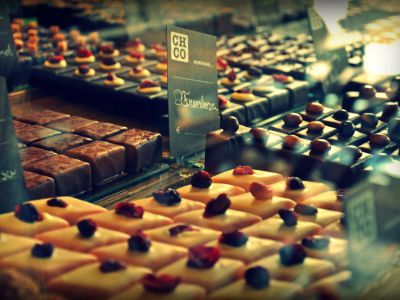
The Chocolate Company, usually abbreviated as CHCO, is an adorable coffee shop – one of the best spots for chocoholics in Luxembourg City – comfortably situated in the heart of the capital, right in front of the Grand Ducal Palace, on Rue du Marche aux Herbes. This innovative company's story began in 2004 with the appearance of their core product, the CHCO Hotchocspoon, an “iPhone among hot chocolates” created by chocolate chef Toussaint, featuring a delicious chunk of chocolate on a wooden spoon, with which the tastiest cup of this delicious drink can be made.
Years later, Hotchocspoons still undergo development and are now available in various shapes and sizes and in more than 60 flavors, sometimes surprising: from whisky and amaretto to Smarties for “kids only”. The real daredevils can try the seaweed variety, while the hardcore chocolate lovers will surely enjoy the 85% cocoa. The CHCO chefs really "cook" their chocolate, using premium cocoa beans, the best spices and other ingredients.
In addition to this, there is also an extensive lunch menu with coffees and smoothies, delicious salads, sandwiches and pies, plus a range of artisan bonbons, cool choc bars, cheerful chocolate fondues and many other delicious chocolate bites.
What makes CHCO unique - in addition to its high-quality chocolate - is the conceptual combination of bustling hospitality and craftsmanship, enabling guests to enjoy their products inside the café as well as at home, as a takeaway gift for family and friends. An assortment of CHCO-made boxed chocolates, a jar of truffles or a chocolate fondue makes as a super fun souvenir, both delicious and creative.
Life is grand! So take time to enjoy it with the help of CHCO chocolate!
Years later, Hotchocspoons still undergo development and are now available in various shapes and sizes and in more than 60 flavors, sometimes surprising: from whisky and amaretto to Smarties for “kids only”. The real daredevils can try the seaweed variety, while the hardcore chocolate lovers will surely enjoy the 85% cocoa. The CHCO chefs really "cook" their chocolate, using premium cocoa beans, the best spices and other ingredients.
In addition to this, there is also an extensive lunch menu with coffees and smoothies, delicious salads, sandwiches and pies, plus a range of artisan bonbons, cool choc bars, cheerful chocolate fondues and many other delicious chocolate bites.
What makes CHCO unique - in addition to its high-quality chocolate - is the conceptual combination of bustling hospitality and craftsmanship, enabling guests to enjoy their products inside the café as well as at home, as a takeaway gift for family and friends. An assortment of CHCO-made boxed chocolates, a jar of truffles or a chocolate fondue makes as a super fun souvenir, both delicious and creative.
Life is grand! So take time to enjoy it with the help of CHCO chocolate!
5) Grand Ducal Palace (must see)
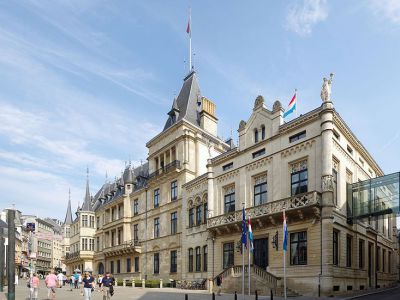
Nestled in the heart of Luxembourg City’s medieval Old Town, the Grand Ducal Palace is a striking example of Flemish Renaissance architecture that has served as the official seat of Luxembourg’s monarchy since 1890. Originally built as the city hall in 1572–1573 on the ruins of an earlier 1418 structure, the palace evolved from municipal government offices to the residence and workplace of the Grand Duke and his family.
Inside, the first floor of the palace boasts lavishly decorated state rooms such as the grand staircase, reception halls, dining rooms, and the Salon des Rois, where the Grand Duke hosts official events and welcomes dignitaries. Each room reflects both historical prestige and modern elegance, thanks to restorations undertaken in the 1960s and a comprehensive renovation between 1991 and 1996. While the palace remains the head of state’s primary workplace, its principal residence lies at Berg Castle in Colmar‑Berg.
Tourists can explore the interior during one of the exclusive guided tours available annually from mid‑July through the end of August. These 75‑minute tours-guided by the Luxembourg City Tourist Office-offer rare access to the Duke’s office, the formal dining room, and the regal Salon des Rois.
For visitors to Luxembourg City, the palace serves as a powerful symbol of the nation’s living heritage. Its magnificent façade, presence within the UNESCO‑listed Old Quarters and Fortifications, and central location make it an unmissable landmark-especially when combined with a scenic stroll through Ville Haute or a relaxing pause at one of the charming nearby cafés.
Why You Should Visit:
The palace is a local landmark right in the heart of Ville-Haute. When visiting Luxembourg, you will inevitably stop and take a look from street level. Keep an eye out for the palace guards' ceremonies.
Tips:
The palace is open for guided tours only during July and August. Ask for information at the information center at Place Guillaume II. Like at Buckingham Palace, you can take pictures with the guard if you wish.
Inside, the first floor of the palace boasts lavishly decorated state rooms such as the grand staircase, reception halls, dining rooms, and the Salon des Rois, where the Grand Duke hosts official events and welcomes dignitaries. Each room reflects both historical prestige and modern elegance, thanks to restorations undertaken in the 1960s and a comprehensive renovation between 1991 and 1996. While the palace remains the head of state’s primary workplace, its principal residence lies at Berg Castle in Colmar‑Berg.
Tourists can explore the interior during one of the exclusive guided tours available annually from mid‑July through the end of August. These 75‑minute tours-guided by the Luxembourg City Tourist Office-offer rare access to the Duke’s office, the formal dining room, and the regal Salon des Rois.
For visitors to Luxembourg City, the palace serves as a powerful symbol of the nation’s living heritage. Its magnificent façade, presence within the UNESCO‑listed Old Quarters and Fortifications, and central location make it an unmissable landmark-especially when combined with a scenic stroll through Ville Haute or a relaxing pause at one of the charming nearby cafés.
Why You Should Visit:
The palace is a local landmark right in the heart of Ville-Haute. When visiting Luxembourg, you will inevitably stop and take a look from street level. Keep an eye out for the palace guards' ceremonies.
Tips:
The palace is open for guided tours only during July and August. Ask for information at the information center at Place Guillaume II. Like at Buckingham Palace, you can take pictures with the guard if you wish.
6) St. Michael's Church
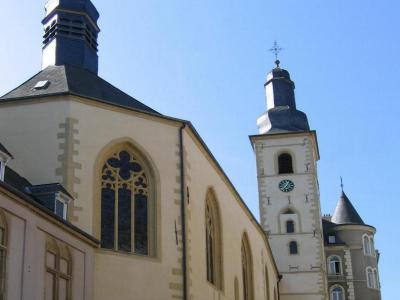
You'll find the small Saint Michael's Church between the Casemates du Bock and old town Luxembourg. It gets fewer visitors than the more striking Notre-Dame Cathedral, but it's historically more significant to the area.
This Roman Catholic church in the heart of Luxembourg City stands on the oldest religious site in the area. The first church was built here in 987 as the chapel for Count Siegfried's fortified castle on the Bock promontory.
Over the centuries, the structure was destroyed and rebuilt many times. The current structure was built in 1688. The coat of arms bears the fleurs-de-lis, a homage to the royal patron Louis XIV who authorized the church to rebuild following its destruction in the siege of 1684.
Behind the church, you will find the Chemin de la Corniche, a walking path with amazing views of the Bock promontory and its fortifications, as well as the Alzette River valley below.
Saint Michael’s is an active Catholic church. You will see a statue of archangel Michael outside, and inside the church is full of history and art. The Baroque altar and stained glass shouldn’t be missed. The church organ is wondrous and grand, and recitals occur often. It’s a small church that doesn’t require a lot of time to see but is still well worth the stop.
Why You Should Visit:
Probably the perfect gateway to the Chemin de la Corniche. You can visit the church, appreciate its history, its beautiful architecture and then head out for a stroll in the Corniche.
Tip:
Do check whether there is a (free) organ recital there. They tend to have them on Saturday mornings at around 11am.
This Roman Catholic church in the heart of Luxembourg City stands on the oldest religious site in the area. The first church was built here in 987 as the chapel for Count Siegfried's fortified castle on the Bock promontory.
Over the centuries, the structure was destroyed and rebuilt many times. The current structure was built in 1688. The coat of arms bears the fleurs-de-lis, a homage to the royal patron Louis XIV who authorized the church to rebuild following its destruction in the siege of 1684.
Behind the church, you will find the Chemin de la Corniche, a walking path with amazing views of the Bock promontory and its fortifications, as well as the Alzette River valley below.
Saint Michael’s is an active Catholic church. You will see a statue of archangel Michael outside, and inside the church is full of history and art. The Baroque altar and stained glass shouldn’t be missed. The church organ is wondrous and grand, and recitals occur often. It’s a small church that doesn’t require a lot of time to see but is still well worth the stop.
Why You Should Visit:
Probably the perfect gateway to the Chemin de la Corniche. You can visit the church, appreciate its history, its beautiful architecture and then head out for a stroll in the Corniche.
Tip:
Do check whether there is a (free) organ recital there. They tend to have them on Saturday mornings at around 11am.
7) Chemin de la Corniche (Walls of the Corniche) (must see)
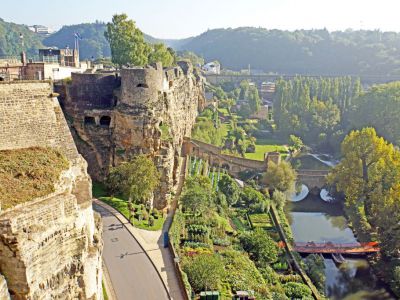
The Walls of the Corniche (Chemin de la Corniche) is a historic promenade, often hailed as “the most beautiful balcony in Europe” thanks to Luxembourg writer Batty Weber. This elegant pathway stretches along the old city ramparts-built in the 17th century by the Spaniards and French-gracefully perched above the Alzette valley. From its vantage point on the Bock promontory to the lower sections around the Holy Ghost Citadel, the corniche offers a stunning vantage over the terraced rooftops of Ville Haute and the storybook quarter of Grund below.
Walking the corniche feels like stepping into a living postcard. Visitors are treated to panoramic views of the Alzette River, the charming Grund neighborhood, and the verdant Rham Plateau. The stone pathway, once equipped with staircases to navigate steep inclines, was leveled off in the late 19th century following the fortress's dismantling of 1867. This transformation revealed unobstructed vistas-shields, and loopholes were removed-so that the beauty of Luxembourg’s dramatic terrain could fully shine.
Steeped in deep history, the corniche traces the remnants of a city fortress that spanned nearly a millennium. From the 10th-century castle of Count Siegfried to the sprawling ramparts heightened by Vauban’s expertise and later scaled back by the Treaty of London’s decree, this area still preserves pieces of its defensive past-walls, towers, casemates, and cobbled ancient paths. As part of the Old Quarters and Fortifications of Luxembourg, a UNESCO World Heritage site since 1994, the corniche forms a captivating chapter in the city’s resilient narrative.
For tourists, the Walls of the Corniche is a must-do stroll. It’s ideal for early mornings or twilight walks when sunlight bathes the valley and rooftops in golden hues. Interpretive plaques, scenic viewpoints, and access to the Grund via elevators or stairways enrich the experience. Along the path, you’ll be just steps from key landmarks-Saint Michael’s Church, the Bock bridge, and the Neumunster Abbey-each one anchoring the corniche within Luxembourg’s intimate tapestry of culture, architecture, and breathtaking beauty.
Walking the corniche feels like stepping into a living postcard. Visitors are treated to panoramic views of the Alzette River, the charming Grund neighborhood, and the verdant Rham Plateau. The stone pathway, once equipped with staircases to navigate steep inclines, was leveled off in the late 19th century following the fortress's dismantling of 1867. This transformation revealed unobstructed vistas-shields, and loopholes were removed-so that the beauty of Luxembourg’s dramatic terrain could fully shine.
Steeped in deep history, the corniche traces the remnants of a city fortress that spanned nearly a millennium. From the 10th-century castle of Count Siegfried to the sprawling ramparts heightened by Vauban’s expertise and later scaled back by the Treaty of London’s decree, this area still preserves pieces of its defensive past-walls, towers, casemates, and cobbled ancient paths. As part of the Old Quarters and Fortifications of Luxembourg, a UNESCO World Heritage site since 1994, the corniche forms a captivating chapter in the city’s resilient narrative.
For tourists, the Walls of the Corniche is a must-do stroll. It’s ideal for early mornings or twilight walks when sunlight bathes the valley and rooftops in golden hues. Interpretive plaques, scenic viewpoints, and access to the Grund via elevators or stairways enrich the experience. Along the path, you’ll be just steps from key landmarks-Saint Michael’s Church, the Bock bridge, and the Neumunster Abbey-each one anchoring the corniche within Luxembourg’s intimate tapestry of culture, architecture, and breathtaking beauty.
8) Bock Casemates (must see)
Luxembourg takes great pride in its title as the "Gibraltar of the North." This fearsome reputation comes from the heavily fortified city's past; it was taken by surprise once in 1443, and the only other time it was defeated was when it was surrendered to the French in 1795. Even then, the city walls were mostly unbreached.
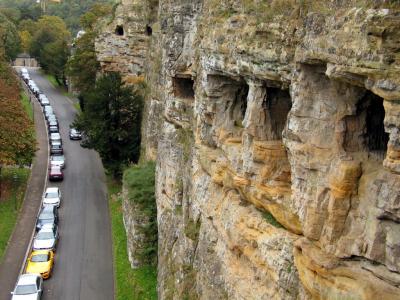
Luxembourg's northeast corner is home to Bock rock, a cliff that towers above the River Alzette. The Romans started with a small fortification here, but it was Count Siegfried in 963 who built the first castle. The city gradually grew around it, and city walls were built that connected to the Bock.
During different periods of occupation, various expansions and upgrades were made by each subsequent occupier. The casements were constructed by the Spanish and the Austrians.
While Luxembourg had begun in the Middle Ages as a relatively open city, by the 16th and 17th centuries, the city had become more or less closed off from the surrounding areas. There were so many walls, guarded gates, and fortresses that the merchant city began to suffer.
Sadly, most of the city's walls and fortresses were torn down in 1867 as a condition of the Treaty of London. Many various pieces and sections of the walls, forts, and towers remain.
Why You Should Visit:
The remains of the fortress and the city's old quarter have been a UNESCO World Heritage Site since 1994. The casements and other remains of the fortified city are one of Luxembourg's foremost attractions.
The Bock is the area that started Luxembourg; this is the defensive position that appealed greatly to Count Siegfried back in 963.
The casements were greatly enlarged during the period of the Austrians. Around 1744, the passages you see today were created. The central passage is 100 meters long and seven meters wide, with as many as 25 cannon slots branching off from either side. The area was large enough to be used as the barracks for several hundred soldiers.
Tips:
Be sure also to check out Pont du Château, the two-story bridge that connects the Bock to the old town. It was built in 1735 by the Austrians and featured four different ways to cross between the cliffs.
The antechamber of the Bock casements is the archeological crypt.
The views from the Bock of the old city can't be beaten. Don't forget your camera!
Luxembourg's northeast corner is home to Bock rock, a cliff that towers above the River Alzette. The Romans started with a small fortification here, but it was Count Siegfried in 963 who built the first castle. The city gradually grew around it, and city walls were built that connected to the Bock.
During different periods of occupation, various expansions and upgrades were made by each subsequent occupier. The casements were constructed by the Spanish and the Austrians.
While Luxembourg had begun in the Middle Ages as a relatively open city, by the 16th and 17th centuries, the city had become more or less closed off from the surrounding areas. There were so many walls, guarded gates, and fortresses that the merchant city began to suffer.
Sadly, most of the city's walls and fortresses were torn down in 1867 as a condition of the Treaty of London. Many various pieces and sections of the walls, forts, and towers remain.
Why You Should Visit:
The remains of the fortress and the city's old quarter have been a UNESCO World Heritage Site since 1994. The casements and other remains of the fortified city are one of Luxembourg's foremost attractions.
The Bock is the area that started Luxembourg; this is the defensive position that appealed greatly to Count Siegfried back in 963.
The casements were greatly enlarged during the period of the Austrians. Around 1744, the passages you see today were created. The central passage is 100 meters long and seven meters wide, with as many as 25 cannon slots branching off from either side. The area was large enough to be used as the barracks for several hundred soldiers.
Tips:
Be sure also to check out Pont du Château, the two-story bridge that connects the Bock to the old town. It was built in 1735 by the Austrians and featured four different ways to cross between the cliffs.
The antechamber of the Bock casements is the archeological crypt.
The views from the Bock of the old city can't be beaten. Don't forget your camera!
9) Neumünster Abbey (must see)
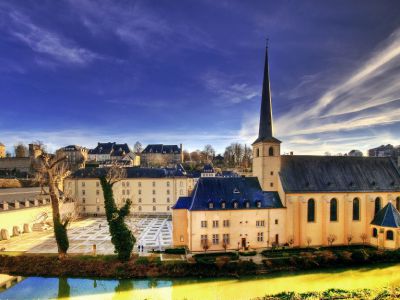
In the Grund district, in the southern part of Luxembourg City, is Neumünster Abbey. The building today houses a public meeting place and cultural center. It is the home of the European Institute of Cultural Routes and is also the site of many concerts, seminars, and exhibitions. Also onsite, the Lucien Wercollier Cloister houses many of the famous local sculptor's collection.
Neumünster Abbey was built in 1688 and expanded in 1720. It stands on the original Benedictine Altmünster Abbey site, which was destroyed by fire in 1542. The abbey consisted of a church and four wings surrounding an inner courtyard. After the French Revolution, authorities confiscated the church and altered the building into a military hospital.
The building was used as a police station, prison, troop barracks, and various points throughout its history. During WWII, the Nazis who occupied Luxembourg used the building to imprison resistors and political opponents.
The building has been the site of many notable events, including where Bulgaria and Romania signed their Treaty of Accession into the EU.
Neumünster Abbey was built in 1688 and expanded in 1720. It stands on the original Benedictine Altmünster Abbey site, which was destroyed by fire in 1542. The abbey consisted of a church and four wings surrounding an inner courtyard. After the French Revolution, authorities confiscated the church and altered the building into a military hospital.
The building was used as a police station, prison, troop barracks, and various points throughout its history. During WWII, the Nazis who occupied Luxembourg used the building to imprison resistors and political opponents.
The building has been the site of many notable events, including where Bulgaria and Romania signed their Treaty of Accession into the EU.
10) Fort Thüngen
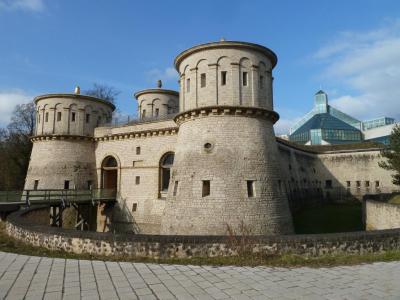
Fort Thungen, also affectionately known as the “Three Acorns” (Drai Eechelen), is a remarkable 18th‑century fortress perched above Luxembourg City in the Drai Eechelen Park, Kirchberg quarter. Built in 1732 under Austrian command to enclose the earlier Vauban-style Redoute du Parc, it was later expanded by Prussian forces in the 19th century before most of its structure was dismantled following the 1867 Treaty of Paris. Only the three distinctive round towers, each crowned with giant acorn motifs, survived intact along with the foundation walls, making them both emblematic and evocative remnants of Luxembourg’s fortress past.
Visitors can explore the Three Acorns Museum (Musee Drai Eechelen), opened in July 2012 within the fully restored fort, to trace Luxembourg’s history from 1443 to 1903. The museum’s permanent exhibit spans six underground casemate galleries filled with over 600 artifacts, maps, documents, and multimedia displays, supplemented by two additional casemates amply illustrating life and urban development in the capital over the centuries. From the rooftop terrace, sweeping panoramic views invite reflection on the verdant Alzette valley below and the contrasting modern skyline of the Kirchberg district, featuring the nearby glass pavilion of the MUDAM (Museum of Modern Art Grand‑Duc Jean).
The grounds themselves are equally inviting, located in a serene landscaped setting known as the Three Acorns Park (Parc des Trois Glands). A former deep moat, now a scenic garden, offers shaded paths ideal for a stroll or quiet respite. Guided tours are available and highly recommended for families and history enthusiasts to gain deeper insights into the site’s military significance and cultural identity.
Whether you're captivated by military architecture, fascinated by historical narratives, or simply seeking a tranquil spot with views of Luxembourg’s fortified past and vibrant present, Fort Thungen delivers a memorable blend of history, culture, and scenic charm.
Why You Should Visit:
There's a beautiful view from the walking path, and the fort itself is very impressive.
Each section takes you through the various histories of Luxembourg and how many times it changed hands until becoming its own country.
The artifacts and maps are very cool to see for anyone interested in this piece of history.
At the end, you can walk in the tunnels of the fort and then go to the top and walk along the roof.
Tip:
Visiting inside the fort requires admission; however, you can explore the outside walls for free!
As it is located in a pretty hilly area, you can just sit down and chill and enjoy the magnificent view of the city with no one to bother you.
Visitors can explore the Three Acorns Museum (Musee Drai Eechelen), opened in July 2012 within the fully restored fort, to trace Luxembourg’s history from 1443 to 1903. The museum’s permanent exhibit spans six underground casemate galleries filled with over 600 artifacts, maps, documents, and multimedia displays, supplemented by two additional casemates amply illustrating life and urban development in the capital over the centuries. From the rooftop terrace, sweeping panoramic views invite reflection on the verdant Alzette valley below and the contrasting modern skyline of the Kirchberg district, featuring the nearby glass pavilion of the MUDAM (Museum of Modern Art Grand‑Duc Jean).
The grounds themselves are equally inviting, located in a serene landscaped setting known as the Three Acorns Park (Parc des Trois Glands). A former deep moat, now a scenic garden, offers shaded paths ideal for a stroll or quiet respite. Guided tours are available and highly recommended for families and history enthusiasts to gain deeper insights into the site’s military significance and cultural identity.
Whether you're captivated by military architecture, fascinated by historical narratives, or simply seeking a tranquil spot with views of Luxembourg’s fortified past and vibrant present, Fort Thungen delivers a memorable blend of history, culture, and scenic charm.
Why You Should Visit:
There's a beautiful view from the walking path, and the fort itself is very impressive.
Each section takes you through the various histories of Luxembourg and how many times it changed hands until becoming its own country.
The artifacts and maps are very cool to see for anyone interested in this piece of history.
At the end, you can walk in the tunnels of the fort and then go to the top and walk along the roof.
Tip:
Visiting inside the fort requires admission; however, you can explore the outside walls for free!
As it is located in a pretty hilly area, you can just sit down and chill and enjoy the magnificent view of the city with no one to bother you.
11) Pfaffenthal Panoramic Elevator (must see)
Luxembourg is a city built on many levels, with the historic old city built on the plateau and other communities sitting below in deep gorges. Connecting the different parts of town for pedestrians and cyclists has always been a challenge from a planning perspective.
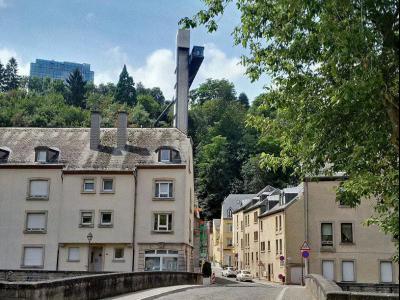
The Pfaffenthal Panoramic Elevator was begun in 2006, but due to various delays, it wasn't completed until 2017. Along with the Grund public elevator and the Pfaffenthal-Kirchberg funicular, the city is connected to the Alzette and Petrusse river valleys below.
The elevator's main shaft is about 60 meters tall, and it is built right into the Cote d'Eich hillside. Seventy-two anchor bolts are drilled as far as 30 meters into the bedrock, and the terrain is reinforced with concrete. The footbridge leading to the elevator in Pescatore Park has an observation platform that extends out over the Alzette Valley. It also has window panels and clear glass flooring, allowing for some stunning views.
Why You Should Visit:
The glass-walled elevator is a quick and easy way to connect to the community of Pfaffenthal, but that's far from the only reason to take the ride. The elevator provides some of the most beautiful panoramic views to be found anywhere in the city.
Tips:
Even if you don't plan to ride the elevator, take the trip out on the footbridge to check out the observation deck.
If you'd like to visit the Pfaffenthal section of town, consider going down on the elevator and back up via the Pfaffenthal-Kirchberg funicular. In this part of town, you'll find the Grand-Duchess Charlotte bridge, several parks, and Fort Niedergrünewald.
The Pfaffenthal Panoramic Elevator was begun in 2006, but due to various delays, it wasn't completed until 2017. Along with the Grund public elevator and the Pfaffenthal-Kirchberg funicular, the city is connected to the Alzette and Petrusse river valleys below.
The elevator's main shaft is about 60 meters tall, and it is built right into the Cote d'Eich hillside. Seventy-two anchor bolts are drilled as far as 30 meters into the bedrock, and the terrain is reinforced with concrete. The footbridge leading to the elevator in Pescatore Park has an observation platform that extends out over the Alzette Valley. It also has window panels and clear glass flooring, allowing for some stunning views.
Why You Should Visit:
The glass-walled elevator is a quick and easy way to connect to the community of Pfaffenthal, but that's far from the only reason to take the ride. The elevator provides some of the most beautiful panoramic views to be found anywhere in the city.
Tips:
Even if you don't plan to ride the elevator, take the trip out on the footbridge to check out the observation deck.
If you'd like to visit the Pfaffenthal section of town, consider going down on the elevator and back up via the Pfaffenthal-Kirchberg funicular. In this part of town, you'll find the Grand-Duchess Charlotte bridge, several parks, and Fort Niedergrünewald.
12) Grand Duchess Charlotte Bridge
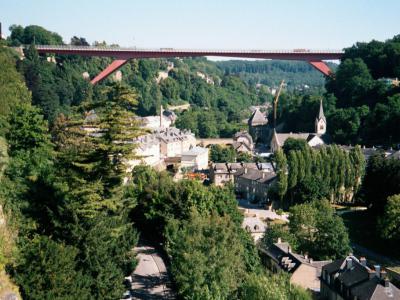
The Grand Duchess Charlotte Bridge, affectionately known as the “Red Bridge”, is one of Luxembourg City’s most iconic landmarks. Completed in 1965 and opened in 1966, it was designed by German architect Egon Jux following a national competition, and built as part of a broader initiative to develop the Kirchberg plateau as the future home of European institutions. The bridge spans the Alzette River and the Pfaffenthal valley, rising approximately 74–75 meters above the valley floor, stretching 355 meters long with a clear main span of 234 meters. Its striking red steel structure-drawing on Luxembourg’s industrial heritage-makes it a bold visual anchor in the city's skyline.
For tourists, the Red Bridge is more than just a functional crossing-it’s a fascinating blend of urban design, history, and picturesque views. The bridge carries six lanes of road traffic, a tram line (LuxTram’s Line 1 since 2018), plus dedicated pedestrian and cycle paths suspended beneath the main deck. Walking or cycling across presents panoramic vistas in every direction: the historic Ville Haute, steep valley walls, and the ultra-modern Kirchberg district, dotted with EU institutions and sleek skyscrapers.
Highlights include the chance to pause mid-span and take photos of the city curving beneath you, especially dramatic at sunset or under soft evening illumination. Nearby attractions like the Pfaffenthal‑Kirchberg funicular, which runs adjacent to the bridge and lifts visitors up the steep hillside, make combining a bridge visit with a fun glimpse of city infrastructure effortless.
In short, the Grand Duchess Charlotte Bridge is a must for visitors to Luxembourg: it merges engineering brilliance, cultural significance, and photogenic views into one memorable experience, bridging the city’s historic heart with its modern European future.
Why You Should Visit:
The iconic bridge of the city, with a view of the valley that separates the upper town and the lower town.
It also offers the possibility of taking some souvenir photos with monuments characteristic of the city.
For tourists, the Red Bridge is more than just a functional crossing-it’s a fascinating blend of urban design, history, and picturesque views. The bridge carries six lanes of road traffic, a tram line (LuxTram’s Line 1 since 2018), plus dedicated pedestrian and cycle paths suspended beneath the main deck. Walking or cycling across presents panoramic vistas in every direction: the historic Ville Haute, steep valley walls, and the ultra-modern Kirchberg district, dotted with EU institutions and sleek skyscrapers.
Highlights include the chance to pause mid-span and take photos of the city curving beneath you, especially dramatic at sunset or under soft evening illumination. Nearby attractions like the Pfaffenthal‑Kirchberg funicular, which runs adjacent to the bridge and lifts visitors up the steep hillside, make combining a bridge visit with a fun glimpse of city infrastructure effortless.
In short, the Grand Duchess Charlotte Bridge is a must for visitors to Luxembourg: it merges engineering brilliance, cultural significance, and photogenic views into one memorable experience, bridging the city’s historic heart with its modern European future.
Why You Should Visit:
The iconic bridge of the city, with a view of the valley that separates the upper town and the lower town.
It also offers the possibility of taking some souvenir photos with monuments characteristic of the city.
13) Ville Haute (Old Town)
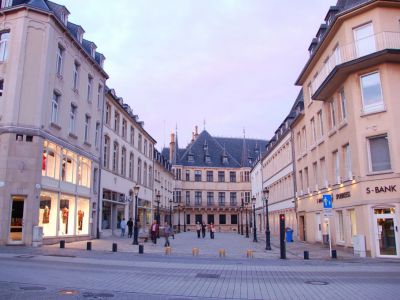
Luxembourg’s Old Town (Ville Haute) is the historic heart of the capital and a UNESCO World Heritage Site, known for its dramatic topography and layered history. Perched atop a rocky plateau between deep river gorges, this fortified area has been a strategic stronghold since Roman times and later became a key European fortress city. Its ramparts, cobblestone lanes, and well-preserved architecture offer a compelling glimpse into centuries of military, religious, and civic life. Despite modern development, the Old Town retains much of its medieval and 18th-century character, blending old-world charm with cosmopolitan flair.
Among its standout landmarks is the Grand Ducal Palace, an elegant Renaissance-style residence used by Luxembourg’s monarch. Nearby, the Notre-Dame Cathedral stands out for its Gothic architecture and royal crypt, while Place Guillaume II serves as the city’s main civic square, flanked by the Town Hall and the statue of Grand Duke William II. Shoppers and sightseers will also find pedestrian-friendly Herb Market Street (Rue du Marché-aux-Herbes) and Capuchin Street (Rue des Capucins) filled with boutiques, cafes, and local delicacies.
The district’s elevated position offers stunning views of the lower quarters, such as Grund and Clausen, with the Chemin de la Corniche walkway earning the nickname “Europe’s most beautiful balcony.” Visitors can explore the Bock Promontory, the site of the original fortress, and descend into the casemates-an underground network of tunnels carved into the rock. Whether approached as a historical site, shopping district, or scenic outlook, the Old Town remains a rich and rewarding introduction to Luxembourg’s layered identity.
Among its standout landmarks is the Grand Ducal Palace, an elegant Renaissance-style residence used by Luxembourg’s monarch. Nearby, the Notre-Dame Cathedral stands out for its Gothic architecture and royal crypt, while Place Guillaume II serves as the city’s main civic square, flanked by the Town Hall and the statue of Grand Duke William II. Shoppers and sightseers will also find pedestrian-friendly Herb Market Street (Rue du Marché-aux-Herbes) and Capuchin Street (Rue des Capucins) filled with boutiques, cafes, and local delicacies.
The district’s elevated position offers stunning views of the lower quarters, such as Grund and Clausen, with the Chemin de la Corniche walkway earning the nickname “Europe’s most beautiful balcony.” Visitors can explore the Bock Promontory, the site of the original fortress, and descend into the casemates-an underground network of tunnels carved into the rock. Whether approached as a historical site, shopping district, or scenic outlook, the Old Town remains a rich and rewarding introduction to Luxembourg’s layered identity.
14) Place d'Armes
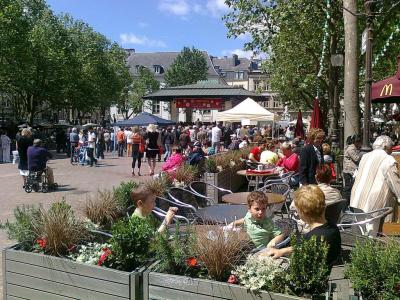
The original town square of the old town is still the heart of the community. Here, you'll find locals and visitors out and about, enjoying the fresh air and sunshine during the warm summer months. Many restaurants and cafés have outdoor patios, and this whole part of town is a pedestrian-only zone. You'll often find live music or open-air markets going on.
On the square's eastern side is the Cercle, which was initially designed as an administrative building. It was the site of the European Court of Justice but is now a venue for cultural events. Outside of it, you will find a sculpture of Countess Ermisinde with the 1244 Charter of Emancipation that guaranteed citizen's rights.
On the opposite end, there are monuments dedicated to two of Luxembourg's poets, Dicks and Michel Lentz. The lion on the monument represents the Grand Duchy, and the national motto is inscribed on the pillar. It translates, "We want to stay what we are."
The square gets its name from its historical purpose of being a gathering spot and parade ground for troops. The spot was laid out after a massive fire destroyed much of Ville-Haute in 1554. Dutch military engineer Sebastian van Noyen created the first version of the square called New Market.
In 1671, Spanish engineer Jean Charles de Landas used the area as a parade spot for the garrison. Flagstones and lime trees were added under Louis XIV.
On the square's eastern side is the Cercle, which was initially designed as an administrative building. It was the site of the European Court of Justice but is now a venue for cultural events. Outside of it, you will find a sculpture of Countess Ermisinde with the 1244 Charter of Emancipation that guaranteed citizen's rights.
On the opposite end, there are monuments dedicated to two of Luxembourg's poets, Dicks and Michel Lentz. The lion on the monument represents the Grand Duchy, and the national motto is inscribed on the pillar. It translates, "We want to stay what we are."
The square gets its name from its historical purpose of being a gathering spot and parade ground for troops. The spot was laid out after a massive fire destroyed much of Ville-Haute in 1554. Dutch military engineer Sebastian van Noyen created the first version of the square called New Market.
In 1671, Spanish engineer Jean Charles de Landas used the area as a parade spot for the garrison. Flagstones and lime trees were added under Louis XIV.
15) Gëlle Fra (Monument of Remembrance)
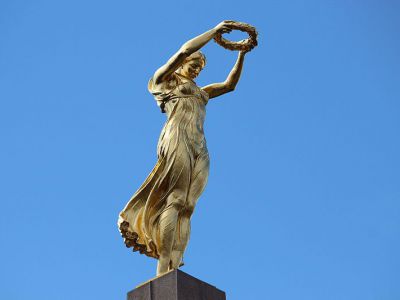
Luxembourgish for "Golden Lady," the Gëlle Fra is a monument located in Constitution Square. The square itself was created on an ancient Bock bastion overlooking the Pétrusse River and park in the valley below. The memorial is to the thousands of Luxembourgers who volunteered for service during the World Wars. It was built in 1923.
The centerpiece of the monument is a 21-meter tall granite obelisk. A gilded bronze statue of Nike, the goddess of victory, stands atop an obelisk.
Germany occupied Luxembourg during the First World War, so there was little that the nation's people could do to help the Allied Powers. But over 3,700 Luxembourgers living outside of the country volunteered to fight in the French army; over 2,000 of them became casualties of the war. The monument was created to honor their courage and sacrifice.
The Nazis dismantled the monument during WWII, but various pieces were recovered and restored. The Gëlle Fra statue was missing until she turned up under the national football stadium's main stands in 1980. Recent additions to the memorial have honored those who fought in World War II and the Korean War.
Immediately west of Constitution Square is the Casemates de la Pétrusse. Both are situated above the Parcs de la Pétrusse and Garden Luxembourg. Walking trails and stairways connect to the valley below, with beautiful views of the Adolphe Bridge crossing over the Pétrusse River and park.
Why You Should Visit:
You can see it from a distance but come near to experience its beauty.
The view of the city from the memorial area is even more fantastic.
Tip:
The best views of Gëlle Fra are during the Christmas market as the Ferris wheel is put up in the parking lot surrounding the statue and you can have a very close look.
The centerpiece of the monument is a 21-meter tall granite obelisk. A gilded bronze statue of Nike, the goddess of victory, stands atop an obelisk.
Germany occupied Luxembourg during the First World War, so there was little that the nation's people could do to help the Allied Powers. But over 3,700 Luxembourgers living outside of the country volunteered to fight in the French army; over 2,000 of them became casualties of the war. The monument was created to honor their courage and sacrifice.
The Nazis dismantled the monument during WWII, but various pieces were recovered and restored. The Gëlle Fra statue was missing until she turned up under the national football stadium's main stands in 1980. Recent additions to the memorial have honored those who fought in World War II and the Korean War.
Immediately west of Constitution Square is the Casemates de la Pétrusse. Both are situated above the Parcs de la Pétrusse and Garden Luxembourg. Walking trails and stairways connect to the valley below, with beautiful views of the Adolphe Bridge crossing over the Pétrusse River and park.
Why You Should Visit:
You can see it from a distance but come near to experience its beauty.
The view of the city from the memorial area is even more fantastic.
Tip:
The best views of Gëlle Fra are during the Christmas market as the Ferris wheel is put up in the parking lot surrounding the statue and you can have a very close look.
16) Am Tunnel
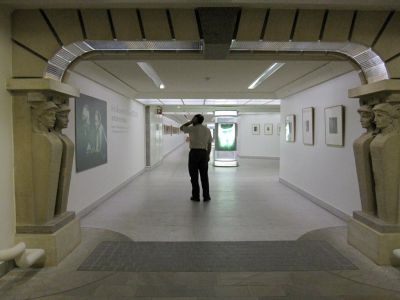
Hidden 15 meters beneath the Bourbon Plateau, Am Tunnel is an extraordinary contemporary art gallery carved out of Luxembourg’s historic casemates. Originally formed by centuries‑old fortress passages and later expanded in 1987 to link BCEE bank buildings, the tunnel was transformed into a public art space in the early 1990s, opening its first exhibition in 1993. Stretching some 350 meters, this subterranean corridor offers visitors a dramatic journey-no ordinary gallery visit.
Inside, the raw stone walls provide a striking contrast to curated displays. The main gallery showcases rotating exhibitions from Luxembourg’s vibrant contemporary art scene, featuring over a hundred local artists. A highlight is the permanent Edward Steichen space, celebrating the native‑born photographer renowned for “The Family of Man” and other iconic works. These avant‑garde installations nestled in the cool, quiet tunnel create a unique sensory blend of history and modern creativity.
The gallery resides within the BCEE’s former Rousegaertchen building, just steps from Place d’Armes and Luxembourg’s bustling Gare quarter. For a truly immersive experience, allow 1–2 hours to explore both the contemporary exhibitions and the atmospheric underground environment.
Whether you're seeking refuge on a rainy afternoon, exploring the intersection of history and art, or discovering local creative voices, Am Tunnel delivers. Don’t miss the chance to pause at the tunnel’s far end café or gift shop for a relaxed finale. This intimate, unconventional space perfectly encapsulates Luxembourg City’s blend of tradition and innovation-a cultural gem just beneath your feet.
Why You Should Visit:
Definitely one of the most unique experiences that you can have in Europe! When was the last time you had a first-class encounter with art in a former Resistance tunnel from WWII?
Inside, the raw stone walls provide a striking contrast to curated displays. The main gallery showcases rotating exhibitions from Luxembourg’s vibrant contemporary art scene, featuring over a hundred local artists. A highlight is the permanent Edward Steichen space, celebrating the native‑born photographer renowned for “The Family of Man” and other iconic works. These avant‑garde installations nestled in the cool, quiet tunnel create a unique sensory blend of history and modern creativity.
The gallery resides within the BCEE’s former Rousegaertchen building, just steps from Place d’Armes and Luxembourg’s bustling Gare quarter. For a truly immersive experience, allow 1–2 hours to explore both the contemporary exhibitions and the atmospheric underground environment.
Whether you're seeking refuge on a rainy afternoon, exploring the intersection of history and art, or discovering local creative voices, Am Tunnel delivers. Don’t miss the chance to pause at the tunnel’s far end café or gift shop for a relaxed finale. This intimate, unconventional space perfectly encapsulates Luxembourg City’s blend of tradition and innovation-a cultural gem just beneath your feet.
Why You Should Visit:
Definitely one of the most unique experiences that you can have in Europe! When was the last time you had a first-class encounter with art in a former Resistance tunnel from WWII?
