Custom Walk in Belfast, Ireland by jos1986_7ae6b9 created on 2026-03-09
Guide Location: Ireland » Belfast
Guide Type: Custom Walk
# of Sights: 15
Tour Duration: 5 Hour(s)
Travel Distance: 10.6 Km or 6.6 Miles
Share Key: ZMRMP
Guide Type: Custom Walk
# of Sights: 15
Tour Duration: 5 Hour(s)
Travel Distance: 10.6 Km or 6.6 Miles
Share Key: ZMRMP
How It Works
Please retrieve this walk in the GPSmyCity app. Once done, the app will guide you from one tour stop to the next as if you had a personal tour guide. If you created the walk on this website or come to the page via a link, please follow the instructions below to retrieve the walk in the app.
Retrieve This Walk in App
Step 1. Download the app "GPSmyCity: Walks in 1K+ Cities" on Apple App Store or Google Play Store.



Step 2. In the GPSmyCity app, download(or launch) the guide "Belfast Map and Walking Tours".
Step 3. Tap the menu button located at upper right corner of the "Walks" screen and select "Retrieve custom walk". Enter the share key: ZMRMP
1) Merchant's Hotel
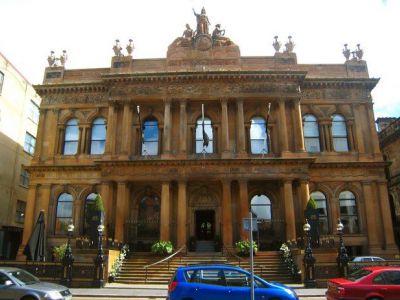
Built of golden sandstone, the Merchant's Hotel building (former Ulster Bank ) is definitely worth seeing while in Belfast. It is a Victorian style construction with outstanding ornamentation that has received a great deal of admiration over the years. The building site was originally acquired in 1836, but the actual construction works began in 1857.
Bank directors Robert Grimshaw and James Heron traveled throughout the UK in order to find perfect examples of bank designs. Later, they held a competition for the best design and the winner was a talented Glaswegian named James Hamilton.
The exterior of the hotel is in decorated in Italian style, it sports three sculptures representing Commerce, Justice and Britannia on top of the fabulous facade. The hotel's main hall is decorated with fruit and foliage designs, and the four Corinthian columns complete the architectural complex of the interior.
Due to its magnificent design, the building of the Merchant's Hotel is known to be one of the most renowned and appreciated constructions in Belfast.
Bank directors Robert Grimshaw and James Heron traveled throughout the UK in order to find perfect examples of bank designs. Later, they held a competition for the best design and the winner was a talented Glaswegian named James Hamilton.
The exterior of the hotel is in decorated in Italian style, it sports three sculptures representing Commerce, Justice and Britannia on top of the fabulous facade. The hotel's main hall is decorated with fruit and foliage designs, and the four Corinthian columns complete the architectural complex of the interior.
Due to its magnificent design, the building of the Merchant's Hotel is known to be one of the most renowned and appreciated constructions in Belfast.
2) Albert Memorial Clock
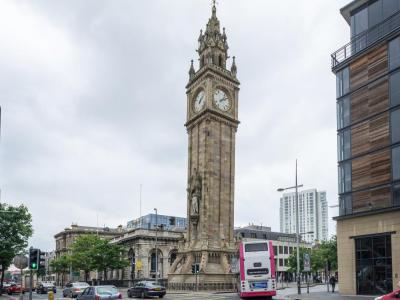
The Albert Memorial Clock, often simply called the Albert Clock, is one of Belfast’s most recognisable landmarks. Perched in Queen’s Square at the east end of High Street, this Gothic Revival clock tower was built between 1865 and 1869 as a memorial to Prince Albert, consort to Queen Victoria. Designed by the accomplished architect W. J. Barre, also famed for Belfast's Ulster Hall, it stands approximately 113 feet (34 meters) tall.
Constructed of pinkish Scrabo sandstone, the tower blends French and Italian Gothic styles, adorned with flying buttresses, heraldic lions, angels, gargoyles, floral motifs, and crowned by an ornate octagonal belfry. A striking life-size statue of Prince Albert in the robes of a Knight of the Garter, sculpted by S. F. Lynn, stands on the west face. Inside, a two-tonne bell cast by Francis Moore could once be heard up to 8 miles away.
One of the tower’s most intriguing quirks is its lean-an eastward tilt of about four feet-earning it the affectionate nickname “Belfast’s Leaning Tower of Pisa.” The tilt resulted from the tower being built on reclaimed, marshy ground near the River Farset, supported on timber piles. Ornamental pinnacles and the statue canopy were removed in 1924 to ease stress, and a substantial restoration between 2000 and 2002 reinforced the foundations and reinstated lost carvings.
Today, the Albert Clock stands as a poetic fusion of Victorian craftsmanship, civic pride, and idiosyncratic charm. It survived damage from an IRA bomb in 1992, and its tilted stance and intricate stonework make it a delightful must-see for architecture buffs, history lovers, and photographers alike. Whether admired by day or illuminated at night, it richly rewards a stroll through Belfast’s Cathedral Quarter.
Constructed of pinkish Scrabo sandstone, the tower blends French and Italian Gothic styles, adorned with flying buttresses, heraldic lions, angels, gargoyles, floral motifs, and crowned by an ornate octagonal belfry. A striking life-size statue of Prince Albert in the robes of a Knight of the Garter, sculpted by S. F. Lynn, stands on the west face. Inside, a two-tonne bell cast by Francis Moore could once be heard up to 8 miles away.
One of the tower’s most intriguing quirks is its lean-an eastward tilt of about four feet-earning it the affectionate nickname “Belfast’s Leaning Tower of Pisa.” The tilt resulted from the tower being built on reclaimed, marshy ground near the River Farset, supported on timber piles. Ornamental pinnacles and the statue canopy were removed in 1924 to ease stress, and a substantial restoration between 2000 and 2002 reinforced the foundations and reinstated lost carvings.
Today, the Albert Clock stands as a poetic fusion of Victorian craftsmanship, civic pride, and idiosyncratic charm. It survived damage from an IRA bomb in 1992, and its tilted stance and intricate stonework make it a delightful must-see for architecture buffs, history lovers, and photographers alike. Whether admired by day or illuminated at night, it richly rewards a stroll through Belfast’s Cathedral Quarter.

3) The Big Fish
The Big Fish-also known locally and lovingly as the Big Blue Fish-is one of Belfast’s most eye-catching and cherished public art pieces. Created by artist John Kindness in 1999, this 10-meter-long ceramic mosaic sculpture was installed at Donegall Quay, near the Lagan Lookout and Customs House, to mark the regeneration of the River Lagan. Officially a salmon (yes, the signs confirm it!), it stands right where the River Farset, from which Belfast gets its name (Béal Feirste meaning "mouth of the Farset"), meets the Lagan. The sculpture is hard to miss-not just because of its size, but because it sits at the very heart of the city’s history.
What makes The Big Fish truly special is its skin. Each shimmering blue ceramic tile is printed with texts, illustrations, and images that collectively tell the story of Belfast. From Tudor-era maps to 20th-century headlines, it’s like a visual time capsule. There are even drawings by schoolchildren and community members, adding a personal and playful layer to the piece-including an Ulster Fry and a cheerful soldier. Contributions came from local schools and day centres, while historic imagery was provided by the Ulster Museum. Inside the fish, there’s a literal time capsule too, containing images, poetry, and documents about the city.
More than just a quirky photo spot, the Big Fish is a symbol of Belfast’s cultural rebirth and deep connection to the water that shaped it. Locals might chuckle at its playful nicknames, but there’s no denying that this gleaming salmon has swum its way into the city’s heart-and become one of its most iconic landmarks.
What makes The Big Fish truly special is its skin. Each shimmering blue ceramic tile is printed with texts, illustrations, and images that collectively tell the story of Belfast. From Tudor-era maps to 20th-century headlines, it’s like a visual time capsule. There are even drawings by schoolchildren and community members, adding a personal and playful layer to the piece-including an Ulster Fry and a cheerful soldier. Contributions came from local schools and day centres, while historic imagery was provided by the Ulster Museum. Inside the fish, there’s a literal time capsule too, containing images, poetry, and documents about the city.
More than just a quirky photo spot, the Big Fish is a symbol of Belfast’s cultural rebirth and deep connection to the water that shaped it. Locals might chuckle at its playful nicknames, but there’s no denying that this gleaming salmon has swum its way into the city’s heart-and become one of its most iconic landmarks.
4) SS Nomadic (must see)
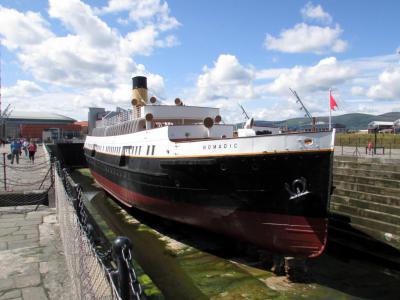
The SS Nomadic is a beautifully restored steamship berthed in Hamilton Dock, a must-see attraction for anyone exploring the Titanic Quarter. Launched in April 1911 by Harland & Wolff, the same legendary shipyard responsible for RMS Titanic and RMS Olympic, this 67‑metre tender served as a crucial shuttle, ferrying first‑ and second‑class passengers, luggage, mail, and provisions from Cherbourg to the mighty liners anchored offshore. Admiring her from the dock, you’ll appreciate her graceful, scaled‑down elegance – she’s often affectionately dubbed Titanic’s “little sister”.
Since returning to her birthplace in 2006, Nomadic has undergone an extensive restoration, finishing in 2013, to revive her Edwardian-era splendour. Today, she is the only surviving vessel of the White Star Line and the sole remaining ship crafted by Thomas Andrews – the man behind Titanic’s design. Abundant period charm awaits visitors: richly decorated first‑class lounges, original brass portholes, and a clear demarcation of third‑class quarters illustrate a fascinating slice of social history onboard.
A visit to Nomadic is included with the Titanic Belfast ticket, offering a complementary and hands‑on experience to the museum’s exhibits. Named “The Nomadic Experience”, tours are immersive and family-friendly, featuring interactive storytelling, character performances like a first‑class barman, audio guides in multiple languages, and plenty of deck space to explore. This makes it ideal for both history buffs and families.
Paired with the neighbouring Titanic Belfast attraction, a stroll past the iconic Samson and Goliath cranes, or a café stop in Titanic Quarter, this visit becomes more than satisfying-it becomes essential to understanding Belfast’s rich maritime heritage.
Since returning to her birthplace in 2006, Nomadic has undergone an extensive restoration, finishing in 2013, to revive her Edwardian-era splendour. Today, she is the only surviving vessel of the White Star Line and the sole remaining ship crafted by Thomas Andrews – the man behind Titanic’s design. Abundant period charm awaits visitors: richly decorated first‑class lounges, original brass portholes, and a clear demarcation of third‑class quarters illustrate a fascinating slice of social history onboard.
A visit to Nomadic is included with the Titanic Belfast ticket, offering a complementary and hands‑on experience to the museum’s exhibits. Named “The Nomadic Experience”, tours are immersive and family-friendly, featuring interactive storytelling, character performances like a first‑class barman, audio guides in multiple languages, and plenty of deck space to explore. This makes it ideal for both history buffs and families.
Paired with the neighbouring Titanic Belfast attraction, a stroll past the iconic Samson and Goliath cranes, or a café stop in Titanic Quarter, this visit becomes more than satisfying-it becomes essential to understanding Belfast’s rich maritime heritage.
5) Titanic Belfast (must see)
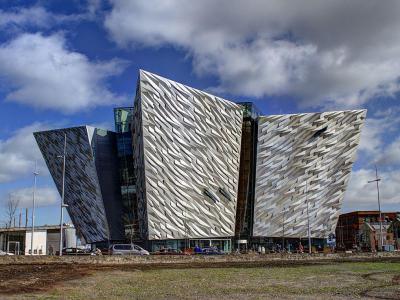
Nestled in the heart of Belfast’s revitalized Titanic Quarter, Titanic Belfast stands as a striking modern monument to one of history’s most famous ocean liners. Opened in 2012 on the very site where RMS Titanic was designed, built, and launched, the building’s jagged silvery exterior-crafted from over 3,000 aluminum shards-evokes the image of ship bows cutting through water and shimmering ice crystals.
Inside, the visitor experience unfolds across nine immersive galleries that chronicle Titanic’s entire journey-from conception and engineering marvels in Belfast’s bustling shipyards, through its tragic maiden voyage in 1912, to the discovery of its wreck and the evolution of modern maritime safety. Interactive displays, atmospheric dark-rides, full-scale cabin recreations and a rotating 7.6 meters scale model bring the narrative to life. A returning visitor on Reddit noted the focus is more on Titanic’s birthplace and industrial heritage, rather than the tragedy itself, which might influence your expectations.
Your ticket also includes access to SS Nomadic, the last surviving White Star Line vessel and Titanic’s original tender, moored nearby in Hamilton Dock. For a deeper dive, the optional Discovery Walking Tour guides you through the original Harland & Wolff drawing offices, historic slipways, and the launch site, with compelling architectural metaphors embedded in the building’s exterior.
Titanic Belfast is more than a museum-it’s the cultural heart of the Titanic Quarter, a regeneration success story and a gateway to Belfast’s evolving maritime narrative. Pair your visit with a stop at the Galley Café or Bistro 401 for locally sourced fare, and don’t miss the gift shop filled with artisan goods.
Inside, the visitor experience unfolds across nine immersive galleries that chronicle Titanic’s entire journey-from conception and engineering marvels in Belfast’s bustling shipyards, through its tragic maiden voyage in 1912, to the discovery of its wreck and the evolution of modern maritime safety. Interactive displays, atmospheric dark-rides, full-scale cabin recreations and a rotating 7.6 meters scale model bring the narrative to life. A returning visitor on Reddit noted the focus is more on Titanic’s birthplace and industrial heritage, rather than the tragedy itself, which might influence your expectations.
Your ticket also includes access to SS Nomadic, the last surviving White Star Line vessel and Titanic’s original tender, moored nearby in Hamilton Dock. For a deeper dive, the optional Discovery Walking Tour guides you through the original Harland & Wolff drawing offices, historic slipways, and the launch site, with compelling architectural metaphors embedded in the building’s exterior.
Titanic Belfast is more than a museum-it’s the cultural heart of the Titanic Quarter, a regeneration success story and a gateway to Belfast’s evolving maritime narrative. Pair your visit with a stop at the Galley Café or Bistro 401 for locally sourced fare, and don’t miss the gift shop filled with artisan goods.

6) Beacon of Hope
The Beacon of Hope is a public art sculpture located in Thanksgiving Square, created by Scottish artist Andy Scott. Standing 19.5 meters tall, it was completed in 2007 after six years of planning and construction. The sculpture portrays a graceful female figure made of stainless steel and bronze, spiraling upwards with an outstretched arm holding a symbolic "ring of thanksgiving." At her feet rests a bronze globe that represents peace, harmony, and the global connections of Belfast-marking cities to which its people and industries have migrated or contributed. Over time, the sculpture has earned affectionate local nicknames such as "Nuala with the Hula," "The Bell on the Ball," and "The Thing with the Ring."
More than just a beautiful addition to Belfast’s skyline, the Beacon of Hope carries a deep message of reconciliation and gratitude. The idea for the sculpture was originally inspired by Myrtle Smyth, who was moved by her visit to Thanks-Giving Square in Dallas, Texas. Andy Scott brought that vision to life, with the piece becoming a symbol of the city's renewal and its ongoing journey towards peace. Fabrication was carried out by P.F. Copeland in Newtownabbey, and the bronze globe was cast by Beltane Studios in Peebles. The sculpture quickly gained popularity and has since been embraced by the Belfast City Council, local businesses, tourism boards, and even television companies as a symbol of civic pride.
Today, the Beacon of Hope stands not only as one of the tallest sculptures in Belfast but also as one of its most iconic. With its soaring figure, powerful symbolism, and universal message, it has become a beloved landmark-celebrated for both its artistic merit and its representation of Belfast’s resilient and outward-looking spirit.
More than just a beautiful addition to Belfast’s skyline, the Beacon of Hope carries a deep message of reconciliation and gratitude. The idea for the sculpture was originally inspired by Myrtle Smyth, who was moved by her visit to Thanks-Giving Square in Dallas, Texas. Andy Scott brought that vision to life, with the piece becoming a symbol of the city's renewal and its ongoing journey towards peace. Fabrication was carried out by P.F. Copeland in Newtownabbey, and the bronze globe was cast by Beltane Studios in Peebles. The sculpture quickly gained popularity and has since been embraced by the Belfast City Council, local businesses, tourism boards, and even television companies as a symbol of civic pride.
Today, the Beacon of Hope stands not only as one of the tallest sculptures in Belfast but also as one of its most iconic. With its soaring figure, powerful symbolism, and universal message, it has become a beloved landmark-celebrated for both its artistic merit and its representation of Belfast’s resilient and outward-looking spirit.
7) Cornmarket
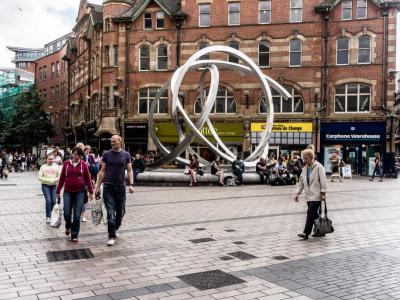
Cornmarket is a vibrant pedestrian square nestled in the heart of the city’s central retail area. Once the site of a traditional corn market, this space has since transformed into a bustling hub filled with shops, cafés, and lively street entertainment-making it a favorite meeting point for locals and tourists alike. Its mix of high-street stores and independent boutiques ensures there’s something for every taste.
Dominating the square is the striking public sculpture “Spirit of Belfast,” created by artist Dan George and unveiled in September 2009. Comprised of interlocking steel rings-often humorously dubbed the “Onion Rings”-the piece is adorned with coloured lighting that pays tribute to Belfast’s rich history: embodying the grace of the linen trade and the strength of shipbuilding. Positioned on what once housed a bandstand, it now forms the centrepiece of Cornmarket’s streetscape facelift.
Beyond its striking visual appeal, Cornmarket serves as a gateway to several of Belfast’s cultural gems. Just off Arthur Square lies the grand entrance to Victoria Square shopping centre, while nearby The Belfast Entries-quaint Victorian alleyways dating back centuries-offer a charming glimpse into the city’s past. Cultural hotspots such as the Linen Quarter, the Grand Opera House, and the Ulster Hall are within easy walking distance.
Cornmarket captures the essence of Belfast’s modern-day spirit: blending history, art, shopping, and socialising in one lively space. Whether you’re in search of a dose of urban energy, a photo with public art, or a relaxed meal in a friendly café, this pedestrian plaza needs to be on your Belfast itinerary.
Dominating the square is the striking public sculpture “Spirit of Belfast,” created by artist Dan George and unveiled in September 2009. Comprised of interlocking steel rings-often humorously dubbed the “Onion Rings”-the piece is adorned with coloured lighting that pays tribute to Belfast’s rich history: embodying the grace of the linen trade and the strength of shipbuilding. Positioned on what once housed a bandstand, it now forms the centrepiece of Cornmarket’s streetscape facelift.
Beyond its striking visual appeal, Cornmarket serves as a gateway to several of Belfast’s cultural gems. Just off Arthur Square lies the grand entrance to Victoria Square shopping centre, while nearby The Belfast Entries-quaint Victorian alleyways dating back centuries-offer a charming glimpse into the city’s past. Cultural hotspots such as the Linen Quarter, the Grand Opera House, and the Ulster Hall are within easy walking distance.
Cornmarket captures the essence of Belfast’s modern-day spirit: blending history, art, shopping, and socialising in one lively space. Whether you’re in search of a dose of urban energy, a photo with public art, or a relaxed meal in a friendly café, this pedestrian plaza needs to be on your Belfast itinerary.
8) Belfast City Hall (must see)
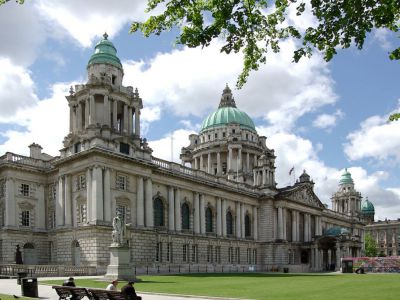
Belfast City Hall is a grand Edwardian Baroque masterpiece that dominates Donegall Square in the heart of Belfast’s city centre. Designed by Sir Alfred Brumwell Thomas and completed in 1906, this iconic building features gleaming Portland stone, a striking copper-domed roof rising 173 ft, and ornate detailing that reflects Belfast’s civic pride. It was built on the former site of the White Linen Hall to mark the city’s growing importance-thanks to its booming linen, shipbuilding, and engineering industries-and to cement its new city status granted in 1888.
Step inside and you’ll be greeted by splendid interiors such as the grand marble staircase, mosaic floors, and exquisitely carved oak and marble-clad spaces like the Council Chamber and Banquet Hall-noting the latter was rebuilt after damage during the Belfast Blitz in 1941. The stained-glass windows are spectacular, showcasing the Belfast coat of arms, portraits of British monarchs, and emblems of the city’s historical provinces. Guided tours last about 45 minutes and offer access to areas normally closed to the public, alongside a 16-room Visitor Exhibition that brings Belfast’s past to life via multilingual audio guides.
Outside, the beautifully landscaped grounds are home to significant memorials and statues, including the impressive Titanic Memorial Garden, the Cenotaph and Garden of Remembrance for war victims, and notable figures such as Queen Victoria, Edward Harland, Mary Ann McCracken, Winifred Carney, and James Magennis VC. These serene lawns offer a peaceful counterpoint to the bustling city around them.
For visitors, City Hall is much more than a civic landmark-it’s a hub of culture and community. Drop into the Bobbin Coffee Shop inside, peruse the gift shop for local keepsakes, or join a free tour (first-come, first-served) at scheduled times. Evening illuminations beautifully accent the exterior, making it a particularly atmospheric spot after dark. Whether you're fascinated by architecture, history, or simply looking for a picturesque gathering place, Belfast City Hall is an essential stop on your journey through Belfast.
Step inside and you’ll be greeted by splendid interiors such as the grand marble staircase, mosaic floors, and exquisitely carved oak and marble-clad spaces like the Council Chamber and Banquet Hall-noting the latter was rebuilt after damage during the Belfast Blitz in 1941. The stained-glass windows are spectacular, showcasing the Belfast coat of arms, portraits of British monarchs, and emblems of the city’s historical provinces. Guided tours last about 45 minutes and offer access to areas normally closed to the public, alongside a 16-room Visitor Exhibition that brings Belfast’s past to life via multilingual audio guides.
Outside, the beautifully landscaped grounds are home to significant memorials and statues, including the impressive Titanic Memorial Garden, the Cenotaph and Garden of Remembrance for war victims, and notable figures such as Queen Victoria, Edward Harland, Mary Ann McCracken, Winifred Carney, and James Magennis VC. These serene lawns offer a peaceful counterpoint to the bustling city around them.
For visitors, City Hall is much more than a civic landmark-it’s a hub of culture and community. Drop into the Bobbin Coffee Shop inside, peruse the gift shop for local keepsakes, or join a free tour (first-come, first-served) at scheduled times. Evening illuminations beautifully accent the exterior, making it a particularly atmospheric spot after dark. Whether you're fascinated by architecture, history, or simply looking for a picturesque gathering place, Belfast City Hall is an essential stop on your journey through Belfast.
9) Queen's University Belfast
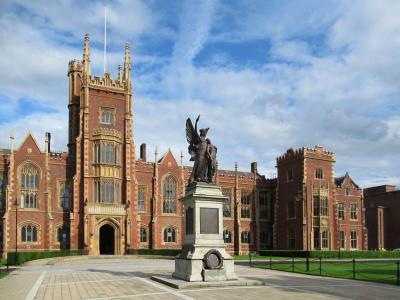
Queen’s University Belfast stands proudly at the heart of Northern Ireland’s capital, an iconic seat of learning and architectural grandeur nestled amidst the vibrant energy of Belfast city. Founded in 1845 as part of Queen’s Colleges of Ireland, this esteemed institution boasts an impressive legacy of academic excellence and cultural contribution. The main Lanyon Building-designed by Sir Charles Lanyon in 1849-commands attention with its striking sandstone façade and towering clock spire, encapsulating the stately elegance of Victorian-era design. It’s not just a university building, but a beloved landmark and photogenic centerpiece for visitors exploring Belfast’s heritage.
For the tourist, Queen’s offers more than historical architecture: it’s a welcoming green oasis punctuated with manicured lawns, leafy pathways, and sculptures that inspire exploration and relaxation. Take a stroll through the quadrangle, pause by the Oscar Wilde statue (a nod to the celebrated alumnus), and wander through the modern additions, such as the McClay Library, which contrasts contemporary glass-and-steel design with the campus’s traditional charm. Along the way, you’ll discover cafés and student hangouts perfect for a quick break, where you can bask in the ambiance and chat with local students, soaking in the atmosphere.
The university is also a cultural hub. Queen’s Film Theatre, located just off campus, has been showing independent and international films since 1968 and often screens open-air movies in warmer months. The Ulster Museum and Botanic Gardens are only minutes away-ideal for those who want to blend their campus visit with art, natural history, and horticultural wonders. Keep an eye out for campus events too: public lectures, concerts, and exhibitions frequently take place in its historic halls, offering a glimpse into the vibrant scholarly life here.
Just beyond the central campus lie the leafy streets of south Belfast-home to eclectic eateries, Victorian terraces, music venues, and boutique shops. Take your time, soak in the atmosphere, and enjoy the sense of history and progress that flows through every path and corridor.
For the tourist, Queen’s offers more than historical architecture: it’s a welcoming green oasis punctuated with manicured lawns, leafy pathways, and sculptures that inspire exploration and relaxation. Take a stroll through the quadrangle, pause by the Oscar Wilde statue (a nod to the celebrated alumnus), and wander through the modern additions, such as the McClay Library, which contrasts contemporary glass-and-steel design with the campus’s traditional charm. Along the way, you’ll discover cafés and student hangouts perfect for a quick break, where you can bask in the ambiance and chat with local students, soaking in the atmosphere.
The university is also a cultural hub. Queen’s Film Theatre, located just off campus, has been showing independent and international films since 1968 and often screens open-air movies in warmer months. The Ulster Museum and Botanic Gardens are only minutes away-ideal for those who want to blend their campus visit with art, natural history, and horticultural wonders. Keep an eye out for campus events too: public lectures, concerts, and exhibitions frequently take place in its historic halls, offering a glimpse into the vibrant scholarly life here.
Just beyond the central campus lie the leafy streets of south Belfast-home to eclectic eateries, Victorian terraces, music venues, and boutique shops. Take your time, soak in the atmosphere, and enjoy the sense of history and progress that flows through every path and corridor.
10) Botanic Gardens (must see)
Belfast’s Botanic Gardens is a lush 28-acre oasis tucked into the vibrant Queen’s Quarter, right by Queen’s University and the Ulster Museum. First established in 1828 by the Belfast Botanic and Horticultural Society, it opened its gates as a public park in 1895. Over time, it has earned annual Green Flag recognition for its excellent maintenance and community value. Locals and visitors alike flock here for peaceful walks, picnics on manicured lawns, and lively events-from summer concerts to the Belfast Mela festival.
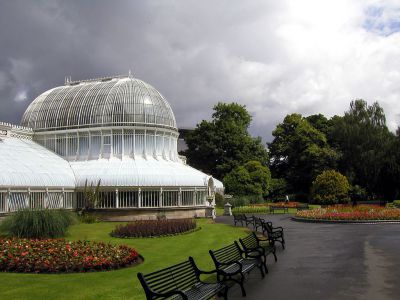
The gardens’ architectural centrepiece is the iconic Palm House-a beautifully restored Victorian glasshouse designed by Sir Charles Lanyon and completed in 1840, with Turner’s cast-iron curved structure added soon after. Divided into cool and tropical zones, it shelters an exotic collection including bird-of-paradise blooms, ancient Xanthorrhoea, and rare lilies that bloom after decades. Just steps away is the lesser-known Tropical Ravine House, a two-level “jungle glen” dating from 1889, now beautifully refurbished with interactive displays and sensory features.
Beyond these glasshouses, visitors can stroll through colourful rose and herbaceous gardens, discover a serene alpine garden and mature trees-some planted as far back as the 1880s, including hornbeam-leafed oaks. Sculptures, a children’s playground, bowling green, and giant bird feeders offer charm and variety, while occasional live recitals or opera performances bring a festive atmosphere.
Open daily with free admission, Botanic Gardens is easy to reach via Metro 7 or 8 (stop at Queen’s University or College Park). It’s a must‑see for nature lovers, history enthusiasts, and anyone seeking a peaceful yet culturally rich slice of Belfast life. Whether you’re admiring Victorian engineering under glass or wandering through fragrant pathways, the Botanic Gardens is a timeless green haven in the heart of Northern Ireland’s capital.
The gardens’ architectural centrepiece is the iconic Palm House-a beautifully restored Victorian glasshouse designed by Sir Charles Lanyon and completed in 1840, with Turner’s cast-iron curved structure added soon after. Divided into cool and tropical zones, it shelters an exotic collection including bird-of-paradise blooms, ancient Xanthorrhoea, and rare lilies that bloom after decades. Just steps away is the lesser-known Tropical Ravine House, a two-level “jungle glen” dating from 1889, now beautifully refurbished with interactive displays and sensory features.
Beyond these glasshouses, visitors can stroll through colourful rose and herbaceous gardens, discover a serene alpine garden and mature trees-some planted as far back as the 1880s, including hornbeam-leafed oaks. Sculptures, a children’s playground, bowling green, and giant bird feeders offer charm and variety, while occasional live recitals or opera performances bring a festive atmosphere.
Open daily with free admission, Botanic Gardens is easy to reach via Metro 7 or 8 (stop at Queen’s University or College Park). It’s a must‑see for nature lovers, history enthusiasts, and anyone seeking a peaceful yet culturally rich slice of Belfast life. Whether you’re admiring Victorian engineering under glass or wandering through fragrant pathways, the Botanic Gardens is a timeless green haven in the heart of Northern Ireland’s capital.
11) Ulster Museum (must see)
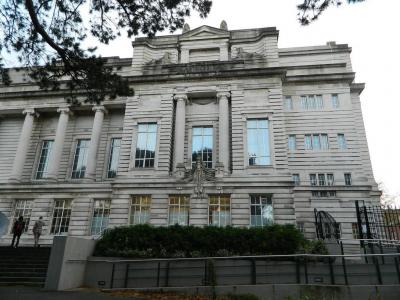
The Ulster Museum, nestled within Belfast’s charming Botanic Gardens, is Northern Ireland’s largest museum and a national cultural landmark. Founded in 1821 as the Belfast Natural History Society and opened to the public in 1833, it moved to its current spot along Stranmillis Road in 1929. A striking Brutalist extension in the 1960s expanded its exhibition space, though a major renovation brought the museum into the 21st century when it reopened in October 2009. Today, its light-filled atrium showcases a seamless blend of old and new architecture.
Inside, visitors are treated to a sweeping journey through natural history, art, and heritage. The museum boasts an extensive collection of Irish fauna, minerals, rocks, and fossils-and hosts Ireland’s only known dinosaur fossil bones. You’ll discover ancient treasures like the Malone and Moss-side hoards-stone tools and Bronze Age gold artifacts-alongside global ethnographic pieces and even a mummified Egyptian body. For art lovers, permanent galleries feature modern and contemporary works, including pieces by Francis Bacon and local Ulster voices, while the fashion and textile collection spans gorgeous couture from Chanel to Alexander McQueen.
The museum’s “Troubles and Beyond” gallery offers a powerful reflection on Northern Ireland’s recent past, examining the decades of conflict and resilience through compelling personal narratives, memorabilia, and visual storytelling. Interactive spaces like the Discovery Zone make it an engaging visit for families, and rotating exhibitions-everything from wildlife art to contemporary photography-ensure there's always something new to explore.
Best of all? Entry is completely free. Pop next door to the Tropical Hothouse in Botanic Gardens, enjoy coffee in the museum café, and perhaps stroll through Queen’s University grounds afterward.
Inside, visitors are treated to a sweeping journey through natural history, art, and heritage. The museum boasts an extensive collection of Irish fauna, minerals, rocks, and fossils-and hosts Ireland’s only known dinosaur fossil bones. You’ll discover ancient treasures like the Malone and Moss-side hoards-stone tools and Bronze Age gold artifacts-alongside global ethnographic pieces and even a mummified Egyptian body. For art lovers, permanent galleries feature modern and contemporary works, including pieces by Francis Bacon and local Ulster voices, while the fashion and textile collection spans gorgeous couture from Chanel to Alexander McQueen.
The museum’s “Troubles and Beyond” gallery offers a powerful reflection on Northern Ireland’s recent past, examining the decades of conflict and resilience through compelling personal narratives, memorabilia, and visual storytelling. Interactive spaces like the Discovery Zone make it an engaging visit for families, and rotating exhibitions-everything from wildlife art to contemporary photography-ensure there's always something new to explore.
Best of all? Entry is completely free. Pop next door to the Tropical Hothouse in Botanic Gardens, enjoy coffee in the museum café, and perhaps stroll through Queen’s University grounds afterward.
12) Grand Opera House (must see)
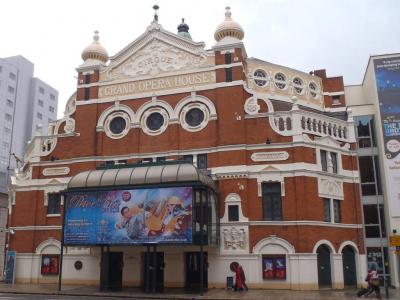
Nestled in the vibrant heart of Belfast, the Grand Opera House is an architectural gem and cultural linchpin. Designed by famed theatre architect Frank Matcham, it opened in December 1895 as the “New Grand Opera House and Cirque”. A striking example of Victorian “oriental style” theatre architecture, its main auditorium is widely regarded as the best preserved in the UK.
For over a century, the Grand Opera House has been a pulsating centre for the arts. It has survived tumultuous times, including wartime repurposing, bomb damage during the Troubles, and even a brush with demolition-but was rescued and listed as Northern Ireland’s first protected building in the 1970s. After extensive renovations in 1980, 2006, and a major £12.2 million restoration in 2020–21, both its ornate auditorium and modern foyers shine brighter than ever.
Today, the venue boasts a 1,058‑seat main auditorium, the intimate Baby Grand studio, and stylish bars on multiple floors. Its annual pantomime tradition continues unabated, delighting families since the very first season featured “Bluebeard” in 1895. Beyond entertainment, the Opera House offers behind‑the‑scenes tours and a compelling heritage exhibition, ideal for history lovers.
A visit here offers more than a show-it’s a journey through Belfast’s cultural soul. Whether you're drawn to grand musicals, drama, opera, dance, or comedy-or simply wish to admire its ornate mouldings and historic atmosphere-the Grand Opera House presents an unforgettable experience at the crossroads of past and present.
For over a century, the Grand Opera House has been a pulsating centre for the arts. It has survived tumultuous times, including wartime repurposing, bomb damage during the Troubles, and even a brush with demolition-but was rescued and listed as Northern Ireland’s first protected building in the 1970s. After extensive renovations in 1980, 2006, and a major £12.2 million restoration in 2020–21, both its ornate auditorium and modern foyers shine brighter than ever.
Today, the venue boasts a 1,058‑seat main auditorium, the intimate Baby Grand studio, and stylish bars on multiple floors. Its annual pantomime tradition continues unabated, delighting families since the very first season featured “Bluebeard” in 1895. Beyond entertainment, the Opera House offers behind‑the‑scenes tours and a compelling heritage exhibition, ideal for history lovers.
A visit here offers more than a show-it’s a journey through Belfast’s cultural soul. Whether you're drawn to grand musicals, drama, opera, dance, or comedy-or simply wish to admire its ornate mouldings and historic atmosphere-the Grand Opera House presents an unforgettable experience at the crossroads of past and present.
13) Cathedral Quarter
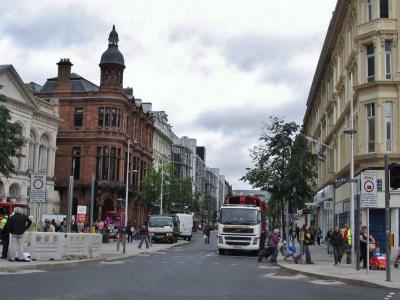
The Cathedral Quarter is an atmospheric cultural hub nestled around the majestic Saint Anne’s Cathedral, from which it takes its name. Historically a heartland of linen, shipbuilding, and trade, it retains its Victorian-era architecture-along winding streets like Waring and Hill-with charming remnants of Belfast’s industrial past. Today, it's a vibrant blend of the old and the new, where heritage buildings host a flourishing arts scene.
This quarter has re-emerged from urban decline to become Belfast’s creative epicentre, packed with galleries, theatres, cafés, and community arts spaces. Highlights include the Metropolitan Arts Centre (MAC)-a sleek, award-winning venue for exhibitions, performance, and workshops since 2012 -and independent hubs such as The Black Box and Belfast Exposed. Once housing trade enterprises, now these buildings surround the cathedral at the heart of lovingly restored public spaces, including the vibrant Custom House Square, which stages open-air concerts, street performances, and circus acts.
The area pulses with creativity, especially during the annual Cathedral Quarter Arts Festival, held each May since 2000, showcasing music, theatre, comedy, visual arts, and literature-often spotlighting international and emerging talent. For visitors, it means a rich calendar of events, from tented performances and fringe shows to major outdoor gigs that light up cobbled streets and piazzas.
When touring Belfast, exploring the Cathedral Quarter is like stepping into the city's cultural renaissance: a dynamic district where history, artistry, and community blend in narrow laneways, atmospheric pubs, and tree‑lined squares-anchored by the soaring Spire of Hope, an illuminated steel tower rising from the cathedral roof, symbolising Belfast’s evolving spirit.
This quarter has re-emerged from urban decline to become Belfast’s creative epicentre, packed with galleries, theatres, cafés, and community arts spaces. Highlights include the Metropolitan Arts Centre (MAC)-a sleek, award-winning venue for exhibitions, performance, and workshops since 2012 -and independent hubs such as The Black Box and Belfast Exposed. Once housing trade enterprises, now these buildings surround the cathedral at the heart of lovingly restored public spaces, including the vibrant Custom House Square, which stages open-air concerts, street performances, and circus acts.
The area pulses with creativity, especially during the annual Cathedral Quarter Arts Festival, held each May since 2000, showcasing music, theatre, comedy, visual arts, and literature-often spotlighting international and emerging talent. For visitors, it means a rich calendar of events, from tented performances and fringe shows to major outdoor gigs that light up cobbled streets and piazzas.
When touring Belfast, exploring the Cathedral Quarter is like stepping into the city's cultural renaissance: a dynamic district where history, artistry, and community blend in narrow laneways, atmospheric pubs, and tree‑lined squares-anchored by the soaring Spire of Hope, an illuminated steel tower rising from the cathedral roof, symbolising Belfast’s evolving spirit.
14) Belfast Central Library
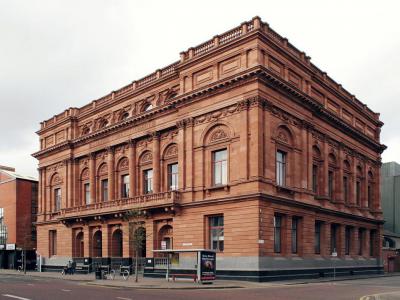
Nestled at the heart of Belfast’s vibrant Library and Cathedral Quarter, Belfast Central Library is a stunning Victorian-era landmark. Designed by architect William Henry Lynn, it opened its doors in 1888 - the same day Belfast was officially granted city status - making it one of the first major public library buildings in Ireland. The grand red sandstone facade, perched on an elegant black granite base, exudes an Italianate flair that reflects the city's late-19th-century optimism.
Step inside, and you’re greeted by an impressive colonnaded foyer and a magnificent ceremonial staircase leading to a luminous domed reading room on the first floor - a space that has captivated readers and visitors for over a century. The three-floor interior originally included a museum and art gallery on the top floor, reinforcing its role as a cultural hub. Remarkably, the building withstood the Belfast Blitz and the Troubles without damage, preserving its historic charm for modern-day explorers.
Today, the library is part of Libraries NI and remains a lively community centre for learning and research. Free Wi‑Fi and IT facilities are available on the ground floor, while second-floor shelves showcase Northern Irish fiction, music scores, and cultural heritage resources. Behind the scenes, hidden from public view, lies a treasure trove of archives and special collections - including manuscripts of Francis Joseph Bigger, Amanda McKittrick Ros, Sam Thompson, and a vast theatre poster collection dating from the 1820s.
For visitors, Belfast Central Library is more than just a place to read - it's a gateway to the city's past and present. Look out for free guided history tours that reveal the library’s hidden stories, architectural highlights, and its vital role in Belfast's cultural identity. Whether you’re reading in the dome or exploring the heritage rooms, this grand institution offers inspiration and insight at every turn.
Step inside, and you’re greeted by an impressive colonnaded foyer and a magnificent ceremonial staircase leading to a luminous domed reading room on the first floor - a space that has captivated readers and visitors for over a century. The three-floor interior originally included a museum and art gallery on the top floor, reinforcing its role as a cultural hub. Remarkably, the building withstood the Belfast Blitz and the Troubles without damage, preserving its historic charm for modern-day explorers.
Today, the library is part of Libraries NI and remains a lively community centre for learning and research. Free Wi‑Fi and IT facilities are available on the ground floor, while second-floor shelves showcase Northern Irish fiction, music scores, and cultural heritage resources. Behind the scenes, hidden from public view, lies a treasure trove of archives and special collections - including manuscripts of Francis Joseph Bigger, Amanda McKittrick Ros, Sam Thompson, and a vast theatre poster collection dating from the 1820s.
For visitors, Belfast Central Library is more than just a place to read - it's a gateway to the city's past and present. Look out for free guided history tours that reveal the library’s hidden stories, architectural highlights, and its vital role in Belfast's cultural identity. Whether you’re reading in the dome or exploring the heritage rooms, this grand institution offers inspiration and insight at every turn.
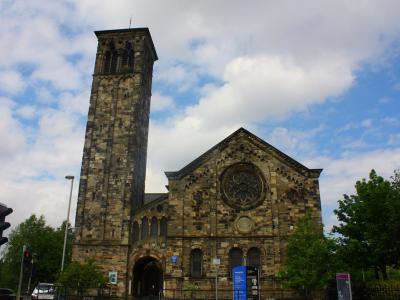
15) Sinclair Seaman's Presbyterian Church
Sinclair Seamen’s Presbyterian Church offers a unique pilgrimage into the city’s seafaring past. Designed in Venetian–Italianate Gothic style by the celebrated firm Lanyon, Lynn & Lanyon, it opened in 1857 as a spiritual haven for mariners. Commissioned by Thomas Sinclair in memory of his merchant father, John Sinclair, the imposing ashlar stone building features a freestanding campanile tower connected by an ornate arcade-beautifully contrasting the surrounding red-brick warehouses.
Step inside, and you’re immediately embraced by a glorious maritime theme: the wooden pulpit fashioned like a ship’s prow, navigation lights perched above, lifeboat‑shaped collection boxes gently slotted along the aisles, and even a brass ship’s wheel salvaged from a 1924 vessel. The pulpit leads the eye toward the organ and stained‑glass windows, while overhead hang anchors and rum ladles once used aboard ships-symbols of the gritty life at sea that shaped Belfast’s identity. The church bell, sourced from HMS Hood, is still rung at each service-a living echo of naval tradition.
For visitors exploring the Maritime Mile-alongside Titanic Belfast, the Albert Clock, and the Harbour Commissioners’ Victorian offices-Sinclair Seamen’s offers a peaceful, contemplative pause. Here, Belfast’s maritime heritage feels palpably present, not just in brackets and beams, but in the living faith of its people. Whether you're drawn by shipwrights’ tales, architectural detail, or spiritual stillness, this little church is a memorable and unexpected gem of maritime Belfast.
Step inside, and you’re immediately embraced by a glorious maritime theme: the wooden pulpit fashioned like a ship’s prow, navigation lights perched above, lifeboat‑shaped collection boxes gently slotted along the aisles, and even a brass ship’s wheel salvaged from a 1924 vessel. The pulpit leads the eye toward the organ and stained‑glass windows, while overhead hang anchors and rum ladles once used aboard ships-symbols of the gritty life at sea that shaped Belfast’s identity. The church bell, sourced from HMS Hood, is still rung at each service-a living echo of naval tradition.
For visitors exploring the Maritime Mile-alongside Titanic Belfast, the Albert Clock, and the Harbour Commissioners’ Victorian offices-Sinclair Seamen’s offers a peaceful, contemplative pause. Here, Belfast’s maritime heritage feels palpably present, not just in brackets and beams, but in the living faith of its people. Whether you're drawn by shipwrights’ tales, architectural detail, or spiritual stillness, this little church is a memorable and unexpected gem of maritime Belfast.
