Custom Walk in Amsterdam, Netherlands by gdcua_b2d548 created on 2026-03-10
Guide Location: Netherlands » Amsterdam
Guide Type: Custom Walk
# of Sights: 7
Tour Duration: 3 Hour(s)
Travel Distance: 6.6 Km or 4.1 Miles
Share Key: 5NHDZ
Guide Type: Custom Walk
# of Sights: 7
Tour Duration: 3 Hour(s)
Travel Distance: 6.6 Km or 4.1 Miles
Share Key: 5NHDZ
How It Works
Please retrieve this walk in the GPSmyCity app. Once done, the app will guide you from one tour stop to the next as if you had a personal tour guide. If you created the walk on this website or come to the page via a link, please follow the instructions below to retrieve the walk in the app.
Retrieve This Walk in App
Step 1. Download the app "GPSmyCity: Walks in 1K+ Cities" on Apple App Store or Google Play Store.



Step 2. In the GPSmyCity app, download(or launch) the guide "Amsterdam Map and Walking Tours".
Step 3. Tap the menu button located at upper right corner of the "Walks" screen and select "Retrieve custom walk". Enter the share key: 5NHDZ
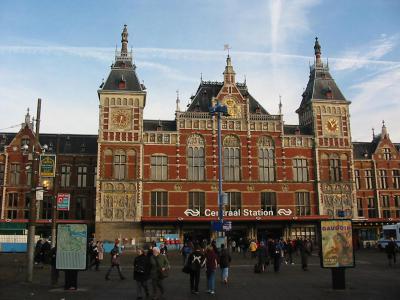
1) Centraal Station (must see)
When in Amsterdam, a visit to the Central Station is practically inevitable. Nearly every traveler to the city encounters it at least once.
Amsterdam Centraal is the largest railway station in the city and has the second longest railway platform in the country, with a length of 695 meters, and a cast-iron platform roof spanning approximately 40 meters. A major international railway hub, it is used daily by almost 200,000 passengers, making it the Netherlands' most visited national heritage object.
Amsterdam Centraal was designed by Dutch architect Pierre Cuypers, featuring a blend of Gothic and Renaissance Revival elements.
The station was constructed on three artificial islands, between 1882 and 1889. Controversially located at the city's waterfront, it took a precise total of 8,687 wooden piles to anchor such a monumental structure on the marshy ground. The station spurred significant urban redevelopment and shifted Amsterdam’s focus from a waterfront to an inland city, influencing both transportation and city planning.
Its design celebrates Dutch economic and colonial prowess through various decorative elements. Initially, the entire project seemed like a huge blunder and was swiftly criticized by numerous experts. However, the architects persevered and ultimately vindicated themselves, defying skeptics.
Through the decades, Amsterdam Centraal has undergone multiple renovations and expansions to meet modern demands. Significant developments included the creation of a pedestrian tunnel in the 1950s, expansion of metro facilities in the late 1970s, and a major overhaul in the 1980s and 1990s that introduced new signaling systems, expanded tracks, and additional roofing. Recent upgrades focus on enhancing capacity and accessibility, including extended platforms for international trains, a new bus station, and upgraded retail spaces, marking it as a central hub in Amsterdam’s urban landscape.
Tip:
Take advantage of the several free ferry trips navigating the canals, departing every 5 to 15 minutes from this location; they offer a rewarding experience. You can even cruise back to the station via boat if you wish, rounding out your visit with a picturesque waterborne journey.
Amsterdam Centraal is the largest railway station in the city and has the second longest railway platform in the country, with a length of 695 meters, and a cast-iron platform roof spanning approximately 40 meters. A major international railway hub, it is used daily by almost 200,000 passengers, making it the Netherlands' most visited national heritage object.
Amsterdam Centraal was designed by Dutch architect Pierre Cuypers, featuring a blend of Gothic and Renaissance Revival elements.
The station was constructed on three artificial islands, between 1882 and 1889. Controversially located at the city's waterfront, it took a precise total of 8,687 wooden piles to anchor such a monumental structure on the marshy ground. The station spurred significant urban redevelopment and shifted Amsterdam’s focus from a waterfront to an inland city, influencing both transportation and city planning.
Its design celebrates Dutch economic and colonial prowess through various decorative elements. Initially, the entire project seemed like a huge blunder and was swiftly criticized by numerous experts. However, the architects persevered and ultimately vindicated themselves, defying skeptics.
Through the decades, Amsterdam Centraal has undergone multiple renovations and expansions to meet modern demands. Significant developments included the creation of a pedestrian tunnel in the 1950s, expansion of metro facilities in the late 1970s, and a major overhaul in the 1980s and 1990s that introduced new signaling systems, expanded tracks, and additional roofing. Recent upgrades focus on enhancing capacity and accessibility, including extended platforms for international trains, a new bus station, and upgraded retail spaces, marking it as a central hub in Amsterdam’s urban landscape.
Tip:
Take advantage of the several free ferry trips navigating the canals, departing every 5 to 15 minutes from this location; they offer a rewarding experience. You can even cruise back to the station via boat if you wish, rounding out your visit with a picturesque waterborne journey.
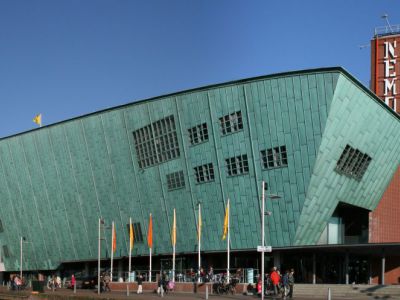
2) NEMO Science Museum (must see)
Resembling the inverted bow of a ship, the imposing copper-green raised structure that towers over the entrance to the River IJ tunnel was designed by the renowned Italian architect Renzo Piano in 1997. Within this structure lies NEMO, a sizeable and highly popular science and technology center, which boasts a range of interactive exhibits that make it an outstanding attraction for children, particularly those in the pre-teenage age group.
Spanning three primary levels, NEMO offers a wealth of fascinating content. In the "Life in Universe" section, interactive displays explore the farthest reaches of the globe. Meanwhile, "Sensational Science" sheds light on the principles behind everyday phenomena like light and sound. Among other visitor favorites are exhibits such as "Chain Reaction", "Soap Bubbles", and "Take a Journey through the Mind."
Why You Should Visit:
Not only for the distinctive "Titanic" building but also for the breathtaking views that can be enjoyed from its top deck. Inside, inquisitive minds will find a stimulating environment, with each spacious floor dedicated to different themes and engaging activities.
Spanning three primary levels, NEMO offers a wealth of fascinating content. In the "Life in Universe" section, interactive displays explore the farthest reaches of the globe. Meanwhile, "Sensational Science" sheds light on the principles behind everyday phenomena like light and sound. Among other visitor favorites are exhibits such as "Chain Reaction", "Soap Bubbles", and "Take a Journey through the Mind."
Why You Should Visit:
Not only for the distinctive "Titanic" building but also for the breathtaking views that can be enjoyed from its top deck. Inside, inquisitive minds will find a stimulating environment, with each spacious floor dedicated to different themes and engaging activities.
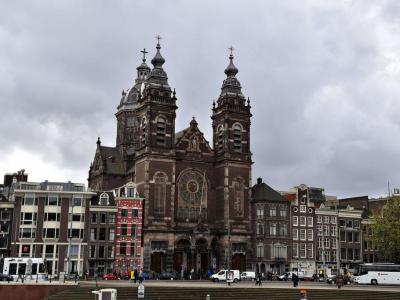
3) Sint Nicolaaskerk (St. Nicholas Church)
Across the water from the Station Square (“Stationsplein”), you'll see the striking twin towers and dome of Saint Nicholas. It’s Amsterdam’s main Catholic church, dedicated to the patron saint of sailors and the city itself. Built in the 1880s, it reflects a mix of revival styles, mainly Neo-Baroque and Neo-Renaissance influences.
Step inside and you’ll find a grand interior adorned with religious murals, which some might find a bit sentimental. The colorful brickwork, however, adds a distinctive charm. Above the main altar is the Habsburg Emperor Maximilian’s crown-a prominent symbol of the city. You’ll see this crown referenced often, as it represents an important historical connection.
In the late 15th century, Holy Roman Emperor Maximilian visited Amsterdam as a pilgrim. While recovering from an illness, he received considerable support from the city’s residents, who even helped fund his military campaigns. In return, Maximilian granted Amsterdam the right to incorporate his crown into its coat of arms. This royal emblem endured through centuries, even surviving the 17th-century revolt against Spain, and remains a proud part of the city’s identity.
Step inside and you’ll find a grand interior adorned with religious murals, which some might find a bit sentimental. The colorful brickwork, however, adds a distinctive charm. Above the main altar is the Habsburg Emperor Maximilian’s crown-a prominent symbol of the city. You’ll see this crown referenced often, as it represents an important historical connection.
In the late 15th century, Holy Roman Emperor Maximilian visited Amsterdam as a pilgrim. While recovering from an illness, he received considerable support from the city’s residents, who even helped fund his military campaigns. In return, Maximilian granted Amsterdam the right to incorporate his crown into its coat of arms. This royal emblem endured through centuries, even surviving the 17th-century revolt against Spain, and remains a proud part of the city’s identity.
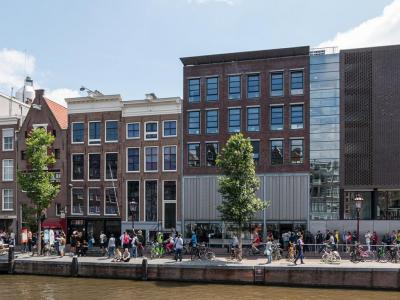
4) Anne Frank House (must see)
Anne Frank once found comfort in the gentle chimes of the Western Church’s bells-a reassuring hint of life outside her secret refuge-until those very bells were melted down for the German war effort. The church’s 85-meter-tall tower still stands as Amsterdam’s most dazzling spire. Rising gracefully above the city, it offers balconies with stunning panoramic views of the center and a carillon that strikes every quarter-hour, plus occasional full musical interludes. At its tip, you’ll find Emperor Maximilian’s crown, a proud emblem of Amsterdam and a glittering highlight of this Protestant landmark. Built by Hendrick de Keyser and completed in 1631, a decade after his passing, the church was a vital piece of the city’s early expansion.
Outwardly, the Western Church projects an air of restrained elegance; inside, however, it embraces Calvinist simplicity. Apart from the ample plain-glass windows that flood the space with natural light, the main attractions are the grand Baroque organ and the ornate wooden pulpit, topped by an oversized sounding board that once lent authority to lengthy sermons. While the Protestant elite shunned opulent decorations, they did indulge in a little exclusivity: boxed-in benches at the base of the nave’s stone columns, rented out by the well-to-do to signal their status.
Feeling adventurous? From April to October, you can climb the tower for a firsthand look at the bells and unbeatable views from a platform near the top. The stairs are steep enough to be interesting, but not so tough as to keep you from reaching one of the best vantage points in Amsterdam.
Outwardly, the Western Church projects an air of restrained elegance; inside, however, it embraces Calvinist simplicity. Apart from the ample plain-glass windows that flood the space with natural light, the main attractions are the grand Baroque organ and the ornate wooden pulpit, topped by an oversized sounding board that once lent authority to lengthy sermons. While the Protestant elite shunned opulent decorations, they did indulge in a little exclusivity: boxed-in benches at the base of the nave’s stone columns, rented out by the well-to-do to signal their status.
Feeling adventurous? From April to October, you can climb the tower for a firsthand look at the bells and unbeatable views from a platform near the top. The stairs are steep enough to be interesting, but not so tough as to keep you from reaching one of the best vantage points in Amsterdam.
5) Cafe de Dokter
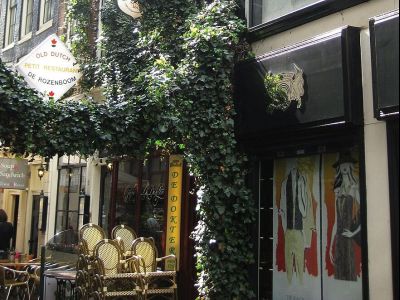
Café de Dokter has quietly held its ground since 1798. It measures just 18 square metres, making it the smallest café in Amsterdam. While the shopping street around the corner keeps reinventing itself, this place has barely moved an inch in two centuries. Lamps hang low, medical instruments crowd the ceiling, and a visible layer of dust gives the room the feel of a preserved curiosity cabinet. It may look untouched, but everything within reach of a guest is carefully kept spotless.
The café began as a meeting spot for doctors and medical students from the nearby Binnengasthuis hospital, now part of the University of Amsterdam. That origin explains the doctor’s tools, the in-house “Doctor’s Recipe” homebrew, and even the receipts, which resemble medical referrals. Still family-owned, the café is now run by Maria, the seventh generation, and her husband Henny. For them, this brown café is less a business than a lived-in space. As Maria’s father used to say, they don’t have customers, only paying visitors.
The drinks list covers all the classics, alongside wines personally selected by Maria and a newer gin and tonic menu curated with help from their daughter. Snacks are simple and traditional, with cheese and Amsterdam ossenworst on offer. Stories, however, are plentiful. From Prince Pils dropping by for a beer to million-euro deals once sealed on a beer mat, Café de Dokter has quietly witnessed more than its size would ever suggest.
The café began as a meeting spot for doctors and medical students from the nearby Binnengasthuis hospital, now part of the University of Amsterdam. That origin explains the doctor’s tools, the in-house “Doctor’s Recipe” homebrew, and even the receipts, which resemble medical referrals. Still family-owned, the café is now run by Maria, the seventh generation, and her husband Henny. For them, this brown café is less a business than a lived-in space. As Maria’s father used to say, they don’t have customers, only paying visitors.
The drinks list covers all the classics, alongside wines personally selected by Maria and a newer gin and tonic menu curated with help from their daughter. Snacks are simple and traditional, with cheese and Amsterdam ossenworst on offer. Stories, however, are plentiful. From Prince Pils dropping by for a beer to million-euro deals once sealed on a beer mat, Café de Dokter has quietly witnessed more than its size would ever suggest.
6) Rijksmuseum (must see)
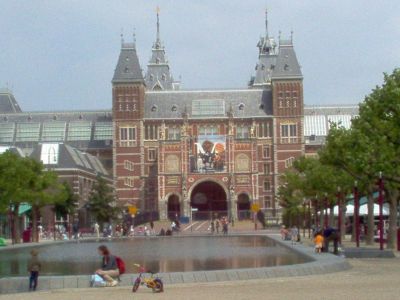
The Netherlands' magnificent national museum is the most frequently visited museum in Amsterdam, boasting an astounding collection of nearly one million Dutch works of art, though only a fraction of this vast treasure is on public display. Its origins trace back to 1808 when King Louis Napoleon established it within the Royal Palace on the Dam, later relocating to its current site near the Vondelpark in 1885.
Architect Pierre Cuypers contributed to the museum's distinctive blend of Gothic and Renaissance architecture, resulting in a structure that not only exudes architectural grandeur but also offers an extensive interior space. This expansion was undertaken with the sole purpose of accommodating the entire collection transported from The Hague.
In recent years, the Rijksmuseum has undergone extensive renovations, featuring a remarkable new entrance area. However, the heightened structure has altered the original floor plan, making navigation between sections somewhat challenging. The ground floor, designated as Floor 0, houses a diverse range of exhibits, including early Flemish paintings (1100–1600) on one side and collections encompassing items like delftware, armaments, and ship models on the other. Floor 1 showcases Dutch art from the 18th and 19th centuries, with notable works by artists such as Van Gogh and representatives of the Hague School of landscape artists. Moving upward, Floor 3 provides an overview of 20th-century art and applied art, featuring Dutch luminaries like Karel Appel and Gerrit Rietveld. In the midst of these levels, Floor 2 houses the heart of the collection: the Golden Age paintings, which understandably draw the most attention from visitors, with key works prominently displayed in the expansive Gallery of Honour. Temporary exhibitions are hosted in a separate wing.
When visiting, be sure to pick up a complimentary map at the reception desk. Keep in mind that the Rijksmuseum is exceptionally popular, so it's advisable to arrive early in the day, especially during major temporary exhibitions. Additionally, you can significantly reduce wait times by possessing an I amsterdam card, a Museumkaart, or by booking your visit online.
Why You Should Pay a Visit:
It's the place where the art you've encountered in your art classes and books comes to life.
Tip:
Browse until you've had your fill, then take a break from the art and artifacts at the excellent atrium café before exploring another section.
Architect Pierre Cuypers contributed to the museum's distinctive blend of Gothic and Renaissance architecture, resulting in a structure that not only exudes architectural grandeur but also offers an extensive interior space. This expansion was undertaken with the sole purpose of accommodating the entire collection transported from The Hague.
In recent years, the Rijksmuseum has undergone extensive renovations, featuring a remarkable new entrance area. However, the heightened structure has altered the original floor plan, making navigation between sections somewhat challenging. The ground floor, designated as Floor 0, houses a diverse range of exhibits, including early Flemish paintings (1100–1600) on one side and collections encompassing items like delftware, armaments, and ship models on the other. Floor 1 showcases Dutch art from the 18th and 19th centuries, with notable works by artists such as Van Gogh and representatives of the Hague School of landscape artists. Moving upward, Floor 3 provides an overview of 20th-century art and applied art, featuring Dutch luminaries like Karel Appel and Gerrit Rietveld. In the midst of these levels, Floor 2 houses the heart of the collection: the Golden Age paintings, which understandably draw the most attention from visitors, with key works prominently displayed in the expansive Gallery of Honour. Temporary exhibitions are hosted in a separate wing.
When visiting, be sure to pick up a complimentary map at the reception desk. Keep in mind that the Rijksmuseum is exceptionally popular, so it's advisable to arrive early in the day, especially during major temporary exhibitions. Additionally, you can significantly reduce wait times by possessing an I amsterdam card, a Museumkaart, or by booking your visit online.
Why You Should Pay a Visit:
It's the place where the art you've encountered in your art classes and books comes to life.
Tip:
Browse until you've had your fill, then take a break from the art and artifacts at the excellent atrium café before exploring another section.
7) Van Gogh Museum (must see)
Vincent van Gogh (1853–90) undeniably ranks as one of the most renowned, widely reproduced, and frequently discussed modern artists. Consequently, it comes as no surprise that this museum, housing an exceptional collection of his works, stands as one of Amsterdam's premier attractions.
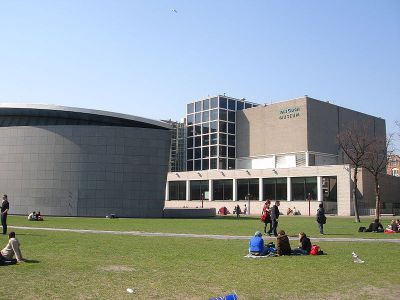
The institution is situated within two contemporary structures positioned on the northern periphery of Museum Square, also known as "Museumplein". The core collection of van Gogh's masterpieces is housed in an angular building designed by the eminent figure of the De Stijl movement, Gerrit Rietveld (1888–1964). This section, spanning four modestly sized floors, serves as an introductory journey into the life and artistry of the painter, primarily featuring paintings that were primarily inherited from Vincent's brother and art dealer, Theo. Complementing these works, you'll often find small supporting exhibitions that contextualize van Gogh's artistic contributions alongside those of his friends and contemporaries. The museum boasts a notable collection of paintings by luminaries such as Toulouse-Lautrec, Cézanne, Gauguin, Pissarro, and Monet.
Towards the rear of Rietveld's architectural masterpiece, a ground-floor escalator connects to the ultramodern 1998 extension. Although somewhat aesthetically controversial, this structure serves as a venue for temporary exhibitions, which typically delve into various facets of van Gogh's art and draw extensively from the permanent collection. Consequently, the paintings on display within the older building undergo regular rotation. The two edifices are seamlessly linked by a striking glass entrance hall, an addition implemented in 2015.
As one might expect, the museum tends to attract substantial crowds, often leading to lengthy queues. To circumvent the congestion, it is advisable to arrive early or consider booking tickets online in advance.
Why You Should Visit:
The main museum for all things Van Gogh, and absolutely the most popular museum in Amsterdam.
Tip:
Proceed directly to the third floor and navigate your visit in a descending manner. This strategic approach will afford you the opportunity to experience a quieter viewing experience on two to three floors.
When purchasing your ticket, make sure to include the audioguide. With this addition, allocating approximately 1.5 to 2 hours should enable you to thoroughly explore all the artworks, rather than limiting your focus solely to the highlights.
The institution is situated within two contemporary structures positioned on the northern periphery of Museum Square, also known as "Museumplein". The core collection of van Gogh's masterpieces is housed in an angular building designed by the eminent figure of the De Stijl movement, Gerrit Rietveld (1888–1964). This section, spanning four modestly sized floors, serves as an introductory journey into the life and artistry of the painter, primarily featuring paintings that were primarily inherited from Vincent's brother and art dealer, Theo. Complementing these works, you'll often find small supporting exhibitions that contextualize van Gogh's artistic contributions alongside those of his friends and contemporaries. The museum boasts a notable collection of paintings by luminaries such as Toulouse-Lautrec, Cézanne, Gauguin, Pissarro, and Monet.
Towards the rear of Rietveld's architectural masterpiece, a ground-floor escalator connects to the ultramodern 1998 extension. Although somewhat aesthetically controversial, this structure serves as a venue for temporary exhibitions, which typically delve into various facets of van Gogh's art and draw extensively from the permanent collection. Consequently, the paintings on display within the older building undergo regular rotation. The two edifices are seamlessly linked by a striking glass entrance hall, an addition implemented in 2015.
As one might expect, the museum tends to attract substantial crowds, often leading to lengthy queues. To circumvent the congestion, it is advisable to arrive early or consider booking tickets online in advance.
Why You Should Visit:
The main museum for all things Van Gogh, and absolutely the most popular museum in Amsterdam.
Tip:
Proceed directly to the third floor and navigate your visit in a descending manner. This strategic approach will afford you the opportunity to experience a quieter viewing experience on two to three floors.
When purchasing your ticket, make sure to include the audioguide. With this addition, allocating approximately 1.5 to 2 hours should enable you to thoroughly explore all the artworks, rather than limiting your focus solely to the highlights.
