Custom Walk in Kyoto, Japan by jonathan_ring_375f87 created on 2026-03-24
Guide Location: Japan » Kyoto
Guide Type: Custom Walk
# of Sights: 5
Tour Duration: 8 Hour(s)
Travel Distance: 22.5 Km or 14 Miles
Share Key: W873K
Guide Type: Custom Walk
# of Sights: 5
Tour Duration: 8 Hour(s)
Travel Distance: 22.5 Km or 14 Miles
Share Key: W873K
How It Works
Please retrieve this walk in the GPSmyCity app. Once done, the app will guide you from one tour stop to the next as if you had a personal tour guide. If you created the walk on this website or come to the page via a link, please follow the instructions below to retrieve the walk in the app.
Retrieve This Walk in App
Step 1. Download the app "GPSmyCity: Walks in 1K+ Cities" on Apple App Store or Google Play Store.



Step 2. In the GPSmyCity app, download(or launch) the guide "Kyoto Map and Walking Tours".
Step 3. Tap the menu button located at upper right corner of the "Walks" screen and select "Retrieve custom walk". Enter the share key: W873K
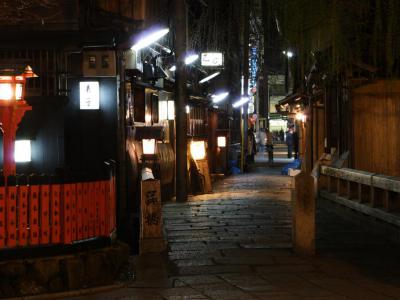
1) Tatsumi Bridge
Before surrendering its waters to the mighty Kamo River, the dainty Shirakawa canal sneaks through Gion like a well-mannered guest who knows how to make an impression. And right where things get photogenic, you'll find Tatsumi Bashi-the largest and most camera-hungry bridge on the block-nestled near the Tatsumi Shrine, in a part of town that until recently was pretty much “locals only” (before Instagram blew its cover), hidden from busy streets and well-trodden tourist paths.
However, due to a scene from the Hollywood movie "Memoirs of a Geisha", featuring Tatsumi Bashi, the bridge has gained considerable fame, attracting many visitors eager to capture its beauty in photographs. And it doesn't really matter that the famous scene was filmed nowhere near Kyoto-the carefully recreated bridge replica was shot on a set near Los Angeles-truth proved no match for cinema magic. Thus, today, Tatsumi Bashi basks in the soft-focus glow of global attention. Attesting to that are the abundance of selfie sticks and the presence of newlywed couples (asserting Tatsumi Bashi's newly-acquired status as a popular spot for wedding photography).
Still, despite its popularity, the bridge sees moderate foot traffic and takes on a truly magical allure. Come on a drizzly day and you’ll see it in its true form: glossy stones and a moody charm straight out of a woodblock print. Nighttime makes it just as impressive, as this place surely knows how to dress for the dark, adorned with glowing red lanterns.
The surrounding streets offer a tempting lineup of riverside shops, bars, and restaurants that seem to have all agreed on a collective pact to keep the whole area impeccably clean-a pure joy to walk around. So, whether you’re out to capture the perfect romantic shot or just here for a serene stroll, Tatsumi Bashi makes sure your visit feels like a gentle step back in time-with just a hint of cinematic déjà vu.
However, due to a scene from the Hollywood movie "Memoirs of a Geisha", featuring Tatsumi Bashi, the bridge has gained considerable fame, attracting many visitors eager to capture its beauty in photographs. And it doesn't really matter that the famous scene was filmed nowhere near Kyoto-the carefully recreated bridge replica was shot on a set near Los Angeles-truth proved no match for cinema magic. Thus, today, Tatsumi Bashi basks in the soft-focus glow of global attention. Attesting to that are the abundance of selfie sticks and the presence of newlywed couples (asserting Tatsumi Bashi's newly-acquired status as a popular spot for wedding photography).
Still, despite its popularity, the bridge sees moderate foot traffic and takes on a truly magical allure. Come on a drizzly day and you’ll see it in its true form: glossy stones and a moody charm straight out of a woodblock print. Nighttime makes it just as impressive, as this place surely knows how to dress for the dark, adorned with glowing red lanterns.
The surrounding streets offer a tempting lineup of riverside shops, bars, and restaurants that seem to have all agreed on a collective pact to keep the whole area impeccably clean-a pure joy to walk around. So, whether you’re out to capture the perfect romantic shot or just here for a serene stroll, Tatsumi Bashi makes sure your visit feels like a gentle step back in time-with just a hint of cinematic déjà vu.
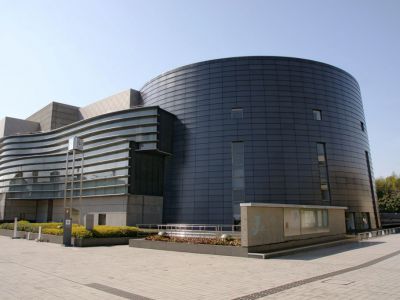
2) Kyoto Concert Hall
Opened in 1995, the Kyoto Concert Hall was conceived as a commemorative venue for the 1,200th anniversary of this ancient city. Designed by architect Arata Isozaki, renowned for his work on the Barcelona Olympic Pavilion, it comprises two distinct concert spaces: the Main Hall with 1,833 seats and serving as the home of the Kyoto Symphony Orchestra (KSO); and the Ensemble Hall, accommodating 500 seats and catering to smaller-scale performances such as chamber music recitals and piano solos. Additionally, visitors can enjoy a café onsite and a snack bar offering light bites just outside the seating area.
Surrounded by granite bridges and stone sculptures reminiscent of a modern Japanese garden, the exterior of the hall exudes contemporary elegance, while the interior foyer is adorned with Florentine limestone (at its heart, twelve pillars symbolize the twelve signs of the Zodiac). The Main Hall adopts the classic shoebox shape, featuring asymmetrical balconies encircling both the audience floor and the stage. Notably also, the hall is equipped with a magnificent 90-stop pipe organ crafted in Germany, enabling the hosting of truly unique performances.
Music enthusiasts will undoubtedly find attending a concert at the Kyoto Concert Hall to be a memorable auditory experience.
Surrounded by granite bridges and stone sculptures reminiscent of a modern Japanese garden, the exterior of the hall exudes contemporary elegance, while the interior foyer is adorned with Florentine limestone (at its heart, twelve pillars symbolize the twelve signs of the Zodiac). The Main Hall adopts the classic shoebox shape, featuring asymmetrical balconies encircling both the audience floor and the stage. Notably also, the hall is equipped with a magnificent 90-stop pipe organ crafted in Germany, enabling the hosting of truly unique performances.
Music enthusiasts will undoubtedly find attending a concert at the Kyoto Concert Hall to be a memorable auditory experience.
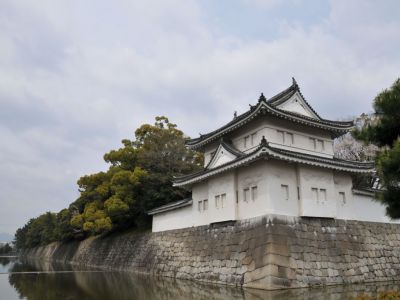
3) Nijo Castle (must see)
If you fancy a crash course in shogunate style, check out Nijo Castle-Kyoto’s architectural declaration: "Yes, I rule the realm, but do it tastefully." Its moat and stone walls are tidy and well-kept, though not exactly built for medieval tank warfare. But don't let their modesty fool you-what’s inside is where the real power play unfolds.
Built in 1603, Nijo wasn’t about brute force-it was a strategic base from which Tokugawa shoguns could oversee the emperor. Enter through the dramatic Chinese-style gate and you're headed straight into the Ninomaru Palace, constructed in 1626 to impress the emperor during a ceremonial visit. Think of it as a 17th-century flex, complete with hand-picked artists decorating over 1,000 paintings across five interconnected buildings. These spaces weren’t just eye candy-they laid out a strict social pecking order, from low-level bureaucrats to top-tier Tokugawa allies.
And then there’s the Nightingale Corridor. Not an actual aviary, but a squeaky hallway designed to chirp under your feet-an early form of home security to ward off would-be assassins and uninvited guests. As a bonus, those chirps now add a soundtrack to your stroll past golden screens, pine tree paintings (hint: power symbolism), and centuries of elite scheming.
Just outside, the garden adds its own drama. Craggy rocks shout military strength, while the surrounding cherry trees soften the scene with poetic flair-especially in spring, when they’re lit up like nature’s disco ball. Stroll the loop, sip from a tea house, and suddenly you're deep in a samurai movie without the sword fights.
Quick tips before you dive in: socks are a must, as no shoes are allowed inside. Want the full story? Rent the audio guide or hop on the English tour at 10 AM or 12:30 PM. Trust us, this Nightingale has tales to sing...
Built in 1603, Nijo wasn’t about brute force-it was a strategic base from which Tokugawa shoguns could oversee the emperor. Enter through the dramatic Chinese-style gate and you're headed straight into the Ninomaru Palace, constructed in 1626 to impress the emperor during a ceremonial visit. Think of it as a 17th-century flex, complete with hand-picked artists decorating over 1,000 paintings across five interconnected buildings. These spaces weren’t just eye candy-they laid out a strict social pecking order, from low-level bureaucrats to top-tier Tokugawa allies.
And then there’s the Nightingale Corridor. Not an actual aviary, but a squeaky hallway designed to chirp under your feet-an early form of home security to ward off would-be assassins and uninvited guests. As a bonus, those chirps now add a soundtrack to your stroll past golden screens, pine tree paintings (hint: power symbolism), and centuries of elite scheming.
Just outside, the garden adds its own drama. Craggy rocks shout military strength, while the surrounding cherry trees soften the scene with poetic flair-especially in spring, when they’re lit up like nature’s disco ball. Stroll the loop, sip from a tea house, and suddenly you're deep in a samurai movie without the sword fights.
Quick tips before you dive in: socks are a must, as no shoes are allowed inside. Want the full story? Rent the audio guide or hop on the English tour at 10 AM or 12:30 PM. Trust us, this Nightingale has tales to sing...
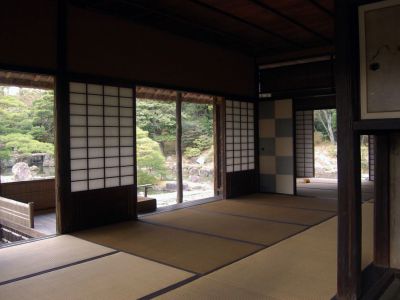
4) Katsura Imperial Villa (must see)
According to experts, Katsura is the crème de la crème of Japanese real estate. It's not just the garden that's a knockout; the buildings are the epitome of Japanese craftsmanship. Prince Toshihito (1571–1629), the brain behind this paradise, wanted a pad where he could entertain his artsy pals in style.
The highlight? A pond garden that plays peek-a-boo with your senses: as you stroll, strategically placed greenery keeps the pond a mystery, until suddenly, bam! You're hit with a clear view of the scenic shoreline, bridges, and scenes straight out of literary classics.
Toshihito, a tea enthusiast, sprinkled 'wabi-sabi' charm throughout the garden with rustic touches like stone lanterns and water basins. And don't miss the four tea houses, each with its own vibe – one's perched like a mountain retreat, while another appears to float serenely on the water.
The main buildings, crafted by Toshihito's son, are deceptively simple yet sneakily intricate – think doorbells shaped like flowers and shelves showcasing 18 wood varieties. So enchanted was the son with the estate that he rarely visited, fearing he might spoil the magic. Each trip was like stepping into his own personal paradise, and you'll likely feel the same if you pay a visit.
Tip:
To peek at this paradise, you’ll need to hop on a 40-minute tour (they have English audio guides), which loops around the centerpiece pond. Sadly, you can't snoop around the buildings, and snapping pics is only allowed in designated areas.
To snag a spot on a tour, you gotta rock up in person (don't forget your passport) to the Imperial Household Office at Kyoto Gyōen. If you're feeling lucky, you can try your hand at scoring a spot on their website, but move fast – they go like hotcakes!
The highlight? A pond garden that plays peek-a-boo with your senses: as you stroll, strategically placed greenery keeps the pond a mystery, until suddenly, bam! You're hit with a clear view of the scenic shoreline, bridges, and scenes straight out of literary classics.
Toshihito, a tea enthusiast, sprinkled 'wabi-sabi' charm throughout the garden with rustic touches like stone lanterns and water basins. And don't miss the four tea houses, each with its own vibe – one's perched like a mountain retreat, while another appears to float serenely on the water.
The main buildings, crafted by Toshihito's son, are deceptively simple yet sneakily intricate – think doorbells shaped like flowers and shelves showcasing 18 wood varieties. So enchanted was the son with the estate that he rarely visited, fearing he might spoil the magic. Each trip was like stepping into his own personal paradise, and you'll likely feel the same if you pay a visit.
Tip:
To peek at this paradise, you’ll need to hop on a 40-minute tour (they have English audio guides), which loops around the centerpiece pond. Sadly, you can't snoop around the buildings, and snapping pics is only allowed in designated areas.
To snag a spot on a tour, you gotta rock up in person (don't forget your passport) to the Imperial Household Office at Kyoto Gyōen. If you're feeling lucky, you can try your hand at scoring a spot on their website, but move fast – they go like hotcakes!
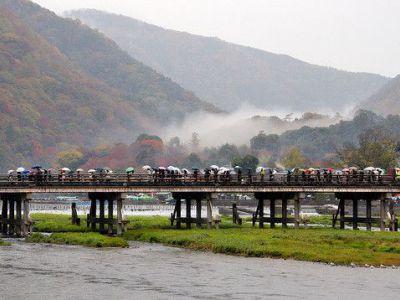
5) Togetsukyo Bridge
At the heart of the Arashiyama district, Togetsukyo, or the "Moon Crossing Bridge", spans across the Katsura River, framed by the majestic Mount Arashi. Originally built in the Heian Period (794-1185) and last restored in the 1930s, this famous landmark exudes a timeless allure, especially during the vibrant hues of autumn foliage and the ethereal beauty of cherry blossoms in spring.
Despite its traditional appearance, the Togetsukyo blends ancient charm with modern engineering, its reinforced concrete columns and beams complemented by cypress parapets. Legend has it that the bridge earned its poetic moniker when Emperor Kameyama beheld a shimmering moonrise over the river, resembling the moon itself traversing the bridge. Since then, it has stood witness to feudal conflicts, samurai clashes, and inspired countless haiku poems.
Visitors are invited to capture Togetsukyo 's beauty from various angles, buy souvenirs from the shops at each end, embark on a rickshaw ride along the riverbanks, or indulge in delectable treats from nearby food stalls and eateries. During the summer months, the bridge comes alive with the age-old tradition of cormorant fishing, offering a captivating glimpse into Japanese culture.
Despite its traditional appearance, the Togetsukyo blends ancient charm with modern engineering, its reinforced concrete columns and beams complemented by cypress parapets. Legend has it that the bridge earned its poetic moniker when Emperor Kameyama beheld a shimmering moonrise over the river, resembling the moon itself traversing the bridge. Since then, it has stood witness to feudal conflicts, samurai clashes, and inspired countless haiku poems.
Visitors are invited to capture Togetsukyo 's beauty from various angles, buy souvenirs from the shops at each end, embark on a rickshaw ride along the riverbanks, or indulge in delectable treats from nearby food stalls and eateries. During the summer months, the bridge comes alive with the age-old tradition of cormorant fishing, offering a captivating glimpse into Japanese culture.
