Custom Walk in Palma de Mallorca, Spain by vishyshanker431 created on 2026-03-29
Guide Location: Spain » Palma de Mallorca
Guide Type: Custom Walk
# of Sights: 10
Tour Duration: 2 Hour(s)
Travel Distance: 3 Km or 1.9 Miles
Share Key: 8F3TN
Guide Type: Custom Walk
# of Sights: 10
Tour Duration: 2 Hour(s)
Travel Distance: 3 Km or 1.9 Miles
Share Key: 8F3TN
How It Works
Please retrieve this walk in the GPSmyCity app. Once done, the app will guide you from one tour stop to the next as if you had a personal tour guide. If you created the walk on this website or come to the page via a link, please follow the instructions below to retrieve the walk in the app.
Retrieve This Walk in App
Step 1. Download the app "GPSmyCity: Walks in 1K+ Cities" on Apple App Store or Google Play Store.



Step 2. In the GPSmyCity app, download(or launch) the guide "Palma de Mallorca Map and Walking Tours".
Step 3. Tap the menu button located at upper right corner of the "Walks" screen and select "Retrieve custom walk". Enter the share key: 8F3TN
1) Palma Cathedral (must see)
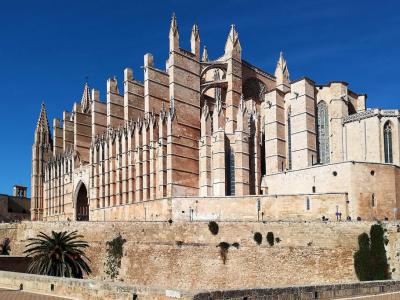
Palma Cathedral, commonly known as La Seu, is the most iconic landmark of Palma de Mallorca and one of the great Gothic cathedrals of the Mediterranean. Rising directly above the Bay of Palma, its vast sandstone structure dominates the city skyline. According to tradition, its construction was born of a vow. In December 1229, King James I of Aragon was caught in a violent storm while sailing to conquer the Balearic Islands. Facing disaster, the young king swore that if he survived and succeeded, he would build a great cathedral in Mallorca. He survived, conquered the island, and in 1230 construction began on La Seu, on the site of the former main mosque.
Building continued intermittently for around 350 years, making the cathedral a record of evolving architectural styles. The seaward-facing portal reflects early Gothic influences from the 13th century, while the opposite portal dates to the late Gothic period of the 16th century. Elsewhere, Gothic gives way to Renaissance elements, Baroque chapels, and touches of Classicism, particularly in the baptistry. The nave, completed last, ranks among the largest in Europe.
Light is central to the cathedral’s identity. The immense Gothic rose window on the eastern façade measures about 41 feet in diameter and is composed of roughly 1,200 pieces of stained glass. Each morning, sunlight floods the interior with shifting colours. Twice a year, on February 2 and November 11, this effect becomes especially dramatic during the “Light Game of the Eight,” when the rising sun projects the rose window’s image directly beneath the western rose, forming a luminous figure eight. For about twenty days on either side of the winter solstice, sunrise can be seen through both rosettes. The rose window on the eastern façade is positioned directly above the High Altar.
Another highlight to admire is famed modernist architect Antoni Gaudí’s early 20th-century intervention: a massive chandelier suspended above the central altar area. To see it best, stand at the front of the pews in the central nave and look up. You will see a large, illuminated, hexagonal baldachin hanging from chains. Made of wrought iron and cardboard, it features 35 brass lamps.
A natural follow-up after viewing Gaudí’s chandelier is another major intervention, completed in 2007. The Chapel of the Blessed Sacrament was renovated by renowned Mallorcan artist Miquel Barceló, who covered its walls with large, cracked ceramic sculptures representing the miracle of the loaves and fishes. Look for the submerged textures of fish and sea plants, as well as the tall, eerie, monochromatic windows that make the space feel underwater. The chapel is located at the front end of the south aisle, near the main altar.
The Trinity Chapel, which is not open to the public, contains the tombs of Kings James II and James III.
Building continued intermittently for around 350 years, making the cathedral a record of evolving architectural styles. The seaward-facing portal reflects early Gothic influences from the 13th century, while the opposite portal dates to the late Gothic period of the 16th century. Elsewhere, Gothic gives way to Renaissance elements, Baroque chapels, and touches of Classicism, particularly in the baptistry. The nave, completed last, ranks among the largest in Europe.
Light is central to the cathedral’s identity. The immense Gothic rose window on the eastern façade measures about 41 feet in diameter and is composed of roughly 1,200 pieces of stained glass. Each morning, sunlight floods the interior with shifting colours. Twice a year, on February 2 and November 11, this effect becomes especially dramatic during the “Light Game of the Eight,” when the rising sun projects the rose window’s image directly beneath the western rose, forming a luminous figure eight. For about twenty days on either side of the winter solstice, sunrise can be seen through both rosettes. The rose window on the eastern façade is positioned directly above the High Altar.
Another highlight to admire is famed modernist architect Antoni Gaudí’s early 20th-century intervention: a massive chandelier suspended above the central altar area. To see it best, stand at the front of the pews in the central nave and look up. You will see a large, illuminated, hexagonal baldachin hanging from chains. Made of wrought iron and cardboard, it features 35 brass lamps.
A natural follow-up after viewing Gaudí’s chandelier is another major intervention, completed in 2007. The Chapel of the Blessed Sacrament was renovated by renowned Mallorcan artist Miquel Barceló, who covered its walls with large, cracked ceramic sculptures representing the miracle of the loaves and fishes. Look for the submerged textures of fish and sea plants, as well as the tall, eerie, monochromatic windows that make the space feel underwater. The chapel is located at the front end of the south aisle, near the main altar.
The Trinity Chapel, which is not open to the public, contains the tombs of Kings James II and James III.
2) Royal Palace of La Almudaina (must see)
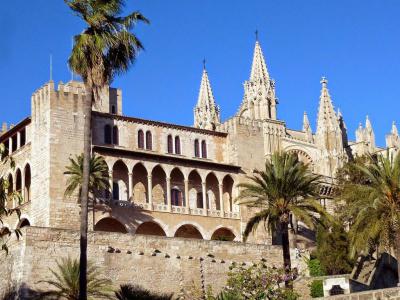
The Royal Palace of La Almudaina is one of Palma de Mallorca’s most important historic monuments, standing directly opposite the cathedral and overlooking the bay. Its origins lie in the Islamic period, when it functioned as the fortified palace of Mallorca. Built on earlier Roman and possibly Byzantine foundations, the complex served as the seat of Muslim governors until the Christian conquest of Mallorca in 1229.
Following the conquest by King James I of Aragon, the palace was adapted for Christian rule. Its most significant transformation came in 1309, when King James II of Mallorca ordered a major reconstruction based on the Royal Palace of Perpignan. This rebuilding established much of the structure and layout that define La Almudaina today. By the 14th century, the palace had assumed its enduring form as a Gothic royal residence, while still preserving traces of its Islamic past, particularly in its courtyards and baths.
To enter the palace premises, look for the arched gateway with a balcony above it. As soon as you clear security, you will walk straight into the King’s Courtyard, easily recognized by the white marble lion fountain at its center. One of the palace’s highlights is the Chapel of Saint Anne, located along the western wall of the courtyard. Its exterior portal immediately stands out, crafted from rose and white marble from the Pyrenees. In contrast to this Romanesque entrance—one of the few surviving examples of the style on the island—the chapel’s interior reflects classic Mallorcan Gothic. Inside, look for the 14th-century alabaster altarpiece and the central rose window, which floods the small space with colorful light.
The most impressive and largest room in the palace is the Great Hall. It is the first major hall you enter after climbing the staircase flanked by two lion statues in the courtyard. Once inside, look up at the massive pointed Gothic arches and the high vaulted ceilings. Along the walls hang Flemish tapestries from the 16th and 17th centuries, depicting intricate mythological and historical scenes. The hall remains the setting for official state receptions when the Spanish royal family is in residence.
Overall, the palace’s interior spaces are clearly differentiated by level. The ground floor maintains a distinctly medieval atmosphere, with art, furnishings, and tapestries dating largely from the 15th century. The upper floor, reserved for official royal acts, is more formal in tone and decorated with artworks and objects from the 17th, 18th, and 20th centuries.
The palace can get quite crowded in the mid-morning when cruise ship tours arrive. For the best experience and to see the Great Hall without the crowds, try to visit during the first hour of opening or in the late afternoon.
Following the conquest by King James I of Aragon, the palace was adapted for Christian rule. Its most significant transformation came in 1309, when King James II of Mallorca ordered a major reconstruction based on the Royal Palace of Perpignan. This rebuilding established much of the structure and layout that define La Almudaina today. By the 14th century, the palace had assumed its enduring form as a Gothic royal residence, while still preserving traces of its Islamic past, particularly in its courtyards and baths.
To enter the palace premises, look for the arched gateway with a balcony above it. As soon as you clear security, you will walk straight into the King’s Courtyard, easily recognized by the white marble lion fountain at its center. One of the palace’s highlights is the Chapel of Saint Anne, located along the western wall of the courtyard. Its exterior portal immediately stands out, crafted from rose and white marble from the Pyrenees. In contrast to this Romanesque entrance—one of the few surviving examples of the style on the island—the chapel’s interior reflects classic Mallorcan Gothic. Inside, look for the 14th-century alabaster altarpiece and the central rose window, which floods the small space with colorful light.
The most impressive and largest room in the palace is the Great Hall. It is the first major hall you enter after climbing the staircase flanked by two lion statues in the courtyard. Once inside, look up at the massive pointed Gothic arches and the high vaulted ceilings. Along the walls hang Flemish tapestries from the 16th and 17th centuries, depicting intricate mythological and historical scenes. The hall remains the setting for official state receptions when the Spanish royal family is in residence.
Overall, the palace’s interior spaces are clearly differentiated by level. The ground floor maintains a distinctly medieval atmosphere, with art, furnishings, and tapestries dating largely from the 15th century. The upper floor, reserved for official royal acts, is more formal in tone and decorated with artworks and objects from the 17th, 18th, and 20th centuries.
The palace can get quite crowded in the mid-morning when cruise ship tours arrive. For the best experience and to see the Great Hall without the crowds, try to visit during the first hour of opening or in the late afternoon.
3) La Llotja (The Market) (must see)
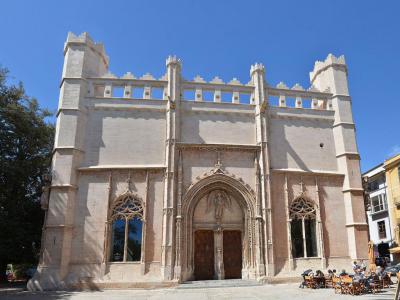
La Llotja, the old Maritime Trade Exchange, is a masterpiece of bourgeois Gothic architecture. It may be found next to La Seu, or Palma Cathedral, on the Avenue Gabriel Roca. The Trade Exchange was founded in Barcelona by a privilege granted by King Marti I in 1403. The exchange moved to Mallorca in 1452 to be housed in La Llotja.
The Exchange regulated trade and maintained the port of Palma. Business transactions could be conducted in the la Llotja building. As maritime trade fell off, la Llotja became merely a goods depot. It was an arms factory and arsenal in the Napoleonic wars and after the factory, it was a courthouse. From 1886 to 1962 it was a museum.
Architect Guillem Sanear began construction in 1426. It was completed in 1447 by Guillermo Vilasolar. In 1452 the Maritime Trade Exchange moved in. During this time the building formed a part of the city's defense walls. Four towers were set up on the four corners of the cube-shaped building. The building was almost touched by the sea.
Inside is a single space. Two rows of twisted columns support a vaulted ceiling. Above the main entrance is a sculpture of The Angel of Merchants in the tympanum.
In the last thirty years the Llotja has been a center for art shows, events and political meetings. It has been recently restored and the roof is now a terraced flat roof. Groups may ascend to the roof with permission. It is open daily except Monday.
The Exchange regulated trade and maintained the port of Palma. Business transactions could be conducted in the la Llotja building. As maritime trade fell off, la Llotja became merely a goods depot. It was an arms factory and arsenal in the Napoleonic wars and after the factory, it was a courthouse. From 1886 to 1962 it was a museum.
Architect Guillem Sanear began construction in 1426. It was completed in 1447 by Guillermo Vilasolar. In 1452 the Maritime Trade Exchange moved in. During this time the building formed a part of the city's defense walls. Four towers were set up on the four corners of the cube-shaped building. The building was almost touched by the sea.
Inside is a single space. Two rows of twisted columns support a vaulted ceiling. Above the main entrance is a sculpture of The Angel of Merchants in the tympanum.
In the last thirty years the Llotja has been a center for art shows, events and political meetings. It has been recently restored and the roof is now a terraced flat roof. Groups may ascend to the roof with permission. It is open daily except Monday.
4) Arab Baths (must see)
Romans, Byzantines and Arabs had settled one after the other in Mallorca before the Catalans arrived. In the Arab days it was called Medina Mayurqa and they really liked to bath. They built their baths, called hammams, using materials left behind by the Romans and Byzantines. They used old bits of columns and capitals and voila! A bath!
The Arabs built well. The baths in Mallorca are over a thousand years old. One may not vouch for the plumbing, but the building materials are still good. Maybe shabby, but ok. The hot room and warm room of the Arab Baths are still extant but the cold room is no more.
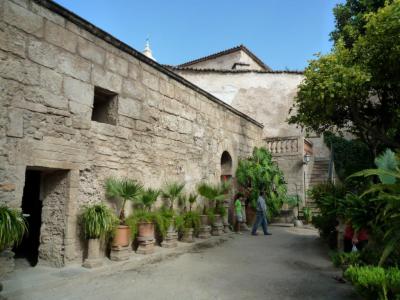
The hot room is a square room. It has 12 columns and a domed ceiling. It is a gallery with a barrel vault. The room has 24 holes for ventilation. The dome has five holes to let in light and fresh air. There is a small well-tended garden attached to the baths. The garden has a jasmine archway, subtropical trees and plants. An afternoon enjoyment.
The baths are only a walk of a minute or so from the Palma Cathedral. They open at 9am to 6pm in the evening in winter and until 7:30pm from April to November.
The Arabs built well. The baths in Mallorca are over a thousand years old. One may not vouch for the plumbing, but the building materials are still good. Maybe shabby, but ok. The hot room and warm room of the Arab Baths are still extant but the cold room is no more.
The hot room is a square room. It has 12 columns and a domed ceiling. It is a gallery with a barrel vault. The room has 24 holes for ventilation. The dome has five holes to let in light and fresh air. There is a small well-tended garden attached to the baths. The garden has a jasmine archway, subtropical trees and plants. An afternoon enjoyment.
The baths are only a walk of a minute or so from the Palma Cathedral. They open at 9am to 6pm in the evening in winter and until 7:30pm from April to November.
5) Convent of San Francisco
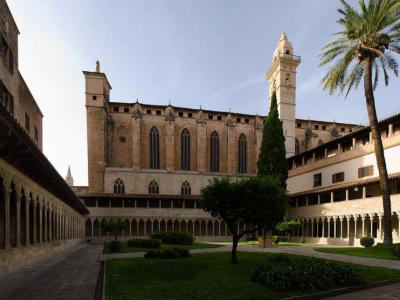
The Convent of San Francisco was built in 1232; in 1281 it was remodeled to what is seen today. Jacques de Mallorca, son of King Jacques II de Mallorca, took his vows here in the 13th century. Today, the Convent of San Francisco and the cloister represent one of the best examples of medieval architecture in Palma de Mallorca.
The church has a Gothic nave which is surrounded by eight side chapels and a polygonal apse. The most recent ones were built between 1445 and 1670. Inside the convent, you will notice a retable, another Gothic masterpiece of the 15th century. To the left of the presbytery, there is the tomb of Ramon Llull, a Majorcan writer and philosopher, logician and a Franciscan tertiary, whose death still remains a mystery.
The façade of the church was rebuilt in the 17th century by Francisco de Herrera. The portal is also of Gothic style. The frontal and the round stained-glass window are the works of glazier Pere Comas.
The cloister attached to the church was built in the 17th -18th centuries. It is a beautiful architectural ensemble with stunning columns and buttresses.
The church has a Gothic nave which is surrounded by eight side chapels and a polygonal apse. The most recent ones were built between 1445 and 1670. Inside the convent, you will notice a retable, another Gothic masterpiece of the 15th century. To the left of the presbytery, there is the tomb of Ramon Llull, a Majorcan writer and philosopher, logician and a Franciscan tertiary, whose death still remains a mystery.
The façade of the church was rebuilt in the 17th century by Francisco de Herrera. The portal is also of Gothic style. The frontal and the round stained-glass window are the works of glazier Pere Comas.
The cloister attached to the church was built in the 17th -18th centuries. It is a beautiful architectural ensemble with stunning columns and buttresses.
6) Església de Santa Eulàlia (Church of Santa Eulalia)
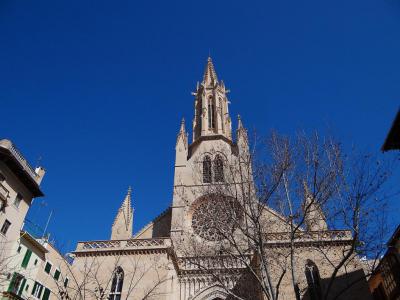
Nestled in the heart of Palma’s charming historic centre, the Church of Santa Eulalia (Església de Santa Eulàlia) stands as the city’s oldest parish church. Built in 1236 on the ruins of a former Moorish mosque shortly after the 1229 Catalan conquest, it predates even the iconic Cathedral of La Seu. In the bull of Pope Innocent IV (1248), Santa Eulàlia was recognized as the foremost church in Palma, reflecting its medieval importance during the formative years of the island’s Christian identity.
Historically, the church was the site of major events in Mallorcan governance and royalty: in 1256, the island’s General Council swore loyalty to the heir Jaume, and in 1276 Jaume II was crowned King of Mallorca within its walls. Over the centuries, the church evolved architecturally-from its original Catalan Gothic structure with a central nave flanked by side aisles and chapels between buttresses, to a Neo‑Gothic façade added at the turn of the 20th century, replete with an original 15th‑century rose window.
Inside, visitors will discover a peaceful sanctuary marked by rib-vaulted ceilings supported by elegant octagonal columns, serene stained glass windows, and subtle details in both Gothic austerity and Baroque flourish. Noteworthy features include the Baroque altarpiece by Dominican friar Albert de Burgunyó and the historic pulpit from which Saint Vincent Ferrer preached in 1413. The exterior is adorned with medieval gargoyles-including dragons and harpies-believed to ward off evil, while terraced balconies and façades depict biblical scenes like the Annunciation and the Epiphany.
Despite its proximity to Palma’s larger cathedral, Santa Eulàlia offers a tranquil oasis for reflection. Free from large tourist crowds, it invites visitors to pause, explore the artistry and architecture at leisure, and soak in centuries of history within one of the island’s most evocative spiritual landmarks.
Historically, the church was the site of major events in Mallorcan governance and royalty: in 1256, the island’s General Council swore loyalty to the heir Jaume, and in 1276 Jaume II was crowned King of Mallorca within its walls. Over the centuries, the church evolved architecturally-from its original Catalan Gothic structure with a central nave flanked by side aisles and chapels between buttresses, to a Neo‑Gothic façade added at the turn of the 20th century, replete with an original 15th‑century rose window.
Inside, visitors will discover a peaceful sanctuary marked by rib-vaulted ceilings supported by elegant octagonal columns, serene stained glass windows, and subtle details in both Gothic austerity and Baroque flourish. Noteworthy features include the Baroque altarpiece by Dominican friar Albert de Burgunyó and the historic pulpit from which Saint Vincent Ferrer preached in 1413. The exterior is adorned with medieval gargoyles-including dragons and harpies-believed to ward off evil, while terraced balconies and façades depict biblical scenes like the Annunciation and the Epiphany.
Despite its proximity to Palma’s larger cathedral, Santa Eulàlia offers a tranquil oasis for reflection. Free from large tourist crowds, it invites visitors to pause, explore the artistry and architecture at leisure, and soak in centuries of history within one of the island’s most evocative spiritual landmarks.
7) Església de Sant Nicolau (Church of Saint Nicolas)
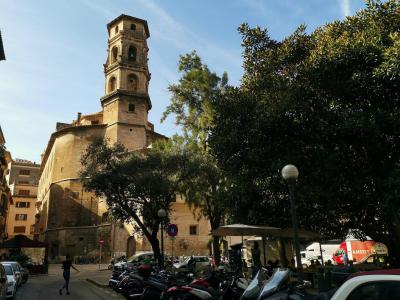
Nestled in the atmospheric labyrinth of Palma’s La Palma Baixa district, just off the elegant boulevard of Es Born, the Church of Saint Nicholas (Església de Sant Nicolau) offers a quiet and evocative experience amidst the city’s bustling historic heart. Founded in 1302 to ease the pressures of the large Santa Eulàlia parish, the original edifice was rebuilt in phases between 1309 and 1349, reflecting the community’s growth at a pivotal moment in Palma’s medieval urban development.
What you see today is largely the result of a comprehensive 17th-century reconstruction, which significantly reshaped the apse, roof, and interior decor. After its renovation and re‑sanctification in 1712, the church welcomed visitors into a structure that elegantly blends Gothic bones with Baroque flourishes. The basilica-style layout-with a single nave flanked by side chapels beneath Gothic vaults and lunettes-echoes its medieval origins, while floral motifs, carved pillars, and the Baroque altarpiece showcase later artistic embellishments.
Architectural highlights include a Catalan-Gothic façade characterised by a square front flanked by octagonal towers, Gothic portals attributed to Francesc Sagrera, and a rose window featuring Casa Amigó stained glass introduced during a later neo‑Gothic revival in the late 19th century by architect Joan Miquel Sureda y Verí. Inside, you’ll find the Gothic paintings of Saint Nicholas and Saint Maginus (by Miquel d’Alcanyís), a silver Gothic ciborium, and a richly decorated Baroque altarpiece, blending layers of Palma’s evolving art history.
For visitors craving a calm moment of reflection or a taste of Palma’s architectural richness, the Church of Saint Nicholas is a peaceful gem often overlooked by mainstream tours. Its intimate scale and layered history reward curiosity. Audio guides are available on-site, and they also play a modest role during Holy Week, serving as the starting point for one of Palma’s traditional processions on Holy Tuesday.
What you see today is largely the result of a comprehensive 17th-century reconstruction, which significantly reshaped the apse, roof, and interior decor. After its renovation and re‑sanctification in 1712, the church welcomed visitors into a structure that elegantly blends Gothic bones with Baroque flourishes. The basilica-style layout-with a single nave flanked by side chapels beneath Gothic vaults and lunettes-echoes its medieval origins, while floral motifs, carved pillars, and the Baroque altarpiece showcase later artistic embellishments.
Architectural highlights include a Catalan-Gothic façade characterised by a square front flanked by octagonal towers, Gothic portals attributed to Francesc Sagrera, and a rose window featuring Casa Amigó stained glass introduced during a later neo‑Gothic revival in the late 19th century by architect Joan Miquel Sureda y Verí. Inside, you’ll find the Gothic paintings of Saint Nicholas and Saint Maginus (by Miquel d’Alcanyís), a silver Gothic ciborium, and a richly decorated Baroque altarpiece, blending layers of Palma’s evolving art history.
For visitors craving a calm moment of reflection or a taste of Palma’s architectural richness, the Church of Saint Nicholas is a peaceful gem often overlooked by mainstream tours. Its intimate scale and layered history reward curiosity. Audio guides are available on-site, and they also play a modest role during Holy Week, serving as the starting point for one of Palma’s traditional processions on Holy Tuesday.
8) Passeig des Born (Born Passage) (must see)
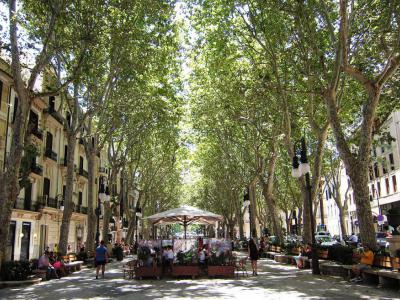
Born Passage is one of Palma de Mallorca’s most elegant and historically layered promenades, linking the Old Town with the former port area. Its origins stretch back to the medieval period, when this open space lay just outside the city walls and was used for tournaments, military drills, and public gatherings. The name “Born” is thought to derive from medieval jousting grounds.
In its modern form, the promenade dates largely to the 19th century, when Palma expanded beyond its fortifications. The Born was laid out over the former riverbed of the Riera torrent, which once divided the city. For more than a hundred years, this tree-lined avenue has hosted feasts, demonstrations, public events, and generations of peaceful strollers. A wide central promenade runs between two traffic lanes, originally designed for vehicles moving in each direction. Today, vehicle traffic is strictly limited, giving the entire area the feel of a pedestrian plaza.
Architecturally, the Born is framed by grand townhouses whose ground floors now house galleries, boutiques, and cafés. Landmarks along the promenade include the Solleric Mansion, a former palace turned exhibition space, and the site of the old Born Cinema, now occupied by a Zara store. During the Franco era, the dictator attempted to rename the avenue “Franco Passage,” but locals continued to call it simply the Born.
The passage is ideal for an evening walk. From here, views open toward the Royal Palace of La Almudaina and Palma Cathedral, both especially atmospheric after dark. Cafés and terraces invite lingering, and even small rituals—such as stopping for vegan ice cream at a place called Dolce—fit naturally into the rhythm of the promenade.
In its modern form, the promenade dates largely to the 19th century, when Palma expanded beyond its fortifications. The Born was laid out over the former riverbed of the Riera torrent, which once divided the city. For more than a hundred years, this tree-lined avenue has hosted feasts, demonstrations, public events, and generations of peaceful strollers. A wide central promenade runs between two traffic lanes, originally designed for vehicles moving in each direction. Today, vehicle traffic is strictly limited, giving the entire area the feel of a pedestrian plaza.
Architecturally, the Born is framed by grand townhouses whose ground floors now house galleries, boutiques, and cafés. Landmarks along the promenade include the Solleric Mansion, a former palace turned exhibition space, and the site of the old Born Cinema, now occupied by a Zara store. During the Franco era, the dictator attempted to rename the avenue “Franco Passage,” but locals continued to call it simply the Born.
The passage is ideal for an evening walk. From here, views open toward the Royal Palace of La Almudaina and Palma Cathedral, both especially atmospheric after dark. Cafés and terraces invite lingering, and even small rituals—such as stopping for vegan ice cream at a place called Dolce—fit naturally into the rhythm of the promenade.
9) Iglesia de Sant Jaume (Parish Church of Saint James)
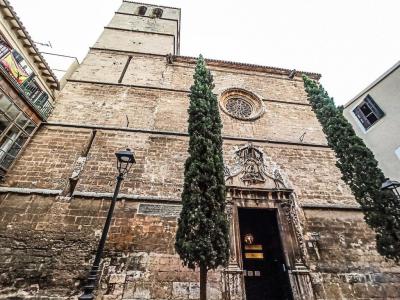
Parish Church of Saint James (Iglesia de Sant Jaume) stands as one of Palma’s four oldest parish churches, alongside Santa Eulàlia, Sant Miquel, and Santa Creu. Founded by the Mallorcan royal family and first documented in 1248 by Pope Innocent IV, its construction under master-builder Jordi Pujol began in 1327 and firmly established its place in medieval Gothic tradition.
The church is compact yet striking, featuring a single cross‑vaulted nave and a large, ornamental rose window on its façade-a classic example of Mallorcan Gothic design. The main portal, crafted in Baroque style by sculptor Miquel Tomàs in 1776, offers rocaille decoration and a bust of Saint James the Apostle, witnessing the blend of Gothic structure and later artistic flair.
Inside, visitors will find subtle treasures: the Chapel of the Blessed Sacrament, added in the 17th century, houses a gilded altarpiece of San Cayetano and canvases of the Holy Christ by Miquel Pons Cantallops. The vault’s keystones preserve an impressive heraldic display-the coats of arms of benefactors who funded the original construction work.
Though not as ornate as Palma’s grand cathedral, this charming church stands out for its architectural purity, intimate scale, and centuries‑old artistry. Located just steps from Passeig des Born and boutique cafés, it offers a serene and enriching stop for those on foot through the old town-an excellent complement to the more imposing landmarks nearby.
The church is compact yet striking, featuring a single cross‑vaulted nave and a large, ornamental rose window on its façade-a classic example of Mallorcan Gothic design. The main portal, crafted in Baroque style by sculptor Miquel Tomàs in 1776, offers rocaille decoration and a bust of Saint James the Apostle, witnessing the blend of Gothic structure and later artistic flair.
Inside, visitors will find subtle treasures: the Chapel of the Blessed Sacrament, added in the 17th century, houses a gilded altarpiece of San Cayetano and canvases of the Holy Christ by Miquel Pons Cantallops. The vault’s keystones preserve an impressive heraldic display-the coats of arms of benefactors who funded the original construction work.
Though not as ornate as Palma’s grand cathedral, this charming church stands out for its architectural purity, intimate scale, and centuries‑old artistry. Located just steps from Passeig des Born and boutique cafés, it offers a serene and enriching stop for those on foot through the old town-an excellent complement to the more imposing landmarks nearby.
10) Olivar Market (must see)
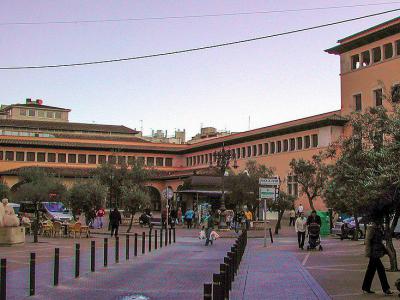
Olivar Market sits in the heart of Palma de Mallorca and is the city’s largest and most important public market. Opened in 1951, it takes its name from the former Convent of the Olivar, which once occupied the area. Built as part of Palma’s postwar modernization, the market brought together food vendors who had previously operated in smaller open-air settings, creating a central hub for everyday shopping and social life.
If you enjoy food in all its forms, Olivar Market is the place to be. The easiest way to understand its importance is to watch the locals. See where they go for snacks, take-away meals, fresh ingredients, and casual lunches. Follow their lead. Even with a fairly dense network of supermarkets in the city, the market remains the go-to destination for residents as well as visitors.
Inside, the range is impressive. Seafood displays highlight Mallorca’s close relationship with the Mediterranean, while nearby stalls offer meats, cured sausages such as sobrassada, cheeses, fresh fruit, vegetables, dairy products, and gourmet specialties. Sushi counters sit alongside traditional fishmongers, reflecting both local tastes and modern influences. Bars, cafés, and small restaurants throughout the market make it easy to stop for tapas, coffee, or a meal on the spot.
On the ground floor (the first floor in the United States), visitors will find most of the produce, meat, seafood, and gourmet food stalls. Escalators and elevators lead to the upper level, which expands the experience beyond food shopping. Here, you’ll find a small shopping arcade, restaurants and bars, boutiques, a supermarket, a cooking school, a hairdressing salon, a children’s area, and even a library, along with access to the parking area.
Beyond its offerings, Olivar Market provides a vivid snapshot of daily Palma life. Conversations flow across counters, routines unfold naturally, and the pace shifts from busy mornings to a calmer midday rhythm. It’s not just a market, but one of the best places to understand how Palma eats, shops, and lives.
If you enjoy food in all its forms, Olivar Market is the place to be. The easiest way to understand its importance is to watch the locals. See where they go for snacks, take-away meals, fresh ingredients, and casual lunches. Follow their lead. Even with a fairly dense network of supermarkets in the city, the market remains the go-to destination for residents as well as visitors.
Inside, the range is impressive. Seafood displays highlight Mallorca’s close relationship with the Mediterranean, while nearby stalls offer meats, cured sausages such as sobrassada, cheeses, fresh fruit, vegetables, dairy products, and gourmet specialties. Sushi counters sit alongside traditional fishmongers, reflecting both local tastes and modern influences. Bars, cafés, and small restaurants throughout the market make it easy to stop for tapas, coffee, or a meal on the spot.
On the ground floor (the first floor in the United States), visitors will find most of the produce, meat, seafood, and gourmet food stalls. Escalators and elevators lead to the upper level, which expands the experience beyond food shopping. Here, you’ll find a small shopping arcade, restaurants and bars, boutiques, a supermarket, a cooking school, a hairdressing salon, a children’s area, and even a library, along with access to the parking area.
Beyond its offerings, Olivar Market provides a vivid snapshot of daily Palma life. Conversations flow across counters, routines unfold naturally, and the pace shifts from busy mornings to a calmer midday rhythm. It’s not just a market, but one of the best places to understand how Palma eats, shops, and lives.
