Custom Walk in Christchurch, New Zealand by millichamp_simon_e835e3 created on 2026-04-03
Guide Location: New Zealand » Christchurch
Guide Type: Custom Walk
# of Sights: 14
Tour Duration: 3 Hour(s)
Travel Distance: 4.3 Km or 2.7 Miles
Share Key: W9ADM
Guide Type: Custom Walk
# of Sights: 14
Tour Duration: 3 Hour(s)
Travel Distance: 4.3 Km or 2.7 Miles
Share Key: W9ADM
How It Works
Please retrieve this walk in the GPSmyCity app. Once done, the app will guide you from one tour stop to the next as if you had a personal tour guide. If you created the walk on this website or come to the page via a link, please follow the instructions below to retrieve the walk in the app.
Retrieve This Walk in App
Step 1. Download the app "GPSmyCity: Walks in 1K+ Cities" on Apple App Store or Google Play Store.



Step 2. In the GPSmyCity app, download(or launch) the guide "Christchurch Map and Walking Tours".
Step 3. Tap the menu button located at upper right corner of the "Walks" screen and select "Retrieve custom walk". Enter the share key: W9ADM
1) Christchurch Botanic Gardens (must see)
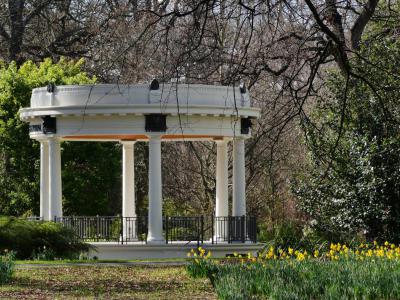
In 1863 an English oak tree was planted in an area of land just south of Hagley Park in Christchurch. The tree was planted for two reasons: 1) To inaugurate the Christchurch Botanic Gardens; and 2) To honor the marriage of Prince Albert of England and Princess Alexandra of Denmark. The marriage prospered and the park grew.
The garden ranges over 21 hectares by the Avon River. It has a variety of exotic and local plants, conservatories, a nursery, a playground and a climate station. The visitor center, opened in 2014, has a gift shop, cafe and an interactive exhibition on the history of gardening. Next door is the Ilex Nursery, home to 10,000 plant species.
The Armstrong Lawn has formal beds of flowers throughout the seasons. The Peacock Fountain, imported from England, is installed on the Lawn. The Curator's House (1920), also on the Lawn, has its own kitchen garden of flowers and vegetables.
Trails and formal paths wander about the park, bringing visitors through many different gardens and environments. The herbaceous border of the gardens is divided by an ornamental sundial. The gardens feature plants of different climates and regions. The Central Rose Garden has 104 beds holding a profuse collection of roses.
The Rock Garden's terraces are ideal for alpine plants. There is the Azalea and Magnolia Garden, canopied by oak and birch trees. There are gardens of heritage roses, the Temperate Asian Collection, and the Water Garden. Woodlands are represented in the Daffodil Woodland, the Woodland Garden and the arboretum of pine trees, called the Pinetum.
There are ornamental buildings, pavilions and follies, and the Bandsmen's Memorial Rotunda. Conservatories are the Cunningham House, the Townend House, the Garrick House, the Gilpin house, the Fern House and the Foweraker House. The conservatories shelter tropical plants, ferns, cacti and desert flora and water plants.
All this, and including a popular children's playground, a climatological station and a cafe are open to visitors.
The garden ranges over 21 hectares by the Avon River. It has a variety of exotic and local plants, conservatories, a nursery, a playground and a climate station. The visitor center, opened in 2014, has a gift shop, cafe and an interactive exhibition on the history of gardening. Next door is the Ilex Nursery, home to 10,000 plant species.
The Armstrong Lawn has formal beds of flowers throughout the seasons. The Peacock Fountain, imported from England, is installed on the Lawn. The Curator's House (1920), also on the Lawn, has its own kitchen garden of flowers and vegetables.
Trails and formal paths wander about the park, bringing visitors through many different gardens and environments. The herbaceous border of the gardens is divided by an ornamental sundial. The gardens feature plants of different climates and regions. The Central Rose Garden has 104 beds holding a profuse collection of roses.
The Rock Garden's terraces are ideal for alpine plants. There is the Azalea and Magnolia Garden, canopied by oak and birch trees. There are gardens of heritage roses, the Temperate Asian Collection, and the Water Garden. Woodlands are represented in the Daffodil Woodland, the Woodland Garden and the arboretum of pine trees, called the Pinetum.
There are ornamental buildings, pavilions and follies, and the Bandsmen's Memorial Rotunda. Conservatories are the Cunningham House, the Townend House, the Garrick House, the Gilpin house, the Fern House and the Foweraker House. The conservatories shelter tropical plants, ferns, cacti and desert flora and water plants.
All this, and including a popular children's playground, a climatological station and a cafe are open to visitors.
2) Canterbury Museum (must see)
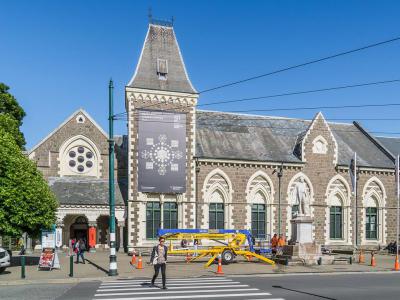
Canterbury Museum may be found in the center of Christchurch. It was founded in 1867 by Julius von Haast, an explorer and geologist. The Museum was based mainly on von Haast's own collections. The museum is a Victorian Gothic Revival building, designed by Benjamin Mountfort, a prominent New Zealand architect dedicated to all things Gothic.
The museum never stopped growing. By 1876 another building had been added and an inner courtyard, which was roofed over in 1882. A new wing was added in 1958, next to Christ's College. Another wing came along in 1977. Strengthening measures were taken in the 1990s. A four-storey section was built in 1995.
The museum experienced some damage to its facade in the earthquakes of 2010-2011, but it still emerged in sound condition. Almost all of the collections were undamaged. The statue of William Rolleston, however, was knocked off its plinth. Rolleston was the superintendent of Canterbury Province until 1877.
The Museum show-cases displays on Antarctica, costumes, indigenous birds, and the history of the Maori and European peoples in New Zealand. Also covered are Asian decorative arts, geology and natural sciences. Access is also available to research materials.
The museum never stopped growing. By 1876 another building had been added and an inner courtyard, which was roofed over in 1882. A new wing was added in 1958, next to Christ's College. Another wing came along in 1977. Strengthening measures were taken in the 1990s. A four-storey section was built in 1995.
The museum experienced some damage to its facade in the earthquakes of 2010-2011, but it still emerged in sound condition. Almost all of the collections were undamaged. The statue of William Rolleston, however, was knocked off its plinth. Rolleston was the superintendent of Canterbury Province until 1877.
The Museum show-cases displays on Antarctica, costumes, indigenous birds, and the history of the Maori and European peoples in New Zealand. Also covered are Asian decorative arts, geology and natural sciences. Access is also available to research materials.
3) Christchurch Art Gallery Te Puna o Waiwhetu
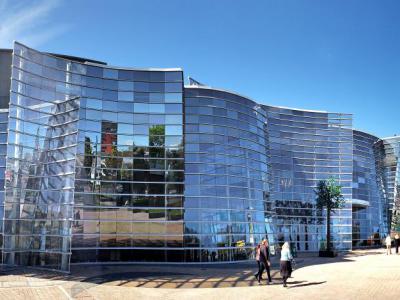
The Christchurch Art Gallery Te Puna o Waiwhetū is a public art institution showcasing a rich tapestry of New Zealand and international exhibitions. The gallery, supported by the Christchurch City Council, boasts a significant art collection, providing a window into the artistic heritage and contemporary creativity of the region and beyond.
Opened to the public in 2003, the gallery took over the mantle from the city's former public art gallery, the Robert McDougall Art Gallery, established in 1932. This transition not only marked a new chapter in the city's cultural life but also introduced a modern architectural marvel designed by the Buchan Group. The building's design pays homage to the natural and cultural heritage of the area, incorporating Māori elements in its name-Te Puna, a nod to the artesian spring beneath the gallery, and Waiwhetū referring to a nearby tributary of the River Avon, evoking images of water mirroring the stars.
The gallery's forecourt is graced by the striking sculpture "Reason for Voyaging," a collaboration between sculptor Graham Bennett and architect David Cole, further cementing the gallery's role as a space for innovative artistic and architectural collaboration.
Following the February 2011 quake, the gallery functioned as the Civil Defence headquarters for seven months. Extensive refurbishments were necessary, delaying its reopening until December 19, 2015, highlighting its resilience and significance as a cultural hub and community support center during difficult times.
The Christchurch Art Gallery Te Puna o Waiwhetū thus stands as a testament to the enduring spirit of Christchurch, marrying the rich cultural heritage of New Zealand with contemporary artistic expressions and serving as a pillar of the community's resilience and recovery.
Opened to the public in 2003, the gallery took over the mantle from the city's former public art gallery, the Robert McDougall Art Gallery, established in 1932. This transition not only marked a new chapter in the city's cultural life but also introduced a modern architectural marvel designed by the Buchan Group. The building's design pays homage to the natural and cultural heritage of the area, incorporating Māori elements in its name-Te Puna, a nod to the artesian spring beneath the gallery, and Waiwhetū referring to a nearby tributary of the River Avon, evoking images of water mirroring the stars.
The gallery's forecourt is graced by the striking sculpture "Reason for Voyaging," a collaboration between sculptor Graham Bennett and architect David Cole, further cementing the gallery's role as a space for innovative artistic and architectural collaboration.
Following the February 2011 quake, the gallery functioned as the Civil Defence headquarters for seven months. Extensive refurbishments were necessary, delaying its reopening until December 19, 2015, highlighting its resilience and significance as a cultural hub and community support center during difficult times.
The Christchurch Art Gallery Te Puna o Waiwhetū thus stands as a testament to the enduring spirit of Christchurch, marrying the rich cultural heritage of New Zealand with contemporary artistic expressions and serving as a pillar of the community's resilience and recovery.
4) Victoria Square
Victoria Square was at first, Market Square. Maori people came to this area on the banks of the Avon River to market their produce. A 20-foot high totem was erected on the square in 1994. It was carved by artist Riki Manuel. It memorializes the presence of the first people.
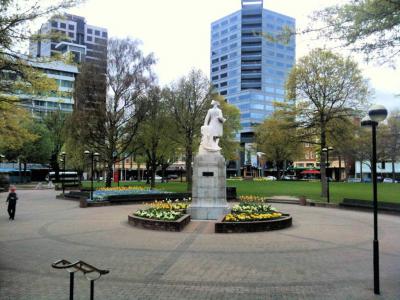
Victoria Square was the commercial dynamo of early Christchurch. It held the Post Office, various markets, the Police Station, Women's Prison, an animal pound, store houses and Immigration Barracks. In May of 1903 the statue of Queen Victoria was unveiled in Market Square and the square became Victoria Square.
In March 1852 a simple bridge was erected over the Avon River. It was called the Market Place Bridge. It was replaced in 1864 by a bridge of iron and stone which still stands today. It was named Victoria Bridge. In 1989 it was renamed Hamish Hay Bridge.
Near the statue of Queen Victoria is Mana Motuhake, carved by Fayne Robinson. It honors the signing of the Treaty of Waitangi, which settled British and Maori governance of New Zealand. It consists of two upright canoe hulls (waka) holding carved figures mounted on a stone plinth.
Other monuments include the Floral Clock, using 7,000 plants each spring and autumn and the H.L. Bowker Fountain, designed by Victor Dean in 1931. Finally there is the marble statue of Captain James Cook, made by William Trethewey, commemorating his three voyages to New Zealand.
Victoria Square was the commercial dynamo of early Christchurch. It held the Post Office, various markets, the Police Station, Women's Prison, an animal pound, store houses and Immigration Barracks. In May of 1903 the statue of Queen Victoria was unveiled in Market Square and the square became Victoria Square.
In March 1852 a simple bridge was erected over the Avon River. It was called the Market Place Bridge. It was replaced in 1864 by a bridge of iron and stone which still stands today. It was named Victoria Bridge. In 1989 it was renamed Hamish Hay Bridge.
Near the statue of Queen Victoria is Mana Motuhake, carved by Fayne Robinson. It honors the signing of the Treaty of Waitangi, which settled British and Maori governance of New Zealand. It consists of two upright canoe hulls (waka) holding carved figures mounted on a stone plinth.
Other monuments include the Floral Clock, using 7,000 plants each spring and autumn and the H.L. Bowker Fountain, designed by Victor Dean in 1931. Finally there is the marble statue of Captain James Cook, made by William Trethewey, commemorating his three voyages to New Zealand.
5) New Regent Street
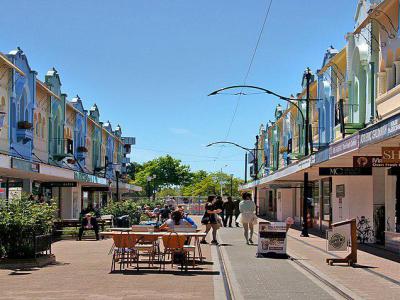
New Regent Street is a pedestrian mall lined with Spanish Mission style shop houses with shaped gables, medallions, tiled window hoods, barley-twist columns and roofed arcades. The houses alternate in light pastel colors of yellow, pale blue and green. The effect is reminiscent of southern California or Granada.
The street was built in the late 1930s with 40 shops. Developing small shops as a compound or complex was an advanced idea. Some say it was a precursor to the modern shopping mall of today.
The original name proposed was Little High Street, referencing High Street south of the city center. The builders suggested Regent Street, as with Regent Street in London. There was a Regent street already in Sydenham, a suburb of Christchurch, so everyone went with New Regent Street. All the buildings are listed as Category I heritage sites.
The street was pedestrianized in 1994 in anticipation of the coming of the Christchurch heritage pram (electric trolly). The pram began operating in the street in 1995. The street offers bars, cafes, waffle houses, jewelers, dance wear boutiques and gelato stores.
The 2011 earthquake caused damage to some of the buildings on the New Regent Street, but most of the damages have been repaired. The street is once again a popular place to go for shopping, dining and people watching.
The street was built in the late 1930s with 40 shops. Developing small shops as a compound or complex was an advanced idea. Some say it was a precursor to the modern shopping mall of today.
The original name proposed was Little High Street, referencing High Street south of the city center. The builders suggested Regent Street, as with Regent Street in London. There was a Regent street already in Sydenham, a suburb of Christchurch, so everyone went with New Regent Street. All the buildings are listed as Category I heritage sites.
The street was pedestrianized in 1994 in anticipation of the coming of the Christchurch heritage pram (electric trolly). The pram began operating in the street in 1995. The street offers bars, cafes, waffle houses, jewelers, dance wear boutiques and gelato stores.
The 2011 earthquake caused damage to some of the buildings on the New Regent Street, but most of the damages have been repaired. The street is once again a popular place to go for shopping, dining and people watching.
6) Margaret Mahy Playground (must see)
Within an easy walk from the center of Christchurch one finds the Margaret Mahy Playground. Margaret Mahy was a world famous children's book author. She died on July 23 2012. The playground is probably the largest playground in the Southern Hemisphere.
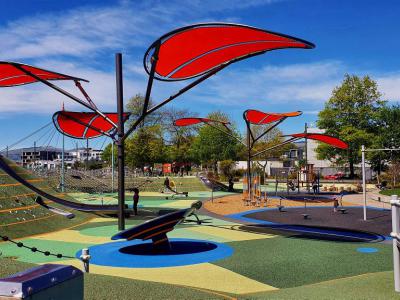
The playground offers serious fun for all children and a break for the adults. There are bouncing slides, climbing, flying fox squirting, picture swings and a small water park, plus food carts and BBQs. The park borders the Avon River and New Regent Street is nearby.
The park covers a wide selection of play equipment. The team designers created a "story arc" path almost 500 feet long. The arc contains elements from the children's stories of writers Margaret Mahy and Elsie Locke. Legends and images from the indigenous Ngai Tahu people also appear in the arc.
Much of the equipment is custom made. A 33 foot high tower, a 15 foot climbing slope with slides, in-ground trampolines and "flying fox" machines and other fun items abound, water play, climbing nets and even artworks add to the many possibilities for children and adults.
The playground offers serious fun for all children and a break for the adults. There are bouncing slides, climbing, flying fox squirting, picture swings and a small water park, plus food carts and BBQs. The park borders the Avon River and New Regent Street is nearby.
The park covers a wide selection of play equipment. The team designers created a "story arc" path almost 500 feet long. The arc contains elements from the children's stories of writers Margaret Mahy and Elsie Locke. Legends and images from the indigenous Ngai Tahu people also appear in the arc.
Much of the equipment is custom made. A 33 foot high tower, a 15 foot climbing slope with slides, in-ground trampolines and "flying fox" machines and other fun items abound, water play, climbing nets and even artworks add to the many possibilities for children and adults.
7) Cardboard Cathedral (must see)
The dust from the 2011 Christchurch earthquake had barely settled when the well known Japanese "disaster architect" Shigaru Ban was invited to Christchurch to design a temporary cathedral. The cathedral needed to be capable of holding concerts and events as well as services. Ban created the design pro bono.
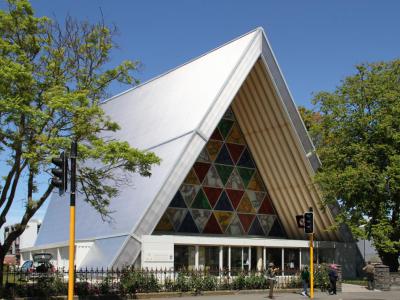
The "Cardboard Cathedral" is an A-frame style building. The roof is 69 feet above the altar. Materials include wood, steel, and 96 24-inch diameter waterproof cardboard tubes. Eight shipping containers provide the walls and the roof is polycarbonate. The foundation is a concrete slab. The cathedral can hold up to 700 people.
It is the only cathedral in the world made substantially of cardboard. Its environmentally conscious use of paper tubes as an architectural material has drawn acclaims from around the world.
Lonely Planet named Christchurch one of the "top 10 cities to travel" in October 2012, and the cathedral was cited as one of the reasons that makes the city an exciting place.
The "Cardboard Cathedral" is an A-frame style building. The roof is 69 feet above the altar. Materials include wood, steel, and 96 24-inch diameter waterproof cardboard tubes. Eight shipping containers provide the walls and the roof is polycarbonate. The foundation is a concrete slab. The cathedral can hold up to 700 people.
It is the only cathedral in the world made substantially of cardboard. Its environmentally conscious use of paper tubes as an architectural material has drawn acclaims from around the world.
Lonely Planet named Christchurch one of the "top 10 cities to travel" in October 2012, and the cathedral was cited as one of the reasons that makes the city an exciting place.
8) Chalice Sculpture
While a student at Hastings Boys' High School in New Zealand, Francis Neil Dawson launched his art career by painting "April Fool" in white on the roof of the school. Years later he climaxed his penchant for art in public places by creating The Chalice, an enormous, upside down metallic cone in Cathedral Square in Christchurch.
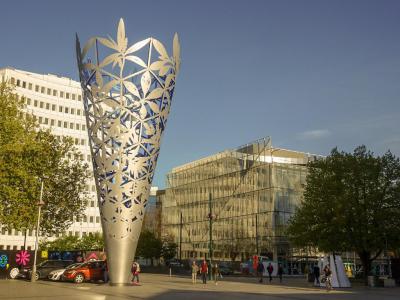
Dawson's forte is optical illusions assisted by the use of patterns, like moire. The Chalice, also called The Millennium Cone, is a steel and aluminum sculpture. It was commissioned for the 150th anniversary of Christchurch and Canterbury by the Canterbury Association in 2001.
The sculpture is of aluminum on a hexagonal steel framework. Forty-two aluminum leaves of native plants are woven through the honeycombed steel. The native tree species represented are Mapou, Kowhai, Mahoe, Totara, Karamu, Titoki, Maratata and Koromiko. The Cone is 59 feet high. The base diameter is 6.5 feet. Top diameter is 28 feet.
The base of the sculpture is dark granite with a diameter of ten feet. The cone is painted silver on the outside and blue inside. At night it may be lighted inside and out.
Dawson's forte is optical illusions assisted by the use of patterns, like moire. The Chalice, also called The Millennium Cone, is a steel and aluminum sculpture. It was commissioned for the 150th anniversary of Christchurch and Canterbury by the Canterbury Association in 2001.
The sculpture is of aluminum on a hexagonal steel framework. Forty-two aluminum leaves of native plants are woven through the honeycombed steel. The native tree species represented are Mapou, Kowhai, Mahoe, Totara, Karamu, Titoki, Maratata and Koromiko. The Cone is 59 feet high. The base diameter is 6.5 feet. Top diameter is 28 feet.
The base of the sculpture is dark granite with a diameter of ten feet. The cone is painted silver on the outside and blue inside. At night it may be lighted inside and out.
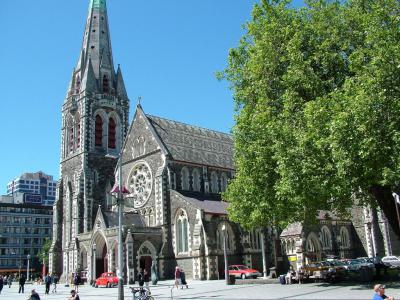
9) ChristChurch Cathedral
ChristChurch Cathedral is in the middle of Cathedral Square. The Cathedral is the child of the Canterbury Association, founded by Parliament and the Anglican Church. Under the leadership of John Robert Godley, Anglo-Irish statesman, the colony of Christchurch became a reality in 1850.
In 1858 The Anglican diocese commissioned architect George Gilbert Scott to design the Cathedral. It was to be built in Scott's Gothic Revival style. The cornerstone was laid in 1864, but budget restraints halted construction in 1865. In 1873 New Zealand architect Benjamin Mountfort took over.
The 100 foot nave and tower were consecrated in 1881. The chancel, transepts and apse were finished in 1904. The tower and spire of the cathedral reached a height of 207 feet above the square. The cathedral was an all-stone construction.
From 1881 through 2011 the Cathedral was wracked by earthquakes. In 2011 a 6.3 magnitude earthquake in February left the Cathedral in ruins. The spire was destroyed completely. After a 6.4 magnitude quake in June, the walls partially fell in. In 2012 it was announced the building would be demolished.
After much litigation, in September of 2017 Bishop Victoria Mathews announced the Cathedral would be reinstated. The reconstruction would take an estimated 10 years.
In 1858 The Anglican diocese commissioned architect George Gilbert Scott to design the Cathedral. It was to be built in Scott's Gothic Revival style. The cornerstone was laid in 1864, but budget restraints halted construction in 1865. In 1873 New Zealand architect Benjamin Mountfort took over.
The 100 foot nave and tower were consecrated in 1881. The chancel, transepts and apse were finished in 1904. The tower and spire of the cathedral reached a height of 207 feet above the square. The cathedral was an all-stone construction.
From 1881 through 2011 the Cathedral was wracked by earthquakes. In 2011 a 6.3 magnitude earthquake in February left the Cathedral in ruins. The spire was destroyed completely. After a 6.4 magnitude quake in June, the walls partially fell in. In 2012 it was announced the building would be demolished.
After much litigation, in September of 2017 Bishop Victoria Mathews announced the Cathedral would be reinstated. The reconstruction would take an estimated 10 years.
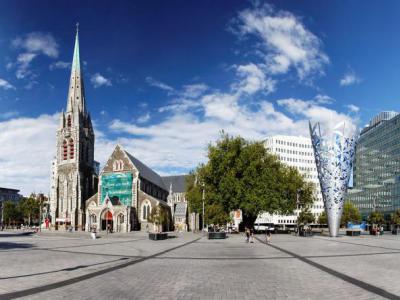
10) Cathedral Square
Cathedral Square, locally known simply as the Square, is the geographical centre and heart of Christchurch.
It was intended that Cathedral Square be named for Protestant martyr Nicholas Ridley, burned at the stake in 1555. Ridley's fellow martyrs, Cranmer and Latimer, have their squares but Ridley's square was envisaged for ChristChurch Cathedral in 1850.
The square was planned in the form of a cross. It was originally conceived as a private area for the Cathedral and a grammar school. However, from the very beginning, the square became a place for meetings and communal events. In 1974 the square was redeveloped. In 2000 Gray tiles were laid, making a grid pattern over an enormous area.
The square is a magnet for colorful characters. Ian Brackenbury, aka "The Wizard", mounts a ladder and begins his discourse. He wears a tall, pointed witch's hat and a black academic gown and he claims to be a false prophet of the Church of England. Then there's the Bible Lady, Renee Stanton. She competes with the false prophet for attention.
Cathedral Square has a large number of historical buildings and statues that are registered as heritage items with Heritage New Zealand. Among them are the ChristChurch Cathedral, Press Building, former Chief Post Office, Old Government Building, Citizens' War Memorial, Godley Statue and others.
In 2011 a disastrous earthquake rocked Christchurch. ChristChurch Cathedral, The crown jewel of the square, was left a gutted ruin. It is still in a damaged state today but plans are to restore it and not to pull it down. Some of the other historical buildings are also damaged by the earthquake.
Today the square is alive with visitors and buskers, food kiosks and hope.
It was intended that Cathedral Square be named for Protestant martyr Nicholas Ridley, burned at the stake in 1555. Ridley's fellow martyrs, Cranmer and Latimer, have their squares but Ridley's square was envisaged for ChristChurch Cathedral in 1850.
The square was planned in the form of a cross. It was originally conceived as a private area for the Cathedral and a grammar school. However, from the very beginning, the square became a place for meetings and communal events. In 1974 the square was redeveloped. In 2000 Gray tiles were laid, making a grid pattern over an enormous area.
The square is a magnet for colorful characters. Ian Brackenbury, aka "The Wizard", mounts a ladder and begins his discourse. He wears a tall, pointed witch's hat and a black academic gown and he claims to be a false prophet of the Church of England. Then there's the Bible Lady, Renee Stanton. She competes with the false prophet for attention.
Cathedral Square has a large number of historical buildings and statues that are registered as heritage items with Heritage New Zealand. Among them are the ChristChurch Cathedral, Press Building, former Chief Post Office, Old Government Building, Citizens' War Memorial, Godley Statue and others.
In 2011 a disastrous earthquake rocked Christchurch. ChristChurch Cathedral, The crown jewel of the square, was left a gutted ruin. It is still in a damaged state today but plans are to restore it and not to pull it down. Some of the other historical buildings are also damaged by the earthquake.
Today the square is alive with visitors and buskers, food kiosks and hope.
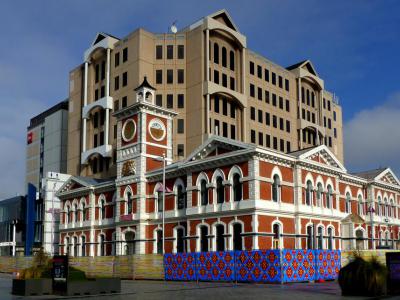
11) Chief Post Office
In 1863 it was decided Christchurch would replace Lyttelton as the main Post Town. Christchurch's post office was too small and located in Market Square, later known as Victoria Square. Architect William Henry Clayton would design the Christchurch Post Office.
The design of the building is Italianate with Venetian Gothic touches. The upper windows have pointed arches. A four faced clock turret clock was installed in the Post Office tower in 1879. It is thought to be an imitation of London's Great Clock of Westminster. On the east face of the tower, under the clock, is the coat of arms of the United Kingdom.
Like other buildings on the Square, the Chief Post Office has suffered quake damages over the years. It has lost tenants since the devastating quake of 2011. In 2018 came the announcement that the building would be repaired and restored. Building Owner Gordon Chamberlain said the process would take about two years.
Scheduled repairs include the facade and clock tower, overall strengthening and replacing the roof.
The design of the building is Italianate with Venetian Gothic touches. The upper windows have pointed arches. A four faced clock turret clock was installed in the Post Office tower in 1879. It is thought to be an imitation of London's Great Clock of Westminster. On the east face of the tower, under the clock, is the coat of arms of the United Kingdom.
Like other buildings on the Square, the Chief Post Office has suffered quake damages over the years. It has lost tenants since the devastating quake of 2011. In 2018 came the announcement that the building would be repaired and restored. Building Owner Gordon Chamberlain said the process would take about two years.
Scheduled repairs include the facade and clock tower, overall strengthening and replacing the roof.
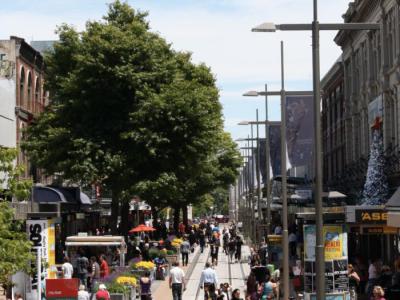
12) City Mall
City Mall, located in the heart of Christchurch, New Zealand, is the principal pedestrian thoroughfare within the central city. It encompasses two segments of Cashel Street, including the Bridge of Remembrance, and a portion of High Street, earning it the colloquial name, Cashel Mall. The transformation of this area into a pedestrian-friendly zone began with the pedestrianization of the Bridge of Remembrance in 1976. The main mall area followed suit, ceasing vehicle traffic on January 11, 1982, and officially reopening as a pedestrian mall on August 7 of the same year.
Between 2006 and 2009, City Mall underwent significant redevelopment, which included the installation of tram tracks to extend the heritage tram network, highlighting its status as a central hub for both shopping and cultural heritage. Despite its importance and historical value, the mall faced several challenges due to natural disasters. The February 2011 earthquake, with a magnitude of 6.3, brought devastating impacts to the mall, leading to the collapse of many building façades and resulting in fatalities. This disaster prompted the closure of the city center to facilitate demolition and rebuilding efforts.
Most of the heritage buildings within the mall, which were registered by Heritage New Zealand, suffered during these earthquakes. Despite these challenges, the resilience of Christchurch and its people shone through. The Cashel Street section from Oxford Terrace to Colombo Street became the first part of the central city to reopen on October 29, 2011. The City Mall was reopened to the public in 2018.
Between 2006 and 2009, City Mall underwent significant redevelopment, which included the installation of tram tracks to extend the heritage tram network, highlighting its status as a central hub for both shopping and cultural heritage. Despite its importance and historical value, the mall faced several challenges due to natural disasters. The February 2011 earthquake, with a magnitude of 6.3, brought devastating impacts to the mall, leading to the collapse of many building façades and resulting in fatalities. This disaster prompted the closure of the city center to facilitate demolition and rebuilding efforts.
Most of the heritage buildings within the mall, which were registered by Heritage New Zealand, suffered during these earthquakes. Despite these challenges, the resilience of Christchurch and its people shone through. The Cashel Street section from Oxford Terrace to Colombo Street became the first part of the central city to reopen on October 29, 2011. The City Mall was reopened to the public in 2018.
13) Bridge of Remembrance
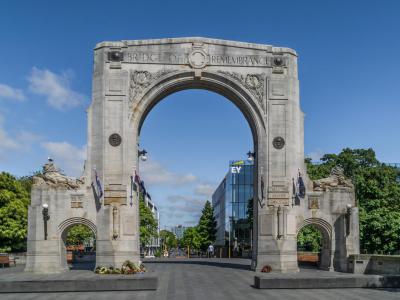
Edward George Wright, civil engineer, was commissioned to build a bridge over the river Avon at Cashel Street in Christchurch in 1873. The bridge became pedestrianized in 1977 and it links Oxford and Cambridge Terraces over the Avon. In 1919, as World War I ended, Mrs Wyn Irwin, secretary of the Bridge of Remembrance Committee, wrote to The Press suggesting a memorial arch on the bridge.
The Memorial Arch was unveiled by Lord Jellicoe, hero of the Battle of Jutland, in November 1924. Soldiers crossed over the Avon this way in the Great War, on their way to the railway station and then by ship to the front.
The design was by William Gummer. Gummer had designed other memorials including the Dunedin Cenotaph war memorial. The central frame of the Remembrance Bridge memorial has the inscription "Quid non-pro Patria" ("What will a man not do for his country"). The arch is adorned with a cross, torches, coat of arms, laurel wreaths and stone lions.
On April 2, 1985 the Bridge of Remembrance was listed as a Category I with the New Zealand Historic Places Trust.
The Memorial Arch was unveiled by Lord Jellicoe, hero of the Battle of Jutland, in November 1924. Soldiers crossed over the Avon this way in the Great War, on their way to the railway station and then by ship to the front.
The design was by William Gummer. Gummer had designed other memorials including the Dunedin Cenotaph war memorial. The central frame of the Remembrance Bridge memorial has the inscription "Quid non-pro Patria" ("What will a man not do for his country"). The arch is adorned with a cross, torches, coat of arms, laurel wreaths and stone lions.
On April 2, 1985 the Bridge of Remembrance was listed as a Category I with the New Zealand Historic Places Trust.
14) Canterbury Earthquake National Memorial
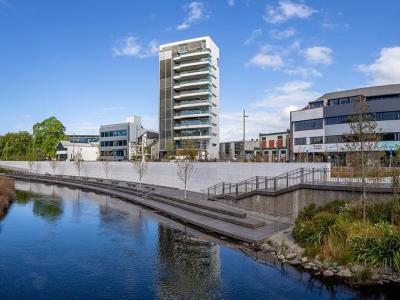
The Canterbury Earthquake National Memorial can be found on both sides of the Avon River, downstream of the Montreal Street Bridge. There was a call for "Ideas to Remember." What was needed was "A place where people can spend time in reflection..." Slavonian architect Grega Vezjak's design filled the bill.
The memorial should: 1) Honor the 185 people who died; 2) Give thanks for those who helped in rescue and recovery; 3) Permit people to share experiences; 4) Provide a space for an annual gathering on 22 February and other events; and 5) become a point for contemplation and remembering. The Memorial has done all these things.
The memorial is designed to provide two different areas on either side of the curving Avon River. A space of parkland is on the north bank. It has trees, seating and gardens. Across the river on the south bank is the memorial wall with the names of those who died. The Maori name for the memorial is "Oi Manawa", "tremor of the heart."
Nondescript forms of concrete in the river remind one of the destructive tectonic forces of the earthquake. Water flows between and around these forms. The water of the river flowing by evokes the violence of the quake and the oppressive silence that followed.
There is a simple balance in the design, creating a feeling of sadness and loss. One can sit quietly, listening to the sounds of nature.
The memorial should: 1) Honor the 185 people who died; 2) Give thanks for those who helped in rescue and recovery; 3) Permit people to share experiences; 4) Provide a space for an annual gathering on 22 February and other events; and 5) become a point for contemplation and remembering. The Memorial has done all these things.
The memorial is designed to provide two different areas on either side of the curving Avon River. A space of parkland is on the north bank. It has trees, seating and gardens. Across the river on the south bank is the memorial wall with the names of those who died. The Maori name for the memorial is "Oi Manawa", "tremor of the heart."
Nondescript forms of concrete in the river remind one of the destructive tectonic forces of the earthquake. Water flows between and around these forms. The water of the river flowing by evokes the violence of the quake and the oppressive silence that followed.
There is a simple balance in the design, creating a feeling of sadness and loss. One can sit quietly, listening to the sounds of nature.
