Custom Walk in Birmingham, England by leonsmit_private_6b6cf created on 2026-04-04
Guide Location: England » Birmingham
Guide Type: Custom Walk
# of Sights: 7
Tour Duration: 2 Hour(s)
Travel Distance: 3.1 Km or 1.9 Miles
Share Key: LFZG2
Guide Type: Custom Walk
# of Sights: 7
Tour Duration: 2 Hour(s)
Travel Distance: 3.1 Km or 1.9 Miles
Share Key: LFZG2
How It Works
Please retrieve this walk in the GPSmyCity app. Once done, the app will guide you from one tour stop to the next as if you had a personal tour guide. If you created the walk on this website or come to the page via a link, please follow the instructions below to retrieve the walk in the app.
Retrieve This Walk in App
Step 1. Download the app "GPSmyCity: Walks in 1K+ Cities" on Apple App Store or Google Play Store.



Step 2. In the GPSmyCity app, download(or launch) the guide "Birmingham Map and Walking Tours".
Step 3. Tap the menu button located at upper right corner of the "Walks" screen and select "Retrieve custom walk". Enter the share key: LFZG2
1) Centenary Square
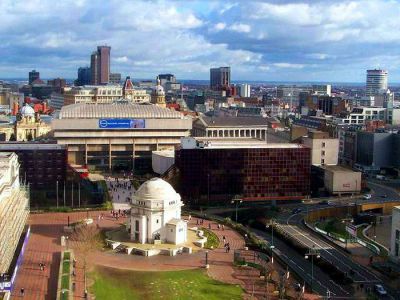
Centenary Square, situated on the north side of Broad Street in Birmingham, was established in 1989 to celebrate the 100th anniversary of Birmingham's city status. Originally an industrial zone filled with small workshops and canal wharves, the area underwent significant transformation after being acquired by the council in the 1920s. Initially intended to be part of a grand civic center scheme featuring museums, council offices, a cathedral, and an opera house, this plan was largely halted by World War II, with only the Hall of Memory and part of Baskerville House completed.
Post-war efforts to revive the original grand scheme in a simplified form did not fully materialize. However, the square saw a substantial redesign in 1991 to complement the newly constructed International Convention Centre. This redesign included new paving, railings, and lamps by artist Tess Jaray, along with a fountain and several sculptures.
Significant changes occurred again with the construction of the Library of Birmingham on the square in 2013, which led to the removal of many elements from the 1991 design and the incorporation of a library amphitheater. In 2014, a competition led to another redesign of the square, with construction commencing in 2017 and completing in 2019.
Today, Centenary Square is a vibrant cultural hub, hosting major city events such as the Frankfurt Christmas Market, arts festivals, Remembrance Day services, and New Year's celebrations. Seasonally, it also features a temporary ice rink and Ferris wheel, adding to its festive allure. This evolution from an industrial site to a centerpiece of urban cultural and civic activity reflects Birmingham's dynamic urban development.
Post-war efforts to revive the original grand scheme in a simplified form did not fully materialize. However, the square saw a substantial redesign in 1991 to complement the newly constructed International Convention Centre. This redesign included new paving, railings, and lamps by artist Tess Jaray, along with a fountain and several sculptures.
Significant changes occurred again with the construction of the Library of Birmingham on the square in 2013, which led to the removal of many elements from the 1991 design and the incorporation of a library amphitheater. In 2014, a competition led to another redesign of the square, with construction commencing in 2017 and completing in 2019.
Today, Centenary Square is a vibrant cultural hub, hosting major city events such as the Frankfurt Christmas Market, arts festivals, Remembrance Day services, and New Year's celebrations. Seasonally, it also features a temporary ice rink and Ferris wheel, adding to its festive allure. This evolution from an industrial site to a centerpiece of urban cultural and civic activity reflects Birmingham's dynamic urban development.
2) Jewellery Quarter
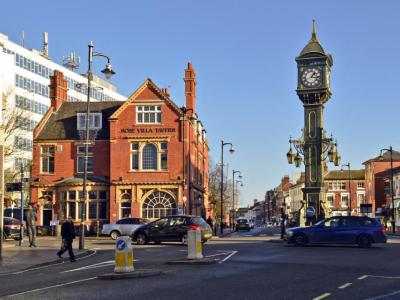
The Jewellery Quarter, situated in the north-western part of Birmingham City Centre, is a notable area combining historical charm with a modern twist. Spanning 1.07 square kilometers and home to around 19,000 residents, this quarter is renowned for being Europe's largest concentration of businesses dedicated to the jewelry trade, contributing 40% of the UK’s jewelry production.
Historically, the Quarter has been an epicenter for the jewelry industry since its peak employment of over 30,000 workers in the early 1900s. Despite facing declines due to international competition and diminishing demand throughout the 20th century, the area has transformed into an urban village that preserves its rich industrial heritage while promoting contemporary creative enterprises. It's also an Anchor Point of the European Route of Industrial Heritage, highlighting its significance in industrial history.
The area hosts the world's largest Assay Office, hallmarking about 12 million items annually, underscoring its pivotal role in the global jewelry business. The Quarter comprises over 100 retail shops, diamond dealerships, and specialized workshops, including a noteworthy museum that houses a preserved 1980s jewelry workshop.
Beyond its industrial significance, the Jewellery Quarter boasts Georgian architecture around Saint Paul’s Square and the 18th-century Saint Paul's Church. The modern resurgence of the area has brought in indie stores, trendy bars, art galleries, and a variety of eateries, blending traditional craftsmanship with modern urban culture.
Today, the Jewellery Quarter stands as a vibrant, multi-faceted part of Birmingham, embodying both its industrial past and its dynamic present, making it a unique and culturally rich area within the city.
Historically, the Quarter has been an epicenter for the jewelry industry since its peak employment of over 30,000 workers in the early 1900s. Despite facing declines due to international competition and diminishing demand throughout the 20th century, the area has transformed into an urban village that preserves its rich industrial heritage while promoting contemporary creative enterprises. It's also an Anchor Point of the European Route of Industrial Heritage, highlighting its significance in industrial history.
The area hosts the world's largest Assay Office, hallmarking about 12 million items annually, underscoring its pivotal role in the global jewelry business. The Quarter comprises over 100 retail shops, diamond dealerships, and specialized workshops, including a noteworthy museum that houses a preserved 1980s jewelry workshop.
Beyond its industrial significance, the Jewellery Quarter boasts Georgian architecture around Saint Paul’s Square and the 18th-century Saint Paul's Church. The modern resurgence of the area has brought in indie stores, trendy bars, art galleries, and a variety of eateries, blending traditional craftsmanship with modern urban culture.
Today, the Jewellery Quarter stands as a vibrant, multi-faceted part of Birmingham, embodying both its industrial past and its dynamic present, making it a unique and culturally rich area within the city.
3) 17 & 19 Newhall Street
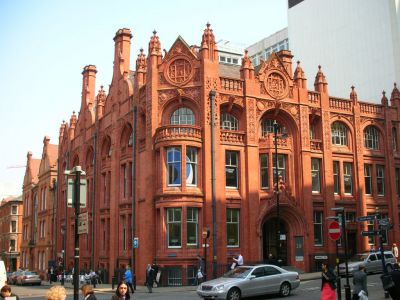
Located in the heart of Birmingham, at the intersection of Newhall Street and Edmund Street, the building at 17 & 19 Newhall Street stands as a significant architectural and historical landmark. Known as "The Exchange" and formerly referred to as the "Bell Edison Telephone Building," this Grade I listed structure is renowned for its distinctive red brick and architectural terracotta facade.
Designed by Frederick Martin of Martin & Chamberlain, the building was inaugurated in 1887 to accommodate the Central Telephone Exchange along with offices for the National Telephone Company (NTC). At the time, with 5,000 subscribers, it was the largest telephone exchange in the country. The building originally bore the postal address of 19 Newhall Street and was internally known within the NTC as "Telephone Buildings." The wrought iron gates at the main entrance proudly display the NTC logo, featuring the names of innovators Bell and Edison, highlighting its origins in the telecommunications industry.
In 1912, the Postmaster General took over the NTC, transferring the building to the General Post Office (GPO). Over the years, it served as a TAS exchange, the Birmingham office for the Post Office Engineering Union, and the Midland headquarters for the air raid warning system during World War I. In 1936, telephone exchange operations were moved to Telephone House, making space for various tenants in the subsequent decades.
Today, 17 & 19 Newhall Street is a vibrant hub for businesses, including Core Marketing, Mitchell Adam, and GBR Phoenix Beard, reflecting its ongoing relevance in modern commerce. The basement, with an entrance on Edmund Street, is home to the bar Bushwackers, adding a recreational aspect to this historic building's contemporary use.
Designed by Frederick Martin of Martin & Chamberlain, the building was inaugurated in 1887 to accommodate the Central Telephone Exchange along with offices for the National Telephone Company (NTC). At the time, with 5,000 subscribers, it was the largest telephone exchange in the country. The building originally bore the postal address of 19 Newhall Street and was internally known within the NTC as "Telephone Buildings." The wrought iron gates at the main entrance proudly display the NTC logo, featuring the names of innovators Bell and Edison, highlighting its origins in the telecommunications industry.
In 1912, the Postmaster General took over the NTC, transferring the building to the General Post Office (GPO). Over the years, it served as a TAS exchange, the Birmingham office for the Post Office Engineering Union, and the Midland headquarters for the air raid warning system during World War I. In 1936, telephone exchange operations were moved to Telephone House, making space for various tenants in the subsequent decades.
Today, 17 & 19 Newhall Street is a vibrant hub for businesses, including Core Marketing, Mitchell Adam, and GBR Phoenix Beard, reflecting its ongoing relevance in modern commerce. The basement, with an entrance on Edmund Street, is home to the bar Bushwackers, adding a recreational aspect to this historic building's contemporary use.
4) Central Library (must see)
The Brutalist Central Library of Birmingham is no more. The building was brought down and replaced by the new Library of Birmingham. The inverted Ziggurat of the Central Library ended its 41-year career as it began. Some cheered, some were horrified by its looks. The Central was never truly accepted by the city.
The Central was designed by architect John Madin in the Brutalist style. It was part of an ambitious project of the City Council to build a civic center on the new Inner Ring Road. The Library replaced by the Central of John Madin was designed by John Henry Chamberlain. Chamberlain's building opened in 1883. It was demolished in 1974.
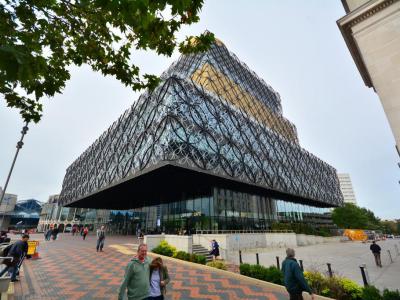
All hail the Library of Birmingham. Architectural design is by Francine Houben. Structural Engineering is by Buro Happold. The new Library has been described as the largest regional library in Europe. The library nestles between and connects to the Birmingham Rep and Baskerville House at Centenary Square.
The Shakespeare Memorial Room, designed by John Chamberlain in 1882 has been reincarnated with each demolition. It has been carefully dismantled and reassembled three times. It is constructed in a Lombardic Renaissance style with a clerestoried reading area. The collection houses 43,000 books, including the First Folio of 1623.
The library was opened in September, 2013 by Malala Youafzai, who was savagely attacked by the Taliban for attending school. She said, "Let us not forget that even one book, one pen, one teacher can change the world."
The Central was designed by architect John Madin in the Brutalist style. It was part of an ambitious project of the City Council to build a civic center on the new Inner Ring Road. The Library replaced by the Central of John Madin was designed by John Henry Chamberlain. Chamberlain's building opened in 1883. It was demolished in 1974.
All hail the Library of Birmingham. Architectural design is by Francine Houben. Structural Engineering is by Buro Happold. The new Library has been described as the largest regional library in Europe. The library nestles between and connects to the Birmingham Rep and Baskerville House at Centenary Square.
The Shakespeare Memorial Room, designed by John Chamberlain in 1882 has been reincarnated with each demolition. It has been carefully dismantled and reassembled three times. It is constructed in a Lombardic Renaissance style with a clerestoried reading area. The collection houses 43,000 books, including the First Folio of 1623.
The library was opened in September, 2013 by Malala Youafzai, who was savagely attacked by the Taliban for attending school. She said, "Let us not forget that even one book, one pen, one teacher can change the world."
5) Victoria Square
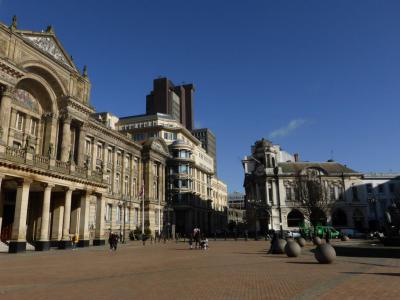
Often considered to be the center of the City, Victoria Square is a pedestrianized square. It is the location of Town Hall and the Council House and neighboring Chamberlain Square. Saint Philip's Cathedral is nearby on Colnore Row. And it is within walking distance of the Bull Ring and Brindleyplace.
Once known as the Council House Square, it was renamed Victoria Square in 1901. Unfortunately the Queen died about a week later.
During the last century the Square became an ongoing traffic jam. It was determined to redevelop the square, making it a pedestrianized area. It was opened by Diana, Princess of Wales in 1994. A fountain in the Square designed by Dhruva Mistry was called, "The River." It was a nude in a fountain. Locals called it "The Floozy in the Jacuzzi."
Other statues were in the square before redevelopment. Queen Victoria is the only one that remains. It was created by Thomas Brock in 1901 and recast in bronze in 1951 by William Blove.
During the Christmas season the square becomes the venue for the Frankfort Christmas Market and craft Fair. The craft fair connects to another similar fair in Chamberlain Square. The Frankfort fair features wooden huts as stalls selling Jewelry, artwork, ornaments, and German food.
In July 2012 the Square was visited by Queen Elizabeth and Prince Philip while on the West Midland Diamond Jubilee Tour. They had a royal walkabout and accepted gifts from the City.
Once known as the Council House Square, it was renamed Victoria Square in 1901. Unfortunately the Queen died about a week later.
During the last century the Square became an ongoing traffic jam. It was determined to redevelop the square, making it a pedestrianized area. It was opened by Diana, Princess of Wales in 1994. A fountain in the Square designed by Dhruva Mistry was called, "The River." It was a nude in a fountain. Locals called it "The Floozy in the Jacuzzi."
Other statues were in the square before redevelopment. Queen Victoria is the only one that remains. It was created by Thomas Brock in 1901 and recast in bronze in 1951 by William Blove.
During the Christmas season the square becomes the venue for the Frankfort Christmas Market and craft Fair. The craft fair connects to another similar fair in Chamberlain Square. The Frankfort fair features wooden huts as stalls selling Jewelry, artwork, ornaments, and German food.
In July 2012 the Square was visited by Queen Elizabeth and Prince Philip while on the West Midland Diamond Jubilee Tour. They had a royal walkabout and accepted gifts from the City.
6) Bullring & Grand Central
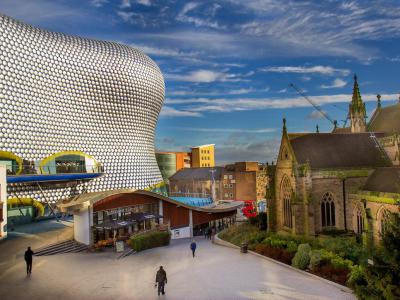
Two major shopping malls in Birmingham are connected by a link bridge. They combine to form the United Kingdom's largest city shopping area, the Bull Ring (currently Bullring) and Grand Central.
Big things start modestly. The area originally was called Corn Cheaping. The was a corn market here and there was the bull ring. In the ring bulls were tied to await baiting by dogs and slaughter. This was a savage but popular spectator sport for everyone except for bulls or dogs.
The market became a legal market in 1154 when Peter de Bermingham was granted marketing rights by King Henry II. By the 18th century food, cattle and corn markets were located there.
The market areas had their ups and downs, but world War II was devastating. Revival efforts began in 1955. In 1964 The Birmingham Bull Ring Centre was complete. The Centre extended to some 23 acres with 350.000 square feet devoted to retail trade, and the complex was visited by the Queen.
After more major development Bull Ring and Grand Central opened in 2003 and 2015 respectively. The malls are connected by a link street. Shoppers can move from one to the other without stepping outside.
The Bullring Bull is a bronze sculpture of an aggressive looking bull, as yet unbaited. The sculpture is the work of Laurence Broderick.
The malls are the site of an annual Christmas Market in the streets. The best time to visit is around four pm, when the malls light up in color.
Big things start modestly. The area originally was called Corn Cheaping. The was a corn market here and there was the bull ring. In the ring bulls were tied to await baiting by dogs and slaughter. This was a savage but popular spectator sport for everyone except for bulls or dogs.
The market became a legal market in 1154 when Peter de Bermingham was granted marketing rights by King Henry II. By the 18th century food, cattle and corn markets were located there.
The market areas had their ups and downs, but world War II was devastating. Revival efforts began in 1955. In 1964 The Birmingham Bull Ring Centre was complete. The Centre extended to some 23 acres with 350.000 square feet devoted to retail trade, and the complex was visited by the Queen.
After more major development Bull Ring and Grand Central opened in 2003 and 2015 respectively. The malls are connected by a link street. Shoppers can move from one to the other without stepping outside.
The Bullring Bull is a bronze sculpture of an aggressive looking bull, as yet unbaited. The sculpture is the work of Laurence Broderick.
The malls are the site of an annual Christmas Market in the streets. The best time to visit is around four pm, when the malls light up in color.
7) Birmingham Back to Backs (must see)
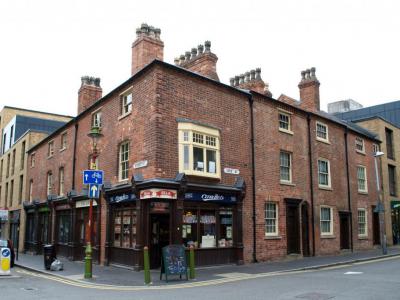
Following the industrial revolution in Britain, there were great migrations of landless people flocking to the cities for work. Birmingham, always the foremost city of industry, built thousands of so-called back-to-back houses to accommodate the influx. The houses were overcrowded and built around shared courtyards, "back-to-back."
Also known as British terraced housing, the back-to-backs were declared unsatisfactory. No more such housing was built after the Public Health Act of 1875. They were replaced by byelaw terraced houses that were not much better.
The back-to-back houses were two to three stories high. They were found mostly in depressed inner-city areas of Birmingham. In the early 1970s most of the back-to-backs had been demolished. Many tenants were moved to council houses and flats. Most of them however settled in housing estates.
The combination of two houses back to back and sharing a common yard was referred to as a "court." Many of the courts were occupied by workers who worked at home in specialized tasks. They labored at such things as button making, glasswork, woodwork, and leather tailoring. There were also skilled trades including jewelry.
Overcrowding was common. In Court 15 for instance, now on display, there had been over 500 families. (Not all at one time, naturally.)
Ground floors were often converted into shops. Trades practiced included cycle maker, hairdresser, ticket writer, fruiter seller, and furniture dealer. A pearl button driller, working at home in court 15 shared her workplace/home with her mother and five children. A glass eye maker also lived in court 15 with his wife and eight children.
This type of housing remained in use until 1966. The buildings were finally declared unfit for human habitation and the tenants were forced to leave.
Heating would come from fireplaces, water from a pump in the yard, and sanitary needs from an outhouse. All things considered, perhaps the tenants did not mind leaving.
Why You Should Visit:
To see how far ordinary people have come and appreciate the blessings we enjoy.
Also known as British terraced housing, the back-to-backs were declared unsatisfactory. No more such housing was built after the Public Health Act of 1875. They were replaced by byelaw terraced houses that were not much better.
The back-to-back houses were two to three stories high. They were found mostly in depressed inner-city areas of Birmingham. In the early 1970s most of the back-to-backs had been demolished. Many tenants were moved to council houses and flats. Most of them however settled in housing estates.
The combination of two houses back to back and sharing a common yard was referred to as a "court." Many of the courts were occupied by workers who worked at home in specialized tasks. They labored at such things as button making, glasswork, woodwork, and leather tailoring. There were also skilled trades including jewelry.
Overcrowding was common. In Court 15 for instance, now on display, there had been over 500 families. (Not all at one time, naturally.)
Ground floors were often converted into shops. Trades practiced included cycle maker, hairdresser, ticket writer, fruiter seller, and furniture dealer. A pearl button driller, working at home in court 15 shared her workplace/home with her mother and five children. A glass eye maker also lived in court 15 with his wife and eight children.
This type of housing remained in use until 1966. The buildings were finally declared unfit for human habitation and the tenants were forced to leave.
Heating would come from fireplaces, water from a pump in the yard, and sanitary needs from an outhouse. All things considered, perhaps the tenants did not mind leaving.
Why You Should Visit:
To see how far ordinary people have come and appreciate the blessings we enjoy.
