Custom Walk in Riga, Latvia by johnfuller301_f2c37 created on 2026-04-06
Guide Location: Latvia » Riga
Guide Type: Custom Walk
# of Sights: 16
Tour Duration: 4 Hour(s)
Travel Distance: 9.1 Km or 5.7 Miles
Share Key: 2V2DB
Guide Type: Custom Walk
# of Sights: 16
Tour Duration: 4 Hour(s)
Travel Distance: 9.1 Km or 5.7 Miles
Share Key: 2V2DB
How It Works
Please retrieve this walk in the GPSmyCity app. Once done, the app will guide you from one tour stop to the next as if you had a personal tour guide. If you created the walk on this website or come to the page via a link, please follow the instructions below to retrieve the walk in the app.
Retrieve This Walk in App
Step 1. Download the app "GPSmyCity: Walks in 1K+ Cities" on Apple App Store or Google Play Store.



Step 2. In the GPSmyCity app, download(or launch) the guide "Riga Map and Walking Tours".
Step 3. Tap the menu button located at upper right corner of the "Walks" screen and select "Retrieve custom walk". Enter the share key: 2V2DB

1) Shroud Bridge
The Shroud Bridge, known locally as Vanšu Bridge, is a significant landmark in Riga. This cable-stayed bridge stretches 595 meters across the Daugava River, connecting the city's center with the island of Ķīpsala. The bridge's distinctive design features cables that resemble nautical shrouds, which is reflected in its name. Originally opened on July 21, 1981, during the Soviet era, it was first named Gorky Bridge, after the nearby Maxim Gorky Street, now renamed Krišjānis Valdemārs Street.
The bridge is not just an essential part of Riga's infrastructure, facilitating daily commutes and traffic across one of the five bridges over the Daugava, but it has also been a focal point for more dramatic events. In the past decade, there have been over ten instances of individuals attempting to climb its cables. This led the Riga City Council to install barbed wire on the cables to prevent such occurrences.
Adjacent to the bridge, the city has enhanced the riverside's appeal by opening a beach complete with a playground and volleyball court in 2013, further integrating the bridge into the community's social life. Looking ahead, the bridge is scheduled for extensive renovation, indicating its continued importance to the city's infrastructure and the safety improvements aimed at preserving its integrity and functionality.
The bridge is not just an essential part of Riga's infrastructure, facilitating daily commutes and traffic across one of the five bridges over the Daugava, but it has also been a focal point for more dramatic events. In the past decade, there have been over ten instances of individuals attempting to climb its cables. This led the Riga City Council to install barbed wire on the cables to prevent such occurrences.
Adjacent to the bridge, the city has enhanced the riverside's appeal by opening a beach complete with a playground and volleyball court in 2013, further integrating the bridge into the community's social life. Looking ahead, the bridge is scheduled for extensive renovation, indicating its continued importance to the city's infrastructure and the safety improvements aimed at preserving its integrity and functionality.
2) Riga Spirits & Wine Outlet
What to buy here: Beer.
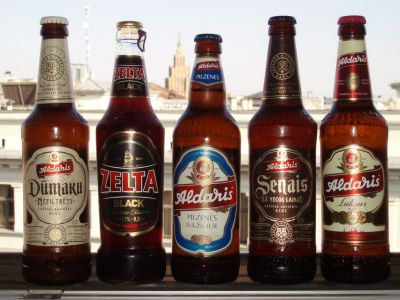
Travel high and low around Riga, visually savor its colorful beauty and uniqueness, appreciate its culture and art, and when you feel a little parched or tired, sit at a conveniently nearby bar or pub and continue your journey through Latvia's richness through the flavors of its beer. Beer is highly appreciated in Latvia, after centuries of German influence, a fact you will come to believe after your first gulp.
Latvian beer is considered among the best in the world. The main reason for that being the excellent quality of the ingredients used and the production process. Famed local brands are Aldaris, Cesis, Valmiermuiza and the hard to find outside Latvia - Uzavas, Bauska or Tervetas. All of these can be found all around the city at most pubs/bars and in specialized shops.
If searching for a wider variety, one can venture into the Riga Spirits & Wine Outlet, the first specialized alcoholic beverage store in Riga located in the heart of the city, or Rimi Centrs, a supermarket with a good selection of Latvian bottled beers.
Prices for beer in Riga range from $1.90 for 0,5L and up.
Travel high and low around Riga, visually savor its colorful beauty and uniqueness, appreciate its culture and art, and when you feel a little parched or tired, sit at a conveniently nearby bar or pub and continue your journey through Latvia's richness through the flavors of its beer. Beer is highly appreciated in Latvia, after centuries of German influence, a fact you will come to believe after your first gulp.
Latvian beer is considered among the best in the world. The main reason for that being the excellent quality of the ingredients used and the production process. Famed local brands are Aldaris, Cesis, Valmiermuiza and the hard to find outside Latvia - Uzavas, Bauska or Tervetas. All of these can be found all around the city at most pubs/bars and in specialized shops.
If searching for a wider variety, one can venture into the Riga Spirits & Wine Outlet, the first specialized alcoholic beverage store in Riga located in the heart of the city, or Rimi Centrs, a supermarket with a good selection of Latvian bottled beers.
Prices for beer in Riga range from $1.90 for 0,5L and up.
3) Elizabetes iela (Elizabetes Street)
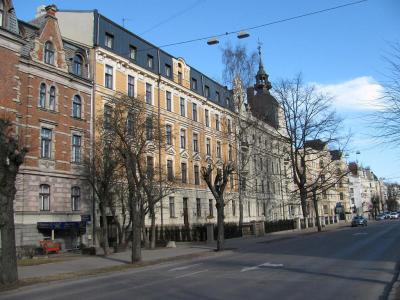
Elizabetes Street in Riga is a central showcase of Art Nouveau architecture, a style that dominates roughly a third of all buildings in the city's center. This distinction makes Riga the city with the highest concentration of Art Nouveau architecture globally. Most of these buildings were constructed during a period of rapid economic growth from 1904 to 1914.
The street is renowned for showcasing diverse Art Nouveau substyles. Initially, Art Nouveau elements blended into Eclectic architecture, creating "Eclectic" Art Nouveau. "Decorative" Art Nouveau, focusing on ornamental details, emerged in 1899 but faded by 1906. "Romantic" Art Nouveau, prevalent in Riga, mixes modern shapes with historical motifs. Between 1905 and 1911, Latvian National Romanticism thrived, integrating traditional Latvian elements. Later, "Vertical" Art Nouveau, characterized by elongated lines, gained popularity right before World War I.
Significantly, Elizabetes Street intersects with Brivibas Boulevard and is part of an area with over 800 Art Nouveau buildings. This district also includes Alberta and Strelnieku Streets, where impressive examples of the style continue. Notably, many of these buildings were designed by Latvian architects, including several by Mikhail Ejzenštejn, known for his decorative Art Nouveau buildings at Elizabetes 10a and 10b, built in 1903.
Furthermore, Elizabetes Street and its surroundings have been recognized as a UNESCO World Heritage site, celebrating its rich architectural heritage. This area not only showcases the architectural innovation of the early 20th century but also serves as a testament to Riga's role as a significant center of Art Nouveau architecture.
The street is renowned for showcasing diverse Art Nouveau substyles. Initially, Art Nouveau elements blended into Eclectic architecture, creating "Eclectic" Art Nouveau. "Decorative" Art Nouveau, focusing on ornamental details, emerged in 1899 but faded by 1906. "Romantic" Art Nouveau, prevalent in Riga, mixes modern shapes with historical motifs. Between 1905 and 1911, Latvian National Romanticism thrived, integrating traditional Latvian elements. Later, "Vertical" Art Nouveau, characterized by elongated lines, gained popularity right before World War I.
Significantly, Elizabetes Street intersects with Brivibas Boulevard and is part of an area with over 800 Art Nouveau buildings. This district also includes Alberta and Strelnieku Streets, where impressive examples of the style continue. Notably, many of these buildings were designed by Latvian architects, including several by Mikhail Ejzenštejn, known for his decorative Art Nouveau buildings at Elizabetes 10a and 10b, built in 1903.
Furthermore, Elizabetes Street and its surroundings have been recognized as a UNESCO World Heritage site, celebrating its rich architectural heritage. This area not only showcases the architectural innovation of the early 20th century but also serves as a testament to Riga's role as a significant center of Art Nouveau architecture.
4) Alberta Iela (Albert Street) (must see)
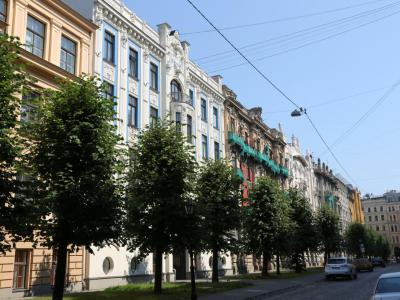
Albert Street (Alberta Iela) in Riga is renowned for its striking collection of Art Nouveau architecture, making it one of the city's most distinguished and visually compelling streets. Constructed between 1901 and 1908, the street is named after Bishop Albert, who is credited with founding Riga in 1201. This connection to the city’s historical roots is celebrated with the street’s name and its architectural grandeur.
The street's most prominent architectural contributions come from Mikhail Eisenstein, a preeminent architect of the early 20th century, known for his extravagant and decorative designs. Eisenstein's works on Alberta Street, including buildings at numbers 2, 2a, 4, 6, and 8, showcase his unique style characterized by romantic nationalism-a theme prevalent in northern European architecture at the time. These buildings are adorned with elaborate sculptures, intricate balconies, and ornate columns that epitomize the Art Nouveau aesthetic.
Other notable architects who contributed to the architectural landscape of Albert Street include Konstantīns Pēkšēns and his pupil Eižens Laube, as well as Baltic and Baltic German architects such as Paul Mandelstamm, Hermann Hilbig, and Heinrich Scheel. Pēkšēns' residence at number 12 now serves as the Riga Art Nouveau Museum, which opened in April 2009 and offers insights into the style and its elements.
In addition to its architectural significance, Alberta Street is a center of academic and diplomatic activity. It houses several institutions of higher education such as the Stockholm School of Economics in Riga, the Riga Graduate School of Law, and the College of Business Administration. Diplomatic missions for Belgium and Ireland are also located here, adding an international dimension to the street.
The entirety of Alberta Street is a testament to the creativity and innovation of the Art Nouveau movement. Eight of the buildings along the street are recognized as architectural monuments of national significance, underscoring their importance in the architectural and cultural heritage of Riga. As a living museum of Art Nouveau, Alberta Street offers both residents and visitors a chance to step back in time and experience the grandeur of early 20th-century European art and architecture.
The street's most prominent architectural contributions come from Mikhail Eisenstein, a preeminent architect of the early 20th century, known for his extravagant and decorative designs. Eisenstein's works on Alberta Street, including buildings at numbers 2, 2a, 4, 6, and 8, showcase his unique style characterized by romantic nationalism-a theme prevalent in northern European architecture at the time. These buildings are adorned with elaborate sculptures, intricate balconies, and ornate columns that epitomize the Art Nouveau aesthetic.
Other notable architects who contributed to the architectural landscape of Albert Street include Konstantīns Pēkšēns and his pupil Eižens Laube, as well as Baltic and Baltic German architects such as Paul Mandelstamm, Hermann Hilbig, and Heinrich Scheel. Pēkšēns' residence at number 12 now serves as the Riga Art Nouveau Museum, which opened in April 2009 and offers insights into the style and its elements.
In addition to its architectural significance, Alberta Street is a center of academic and diplomatic activity. It houses several institutions of higher education such as the Stockholm School of Economics in Riga, the Riga Graduate School of Law, and the College of Business Administration. Diplomatic missions for Belgium and Ireland are also located here, adding an international dimension to the street.
The entirety of Alberta Street is a testament to the creativity and innovation of the Art Nouveau movement. Eight of the buildings along the street are recognized as architectural monuments of national significance, underscoring their importance in the architectural and cultural heritage of Riga. As a living museum of Art Nouveau, Alberta Street offers both residents and visitors a chance to step back in time and experience the grandeur of early 20th-century European art and architecture.
5) Laima
What to buy here: Latvian Sweets.
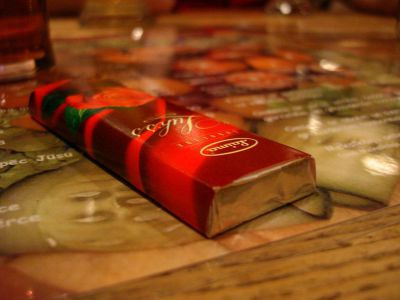
While taking a walk around Old Riga, you will notice many small shops offering chocolate desserts and confections. Latvians have always excelled at sugary pastries, honey cakes and , most importantly, chocolate, which will surprise one's taste buds with its rich flavor.
Riga's chocolate history dates back more than 100 years, having amassed a great number of traditional recipes. Among the products with the longest history is the chocolate candy "Serenade". These can be found under the "Laima" brand. It is the most famous confectionery brand in the Baltic, it has recently celebrated its 140th birthday. Its most famous candy, the "Serenade", dates back to 1937. It's composition comprises such ingredients as fruit jelly, apricots, nuts and the mysterious, but oh so craved "chocolate magic". Another sweet delight to bring back home are the Prozit boxes containing solid chocolate bottles filled with liqueur. The prices for Laima's products range from $5 to $7 per chocolate bar and around $9 to $15 for a chocolate box.
There is another option for those who crave a new, supple and exquisite taste. Venture into cafe "Emihls Gustavs Chocolate", the central cafe is situated adjacent to Hotel Reval. There, one will be served a deliciously fragrant coffee and the best chocolate in town. All chocolate confections at this cafe are handmade, created following Latvia's oldest recipes. No margarine, thickening agents or flavor enhancers here! Chocolate bars, candies and figurines can also be bought as gifts. These will be nicely warped in accurate packages and decorated with a delicate ribbon. Furthermore, the cafe organizes frequent workshops, where visitors can try their hands at painting the chocolate figurines.
Prices range from $9 and up.
While taking a walk around Old Riga, you will notice many small shops offering chocolate desserts and confections. Latvians have always excelled at sugary pastries, honey cakes and , most importantly, chocolate, which will surprise one's taste buds with its rich flavor.
Riga's chocolate history dates back more than 100 years, having amassed a great number of traditional recipes. Among the products with the longest history is the chocolate candy "Serenade". These can be found under the "Laima" brand. It is the most famous confectionery brand in the Baltic, it has recently celebrated its 140th birthday. Its most famous candy, the "Serenade", dates back to 1937. It's composition comprises such ingredients as fruit jelly, apricots, nuts and the mysterious, but oh so craved "chocolate magic". Another sweet delight to bring back home are the Prozit boxes containing solid chocolate bottles filled with liqueur. The prices for Laima's products range from $5 to $7 per chocolate bar and around $9 to $15 for a chocolate box.
There is another option for those who crave a new, supple and exquisite taste. Venture into cafe "Emihls Gustavs Chocolate", the central cafe is situated adjacent to Hotel Reval. There, one will be served a deliciously fragrant coffee and the best chocolate in town. All chocolate confections at this cafe are handmade, created following Latvia's oldest recipes. No margarine, thickening agents or flavor enhancers here! Chocolate bars, candies and figurines can also be bought as gifts. These will be nicely warped in accurate packages and decorated with a delicate ribbon. Furthermore, the cafe organizes frequent workshops, where visitors can try their hands at painting the chocolate figurines.
Prices range from $9 and up.
6) Vermane Garden
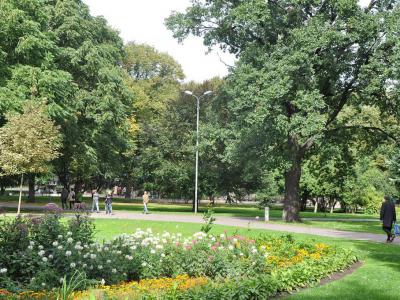
Vērmane Garden stands as the oldest public garden in Riga, spanning approximately 5 hectares (12 acres). It was originally established in 1814 as Wöhrmann Park, named after its patrons Johann Christoph Wöhrmann, the Prussian Consul General, and his mother Anna Gertrud Wöhrmann. The park was founded on the outskirts of Riga following its devastation during the French invasion of Russia.
Initially opened in 1817, the garden covered 0.8 hectares (2 acres) and featured exotic trees, a rose garden, and a restaurant. An obelisk was erected in 1829 as a tribute to Anna Wöhrmann, which was later dismantled before World War II and recreated in 2000. In 1836, a mineral water shop was added to the park, and expansions in the mid-19th century brought in new features such as a sundial and a fountain.
The garden's most significant transformation occurred under Georg Kuphaldt in 1881 when he expanded the garden's area by incorporating parts of city squares and adjacent territories. During this expansion, Kuphaldt introduced a variety of exotic flora, including species like the Honey locust, Japanese angelica tree, various types of beeches and maples, as well as the Magnolia obovata and Magnolia yulan. Other notable plantings included the Black locust, Caucasian wingnut, Cherry laurel, European box, and several others, enhancing the park's botanical diversity and beauty.
Today, Vērmane Garden serves as a cherished green space in Riga, blending historical legacy with rich botanical variety, providing a tranquil escape for both residents and visitors of the city.
Initially opened in 1817, the garden covered 0.8 hectares (2 acres) and featured exotic trees, a rose garden, and a restaurant. An obelisk was erected in 1829 as a tribute to Anna Wöhrmann, which was later dismantled before World War II and recreated in 2000. In 1836, a mineral water shop was added to the park, and expansions in the mid-19th century brought in new features such as a sundial and a fountain.
The garden's most significant transformation occurred under Georg Kuphaldt in 1881 when he expanded the garden's area by incorporating parts of city squares and adjacent territories. During this expansion, Kuphaldt introduced a variety of exotic flora, including species like the Honey locust, Japanese angelica tree, various types of beeches and maples, as well as the Magnolia obovata and Magnolia yulan. Other notable plantings included the Black locust, Caucasian wingnut, Cherry laurel, European box, and several others, enhancing the park's botanical diversity and beauty.
Today, Vērmane Garden serves as a cherished green space in Riga, blending historical legacy with rich botanical variety, providing a tranquil escape for both residents and visitors of the city.
7) Central Market (must see)
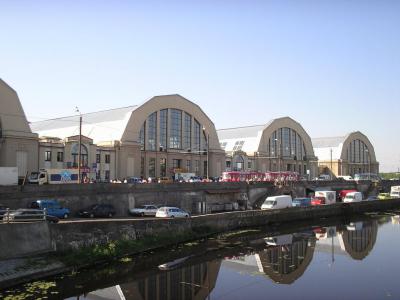
Riga's Central Market is Europe's largest market and bazaar. The enormous building was constructed by repurposing five old German Zeppelin hangars. The total covered area inside the pavilions is 72,300 square meters (778,000 square feet), and it houses more than 3,000 vendor booths.
Riga's location on the River Daugava has always made it a center for trade. The Central Market was conceived in the 1920s. An international competition was held, and the winner's idea of using the metal frames of abandoned World War I Zeppelin hangars was a hit.
Construction was completed in 1930. Only the top parts of the hangars could be used, but the effect remained. Finishing touches on the buildings were done in the Art Deco style of the time. A tunnel system under the buildings allows for goods to be transported to vendors without going through the floor. It also connects to the river for deliveries.
When the market is not held, the space is used for other events and exhibitions. Along with Old Riga, the Market was added as a UNESCO World Heritage Site in 1998. The Zeppelin hangars are five of the only nine remaining in the world.
The Market is a must-see stop for foodies or anyone looking for delectable, Latvian-grown treats. Each pavilion has a category--dairy, meats, vegetables, fish, and gastronomy products. In addition, the outdoor area also has stalls and hosts the Night Market and the Clock Farmers Market.
Riga's location on the River Daugava has always made it a center for trade. The Central Market was conceived in the 1920s. An international competition was held, and the winner's idea of using the metal frames of abandoned World War I Zeppelin hangars was a hit.
Construction was completed in 1930. Only the top parts of the hangars could be used, but the effect remained. Finishing touches on the buildings were done in the Art Deco style of the time. A tunnel system under the buildings allows for goods to be transported to vendors without going through the floor. It also connects to the river for deliveries.
When the market is not held, the space is used for other events and exhibitions. Along with Old Riga, the Market was added as a UNESCO World Heritage Site in 1998. The Zeppelin hangars are five of the only nine remaining in the world.
The Market is a must-see stop for foodies or anyone looking for delectable, Latvian-grown treats. Each pavilion has a category--dairy, meats, vegetables, fish, and gastronomy products. In addition, the outdoor area also has stalls and hosts the Night Market and the Clock Farmers Market.

8) Brivibas Piemineklis (Freedom Monument) (must see)
The Freedom Monument commemorates the soldiers who fell during the Latvian War of Independence of 1918-1920. Built in 1935 to a design by R. Mirsmeden, the monument presents Latvia's national values. It stands as the symbol of two battles fought by the country for its independence and is a ground zero for the majority of political demonstrations held in Riga nowadays.
Surprisingly enough, the monument has survived almost 50 years of the Soviet rule, in part due to its high artistic value. On 14 June 1987, about 5,000 people gathered at the monument to lay flowers. This rally renewed the national independence movement, which culminated three years later in the re-establishment of Latvian sovereignty after the dissolution of the Soviet Union.
The structure consists of three major blocks decorated by 14 statuary groups. The base block features Latvian riflemen and singers. The block above depicts scholars, people of work, Guardians of the Fatherland and the Family. The central element of the monument, topping a 19 meter (62 feet) column, is the bronze statue of a woman holding up three golden stars above her head, symbolizing three Latvian regions: Kurzeme, Vidzeme and Latgale.
With a total height of 42 meters, the Freedom Monument is visible from almost every corner of Old Riga, and acts as a sort of navigation aid for tourists en route to different locations.
Surprisingly enough, the monument has survived almost 50 years of the Soviet rule, in part due to its high artistic value. On 14 June 1987, about 5,000 people gathered at the monument to lay flowers. This rally renewed the national independence movement, which culminated three years later in the re-establishment of Latvian sovereignty after the dissolution of the Soviet Union.
The structure consists of three major blocks decorated by 14 statuary groups. The base block features Latvian riflemen and singers. The block above depicts scholars, people of work, Guardians of the Fatherland and the Family. The central element of the monument, topping a 19 meter (62 feet) column, is the bronze statue of a woman holding up three golden stars above her head, symbolizing three Latvian regions: Kurzeme, Vidzeme and Latgale.
With a total height of 42 meters, the Freedom Monument is visible from almost every corner of Old Riga, and acts as a sort of navigation aid for tourists en route to different locations.
9) Bastion Hill
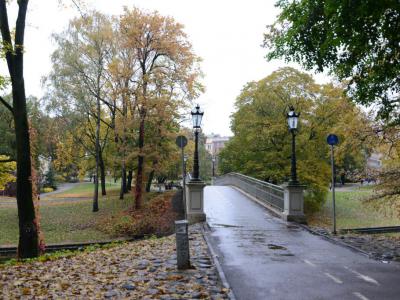
Bastion Hill (Bastejkalns) is a historic and picturesque park in the heart of Riga. Originally a sand rampart, it has been transformed into a beloved outdoor recreational spot. The transformation of Bastion Hill began in 1859 with the planting of the first trees and flowers, marking its early development into a green space.
Significant developments occurred in the late 19th century to enhance its accessibility and aesthetic appeal. In 1883, a pedestrian wooden bridge was constructed over the transformed defensive moat, now a scenic winding canal, facilitating easier public access. This bridge was subsequently replaced in 1892 by a more durable stone bridge designed by A. Agte, further solidifying the hill's role as a public space.
The hill itself underwent a major redesign in 1888 under the guidance of landscape architect Georg Kuphaldt. Kuphaldt's redesign included relocating some plants, introducing new walking paths leading to the hill's summit, and adding waterfalls, which greatly enhanced the park's charm and usability.
Further adding to its appeal, in 1893, the park became home to a pair of swans, a gift from the Society of Bird Breeders to the City Garden Committee. A specially designed swan house by Henrich Shell was built, perfectly integrating with the park’s landscape.
Today, Bastion Hill is a central leisure destination in Riga, attracting both locals and tourists, especially during the warmer months. The park's lush greenery and resident waterfowl, along with the occasional cultural and recreational activities, contribute to its status as one of Riga's most popular parks. Even in winter, the park remains appealing, with stunning views of the city from its summit, making it a year-round attraction.
Significant developments occurred in the late 19th century to enhance its accessibility and aesthetic appeal. In 1883, a pedestrian wooden bridge was constructed over the transformed defensive moat, now a scenic winding canal, facilitating easier public access. This bridge was subsequently replaced in 1892 by a more durable stone bridge designed by A. Agte, further solidifying the hill's role as a public space.
The hill itself underwent a major redesign in 1888 under the guidance of landscape architect Georg Kuphaldt. Kuphaldt's redesign included relocating some plants, introducing new walking paths leading to the hill's summit, and adding waterfalls, which greatly enhanced the park's charm and usability.
Further adding to its appeal, in 1893, the park became home to a pair of swans, a gift from the Society of Bird Breeders to the City Garden Committee. A specially designed swan house by Henrich Shell was built, perfectly integrating with the park’s landscape.
Today, Bastion Hill is a central leisure destination in Riga, attracting both locals and tourists, especially during the warmer months. The park's lush greenery and resident waterfowl, along with the occasional cultural and recreational activities, contribute to its status as one of Riga's most popular parks. Even in winter, the park remains appealing, with stunning views of the city from its summit, making it a year-round attraction.

10) Kaļķu Iela (Lime Street)
One of the oldest streets in Riga, Lime Street runs from Town Hall Square northeast to the edge of the old city. It was first mentioned in 1407.
A stroll down Lime Street will reveal many treasures and surprises. Number 11 is a bank from the 18th century. Number 16 is the impressive Mikhail Chekhov Russian Theatre of Riga, founded in 1883. Finally, Number 20 is the Lion Pharmacy, the oldest in Riga that traces its lineage to 1653.
During the Soviet Era, Lime Street was merged with two nearby thoroughfares to form the principal street through Soviet Riga. It was called Lenin Street.
The street is a bustling central shopping and entertainment district for the city. Sidewalk cafes line the wide walking lanes, interspersed with fine dining establishments and trendy shops. There are also banks, hotels, and fast food choices.
The street ends at Bastejkalna Park and the Freedom Monument. You'll also find the Laima Clock, a popular local meeting spot. The distinctive clock is restored and dates from 1924.
A stroll down Lime Street will reveal many treasures and surprises. Number 11 is a bank from the 18th century. Number 16 is the impressive Mikhail Chekhov Russian Theatre of Riga, founded in 1883. Finally, Number 20 is the Lion Pharmacy, the oldest in Riga that traces its lineage to 1653.
During the Soviet Era, Lime Street was merged with two nearby thoroughfares to form the principal street through Soviet Riga. It was called Lenin Street.
The street is a bustling central shopping and entertainment district for the city. Sidewalk cafes line the wide walking lanes, interspersed with fine dining establishments and trendy shops. There are also banks, hotels, and fast food choices.
The street ends at Bastejkalna Park and the Freedom Monument. You'll also find the Laima Clock, a popular local meeting spot. The distinctive clock is restored and dates from 1924.
11) Vecriga (Old Town)
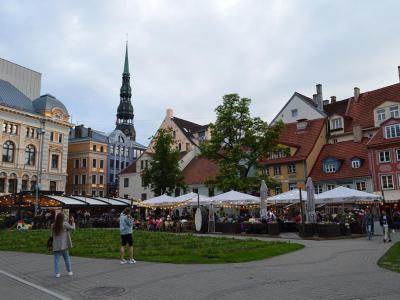
Vecrīga, or Old Riga, serves as the historical heart of Riga, situated within the Central District on the eastern side of the Daugava River. This neighborhood is celebrated for its historic churches and cathedrals, including the Riga Cathedral, Saint James's Cathedral, and Saint Peter's Church. These religious structures, along with its comprehensive collection of Renaissance, Baroque, and Medieval architecture, contribute to Vecrīga's charm and historical significance.
Originally, Vecrīga encompassed the entire city of Riga before its expansion in the late 19th century. The area was historically fortified with a wall, except on the side facing the riverbank of the Daugava. Following the demolition of this wall, the adjacent river waters were redirected to create the Riga City Canal, adding a picturesque element to the area.
In recognition of its cultural and historical value, Vecrīga is included in the UNESCO World Heritage Site listing for the "Historic Centre of Riga," which also covers most of the surrounding Central district. The early 1990s saw significant changes in Vecrīga’s accessibility, as its streets were closed to regular traffic. Now, only residents and local delivery vehicles with special permits can access the area, preserving its tranquil and historic atmosphere.
Notably, Vecrīga is not just a relic of the past but a living part of the city, showcasing not only ancient architectural styles but also the distinct Art Nouveau style, particularly through the works of Mikhail Eisenstein, a renowned architect both locally and internationally. This blend of architectural styles and the area’s rich history make Vecrīga a key destination for both visitors and scholars alike, offering a unique glimpse into the layered past of Riga.
Originally, Vecrīga encompassed the entire city of Riga before its expansion in the late 19th century. The area was historically fortified with a wall, except on the side facing the riverbank of the Daugava. Following the demolition of this wall, the adjacent river waters were redirected to create the Riga City Canal, adding a picturesque element to the area.
In recognition of its cultural and historical value, Vecrīga is included in the UNESCO World Heritage Site listing for the "Historic Centre of Riga," which also covers most of the surrounding Central district. The early 1990s saw significant changes in Vecrīga’s accessibility, as its streets were closed to regular traffic. Now, only residents and local delivery vehicles with special permits can access the area, preserving its tranquil and historic atmosphere.
Notably, Vecrīga is not just a relic of the past but a living part of the city, showcasing not only ancient architectural styles but also the distinct Art Nouveau style, particularly through the works of Mikhail Eisenstein, a renowned architect both locally and internationally. This blend of architectural styles and the area’s rich history make Vecrīga a key destination for both visitors and scholars alike, offering a unique glimpse into the layered past of Riga.
12) Riga Art Space
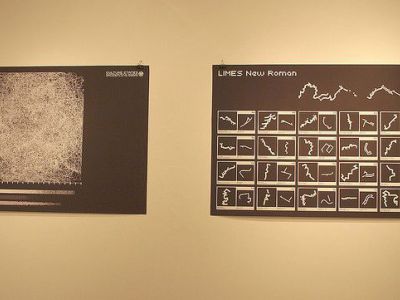
Riga Art Space opened in 2008 in Riga, serves as a pivotal venue for contemporary art within the city, uniquely located beneath the Town Hall Square in the historic Old Town. As the city's sole exhibition hall dedicated to contemporary art, it showcases a diverse array of art forms and genres. Its programming is meticulously curated to offer a broad spectrum of contemporary art, featuring up to five major exhibitions annually in the great hall. These exhibitions range from classical Latvian art to contemporary and applied arts, as well as international art projects.
Riga Art Space is committed to a multidisciplinary approach, integrating various cultural forms such as music, literature, and choreography to foster a dynamic dialogue between artists and the community. This commitment is reflected in the hall's diverse activities, including educational events tailored to each exhibition like discussions, conversational cycles, and creative workshops suitable for all ages.
The exhibition hall collaborates closely with art historians, professional curators, artists, and creative teams to ensure the quality and diversity of its offerings. The overarching goal of Riga Art Space is to enhance the role of art in society by promoting its relevance through high-quality, regular art programs and cultural events that facilitate the interaction of different artistic disciplines, thereby enriching the cultural fabric of Riga.
Riga Art Space is committed to a multidisciplinary approach, integrating various cultural forms such as music, literature, and choreography to foster a dynamic dialogue between artists and the community. This commitment is reflected in the hall's diverse activities, including educational events tailored to each exhibition like discussions, conversational cycles, and creative workshops suitable for all ages.
The exhibition hall collaborates closely with art historians, professional curators, artists, and creative teams to ensure the quality and diversity of its offerings. The overarching goal of Riga Art Space is to enhance the role of art in society by promoting its relevance through high-quality, regular art programs and cultural events that facilitate the interaction of different artistic disciplines, thereby enriching the cultural fabric of Riga.
13) Town Hall Square (must see)
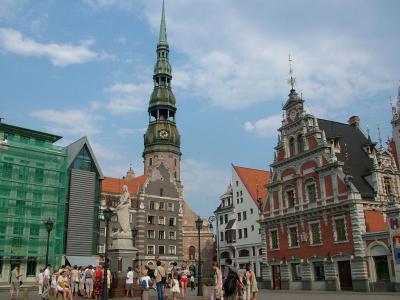
This cobblestone town square marks the center of Old Riga. It's surrounded by beautiful architecture, including the House of the Black Heads and Riga City Hall.
In the center of the Square stands a statue of Roland. He was Charlemagne's nephew and a Frankish military leader. His reputation for stringent but just governance has led to him becoming a symbol of justice in Northern Germany. The statue has stood next to the town's well since 1897.
However, the Square's biggest claim to fame is that it was the site of the first lit and decorated Christmas tree in 1510. There is a plank marking the location, and, of course, a tree is decorated here every year during the holidays.
Bombs leveled Town Hall Square and its surrounding buildings during World War II. Everything you see today was rebuilt in the years following the war. The House of the Black Heads was reopened in 1999, and the Town Hall Building in 2003.
The Square is a great place to begin your explorations of Riga--the narrow cobblestone streets wind through some of the most beautiful architecture you'll find. The scene is especially stunning at night when the buildings are lit for maximum effect.
In the center of the Square stands a statue of Roland. He was Charlemagne's nephew and a Frankish military leader. His reputation for stringent but just governance has led to him becoming a symbol of justice in Northern Germany. The statue has stood next to the town's well since 1897.
However, the Square's biggest claim to fame is that it was the site of the first lit and decorated Christmas tree in 1510. There is a plank marking the location, and, of course, a tree is decorated here every year during the holidays.
Bombs leveled Town Hall Square and its surrounding buildings during World War II. Everything you see today was rebuilt in the years following the war. The House of the Black Heads was reopened in 1999, and the Town Hall Building in 2003.
The Square is a great place to begin your explorations of Riga--the narrow cobblestone streets wind through some of the most beautiful architecture you'll find. The scene is especially stunning at night when the buildings are lit for maximum effect.
14) Jauniela
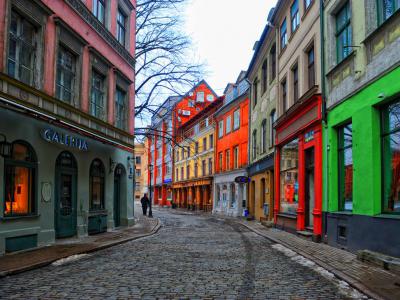
Jauniela Street in Riga epitomizes the enchanting allure of the historical Old Town, despite its name translating to "New Street." This picturesque avenue is framed by an array of pastel-colored buildings that rest on cobblestone paths, lending it a vibrant yet historic charm. Recognized as one of the prettiest streets in Riga's Old Town, Jauniela is also among the most dynamic, and bustling with hotels, bars, and restaurants that cater to both locals and tourists.
The street's pedestrian-friendly design ensures that it is a common fixture on walking tours of Riga, particularly those focused on architecture. Visitors are likely to be drawn here to admire the Art Nouveau façade of the Neiburgs Hotel, among other architectural delights. Jauniela is strategically positioned near major landmarks like the Riga Cathedral, making it an ideal route for those looking to combine historical exploration with culinary ventures or leisurely strolls.
In addition to its architectural marvels, Jauniela Street has gained fame as a filming location for notable period dramas, including adaptations of "War and Peace" and "Sherlock Holmes." The street is not just a feast for the eyes but also serves as a hub of cultural expression, showcasing vibrant street art that reflects the creativity of local artists. It offers a rich tapestry of experiences from dining in exquisite cafes serving traditional Latvian cuisine to shopping in quaint boutiques that offer unique, handcrafted souvenirs.
For anyone visiting Riga, a trip down Jauniela Street promises a blend of historical intrigue, architectural beauty, and cultural vibrancy, making it an unforgettable part of any journey through Latvia's capital.
The street's pedestrian-friendly design ensures that it is a common fixture on walking tours of Riga, particularly those focused on architecture. Visitors are likely to be drawn here to admire the Art Nouveau façade of the Neiburgs Hotel, among other architectural delights. Jauniela is strategically positioned near major landmarks like the Riga Cathedral, making it an ideal route for those looking to combine historical exploration with culinary ventures or leisurely strolls.
In addition to its architectural marvels, Jauniela Street has gained fame as a filming location for notable period dramas, including adaptations of "War and Peace" and "Sherlock Holmes." The street is not just a feast for the eyes but also serves as a hub of cultural expression, showcasing vibrant street art that reflects the creativity of local artists. It offers a rich tapestry of experiences from dining in exquisite cafes serving traditional Latvian cuisine to shopping in quaint boutiques that offer unique, handcrafted souvenirs.
For anyone visiting Riga, a trip down Jauniela Street promises a blend of historical intrigue, architectural beauty, and cultural vibrancy, making it an unforgettable part of any journey through Latvia's capital.
15) Cathedral Square (aka Dome Square)
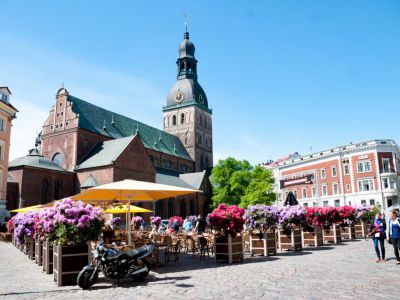
Another of Old Riga's cobblestone squares lies squarely in front of the Riga Cathedral. Commonly called the Dome Cathedral, this is one of Riga's trademark buildings. The word "Dome" comes from the German "Dom," which also means cathedral. It is considered to be the largest medieval church in the Baltics.
The church was built on the river in 1211 by Livonian Bishop Albert of Riga from Lower Saxony. It was Roman Catholic until a 1923 referendum forced it to be shared with the Lutheran Church. During the Soviet Era, the church was used as a concert hall. Religious services were restarted in 1991, and today it is used by the Evangelical Lutheran Church of Latvia.
Cathedral Square is the site of various events during the year, including a popular Christmas Market. It's a great place for souvenirs and local delicacies. But no matter what time of the year you stop through, there's bound to be something going on. From art installations and cultural festivals to bustling sidewalk cafes and great people watching, Cathedral Square is at the center of it all.
The church was built on the river in 1211 by Livonian Bishop Albert of Riga from Lower Saxony. It was Roman Catholic until a 1923 referendum forced it to be shared with the Lutheran Church. During the Soviet Era, the church was used as a concert hall. Religious services were restarted in 1991, and today it is used by the Evangelical Lutheran Church of Latvia.
Cathedral Square is the site of various events during the year, including a popular Christmas Market. It's a great place for souvenirs and local delicacies. But no matter what time of the year you stop through, there's bound to be something going on. From art installations and cultural festivals to bustling sidewalk cafes and great people watching, Cathedral Square is at the center of it all.
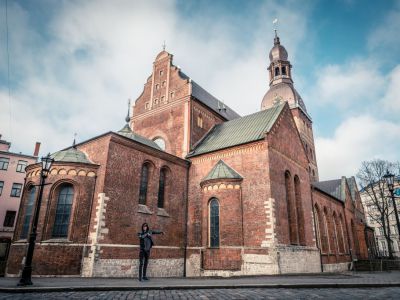
16) Riga Cathedral (must see)
Riga Cathedral, formally known as The Cathedral Church of Saint Mary, is the Evangelical Lutheran cathedral located in Riga. It serves as the seat of the Archbishop of Riga. The cathedral is one of Latvia's most iconic landmarks, often featured in paintings, photographs, and television travelogues, and is noted for its weathercock, similar to other historic churches in the city.
The church was established near the River Daugava in 1211 by Livonian Bishop Albert of Riga, who hailed from Lower Saxony in northwestern Germany. It is recognized as the largest medieval church in the Baltic states and has undergone numerous modifications throughout its history. Notable figures associated with the cathedral include David Caspari, rector of the cathedral school in the late 17th century, and his son Georg Caspari, who also served at the cathedral.
In a 1923 referendum, the Lutheran Church was compelled to share the cathedral with the Roman Catholic Church. However, this decision was reversed in the 1931 Latvian Riga Cathedral referendum, restoring it solely to the Lutheran Church. During the Soviet occupation from 1939 to 1989, religious services were banned, and the cathedral functioned as a concert hall. The Museum of the History of Riga and Navigation was housed in the cathedral's southern wing during this period. Religious services resumed in 1991, and the cathedral is now actively used by the Evangelical Lutheran Church of Latvia.
A prominent feature of the Riga Cathedral is its organ, built by E.F. Walcker & Sons of Ludwigsburg, Germany, in 1882-83 and inaugurated on January 31, 1884. During World War II, a recording captured the sound of battle as Latvian composer Lūcija Garūta played the organ for a cantata.
The church was established near the River Daugava in 1211 by Livonian Bishop Albert of Riga, who hailed from Lower Saxony in northwestern Germany. It is recognized as the largest medieval church in the Baltic states and has undergone numerous modifications throughout its history. Notable figures associated with the cathedral include David Caspari, rector of the cathedral school in the late 17th century, and his son Georg Caspari, who also served at the cathedral.
In a 1923 referendum, the Lutheran Church was compelled to share the cathedral with the Roman Catholic Church. However, this decision was reversed in the 1931 Latvian Riga Cathedral referendum, restoring it solely to the Lutheran Church. During the Soviet occupation from 1939 to 1989, religious services were banned, and the cathedral functioned as a concert hall. The Museum of the History of Riga and Navigation was housed in the cathedral's southern wing during this period. Religious services resumed in 1991, and the cathedral is now actively used by the Evangelical Lutheran Church of Latvia.
A prominent feature of the Riga Cathedral is its organ, built by E.F. Walcker & Sons of Ludwigsburg, Germany, in 1882-83 and inaugurated on January 31, 1884. During World War II, a recording captured the sound of battle as Latvian composer Lūcija Garūta played the organ for a cantata.
