Custom Walk in Rome, Italy by brmontano_d88683 created on 2026-04-12
Guide Location: Italy » Rome
Guide Type: Custom Walk
# of Sights: 6
Tour Duration: 2 Hour(s)
Travel Distance: 5.8 Km or 3.6 Miles
Share Key: 3BVDT
Guide Type: Custom Walk
# of Sights: 6
Tour Duration: 2 Hour(s)
Travel Distance: 5.8 Km or 3.6 Miles
Share Key: 3BVDT
How It Works
Please retrieve this walk in the GPSmyCity app. Once done, the app will guide you from one tour stop to the next as if you had a personal tour guide. If you created the walk on this website or come to the page via a link, please follow the instructions below to retrieve the walk in the app.
Retrieve This Walk in App
Step 1. Download the app "GPSmyCity: Walks in 1K+ Cities" on Apple App Store or Google Play Store.



Step 2. In the GPSmyCity app, download(or launch) the guide "Rome Map and Walking Tours".
Step 3. Tap the menu button located at upper right corner of the "Walks" screen and select "Retrieve custom walk". Enter the share key: 3BVDT
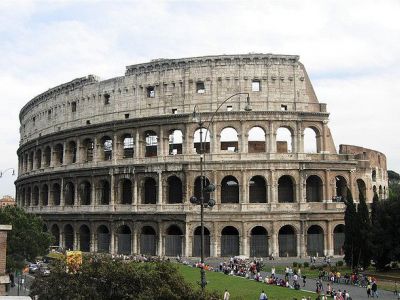
1) Colosseo (Colosseum) (must see)
The Colosseum, Rome’s iconic elliptical amphitheater, is the largest ancient amphitheater ever built, covering 24,000 square meters. Constructed between 69 and 80 AD by the Flavian dynasty, it was initially called the Flavian Amphitheater. Its modern name stems from the Colossus of Nero statue that once stood nearby, with the term "Colosseum" emerging during the medieval period.
Built on the land reclaimed from Emperor Nero’s landscaped Domus Aurea complex after the Great Fire of 64 AD, the Colosseum represented a gift to the Roman people under Emperor Vespasian. It was constructed using travertine, tuff, and concrete and was funded by spoils from the Jewish War. The latter, fought in 70 AD, led to the Siege of Jerusalem and brought back numerous prisoners who largely contributed to the massive workforce needed for the construction. The amphitheater comprised four tiers that could hold between 50,000 and 80,000 spectators at a time. Its free-standing structure features three architectural orders – Doric, Ionic, and Corinthian.
The lowest tier was for the emperor and the royal family, the two middle ones were for the noble Romans and members of government, while the highest tier was for the ordinary citizens. The elaborate system included 80 entrances, passageways for crowd control, and numbered pottery tickets for seating. Admission was free and the main sponsor was the emperor himself.
The Colosseum hosted gladiatorial contests, animal hunts, and mythological reenactments. Events often featured exotic animals imported from Africa and the Middle East. Emperor Trajan's games, for example, involved over 11,000 animals and 10,000 gladiators over 123 days! The below-ground passages were used to bring men and animals into the arena, which was separated from the audience by a ditch. Occasionally, it was reportedly even flooded for naval battles. Executions were common during intervals, with the condemned facing wild beasts or acting out tragic myths.
During the medieval period, the Colosseum served as a fortress and even a stone quarry. Passers-by habitually chipped off pieces of it for souvenirs which, together with some natural causes like earthquakes, led to its partial destruction.
Despite popular belief that the early Christians were martyred here in numbers, evidence suggests that most executions occurred elsewhere. By the 17th century, the Colosseum became recognized as a sacred site. Today, it hosts the Pope’s Good Friday “Way of the Cross” procession.
Only the north side of the building, as well as the underground passages, have survived intact. The arena floor is totally gone. Inside the Colosseum, there's a historical exhibition with both permanent and changing displays.
Tips:
Visit early in the morning or late in the evening to avoid long queues and heat. The ground and first floors are open to visitors without a special ticket, while the subterranean part and the third floor are accessed on pre-booked tours only. Opt for a guided tour to skip lines and access the Forum area. Alternatively, buy tickets in advance or at the Roman Forum. Enhance your experience with an audio guide for detailed historical insights.
Built on the land reclaimed from Emperor Nero’s landscaped Domus Aurea complex after the Great Fire of 64 AD, the Colosseum represented a gift to the Roman people under Emperor Vespasian. It was constructed using travertine, tuff, and concrete and was funded by spoils from the Jewish War. The latter, fought in 70 AD, led to the Siege of Jerusalem and brought back numerous prisoners who largely contributed to the massive workforce needed for the construction. The amphitheater comprised four tiers that could hold between 50,000 and 80,000 spectators at a time. Its free-standing structure features three architectural orders – Doric, Ionic, and Corinthian.
The lowest tier was for the emperor and the royal family, the two middle ones were for the noble Romans and members of government, while the highest tier was for the ordinary citizens. The elaborate system included 80 entrances, passageways for crowd control, and numbered pottery tickets for seating. Admission was free and the main sponsor was the emperor himself.
The Colosseum hosted gladiatorial contests, animal hunts, and mythological reenactments. Events often featured exotic animals imported from Africa and the Middle East. Emperor Trajan's games, for example, involved over 11,000 animals and 10,000 gladiators over 123 days! The below-ground passages were used to bring men and animals into the arena, which was separated from the audience by a ditch. Occasionally, it was reportedly even flooded for naval battles. Executions were common during intervals, with the condemned facing wild beasts or acting out tragic myths.
During the medieval period, the Colosseum served as a fortress and even a stone quarry. Passers-by habitually chipped off pieces of it for souvenirs which, together with some natural causes like earthquakes, led to its partial destruction.
Despite popular belief that the early Christians were martyred here in numbers, evidence suggests that most executions occurred elsewhere. By the 17th century, the Colosseum became recognized as a sacred site. Today, it hosts the Pope’s Good Friday “Way of the Cross” procession.
Only the north side of the building, as well as the underground passages, have survived intact. The arena floor is totally gone. Inside the Colosseum, there's a historical exhibition with both permanent and changing displays.
Tips:
Visit early in the morning or late in the evening to avoid long queues and heat. The ground and first floors are open to visitors without a special ticket, while the subterranean part and the third floor are accessed on pre-booked tours only. Opt for a guided tour to skip lines and access the Forum area. Alternatively, buy tickets in advance or at the Roman Forum. Enhance your experience with an audio guide for detailed historical insights.
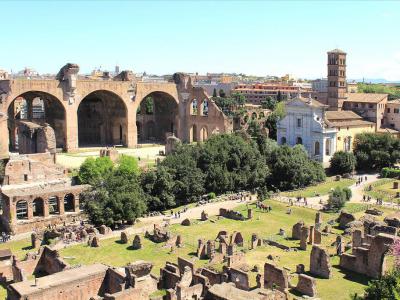
2) Foro Romano (Roman Forum) (must see)
The Roman Forum, once the pulsating heart of ancient Rome's public life, evolved from a simple marketplace around 500 BC into the epicenter of Roman political, social, and religious activity. Known as the Forum Magnum, it became a hub for triumphal processions, public speeches, elections, criminal trials, gladiatorial matches, and commerce. Statues and monuments celebrating Roman leaders solidified its status as one of history’s most significant meeting places.
Initially featuring early structures like the Regia (a royal residence) and the Temple of Vesta, the Forum developed into a formal assembly area called the Comitium, where the Senate and government convened. Over centuries, temples, tribunals, and public buildings, such as the Senate House and the Temple of Saturn, transformed the Forum into a multifunctional hub. The Basilica Aemilia, built in 179 BC, expanded judicial activities, while Julius Caesar’s enhancements, including the Basilica Julia and Curia Julia, underscored its role as a center for politics, commerce, and religion.
Despite its prominence, the Forum’s importance began to decline with the emergence of grander structures, such as Trajan's Forum and the Basilica Ulpia, to the north. Unlike the more planned Imperial Forums, the Roman Forum grew organically, reflecting a mix of architectural styles across periods. Constantine the Great’s construction of the Maxentius Basilica in 312 AD marked its final significant addition, temporarily restoring its political centrality. However, the fall of the Western Roman Empire in the 5th century AD led to the Forum's destruction and decline.
Today, the Roman Forum is a sprawling ruin but remains a priceless historical treasure. Though reduced to crumbling remains, it continues to captivate visitors, drawing nearly five million annually. Highlights of the site include the Sacred Street, the Arch of Titus, and remnants of iconic buildings like the Temple of Castor and Pollux.
Initially featuring early structures like the Regia (a royal residence) and the Temple of Vesta, the Forum developed into a formal assembly area called the Comitium, where the Senate and government convened. Over centuries, temples, tribunals, and public buildings, such as the Senate House and the Temple of Saturn, transformed the Forum into a multifunctional hub. The Basilica Aemilia, built in 179 BC, expanded judicial activities, while Julius Caesar’s enhancements, including the Basilica Julia and Curia Julia, underscored its role as a center for politics, commerce, and religion.
Despite its prominence, the Forum’s importance began to decline with the emergence of grander structures, such as Trajan's Forum and the Basilica Ulpia, to the north. Unlike the more planned Imperial Forums, the Roman Forum grew organically, reflecting a mix of architectural styles across periods. Constantine the Great’s construction of the Maxentius Basilica in 312 AD marked its final significant addition, temporarily restoring its political centrality. However, the fall of the Western Roman Empire in the 5th century AD led to the Forum's destruction and decline.
Today, the Roman Forum is a sprawling ruin but remains a priceless historical treasure. Though reduced to crumbling remains, it continues to captivate visitors, drawing nearly five million annually. Highlights of the site include the Sacred Street, the Arch of Titus, and remnants of iconic buildings like the Temple of Castor and Pollux.
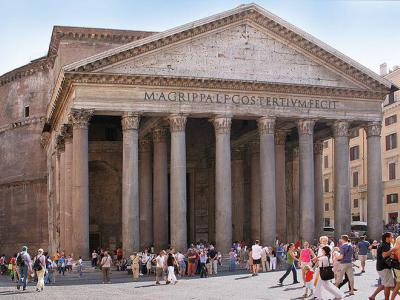
3) Pantheon (must see)
The Pantheon is one of Rome’s most iconic landmarks, renowned for its architectural brilliance. Originally a Roman temple, its name comes from the Ancient Greek "pan theos," which means dedication to all gods. Built on the site of a temple commissioned by consul Marcus Agrippa during Augustus’ reign, the current structure was completed under Emperor Hadrian around 126 AD. It was transformed into a Catholic Church of Saint Mary and the Martyrs in 609 AD, ensuring its preservation through centuries.
The Pantheon’s unique design combines a classical portico supported by Corinthian granite columns with a domed cylindrical structure (called a rotunda). The unsupported concrete dome, still the largest of its kind in the world, features a central oculus that provides natural light, ventilation, and symbolic celestial connections. The rotunda's harmonious dimensions-43 meters in both height and diameter-epitomize Roman engineering excellence, while its original massive bronze doors, each weighing over 20 tons, and intricate drainage system (allowing to effectively divert rainwater) highlight the ingenuity of its creators.
Throughout its history, the Pantheon has been a vibrant part of Roman life. It served as a burial site during the Renaissance, housing notable figures like painter Raphael and Italian kings Victor Emmanuel II and Umberto I. Its materials, such as bronze, have been repurposed for other projects like Bernini’s baldachin above the high altar of Saint Peter's Basilica. However, its core structure remains remarkably intact. Today, the church still host religious ceremonies, including masses, weddings, and Pentecost celebrations.
The Pantheon’s influence extends far beyond Rome. Its dome inspired architectural marvels like the Florence Cathedral and Rotunda of the U.S. Capital in Washington D.C., while its combination of classical and modern elements shaped countless government and academic buildings worldwide.
With over six million annual visitors, the Pantheon remains a symbol of Roman ingenuity and artistic achievement. Tourists can enjoy free entry to this historic site or soak in its splendor from Rotonda Square, savoring gelato while marveling at its timeless beauty.
Tip:
Incredible at night (from the outside), it is especially so if you enjoy musicians with talent and engagement... but beware of pickpockets.
The Pantheon’s unique design combines a classical portico supported by Corinthian granite columns with a domed cylindrical structure (called a rotunda). The unsupported concrete dome, still the largest of its kind in the world, features a central oculus that provides natural light, ventilation, and symbolic celestial connections. The rotunda's harmonious dimensions-43 meters in both height and diameter-epitomize Roman engineering excellence, while its original massive bronze doors, each weighing over 20 tons, and intricate drainage system (allowing to effectively divert rainwater) highlight the ingenuity of its creators.
Throughout its history, the Pantheon has been a vibrant part of Roman life. It served as a burial site during the Renaissance, housing notable figures like painter Raphael and Italian kings Victor Emmanuel II and Umberto I. Its materials, such as bronze, have been repurposed for other projects like Bernini’s baldachin above the high altar of Saint Peter's Basilica. However, its core structure remains remarkably intact. Today, the church still host religious ceremonies, including masses, weddings, and Pentecost celebrations.
The Pantheon’s influence extends far beyond Rome. Its dome inspired architectural marvels like the Florence Cathedral and Rotunda of the U.S. Capital in Washington D.C., while its combination of classical and modern elements shaped countless government and academic buildings worldwide.
With over six million annual visitors, the Pantheon remains a symbol of Roman ingenuity and artistic achievement. Tourists can enjoy free entry to this historic site or soak in its splendor from Rotonda Square, savoring gelato while marveling at its timeless beauty.
Tip:
Incredible at night (from the outside), it is especially so if you enjoy musicians with talent and engagement... but beware of pickpockets.
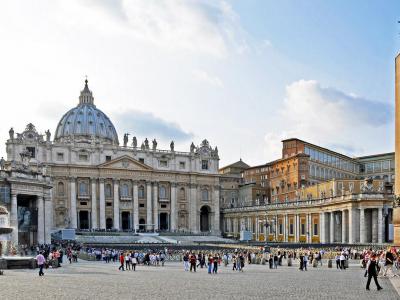
4) Basilica Papale di San Pietro in Vaticano (Saint Peter's Basilica) (must see)
Despite not being the mother church of Catholicism or Rome's cathedral, Saint Peter's Basilica in the Vatican is one of Christianity's holiest sites. Tradition holds that Saint Peter, the first Bishop of Rome, is buried inside, beneath the high altar, known as the Altar of the Confession.
Built to replace the aging original basilica, the new construction began in 1506, under Pope Julius II, and was completed in 1626. Designed by Renaissance masters such as Donato Bramante, Michelangelo, and Carlo Maderno, the structure embodies the grandeur of Italian High Renaissance architecture. Its vast interior makes it the largest church in the world by space.
The Latin cross layout features a vast dome, spanning 42 meters in diameter and towering 120 meters high. Meanwhile, the imposing façade adorned with statues of Saints Peter and Paul is complemented by a narthex housing the Holy Door. The latter, walled up with bricks, is opened only during jubilee years. Inside, the immense nave, wide aisles, and chapels are decorated with elaborate sculptures and artwork. Among these are Michelangelo’s Pietà and Bernini’s Baldachin, a monumental canopy over the Papal Altar. Other notable artworks include Giotto’s Navicella mosaic and equestrian statues of Constantine and Charlemagne.
Michelangelo played a crucial role in shaping the place, refining its design into a more unified and monumental form. His dome, completed in 1590, has profoundly influenced Western church architecture. Slightly more pointed than Michelangelo's original plan, the dome's design blends Renaissance ideals with Baroque dynamism. Encircling the interior is an inscription that reads: "You are Peter, and on this rock I will build my church... and I will give you the keys of the kingdom of heaven."
The basilica also has six bells. The largest of them, "Campanone," weighs 9 tons and is used for ringing for papal blessings. Up on the roof are the sculptures of Christ the Redeemer, Saint John the Baptist, and 11 Apostles. Meanwhile, inside, there are over 100 tombs. Among those laid to rest are many popes, including Pope Jean Paul II, royals, and other historical figures, such as Holy Roman Emperor Otto II and Italian composer Giovanni Pierluigi da Palestrina.
Tips:
Arrive early in the morning to avoid long queues. Admission is free (until 5 PM when the gates close), but expect to undergo a security check before entering. Remember to dress modestly, with knees and shoulders covered (affordable scarves for ladies are available from nearby vendors). If you're feeling adventurous, ascend to the top of the dome. An elevator ride can save you from climbing more than 300 stairs.
Built to replace the aging original basilica, the new construction began in 1506, under Pope Julius II, and was completed in 1626. Designed by Renaissance masters such as Donato Bramante, Michelangelo, and Carlo Maderno, the structure embodies the grandeur of Italian High Renaissance architecture. Its vast interior makes it the largest church in the world by space.
The Latin cross layout features a vast dome, spanning 42 meters in diameter and towering 120 meters high. Meanwhile, the imposing façade adorned with statues of Saints Peter and Paul is complemented by a narthex housing the Holy Door. The latter, walled up with bricks, is opened only during jubilee years. Inside, the immense nave, wide aisles, and chapels are decorated with elaborate sculptures and artwork. Among these are Michelangelo’s Pietà and Bernini’s Baldachin, a monumental canopy over the Papal Altar. Other notable artworks include Giotto’s Navicella mosaic and equestrian statues of Constantine and Charlemagne.
Michelangelo played a crucial role in shaping the place, refining its design into a more unified and monumental form. His dome, completed in 1590, has profoundly influenced Western church architecture. Slightly more pointed than Michelangelo's original plan, the dome's design blends Renaissance ideals with Baroque dynamism. Encircling the interior is an inscription that reads: "You are Peter, and on this rock I will build my church... and I will give you the keys of the kingdom of heaven."
The basilica also has six bells. The largest of them, "Campanone," weighs 9 tons and is used for ringing for papal blessings. Up on the roof are the sculptures of Christ the Redeemer, Saint John the Baptist, and 11 Apostles. Meanwhile, inside, there are over 100 tombs. Among those laid to rest are many popes, including Pope Jean Paul II, royals, and other historical figures, such as Holy Roman Emperor Otto II and Italian composer Giovanni Pierluigi da Palestrina.
Tips:
Arrive early in the morning to avoid long queues. Admission is free (until 5 PM when the gates close), but expect to undergo a security check before entering. Remember to dress modestly, with knees and shoulders covered (affordable scarves for ladies are available from nearby vendors). If you're feeling adventurous, ascend to the top of the dome. An elevator ride can save you from climbing more than 300 stairs.
5) Cappella Sistina (Sistine Chapel) (must see)
The Sistine Chapel is one of the most significant artistic and religious landmarks in the world. Originally known as the "Great Chapel," it was reconstructed and consecrated between 1473 and 1483, under Pope Sixtus IV; hence its name.
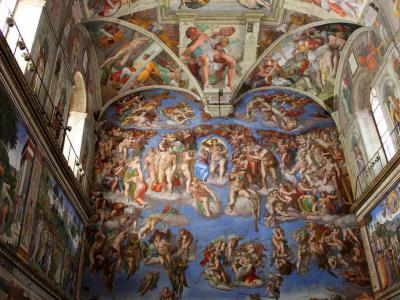
The chapel’s fame largely stems from its breathtaking frescoes, particularly Michelangelo’s ceiling and The Last Judgment on the altar wall. Before that, Renaissance painters such as Botticelli, Perugino, and several others had already adorned the side walls with depictions of The Life of Moses and The Life of Christ. Above these biblical scenes, portraits of popes and “deceive the eye” drapery added to the visual splendor. Raphael later designed tapestries for the lower walls in 1515, though many were looted and only partially restored in the 20th century.
Under the patronage of Pope Julius II, in 1508, Michelangelo repainted the chapel's ceiling, originally decorated with a blue background and golden stars. Despite considering himself more of a sculptor than a painter, he undertook the monumental task, conditioned he was given full artistic control. Michelangelo's work, completed in 1512, transformed Western art with vivid colors and a masterful composition that depicted The Creation of the World, The Fall of Man, and The Redemption of Humanity. More than 300 figures, arranged in three layers, included prophets, ancestors of Christ, and nine dramatic scenes from Genesis, covering over 5,000 square feet.
These frescoes are accompanied by the presence of male nudes. Additionally, the spandrels surrounding the vault feature sibyls, prophetesses from pagan mythology, who were embraced by Christian artists during the Renaissance as capable of foreseeing the arrival of Christ. One of the most iconic paintings within the chapel is The Creation of Adam, portraying God reaching out to create Adam against a backdrop of cloudy heavens. This renowned artwork is among the most reproduced religious paintings in history.
In 1535, under Pope Paul III, Michelangelo returned to paint "The Last Judgment" and completed it in 1541. This monumental fresco, portraying Christ’s Second Coming, stirred controversy due to its nude figures, leading to a censorship campaign. The artist mocked critics by incorporating their likenesses into the painting, while later interventions saw parts of the nudity covered.
The chapel’s structure, measuring 35 meters long, 14 meters wide, and 20 meters high, follows precise Renaissance proportions. Though plain on the outside, its interior is a masterpiece of composition and storytelling.
The chapel’s fame largely stems from its breathtaking frescoes, particularly Michelangelo’s ceiling and The Last Judgment on the altar wall. Before that, Renaissance painters such as Botticelli, Perugino, and several others had already adorned the side walls with depictions of The Life of Moses and The Life of Christ. Above these biblical scenes, portraits of popes and “deceive the eye” drapery added to the visual splendor. Raphael later designed tapestries for the lower walls in 1515, though many were looted and only partially restored in the 20th century.
Under the patronage of Pope Julius II, in 1508, Michelangelo repainted the chapel's ceiling, originally decorated with a blue background and golden stars. Despite considering himself more of a sculptor than a painter, he undertook the monumental task, conditioned he was given full artistic control. Michelangelo's work, completed in 1512, transformed Western art with vivid colors and a masterful composition that depicted The Creation of the World, The Fall of Man, and The Redemption of Humanity. More than 300 figures, arranged in three layers, included prophets, ancestors of Christ, and nine dramatic scenes from Genesis, covering over 5,000 square feet.
These frescoes are accompanied by the presence of male nudes. Additionally, the spandrels surrounding the vault feature sibyls, prophetesses from pagan mythology, who were embraced by Christian artists during the Renaissance as capable of foreseeing the arrival of Christ. One of the most iconic paintings within the chapel is The Creation of Adam, portraying God reaching out to create Adam against a backdrop of cloudy heavens. This renowned artwork is among the most reproduced religious paintings in history.
In 1535, under Pope Paul III, Michelangelo returned to paint "The Last Judgment" and completed it in 1541. This monumental fresco, portraying Christ’s Second Coming, stirred controversy due to its nude figures, leading to a censorship campaign. The artist mocked critics by incorporating their likenesses into the painting, while later interventions saw parts of the nudity covered.
The chapel’s structure, measuring 35 meters long, 14 meters wide, and 20 meters high, follows precise Renaissance proportions. Though plain on the outside, its interior is a masterpiece of composition and storytelling.
6) Musei Vaticani (Vatican Museums) (must see)
The Vatican Museums house an extensive collection of art and historical artifacts amassed by the Catholic Church over centuries. With approximately 70,000 works, of which 20,000 are on display, they rank among the most significant museums in the world and are the second most-visited art museum after the Louvre.
The museums trace their origins to Pope Julius II in the early 16th century. Their foundation is closely linked to the discovery of the famous Roman sculpture "Laocoon and His Sons" in 1506. Following expert advice from Michelangelo and Giuliano da Sangallo, who was an Italian sculptor, architect, and military engineer, the Pope acquired the piece and put it on display. Over time, the collection expanded, with Pope Pius IX establishing the Museum Christianum and Lateran Museum in 1854. In 2006, the museums celebrated their 500th anniversary by opening the Vatican Hill necropolis to the public.
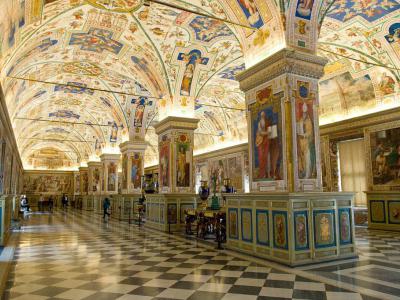
The museums include 24 galleries, culminating in the Sistine Chapel, famous for Michelangelo’s frescoed ceiling and The Last Judgment. Other highlights include the Raphael Rooms, featuring masterpieces like The School of Athens, and the Vatican Art Gallery, showcasing works by Giotto, Leonardo da Vinci, Raphael, Titian, Caravaggio, and Veronese.
Several museums surrounding the Belvedere Courtyard specialize in sculpture. The Pio-Clementino Museum is the most prominent, housing Greek and Roman sculptures, such as Apollo Belvedere and Laocoön and His Sons. The Chiaramonti Museum displays statues, friezes, and sarcophagi, while the Gregoriano Etrusco and Gregoriano Egiziano museums feature Etruscan and Egyptian antiquities, respectively.
The Vatican Historical Museum (established in 1973) displays papal artifacts, including a red marble papal throne. The Gallery of Maps, commissioned by Pope Gregory XIII, remains the largest geographical pictorial study ever created. The Borgia Apartment, once home to Pope Alexander VI, contains Renaissance frescoes. Another highlight is the Bramante Staircase, a stunning double-helix design from 1932.
Tip:
Before embarking on a visit, ensure you have a satisfying breakfast and wear comfortable walking shoes. It can be helpful to prioritize a few key pieces of art that you don't want to miss and focus on experiencing those. Alternatively, if you wish to explore the entire collection, plan for multiple visits.
It is highly recommended to book tickets in advance online, particularly for an afternoon visit during the middle of the week. Saturdays and Mondays tend to be the busiest days, so opting for other times can enhance your experience.
The museums trace their origins to Pope Julius II in the early 16th century. Their foundation is closely linked to the discovery of the famous Roman sculpture "Laocoon and His Sons" in 1506. Following expert advice from Michelangelo and Giuliano da Sangallo, who was an Italian sculptor, architect, and military engineer, the Pope acquired the piece and put it on display. Over time, the collection expanded, with Pope Pius IX establishing the Museum Christianum and Lateran Museum in 1854. In 2006, the museums celebrated their 500th anniversary by opening the Vatican Hill necropolis to the public.
The museums include 24 galleries, culminating in the Sistine Chapel, famous for Michelangelo’s frescoed ceiling and The Last Judgment. Other highlights include the Raphael Rooms, featuring masterpieces like The School of Athens, and the Vatican Art Gallery, showcasing works by Giotto, Leonardo da Vinci, Raphael, Titian, Caravaggio, and Veronese.
Several museums surrounding the Belvedere Courtyard specialize in sculpture. The Pio-Clementino Museum is the most prominent, housing Greek and Roman sculptures, such as Apollo Belvedere and Laocoön and His Sons. The Chiaramonti Museum displays statues, friezes, and sarcophagi, while the Gregoriano Etrusco and Gregoriano Egiziano museums feature Etruscan and Egyptian antiquities, respectively.
The Vatican Historical Museum (established in 1973) displays papal artifacts, including a red marble papal throne. The Gallery of Maps, commissioned by Pope Gregory XIII, remains the largest geographical pictorial study ever created. The Borgia Apartment, once home to Pope Alexander VI, contains Renaissance frescoes. Another highlight is the Bramante Staircase, a stunning double-helix design from 1932.
Tip:
Before embarking on a visit, ensure you have a satisfying breakfast and wear comfortable walking shoes. It can be helpful to prioritize a few key pieces of art that you don't want to miss and focus on experiencing those. Alternatively, if you wish to explore the entire collection, plan for multiple visits.
It is highly recommended to book tickets in advance online, particularly for an afternoon visit during the middle of the week. Saturdays and Mondays tend to be the busiest days, so opting for other times can enhance your experience.
