Custom Walk in Cork, Ireland by monch13_43694 created on 2026-04-23
Guide Location: Ireland » Cork
Guide Type: Custom Walk
# of Sights: 7
Tour Duration: 11 Hour(s)
Travel Distance: 31 Km or 19.3 Miles
Share Key: QMQGS
Guide Type: Custom Walk
# of Sights: 7
Tour Duration: 11 Hour(s)
Travel Distance: 31 Km or 19.3 Miles
Share Key: QMQGS
How It Works
Please retrieve this walk in the GPSmyCity app. Once done, the app will guide you from one tour stop to the next as if you had a personal tour guide. If you created the walk on this website or come to the page via a link, please follow the instructions below to retrieve the walk in the app.
Retrieve This Walk in App
Step 1. Download the app "GPSmyCity: Walks in 1K+ Cities" on Apple App Store or Google Play Store.



Step 2. In the GPSmyCity app, download(or launch) the guide "Cork Map and Walking Tours".
Step 3. Tap the menu button located at upper right corner of the "Walks" screen and select "Retrieve custom walk". Enter the share key: QMQGS
1) St. Fin Barre's Cathedral (must see)
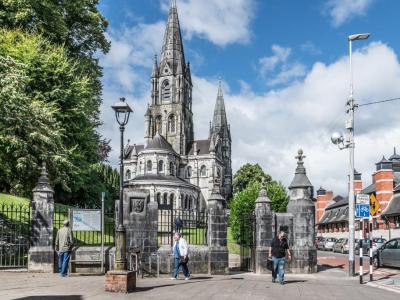
Saint Finn Barre’s Cathedral practically crowns Cork, with three spires that have been keeping watch since the late 19th century. But the story goes back much further. In the 7th century, Saint Fin Barre, Cork’s patron, founded a monastery here. That first building didn’t survive the 12th-century Norman invasion, and its successors fared no better-each replaced by something grander, as if every generation was trying to outdo the last. The Gothic Revival masterpiece you see today was built between 1863 and 1879, designed by William Burges, a man who wasn’t content to just draw blueprints-he dreamed up everything from the stained glass to the furniture.
Burges was so determined to see the cathedral completed his way that he left behind two detailed “how-to” manuals-the Book of Furniture and the Book of Designs-like a Victorian IKEA guide, only with more angels and gargoyles. Those plans have kept restorations faithful to the original, even down to re-carving sculptures degraded by Cork’s damp climate. Built mainly from local limestone, with marble columns inside, the cathedral’s skyline signature is the gilded copper “Golden Angel,” gleaming from the sanctuary roof.
Step inside and it’s sensory overload-in the best way. Mosaic pavements underfoot, a marble nave soaring above, and a pulpit propped up on four sculpted legs. The brass lectern stares back at you with the faces of Moses and King David. Seventy-four stained glass windows tell biblical tales, except in the nave, where the signs of the zodiac sneak in. The 1870 William Hill & Sons pipe organ has more than 4,500 pipes, making sure any note played resonates through both stone and soul. And if you can brave a steep, dim staircase, you’ll be rewarded with a sweeping panorama of Cork, spires in the foreground, rooftops fading into the distance.
Today, St. Fin Barre’s is more than a place of worship-it’s part of Cork’s cultural bloodstream, hosting concerts, events, and standing within easy reach of Elizabeth Fort and the city’s historic lanes. For anyone with an eye for architecture, a love of history, or just an appreciation for an excellent city view, it’s a stop that delivers on every level.
Burges was so determined to see the cathedral completed his way that he left behind two detailed “how-to” manuals-the Book of Furniture and the Book of Designs-like a Victorian IKEA guide, only with more angels and gargoyles. Those plans have kept restorations faithful to the original, even down to re-carving sculptures degraded by Cork’s damp climate. Built mainly from local limestone, with marble columns inside, the cathedral’s skyline signature is the gilded copper “Golden Angel,” gleaming from the sanctuary roof.
Step inside and it’s sensory overload-in the best way. Mosaic pavements underfoot, a marble nave soaring above, and a pulpit propped up on four sculpted legs. The brass lectern stares back at you with the faces of Moses and King David. Seventy-four stained glass windows tell biblical tales, except in the nave, where the signs of the zodiac sneak in. The 1870 William Hill & Sons pipe organ has more than 4,500 pipes, making sure any note played resonates through both stone and soul. And if you can brave a steep, dim staircase, you’ll be rewarded with a sweeping panorama of Cork, spires in the foreground, rooftops fading into the distance.
Today, St. Fin Barre’s is more than a place of worship-it’s part of Cork’s cultural bloodstream, hosting concerts, events, and standing within easy reach of Elizabeth Fort and the city’s historic lanes. For anyone with an eye for architecture, a love of history, or just an appreciation for an excellent city view, it’s a stop that delivers on every level.
2) Blackrock Castle Observatory
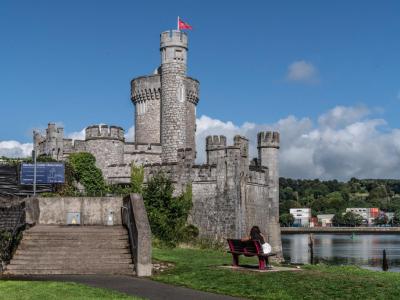
Blackrock Castle is a watchtower on the banks of the River Lee, Cork. It was built in 1604 in order to protect the city from pirates. Nowadays the building, after reconstruction, serves as the home of one of the most interesting observatories in Europe. At the castle, you can find Ireland's first interactive science exhibitions, the Quarter moon viewings where you are invited to learn how telescopes work and see the moon up close, workshops exploring different themes in science and engineering.
One of the most intriguing exhibits at Blackrock Castle Observatory is the radio telescope, which beams messages towards nearby stars. Visitors can compose their own message to space at the Pan Galactic Station, and it will be sent via the castle's radio telescope at their command. This is a unique opportunity to communicate with potential extraterrestrial life and be a part of space exploration.
The observatory is an excellent destination for families, groups, or individuals looking for a fun and educational day out. It offers a mix of science, cosmos, and history that is sure to fascinate visitors of all ages.
Why You Should Visit:
Great spot to view the river and Cork Harbour, and an easy drive through the historic Blackrock area of Cork.
Tip:
Wonderful views from the top of the castle.
Nearby you will also find a shop, a courtyard with a few small cannons, and a lovely restaurant.
Car parking is also available.
One of the most intriguing exhibits at Blackrock Castle Observatory is the radio telescope, which beams messages towards nearby stars. Visitors can compose their own message to space at the Pan Galactic Station, and it will be sent via the castle's radio telescope at their command. This is a unique opportunity to communicate with potential extraterrestrial life and be a part of space exploration.
The observatory is an excellent destination for families, groups, or individuals looking for a fun and educational day out. It offers a mix of science, cosmos, and history that is sure to fascinate visitors of all ages.
Why You Should Visit:
Great spot to view the river and Cork Harbour, and an easy drive through the historic Blackrock area of Cork.
Tip:
Wonderful views from the top of the castle.
Nearby you will also find a shop, a courtyard with a few small cannons, and a lovely restaurant.
Car parking is also available.
3) English Market (must see)
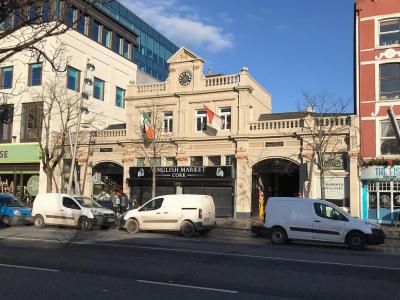
Step off the busy streets of Cork and into the English Market, and you’ll swap the hum of traffic for the soft shuffle of footsteps and the clink of traders’ tools. Established in 1788 as the “new markets” for meat, it has since evolved into a feast for the senses - and the appetite. The name “English Market” came later, in the 19th century, to set it apart from the Irish Market on St. Peter’s. The present building, with its admired mid-19th-century architecture, greets visitors through the elegant tripartite façade on Princes Street or the bayed entrance from the Grand Parade. Inside, a gabled bay, central archways, and stained-glass lunette windows create an atmosphere that feels both vintage and alive.
This is not just a stroll-and-stare kind of place. It’s where locals pick up their spiced beef for Sunday, where chefs hunt for the best fish in town, and where self-catering travellers can stock up on top-quality Irish produce. You’ll find fruit and vegetables from far-flung places, but the real pride lies in local specialities - blood sausage, buttered eggs, and a butcher’s counter that could stock half the city. The quality here is so consistent that many of Cork’s best restaurants take their cues (and their cuts) from these stalls.
The market’s reputation has outgrown the city, drawing praise from food lovers worldwide - including chef Rick Stein, who once called it the “best covered market in the UK and Ireland.” It’s also hosted royal visitors like Queen Elizabeth II and Prince Charles and even made appearances in The Young Offenders. The English Market delivers more than groceries: it’s a snapshot of Cork’s culinary identity, a clean and charming old-world marketplace where every counter has a story, and every merchant is willing to talk about it.
This is not just a stroll-and-stare kind of place. It’s where locals pick up their spiced beef for Sunday, where chefs hunt for the best fish in town, and where self-catering travellers can stock up on top-quality Irish produce. You’ll find fruit and vegetables from far-flung places, but the real pride lies in local specialities - blood sausage, buttered eggs, and a butcher’s counter that could stock half the city. The quality here is so consistent that many of Cork’s best restaurants take their cues (and their cuts) from these stalls.
The market’s reputation has outgrown the city, drawing praise from food lovers worldwide - including chef Rick Stein, who once called it the “best covered market in the UK and Ireland.” It’s also hosted royal visitors like Queen Elizabeth II and Prince Charles and even made appearances in The Young Offenders. The English Market delivers more than groceries: it’s a snapshot of Cork’s culinary identity, a clean and charming old-world marketplace where every counter has a story, and every merchant is willing to talk about it.
4) Cork City Gaol (must see)
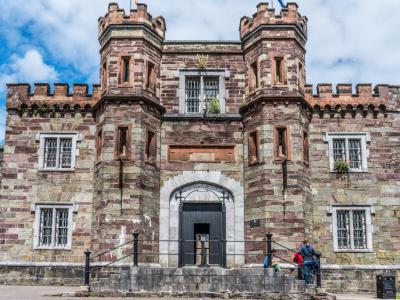
Cork City Gaol looks more like a Gothic fortress than a former prison, which was exactly the point when William Robertson designed it in 1818. The law was meant to feel imposing, and this place did the job. Even future art legend John Hogan cut his teeth here-though as a draughtsman, not an inmate-before going on to sculpt his way into Ireland’s cultural history. When the doors first opened in 1824, the gaol replaced Cork’s overcrowded old prison and took in both men and women, often for offences so minor-like drunkenness or foul language-that they wouldn’t raise an eyebrow today. In 1919, it even hosted Constance Markievicz, the first woman elected to the British Parliament, for giving a politically charged speech.
By 1878, the prison housed only women, switching back to a mixed population in 1922 before shutting down entirely a year later. The next chapter was unexpected: from 1927 to the 1950s, its thick stone walls broadcast RTÉ radio programmes instead of holding prisoners. After that, it slipped into partial ruin, its unused wings slowly gathering dust-until a 1993 restoration gave the building a second life as a museum.
Step inside today and you’ll find restored cells with wax figures and period belongings that make it hard not to imagine the sounds and smells of daily prison life. Displays dig into Cork’s social history, the harsh realities of 19th-century justice, and the odd daring escape. There’s a radio museum too, a shout-out to its broadcasting years, while graffiti left by real inmates lingers as a raw reminder of the human stories behind the bars. With panoramic views over the city from its hillside perch, the gaol mixes eerie atmosphere with architectural splendor, making it a memorable stop for anyone curious about Ireland’s past.
By 1878, the prison housed only women, switching back to a mixed population in 1922 before shutting down entirely a year later. The next chapter was unexpected: from 1927 to the 1950s, its thick stone walls broadcast RTÉ radio programmes instead of holding prisoners. After that, it slipped into partial ruin, its unused wings slowly gathering dust-until a 1993 restoration gave the building a second life as a museum.
Step inside today and you’ll find restored cells with wax figures and period belongings that make it hard not to imagine the sounds and smells of daily prison life. Displays dig into Cork’s social history, the harsh realities of 19th-century justice, and the odd daring escape. There’s a radio museum too, a shout-out to its broadcasting years, while graffiti left by real inmates lingers as a raw reminder of the human stories behind the bars. With panoramic views over the city from its hillside perch, the gaol mixes eerie atmosphere with architectural splendor, making it a memorable stop for anyone curious about Ireland’s past.
5) Blarney Castle
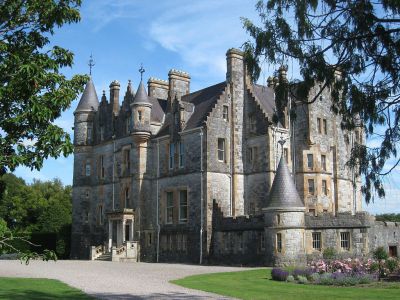
Blarney Castle is a historic fortress located in the town of Blarney, in County Cork. The castle dates back to the 13th century when a timber house was believed to have been constructed on the site. This was later replaced by a stone fortification around 1210. However, the current keep that stands today was built in 1446 by Cormac Láidir MacCarthy, the Lord of Muskerry, who was a member of the MacCarthy of Muskerry dynasty, a branch of the Kings of Desmond.
Blarney Castle played a significant role in the Irish Confederate Wars when it was besieged by Parliamentarian forces led by Lord Broghill in 1646. The castle was eventually restored to Donough MacCarty, who was made the 1st Earl of Clancarty after the Restoration. However, during the Williamite War in Ireland in the 1690s, the castle was seized, and the 4th Earl of Clancarty was captured, resulting in the confiscation of his lands, including Blarney Castle, by the Williamites.
Over the centuries, Blarney Castle changed hands several times, with different owners adding their touches to the castle and its surroundings. Sir James Jeffreys, governor of Cork City, purchased the castle in the early 18th century, and it remained in his family until the mid-19th century.
Today, Blarney Castle is a popular tourist attraction, with its highlight being the Stone of Eloquence, also known as the Blarney Stone. The stone is located among the machicolations of the castle, and visitors can hang upside-down over a sheer drop to kiss the stone. It is believed that kissing the Blarney Stone gives the gift of eloquence.
There are also extensive gardens surrounding the castle, featuring natural rock formations with fanciful names such as Druid's Circle, Witch's Cave, and the Wishing Steps. The poison garden, located within the grounds, features numerous poisonous plants, including wolfsbane, mandrake, ricin, and opium, as well as cannabis. Blarney House, located on the grounds, is also open to the public.
Blarney Castle played a significant role in the Irish Confederate Wars when it was besieged by Parliamentarian forces led by Lord Broghill in 1646. The castle was eventually restored to Donough MacCarty, who was made the 1st Earl of Clancarty after the Restoration. However, during the Williamite War in Ireland in the 1690s, the castle was seized, and the 4th Earl of Clancarty was captured, resulting in the confiscation of his lands, including Blarney Castle, by the Williamites.
Over the centuries, Blarney Castle changed hands several times, with different owners adding their touches to the castle and its surroundings. Sir James Jeffreys, governor of Cork City, purchased the castle in the early 18th century, and it remained in his family until the mid-19th century.
Today, Blarney Castle is a popular tourist attraction, with its highlight being the Stone of Eloquence, also known as the Blarney Stone. The stone is located among the machicolations of the castle, and visitors can hang upside-down over a sheer drop to kiss the stone. It is believed that kissing the Blarney Stone gives the gift of eloquence.
There are also extensive gardens surrounding the castle, featuring natural rock formations with fanciful names such as Druid's Circle, Witch's Cave, and the Wishing Steps. The poison garden, located within the grounds, features numerous poisonous plants, including wolfsbane, mandrake, ricin, and opium, as well as cannabis. Blarney House, located on the grounds, is also open to the public.
6) Fitzgerald Park (must see)
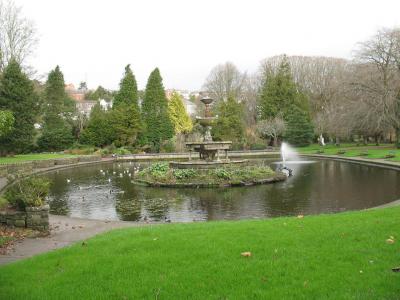
If Cork had a living room, Fitzgerald Park would be it-18 acres of open-air lounging with a strong sense of history and a dash of artistic flair. Sitting along the River Lee, about a 20-minute wander from the city centre, the park was first laid out in 1902 for the Cork International Exhibition. When the fair packed up, the landscaped grounds stayed put, transforming into the public space locals know today. Its name honours Edward Fitzgerald, Cork’s Lord Mayor from 1901 to 1903, who championed bringing the exhibition to the city.
It’s a place where stone, bronze, and greenery mingle. Sculptures by heavyweights like Seamus Murphy and Oisín Kelly punctuate the lawns, each adding its own accent to the landscape. The Georgian-style Cork Public Museum, tucked within the park, dives into archaeology, local history, and cultural heritage, making it a handy side trip if the weather turns. For a softer touch, tree-lined walkways, ornamental gardens, and a central fountain set the scene for a slower pace. On the other side of the spectrum, modern additions-a skate park, large playground, and picnic-friendly lawns-keep things lively.
Seasonal floral displays and riverside views make it an easy sell for photographers and strollers alike. Thanks to its location, you can pair a visit with nearby University College Cork or cross the pedestrian “Shakey Bridge” for another angle on the city. The park’s open lawns also double as a stage for concerts, community gatherings, and open-air performances, meaning you might stumble onto an event without even trying.
Arrive for the art, stay for the quiet lawns, wander into the museum, or stumble upon a gig-you’ll leave with a sense that Fitzgerald Park has slipped you a little extra piece of Cork’s character to carry into the rest of your day.
It’s a place where stone, bronze, and greenery mingle. Sculptures by heavyweights like Seamus Murphy and Oisín Kelly punctuate the lawns, each adding its own accent to the landscape. The Georgian-style Cork Public Museum, tucked within the park, dives into archaeology, local history, and cultural heritage, making it a handy side trip if the weather turns. For a softer touch, tree-lined walkways, ornamental gardens, and a central fountain set the scene for a slower pace. On the other side of the spectrum, modern additions-a skate park, large playground, and picnic-friendly lawns-keep things lively.
Seasonal floral displays and riverside views make it an easy sell for photographers and strollers alike. Thanks to its location, you can pair a visit with nearby University College Cork or cross the pedestrian “Shakey Bridge” for another angle on the city. The park’s open lawns also double as a stage for concerts, community gatherings, and open-air performances, meaning you might stumble onto an event without even trying.
Arrive for the art, stay for the quiet lawns, wander into the museum, or stumble upon a gig-you’ll leave with a sense that Fitzgerald Park has slipped you a little extra piece of Cork’s character to carry into the rest of your day.
7) University College Cork (must see)
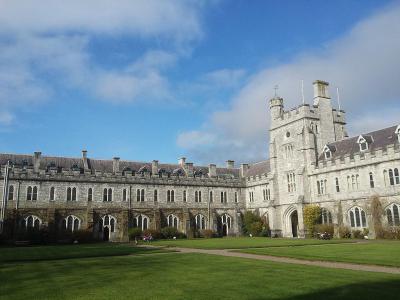
If Cork had an academic crown jewel, University College Cork would be it-though it began life in 1845 as Queen’s College Cork, one of three colleges founded under Queen Victoria. By 1908, it had joined the National University of Ireland and swapped the royal title for its current name. The original quadrangle, in stately Tudor Gothic style, still anchors the 42-acre campus. And while its lawns roll gently down to the River Lee, the whole place sits just a brisk ten-minute walk from Cork’s city centre.
This is also the campus that made medical history in 1898, when Ireland’s first two female doctors graduated here-decades before many universities even considered opening those door to women. The stone façades and arched windows look suitably scholarly, but the details tell their own stories. The Aula Maxima, the university’s ceremonial heart, brims with portraits and period furnishings. At the Crawford Observatory, late-19th-century telescopes-restored to working order-still point skyward, recalling a time of astronomy lectures.
In more recent history, UCC has been named Irish University of the Year five times and once claimed the European Commission’s title for top performing university. On the cultural side, the Glucksman Gallery-a bold piece of modernist architecture that earned a spot in 1001 Buildings You Must See Before You Die-hosts exhibitions from Irish and international artists, adding contemporary flair to the historic grounds.
Then there are the Ogham stones: early medieval standing stones carved with ancient script, sitting quietly among the green spaces as if waiting for you to decipher them. A seasonal campus walk, time spent with the art collections, or the contrast between historic quads and city streets-however you approach it, UCC offers a layered mix of history, architecture, and cultural life that stands out in Cork.
This is also the campus that made medical history in 1898, when Ireland’s first two female doctors graduated here-decades before many universities even considered opening those door to women. The stone façades and arched windows look suitably scholarly, but the details tell their own stories. The Aula Maxima, the university’s ceremonial heart, brims with portraits and period furnishings. At the Crawford Observatory, late-19th-century telescopes-restored to working order-still point skyward, recalling a time of astronomy lectures.
In more recent history, UCC has been named Irish University of the Year five times and once claimed the European Commission’s title for top performing university. On the cultural side, the Glucksman Gallery-a bold piece of modernist architecture that earned a spot in 1001 Buildings You Must See Before You Die-hosts exhibitions from Irish and international artists, adding contemporary flair to the historic grounds.
Then there are the Ogham stones: early medieval standing stones carved with ancient script, sitting quietly among the green spaces as if waiting for you to decipher them. A seasonal campus walk, time spent with the art collections, or the contrast between historic quads and city streets-however you approach it, UCC offers a layered mix of history, architecture, and cultural life that stands out in Cork.
