Custom Walk in Mumbai, India by manuel_campelo_3e5fdd created on 2026-04-29
Guide Location: India » Mumbai
Guide Type: Custom Walk
# of Sights: 12
Tour Duration: 48 Hour(s)
Travel Distance: 139.8 Km or 86.9 Miles
Share Key: D2V3G
Guide Type: Custom Walk
# of Sights: 12
Tour Duration: 48 Hour(s)
Travel Distance: 139.8 Km or 86.9 Miles
Share Key: D2V3G
How It Works
Please retrieve this walk in the GPSmyCity app. Once done, the app will guide you from one tour stop to the next as if you had a personal tour guide. If you created the walk on this website or come to the page via a link, please follow the instructions below to retrieve the walk in the app.
Retrieve This Walk in App
Step 1. Download the app "GPSmyCity: Walks in 1K+ Cities" on Apple App Store or Google Play Store.



Step 2. In the GPSmyCity app, download(or launch) the guide "Mumbai Map and Walking Tours".
Step 3. Tap the menu button located at upper right corner of the "Walks" screen and select "Retrieve custom walk". Enter the share key: D2V3G
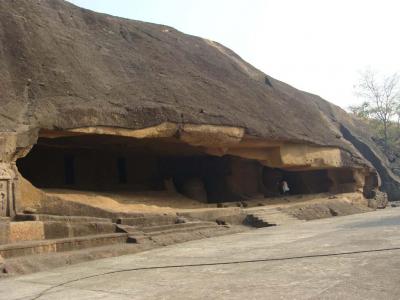
1) Kanheri Caves (must see)
The Kanheri Caves, also known as Kānherī-guhā, are a collection of caves and rock-cut monuments carved into a massive basalt rock formation located in the woodlands of Sanjay Gandhi National Park, situated on the former Salsette Island in the western outskirts of Mumbai. These caves are adorned with Buddhist sculptures, relief carvings, paintings, and inscriptions, dating back from the 1st century CE to the 10th century CE. The name "Kanheri" is derived from the Sanskrit word "Krishnagiri," which translates to "black mountain."
Perched on a hillside, the site is accessible via rock-cut steps and comprises a total of 109 caves. The older caves are relatively simple and unembellished in comparison to the later ones on the site, as well as the more ornate Elephanta Caves in Mumbai. Each cave features a stone platform that served as a bed, and a congregation hall with imposing stone pillars houses a stupa, which is a Buddhist shrine. Elaborate rock-cut channels above the caves channeled rainwater into cisterns, supplying the complex with water. Over time, as the caves were converted into permanent monastic dwellings, their walls were adorned with intricate reliefs depicting Buddha and the Bodhisattvas. By the 3rd century CE, Kanheri had evolved into a significant Buddhist settlement on the Konkan coast.
The majority of these caves were viharas, designed for the purposes of living, studying, and meditation. The larger caves, which functioned as chaityas or halls for communal worship, feature finely crafted Buddhist sculptures, reliefs, pillars, and rock-cut stupas. Among the distinctive figures found here is Avalokiteshwara. The abundance of viharas indicates the existence of a well-organized community of Buddhist monks. This community also had connections with various trade centers, including the ports of Sopara, Kalyan, Nasik, Paithan, and Ujjain. By the time of the Mauryan and Kushan empires, Kanheri had developed into a center of Buddhist learning, akin to a university. In the late 10th century, the renowned Buddhist teacher Atisha (980–1054) came to Krishnagiri Vihara to study Buddhist meditation under the guidance of Rahulagupta.
Perched on a hillside, the site is accessible via rock-cut steps and comprises a total of 109 caves. The older caves are relatively simple and unembellished in comparison to the later ones on the site, as well as the more ornate Elephanta Caves in Mumbai. Each cave features a stone platform that served as a bed, and a congregation hall with imposing stone pillars houses a stupa, which is a Buddhist shrine. Elaborate rock-cut channels above the caves channeled rainwater into cisterns, supplying the complex with water. Over time, as the caves were converted into permanent monastic dwellings, their walls were adorned with intricate reliefs depicting Buddha and the Bodhisattvas. By the 3rd century CE, Kanheri had evolved into a significant Buddhist settlement on the Konkan coast.
The majority of these caves were viharas, designed for the purposes of living, studying, and meditation. The larger caves, which functioned as chaityas or halls for communal worship, feature finely crafted Buddhist sculptures, reliefs, pillars, and rock-cut stupas. Among the distinctive figures found here is Avalokiteshwara. The abundance of viharas indicates the existence of a well-organized community of Buddhist monks. This community also had connections with various trade centers, including the ports of Sopara, Kalyan, Nasik, Paithan, and Ujjain. By the time of the Mauryan and Kushan empires, Kanheri had developed into a center of Buddhist learning, akin to a university. In the late 10th century, the renowned Buddhist teacher Atisha (980–1054) came to Krishnagiri Vihara to study Buddhist meditation under the guidance of Rahulagupta.

2) Global Vipassana Pagoda (must see)
The Global Vipassana Pagoda is a meditation dome hall located near Gorai, in the north-western part of Mumbai. It's notable for being the largest meditation hall of its kind globally, capable of accommodating approximately 8,000 Vipassana meditators. This impressive structure was officially opened on February 8, 2009, by Pratibha Patil, who was the President of India at that time. Situated on land donated for this purpose, it's positioned on a narrow piece of land between Gorai creek and the Arabian Sea. The primary intention behind the construction of this pagoda is to serve as a symbol of peace and harmony.
The Global Vipassana Pagoda stands as a token of gratitude to Sayagyi U Ba Khin (1899 - 1971), a prominent Vipassana teacher and the first Accountant-General of Independent Burma. He played a vital role in reintroducing Vipassana to India, its country of origin. Interestingly, the entire pagoda was funded through voluntary donations. Its core purpose is to disseminate information about Vipassana meditation and promote awareness of the teachings of Gotama the Buddha. Vipassanā represents the practical essence of the Buddha's universal, non-sectarian teachings.
The pagoda features a traditional Burmese architectural design, which is a way of expressing gratitude to Myanmar for preserving the practice of Vipassana. In terms of its shape, it's modeled after the Shwedagon Pagoda (Golden Pagoda) in Yangon, Myanmar. What makes this structure remarkable is the combination of ancient Indian and modern construction techniques, ensuring its durability for centuries to come.
The Global Vipassana Pagoda stands as a token of gratitude to Sayagyi U Ba Khin (1899 - 1971), a prominent Vipassana teacher and the first Accountant-General of Independent Burma. He played a vital role in reintroducing Vipassana to India, its country of origin. Interestingly, the entire pagoda was funded through voluntary donations. Its core purpose is to disseminate information about Vipassana meditation and promote awareness of the teachings of Gotama the Buddha. Vipassanā represents the practical essence of the Buddha's universal, non-sectarian teachings.
The pagoda features a traditional Burmese architectural design, which is a way of expressing gratitude to Myanmar for preserving the practice of Vipassana. In terms of its shape, it's modeled after the Shwedagon Pagoda (Golden Pagoda) in Yangon, Myanmar. What makes this structure remarkable is the combination of ancient Indian and modern construction techniques, ensuring its durability for centuries to come.
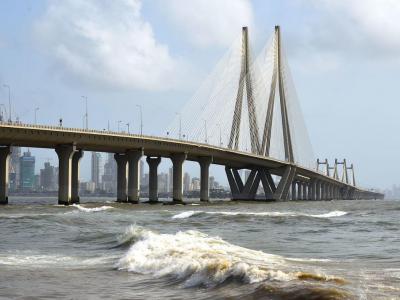
3) Bandra–Worli Sea Link (must see)
Bandra–Worli Sea Link is a cable-stayed bridge that connects the suburb of Bandra with the Worli peninsula. The bridge was commissioned by Maharashtra State Road Development Corporation in 1999 and completed in 2010.
The bridge is the first cable-stayed bridge over open seas in India. It is also the first bridge in Mumbai that uses seismic arresters to withstand earthquakes of up to 7.0.
Construction of the bridge helped to significantly ease traffic in the region. More than 35,000 vehicles use the Bandra-Worli Sea Link daily due to the fact that it shortens a 30 minute drive to only 10 minutes.
Visitors to Mumbai cannot walk on the bridge, as it is not open to pedestrians. However, the true beauty of the Bandra-Worli Sea Link can only be seen from afar. To get a good view of the bridge, visitors can head to the area known as Sealink View on Mahim Beach near the Mayor's Bungalow.
Arguably the best view of the bridge is available from the Bandra-Worli Sea Link promenade. Pedestrians can walk along the shore of Mahim Bay while appreciation the engineering of the bridge while avoiding the heavy traffic.
The bridge is the first cable-stayed bridge over open seas in India. It is also the first bridge in Mumbai that uses seismic arresters to withstand earthquakes of up to 7.0.
Construction of the bridge helped to significantly ease traffic in the region. More than 35,000 vehicles use the Bandra-Worli Sea Link daily due to the fact that it shortens a 30 minute drive to only 10 minutes.
Visitors to Mumbai cannot walk on the bridge, as it is not open to pedestrians. However, the true beauty of the Bandra-Worli Sea Link can only be seen from afar. To get a good view of the bridge, visitors can head to the area known as Sealink View on Mahim Beach near the Mayor's Bungalow.
Arguably the best view of the bridge is available from the Bandra-Worli Sea Link promenade. Pedestrians can walk along the shore of Mahim Bay while appreciation the engineering of the bridge while avoiding the heavy traffic.
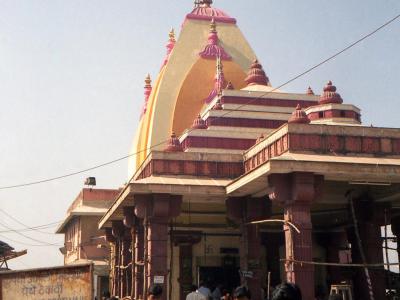
4) Mahalaxmi Temple (must see)
The Mahalaxmi Temple is a Hindu temple that honors three Hindu deities: Shri Mahalakshmi, Shri Mahakali and Shri Mahasaraswati. This is one of the most famous temples in Mumbai.
The origins of the temple date to the late 18th century. Idols had been thrown into the sea to protect them from Muslim invaders. Ramji Shivji Prabhu, a government engineer, dreamed that Shri Mahalakshmi instructed him to remove the idols and build a temple. Construction of temple began in 1761 and was completed in 1771.
The interior of the temple includes images of the Tridevi goddesses. Mahalakshmi is the central figure, who holds a lotus flower, the Hindu symbol of eternity, purity and divinity.
Visitors can purchase flowers and other offerings at stalls near the temple that can then be given as an offering to Mahalakshmi. Aarti, the offering of light, takes place during the daily pooja each morning, evening and at night before the temple closes.
Many people come to visit the Mahalakshmi Temple around festivals of Navaratri and Diwali.
The origins of the temple date to the late 18th century. Idols had been thrown into the sea to protect them from Muslim invaders. Ramji Shivji Prabhu, a government engineer, dreamed that Shri Mahalakshmi instructed him to remove the idols and build a temple. Construction of temple began in 1761 and was completed in 1771.
The interior of the temple includes images of the Tridevi goddesses. Mahalakshmi is the central figure, who holds a lotus flower, the Hindu symbol of eternity, purity and divinity.
Visitors can purchase flowers and other offerings at stalls near the temple that can then be given as an offering to Mahalakshmi. Aarti, the offering of light, takes place during the daily pooja each morning, evening and at night before the temple closes.
Many people come to visit the Mahalakshmi Temple around festivals of Navaratri and Diwali.
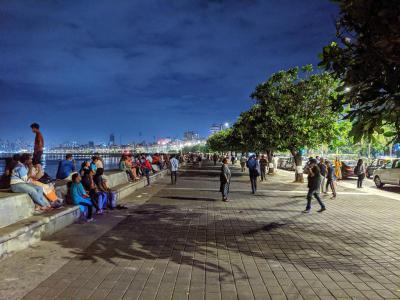
5) Marine Drive (must see)
Marine Drive is a promenade that curves around Back Bay. The 2.2 miles (3.6 kilometers) pedestrian path follows Netaji Subhash Chandra Bose Road from Nariman Point to Chowpatty Beach.
People who wish to walk the entire span of Marine Drive will see numerous fascinating sights along the way. The tree-lined promenade offers easy access to shopping areas, coffee shops, ice cream parlors and sit-down restaurants. Indeed, visitors may wish to plan several hours on this tour so they can stop to take photos, go shopping or grab a bite to eat.
Starting at the Tip of Nariman Point, you have an excellent photo opportunity where, on clear days, you can see the skyscrapers of Mumbai and the Arabian Sea. Other nearby areas of interest include the Nehru Statue, the Lokmanya Bal Gangadhar Tilak Samadhi memorial and the Wankhede Stadium.
Marine Drive is lit at night, which allows for easy night-time strolling. These lights also give the promenade its nickname, Queen's Necklace, as the lights along the C-shaped walkway resemble that of a strand of pearls.
People who wish to walk the entire span of Marine Drive will see numerous fascinating sights along the way. The tree-lined promenade offers easy access to shopping areas, coffee shops, ice cream parlors and sit-down restaurants. Indeed, visitors may wish to plan several hours on this tour so they can stop to take photos, go shopping or grab a bite to eat.
Starting at the Tip of Nariman Point, you have an excellent photo opportunity where, on clear days, you can see the skyscrapers of Mumbai and the Arabian Sea. Other nearby areas of interest include the Nehru Statue, the Lokmanya Bal Gangadhar Tilak Samadhi memorial and the Wankhede Stadium.
Marine Drive is lit at night, which allows for easy night-time strolling. These lights also give the promenade its nickname, Queen's Necklace, as the lights along the C-shaped walkway resemble that of a strand of pearls.
6) Elephanta Caves (must see)
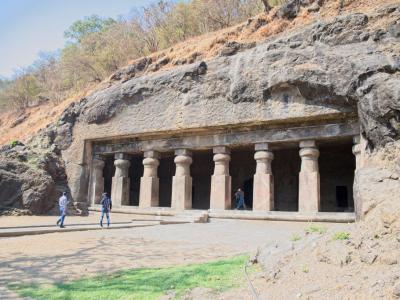
Elephanta Caves are a series of cave temples on Elephanta Island. The majority of these temples are dedicated to Shiva, who is one of the principal deities in Hinduism. The cave temples are thought to have been built between the 5th and 6th centuries.
There two groups of seven caves on the island. The main cave, known as Cave 1 or the Great Cave is the primary site for tourists. The 130-foot cave has a grand hall with east and west wings. A number of carvings and friezes depict the traditional views of Shiva slaying Andhaka, the wedding of Shiva and many others.
The Linga Shrine is the primary shrine in Cave 1. There are four entrances into the free-standing shrine. Each of these entrances are guarded by two dvarapalas. Inside of the shrine is the Linga, which is an abstract representation of Shiva.
Elephanta Island is located in Mumbai Harbor. It is only reachable by ferry from the Gateway of India. The ferry is about a 1.5 hour trip each way. The monument is open from 6 AM through 6 PM daily.
There two groups of seven caves on the island. The main cave, known as Cave 1 or the Great Cave is the primary site for tourists. The 130-foot cave has a grand hall with east and west wings. A number of carvings and friezes depict the traditional views of Shiva slaying Andhaka, the wedding of Shiva and many others.
The Linga Shrine is the primary shrine in Cave 1. There are four entrances into the free-standing shrine. Each of these entrances are guarded by two dvarapalas. Inside of the shrine is the Linga, which is an abstract representation of Shiva.
Elephanta Island is located in Mumbai Harbor. It is only reachable by ferry from the Gateway of India. The ferry is about a 1.5 hour trip each way. The monument is open from 6 AM through 6 PM daily.
7) Chhatrapati Shivaji Maharaj Vastu Sangrahalaya (Prince of Wales Museum)
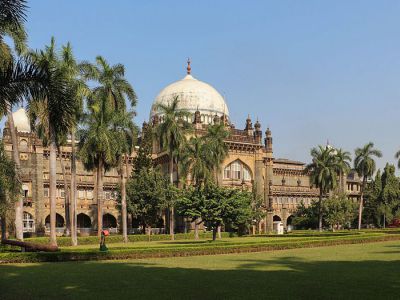
The formerly Prince of Wales Museum stands as one of Mumbai’s most important cultural institutions. Opened to the public in 1922, it was conceived during the late colonial period to house collections reflecting the art, history, and natural heritage of India and the wider region. In 1998, the museum was renamed in honor of the 17th-century Maratha ruler, and it continues to bear that name today.
The museum building itself is a landmark of Indo-Saracenic architecture, designed by Scottish architect George Wittet. Its large central dome, arched entrances, and pale stone façade draw inspiration from Mughal, Rajput, and Deccan. Construction of the building began in the early 20th century to commemorate King George V, then Prince of Wales, who laid the foundation stone in 1905. After taking several years to complete, the structure was briefly used as a military hospital before being formally established as a museum.
Inside, the museum’s collections span several millennia, ranging from artifacts of the Indus Valley Civilization to relics of major Indian empires including the Mauryas, Guptas, Rashtrakutas, Chalukyas, and the Mughal era. Galleries display sculpture, miniature paintings, decorative arts, arms and armor, textiles, and archaeological finds, alongside natural history exhibits exploring India’s biodiversity.
The museum building itself is a landmark of Indo-Saracenic architecture, designed by Scottish architect George Wittet. Its large central dome, arched entrances, and pale stone façade draw inspiration from Mughal, Rajput, and Deccan. Construction of the building began in the early 20th century to commemorate King George V, then Prince of Wales, who laid the foundation stone in 1905. After taking several years to complete, the structure was briefly used as a military hospital before being formally established as a museum.
Inside, the museum’s collections span several millennia, ranging from artifacts of the Indus Valley Civilization to relics of major Indian empires including the Mauryas, Guptas, Rashtrakutas, Chalukyas, and the Mughal era. Galleries display sculpture, miniature paintings, decorative arts, arms and armor, textiles, and archaeological finds, alongside natural history exhibits exploring India’s biodiversity.
8) Mahatma Jyotiba Phule Market (Crawford Market)
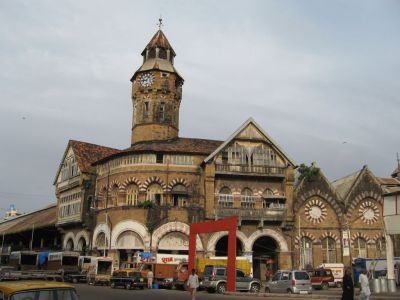
The former Crawford Market is one of Mumbai’s oldest marketplaces, completed in 1869. It was originally named after Arthur Crawford, the first municipal commissioner of Bombay, while its present name honors the social reformer Mahatma Jyotiba Phule. Even today, many residents still refer to the market by its historic name.
The building itself is an impressive example of Victorian Gothic architecture adapted to India’s tropical climate. Designed by British architect William Emerson, the structure features red stone walls, decorative arches, and high ceilings. The entrance is decorated with sculptural reliefs of animals and agricultural scenes. The building was also notable for being among the first in India to be illuminated with electricity.
Spread across more than 22,000 square meters, Crawford Market is a lively maze of stalls and shops offering everything from fresh fruits, vegetables, and spices to dried fruits, sweets, household goods, and imported products. Certain sections specialize in particular items, while other areas feature upscale shops and vendors selling unusual goods.
The building itself is an impressive example of Victorian Gothic architecture adapted to India’s tropical climate. Designed by British architect William Emerson, the structure features red stone walls, decorative arches, and high ceilings. The entrance is decorated with sculptural reliefs of animals and agricultural scenes. The building was also notable for being among the first in India to be illuminated with electricity.
Spread across more than 22,000 square meters, Crawford Market is a lively maze of stalls and shops offering everything from fresh fruits, vegetables, and spices to dried fruits, sweets, household goods, and imported products. Certain sections specialize in particular items, while other areas feature upscale shops and vendors selling unusual goods.
9) Chor Bazaar (must see)
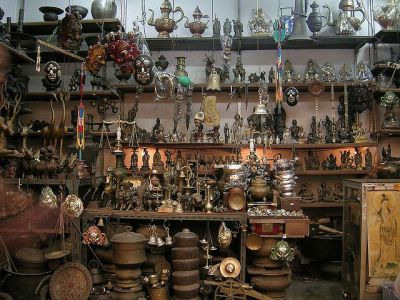
One of the most fascinating places in Mumbai is the Chor Bazaar. Chor, which literally translates to “thief”, and hence culminates to the thief market, is one of the best places to witness the true essence and flavour of street shopping in Mumbai. Essentially a flea market, it has virtually everything, from a genuine spare part of a Mercedes car to an authentic Ming vase here.
A popular destination for tourists, the Chor Bazaar is where you can literally shop till you drop. Don’t feel shy to haggle shamelessly, for this is one place where you just don’t pay what the salesmen's price. Popular picks at the market are old Bollywood posters, antique junk, spare parts, beautiful clocks, old lamp shades and other trinkets. Dense with shoppers and filled with back to back shops and hawkers, the Chor Bazaar is definitely a place to visit.
Located near the Bhendi Bazzar, in South Mumbai, it is very close to the Crawford Market. Although weekends are a good time to visit the Bazaar, the best time would be Friday, as the sellers replenish their stock. A word of advice - you can also expect many more hopefuls on Fridays, so be prepared for a crowd.
What to buy here: Lampshades.
As you already know, it's all about the atmosphere. Re-create an Indian afternoon and its magic by adding a special touch to your home décor. Or better yet, bring a beautiful Indian lampshade as a gift for your friends and enjoy their soft, romantic light whenever you visit.
This traditional handicraft has been successfully combined with modern creativity, the lampshades are made out of cotton paper, jute and bamboo. Inexpensive but diverse materials, a fairly easy technique and a little imagination are some of the ingredients of their rapid ascent. These lampshades are delicate, sporting versatile structures, whose beauty is often times enhanced by craftsmen with the assistance of cut work, ribbons or hand-made paintings. Jaipur, Delhi and recently Mumbai boast rich traditions of making decorative lampshades, for daily use and special occasions such as festivals and weddings equally.
A popular destination for tourists, the Chor Bazaar is where you can literally shop till you drop. Don’t feel shy to haggle shamelessly, for this is one place where you just don’t pay what the salesmen's price. Popular picks at the market are old Bollywood posters, antique junk, spare parts, beautiful clocks, old lamp shades and other trinkets. Dense with shoppers and filled with back to back shops and hawkers, the Chor Bazaar is definitely a place to visit.
Located near the Bhendi Bazzar, in South Mumbai, it is very close to the Crawford Market. Although weekends are a good time to visit the Bazaar, the best time would be Friday, as the sellers replenish their stock. A word of advice - you can also expect many more hopefuls on Fridays, so be prepared for a crowd.
What to buy here: Lampshades.
As you already know, it's all about the atmosphere. Re-create an Indian afternoon and its magic by adding a special touch to your home décor. Or better yet, bring a beautiful Indian lampshade as a gift for your friends and enjoy their soft, romantic light whenever you visit.
This traditional handicraft has been successfully combined with modern creativity, the lampshades are made out of cotton paper, jute and bamboo. Inexpensive but diverse materials, a fairly easy technique and a little imagination are some of the ingredients of their rapid ascent. These lampshades are delicate, sporting versatile structures, whose beauty is often times enhanced by craftsmen with the assistance of cut work, ribbons or hand-made paintings. Jaipur, Delhi and recently Mumbai boast rich traditions of making decorative lampshades, for daily use and special occasions such as festivals and weddings equally.
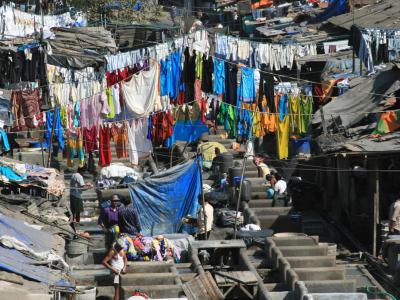
10) Dhobi Ghat (must see)
Dhobi Ghat stands as an open-air laundry facility situated in Mumbai, where skilled workers known as dhobis labor in the open to launder clothing and linens primarily sourced from the city's hotels and hospitals. Its construction dates back to 1890. The facility features rows of exposed concrete wash pens, each equipped with its own heavy-duty washing stone. Reputed as the world's largest outdoor laundry, Dhobi Ghat has gained significant popularity among international tourists.
The Dhobi Kalyan & Audhyogik Vikas Cooperative Society, the leading organization representing these washermen, estimates an annual turnover of approximately Rs 100 crore for the Mahalaxmi Dhobi Ghat. Over 7,000 individuals toil for 18 to 20 hours daily, engaging in activities such as beating, scrubbing, dyeing, and bleaching clothes in these concrete wash pens. Subsequently, they hang the garments on ropes to dry, meticulously press them, and distribute them throughout the city. The facility manages to wash over one lakh (100,000) pieces of clothing daily. Some of the more affluent dhobis have transitioned to using large mechanical washing and drying machines.
The dhobis serve clients spanning various sectors, including local laundries, garment retailers, wedding planners, caterers, as well as mid-sized hotels and clubs. Dhobi Ghat made it into the Guinness Book of World Records in 2011 under the category of 'most people hand-washing clothes at a single location.' In 2013, World Records India and World Amazing Records recognized Dhobi Kalyan & Audhyogik Vikas Co-op. Society Ltd. with a World Record Certificate.
Adjacent to Dhobi Ghat lies the Saat Rasta Project, a proposed public space project extending along Bapurao Jagtap Road, linking Jacob Circle to the Mahalaxmi Railway Station. This public space would seamlessly connect to Dhobi Ghat, further enhancing its status as a significant tourist attraction. Dhobi Ghat serves as the residence for the dhobis and their families, numbering around 200 families. This profession has been handed down through generations within these families. Additionally, it's conveniently observable from the Mahalaxmi Railway Station. The optimal times for visiting Dhobi Ghat are early morning and early afternoon. Mornings witness the dhobis actively managing their laundry workload, while the early afternoons offer an ideal opportunity to witness the drying process of the freshly cleaned clothes.
The Dhobi Kalyan & Audhyogik Vikas Cooperative Society, the leading organization representing these washermen, estimates an annual turnover of approximately Rs 100 crore for the Mahalaxmi Dhobi Ghat. Over 7,000 individuals toil for 18 to 20 hours daily, engaging in activities such as beating, scrubbing, dyeing, and bleaching clothes in these concrete wash pens. Subsequently, they hang the garments on ropes to dry, meticulously press them, and distribute them throughout the city. The facility manages to wash over one lakh (100,000) pieces of clothing daily. Some of the more affluent dhobis have transitioned to using large mechanical washing and drying machines.
The dhobis serve clients spanning various sectors, including local laundries, garment retailers, wedding planners, caterers, as well as mid-sized hotels and clubs. Dhobi Ghat made it into the Guinness Book of World Records in 2011 under the category of 'most people hand-washing clothes at a single location.' In 2013, World Records India and World Amazing Records recognized Dhobi Kalyan & Audhyogik Vikas Co-op. Society Ltd. with a World Record Certificate.
Adjacent to Dhobi Ghat lies the Saat Rasta Project, a proposed public space project extending along Bapurao Jagtap Road, linking Jacob Circle to the Mahalaxmi Railway Station. This public space would seamlessly connect to Dhobi Ghat, further enhancing its status as a significant tourist attraction. Dhobi Ghat serves as the residence for the dhobis and their families, numbering around 200 families. This profession has been handed down through generations within these families. Additionally, it's conveniently observable from the Mahalaxmi Railway Station. The optimal times for visiting Dhobi Ghat are early morning and early afternoon. Mornings witness the dhobis actively managing their laundry workload, while the early afternoons offer an ideal opportunity to witness the drying process of the freshly cleaned clothes.
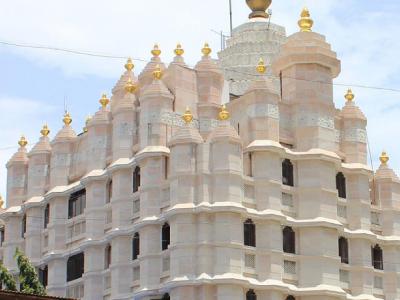
11) Siddhivinayak Temple (must see)
The Shree Siddhivinayak Ganapati Mandir is a Hindu temple devoted to Lord Shri Ganesh and is situated in Prabhadevi, Mumbai. It was originally constructed on November 19, 1801, by Laxman Vithu and Deubai Patil. This temple is renowned for its substantial wealth and features a small hall housing the shrine of Siddhi Vinayak, also known as "Ganesha who grants your wish."
The entrance doors to the inner sanctum are intricately carved with images of the Ashtavinayak, which represent the eight manifestations of Ganesha in Maharashtra. Inside, the sanctum's ceiling is adorned with gold plating, and the central deity is Lord Ganesha. Additionally, there is a Hanuman temple in the temple's vicinity.
The temple's exterior boasts a dome that is illuminated with a changing array of colors during the evening hours. Beneath this dome lies the statue of Shri Ganesha. Over the years, the Siddhivinayak Mandir has transformed from a modest place of worship into the grand temple we see today, particularly in the latter half of the twentieth century. The temple's fame is not only attributed to the politicians who frequently visit but also to Bollywood film stars who seek the blessings of Lord Ganesha during their visits.
In 2016, Apple's CEO, Tim Cook, commenced his India trip with morning prayers at this temple. Among devotees, Siddhivinayak is well-known as "Navsacha Ganapati" or "Navasala Pavanara Ganapati," signifying that Lord Ganapati bestows blessings whenever sincere wishes are humbly prayed for. The temple authorities also provide facilities for various types of pujas (rituals) to cater to the devotees' needs.
The entrance doors to the inner sanctum are intricately carved with images of the Ashtavinayak, which represent the eight manifestations of Ganesha in Maharashtra. Inside, the sanctum's ceiling is adorned with gold plating, and the central deity is Lord Ganesha. Additionally, there is a Hanuman temple in the temple's vicinity.
The temple's exterior boasts a dome that is illuminated with a changing array of colors during the evening hours. Beneath this dome lies the statue of Shri Ganesha. Over the years, the Siddhivinayak Mandir has transformed from a modest place of worship into the grand temple we see today, particularly in the latter half of the twentieth century. The temple's fame is not only attributed to the politicians who frequently visit but also to Bollywood film stars who seek the blessings of Lord Ganesha during their visits.
In 2016, Apple's CEO, Tim Cook, commenced his India trip with morning prayers at this temple. Among devotees, Siddhivinayak is well-known as "Navsacha Ganapati" or "Navasala Pavanara Ganapati," signifying that Lord Ganapati bestows blessings whenever sincere wishes are humbly prayed for. The temple authorities also provide facilities for various types of pujas (rituals) to cater to the devotees' needs.
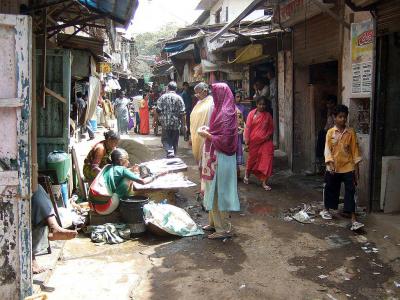
12) Dharavi
Dharavi, situated in Mumbai, Maharashtra, is recognized as one of the largest slums in Asia. It covers a land area slightly exceeding 2.1 square kilometers (0.81 square miles or 520 acres) and is inhabited by around one million people. The population density in Dharavi is extremely high, with over 277,136 individuals per square kilometer (717,780 per square mile), making it one of the most densely populated areas globally.
Established in 1884 during the British colonial period, Dharavi grew due to the relocation of factories and residents from the city center and the influx of rural Indians into urban Mumbai. As a result, Dharavi has evolved into a highly diverse community in terms of religion and ethnicity.
Dharavi boasts a thriving informal economy, with numerous small-scale businesses that provide employment to a significant portion of the slum's residents. These businesses produce various items, such as leather goods, textiles, and pottery. The combined annual economic activity in Dharavi has been estimated to exceed one billion US dollars.
Throughout its history, Dharavi has faced numerous epidemics and disasters, including a major plague outbreak in 1896 that resulted in the deaths of more than half of Mumbai's population. Sanitary conditions in the slum continue to be subpar.
Established in 1884 during the British colonial period, Dharavi grew due to the relocation of factories and residents from the city center and the influx of rural Indians into urban Mumbai. As a result, Dharavi has evolved into a highly diverse community in terms of religion and ethnicity.
Dharavi boasts a thriving informal economy, with numerous small-scale businesses that provide employment to a significant portion of the slum's residents. These businesses produce various items, such as leather goods, textiles, and pottery. The combined annual economic activity in Dharavi has been estimated to exceed one billion US dollars.
Throughout its history, Dharavi has faced numerous epidemics and disasters, including a major plague outbreak in 1896 that resulted in the deaths of more than half of Mumbai's population. Sanitary conditions in the slum continue to be subpar.
