Custom Walk in Madrid, Spain by emurphy_74f69 created on 2026-04-29
Guide Location: Spain » Madrid
Guide Type: Custom Walk
# of Sights: 5
Tour Duration: 2 Hour(s)
Travel Distance: 3.6 Km or 2.2 Miles
Share Key: D48M3
Guide Type: Custom Walk
# of Sights: 5
Tour Duration: 2 Hour(s)
Travel Distance: 3.6 Km or 2.2 Miles
Share Key: D48M3
How It Works
Please retrieve this walk in the GPSmyCity app. Once done, the app will guide you from one tour stop to the next as if you had a personal tour guide. If you created the walk on this website or come to the page via a link, please follow the instructions below to retrieve the walk in the app.
Retrieve This Walk in App
Step 1. Download the app "GPSmyCity: Walks in 1K+ Cities" on Apple App Store or Google Play Store.



Step 2. In the GPSmyCity app, download(or launch) the guide "Madrid Map and Walking Tours".
Step 3. Tap the menu button located at upper right corner of the "Walks" screen and select "Retrieve custom walk". Enter the share key: D48M3
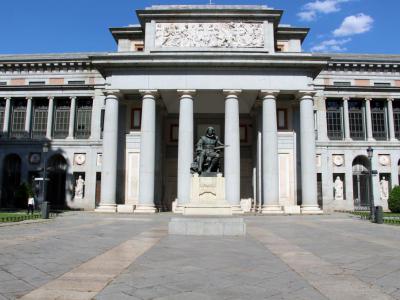
1) Museo Nacional del Prado (Prado National Museum) (must see)
The Prado National Museum stands as Madrid's top tourist attraction, renowned for its rich art collection that spans centuries and was predominantly acquired by the Spanish royal family over the past 200 years. The institution is organized by national schools and received a significant rejuvenation with the controversial €152 million extension designed by Rafael Moneo. Upon entering, follow the suggested route by bearing right into the central hallway, known as the Hall of the Muses ("Sala de las Musas"). From there, you will be guided through the collections on the ground floor before proceeding upstairs.
The collection of Spanish paintings is truly remarkable, starting with stunning 12th-century Romanesque frescoes and encompassing works by nearly every influential Spanish painter: from the renowned El Greco, who hailed from Crete but worked in Toledo during the 1570s, to the outstanding Francisco de Goya, known for his masterpieces depicting 18th-century Bourbon Spain. Don't miss the collection of works by Diego Velázquez, including his renowned masterpiece, "Las Meninas", either.
Meanwhile, the Italian painting collection boasts the most comprehensive assembly of painters from the Venice School within a single museum, including Titian's magnificent equestrian portrait, "Emperor Carlos V at Mühlberg". Notable works by Raphael, Tintoretto, Veronese, and Caravaggio can also be found. The early Flemish works are equally impressive, featuring Hieronymus Bosch's renowned triptych, the mesmerizing "Garden of Earthly Delights". Keep an eye out for Pieter Bruegel the Elder's "Triumph of Death", one of the most chilling canvases ever painted, as well as Rogier van der Weyden's "Descent from the Cross" and the extensive Rubens collection.
While German and French paintings have a lesser representation, they are still worth exploring, especially the works by Dürer, Cranach, and Poussin. Downstairs in the basement, you'll encounter a dazzling display of jewels that once belonged to the Grand Dauphin Louis, son of Louis XIV and father of Felipe V, Spain's first Bourbon king.
The new wing of the museum houses temporary exhibition spaces, restoration workshops, a sculpture gallery, as well as a restaurant, café, and shops, providing visitors with a comprehensive experience.
***HEMINGWAY'S MADRID***
Although Ernest Hemingway was not a usual lover of museums, Prado was an exception for him. He recognized this cultural site as a treasure, with its exhibited works by Picasso, Velazquez, Goya, El Greco and many other international artists. The writer was especially fascinated by Goya, whom he considered a genius.
Tip:
To enter, tickets can be purchased at the Puerta de Goya, opposite the Hotel Ritz on Calle Felipe IV, while the actual entrance is located at the Puerta de los Jerónimos at the back, leading into the museum's new extension. To avoid the lengthy queues, it is advisable to buy tickets in advance from the museum's website.
You have the option of enjoying a free visit during the last two hours of the day, which is a great way to save on your travel expenses while still being able to experience the museum. However, if you intend to spend an entire day here, you can have your ticket and audio guide stamped, allowing you to temporarily exit the museum for lunch and then return to continue exploring.
The collection of Spanish paintings is truly remarkable, starting with stunning 12th-century Romanesque frescoes and encompassing works by nearly every influential Spanish painter: from the renowned El Greco, who hailed from Crete but worked in Toledo during the 1570s, to the outstanding Francisco de Goya, known for his masterpieces depicting 18th-century Bourbon Spain. Don't miss the collection of works by Diego Velázquez, including his renowned masterpiece, "Las Meninas", either.
Meanwhile, the Italian painting collection boasts the most comprehensive assembly of painters from the Venice School within a single museum, including Titian's magnificent equestrian portrait, "Emperor Carlos V at Mühlberg". Notable works by Raphael, Tintoretto, Veronese, and Caravaggio can also be found. The early Flemish works are equally impressive, featuring Hieronymus Bosch's renowned triptych, the mesmerizing "Garden of Earthly Delights". Keep an eye out for Pieter Bruegel the Elder's "Triumph of Death", one of the most chilling canvases ever painted, as well as Rogier van der Weyden's "Descent from the Cross" and the extensive Rubens collection.
While German and French paintings have a lesser representation, they are still worth exploring, especially the works by Dürer, Cranach, and Poussin. Downstairs in the basement, you'll encounter a dazzling display of jewels that once belonged to the Grand Dauphin Louis, son of Louis XIV and father of Felipe V, Spain's first Bourbon king.
The new wing of the museum houses temporary exhibition spaces, restoration workshops, a sculpture gallery, as well as a restaurant, café, and shops, providing visitors with a comprehensive experience.
***HEMINGWAY'S MADRID***
Although Ernest Hemingway was not a usual lover of museums, Prado was an exception for him. He recognized this cultural site as a treasure, with its exhibited works by Picasso, Velazquez, Goya, El Greco and many other international artists. The writer was especially fascinated by Goya, whom he considered a genius.
Tip:
To enter, tickets can be purchased at the Puerta de Goya, opposite the Hotel Ritz on Calle Felipe IV, while the actual entrance is located at the Puerta de los Jerónimos at the back, leading into the museum's new extension. To avoid the lengthy queues, it is advisable to buy tickets in advance from the museum's website.
You have the option of enjoying a free visit during the last two hours of the day, which is a great way to save on your travel expenses while still being able to experience the museum. However, if you intend to spend an entire day here, you can have your ticket and audio guide stamped, allowing you to temporarily exit the museum for lunch and then return to continue exploring.
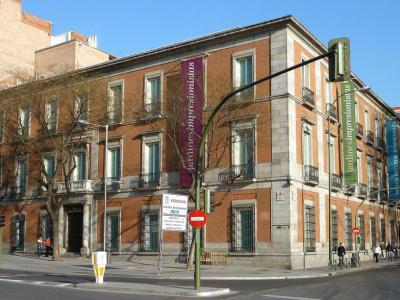
2) Museo Thyssen-Bornemisza (Thyssen-Bornemisza Museum) (must see)
This extraordinary private collection, curated by Baron Heinrich Thyssen-Bornemisza, his son Hans Heinrich, and his former wife Carmen, is a treasure trove of art spanning centuries. Since its opening in 1993, the museum has showcased masterpieces by renowned Western artists from the 14th century onwards. An extension, seamlessly integrated into the original museum layout, now hosts temporary exhibitions and Carmen's remarkable collection, which features a strong emphasis on 19th-century landscapes, North American art, Impressionism, and Post-Impressionism.
To explore the collection in chronological order, begin on the second floor, where you'll encounter pre-Renaissance artwork from the 14th century. Renaissance portraits by renowned artists such as Ghirlandaio, Raphael, and Holbein adorn the walls, including Holbein's captivating portrayal of Henry VIII. Moving forward, you'll discover equally impressive works by Titian, Tintoretto, El Greco, Caravaggio, and Canaletto. The new galleries house a superb collection of landscapes and serene Impressionist pieces by Pissarro, Monet, Renoir, Degas, and Sisley.
Continuing to the first floor, you'll encounter an exceptional selection of works by Gauguin and the Post-Impressionists. The vivid expressionism of Kandinsky, Nolde, and Kirchner is also well represented. Further displays include a comprehensive array of Dutch paintings from the 17th century, spanning various genres, as well as splendid 19th-century American landscapes. Van Gogh's contributions are particularly striking, including his captivating and final work, "Les Vessenots". The expressionist movement is further showcased with George Grosz's apocalyptic masterpiece, "Metropolis".
On the ground floor, the collection encompasses art from the early 20th century. Noteworthy works from the Cubist movement by Picasso, Braque, and Mondrian can be found within the "experimental avant-garde" section. Miró, Pollock, and Chagall are also featured, capturing the viewer's attention. Surrealism is well represented by Dalí, while the final galleries showcase captivating pieces by Bacon, Lichtenstein, and Freud.
Why You Should Visit:
A very cozy, relaxing, interesting and well-organized gallery, with all great pieces commented by an outstanding audio guide.
You can get close and examine the techniques used, take photos of your favourite works, or just admire them.
The artwork is more varied than in the Prado – there are more artists/styles represented, and something to suit all tastes.
Good cafe/restaurant for either coffee, snack or lunch – you can either sit inside or outside in the courtyard.
Tip:
On Mondays, be sure to prioritize the temporary exhibitions located on the top floors, as they close at 1pm. Otherwise, you can choose to begin your visit on the top floor and make your way down or vice versa if contemporary art is more to your liking. Don't forget to bring your earphones along so you can enjoy the audio guide and immerse yourself in the artwork.
To explore the collection in chronological order, begin on the second floor, where you'll encounter pre-Renaissance artwork from the 14th century. Renaissance portraits by renowned artists such as Ghirlandaio, Raphael, and Holbein adorn the walls, including Holbein's captivating portrayal of Henry VIII. Moving forward, you'll discover equally impressive works by Titian, Tintoretto, El Greco, Caravaggio, and Canaletto. The new galleries house a superb collection of landscapes and serene Impressionist pieces by Pissarro, Monet, Renoir, Degas, and Sisley.
Continuing to the first floor, you'll encounter an exceptional selection of works by Gauguin and the Post-Impressionists. The vivid expressionism of Kandinsky, Nolde, and Kirchner is also well represented. Further displays include a comprehensive array of Dutch paintings from the 17th century, spanning various genres, as well as splendid 19th-century American landscapes. Van Gogh's contributions are particularly striking, including his captivating and final work, "Les Vessenots". The expressionist movement is further showcased with George Grosz's apocalyptic masterpiece, "Metropolis".
On the ground floor, the collection encompasses art from the early 20th century. Noteworthy works from the Cubist movement by Picasso, Braque, and Mondrian can be found within the "experimental avant-garde" section. Miró, Pollock, and Chagall are also featured, capturing the viewer's attention. Surrealism is well represented by Dalí, while the final galleries showcase captivating pieces by Bacon, Lichtenstein, and Freud.
Why You Should Visit:
A very cozy, relaxing, interesting and well-organized gallery, with all great pieces commented by an outstanding audio guide.
You can get close and examine the techniques used, take photos of your favourite works, or just admire them.
The artwork is more varied than in the Prado – there are more artists/styles represented, and something to suit all tastes.
Good cafe/restaurant for either coffee, snack or lunch – you can either sit inside or outside in the courtyard.
Tip:
On Mondays, be sure to prioritize the temporary exhibitions located on the top floors, as they close at 1pm. Otherwise, you can choose to begin your visit on the top floor and make your way down or vice versa if contemporary art is more to your liking. Don't forget to bring your earphones along so you can enjoy the audio guide and immerse yourself in the artwork.
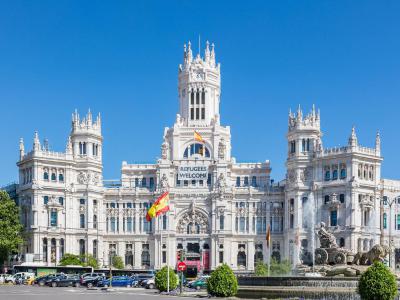
3) Palacio de Cibeles (Cibeles Palace) (must see)
Originally conceived as a headquarters for Spain’s postal and telegraph service, this grand building is a masterpiece of neo-Gothic and neo-Plateresque design. With its intricate white facade and towering pinnacles, it’s no wonder people often compare it to a towering wedding cake. In 2011, the addition of a shimmering glass dome to the central courtyard took its elegance to the next level. And let’s not forget the backdrop: the palace overlooks its namesake square and the world-famous fountain at its center-truly one of Madrid’s most recognizable symbols.
Just outside the main entrance, you can still spot a set of traditional brass letterboxes in the wall, each labeled with the names of various Spanish cities and provinces. While the building now serves as home to Madrid’s mayor and City Council, it’s much more than a seat of government. Thanks to its transformation into the CentroCentro cultural hub, visitors can immerse themselves in a revolving roster of exhibitions, concerts, and events that highlight contemporary art, cutting-edge design, and urban innovation. Inside, the palace is a visual feast, with intricately carved details, soaring ceilings, and expansive halls that showcase the artistic excellence of its era.
One of the main draws is the Mirador Madrid, a rooftop observation deck that offers an outstanding panorama of the city. From up here, you can soak in the sights of Gran Vía, Retiro Park, and historic neighborhoods stretching out to the horizon. By night, the illuminated tower turns into a beacon that adds a magical glow to the skyline.
For a perfect way to end your visit, head to the sixth-floor café-restaurant. Whether you’re craving a quick coffee or a hearty meal, you can savor the scenery alongside your refreshments.
Just outside the main entrance, you can still spot a set of traditional brass letterboxes in the wall, each labeled with the names of various Spanish cities and provinces. While the building now serves as home to Madrid’s mayor and City Council, it’s much more than a seat of government. Thanks to its transformation into the CentroCentro cultural hub, visitors can immerse themselves in a revolving roster of exhibitions, concerts, and events that highlight contemporary art, cutting-edge design, and urban innovation. Inside, the palace is a visual feast, with intricately carved details, soaring ceilings, and expansive halls that showcase the artistic excellence of its era.
One of the main draws is the Mirador Madrid, a rooftop observation deck that offers an outstanding panorama of the city. From up here, you can soak in the sights of Gran Vía, Retiro Park, and historic neighborhoods stretching out to the horizon. By night, the illuminated tower turns into a beacon that adds a magical glow to the skyline.
For a perfect way to end your visit, head to the sixth-floor café-restaurant. Whether you’re craving a quick coffee or a hearty meal, you can savor the scenery alongside your refreshments.
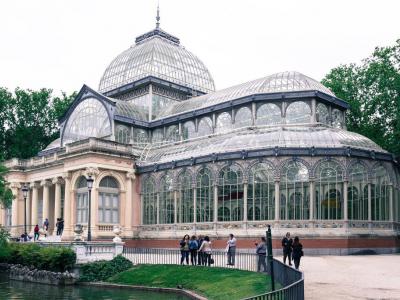
4) Palacio de Cristal (Crystal Palace) (must see)
Right by a quiet, man-made lake and surrounded by the towering chestnut trees of Retiro Park, you’ll find the Crystal Palace-one of Madrid’s most remarkable examples of iron-and-glass architecture. Initially built in 1887 as a giant greenhouse for the Philippine Islands Flora Exhibition, it was closely modeled on London’s famous Crystal Palace in Hyde Park.
With its wide glass panels and slender iron columns, the building feels light, almost dreamlike. Sunlight floods in from every angle, bouncing off the glass and casting reflections that shift throughout the day. Cast iron columns support the structure, creating a grand and elegant interior. A full restoration in 1975 helped bring it back to its former glory.
These days, the Crystal Palace isn’t home to tropical plants-but to art, regularly hosting temporary exhibits and installations that make creative use of the open, light-filled space. Admission is free, so you’re welcome to step inside and take it all in-whether you're there for the art or simply to soak in the atmosphere. And if you catch it at sunset, when the lights come on, the whole place seems to take on another life again.
Tip: If you’re after that perfect photo, aim for sunrise. The early light reflecting off the lake and catching the glass panels gives the whole place a magical glow.
With its wide glass panels and slender iron columns, the building feels light, almost dreamlike. Sunlight floods in from every angle, bouncing off the glass and casting reflections that shift throughout the day. Cast iron columns support the structure, creating a grand and elegant interior. A full restoration in 1975 helped bring it back to its former glory.
These days, the Crystal Palace isn’t home to tropical plants-but to art, regularly hosting temporary exhibits and installations that make creative use of the open, light-filled space. Admission is free, so you’re welcome to step inside and take it all in-whether you're there for the art or simply to soak in the atmosphere. And if you catch it at sunset, when the lights come on, the whole place seems to take on another life again.
Tip: If you’re after that perfect photo, aim for sunrise. The early light reflecting off the lake and catching the glass panels gives the whole place a magical glow.
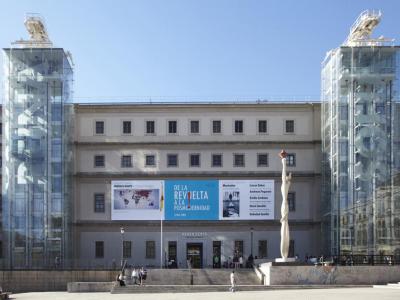
5) Museo Nacional Centro de Arte Reina Sofia (Queen Sofia National Museum Art Centre) (must see)
A must-visit destination on the Madrid art scene is the Queen Sofía (Reina Sofía) Museum, an expansive exhibition space that serves as the permanent home for the Spanish collection of modern and contemporary art, including the renowned Miró and Picasso legacies. In addition to its impressive collection of 20th-century art, the museum features a theater, cinema, excellent bookshops, a print, music and photographic library, a restaurant, bar, and café located in the basement, as well as a tranquil inner courtyard garden. Informative guidebooks that delve into key works are available for purchase at the shops, although they can be quite expensive. For first-time visitors, audioguides in English can be found at the entrance, providing insightful commentaries.
The museum's permanent collection starts on the second floor, exploring the origins of modern Spanish art, primarily focusing on the artistic movements that emerged in Catalonia and the Basque Country at the end of the 19th century. Moving through Collection 1, the highlight of the Reina Sofía is Picasso's iconic "Guernica", a powerful piece that has always elicited strong reactions. The exhibition also includes notable sections on Cubism, with Picasso being well-represented, as well as the Paris School. Dalí and Miró also make significant contributions in the Surrealism section, showcasing the development of their works and their diverse techniques. The floor is completed with impressive works from Cubist artist Juan Gris and a captivating collection of Spanish sculpture.
On the fourth floor, Collection 2 continues the narrative, covering Spain's post-war years up to 1968 and featuring examples of abstract and avant-garde movements such as Pop Art, Constructivism, and Minimalism. Highlights include Francis Bacon's "Figura Tumbada" (Reclining Figure). Noteworthy sections to explore are the photography during Franco's dictatorship and the works by British artists Henry Moore and Graham Sutherland. Visitors will also find striking pieces by Basque abstract sculptor Chillida and Catalan Surrealist painter Antoni Tàpies.
The state-of-the-art extension known as the Area Nouvel, designed by Jean Nouvel at a cost of 79 million euros, encompasses the third part of the collection, which spans the period 1962-1982. This section focuses on experimental, revolutionary, and feminist art, exploring themes from the final years of the Franco dictatorship to the present day. The new wing also houses temporary exhibition spaces, an auditorium, library, bookshop, and café-restaurant.
Why You Should Visit:
If 20th-century art is your thing, this is an exceptional museum not to be missed; if not, the museum's impressive collection still offers something worthwhile. The inner garden is a pleasant cool oasis, while the top floor has a view deck of Madrid.
Tips:
if you encounter long queues at the main entrance, you can find an alternative entrance at the extension on Ronda de Atocha.
Consider getting an online Paseo del Arte combined ticket, which grants you access to the main three museums and helps save both time and money. If you're looking to visit for free, note that between 7pm and 9pm, Monday through Saturday (except Tuesday), entry is free for visitors who don't fall into the age or student categories eligible for free admission.
The museum's permanent collection starts on the second floor, exploring the origins of modern Spanish art, primarily focusing on the artistic movements that emerged in Catalonia and the Basque Country at the end of the 19th century. Moving through Collection 1, the highlight of the Reina Sofía is Picasso's iconic "Guernica", a powerful piece that has always elicited strong reactions. The exhibition also includes notable sections on Cubism, with Picasso being well-represented, as well as the Paris School. Dalí and Miró also make significant contributions in the Surrealism section, showcasing the development of their works and their diverse techniques. The floor is completed with impressive works from Cubist artist Juan Gris and a captivating collection of Spanish sculpture.
On the fourth floor, Collection 2 continues the narrative, covering Spain's post-war years up to 1968 and featuring examples of abstract and avant-garde movements such as Pop Art, Constructivism, and Minimalism. Highlights include Francis Bacon's "Figura Tumbada" (Reclining Figure). Noteworthy sections to explore are the photography during Franco's dictatorship and the works by British artists Henry Moore and Graham Sutherland. Visitors will also find striking pieces by Basque abstract sculptor Chillida and Catalan Surrealist painter Antoni Tàpies.
The state-of-the-art extension known as the Area Nouvel, designed by Jean Nouvel at a cost of 79 million euros, encompasses the third part of the collection, which spans the period 1962-1982. This section focuses on experimental, revolutionary, and feminist art, exploring themes from the final years of the Franco dictatorship to the present day. The new wing also houses temporary exhibition spaces, an auditorium, library, bookshop, and café-restaurant.
Why You Should Visit:
If 20th-century art is your thing, this is an exceptional museum not to be missed; if not, the museum's impressive collection still offers something worthwhile. The inner garden is a pleasant cool oasis, while the top floor has a view deck of Madrid.
Tips:
if you encounter long queues at the main entrance, you can find an alternative entrance at the extension on Ronda de Atocha.
Consider getting an online Paseo del Arte combined ticket, which grants you access to the main three museums and helps save both time and money. If you're looking to visit for free, note that between 7pm and 9pm, Monday through Saturday (except Tuesday), entry is free for visitors who don't fall into the age or student categories eligible for free admission.
