Custom Walk in Helsinki, Finland by jwo4159997 created on 2026-05-04
Guide Location: Finland » Helsinki
Guide Type: Custom Walk
# of Sights: 5
Tour Duration: 1 Hour(s)
Travel Distance: 2.9 Km or 1.8 Miles
Share Key: HK2B6
Guide Type: Custom Walk
# of Sights: 5
Tour Duration: 1 Hour(s)
Travel Distance: 2.9 Km or 1.8 Miles
Share Key: HK2B6
How It Works
Please retrieve this walk in the GPSmyCity app. Once done, the app will guide you from one tour stop to the next as if you had a personal tour guide. If you created the walk on this website or come to the page via a link, please follow the instructions below to retrieve the walk in the app.
Retrieve This Walk in App
Step 1. Download the app "GPSmyCity: Walks in 1K+ Cities" on Apple App Store or Google Play Store.



Step 2. In the GPSmyCity app, download(or launch) the guide "Helsinki Map and Walking Tours".
Step 3. Tap the menu button located at upper right corner of the "Walks" screen and select "Retrieve custom walk". Enter the share key: HK2B6
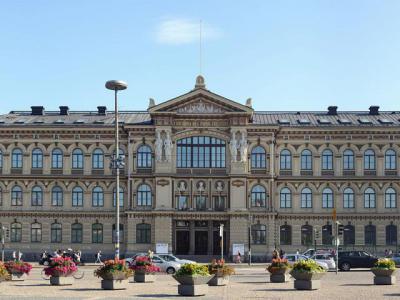
1) Ateneum Art Museum (must see)
On Rautatientori square, close to the Helsinki Central rail stations, lies Ateneum. It is one of three museums that form the Finnish National Gallery. The other two are the Kiasma Museum of Contemporary Art and the Sinebrychoff Art Museum.
The museum gallery focuses on Finnish art from the 18th to the 20th centuries. There are also 650 or so international works, including one piece by Vincent van Gogh.
The building was designed by Theodor Höijer and built in 1887. The heavily ornamented exterior includes busts of famous artists like Raphael. Four female figures support the pediment, each representing one of the four classical art forms-architecture, painting, sculpture, and geometry. Above, the Goddess of Art, Pallas Athene, blesses the artworks.
Ateneum has rotating exhibitions in addition to their permanent collection, and they offer Saturday workshops with museum admission. The gallery is closed on Mondays. There's a museum shop on the property as well.
Why You Should Visit:
One of the best art museums in the Nordics, and certainly recommendable if you want to have a look at the most famous Finnish pieces of art. The well-stocked shop is an excellent place for postcards and tasteful gifts from Helsinki. The bistro serves excellent Finnish food in an inspiring setting.
The museum gallery focuses on Finnish art from the 18th to the 20th centuries. There are also 650 or so international works, including one piece by Vincent van Gogh.
The building was designed by Theodor Höijer and built in 1887. The heavily ornamented exterior includes busts of famous artists like Raphael. Four female figures support the pediment, each representing one of the four classical art forms-architecture, painting, sculpture, and geometry. Above, the Goddess of Art, Pallas Athene, blesses the artworks.
Ateneum has rotating exhibitions in addition to their permanent collection, and they offer Saturday workshops with museum admission. The gallery is closed on Mondays. There's a museum shop on the property as well.
Why You Should Visit:
One of the best art museums in the Nordics, and certainly recommendable if you want to have a look at the most famous Finnish pieces of art. The well-stocked shop is an excellent place for postcards and tasteful gifts from Helsinki. The bistro serves excellent Finnish food in an inspiring setting.
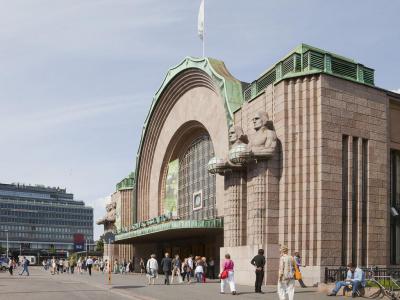
2) Helsinki Central Railway Station (must see)
The Central Railway Station is one of the most visited and well-known sites in the city. There are over two hundred thousand passengers that pass through this place every day. On that basis, it is the single busiest building in the whole country.
The whole complex of rails in the country was started in 1860 when the first track was opened for business between Helsinki and Hameenlinna, a city 100 kilometer north of Helsinki. The first station here was designed by Carl Edelfelt. The station's popularity grew through the years, and so the location had to be renovated multiple times. The last such renovation was completed in 2003 when a shopping center was added to the complex.
One little known tidbit about this station is the Presidential Lounge. This private 50-square-meter waiting lounge is available for exclusive use of the President of Finland and his/her official guests. It was first built for the Emperor of Russia in 1911. After a short stint as a military hospital, it has been the private lounge for the President ever since. It is the only such structure known in the world.
Tip:
Underneath the station, there is a multitude of shops, including supermarkets, and also a walkway over to the other side of Kaivokatu street, which gets you into downtown.
The whole complex of rails in the country was started in 1860 when the first track was opened for business between Helsinki and Hameenlinna, a city 100 kilometer north of Helsinki. The first station here was designed by Carl Edelfelt. The station's popularity grew through the years, and so the location had to be renovated multiple times. The last such renovation was completed in 2003 when a shopping center was added to the complex.
One little known tidbit about this station is the Presidential Lounge. This private 50-square-meter waiting lounge is available for exclusive use of the President of Finland and his/her official guests. It was first built for the Emperor of Russia in 1911. After a short stint as a military hospital, it has been the private lounge for the President ever since. It is the only such structure known in the world.
Tip:
Underneath the station, there is a multitude of shops, including supermarkets, and also a walkway over to the other side of Kaivokatu street, which gets you into downtown.
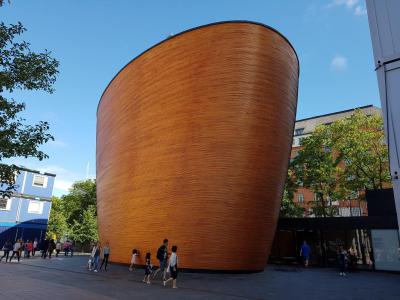
3) Kamppi Chapel of Silence (must see)
The Kamppi Chapel is a non-denominational spot for people to seek sanctuary from busy Helsinki's hustle and bustle. The striking building is found in Narinkka Square. It's oval on the outside and inside and is often described as neutral, austere, or unadorned. It is similar in that way to many multi-faith prayer rooms found around the world.
But just because it is minimalist does not mean that the building is not noteworthy. It was built as part of the World Design Capital program, which Helsinki won in 2012. The Chapel won the International Architecture Award in 2010.
The Chapel of Silence is located right in one of Helsinki's busiest areas, which is part of its charm. Many visitors say they wish more cities had spots like this; it's an uplifting place to slow down and disconnect from the busy world.
But just because it is minimalist does not mean that the building is not noteworthy. It was built as part of the World Design Capital program, which Helsinki won in 2012. The Chapel won the International Architecture Award in 2010.
The Chapel of Silence is located right in one of Helsinki's busiest areas, which is part of its charm. Many visitors say they wish more cities had spots like this; it's an uplifting place to slow down and disconnect from the busy world.
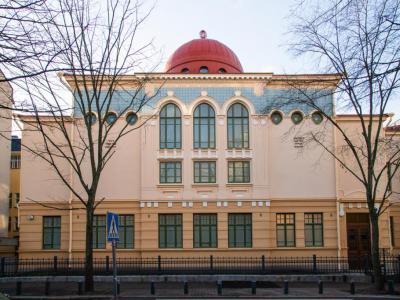
4) Helsinki Synagogue
The Helsinki Synagogue is a significant symbol of Jewish culture and community in the Finnish capital. Found in the Kamppi district, it's one of just two synagogues in Finland, catering to the spiritual needs of Helsinki's 1,200-member Jewish community. Built in 1906, it was designed by Jac. Ahrenberg, an architect from Viipuri, reflects a blend of styles commonly seen in 19th-century Central European and English synagogues. This style is characterized by round arches on the building's façades, with the street-facing side featuring three symmetrical two-story high windows, along with smaller round windows adorned with Star of David motifs.
The synagogue's stucco facades hide its true essence, unveiled by a central cupola symbolizing its sacredness. Inside, it boasts rich architectural details with a symmetrical rectangular hall, balconies adorned with gilt Jugend-style motifs, and a notable cupola supported by slender cast-iron columns adorned with gilt flower petals, round windows, and stars, crafting a spiritual atmosphere.
The focal point inside is the vault facing Jerusalem, painted bright blue with golden stars, housing the holy ark containing the Torah scrolls. Richly decorated with sculptures and folk art, it echoes the tradition and history of Finnish Jewry. Sculptures of lions, other animals, and plants around the cabinet connect the synagogue to the earliest Finnish Jewish prayer room at Suomenlinna Fortress.
Additionally, the synagogue features a reader's pulpit, a bimah in the center for Torah readings, and a significant chandelier, all contributing to its solemn atmosphere. The well-preserved interiors, including recently restored balcony railings, ensure that visitors and congregants are enveloped in a space steeped in history and faith.
The synagogue's stucco facades hide its true essence, unveiled by a central cupola symbolizing its sacredness. Inside, it boasts rich architectural details with a symmetrical rectangular hall, balconies adorned with gilt Jugend-style motifs, and a notable cupola supported by slender cast-iron columns adorned with gilt flower petals, round windows, and stars, crafting a spiritual atmosphere.
The focal point inside is the vault facing Jerusalem, painted bright blue with golden stars, housing the holy ark containing the Torah scrolls. Richly decorated with sculptures and folk art, it echoes the tradition and history of Finnish Jewry. Sculptures of lions, other animals, and plants around the cabinet connect the synagogue to the earliest Finnish Jewish prayer room at Suomenlinna Fortress.
Additionally, the synagogue features a reader's pulpit, a bimah in the center for Torah readings, and a significant chandelier, all contributing to its solemn atmosphere. The well-preserved interiors, including recently restored balcony railings, ensure that visitors and congregants are enveloped in a space steeped in history and faith.
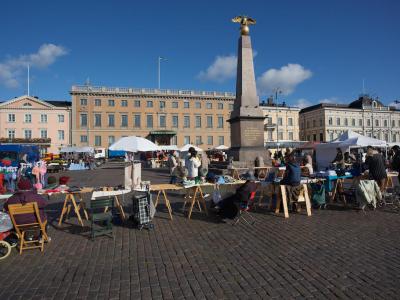
5) Kauppatori (Market Square) (must see)
On the Baltic Sea at the eastern end of the Esplanadi Park likes Market Square. Many local cruises and sightseeing boats depart from the port next to the square in the summer, including the year-round ferry to Suomenlinna Sea Fortress. Many vendors congregate here to sell souvenirs and fresh fish and seafood. Cafes are dotted around the square, and it's a great place to grab a lihapiirakka, a Finnish meat pastry.
The square is the site of the famous annual herring market in October. Many popular sites are located next to Market Square, including the Presidential Palace, Swedish Embassy, and the Helsinki City Hall. The square is a beautiful place to stroll, and the ships in the harbor and vendors selling their goods will take you back to a bygone era.
On the south side of the square, look for the Vanha Kauppahalli, or Old Market Hall. This is a popular shopping spot and a great place to sample local delicacies.
Why You Should Visit:
Fun place to get a taste of Finnish food and try something you haven't eaten before.
Tip:
Do not leave without trying the "neulamuikut" (deep fried whitefish), which is usually served with potatoes and garlic sauce. If you visit when the season for wild berries & mushrooms starts, stop by to stock on some fresh wonderful cloudberries or chanterelles.
The square is the site of the famous annual herring market in October. Many popular sites are located next to Market Square, including the Presidential Palace, Swedish Embassy, and the Helsinki City Hall. The square is a beautiful place to stroll, and the ships in the harbor and vendors selling their goods will take you back to a bygone era.
On the south side of the square, look for the Vanha Kauppahalli, or Old Market Hall. This is a popular shopping spot and a great place to sample local delicacies.
Why You Should Visit:
Fun place to get a taste of Finnish food and try something you haven't eaten before.
Tip:
Do not leave without trying the "neulamuikut" (deep fried whitefish), which is usually served with potatoes and garlic sauce. If you visit when the season for wild berries & mushrooms starts, stop by to stock on some fresh wonderful cloudberries or chanterelles.
