Custom Walk in Panama City, Panama by vashteesingh_9a84c3 created on 2026-05-07
Guide Location: Panama » Panama City
Guide Type: Custom Walk
# of Sights: 15
Tour Duration: 18 Hour(s)
Travel Distance: 49.5 Km or 30.8 Miles
Share Key: Y257E
Guide Type: Custom Walk
# of Sights: 15
Tour Duration: 18 Hour(s)
Travel Distance: 49.5 Km or 30.8 Miles
Share Key: Y257E
How It Works
Please retrieve this walk in the GPSmyCity app. Once done, the app will guide you from one tour stop to the next as if you had a personal tour guide. If you created the walk on this website or come to the page via a link, please follow the instructions below to retrieve the walk in the app.
Retrieve This Walk in App
Step 1. Download the app "GPSmyCity: Walks in 1K+ Cities" on Apple App Store or Google Play Store.



Step 2. In the GPSmyCity app, download(or launch) the guide "Panama City Map and Walking Tours".
Step 3. Tap the menu button located at upper right corner of the "Walks" screen and select "Retrieve custom walk". Enter the share key: Y257E
1) Albrook Mall
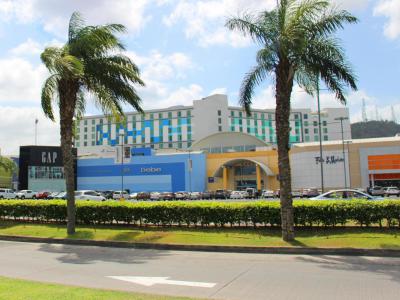
Albrook Mall is a prominent shopping and leisure complex situated in Panama City. Opened in 2002, it stands on the former site of the Albrook Air Force Base, once a United States Air Force installation in the Panama Canal Zone. Notably adjacent to the city's main bus station and the Marcos A. Gelabert domestic airport, its location makes it highly accessible and a central hub for both locals and travelers.
As of July 2022, Albrook Mall was ranked as the 25th largest mall in the world and the second largest in the Americas. The mall boasts around 400 businesses and attracts up to 50,000 visitors daily, including a significant portion (25%) of foreigners. It is a major employment center in the region, providing jobs for about 10,000 people.
The mall's extensive array of facilities includes over 700 stores and restaurants, which are spread across several food courts. Visitors can enjoy a movie theater, bowling alley, supermarket, and even casinos. The food courts feature popular international chains like McDonald's, Dunkin Donuts, Subway, and Quiznos, alongside local chains and independent eateries. The mall regularly hosts events, promotions, and special activities, particularly during holidays and festive seasons, which enhance the shopping and entertainment experience.
As of July 2022, Albrook Mall was ranked as the 25th largest mall in the world and the second largest in the Americas. The mall boasts around 400 businesses and attracts up to 50,000 visitors daily, including a significant portion (25%) of foreigners. It is a major employment center in the region, providing jobs for about 10,000 people.
The mall's extensive array of facilities includes over 700 stores and restaurants, which are spread across several food courts. Visitors can enjoy a movie theater, bowling alley, supermarket, and even casinos. The food courts feature popular international chains like McDonald's, Dunkin Donuts, Subway, and Quiznos, alongside local chains and independent eateries. The mall regularly hosts events, promotions, and special activities, particularly during holidays and festive seasons, which enhance the shopping and entertainment experience.
2) Panama Viejo (Old Panama) (must see)
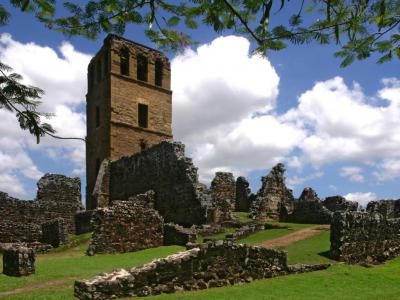
Old Panama (Panama Viejo) is the remaining part of the original Panama City. It served as the former capital of Panama before its destruction in 1671 by the Welsh privateer Henry Morgan. Located in the suburbs of the current capital, it is a site of great historical significance and, together with the historical district of Panama, has been recognized as a UNESCO World Heritage Site since 1997.
The settlement, initially called Castilla del Oro, was established on August 15, 1519, by Pedro Arias Dávila and 100 other settlers. This marked the first permanent European settlement on the Pacific Ocean, replacing the earlier cities of Santa María la Antigüa del Darién and Acla. In 1521, the settlement was elevated to city status by a royal decree from Charles V of Spain, who also granted it a coat of arms, thereby forming a new municipal council (cabildo). Old Panama quickly became a pivotal starting point for expeditions to Peru and an essential hub for the shipment of gold and silver to Spain.
Despite experiencing significant fires in 1539 and 1563, which destroyed parts of the city, Old Panama continued to grow. By 1610, it boasted a population of 5,000, with 500 houses, convents, chapels, a hospital, and a cathedral. However, the city faced multiple attacks from pirates and indigenous people from Darién in the early 17th century. Additionally, a destructive earthquake on May 2, 1620, and the Great Fire of February 21, 1644, which destroyed 83 religious buildings, including the cathedral, were significant setbacks. By this time, the city's population had reached 8,000.
The most catastrophic event in Old Panama's history occurred on January 28, 1671, when Henry Morgan attacked the city with a force of 1,400 men. After defeating the city's militia, Morgan's men sacked Panama. Whether the subsequent fire that destroyed the city was started by Morgan's forces or was a result of an order from Captain General Don Juan Pérez de Guzmán to blow up the gunpowder magazines remains unclear. The attack led to the loss of thousands of lives and necessitated the rebuilding of Panama City a few kilometers to the west at its present location.
Today, Old Panama stands as a symbol of the rich and tumultuous history of Panama. It has also featured in popular culture, serving as a Pit Stop in the 19th season of "The Amazing Race" and hosting a reward feast in the 7th season of the CBS show "Survivor."
The settlement, initially called Castilla del Oro, was established on August 15, 1519, by Pedro Arias Dávila and 100 other settlers. This marked the first permanent European settlement on the Pacific Ocean, replacing the earlier cities of Santa María la Antigüa del Darién and Acla. In 1521, the settlement was elevated to city status by a royal decree from Charles V of Spain, who also granted it a coat of arms, thereby forming a new municipal council (cabildo). Old Panama quickly became a pivotal starting point for expeditions to Peru and an essential hub for the shipment of gold and silver to Spain.
Despite experiencing significant fires in 1539 and 1563, which destroyed parts of the city, Old Panama continued to grow. By 1610, it boasted a population of 5,000, with 500 houses, convents, chapels, a hospital, and a cathedral. However, the city faced multiple attacks from pirates and indigenous people from Darién in the early 17th century. Additionally, a destructive earthquake on May 2, 1620, and the Great Fire of February 21, 1644, which destroyed 83 religious buildings, including the cathedral, were significant setbacks. By this time, the city's population had reached 8,000.
The most catastrophic event in Old Panama's history occurred on January 28, 1671, when Henry Morgan attacked the city with a force of 1,400 men. After defeating the city's militia, Morgan's men sacked Panama. Whether the subsequent fire that destroyed the city was started by Morgan's forces or was a result of an order from Captain General Don Juan Pérez de Guzmán to blow up the gunpowder magazines remains unclear. The attack led to the loss of thousands of lives and necessitated the rebuilding of Panama City a few kilometers to the west at its present location.
Today, Old Panama stands as a symbol of the rich and tumultuous history of Panama. It has also featured in popular culture, serving as a Pit Stop in the 19th season of "The Amazing Race" and hosting a reward feast in the 7th season of the CBS show "Survivor."
3) Global Bank Tower
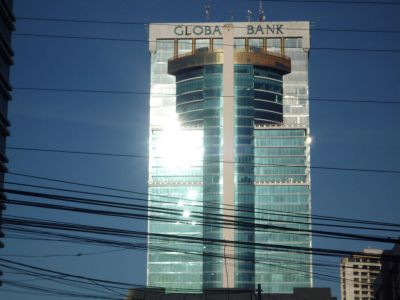
The Global Bank Tower in Panama City is a prominent skyscraper known for its advanced architectural design and significant presence in the city's skyline. Completed in 2005, this high-rise stands at a height of 176 meters and consists of 46 floors above ground and three underground levels, making it one of the tallest buildings in Panama at the time of its construction.
The tower is located in a bustling area renowned for its numerous skyscrapers. The building's location is also notable for its proximity to key sites such as the Embassy of Argentina and Harry Strunz Park, placing it in a strategic position within the city’s banking district.
Global Bank Tower was designed as a smart building, reflecting the height of modernity and luxury in Central America during its construction year. It occupies a lot size of 4,265 square meters, with dimensions of 40 meters by 15 meters. The building's infrastructure includes advanced technological features such as high-speed elevators, full 24-hour security, backup generators, fiber optics data wiring, security cameras, and cell phone signal enhancers for common areas.
The building offers both furnished and unfurnished office spaces, catering to a variety of business needs. Additionally, it includes a business center designed to support smaller operations. For parking, the tower provides three levels dedicated to visitor parking and 11 levels for resident parking, ensuring ample space for both guests and tenants.
The tower is located in a bustling area renowned for its numerous skyscrapers. The building's location is also notable for its proximity to key sites such as the Embassy of Argentina and Harry Strunz Park, placing it in a strategic position within the city’s banking district.
Global Bank Tower was designed as a smart building, reflecting the height of modernity and luxury in Central America during its construction year. It occupies a lot size of 4,265 square meters, with dimensions of 40 meters by 15 meters. The building's infrastructure includes advanced technological features such as high-speed elevators, full 24-hour security, backup generators, fiber optics data wiring, security cameras, and cell phone signal enhancers for common areas.
The building offers both furnished and unfurnished office spaces, catering to a variety of business needs. Additionally, it includes a business center designed to support smaller operations. For parking, the tower provides three levels dedicated to visitor parking and 11 levels for resident parking, ensuring ample space for both guests and tenants.
4) Cinta Costera (must see)
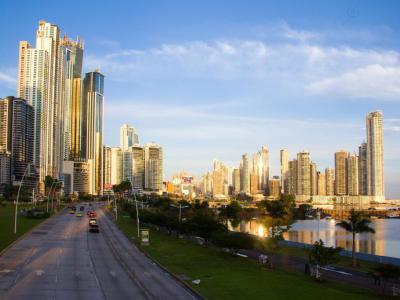
The Cinta Costera, or Coastal Beltway, is the result of a massive land reclamation project. This public oceanfront space is a beautiful addition to downtown Panama City. Tourists and locals alike enjoy the 64 acres of green space.
Visitors will find The Cinta Costera a great place to get some exercise on the bike lanes and running trails. Free workout sessions are offered along The Cinta Costera. Join a Zumba class, yoga session, or try your hand at AeroBox. Join in a game of tennis, volleyball, or basketball and make new friends.
After you've jogged the trails, relax with a picnic in the open space and enjoy views of the city and the bay. Public parties and festivals are often celebrated here. You might join in the Carnival festival or encounter the Pride Parade.
Check out the Seafood Market for the freshest seafood in the city. Watch local fisherman unload their catch and sample different vendor's ceviche.
Cinta Costera is a vibrant location to get some exercise and enjoy the local culture.
Visitors will find The Cinta Costera a great place to get some exercise on the bike lanes and running trails. Free workout sessions are offered along The Cinta Costera. Join a Zumba class, yoga session, or try your hand at AeroBox. Join in a game of tennis, volleyball, or basketball and make new friends.
After you've jogged the trails, relax with a picnic in the open space and enjoy views of the city and the bay. Public parties and festivals are often celebrated here. You might join in the Carnival festival or encounter the Pride Parade.
Check out the Seafood Market for the freshest seafood in the city. Watch local fisherman unload their catch and sample different vendor's ceviche.
Cinta Costera is a vibrant location to get some exercise and enjoy the local culture.
5) Iglesia Santa Ana (Church of Santa Ana)
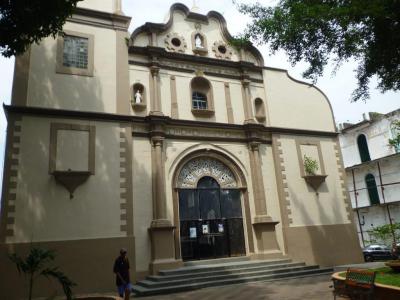
In the center of the city of Panama is located the township of Santa Ana. The town gets its name from the Church of Santa Ana, a shrine dedicated to Santa Ana, who, according to Christian tradition, is the mother of Mary and the grandmother of Jesus. The Church of Santa Ana was initially a parish church. The Count of Santa Ana donated funds to build the church and it was consecrated in 1764. The church was very popular in its early days and attracted a community of humble people all around it. These were the people who were engaged in various trades and the town of Santa Ana grew in reputation as a transit point for many trade routes.
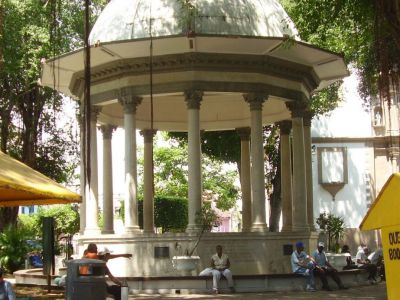
The church was destroyed by fire in the year 1854 and was completely renovated only in the twentieth century. In 1980, the Church of Santa Ana was declared a historic landmark of national importance. Surrounding the church is a park that also goes by the name of the church. The area surrounding the church is far from the main tourist attractions that are in the old part of the city. You can experience a bit of the traditional Panamanian lifestyle with folk festivals, dance and music in a gazebo that is also a national landmark.
The church was destroyed by fire in the year 1854 and was completely renovated only in the twentieth century. In 1980, the Church of Santa Ana was declared a historic landmark of national importance. Surrounding the church is a park that also goes by the name of the church. The area surrounding the church is far from the main tourist attractions that are in the old part of the city. You can experience a bit of the traditional Panamanian lifestyle with folk festivals, dance and music in a gazebo that is also a national landmark.
6) Plaza Santa Ana (Santa Ana Square)
Santa Ana Square (Plaza Santa Ana), located in the historic section of Panama City, is a vibrant and essential destination for both tourists and locals. Historically known as Arrabal in the 19th century, this area was originally outside the city walls, serving as a venue for bullfights and markets. By the 1890s, it transformed into a park, now celebrated for its lush greenery and ample seating areas.
The square is anchored by the beautiful Santa Ana Church, adding a significant cultural and architectural element to the site. Today, Santa Ana Square is a bustling commercial hub characterized by its lively atmosphere. It differs markedly from other parts of Old Town (Casco Viejo), thanks to its dynamic mix of activities and commercial offerings. Visitors frequently gather here, drawn by the combination of relaxation and social interaction opportunities.
Around the square, a variety of hotels offer accommodation, while numerous eateries provide a wide selection of culinary choices. Shoppers can explore an array of stores selling everything from fruits and grains to mobile phones and toys. A notable local favorite is Café Coca-Cola, located adjacent to the park, famous particularly for its breakfast offerings. Santa Ana Square is a perfect spot to immerse in local culture, meet friends, or simply enjoy a leisurely day in an engaging and historic setting.
The square is anchored by the beautiful Santa Ana Church, adding a significant cultural and architectural element to the site. Today, Santa Ana Square is a bustling commercial hub characterized by its lively atmosphere. It differs markedly from other parts of Old Town (Casco Viejo), thanks to its dynamic mix of activities and commercial offerings. Visitors frequently gather here, drawn by the combination of relaxation and social interaction opportunities.
Around the square, a variety of hotels offer accommodation, while numerous eateries provide a wide selection of culinary choices. Shoppers can explore an array of stores selling everything from fruits and grains to mobile phones and toys. A notable local favorite is Café Coca-Cola, located adjacent to the park, famous particularly for its breakfast offerings. Santa Ana Square is a perfect spot to immerse in local culture, meet friends, or simply enjoy a leisurely day in an engaging and historic setting.
7) Iglesia la Merced (Church of Merced)
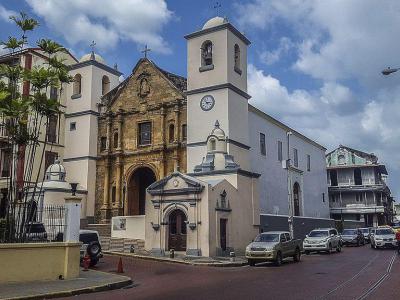
If you are a history lover or want to visit some exquisite historic divine place, Church of Merced is the right place for you. The Church of Merced is a very old church which was constructed way back in 1680 and situated in Casco Antiguo, which is close to Cathedral Park within Panama City. The church is remarkable and its beautiful and intricate Baroque stonework was moved piece by piece from the original site in Panama Viejo which incidentally was the initial city center that the Spaniards had founded.
Although the chapel has undergone renovations recently, its ornate Baroque facade is a classic example of Baroque architecture that is only observed amongst the oldest buildings in Casco Viejo. The church’s Baroque façade squarely faces anyone walking from the North towards it on Avenida Central. Despite the small structure, the stones with which the church is built have an impressive and long history. The church is said to have a better exterior than the interior and that it is best photographed and viewed late in the afternoon. The afternoon sun’s rays provide a sparkling effect on the tiny chapels and the bell towers. This amazing sight makes every tourist’s trip worthwhile and mesmerizing.
A museum that houses documents of historic and religious value lies in close proximity to the church, which incidentally was the site for storing birth and baptism records in Panama City.
Although the chapel has undergone renovations recently, its ornate Baroque facade is a classic example of Baroque architecture that is only observed amongst the oldest buildings in Casco Viejo. The church’s Baroque façade squarely faces anyone walking from the North towards it on Avenida Central. Despite the small structure, the stones with which the church is built have an impressive and long history. The church is said to have a better exterior than the interior and that it is best photographed and viewed late in the afternoon. The afternoon sun’s rays provide a sparkling effect on the tiny chapels and the bell towers. This amazing sight makes every tourist’s trip worthwhile and mesmerizing.
A museum that houses documents of historic and religious value lies in close proximity to the church, which incidentally was the site for storing birth and baptism records in Panama City.
8) Metropolitan Cathedral
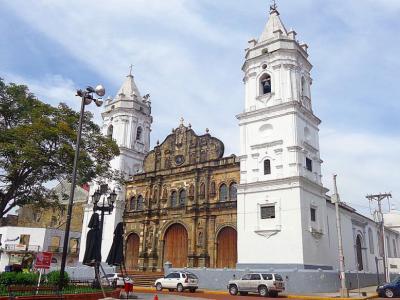
No visit to Panama City’s Old Town feels complete without stopping at the Metropolitan Cathedral of Panama. Construction began in 1688 and stretched over more than a century, with the cathedral finally completed and consecrated in 1796. Over the centuries, the cathedral has endured earthquakes, fires, and periods of decline that affected much of the surrounding city. While neighboring buildings were damaged or replaced during the nineteenth century, the cathedral itself remained standing.
Architecturally, the cathedral is defined by contrast rather than ornament. The central facade, constructed using stone reused from the ruins of Old Panama, appears darker and more subdued. This section is flanked by two lighter-colored bell towers, creating a visual balance. Rather than following a single architectural plan, the cathedral combines elements shaped by different periods of colonial design.
Set into niches on the exterior are wooden statues of saints, including a prominent figure of the Virgin Mary associated with Santa María la Antigua, the patroness of Panama. These figures are later additions and are often mistaken for stone due to their weathered appearance.
Inside, the cathedral reveals a more elaborate interior. The main altarpiece, dating largely to the late nineteenth century, is composed of multiple types of marble combined with gold leaf. It was restored between 2018 and 2019, when the altar was reconsecrated and blessed by Pope Francis during his visit to Panama. Stained-glass windows filter light into the nave, adding color to a space that has witnessed centuries of religious, political, and civic life.
Architecturally, the cathedral is defined by contrast rather than ornament. The central facade, constructed using stone reused from the ruins of Old Panama, appears darker and more subdued. This section is flanked by two lighter-colored bell towers, creating a visual balance. Rather than following a single architectural plan, the cathedral combines elements shaped by different periods of colonial design.
Set into niches on the exterior are wooden statues of saints, including a prominent figure of the Virgin Mary associated with Santa María la Antigua, the patroness of Panama. These figures are later additions and are often mistaken for stone due to their weathered appearance.
Inside, the cathedral reveals a more elaborate interior. The main altarpiece, dating largely to the late nineteenth century, is composed of multiple types of marble combined with gold leaf. It was restored between 2018 and 2019, when the altar was reconsecrated and blessed by Pope Francis during his visit to Panama. Stained-glass windows filter light into the nave, adding color to a space that has witnessed centuries of religious, political, and civic life.
9) Herons' Palace (Presidential Palace)
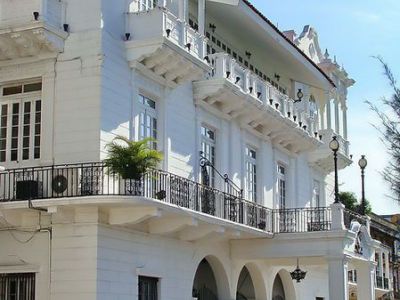
The Herons' Palace occupies one of the most historically significant sites, the original structure dating to 1673, when it was built as a residence for a Spanish colonial judge. Over the following centuries, the building adapted repeatedly to the city’s changing needs, serving at various times as a customs house, warehouse, school, and bank, before gradually evolving into the seat of executive power.
The appearance of the palace today is largely the result of extensive renovations carried out in the early twentieth century, particularly during the presidency of Belisario Porras. These works transformed the building into the official presidential residence and introduced a carefully curated blend of Spanish colonial and Spanish-Moorish architectural elements.
This influence is most clearly visible in the central courtyard, which functions as the architectural and symbolic heart of the palace. Arcaded galleries surround the space, while fountains and shaded walkways reflect Andalusian and Moorish traditions adapted to the tropical climate. The palace takes its popular name from the white herons that move freely through the courtyard. Introduced in 1922 as a gift to President Porras from Panama’s Darién region, the birds have become a living emblem of the building.
Modern additions reflect the palace’s continued use as a working residence. In 1934, an elevator was installed in preparation for the visit of U.S. President Franklin D. Roosevelt, whose mobility required easier access within the building. Today, the palace remains an active center of government. Public access is restricted, but guided visits to selected areas are occasionally offered.
The appearance of the palace today is largely the result of extensive renovations carried out in the early twentieth century, particularly during the presidency of Belisario Porras. These works transformed the building into the official presidential residence and introduced a carefully curated blend of Spanish colonial and Spanish-Moorish architectural elements.
This influence is most clearly visible in the central courtyard, which functions as the architectural and symbolic heart of the palace. Arcaded galleries surround the space, while fountains and shaded walkways reflect Andalusian and Moorish traditions adapted to the tropical climate. The palace takes its popular name from the white herons that move freely through the courtyard. Introduced in 1922 as a gift to President Porras from Panama’s Darién region, the birds have become a living emblem of the building.
Modern additions reflect the palace’s continued use as a working residence. In 1934, an elevator was installed in preparation for the visit of U.S. President Franklin D. Roosevelt, whose mobility required easier access within the building. Today, the palace remains an active center of government. Public access is restricted, but guided visits to selected areas are occasionally offered.
10) Church of Saint Francis of Assisi
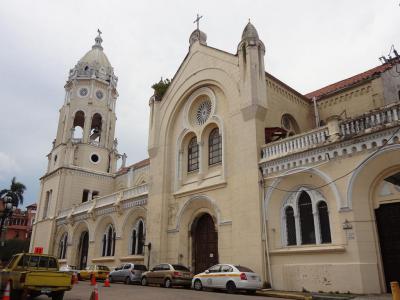
The Church of Saint Francis of Assisi is a Roman Catholic church, holding an important place in the religious and architectural history of the Old Town. The church stands on land that once formed part of the Franciscan convent complex, closely linked to the intellectual and religious life of colonial Panama. The original structures on this site suffered repeated damage, notably during fires in 1737 and 1756, which affected much of the surrounding area. Over time, the church was rebuilt and altered, with major restoration work completed in 1998, giving it the appearance seen today.
Architecturally, the church is characterized by a solid stone structure typical of early colonial religious buildings. Its interior preserves a strong Baroque influence, particularly in the carved wooden altars. These were produced with the involvement of local Indigenous artisans, working under the supervision of Franciscan monks, reflecting the blending of European religious design with regional craftsmanship.
The main altar, composed of finely carved and painted tropical hardwood elements, stands out as one of the church’s most notable features and an important example of colonial religious art in Panama. While restrained on the exterior, the interior reveals a level of decorative detail that rewards closer attention.
Architecturally, the church is characterized by a solid stone structure typical of early colonial religious buildings. Its interior preserves a strong Baroque influence, particularly in the carved wooden altars. These were produced with the involvement of local Indigenous artisans, working under the supervision of Franciscan monks, reflecting the blending of European religious design with regional craftsmanship.
The main altar, composed of finely carved and painted tropical hardwood elements, stands out as one of the church’s most notable features and an important example of colonial religious art in Panama. While restrained on the exterior, the interior reveals a level of decorative detail that rewards closer attention.
11) Plaza de la Independencia (Independence Square)
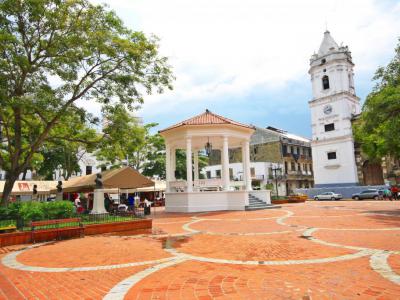
Panama declared its independence from Colombia on 3 November 1903 in what is now known as Independence Square, also called Plaza Mayor or Cathedral Plaza. This space has long functioned as the civic, religious, and symbolic center of the Old Town. As you move across the square today, cafes, small shops, and artisan stalls line the edges.
Along the western side of the square stands the Metropolitan Cathedral of Panama, its white twin bell towers rising above the plaza and forming its most dominant visual landmark. On the northern side, two major museums sit side by side. To the left, the Panama Canal Museum occupies a grand former hotel building. Immediately beside it, to the right, the Panama History Museum offers a broader narrative of the country’s past.
The southern side of the plaza is enclosed by additional colonial-era buildings that once served residential and administrative purposes. Scattered within the plaza are several statues and commemorative monuments, including figures associated with independence and national memory. These sculptures add another layer to the space, reminding visitors that Independence Square is not only defined by the buildings around it, but also by the events and people it continues to honor.
Along the western side of the square stands the Metropolitan Cathedral of Panama, its white twin bell towers rising above the plaza and forming its most dominant visual landmark. On the northern side, two major museums sit side by side. To the left, the Panama Canal Museum occupies a grand former hotel building. Immediately beside it, to the right, the Panama History Museum offers a broader narrative of the country’s past.
The southern side of the plaza is enclosed by additional colonial-era buildings that once served residential and administrative purposes. Scattered within the plaza are several statues and commemorative monuments, including figures associated with independence and national memory. These sculptures add another layer to the space, reminding visitors that Independence Square is not only defined by the buildings around it, but also by the events and people it continues to honor.
12) Iglesia San Jose (Church of San Jose)
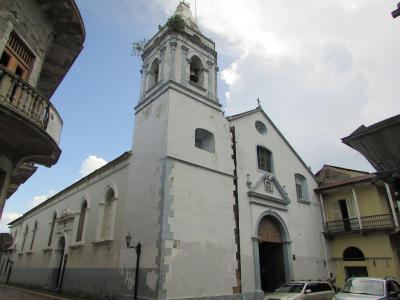
One of the most magnificent places to visit in Panama City is the Church of San Jose, located at Avenida A, near Plaza Herrera, Casco Viejo. The main attraction of this church is the seventeenth century Baroque style Golden Altar, Altar de Oro. The altar was originally located in a temple by the similar name, San Jose. After the pirates had burned down the Old Panama city, the altar was relocated to the new place and entirely renovated in 1915. Carved in mahogany, the altar is covered in golden leaf.
There is an interesting story behind the altar which says that when Henry Morgan, the infamous pirate, attacked Panama Viejo, the priest of the church concealed the golden altar by coloring it black. This was done in order to save this valuable object from being looted by the pirate gang. It also seems that the priest had told Henry Morgan that the altar had been stolen by another pirate and even managed to convince Henry to give a handsome donation to replace the supposedly stolen golden artifact.
When you go to the city of Casco Viejo, you must visit the Church of San Jose, to admire the magnificent golden altar.
There is an interesting story behind the altar which says that when Henry Morgan, the infamous pirate, attacked Panama Viejo, the priest of the church concealed the golden altar by coloring it black. This was done in order to save this valuable object from being looted by the pirate gang. It also seems that the priest had told Henry Morgan that the altar had been stolen by another pirate and even managed to convince Henry to give a handsome donation to replace the supposedly stolen golden artifact.
When you go to the city of Casco Viejo, you must visit the Church of San Jose, to admire the magnificent golden altar.
13) Amador Causeway (must see)
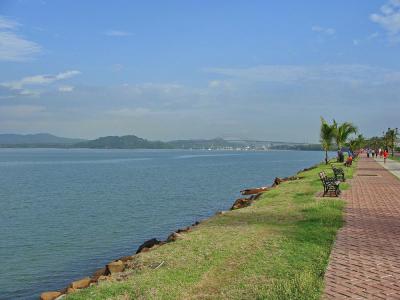
The Amador Causeway, located in Panama City, is a prominent landmark and a hub of recreational and commercial activity. Constructed with rocks excavated during the building of the Panama Canal between 1904 and 1914, the causeway connects the mainland to the four islands of Naos, Perico, Flamenco, and one unnamed island. This 6-kilometer stretch serves as a breakwater at the Pacific entrance of the canal and has transformed significantly since Panama regained control from the U.S.-administered Canal Zone.
Today, the Amador Causeway is adorned with a four-lane road and accompanying bicycle and jogging paths that offer scenic views of Panama City's skyline and the Pacific Ocean. The causeway has seen extensive development, including the establishment of port facilities, marinas, a diverse array of shops, and a variety of restaurants offering cuisines ranging from local Panamanian to international flavors like Arabic, Italian, and Japanese.
The islands, while developed along their edges, still harbor secluded maritime jungles, preserving some of their natural beauty amidst the commercial expansion. The historical significance of the area is highlighted by the remnants of military fortifications dating from the 1920s to the 1980s, originally part of Fort Grant and later Fort Amador, which have been repurposed into commercial spaces such as restaurants and clubs.
For outdoor enthusiasts and tourists, the Amador Causeway provides a plethora of activities. Visitors can engage in walking, jogging, skating, cycling, and renting electric scooters. Water-based activities include kayak and paddle rentals for adventures in the bay. The causeway is also a departure point for trips to nearby Taboga Island and the Las Perlas archipelago.
Cultural and educational experiences are enriched by attractions like the Punta Culebra Natural Center, managed by the Smithsonian Tropical Research Institute, and the Biomuseo. The area also hosts craft centers where local artisans sell their products, adding to the vibrant, multicultural atmosphere of the causeway. The Amador Causeway stands out as one of the most enjoyable outdoor locations in Panama City, blending historical, natural, and modern elements.
Today, the Amador Causeway is adorned with a four-lane road and accompanying bicycle and jogging paths that offer scenic views of Panama City's skyline and the Pacific Ocean. The causeway has seen extensive development, including the establishment of port facilities, marinas, a diverse array of shops, and a variety of restaurants offering cuisines ranging from local Panamanian to international flavors like Arabic, Italian, and Japanese.
The islands, while developed along their edges, still harbor secluded maritime jungles, preserving some of their natural beauty amidst the commercial expansion. The historical significance of the area is highlighted by the remnants of military fortifications dating from the 1920s to the 1980s, originally part of Fort Grant and later Fort Amador, which have been repurposed into commercial spaces such as restaurants and clubs.
For outdoor enthusiasts and tourists, the Amador Causeway provides a plethora of activities. Visitors can engage in walking, jogging, skating, cycling, and renting electric scooters. Water-based activities include kayak and paddle rentals for adventures in the bay. The causeway is also a departure point for trips to nearby Taboga Island and the Las Perlas archipelago.
Cultural and educational experiences are enriched by attractions like the Punta Culebra Natural Center, managed by the Smithsonian Tropical Research Institute, and the Biomuseo. The area also hosts craft centers where local artisans sell their products, adding to the vibrant, multicultural atmosphere of the causeway. The Amador Causeway stands out as one of the most enjoyable outdoor locations in Panama City, blending historical, natural, and modern elements.
14) Biomuseo (must see)
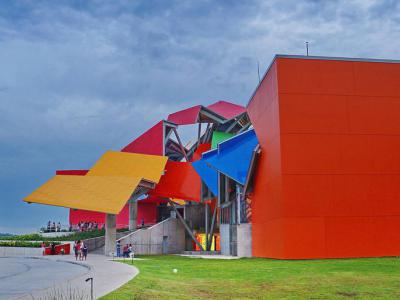
The Biomuseo in Panama City is a striking museum dedicated to the natural and cultural history of the country, particularly focusing on the geological formation and ecological impact of the Isthmus of Panama. Located on the Amador Causeway, a prominent position at the south entrance of the Panama Canal, the museum is a significant cultural landmark designed by the internationally acclaimed architect Frank Gehry. This structure marks Gehry's first architectural venture in Latin America, with its conception dating back to 1999 and its doors opening to the public on October 2, 2014.
Spanning 4,000 square meters, the Biomuseo offers eight permanent galleries, thoughtfully designed by Bruce Mau Design to provide a sequential journey through the natural history of Panama. The initial five galleries, which opened in 2014, include the Gallery of Biodiversity, Panamarama, Building the Bridge, Worlds Collide, and The Human Path. Each of these spaces provides immersive experiences from an introductory panorama of Panama’s biodiversity to interactive displays detailing the creation of the isthmus and its global ecological implications.
In March 2019, the remaining three galleries were introduced, enriching the visitor experience with Oceans Divided, The Living Web, and Panama is the Museum. These exhibits delve deeper into the diverse marine environments created by the separation of the Pacific Ocean and the Caribbean Sea, the interconnectedness of various life forms demonstrated through a living sculpture, and an interactive exploration of Panama's biological and cultural diversity.
The museum complex also includes a public atrium, temporary exhibit spaces, a gift store, a coffee shop, and exterior exhibits set within a botanical garden designed by Edwina von Gal. As a center of learning and cultural engagement, Biomuseo not only celebrates the pivotal role of the Panamanian isthmus in the natural world but also emphasizes the impact of human activity on the environment, urging a reflective consideration of our role in shaping the future of our planet.
Spanning 4,000 square meters, the Biomuseo offers eight permanent galleries, thoughtfully designed by Bruce Mau Design to provide a sequential journey through the natural history of Panama. The initial five galleries, which opened in 2014, include the Gallery of Biodiversity, Panamarama, Building the Bridge, Worlds Collide, and The Human Path. Each of these spaces provides immersive experiences from an introductory panorama of Panama’s biodiversity to interactive displays detailing the creation of the isthmus and its global ecological implications.
In March 2019, the remaining three galleries were introduced, enriching the visitor experience with Oceans Divided, The Living Web, and Panama is the Museum. These exhibits delve deeper into the diverse marine environments created by the separation of the Pacific Ocean and the Caribbean Sea, the interconnectedness of various life forms demonstrated through a living sculpture, and an interactive exploration of Panama's biological and cultural diversity.
The museum complex also includes a public atrium, temporary exhibit spaces, a gift store, a coffee shop, and exterior exhibits set within a botanical garden designed by Edwina von Gal. As a center of learning and cultural engagement, Biomuseo not only celebrates the pivotal role of the Panamanian isthmus in the natural world but also emphasizes the impact of human activity on the environment, urging a reflective consideration of our role in shaping the future of our planet.
15) Miraflores Visitor Center (must see)
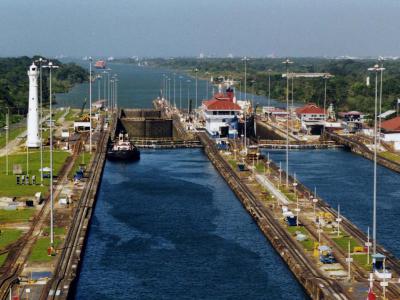
The Miraflores Visitor Center gives visitors insight into the Panama Canal's history and the area's biodiversity and allows front row seating to watch ships move through the canal.
A fabulous IMAX film, Panama Canal: A Land Divided, a World United, is narrated by Morgan Freeman. The movie describes the timeline of the canal from the early 1500s to the present day.
Exhibits describe Panama's natural areas, flora, and fauna. Captains can try out the navigation simulator and see if they have what it takes to pilot a boat through the canal.
If you want to see ships transiting through the locks, the Miraflores Visitor Center is a great place to visit. The Visitor Center has three levels with terraces and observation decks that allow visitors to watch ships transit the canal.
The Atlantic & Pacific Company Restaurant is on the fourth floor of the Visitor Center. This is another excellent place to watch ships transiting the canal. The Restaurant has tasty options for everyone in your group.
Finally, pick out your favorite souvenir at the Gift Shop.
Why You Should Visit:
The Panama Canal provides an essential link between the Caribbean Sea and the Pacific Ocean. It cuts down worldwide shipping times and provides a safer route. Watching mega-tankers move through the canal is a once-in-a-lifetime opportunity, and the Miraflores Visitor Center offers the best vista to witness this engineering feat at work.
Tips:
The best times to visit to watch ships transit are in the morning between 9:00 am, and 11:00 am and in the afternoon between 3:00 pm and 5:00 pm. The canal is busiest during those times.
A fabulous IMAX film, Panama Canal: A Land Divided, a World United, is narrated by Morgan Freeman. The movie describes the timeline of the canal from the early 1500s to the present day.
Exhibits describe Panama's natural areas, flora, and fauna. Captains can try out the navigation simulator and see if they have what it takes to pilot a boat through the canal.
If you want to see ships transiting through the locks, the Miraflores Visitor Center is a great place to visit. The Visitor Center has three levels with terraces and observation decks that allow visitors to watch ships transit the canal.
The Atlantic & Pacific Company Restaurant is on the fourth floor of the Visitor Center. This is another excellent place to watch ships transiting the canal. The Restaurant has tasty options for everyone in your group.
Finally, pick out your favorite souvenir at the Gift Shop.
Why You Should Visit:
The Panama Canal provides an essential link between the Caribbean Sea and the Pacific Ocean. It cuts down worldwide shipping times and provides a safer route. Watching mega-tankers move through the canal is a once-in-a-lifetime opportunity, and the Miraflores Visitor Center offers the best vista to witness this engineering feat at work.
Tips:
The best times to visit to watch ships transit are in the morning between 9:00 am, and 11:00 am and in the afternoon between 3:00 pm and 5:00 pm. The canal is busiest during those times.
