Custom Walk in Bologna, Italy by domnadk7322 created on 2026-05-23
Guide Location: Italy » Bologna
Guide Type: Custom Walk
# of Sights: 7
Tour Duration: 1 Hour(s)
Travel Distance: 2.2 Km or 1.4 Miles
Share Key: GS7CW
Guide Type: Custom Walk
# of Sights: 7
Tour Duration: 1 Hour(s)
Travel Distance: 2.2 Km or 1.4 Miles
Share Key: GS7CW
How It Works
Please retrieve this walk in the GPSmyCity app. Once done, the app will guide you from one tour stop to the next as if you had a personal tour guide. If you created the walk on this website or come to the page via a link, please follow the instructions below to retrieve the walk in the app.
Retrieve This Walk in App
Step 1. Download the app "GPSmyCity: Walks in 1K+ Cities" on Apple App Store or Google Play Store.



Step 2. In the GPSmyCity app, download(or launch) the guide "Bologna Map and Walking Tours".
Step 3. Tap the menu button located at upper right corner of the "Walks" screen and select "Retrieve custom walk". Enter the share key: GS7CW

1) Porta Galliera (Galliera Gate)
Constructed above a Roman thoroughfare, Via Galliera once stood as Bologna's grandest avenue, adorned with elegant arcades and flanked by stately palaces spanning from the 15th to the 18th century. Characterized by terracotta hues, many of the porticoes along this historic street are crafted from recycled Roman and medieval bricks, embellished with intricate decorative motifs in baked clay.
Stretching northward, Via Galliera culminates at the striking Porta Galliera, a gateway that has endured multiple reconstructions, having been demolished and rebuilt five times between 1330 and 1511. Among the various gates delineating Bologna's ancient boundaries and the remnants of its original walls, which have since been dismantled, Galliera reigns as the most opulent and elaborate. Initially integrated into the medieval fortifications safeguarding the city, its current iteration, dating back to the 1660s, showcases a grand Baroque style, commanding attention within Piazza XX Septembrie.
Stretching northward, Via Galliera culminates at the striking Porta Galliera, a gateway that has endured multiple reconstructions, having been demolished and rebuilt five times between 1330 and 1511. Among the various gates delineating Bologna's ancient boundaries and the remnants of its original walls, which have since been dismantled, Galliera reigns as the most opulent and elaborate. Initially integrated into the medieval fortifications safeguarding the city, its current iteration, dating back to the 1660s, showcases a grand Baroque style, commanding attention within Piazza XX Septembrie.
2) Parco della Montagnola (Montagnola Park)
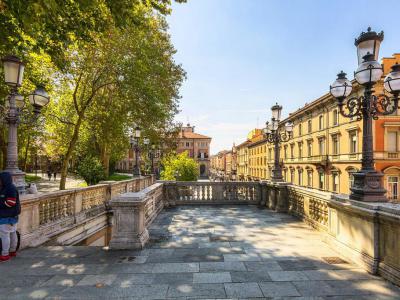
Montagnola stands as the city's oldest garden, cherished as a favored spot for leisurely strolls and as a picturesque setting for a myriad of events, games, and sports activities throughout the ages. Since 1662, this raised plateau, once designated for waste disposal during medieval times, has welcomed the public. Initially featuring vegetable patches and mulberry groves, it gradually transformed to include spacious pathways and a central square for visitors' enjoyment.
The garden's present layout, dating back to the early 1800s, was conceived under the direction of G. B. Martinetti, influenced by the geometric patterns found in French gardens, at the insistence of Napoleon. In 1896, the Montagnola was further embellished with a grand monumental staircase, offering views of the old gate and the remnants of the ancient Galliera fortress. Following this, a circular basin, adorned with sculptural works by Diego Sarti, originally commissioned for the Margherita Gardens during the Emiliana Exposition of 1888, was installed at the garden's heart.
Among the lush greenery of this 6-hectare expanse, the majestic canopies of several monumental plane trees, dating back to the Napoleonic era, catch the eye.
The garden's present layout, dating back to the early 1800s, was conceived under the direction of G. B. Martinetti, influenced by the geometric patterns found in French gardens, at the insistence of Napoleon. In 1896, the Montagnola was further embellished with a grand monumental staircase, offering views of the old gate and the remnants of the ancient Galliera fortress. Following this, a circular basin, adorned with sculptural works by Diego Sarti, originally commissioned for the Margherita Gardens during the Emiliana Exposition of 1888, was installed at the garden's heart.
Among the lush greenery of this 6-hectare expanse, the majestic canopies of several monumental plane trees, dating back to the Napoleonic era, catch the eye.
3) Finestrella (Small Window)
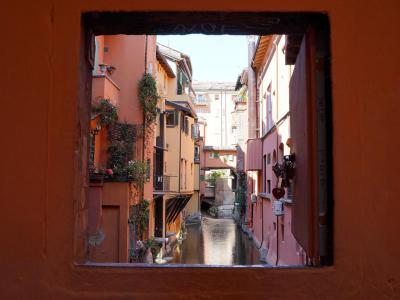
A small window on Piella Street offers a lovely and rare peek at Bologna's lost canals. Unlike Venice, where the famous canals and glamorous gondola rides are everywhere, Bologna's historic waterways are much easier to miss. This is mainly because many of them were covered over time, with roads and buildings built on top, hiding these medieval channels from view.
Back in the 12th century, canals were constructed on Bologna’s major rivers, the Savena and Reno. They had a sophisticated system of locks and pipes, stretching over 37 miles. These canals were essential for silk manufacturing and trade, making Bologna a major hub for silk, tobacco, and flour.
Many of the canals were used for transporting goods and people. However, as the economy evolved, most of the canal system was covered with roads and parking lots, especially after World War II.
Today, the best spot to see one of the few remaining sections of these historic canals is through the Small “Canal Window” on Piella Street. From this unassuming street, you can look out over a part of Mill Canal. The water flows between brightly colored houses on one side and unpainted brick walls on the other. It's a quaint and picturesque sight, making the Small Window a popular spot for visitors.
Many locals didn't know this canal still existed and thought all of them had been closed. Even though you can see the canal from the bigger street, the window view is much better.
Back in the 12th century, canals were constructed on Bologna’s major rivers, the Savena and Reno. They had a sophisticated system of locks and pipes, stretching over 37 miles. These canals were essential for silk manufacturing and trade, making Bologna a major hub for silk, tobacco, and flour.
Many of the canals were used for transporting goods and people. However, as the economy evolved, most of the canal system was covered with roads and parking lots, especially after World War II.
Today, the best spot to see one of the few remaining sections of these historic canals is through the Small “Canal Window” on Piella Street. From this unassuming street, you can look out over a part of Mill Canal. The water flows between brightly colored houses on one side and unpainted brick walls on the other. It's a quaint and picturesque sight, making the Small Window a popular spot for visitors.
Many locals didn't know this canal still existed and thought all of them had been closed. Even though you can see the canal from the bigger street, the window view is much better.
4) Due Torri (Two Towers: Asinelli and Garisenda) (must see)
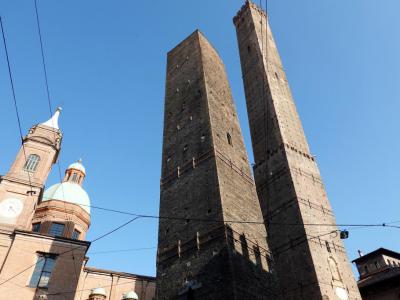
Dominating the scene at Piazza di Porta Ravegnana, where the main gate of the Roman walls once stood, are the iconic Two Towers, emblematic of Bologna's medieval past when the city boasted around 120 such structures. Dating back to the 12th century, these likely served as both lookout points and symbols of prestige. Legend has it that the Asinelli and Garisenda families, engaged in a fierce competition to erect the tallest and most magnificent tower in the city.
For a taste of history and panoramic vistas over the terracotta rooftops, brave the ascent to the top of the Asinelli Tower, rising over 97 meters (318 feet) high. Though the climb is steep, navigating a narrow spiral staircase of nearly 500 steps, the reward is well worth the effort. From the summit, you can spot other surviving medieval towers and, weather permitting, catch a glimpse of the Alpine foothills beyond Verona. Like many of Bologna's towers, both the Two Towers have a noticeable tilt: Garisenda tilts 3.33 meters (11 feet) northeast, while Asinelli leans 2.23 meters (7.3 feet) westward. Originally reaching 60 meters (197 feet), Garisenda was truncated by 12 meters (39 feet) in the mid-14th century due to unstable foundations; however, from certain angles, the two towers appear to be of equal height. Dante, who briefly sojourned in Bologna during his exile from Florence, famously referenced the leaning tower in "The Inferno" (before its reduction), likening it to the bent figure of Antaeus, the giant son of Poseidon, trapped in ice at the depths of hell.
Beneath the towers, yet not overshadowed, stands the 17th-century Saint Bartholomew's Church, featuring a Renaissance portico. Inside, seek out Francesco Albani's "Annunciation" in the fourth chapel of the south aisle, and Guido Reni's small "Madonna with Child" in the north transept. On the square's north side, the abrupt appearance of a starkly modern office building sparked controversy in the 1950s.
For a taste of history and panoramic vistas over the terracotta rooftops, brave the ascent to the top of the Asinelli Tower, rising over 97 meters (318 feet) high. Though the climb is steep, navigating a narrow spiral staircase of nearly 500 steps, the reward is well worth the effort. From the summit, you can spot other surviving medieval towers and, weather permitting, catch a glimpse of the Alpine foothills beyond Verona. Like many of Bologna's towers, both the Two Towers have a noticeable tilt: Garisenda tilts 3.33 meters (11 feet) northeast, while Asinelli leans 2.23 meters (7.3 feet) westward. Originally reaching 60 meters (197 feet), Garisenda was truncated by 12 meters (39 feet) in the mid-14th century due to unstable foundations; however, from certain angles, the two towers appear to be of equal height. Dante, who briefly sojourned in Bologna during his exile from Florence, famously referenced the leaning tower in "The Inferno" (before its reduction), likening it to the bent figure of Antaeus, the giant son of Poseidon, trapped in ice at the depths of hell.
Beneath the towers, yet not overshadowed, stands the 17th-century Saint Bartholomew's Church, featuring a Renaissance portico. Inside, seek out Francesco Albani's "Annunciation" in the fourth chapel of the south aisle, and Guido Reni's small "Madonna with Child" in the north transept. On the square's north side, the abrupt appearance of a starkly modern office building sparked controversy in the 1950s.
5) Complesso di Santo Stefano (St. Stephen's Complex) (must see)
Navigating through this ecclesiastical maze, a pilgrimage through Bologna's holiest sites, demands patience and time. Originally a complex of seven churches, akin to Jerusalem's architecture, it is known as Le Sette Chiese ("the Seven Churches"), though only four endure today. Dating back to the 5th century, Santo Stefano may have been established by Bishop Petronius as his cathedral atop a former pagan temple site; by the 10th century, however, it evolved into a Benedictine sanctuary. The complex is still overseen by stern Benedictines, one of whom reveals: "Dante often came here to meditate in 1287, but we are inclusive - even local prostitutes come here."
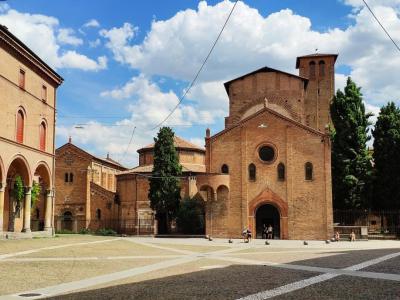
The interconnected churches and courtyards, including the Benedictine cloisters, create a harmonious ensemble. From the picturesque square, the larger church on the right is the Church of the Crucifix ("Chiesa del Crocifisso"), the central one is the Basilica of "San Sepolcro", modeled after Jerusalem's Holy Sepulchre, and on the left stands Santi Vitale e Agricola, Bologna's oldest church.
Enter through the Church of the Crucifix, originally Lombard but extensively renovated. Ascend a central staircase to the Presbytery, then descend to a graceful crypt housing relics of early Bolognese martyrs Vitale and Agricola. A door on the left leads to the Basilica of the Holy Sepulchre, a unique polygonal structure surrounded by ancient columns.
Bathed in mystical light, the 11th-century Santi Vitale e Agricola captivates with its Romanesque Lombard simplicity. Adjacent is Pilate's Courtyard ("Cortile di Pilato"), featuring a marble basin erroneously attributed to Pontius Pilate, while beyond lies the mysterious Martyrium, a transverse church illuminated by niches, including one displaying a sculpted scene by Bolognese artist Simone de' Crocifissi.
The peaceful Benedictine cloister features two tiers of loggias and houses a small museum of early Bolognese paintings and reliquaries, along with a shop offering liqueurs and lotions produced by the monks.
The interconnected churches and courtyards, including the Benedictine cloisters, create a harmonious ensemble. From the picturesque square, the larger church on the right is the Church of the Crucifix ("Chiesa del Crocifisso"), the central one is the Basilica of "San Sepolcro", modeled after Jerusalem's Holy Sepulchre, and on the left stands Santi Vitale e Agricola, Bologna's oldest church.
Enter through the Church of the Crucifix, originally Lombard but extensively renovated. Ascend a central staircase to the Presbytery, then descend to a graceful crypt housing relics of early Bolognese martyrs Vitale and Agricola. A door on the left leads to the Basilica of the Holy Sepulchre, a unique polygonal structure surrounded by ancient columns.
Bathed in mystical light, the 11th-century Santi Vitale e Agricola captivates with its Romanesque Lombard simplicity. Adjacent is Pilate's Courtyard ("Cortile di Pilato"), featuring a marble basin erroneously attributed to Pontius Pilate, while beyond lies the mysterious Martyrium, a transverse church illuminated by niches, including one displaying a sculpted scene by Bolognese artist Simone de' Crocifissi.
The peaceful Benedictine cloister features two tiers of loggias and houses a small museum of early Bolognese paintings and reliquaries, along with a shop offering liqueurs and lotions produced by the monks.
6) Piazza Maggiore (Main Square) (must see)
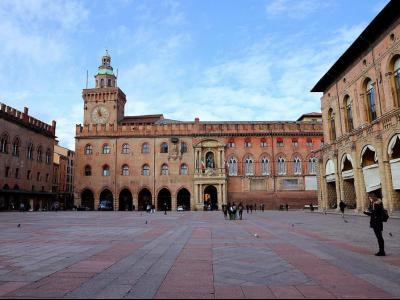
On a sunny day, there's no better place to be than soaking up the atmosphere at café tables in Bologna's Main Square, known as "Piazza Maggiore", or lounging on the steps under the arcades. This historic square, one of the oldest in Italy, underwent expansion in the 14th century and saw the addition of many grand buildings in the 16th century.
At its heart stands the impressive yet incomplete Basilica of San Petronio, a beloved landmark among locals. Nearby, you'll find notable structures such as the Municipal Palace, Notaries' Palace, Podesta Palace, and the Palace of the Banks. Adorning the center of the square is Giambologna's renowned statue of Neptune.
The slightly raised platform in the middle, familiarly known as the "crescentone" after the local flat bread "crescente" it resembles, holds historical significance. Damaged by Allied tanks during the liberation of Bologna in 1945, it serves as a commemoration of that historic day. In July and August, the space transforms into one of Italy's largest outdoor cinemas during the Under the Stars of Cinema ("Sotto le stelle del Cinema") film festival, with over 3,000 chairs arranged on the "crescentone", solidifying its status as the cultural heart of the city.
Tip:
For visitors seeking convenience, the excellent tourist office on the square offers the Bologna Welcome Card, providing excellent value by offering free admission to many city museums and attractions, as well as discounts for shops, restaurants, and events.
At its heart stands the impressive yet incomplete Basilica of San Petronio, a beloved landmark among locals. Nearby, you'll find notable structures such as the Municipal Palace, Notaries' Palace, Podesta Palace, and the Palace of the Banks. Adorning the center of the square is Giambologna's renowned statue of Neptune.
The slightly raised platform in the middle, familiarly known as the "crescentone" after the local flat bread "crescente" it resembles, holds historical significance. Damaged by Allied tanks during the liberation of Bologna in 1945, it serves as a commemoration of that historic day. In July and August, the space transforms into one of Italy's largest outdoor cinemas during the Under the Stars of Cinema ("Sotto le stelle del Cinema") film festival, with over 3,000 chairs arranged on the "crescentone", solidifying its status as the cultural heart of the city.
Tip:
For visitors seeking convenience, the excellent tourist office on the square offers the Bologna Welcome Card, providing excellent value by offering free admission to many city museums and attractions, as well as discounts for shops, restaurants, and events.
7) Fontana del Nettuno (Fountain of Neptune) (must see)
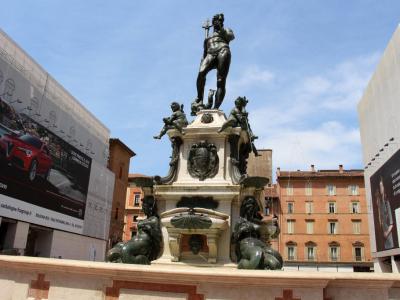
Adjacent to the historic King Enzo Palace ("Palazzo Re Enzo"), in the lively square bearing his name, proudly stands the Fountain of Neptune ("Fontana del Nettuno"), a masterpiece crafted by Giambologna in 1556. Born Jean Boulogne in Flanders, this sculptor found his creative groove in Florence; however, it was his aquatic masterpiece in Bologna that truly made waves.
At the heart of the fountain reigns a colossal Neptune (dubbed 'Il Gigante'), flanked by cherubs and four luscious sirens astride dolphins, playfully spouting water from, shall we say, unconventional sources. Initially causing quite the stir with its unabashed nudity, the statue eventually won over censorship, becoming a symbol of irreverence cherished by the locals who revel in uncovering the most strategic vantage points to admire Neptune's, ahem, commanding presence.
To accommodate the fountain, an entire city block was razed, making space for its imposing presence. Its base is covered with Verona marble, while each dolphin symbolizes prominent rivers of the era: the Ganges, Nile, Amazon, and Danube, while Neptune, in all his grandeur, reigns over the seas, symbolizing the Pope's dominion over Bologna and beyond.
At the heart of the fountain reigns a colossal Neptune (dubbed 'Il Gigante'), flanked by cherubs and four luscious sirens astride dolphins, playfully spouting water from, shall we say, unconventional sources. Initially causing quite the stir with its unabashed nudity, the statue eventually won over censorship, becoming a symbol of irreverence cherished by the locals who revel in uncovering the most strategic vantage points to admire Neptune's, ahem, commanding presence.
To accommodate the fountain, an entire city block was razed, making space for its imposing presence. Its base is covered with Verona marble, while each dolphin symbolizes prominent rivers of the era: the Ganges, Nile, Amazon, and Danube, while Neptune, in all his grandeur, reigns over the seas, symbolizing the Pope's dominion over Bologna and beyond.
