

Fontana del Nettuno (Fountain of Neptune), Bologna (must see)
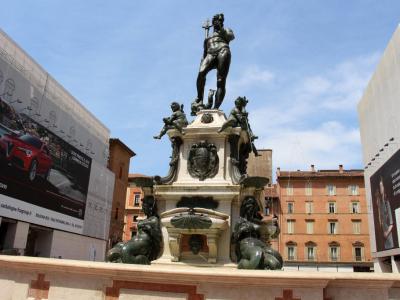
Standing between Neptune Square and Main Square, beside the medieval King Enzo Palace, the Fountain of Neptune is one of Bologna’s most recognizable Renaissance monuments. It was created between 1563 and 1566 after part of the existing city block was cleared to provide a suitably spacious setting. Architect Tommaso Laureti designed the fountain, while its elaborate bronze figures were made by Giambologna, the Flemish-born sculptor originally named Jean Boulogne, who developed much of his career in Florence. This ambitious commission helped establish his reputation as one of the leading sculptors of the late Renaissance.
Direct your gaze up to the top level of the monument to inspect the main figure. At the center rises the colossal figure of Neptune, affectionately known to Bolognese residents as "the Giant.'' The Roman god of the sea stands in a commanding pose above a basin faced with Verona marble, extending one hand as though calming the waters beneath him. The image was intended as a political allegory: just as Neptune ruled the seas, Pope Pius IV claimed authority over Bologna and the wider territories of the Church.
Next up, shift your focus downward to the base and perimeter of the stone pedestal. Walk around the fountain to examine its lively supporting figures. Four cherubs represent the winds, while four bronze female figures, often described as nereids or sirens, sit astride dolphins and spout water from their breasts. They traditionally symbolize four major rivers known to Europeans at the time-the Ganges, Nile, La Plata, and Danube-and therefore four parts of the known world.
A popular local legend concerns Neptune’s anatomy. Giambologna was reportedly prevented from making one feature of the statue as prominent as he wished, so he created an optical illusion instead. Stand on the specially marked paving stone near the entrance to Salaborsa Library and look toward Neptune from behind: from this carefully chosen angle, the extended thumb appears as a phallic projection from the figure’s lower body.
The fountain is best appreciated by circling it slowly, observing the contrast between Neptune’s solemn authority and the playful cherubs, dolphins, and water-spouting figures below.
Direct your gaze up to the top level of the monument to inspect the main figure. At the center rises the colossal figure of Neptune, affectionately known to Bolognese residents as "the Giant.'' The Roman god of the sea stands in a commanding pose above a basin faced with Verona marble, extending one hand as though calming the waters beneath him. The image was intended as a political allegory: just as Neptune ruled the seas, Pope Pius IV claimed authority over Bologna and the wider territories of the Church.
Next up, shift your focus downward to the base and perimeter of the stone pedestal. Walk around the fountain to examine its lively supporting figures. Four cherubs represent the winds, while four bronze female figures, often described as nereids or sirens, sit astride dolphins and spout water from their breasts. They traditionally symbolize four major rivers known to Europeans at the time-the Ganges, Nile, La Plata, and Danube-and therefore four parts of the known world.
A popular local legend concerns Neptune’s anatomy. Giambologna was reportedly prevented from making one feature of the statue as prominent as he wished, so he created an optical illusion instead. Stand on the specially marked paving stone near the entrance to Salaborsa Library and look toward Neptune from behind: from this carefully chosen angle, the extended thumb appears as a phallic projection from the figure’s lower body.
The fountain is best appreciated by circling it slowly, observing the contrast between Neptune’s solemn authority and the playful cherubs, dolphins, and water-spouting figures below.
Want to visit this sight? Check out these Self-Guided Walking Tours in Bologna. Alternatively, you can download the mobile app "GPSmyCity: Walks in 1K+ Cities" from Apple App Store or Google Play Store. The app turns your mobile device to a personal tour guide and it works offline, so no data plan is needed when traveling abroad.
Download The GPSmyCity App



Fontana del Nettuno (Fountain of Neptune) on Map
Sight Name: Fontana del Nettuno (Fountain of Neptune)
Sight Location: Bologna, Italy (See walking tours in Bologna)
Sight Type: Attraction/Landmark
Guide(s) Containing This Sight:
Sight Location: Bologna, Italy (See walking tours in Bologna)
Sight Type: Attraction/Landmark
Guide(s) Containing This Sight:
Nearby Sights

Walking Tours in Bologna, Italy

Create Your Own Walk in Bologna
Creating your own self-guided walk in Bologna is easy and fun. Choose the city attractions that you want to see and a walk route map will be created just for you. You can even set your hotel as the start point of the walk.
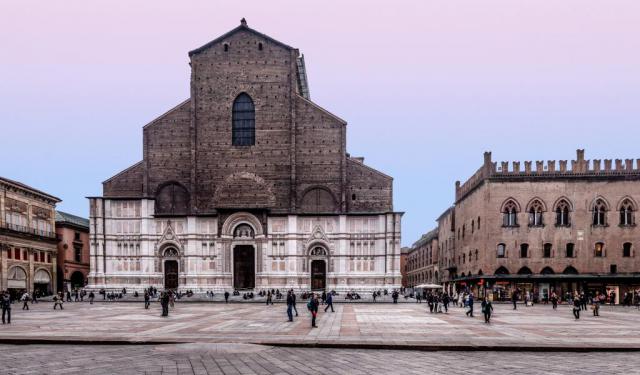
Historical Churches
The historic city of Bologna is one of the most sumptuous medieval places in Italy, as well as one of the country's most visited destinations. There are churches everywhere in the city, many of which are well-preserved and well worth a visit. Magnificent and centuries-old, each of them has its own specialty and history carved into, replete with great historic artifacts associated with world... view more
Tour Duration: 1 Hour
Travel Distance: 2.2 Km or 1.4 Miles
Tour Duration: 1 Hour
Travel Distance: 2.2 Km or 1.4 Miles
Bologna Palaces
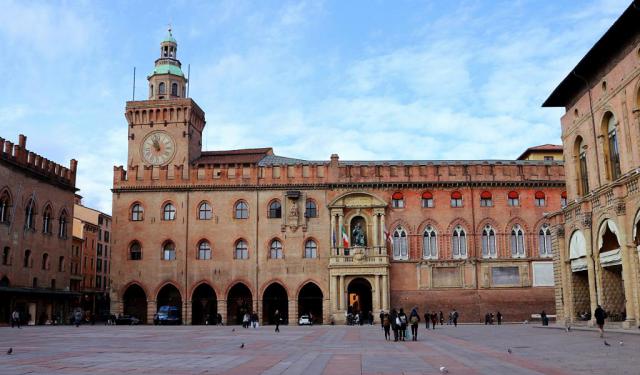
English writer Charles Dickens found “a grave and learned air” in Bologna-an impression that still lingers beneath the arches of its medieval palaces.
Bologna’s palaces are more than impressive historic buildings. Together, they form a record of how the city was governed, administered, and enriched over many centuries. Their walls reflect the changing ambitions of civic officials,... view more
Tour Duration: 1 Hour
Travel Distance: 1.4 Km or 0.9 Miles
Bologna’s palaces are more than impressive historic buildings. Together, they form a record of how the city was governed, administered, and enriched over many centuries. Their walls reflect the changing ambitions of civic officials,... view more
Tour Duration: 1 Hour
Travel Distance: 1.4 Km or 0.9 Miles
Bologna's Shopping Areas
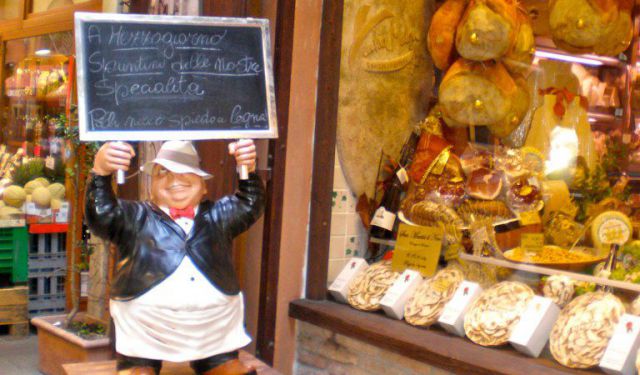
When it comes to shopping, Bologna walks tall amid grands like Milan or Rome, with a harmonious mix of international chains, exclusive boutiques, luxury stores and open-air markets lining the streets in the city center, offering a wealth of international fashion, designer brands and top quality local delicacies in rich supply.
Shopping here is particularly pleasant on weekends when Zone... view more
Tour Duration: 1 Hour
Travel Distance: 0.8 Km or 0.5 Miles
Shopping here is particularly pleasant on weekends when Zone... view more
Tour Duration: 1 Hour
Travel Distance: 0.8 Km or 0.5 Miles
Exploring Bologna Historic Center on Foot
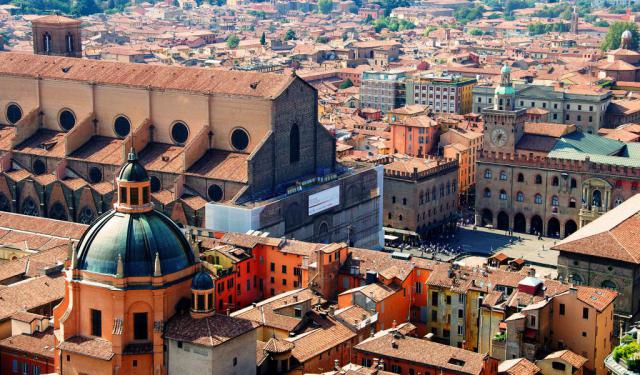
Bologna is one of Italy’s oldest and most historically significant cities, shaped by more than two thousand years of political, cultural, and intellectual development.
Around the 3rd century BC, the Romans conquered the Po valley area and established the colony of Bononia in 189 BC. The name is generally believed to derive from the Celtic root bon, meaning “settlement” or “fortified... view more
Tour Duration: 2 Hours
Travel Distance: 2.3 Km or 1.4 Miles
Around the 3rd century BC, the Romans conquered the Po valley area and established the colony of Bononia in 189 BC. The name is generally believed to derive from the Celtic root bon, meaning “settlement” or “fortified... view more
Tour Duration: 2 Hours
Travel Distance: 2.3 Km or 1.4 Miles