Custom Walk in Riga, Latvia by maxinewhittaker34_5d9ec5 created on 2026-05-26
Guide Location: Latvia » Riga
Guide Type: Custom Walk
# of Sights: 13
Tour Duration: 3 Hour(s)
Travel Distance: 5.3 Km or 3.3 Miles
Share Key: UMCFZ
Guide Type: Custom Walk
# of Sights: 13
Tour Duration: 3 Hour(s)
Travel Distance: 5.3 Km or 3.3 Miles
Share Key: UMCFZ
How It Works
Please retrieve this walk in the GPSmyCity app. Once done, the app will guide you from one tour stop to the next as if you had a personal tour guide. If you created the walk on this website or come to the page via a link, please follow the instructions below to retrieve the walk in the app.
Retrieve This Walk in App
Step 1. Download the app "GPSmyCity: Walks in 1K+ Cities" on Apple App Store or Google Play Store.



Step 2. In the GPSmyCity app, download(or launch) the guide "Riga Map and Walking Tours".
Step 3. Tap the menu button located at upper right corner of the "Walks" screen and select "Retrieve custom walk". Enter the share key: UMCFZ
1) Alberta Iela (Albert Street) (must see)
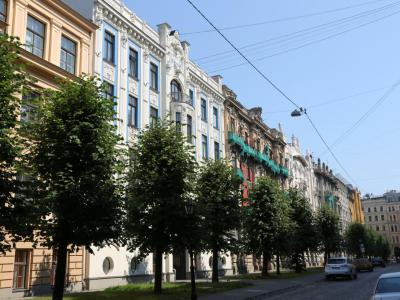
Albert Street (Alberta Iela) in Riga is renowned for its striking collection of Art Nouveau architecture, making it one of the city's most distinguished and visually compelling streets. Constructed between 1901 and 1908, the street is named after Bishop Albert, who is credited with founding Riga in 1201. This connection to the city’s historical roots is celebrated with the street’s name and its architectural grandeur.
The street's most prominent architectural contributions come from Mikhail Eisenstein, a preeminent architect of the early 20th century, known for his extravagant and decorative designs. Eisenstein's works on Alberta Street, including buildings at numbers 2, 2a, 4, 6, and 8, showcase his unique style characterized by romantic nationalism-a theme prevalent in northern European architecture at the time. These buildings are adorned with elaborate sculptures, intricate balconies, and ornate columns that epitomize the Art Nouveau aesthetic.
Other notable architects who contributed to the architectural landscape of Albert Street include Konstantīns Pēkšēns and his pupil Eižens Laube, as well as Baltic and Baltic German architects such as Paul Mandelstamm, Hermann Hilbig, and Heinrich Scheel. Pēkšēns' residence at number 12 now serves as the Riga Art Nouveau Museum, which opened in April 2009 and offers insights into the style and its elements.
In addition to its architectural significance, Alberta Street is a center of academic and diplomatic activity. It houses several institutions of higher education such as the Stockholm School of Economics in Riga, the Riga Graduate School of Law, and the College of Business Administration. Diplomatic missions for Belgium and Ireland are also located here, adding an international dimension to the street.
The entirety of Alberta Street is a testament to the creativity and innovation of the Art Nouveau movement. Eight of the buildings along the street are recognized as architectural monuments of national significance, underscoring their importance in the architectural and cultural heritage of Riga. As a living museum of Art Nouveau, Alberta Street offers both residents and visitors a chance to step back in time and experience the grandeur of early 20th-century European art and architecture.
The street's most prominent architectural contributions come from Mikhail Eisenstein, a preeminent architect of the early 20th century, known for his extravagant and decorative designs. Eisenstein's works on Alberta Street, including buildings at numbers 2, 2a, 4, 6, and 8, showcase his unique style characterized by romantic nationalism-a theme prevalent in northern European architecture at the time. These buildings are adorned with elaborate sculptures, intricate balconies, and ornate columns that epitomize the Art Nouveau aesthetic.
Other notable architects who contributed to the architectural landscape of Albert Street include Konstantīns Pēkšēns and his pupil Eižens Laube, as well as Baltic and Baltic German architects such as Paul Mandelstamm, Hermann Hilbig, and Heinrich Scheel. Pēkšēns' residence at number 12 now serves as the Riga Art Nouveau Museum, which opened in April 2009 and offers insights into the style and its elements.
In addition to its architectural significance, Alberta Street is a center of academic and diplomatic activity. It houses several institutions of higher education such as the Stockholm School of Economics in Riga, the Riga Graduate School of Law, and the College of Business Administration. Diplomatic missions for Belgium and Ireland are also located here, adding an international dimension to the street.
The entirety of Alberta Street is a testament to the creativity and innovation of the Art Nouveau movement. Eight of the buildings along the street are recognized as architectural monuments of national significance, underscoring their importance in the architectural and cultural heritage of Riga. As a living museum of Art Nouveau, Alberta Street offers both residents and visitors a chance to step back in time and experience the grandeur of early 20th-century European art and architecture.
2) Alberta Iela (Albert Street) 1
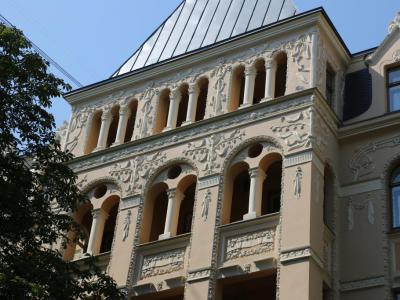
Albert Street 1 is one of the first ever Art Nouveau buildings constructed in Riga. This house dates back to 1901 and marks a transition from Eclecticism to Jugendstil. The architects, Heinrich Karl Scheel and August Friedrich Sheffel, of the legendary “Šēls un Šefels” (Scheel & Scheffel) construction firm, were among the city's Art Nouveau pioneers.
Lately, the building has regained its original splendor – the decorative elements in both the apartments and stairwells, as well as on the façades, have been carefully restored.
The tasteful refinement and testimony to the affluence of the façade – richly adorned with multiple reliefs, featuring Art Nouveau ornamental expression, complete with the ceiling ornaments and cut glass – form one of the most beautiful monuments to the residents of Riga at the dawn of the 20th century. Among those who lived here once was the Latvian writer Zenta Mauriņa.
Today, the property is included in both the UNESCO World Heritage list and the State Architectural Monument list.
Lately, the building has regained its original splendor – the decorative elements in both the apartments and stairwells, as well as on the façades, have been carefully restored.
The tasteful refinement and testimony to the affluence of the façade – richly adorned with multiple reliefs, featuring Art Nouveau ornamental expression, complete with the ceiling ornaments and cut glass – form one of the most beautiful monuments to the residents of Riga at the dawn of the 20th century. Among those who lived here once was the Latvian writer Zenta Mauriņa.
Today, the property is included in both the UNESCO World Heritage list and the State Architectural Monument list.
3) Elizabetes Iela (Elizabeth Street) 10A and 10B
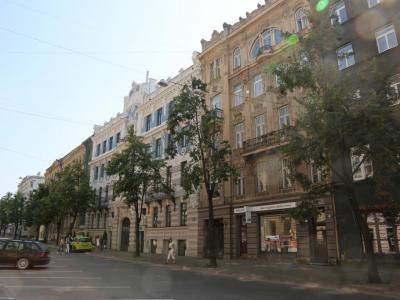
Standing next to one another, at the corner of Elizabetes and Antonijas streets, are the two of Mikhail Eisenstein’s most iconic buildings in Riga. Completed in 1903, they are perhaps also the most recognized pearls of local Art Nouveau.
Although Konstantīns Pēkšēns was the initial mastermind behind this project, it is Eisenstein who eventually took it over and is credited for adding to the typically eclectic design of 10A building an unusually extravagant façade (complete with colorful set of Art Nouveau ornamentation).
Among other elements seen on the façade is the impressive, large window aperture in the shape of a keyhole on the upper floor. Another distinctive feature, intertwined in several decorative elements, is the stylized carriage spring motif. This was Eisenstein’s subtle way of mentioning his day job at that time – as the head of the Public Transport Department in the Vidzeme province.
The 10B building next door (once an apartment house with shops, belonging to the State Councillor Andrey Lebedinsky) is also rich in ornamentation. Dressed in blue ceramic tiles, the façade on two upper floors here offers a wonderful background for stucco decoration: masks, peacocks, sculptured heads and geometric figures. The monumental mascarons, rising two floors high above the central avant corps, complete the sumptuous attic.
The façade's design was based on the sketch made by the Leipzig architect Georg Wünschmann and artist Hans Kozel, published previously in Saint Petersburg.
The incredibly long female faces seen at the top of 10B (whose expressions seem to make anyone ruminate the meaning of life) are among the most photographed sights in Riga. Equally impressive in this respect are the oddly-shaped windows and smiling sun face under the balcony at 10A.
Although Konstantīns Pēkšēns was the initial mastermind behind this project, it is Eisenstein who eventually took it over and is credited for adding to the typically eclectic design of 10A building an unusually extravagant façade (complete with colorful set of Art Nouveau ornamentation).
Among other elements seen on the façade is the impressive, large window aperture in the shape of a keyhole on the upper floor. Another distinctive feature, intertwined in several decorative elements, is the stylized carriage spring motif. This was Eisenstein’s subtle way of mentioning his day job at that time – as the head of the Public Transport Department in the Vidzeme province.
The 10B building next door (once an apartment house with shops, belonging to the State Councillor Andrey Lebedinsky) is also rich in ornamentation. Dressed in blue ceramic tiles, the façade on two upper floors here offers a wonderful background for stucco decoration: masks, peacocks, sculptured heads and geometric figures. The monumental mascarons, rising two floors high above the central avant corps, complete the sumptuous attic.
The façade's design was based on the sketch made by the Leipzig architect Georg Wünschmann and artist Hans Kozel, published previously in Saint Petersburg.
The incredibly long female faces seen at the top of 10B (whose expressions seem to make anyone ruminate the meaning of life) are among the most photographed sights in Riga. Equally impressive in this respect are the oddly-shaped windows and smiling sun face under the balcony at 10A.
4) Three Brothers
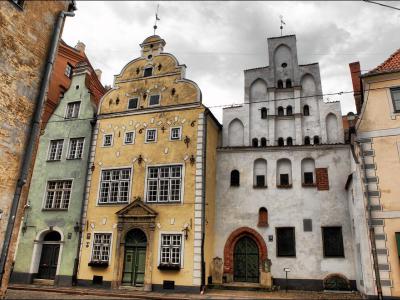
The Three Brothers are a unique set of architectural treasures in Old Riga. The name applies to three adjacent houses, each built at different times and in different styles. Together the treehouses represent the oldest dwellings in the city, and each one demonstrates a different development period.
The oldest house is at number 17 Maza Pils Street--it dates from the late 1400s. It has crow-stepped gables and a few Gothic and Renaissance details. The interior is one large room with an attic.
The exterior of its neighbor at 19 Maza Pils Street is from 1646. The exterior style of this building has elements of Dutch Mannerism. This is the middle building and has a distinctive pale yellow exterior. Above the door, the Latin inscription reads, "Glory to God alone!"
Number 21 Maza Pils Street is the newest, a narrow Baroque structure last updated in the 17th century. The green color was meant to guard against evil spirits.
Today, Number 21 houses the Latvian Museum of Architecture and State Inspectorate for Heritage Protection. It's open to the public and is a good place to see photos of the history of Riga. The Three Brothers earned the European Heritage Label in 2020.
The oldest house is at number 17 Maza Pils Street--it dates from the late 1400s. It has crow-stepped gables and a few Gothic and Renaissance details. The interior is one large room with an attic.
The exterior of its neighbor at 19 Maza Pils Street is from 1646. The exterior style of this building has elements of Dutch Mannerism. This is the middle building and has a distinctive pale yellow exterior. Above the door, the Latin inscription reads, "Glory to God alone!"
Number 21 Maza Pils Street is the newest, a narrow Baroque structure last updated in the 17th century. The green color was meant to guard against evil spirits.
Today, Number 21 houses the Latvian Museum of Architecture and State Inspectorate for Heritage Protection. It's open to the public and is a good place to see photos of the history of Riga. The Three Brothers earned the European Heritage Label in 2020.
5) Riga Cathedral (must see)
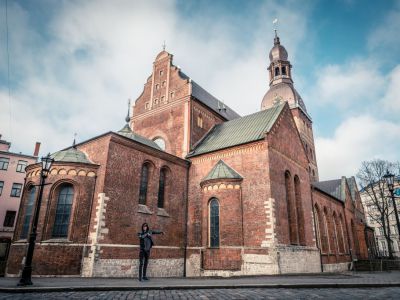
Riga Cathedral, formally known as The Cathedral Church of Saint Mary, is the Evangelical Lutheran cathedral located in Riga. It serves as the seat of the Archbishop of Riga. The cathedral is one of Latvia's most iconic landmarks, often featured in paintings, photographs, and television travelogues, and is noted for its weathercock, similar to other historic churches in the city.
The church was established near the River Daugava in 1211 by Livonian Bishop Albert of Riga, who hailed from Lower Saxony in northwestern Germany. It is recognized as the largest medieval church in the Baltic states and has undergone numerous modifications throughout its history. Notable figures associated with the cathedral include David Caspari, rector of the cathedral school in the late 17th century, and his son Georg Caspari, who also served at the cathedral.
In a 1923 referendum, the Lutheran Church was compelled to share the cathedral with the Roman Catholic Church. However, this decision was reversed in the 1931 Latvian Riga Cathedral referendum, restoring it solely to the Lutheran Church. During the Soviet occupation from 1939 to 1989, religious services were banned, and the cathedral functioned as a concert hall. The Museum of the History of Riga and Navigation was housed in the cathedral's southern wing during this period. Religious services resumed in 1991, and the cathedral is now actively used by the Evangelical Lutheran Church of Latvia.
A prominent feature of the Riga Cathedral is its organ, built by E.F. Walcker & Sons of Ludwigsburg, Germany, in 1882-83 and inaugurated on January 31, 1884. During World War II, a recording captured the sound of battle as Latvian composer Lūcija Garūta played the organ for a cantata.
The church was established near the River Daugava in 1211 by Livonian Bishop Albert of Riga, who hailed from Lower Saxony in northwestern Germany. It is recognized as the largest medieval church in the Baltic states and has undergone numerous modifications throughout its history. Notable figures associated with the cathedral include David Caspari, rector of the cathedral school in the late 17th century, and his son Georg Caspari, who also served at the cathedral.
In a 1923 referendum, the Lutheran Church was compelled to share the cathedral with the Roman Catholic Church. However, this decision was reversed in the 1931 Latvian Riga Cathedral referendum, restoring it solely to the Lutheran Church. During the Soviet occupation from 1939 to 1989, religious services were banned, and the cathedral functioned as a concert hall. The Museum of the History of Riga and Navigation was housed in the cathedral's southern wing during this period. Religious services resumed in 1991, and the cathedral is now actively used by the Evangelical Lutheran Church of Latvia.
A prominent feature of the Riga Cathedral is its organ, built by E.F. Walcker & Sons of Ludwigsburg, Germany, in 1882-83 and inaugurated on January 31, 1884. During World War II, a recording captured the sound of battle as Latvian composer Lūcija Garūta played the organ for a cantata.
6) House of Blackheads (Melngalvju Nams) (must see)
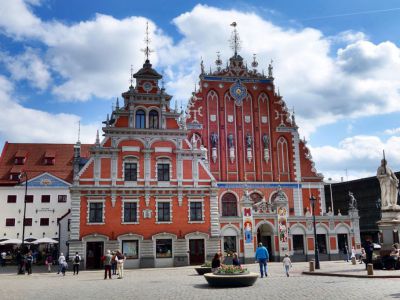
The House of the Black Heads is now a museum celebrating commerce in Riga. The building was originally erected in 1334 and has dominated Town Hall Square for centuries.
It was built by the Brotherhood of the Black Heads, a local guild made up of unmarried Riga merchants, shipowners, and foreigners. The organization was active from the middle of the 14th century until about 1940, although a chapter in Hamburg still meets. It began as a military society but gradually transitioned into a social organization.
The House of Black Heads was meant to be a meeting place for the society, where they would host banquets and cultural events. The first decorated Christmas tree was displayed on the square outside in 1510.
The building was destroyed during World War II--first leveled by Germans bombs in 1941 and then further demolished by the Soviets in 1948. As it stands today, the building was reconstructed in the late 1990s. Locals donated a few Euros each person to put a brick in the wall during an event called "I Build the House of the Black Heads."
The building has been rebuilt to its previous glory and is open to the public. The upper levels have grand ballrooms where some of Riga's most posh cultural events occurred. There are also spaces used by former Presidents of Latvia, as this house was used as the Presidential residence between 2012 and 2016.
Most interesting are the cellars, which were buried and re-excavated during the rebuilding and restoration efforts. Here you can walk through original 14th-century corridors in the authentic underground of medieval Riga. This space was used to store goods and is now used as an exhibit space.
The museum is open Wednesdays through Sundays. On the last Sunday of every month, they hold a free one-hour-long guided house tour, available in both English and German.
It was built by the Brotherhood of the Black Heads, a local guild made up of unmarried Riga merchants, shipowners, and foreigners. The organization was active from the middle of the 14th century until about 1940, although a chapter in Hamburg still meets. It began as a military society but gradually transitioned into a social organization.
The House of Black Heads was meant to be a meeting place for the society, where they would host banquets and cultural events. The first decorated Christmas tree was displayed on the square outside in 1510.
The building was destroyed during World War II--first leveled by Germans bombs in 1941 and then further demolished by the Soviets in 1948. As it stands today, the building was reconstructed in the late 1990s. Locals donated a few Euros each person to put a brick in the wall during an event called "I Build the House of the Black Heads."
The building has been rebuilt to its previous glory and is open to the public. The upper levels have grand ballrooms where some of Riga's most posh cultural events occurred. There are also spaces used by former Presidents of Latvia, as this house was used as the Presidential residence between 2012 and 2016.
Most interesting are the cellars, which were buried and re-excavated during the rebuilding and restoration efforts. Here you can walk through original 14th-century corridors in the authentic underground of medieval Riga. This space was used to store goods and is now used as an exhibit space.
The museum is open Wednesdays through Sundays. On the last Sunday of every month, they hold a free one-hour-long guided house tour, available in both English and German.
7) Town Hall Square (must see)
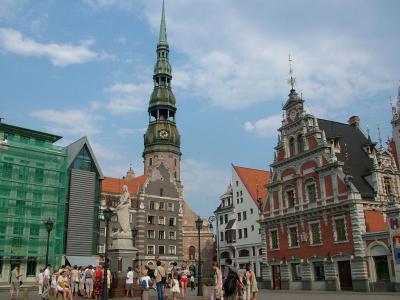
This cobblestone town square marks the center of Old Riga. It's surrounded by beautiful architecture, including the House of the Black Heads and Riga City Hall.
In the center of the Square stands a statue of Roland. He was Charlemagne's nephew and a Frankish military leader. His reputation for stringent but just governance has led to him becoming a symbol of justice in Northern Germany. The statue has stood next to the town's well since 1897.
However, the Square's biggest claim to fame is that it was the site of the first lit and decorated Christmas tree in 1510. There is a plank marking the location, and, of course, a tree is decorated here every year during the holidays.
Bombs leveled Town Hall Square and its surrounding buildings during World War II. Everything you see today was rebuilt in the years following the war. The House of the Black Heads was reopened in 1999, and the Town Hall Building in 2003.
The Square is a great place to begin your explorations of Riga--the narrow cobblestone streets wind through some of the most beautiful architecture you'll find. The scene is especially stunning at night when the buildings are lit for maximum effect.
In the center of the Square stands a statue of Roland. He was Charlemagne's nephew and a Frankish military leader. His reputation for stringent but just governance has led to him becoming a symbol of justice in Northern Germany. The statue has stood next to the town's well since 1897.
However, the Square's biggest claim to fame is that it was the site of the first lit and decorated Christmas tree in 1510. There is a plank marking the location, and, of course, a tree is decorated here every year during the holidays.
Bombs leveled Town Hall Square and its surrounding buildings during World War II. Everything you see today was rebuilt in the years following the war. The House of the Black Heads was reopened in 1999, and the Town Hall Building in 2003.
The Square is a great place to begin your explorations of Riga--the narrow cobblestone streets wind through some of the most beautiful architecture you'll find. The scene is especially stunning at night when the buildings are lit for maximum effect.
8) Saint Peter's Church (must see)
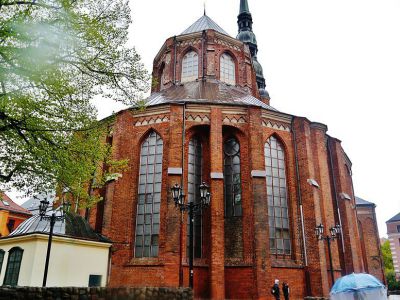
You can trace the history of this beautiful church back to 1209. Having such a long story to tell, it's not surprising that the tales are traced to the building styles of various periods. The church has Gothic, Romanesque, and Baroque elements.
Little remains of the original Gothic construction. Only the central section of the church, including the outer nave walls and a few pillars, remain from those early years.
The second construction period was overseen by master builder Johannes Rumeschottel from Germany. This was in 1409, but work was interrupted by wars and the plague. Nevertheless, by the late 15th century, the church had a mighty basilica with three aisles and vaulted ceilings. It also sported a new bell tower, 136 meters (446 feet) tall, with a steeple.
The final construction period occurred in the late 1600s when the western facade and new bell tower were built after a devastating fire in the city. Many of the furnishings and the vaulted ceiling were refurbished as well. When finished, the new tower and steeple was the tallest wooden structure in Europe.
The church was reconstructed after artillery fire destroyed it during World War II. The bronze candelabrum--a standing lantern--was taken from the church to Wloclawek, Poland. It was displayed there until 2012 when it was returned to Riga.
The steeple was completed in 1970, and the clock tower in the early 1970s. The rooster atop the steeple weighs 158 kilograms and includes 140 grams of gold plating. The bell plays the Latvian folk melody "Riga Resounds" five times a day, and the bell chimes hourly. There is an elevator that takes guests up the tower, where you can take in the view of Riga from a height of 72 meters (236 feet).
Today, the church is owned by the Evangelical Lutheran Church of Latvia. Services resumed here in 1991. In addition to the view from the tower's top, strolling through the art collection and seeing the beautiful nave are must-dos in Riga.
Little remains of the original Gothic construction. Only the central section of the church, including the outer nave walls and a few pillars, remain from those early years.
The second construction period was overseen by master builder Johannes Rumeschottel from Germany. This was in 1409, but work was interrupted by wars and the plague. Nevertheless, by the late 15th century, the church had a mighty basilica with three aisles and vaulted ceilings. It also sported a new bell tower, 136 meters (446 feet) tall, with a steeple.
The final construction period occurred in the late 1600s when the western facade and new bell tower were built after a devastating fire in the city. Many of the furnishings and the vaulted ceiling were refurbished as well. When finished, the new tower and steeple was the tallest wooden structure in Europe.
The church was reconstructed after artillery fire destroyed it during World War II. The bronze candelabrum--a standing lantern--was taken from the church to Wloclawek, Poland. It was displayed there until 2012 when it was returned to Riga.
The steeple was completed in 1970, and the clock tower in the early 1970s. The rooster atop the steeple weighs 158 kilograms and includes 140 grams of gold plating. The bell plays the Latvian folk melody "Riga Resounds" five times a day, and the bell chimes hourly. There is an elevator that takes guests up the tower, where you can take in the view of Riga from a height of 72 meters (236 feet).
Today, the church is owned by the Evangelical Lutheran Church of Latvia. Services resumed here in 1991. In addition to the view from the tower's top, strolling through the art collection and seeing the beautiful nave are must-dos in Riga.
9) Saint John's Church
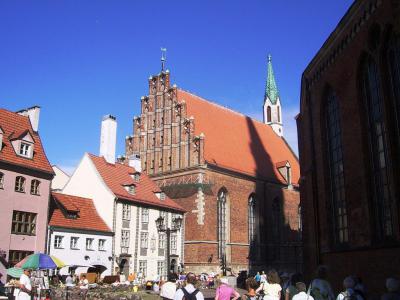
Saint John’s Church is a 13th century temple presumably built by the Dominicans. Its original shape and location are unknown and may only be assumed. Legend has it that two monks were immured in the church's southern wall when it was built and were fed through a hole, which in the Middle Ages was considered a supreme form of asceticism.
After the Dominicans had been expelled from Latvia, the building was passed into private hands and turned into a stable; later on it was even used as a weapon workshop. In 1582, the church was sanctified again and returned to the Latvian parish. Five years later, it underwent major reconstruction and an altar was added.
Today, Saint John’s serves the local Lutheran community and forms part of Riga's Old Town area, remaining one of the top tourist sights in the city. Its Gothic interior, ascetic medieval outside appearance and rich history are equally appreciated by tourists and locals.
After the Dominicans had been expelled from Latvia, the building was passed into private hands and turned into a stable; later on it was even used as a weapon workshop. In 1582, the church was sanctified again and returned to the Latvian parish. Five years later, it underwent major reconstruction and an altar was added.
Today, Saint John’s serves the local Lutheran community and forms part of Riga's Old Town area, remaining one of the top tourist sights in the city. Its Gothic interior, ascetic medieval outside appearance and rich history are equally appreciated by tourists and locals.
10) Central Market (must see)
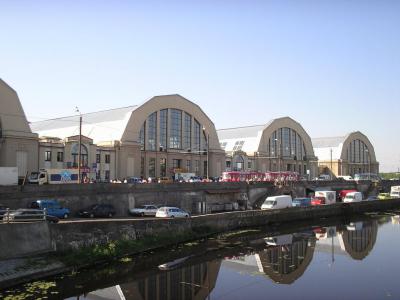
Riga's Central Market is Europe's largest market and bazaar. The enormous building was constructed by repurposing five old German Zeppelin hangars. The total covered area inside the pavilions is 72,300 square meters (778,000 square feet), and it houses more than 3,000 vendor booths.
Riga's location on the River Daugava has always made it a center for trade. The Central Market was conceived in the 1920s. An international competition was held, and the winner's idea of using the metal frames of abandoned World War I Zeppelin hangars was a hit.
Construction was completed in 1930. Only the top parts of the hangars could be used, but the effect remained. Finishing touches on the buildings were done in the Art Deco style of the time. A tunnel system under the buildings allows for goods to be transported to vendors without going through the floor. It also connects to the river for deliveries.
When the market is not held, the space is used for other events and exhibitions. Along with Old Riga, the Market was added as a UNESCO World Heritage Site in 1998. The Zeppelin hangars are five of the only nine remaining in the world.
The Market is a must-see stop for foodies or anyone looking for delectable, Latvian-grown treats. Each pavilion has a category--dairy, meats, vegetables, fish, and gastronomy products. In addition, the outdoor area also has stalls and hosts the Night Market and the Clock Farmers Market.
Riga's location on the River Daugava has always made it a center for trade. The Central Market was conceived in the 1920s. An international competition was held, and the winner's idea of using the metal frames of abandoned World War I Zeppelin hangars was a hit.
Construction was completed in 1930. Only the top parts of the hangars could be used, but the effect remained. Finishing touches on the buildings were done in the Art Deco style of the time. A tunnel system under the buildings allows for goods to be transported to vendors without going through the floor. It also connects to the river for deliveries.
When the market is not held, the space is used for other events and exhibitions. Along with Old Riga, the Market was added as a UNESCO World Heritage Site in 1998. The Zeppelin hangars are five of the only nine remaining in the world.
The Market is a must-see stop for foodies or anyone looking for delectable, Latvian-grown treats. Each pavilion has a category--dairy, meats, vegetables, fish, and gastronomy products. In addition, the outdoor area also has stalls and hosts the Night Market and the Clock Farmers Market.
11) Latvian National Opera and Opera Square
The history of opera and ballet in Riga started in 1782, when a German-speaking troupe was brought to entertain the local public with a new form of theatrical art for the first time. The very first attempt to establish in Latvia its own national opera was made in 1912, when Pāvuls Jurjāns opened the Latvian Opera House. Unfortunately, the outbreak of World War One led to the departure of Latvia's first opera singers to Russia. In 1918, Jāzeps Vītols revived the house and kept it running until the Soviet takeover of 1940, after which it was renamed the Latvian S.S.R. State Opera and Ballet Theatre and its repertoire was significantly affected by the Soviet ideology. In 1991, along with Latvia’s independence, the theatre regained its original name and artistic freedom.
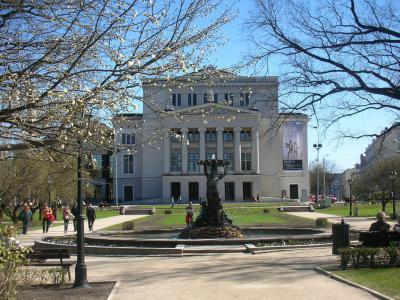
The Latvian National Opera is housed in a 1863 building, designed by architect Ludwig Bohnstedt. It was fully renovated during 1990-1995 to provide best conditions for both performers and audience. A new annex, combining 19th century and today's architectural elements, was added to the building in 2001.
The Latvian National Opera is the home of Latvian opera, choir, orchestra and national ballet. The opera and ballet of Latvia have established themselves well on the international stage, and been particularly popular with the younger audience.
Opera Square in situated in front of Riga's Opera House. The central element of the square is a renowned fountain, created in 1887 by the architect Augusta Folca. The artistic fountain resembles the mythological character, Nimfa, from which it got its name. The fountain was reconstructed in 1986.
The Latvian National Opera is housed in a 1863 building, designed by architect Ludwig Bohnstedt. It was fully renovated during 1990-1995 to provide best conditions for both performers and audience. A new annex, combining 19th century and today's architectural elements, was added to the building in 2001.
The Latvian National Opera is the home of Latvian opera, choir, orchestra and national ballet. The opera and ballet of Latvia have established themselves well on the international stage, and been particularly popular with the younger audience.
Opera Square in situated in front of Riga's Opera House. The central element of the square is a renowned fountain, created in 1887 by the architect Augusta Folca. The artistic fountain resembles the mythological character, Nimfa, from which it got its name. The fountain was reconstructed in 1986.

12) Brivibas Piemineklis (Freedom Monument) (must see)
The Freedom Monument commemorates the soldiers who fell during the Latvian War of Independence of 1918-1920. Built in 1935 to a design by R. Mirsmeden, the monument presents Latvia's national values. It stands as the symbol of two battles fought by the country for its independence and is a ground zero for the majority of political demonstrations held in Riga nowadays.
Surprisingly enough, the monument has survived almost 50 years of the Soviet rule, in part due to its high artistic value. On 14 June 1987, about 5,000 people gathered at the monument to lay flowers. This rally renewed the national independence movement, which culminated three years later in the re-establishment of Latvian sovereignty after the dissolution of the Soviet Union.
The structure consists of three major blocks decorated by 14 statuary groups. The base block features Latvian riflemen and singers. The block above depicts scholars, people of work, Guardians of the Fatherland and the Family. The central element of the monument, topping a 19 meter (62 feet) column, is the bronze statue of a woman holding up three golden stars above her head, symbolizing three Latvian regions: Kurzeme, Vidzeme and Latgale.
With a total height of 42 meters, the Freedom Monument is visible from almost every corner of Old Riga, and acts as a sort of navigation aid for tourists en route to different locations.
Surprisingly enough, the monument has survived almost 50 years of the Soviet rule, in part due to its high artistic value. On 14 June 1987, about 5,000 people gathered at the monument to lay flowers. This rally renewed the national independence movement, which culminated three years later in the re-establishment of Latvian sovereignty after the dissolution of the Soviet Union.
The structure consists of three major blocks decorated by 14 statuary groups. The base block features Latvian riflemen and singers. The block above depicts scholars, people of work, Guardians of the Fatherland and the Family. The central element of the monument, topping a 19 meter (62 feet) column, is the bronze statue of a woman holding up three golden stars above her head, symbolizing three Latvian regions: Kurzeme, Vidzeme and Latgale.
With a total height of 42 meters, the Freedom Monument is visible from almost every corner of Old Riga, and acts as a sort of navigation aid for tourists en route to different locations.
13) Corner House (must see)
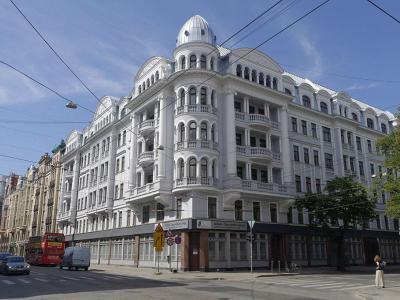
The Corner House, located in the center of Riga, is a building with a storied past, reflecting the turbulent history of the region. Originally designed by architect Aleksandrs Vanags, construction began in 1910 and was completed in 1912. Initially, it served a variety of commercial and cultural purposes, housing apartments, shops, a music school under the Imperial Russian Society of Music, a library, a bookstore, and various other establishments.
During the Latvian War of Independence in 1919, the building was briefly used by the Latvian Revolutionary War Committee. By 1920, following Latvia's independence, the new government repurposed the building for governmental use, accommodating offices such as the Ministry of the Interior and other administrative departments. Throughout the 1920s and 1930s, it was utilized by various governmental and cultural organizations including the Public Affairs Ministry, the State Statistical Bureau, the Forestry Department, and several cultural and educational directorates.
However, the onset of the Soviet occupation in 1940 marked a dark chapter in the building's history as it was transformed into the headquarters of the Soviet KGB in Latvia. It housed numerous offices and prison cells where countless atrocities were committed until 1941. During the German occupation from 1941 to 1944, the building was used by the National Watch youth group and the Latvian puppet government established by the Nazis. Following the Soviet re-occupation in 1944, the KGB reclaimed the building, continuing its operations there until the collapse of the Soviet Union in 1991.
After Latvia regained its independence, the State Police took over the building from 1990 until 2008. In a significant cultural transformation, the Corner House was opened to the public in 2014 as part of Riga's tenure as a European Capital of Culture. Since 2015, it has hosted an exposition by the Museum of the Occupation of Latvia, detailing the history of the KGB's activities in the country. The building underwent a facade renovation in 2015 and was put up for auction in 2020.
Today, the Corner House stands as a poignant reminder of Latvia’s complex history, serving both as a symbol of oppression and a beacon of cultural and historical education.
During the Latvian War of Independence in 1919, the building was briefly used by the Latvian Revolutionary War Committee. By 1920, following Latvia's independence, the new government repurposed the building for governmental use, accommodating offices such as the Ministry of the Interior and other administrative departments. Throughout the 1920s and 1930s, it was utilized by various governmental and cultural organizations including the Public Affairs Ministry, the State Statistical Bureau, the Forestry Department, and several cultural and educational directorates.
However, the onset of the Soviet occupation in 1940 marked a dark chapter in the building's history as it was transformed into the headquarters of the Soviet KGB in Latvia. It housed numerous offices and prison cells where countless atrocities were committed until 1941. During the German occupation from 1941 to 1944, the building was used by the National Watch youth group and the Latvian puppet government established by the Nazis. Following the Soviet re-occupation in 1944, the KGB reclaimed the building, continuing its operations there until the collapse of the Soviet Union in 1991.
After Latvia regained its independence, the State Police took over the building from 1990 until 2008. In a significant cultural transformation, the Corner House was opened to the public in 2014 as part of Riga's tenure as a European Capital of Culture. Since 2015, it has hosted an exposition by the Museum of the Occupation of Latvia, detailing the history of the KGB's activities in the country. The building underwent a facade renovation in 2015 and was put up for auction in 2020.
Today, the Corner House stands as a poignant reminder of Latvia’s complex history, serving both as a symbol of oppression and a beacon of cultural and historical education.
