Custom Walk in Cadiz, Spain by rob_lyons_7993f4 created on 2026-06-02
Guide Location: Spain » Cadiz
Guide Type: Custom Walk
# of Sights: 6
Tour Duration: 1 Hour
Travel Distance: 2 Km or 1.2 Miles
Share Key: 5C2V4
Guide Type: Custom Walk
# of Sights: 6
Tour Duration: 1 Hour
Travel Distance: 2 Km or 1.2 Miles
Share Key: 5C2V4
How It Works
Please retrieve this walk in the GPSmyCity app. Once done, the app will guide you from one tour stop to the next as if you had a personal tour guide. If you created the walk on this website or come to the page via a link, please follow the instructions below to retrieve the walk in the app.
Retrieve This Walk in App
Step 1. Download the app "GPSmyCity: Walks in 1K+ Cities" on Apple App Store or Google Play Store.



Step 2. In the GPSmyCity app, download(or launch) the guide "Cadiz Map and Walking Tours".
Step 3. Tap the menu button located at upper right corner of the "Walks" screen and select "Retrieve custom walk". Enter the share key: 5C2V4
1) Teatro Romano (Roman Theatre)
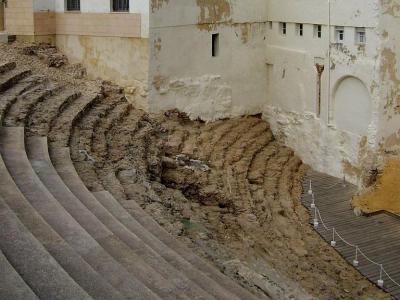
The Roman Theatre of Cádiz-also known as the Balbi Theatre-is proof that even in ancient times, Cádiz knew how to put on a show. Unearthed in 1980 after centuries of playing hide-and-seek beneath the medieval city, this 1st-century BC structure was built around 70 BC, back when the Roman Empire was still figuring out how to get the better of the Greeks.
The brains (and probably the ego) behind it? Lucius Cornelius Balbus the Elder, a Cádiz-born Roman politician, friend of Julius Caesar. Along with his nephew, Balbus the Younger, he had big dreams of expanding Gades-today’s Cádiz-into a gleaming Neapolis, or “New City.” So far, we’ve found their theatre and signs of an amphitheater, suggesting these guys were building more than just infrastructure-they were building a vibe.
By the end of the 3rd century AD, though, the curtain had dropped. The theatre was abandoned, and over time it was scavenged for stone, turned into a stable, a storehouse, and even a medieval apartment complex. Eventually, the ruins became the foundation for a Moorish fort aptly called the Castle of the Theatre-because sometimes history just layers itself like a lasagna.
Even partially excavated, this site is considered one of the oldest and possibly the largest Roman theatres in Spain. It features a classic horseshoe-shaped auditorium with parabolic tiered seating and a vaulted distribution gallery hidden beneath. The outer wall, made from finely cut ashlar stone, it's as imposing as ever.
The modern Theatre Visitors' Center is your backstage pass to the past. Inside, you’ll find detailed models and exhibits covering three acts: the Theatre of Neapolis, the Castle of the Theatre, and the original Theatre of Balbus. Spoiler: there’s no popcorn, but the ruins do all the storytelling you need.
The brains (and probably the ego) behind it? Lucius Cornelius Balbus the Elder, a Cádiz-born Roman politician, friend of Julius Caesar. Along with his nephew, Balbus the Younger, he had big dreams of expanding Gades-today’s Cádiz-into a gleaming Neapolis, or “New City.” So far, we’ve found their theatre and signs of an amphitheater, suggesting these guys were building more than just infrastructure-they were building a vibe.
By the end of the 3rd century AD, though, the curtain had dropped. The theatre was abandoned, and over time it was scavenged for stone, turned into a stable, a storehouse, and even a medieval apartment complex. Eventually, the ruins became the foundation for a Moorish fort aptly called the Castle of the Theatre-because sometimes history just layers itself like a lasagna.
Even partially excavated, this site is considered one of the oldest and possibly the largest Roman theatres in Spain. It features a classic horseshoe-shaped auditorium with parabolic tiered seating and a vaulted distribution gallery hidden beneath. The outer wall, made from finely cut ashlar stone, it's as imposing as ever.
The modern Theatre Visitors' Center is your backstage pass to the past. Inside, you’ll find detailed models and exhibits covering three acts: the Theatre of Neapolis, the Castle of the Theatre, and the original Theatre of Balbus. Spoiler: there’s no popcorn, but the ruins do all the storytelling you need.
2) Cadiz Cathedral and Square (must see)
The 18th century was Cádiz’s golden era-literally. Gold from the Americas was flowing in, wigs were high, and civic pride was even higher. So naturally, the city decided it needed a cathedral that didn’t just rival Seville’s-it had to outshine the Giralda, Seville's precious tower.
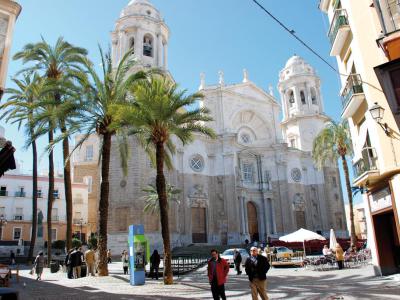
After the original architect stormed off in 1739, a tag-team of architects spanning nearly a century followed, each adding their own stylistic flair. The result was a cathedral that pirouettes from Baroque to Rococo to Neoclassical like it couldn’t make up its mind. Surprisingly or not, the cathedral ended up looking fabulous.
The layout follows the traditional cross shape, with three main aisles and a walkway that curves around the altar like a quiet loop. Rows of polished Corinthian columns hold up elegant vaulted ceilings, and there's a crypt downstairs big enough to make any vampire rethink retirement. The altar sits high and proud, commanding your gaze, while above it all, a dome crowns the space like a golden exclamation mark. And in the choir loft? Not one, but two powerful organs-more than enough to fill the church (and your spine) with musical thunder.
Nevertheless, the main showpiece is the Clock Tower, also known as the Levante Tower. Standing at 184 feet tall, it’s your best bet for sweeping views of the El Pópulo district, the Field of the South, and the harbor, with the Atlantic winking in the distance.
The Cathedral Square outside wasn’t always so open and grand-it was created during Cádiz’s 1721 urban makeover, which included demolishing a few modest houses to make room for this dramatic entrance. The square runs along the seafront and is paved in white marble, because if you're going to build a cathedral this extra, your plaza needs to match.
Don't miss the Rose Arch, which once led to the old Tablas Square and now serves as a charming pass-through to the Town Castle. Within the square itself, you’ll also find the Church of Santa Cruz (the old cathedral from 1669) and the Jesuit Church of Santiago, built in 1563 and still standing tall.
After the original architect stormed off in 1739, a tag-team of architects spanning nearly a century followed, each adding their own stylistic flair. The result was a cathedral that pirouettes from Baroque to Rococo to Neoclassical like it couldn’t make up its mind. Surprisingly or not, the cathedral ended up looking fabulous.
The layout follows the traditional cross shape, with three main aisles and a walkway that curves around the altar like a quiet loop. Rows of polished Corinthian columns hold up elegant vaulted ceilings, and there's a crypt downstairs big enough to make any vampire rethink retirement. The altar sits high and proud, commanding your gaze, while above it all, a dome crowns the space like a golden exclamation mark. And in the choir loft? Not one, but two powerful organs-more than enough to fill the church (and your spine) with musical thunder.
Nevertheless, the main showpiece is the Clock Tower, also known as the Levante Tower. Standing at 184 feet tall, it’s your best bet for sweeping views of the El Pópulo district, the Field of the South, and the harbor, with the Atlantic winking in the distance.
The Cathedral Square outside wasn’t always so open and grand-it was created during Cádiz’s 1721 urban makeover, which included demolishing a few modest houses to make room for this dramatic entrance. The square runs along the seafront and is paved in white marble, because if you're going to build a cathedral this extra, your plaza needs to match.
Don't miss the Rose Arch, which once led to the old Tablas Square and now serves as a charming pass-through to the Town Castle. Within the square itself, you’ll also find the Church of Santa Cruz (the old cathedral from 1669) and the Jesuit Church of Santiago, built in 1563 and still standing tall.
3) Mercado Central (Central Market) (must see)
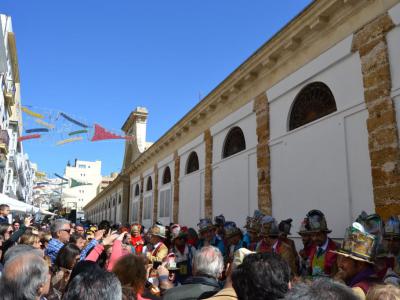
Once just a humble farmers' market, the Central Market of Cádiz decided to upgrade in the late 1890s. Enter Torcuato Benjumeda, the city’s go-to architect (he also did the Town Hall and the Church of Saint Joseph, no big deal), who designed the new market like a Roman forum with snacks: an open quadrangle lined with sturdy Doric columns, giving grocery shopping a touch of classical solemnity.
Part of the market was built right over the old Convent of the Shoeless-so while you're picking out seafood, you're also standing on a bit of sacred ground. That central space is now the main pavilion, flanked by two additional columned wings added to keep up with the city’s growing appetite for produce.
A major facelift in the early 2000s brought the market into the modern era without losing its historic charm. Today, there are over 170 stalls hawking everything from fresh seafood to baked goods, vegetables, meat, and just enough quirky side stands to keep you guessing-yes, you can pick up pickles, paper bags, and fishing gear, all in one go.
The central pavilion is a seafood lover’s dream, with counters piled high with octopus, tuna, shrimp, and whatever else the Atlantic decided to deliver that morning. Step into the left wing, and you’ll find the Gastronomic Corner, a foodie haven where locals and tourists alike graze on Cádiz’s greatest hits. The right wing leans carnivorous, featuring butchers and the occasional oddball veggie stand.
List of highlights from the tasting lineup that are worth trying out are: El Comado does wine and meats like it’s hosting your birthday party. La Tapería de Luna serves up soups and tapas that feel like home. Gadisushi delivers Japanese precision with Andalusian flair. Gadesbeer keeps things hoppy. La Sartén takes eggs and tortillas seriously. And Queso 360? Cheese from every corner of the planet.
The Central Market is a culinary microcosm of Cádiz, dressed in columns and ready to feed you.
Part of the market was built right over the old Convent of the Shoeless-so while you're picking out seafood, you're also standing on a bit of sacred ground. That central space is now the main pavilion, flanked by two additional columned wings added to keep up with the city’s growing appetite for produce.
A major facelift in the early 2000s brought the market into the modern era without losing its historic charm. Today, there are over 170 stalls hawking everything from fresh seafood to baked goods, vegetables, meat, and just enough quirky side stands to keep you guessing-yes, you can pick up pickles, paper bags, and fishing gear, all in one go.
The central pavilion is a seafood lover’s dream, with counters piled high with octopus, tuna, shrimp, and whatever else the Atlantic decided to deliver that morning. Step into the left wing, and you’ll find the Gastronomic Corner, a foodie haven where locals and tourists alike graze on Cádiz’s greatest hits. The right wing leans carnivorous, featuring butchers and the occasional oddball veggie stand.
List of highlights from the tasting lineup that are worth trying out are: El Comado does wine and meats like it’s hosting your birthday party. La Tapería de Luna serves up soups and tapas that feel like home. Gadisushi delivers Japanese precision with Andalusian flair. Gadesbeer keeps things hoppy. La Sartén takes eggs and tortillas seriously. And Queso 360? Cheese from every corner of the planet.
The Central Market is a culinary microcosm of Cádiz, dressed in columns and ready to feed you.
4) Torre Tavira (Tavira Tower) (must see)
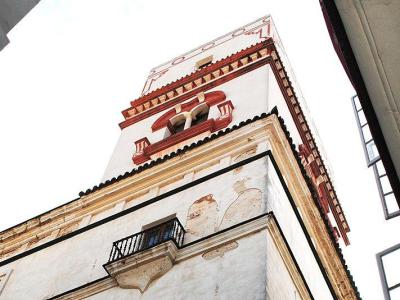
The Tavira Tower isn’t just another old lookout-it’s Cádiz’s version of a rooftop with a 300-year-old guest list. At 149 feet above sea level, it holds the title of tallest spot in the Old City, giving anyone at the top a serious advantage in the 18th-century game of “What ship is that?”
Originally part of The Palace of the Marquises of Recaño , the tower came with all the aristocratic bells and whistles. Cádiz was booming from its trade with the Americas and needed more than your average harbor patrol. All of this resulted in a skyline punctuated by over 126 watchtowers, with Tavira Tower sitting at the very top.
Built in 1780, Tavira Tower was always meant to be the city’s official lookout. And who better to man the post than Don Antonio Tavira, the first watchman and the man who gave the tower its name? He didn’t just climb the stairs-he left a legacy.
Today, Tavira Tower still keeps an eye on things-with a twist. Step into the Camera Obscura, and a guide will darken the room and light up your curiosity. Thanks to an old-school optical system (think spy tech meets science fair), real-time images of the city and sea are projected onto a circular table. It’s like Google Earth, but powered by mirrors and 18th-century ingenuity. The show lasts about 20 minutes, long enough to be amazed but short enough to still grab a tapa afterward.
The other rooms of the tower house exhibitions on Cádiz’s golden age, the evolution of the camera obscura, and a star-studded chapter on Spain’s 1812 Constitution-yes, the country’s very first, penned right here in Cádiz.
So climb up, squint out, and time-travel a little. Tavira Tower offers the best views in town-and not just the physical kind.
Originally part of The Palace of the Marquises of Recaño , the tower came with all the aristocratic bells and whistles. Cádiz was booming from its trade with the Americas and needed more than your average harbor patrol. All of this resulted in a skyline punctuated by over 126 watchtowers, with Tavira Tower sitting at the very top.
Built in 1780, Tavira Tower was always meant to be the city’s official lookout. And who better to man the post than Don Antonio Tavira, the first watchman and the man who gave the tower its name? He didn’t just climb the stairs-he left a legacy.
Today, Tavira Tower still keeps an eye on things-with a twist. Step into the Camera Obscura, and a guide will darken the room and light up your curiosity. Thanks to an old-school optical system (think spy tech meets science fair), real-time images of the city and sea are projected onto a circular table. It’s like Google Earth, but powered by mirrors and 18th-century ingenuity. The show lasts about 20 minutes, long enough to be amazed but short enough to still grab a tapa afterward.
The other rooms of the tower house exhibitions on Cádiz’s golden age, the evolution of the camera obscura, and a star-studded chapter on Spain’s 1812 Constitution-yes, the country’s very first, penned right here in Cádiz.
So climb up, squint out, and time-travel a little. Tavira Tower offers the best views in town-and not just the physical kind.
5) Barrio de la Vina (Neighborhood of the Vine)
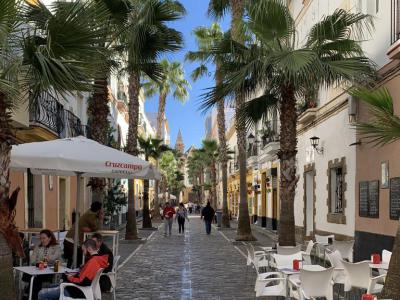
The Neighborhood of the Vine is one of the city's most emblematic and vibrant neighborhoods. Originally a vine-growing area, it developed into a densely populated quarter in the 18th century, as trade with the Americas brought a surge of residents. Anchored by the fishing traditions of nearby La Caleta beach, La Viña soon became home to sailors, laborers, and the heartbeat of urban popular culture.
Its narrow streets, palm-lined squares, and balconied buildings now house flamenco clubs, buzzing tapas bars, and seafood restaurants famed for their freshness. Highlights include the Street of la Palma, the Baroque Church of Our Lady of la Palma, and the lively Pinto Square, affectionately known as the Square of Tio of la Tiza, in honor of carnival legend Antonio Rodríguez Martínez.
Its narrow streets, palm-lined squares, and balconied buildings now house flamenco clubs, buzzing tapas bars, and seafood restaurants famed for their freshness. Highlights include the Street of la Palma, the Baroque Church of Our Lady of la Palma, and the lively Pinto Square, affectionately known as the Square of Tio of la Tiza, in honor of carnival legend Antonio Rodríguez Martínez.
6) Playa de La Caleta (La Caleta Beach) (must see)
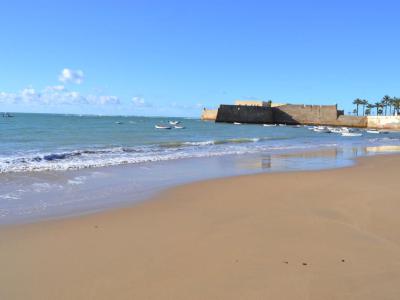
There are over 66 beaches dotting the island, but let’s be honest-La Caleta steals the spotlight. Nestled between the Castle of Santa Catalina and the Castle of San Sebastian, this little slice of paradise doesn’t just rest on its laurels-it proudly waves its blue flag every year, flaunting sparkling clean waters and pristine facilities.
It’s popular, to say the least, so don’t expect a secluded getaway-but hey, when you’ve got sunsets that can stop traffic and views that practically scream “Instagram,” who’s complaining?
The two castles that flank the beach are certainly impressive-no surprise there. But if you’re after true eye candy, head to the Spa of Our Lady of La Palma and Real. Built in the early 20th century, it was once a neglected relic, but it’s been resurrected and is now home to the Subaquatic Archaeology Centre of the Andalusian Historical Institute. Because, apparently, even spas need a little depth.
Historically speaking, La Caleta was once the link between the two islands of ancient Cadiz. Phoenician boats landed here, and let’s just say they didn’t just drop off some fish-this beach is practically built on history. From ancient shipwrecks to buried treasures, this is the birthplace of Cádiz.
It’s not just history buffs who are drawn to La Caleta-the beach has also served as a movie star. You’ve seen it in 007’s James Bond: Die Another Day. The scene with Halle Berry in a bikini and Pierce Brosnan sipping a mojito at La Habana? Spoiler alert-it was shot right here in La Caleta, Cádiz. So if you’re looking for a place that’s part historical treasure and part silver-screen legend, grab your sunscreen and head to La Caleta-where the past, present, and movie magic collide.
It’s popular, to say the least, so don’t expect a secluded getaway-but hey, when you’ve got sunsets that can stop traffic and views that practically scream “Instagram,” who’s complaining?
The two castles that flank the beach are certainly impressive-no surprise there. But if you’re after true eye candy, head to the Spa of Our Lady of La Palma and Real. Built in the early 20th century, it was once a neglected relic, but it’s been resurrected and is now home to the Subaquatic Archaeology Centre of the Andalusian Historical Institute. Because, apparently, even spas need a little depth.
Historically speaking, La Caleta was once the link between the two islands of ancient Cadiz. Phoenician boats landed here, and let’s just say they didn’t just drop off some fish-this beach is practically built on history. From ancient shipwrecks to buried treasures, this is the birthplace of Cádiz.
It’s not just history buffs who are drawn to La Caleta-the beach has also served as a movie star. You’ve seen it in 007’s James Bond: Die Another Day. The scene with Halle Berry in a bikini and Pierce Brosnan sipping a mojito at La Habana? Spoiler alert-it was shot right here in La Caleta, Cádiz. So if you’re looking for a place that’s part historical treasure and part silver-screen legend, grab your sunscreen and head to La Caleta-where the past, present, and movie magic collide.
