Custom Walk in Madrid, Spain by kt_dodd_fc2666 created on 2026-06-20
Guide Location: Spain » Madrid
Guide Type: Custom Walk
# of Sights: 13
Tour Duration: 3 Hour(s)
Travel Distance: 4.7 Km or 2.9 Miles
Share Key: F9PCF
Guide Type: Custom Walk
# of Sights: 13
Tour Duration: 3 Hour(s)
Travel Distance: 4.7 Km or 2.9 Miles
Share Key: F9PCF
How It Works
Please retrieve this walk in the GPSmyCity app. Once done, the app will guide you from one tour stop to the next as if you had a personal tour guide. If you created the walk on this website or come to the page via a link, please follow the instructions below to retrieve the walk in the app.
Retrieve This Walk in App
Step 1. Download the app "GPSmyCity: Walks in 1K+ Cities" on Apple App Store or Google Play Store.



Step 2. In the GPSmyCity app, download(or launch) the guide "Madrid Map and Walking Tours".
Step 3. Tap the menu button located at upper right corner of the "Walks" screen and select "Retrieve custom walk". Enter the share key: F9PCF
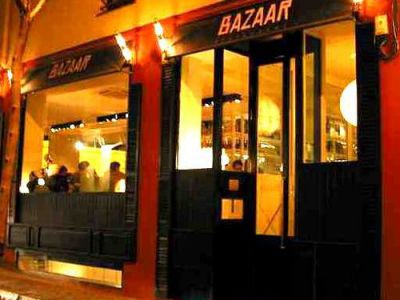
1) Bazaar
The enduring popularity of Bazaar among Chueca's affluent crowd shows no signs of waning. Its immaculate white interior design, complemented by theater-style lighting and expansive windows, attracts a colourful clientele; however, what truly sets this establishment apart is its exceptionally affordable and innovative cuisine, rooted in a fusion concept that skillfully combines unexpected ingredients from diverse culinary traditions into delectable dishes. The staff members are known for their impeccable manners, and the restaurant maintains a clean and modern ambiance, making it an ideal choice for both travelers and locals alike. It is advisable to make a reservation in advance, as Bazaar tends to fill up quickly due to its popularity.
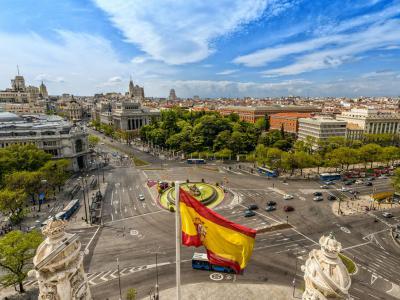
2) Plaza de Cibeles (Cibeles Square)
Traffic flows continuously day and night around Cibeles Square, serving as a vital intersection connecting various parts of the city. At the heart of it stands the iconic Cibeles Fountain, a prominent landmark of Madrid that depicts Cibele, the goddess of nature, riding in a chariot pulled by two lions. The fountain symbolizes the fertility of the surrounding land and has become a gathering spot for Real Madrid football club fans to celebrate important victories.
Located on a large block at the corner of Calle de Alcalá and Paseo del Prado, you'll find the magnificent Bank of Spain (Banco de España) with its grand entrance adorned with sculptures by Jerónimo Suñol. Across Calle de Alcalá, on the northwest corner, is the Buenavista Palace ("Palacio de Buenavista"), originally built for the Duchess of Alba in the 18th century and now serving as the headquarters of the Spanish army.
On the northeast corner of the square stands the neo-Baroque Linares Palace ("Palacio de Linares"). Constructed in the late 19th century for the Marquis of Linares, it boasts opulent interiors and is rumored to be haunted. Guided tours are available on Saturdays and Sundays at 11am, noon, and 1pm. Within the same building, you'll find Casa de América, a cultural center focused on Latin American arts, hosting vibrant exhibitions, concerts, and discussions. Admission is free, and their operating hours are Mon-Fri: 9 am–3pm, 4–8pm; Sat: 11am–3pm.
Dominating the square is the elegant white Cibeles Palace, formally known as the Palace of Communications ("Palacio de Comunicaciones"), formerly the main post office and now serving as the City Hall. Designed by renowned architect Antonio Palacios, who was responsible for several of Madrid's grandest buildings in the early 20th century, it boasts ornate and elaborate features. The building also houses CentroCentro, a cultural space with regular exhibitions. Inside, visitors can enjoy the intricate interior and access the observation deck (open from Tuesday to Sunday, 10am to 8pm) for panoramic views of the city. Additionally, there is a chic terrace bar on the sixth floor, open from 1pm, where visitors can relax and enjoy a drink.
Located on a large block at the corner of Calle de Alcalá and Paseo del Prado, you'll find the magnificent Bank of Spain (Banco de España) with its grand entrance adorned with sculptures by Jerónimo Suñol. Across Calle de Alcalá, on the northwest corner, is the Buenavista Palace ("Palacio de Buenavista"), originally built for the Duchess of Alba in the 18th century and now serving as the headquarters of the Spanish army.
On the northeast corner of the square stands the neo-Baroque Linares Palace ("Palacio de Linares"). Constructed in the late 19th century for the Marquis of Linares, it boasts opulent interiors and is rumored to be haunted. Guided tours are available on Saturdays and Sundays at 11am, noon, and 1pm. Within the same building, you'll find Casa de América, a cultural center focused on Latin American arts, hosting vibrant exhibitions, concerts, and discussions. Admission is free, and their operating hours are Mon-Fri: 9 am–3pm, 4–8pm; Sat: 11am–3pm.
Dominating the square is the elegant white Cibeles Palace, formally known as the Palace of Communications ("Palacio de Comunicaciones"), formerly the main post office and now serving as the City Hall. Designed by renowned architect Antonio Palacios, who was responsible for several of Madrid's grandest buildings in the early 20th century, it boasts ornate and elaborate features. The building also houses CentroCentro, a cultural space with regular exhibitions. Inside, visitors can enjoy the intricate interior and access the observation deck (open from Tuesday to Sunday, 10am to 8pm) for panoramic views of the city. Additionally, there is a chic terrace bar on the sixth floor, open from 1pm, where visitors can relax and enjoy a drink.
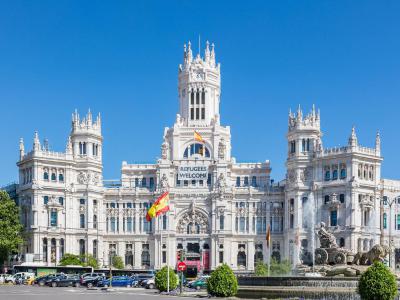
3) Palacio de Cibeles (Cibeles Palace) (must see)
Originally conceived as a headquarters for Spain’s postal and telegraph service, this grand building is a masterpiece of neo-Gothic and neo-Plateresque design. With its intricate white facade and towering pinnacles, it’s no wonder people often compare it to a towering wedding cake. In 2011, the addition of a shimmering glass dome to the central courtyard took its elegance to the next level. And let’s not forget the backdrop: the palace overlooks its namesake square and the world-famous fountain at its center-truly one of Madrid’s most recognizable symbols.
Just outside the main entrance, you can still spot a set of traditional brass letterboxes in the wall, each labeled with the names of various Spanish cities and provinces. While the building now serves as home to Madrid’s mayor and City Council, it’s much more than a seat of government. Thanks to its transformation into the CentroCentro cultural hub, visitors can immerse themselves in a revolving roster of exhibitions, concerts, and events that highlight contemporary art, cutting-edge design, and urban innovation. Inside, the palace is a visual feast, with intricately carved details, soaring ceilings, and expansive halls that showcase the artistic excellence of its era.
One of the main draws is the Mirador Madrid, a rooftop observation deck that offers an outstanding panorama of the city. From up here, you can soak in the sights of Gran Vía, Retiro Park, and historic neighborhoods stretching out to the horizon. By night, the illuminated tower turns into a beacon that adds a magical glow to the skyline.
For a perfect way to end your visit, head to the sixth-floor café-restaurant. Whether you’re craving a quick coffee or a hearty meal, you can savor the scenery alongside your refreshments.
Just outside the main entrance, you can still spot a set of traditional brass letterboxes in the wall, each labeled with the names of various Spanish cities and provinces. While the building now serves as home to Madrid’s mayor and City Council, it’s much more than a seat of government. Thanks to its transformation into the CentroCentro cultural hub, visitors can immerse themselves in a revolving roster of exhibitions, concerts, and events that highlight contemporary art, cutting-edge design, and urban innovation. Inside, the palace is a visual feast, with intricately carved details, soaring ceilings, and expansive halls that showcase the artistic excellence of its era.
One of the main draws is the Mirador Madrid, a rooftop observation deck that offers an outstanding panorama of the city. From up here, you can soak in the sights of Gran Vía, Retiro Park, and historic neighborhoods stretching out to the horizon. By night, the illuminated tower turns into a beacon that adds a magical glow to the skyline.
For a perfect way to end your visit, head to the sixth-floor café-restaurant. Whether you’re craving a quick coffee or a hearty meal, you can savor the scenery alongside your refreshments.
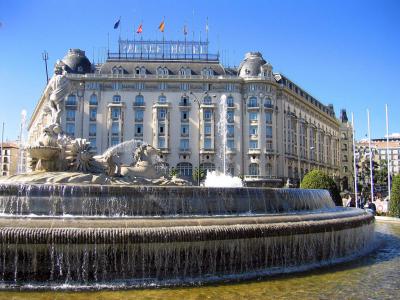
4) Plaza Canovas del Castillo (Canovas del Castillo Square)
Ensure that your camera is fully charged and that you have ample storage space for photos when you visit Plaza Canovas del Castillo, as it would be a shame not to capture some mementos of this picturesque square.
Although the name "plaza" may seem grand, it is actually Madrid's most popular and beautiful roundabout. Encircled by magnificent Baroque buildings, the focal point of the square is the magnificent Neptune Fountain ("Fuente de Neptuno"). This grand fountain features a large basin adorned with a statue of Neptune riding a chariot pulled by two horses, symbolizing his dominion over the seas. Designed by Ventura Rodríguez in 1777, the fountain was part of a grand plan by King Carlos III to enhance the beauty of eastern Madrid.
In the late 19th century, the square was renamed in honor of Antonio Cánovas del Castillo, a renowned historian and influential statesman in Spain who played a key role in drafting the Spanish Constitution and advocated for religious freedom. However, his political stance against the independence of Cuba had detrimental consequences: his opposition eventually contributed to the Spanish-American War in 1898. Furthermore, Cánovas del Castillo's darker side emerged when, in response to a bomb explosion during a religious gathering in 1896, he ordered the arrest and torture of over 300 individuals, many of whom were innocent. He was assassinated in 1897 by an Italian anarchist.
Although the name "plaza" may seem grand, it is actually Madrid's most popular and beautiful roundabout. Encircled by magnificent Baroque buildings, the focal point of the square is the magnificent Neptune Fountain ("Fuente de Neptuno"). This grand fountain features a large basin adorned with a statue of Neptune riding a chariot pulled by two horses, symbolizing his dominion over the seas. Designed by Ventura Rodríguez in 1777, the fountain was part of a grand plan by King Carlos III to enhance the beauty of eastern Madrid.
In the late 19th century, the square was renamed in honor of Antonio Cánovas del Castillo, a renowned historian and influential statesman in Spain who played a key role in drafting the Spanish Constitution and advocated for religious freedom. However, his political stance against the independence of Cuba had detrimental consequences: his opposition eventually contributed to the Spanish-American War in 1898. Furthermore, Cánovas del Castillo's darker side emerged when, in response to a bomb explosion during a religious gathering in 1896, he ordered the arrest and torture of over 300 individuals, many of whom were innocent. He was assassinated in 1897 by an Italian anarchist.
5) Real Jardin Botanico (Royal Botanical Garden)
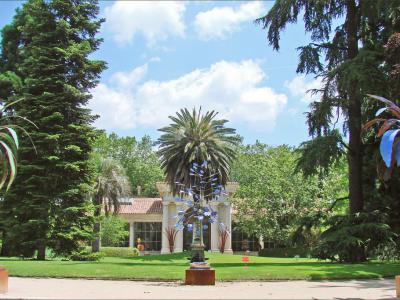
Madrid boasts a wealth of history and architecture, and fortunately, it also offers an abundance of parks where one can unwind, enjoy a picnic lunch, and still be immersed in the heart of the city. The Royal Botanical Garden serves as a delightful oasis, providing a tranquil escape to stroll amidst a variety of plants. As you enter, take a moment to admire the neoclassical gate, the Puerta de Murillo, designed by Juan de Villanueva.
These enchanting botanical gardens were established in 1781 by King Carlos III. The king's vision was to collect and cultivate species from across his Spanish Empire, create a research center, and supply medicinal herbs and plants to Madrid's hospitals. Although neglected for much of the last century, the gardens underwent restoration in the 1980s and now boast around 30,000 species from around the world.
As you wander along the Paseo de Carlos III, lined with old varieties of roses, you'll come across the Puerta Real, a gate designed by Sabatini. On the second level, keep an eye out for the elm tree known as Pantalones, aptly named because its trunk divides into two, resembling a pair of trousers. The upper level features an oval pond surrounded by trees, including a Canarian palm. The pavilion at the back, originally a hothouse, is now used for temporary exhibitions.
Tip:
Be sure to visit the two greenhouses located at the back of the gardens. Take a walk along the upper level of the rainforest and desert greenhouse for a unique perspective. Additionally, don't miss the hothouse showcasing remarkable cacti or the bonsai collection curated by former prime minister Felipe González.
These enchanting botanical gardens were established in 1781 by King Carlos III. The king's vision was to collect and cultivate species from across his Spanish Empire, create a research center, and supply medicinal herbs and plants to Madrid's hospitals. Although neglected for much of the last century, the gardens underwent restoration in the 1980s and now boast around 30,000 species from around the world.
As you wander along the Paseo de Carlos III, lined with old varieties of roses, you'll come across the Puerta Real, a gate designed by Sabatini. On the second level, keep an eye out for the elm tree known as Pantalones, aptly named because its trunk divides into two, resembling a pair of trousers. The upper level features an oval pond surrounded by trees, including a Canarian palm. The pavilion at the back, originally a hothouse, is now used for temporary exhibitions.
Tip:
Be sure to visit the two greenhouses located at the back of the gardens. Take a walk along the upper level of the rainforest and desert greenhouse for a unique perspective. Additionally, don't miss the hothouse showcasing remarkable cacti or the bonsai collection curated by former prime minister Felipe González.
6) Palacio de Cristal (Crystal Palace) (must see)
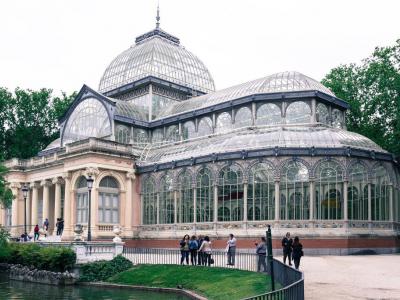
Right by a quiet, man-made lake and surrounded by the towering chestnut trees of Retiro Park, you’ll find the Crystal Palace-one of Madrid’s most remarkable examples of iron-and-glass architecture. Initially built in 1887 as a giant greenhouse for the Philippine Islands Flora Exhibition, it was closely modeled on London’s famous Crystal Palace in Hyde Park.
With its wide glass panels and slender iron columns, the building feels light, almost dreamlike. Sunlight floods in from every angle, bouncing off the glass and casting reflections that shift throughout the day. Cast iron columns support the structure, creating a grand and elegant interior. A full restoration in 1975 helped bring it back to its former glory.
These days, the Crystal Palace isn’t home to tropical plants-but to art, regularly hosting temporary exhibits and installations that make creative use of the open, light-filled space. Admission is free, so you’re welcome to step inside and take it all in-whether you're there for the art or simply to soak in the atmosphere. And if you catch it at sunset, when the lights come on, the whole place seems to take on another life again.
Tip: If you’re after that perfect photo, aim for sunrise. The early light reflecting off the lake and catching the glass panels gives the whole place a magical glow.
With its wide glass panels and slender iron columns, the building feels light, almost dreamlike. Sunlight floods in from every angle, bouncing off the glass and casting reflections that shift throughout the day. Cast iron columns support the structure, creating a grand and elegant interior. A full restoration in 1975 helped bring it back to its former glory.
These days, the Crystal Palace isn’t home to tropical plants-but to art, regularly hosting temporary exhibits and installations that make creative use of the open, light-filled space. Admission is free, so you’re welcome to step inside and take it all in-whether you're there for the art or simply to soak in the atmosphere. And if you catch it at sunset, when the lights come on, the whole place seems to take on another life again.
Tip: If you’re after that perfect photo, aim for sunrise. The early light reflecting off the lake and catching the glass panels gives the whole place a magical glow.

7) Monumento a Alfonso XII (Monument to Alfonso XII)
Retiro Park’s “Pleasure Lake” is one of its most visited spots-and for good reason. On its eastern edge stands the park’s largest preserved monument, a towering tribute to King Alfonso XII. Unveiled in 1922, the monument had been in the works for two decades, originally commissioned by Queen Maria Cristina and funded by public donations. The winning design came from Catalan architect José Grases Riera, best known for his work on Madrid’s ornate Longoria Palace.
Up close, the monument is even more impressive. Around twenty sculptors contributed to its rich detail, from the proud stone lions guarding the pond, to figures of mermaids and symbolic carvings representing Science, Agriculture, the Army, and the Navy. The centerpiece, of course, is the bronze equestrian statue of Alfonso XII himself. Just below it, a wide staircase leads down to the lake, offering a popular spot to sit and watch the sunset reflect across the water.
Here’s a tip: if you’re curious about the view from the top, you can actually climb up to the monument’s viewpoint during special guided visits organized by the Madrid City Council. These are part of the “Pasea Madrid” program and include fascinating stories about the monument’s creation, plus sweeping views of Retiro Park. Visits typically take place on Tuesdays and Thursdays, between 3 and 5:30 in the afternoon. Slots fill up fast, so be sure to book early. The viewpoint is also open during select months like September and October-so keep an eye out if you’re planning ahead.
Up close, the monument is even more impressive. Around twenty sculptors contributed to its rich detail, from the proud stone lions guarding the pond, to figures of mermaids and symbolic carvings representing Science, Agriculture, the Army, and the Navy. The centerpiece, of course, is the bronze equestrian statue of Alfonso XII himself. Just below it, a wide staircase leads down to the lake, offering a popular spot to sit and watch the sunset reflect across the water.
Here’s a tip: if you’re curious about the view from the top, you can actually climb up to the monument’s viewpoint during special guided visits organized by the Madrid City Council. These are part of the “Pasea Madrid” program and include fascinating stories about the monument’s creation, plus sweeping views of Retiro Park. Visits typically take place on Tuesdays and Thursdays, between 3 and 5:30 in the afternoon. Slots fill up fast, so be sure to book early. The viewpoint is also open during select months like September and October-so keep an eye out if you’re planning ahead.
8) El Estanque (Pleasure Lake)
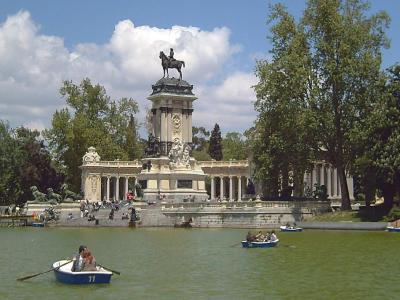
From the park’s northern gate, a tree-lined path guides you toward Retiro’s central lake, known as Pleasure Lake. This mirror-like pool is anything but sleepy; it’s the heart of the park’s liveliness, where visitors drift across the water in rented rowing boats. Whether spring is bursting with color or autumn’s gold is falling all around, drifting across the glassy surface is a timeless ritual. Boats are available daily from 10am to 8pm-or until sunset, whichever mood strikes the sky first. Each 45-minute escape comes with a small fee.
One side of the lake is crowned by a dramatic semicircular colonnade of stone-solemn, statuesque, and brimming with gravitas. At its center stands a bronze Alfonso XII on horseback, high atop a column, caught mid-gaze like a monarch surveying his tranquil domain. The monument was unveiled by his son, Alfonso XIII, during a ceremony of royal pomp. And here's where things get curious: that same Alfonso XIII narrowly escaped a deadly bombing on his wedding day to Queen Victoria’s granddaughter. Legend has it, a cryptic message carved into a tree right here in Retiro may have saved his life.
Swing around to the opposite bank and the atmosphere shifts. Portrait artists dip into passing faces, capturing fleeting likenesses, while fortune-tellers unfurl mysteries under the trees, offering glimpses into futures just vague enough to feel true.
One side of the lake is crowned by a dramatic semicircular colonnade of stone-solemn, statuesque, and brimming with gravitas. At its center stands a bronze Alfonso XII on horseback, high atop a column, caught mid-gaze like a monarch surveying his tranquil domain. The monument was unveiled by his son, Alfonso XIII, during a ceremony of royal pomp. And here's where things get curious: that same Alfonso XIII narrowly escaped a deadly bombing on his wedding day to Queen Victoria’s granddaughter. Legend has it, a cryptic message carved into a tree right here in Retiro may have saved his life.
Swing around to the opposite bank and the atmosphere shifts. Portrait artists dip into passing faces, capturing fleeting likenesses, while fortune-tellers unfurl mysteries under the trees, offering glimpses into futures just vague enough to feel true.
9) Parque del Retiro (Retiro Park) (must see)
Born in the mind of King Felipe IV in the early 1600s, this place began not as a park, but a royal escape hatch: the Buen Retiro, or “Pleasant Retreat.” A palace, gardens, and a hush from the noise of court life-French in style, Spanish in soul. While the original buildings are mostly gone now, the old ballroom and the Hall of Realms still remain, alongside 15,000 trees standing like green sentinels around a picturesque lake.
Retiro’s sprawling 330-acre dreamscape invites you to do anything but rush. Jog, rollerblade, cycle, row. Let a stranger read your fortune. Most importantly: walk-and keep walking. On Sundays, half of Madrid seems to drift here, as if pulled by an invisible thread, pacing the promenade in ritual procession.
Beside leisurely walks, there’s always something happening. Music pavilions echo with concerts. Panpipes flutter near the lake like Andean ghosts, while puppet shows unravel near the Alcalá Gate entrance during summer weekends.
And then there’s the Velázquez Palace, elegantly hosting art exhibitions that never charge a cent. The Crystal Palace, a glass cathedral glowing with quiet intensity. Casa de Vacas-the Cow House-pulses with plays and performances, mooing culture to anyone who’ll listen.
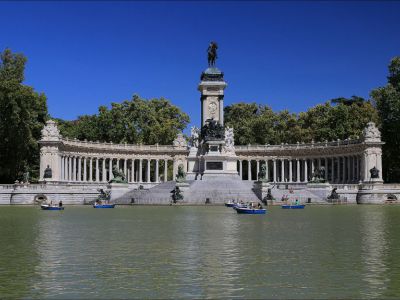
The grandiose statue of King Alfonso XII on horseback stares down the lake like he’s seen something you haven’t. Further south, the Fallen Angel himself sits in coiled ecstasy, reportedly the only public statue of Lucifer on Earth. It makes you wonder what else Madrid is hiding. Nearby, the Grove of the Absent whispers through 192 olive and cypress trees, planted in memory of those lost in the Atocha train bombings. Grief in rows, peace in shade.
Tip: Pack a picnic and smuggle in your own paradise. While the park offers dining options, they tend to be on the expensive side. Fortunately, there are plenty of quiet corners where you can settle in and enjoy your meal in peace.
Retiro’s sprawling 330-acre dreamscape invites you to do anything but rush. Jog, rollerblade, cycle, row. Let a stranger read your fortune. Most importantly: walk-and keep walking. On Sundays, half of Madrid seems to drift here, as if pulled by an invisible thread, pacing the promenade in ritual procession.
Beside leisurely walks, there’s always something happening. Music pavilions echo with concerts. Panpipes flutter near the lake like Andean ghosts, while puppet shows unravel near the Alcalá Gate entrance during summer weekends.
And then there’s the Velázquez Palace, elegantly hosting art exhibitions that never charge a cent. The Crystal Palace, a glass cathedral glowing with quiet intensity. Casa de Vacas-the Cow House-pulses with plays and performances, mooing culture to anyone who’ll listen.
The grandiose statue of King Alfonso XII on horseback stares down the lake like he’s seen something you haven’t. Further south, the Fallen Angel himself sits in coiled ecstasy, reportedly the only public statue of Lucifer on Earth. It makes you wonder what else Madrid is hiding. Nearby, the Grove of the Absent whispers through 192 olive and cypress trees, planted in memory of those lost in the Atocha train bombings. Grief in rows, peace in shade.
Tip: Pack a picnic and smuggle in your own paradise. While the park offers dining options, they tend to be on the expensive side. Fortunately, there are plenty of quiet corners where you can settle in and enjoy your meal in peace.
10) Puerta de Alcala (Alcala Gate)
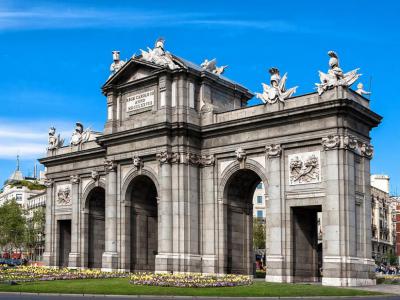
Standing as one of Madrid’s most iconic landmarks, Alcalá is a lasting symbol of King Carlos III’s vision for urban renewal in the city’s eastern districts. Designed by renowned architect Francesco Sabatini, it replaced an earlier Baroque gateway originally constructed by Felipe III to mark his wife’s grand entry into Madrid.
Construction on this colossal Neo-Classical city gate began in 1769 and spanned nine years. At the time, it was Europe’s largest such structure, predating other renowned triumphal arches like the Arc de Triomphe in Paris and Berlin’s Brandenburg Gate. Built from granite, it features an imposing pediment and five arches-three central and two rectangular outer ones-adorned with classical statues and finely detailed reliefs. The name “Alcalá” traces its roots to the Arabic term “al-qalat,” meaning castle or fortification, reflecting the original route’s connection to the fortified town of Alcalá de Henares.
Once marking Madrid’s eastern boundary, the gateway now stands within Independence Square, surrounded by well-tended gardens. Its grandeur is particularly striking at night, when illuminated by soft, golden lighting. Situated near Retiro Park and the upscale Salamanca district, Alcalá is perfectly positioned for visitors to experience its beauty as part of a larger exploration of Madrid’s attractions. Stroll through the nearby park, enjoy a coffee at one of the surrounding terraces, or simply marvel at the architectural elegance of this historic landmark.
Construction on this colossal Neo-Classical city gate began in 1769 and spanned nine years. At the time, it was Europe’s largest such structure, predating other renowned triumphal arches like the Arc de Triomphe in Paris and Berlin’s Brandenburg Gate. Built from granite, it features an imposing pediment and five arches-three central and two rectangular outer ones-adorned with classical statues and finely detailed reliefs. The name “Alcalá” traces its roots to the Arabic term “al-qalat,” meaning castle or fortification, reflecting the original route’s connection to the fortified town of Alcalá de Henares.
Once marking Madrid’s eastern boundary, the gateway now stands within Independence Square, surrounded by well-tended gardens. Its grandeur is particularly striking at night, when illuminated by soft, golden lighting. Situated near Retiro Park and the upscale Salamanca district, Alcalá is perfectly positioned for visitors to experience its beauty as part of a larger exploration of Madrid’s attractions. Stroll through the nearby park, enjoy a coffee at one of the surrounding terraces, or simply marvel at the architectural elegance of this historic landmark.
11) Plaza de la Independencia (Independence Square)
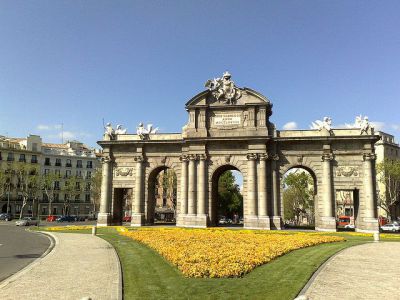
The Independence Square is a renowned Madrid landmark where the streets of Serrano, Alcalá, and Alfonso XII intersect. Mainly surrounded with buildings from the late 19th and early 20th centuries, constructed during the city's expansion, it notably houses the iconic Alcalá Gate, a neoclassical monument constructed in 1778 by architect Francisco Sabatini during the reign of Carlos III. The gate serves as an entrance and exit point to the city, featuring three semi-circular arches for carriages and two smaller lintel arches for pedestrians.
The square is characterized by its Parisian-style urban design, with well-maintained central gardens that exhibit classical elements of the era. The gate's two facades display distinct decorative styles, with the interior face portraying the virtues of Prudence, Justice, Temperance, and Fortitude in a simpler fashion, while the exterior face boasts a rich ornamentation, including the royal coat of arms.
Together with the Independence Gate of the Retiro Park and the surrounding buildings, the square forms a historic and artistic ensemble, making it a prominent tourist destination in the Cibeles-Retiro axis.
Today, the spacious sidewalks encircling the roundabout are adorned with various urban amenities and lively hospitality terraces and restaurants. The vibrant location also serves as a backdrop for numerous social and cultural events in the city.
The square is characterized by its Parisian-style urban design, with well-maintained central gardens that exhibit classical elements of the era. The gate's two facades display distinct decorative styles, with the interior face portraying the virtues of Prudence, Justice, Temperance, and Fortitude in a simpler fashion, while the exterior face boasts a rich ornamentation, including the royal coat of arms.
Together with the Independence Gate of the Retiro Park and the surrounding buildings, the square forms a historic and artistic ensemble, making it a prominent tourist destination in the Cibeles-Retiro axis.
Today, the spacious sidewalks encircling the roundabout are adorned with various urban amenities and lively hospitality terraces and restaurants. The vibrant location also serves as a backdrop for numerous social and cultural events in the city.
12) Museo Arqueologico Nacional (National Archaeological Museum) (must see)
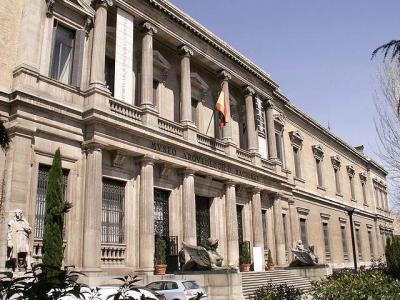
Established by Queen Isabel II in 1867, Madrid's impressive Archaeological Museum houses a vast collection of artifacts discovered during excavations throughout Spain, as well as pieces from ancient Egypt, Greece, and the Etruscan civilization.
Among the highlights are exhibitions on the ancient civilization of El Argar in Andalucía and a display of jewelry unearthed at the Roman settlement of Numantia, near Soria. The museum also showcases 7th-century AD gold votive crowns from Toledo province, Greek and Carthaginian coins, remarkable Roman mosaics including one from the 3rd century AD, and exquisite Islamic pottery. Keep an eye out for the Romanesque "Madonna and Child" from Sahagún, hailed as a Spanish art masterpiece.
In the museum gardens, visitors can descend a short flight of steps to encounter a faithful replica of the Cave of Altamira, famous for its Upper Paleolithic paintings gracing the walls and ceiling.
Why You Should Visit:
Following an extensive renovation, the museum's collections have been beautifully set out around a naturally illuminated central atrium. The labeling and video explanations, available in English and Spanish, provide valuable context for the exhibits. Grabbing a quick lunch in the downstairs cafeteria is convenient, and your ticket allows for re-entry at your leisure. The admission fee is reasonable, and the museum is usually quiet. Lockers are available for €1 each, ensuring you don't have to carry around heavy belongings.
Tip:
You can easily spend half a day here, but if you have limited time, get a leaflet showcasing the top 10 items and try to locate them. On Sunday mornings, admission is free (expect crowds), and children always enter for free.
Among the highlights are exhibitions on the ancient civilization of El Argar in Andalucía and a display of jewelry unearthed at the Roman settlement of Numantia, near Soria. The museum also showcases 7th-century AD gold votive crowns from Toledo province, Greek and Carthaginian coins, remarkable Roman mosaics including one from the 3rd century AD, and exquisite Islamic pottery. Keep an eye out for the Romanesque "Madonna and Child" from Sahagún, hailed as a Spanish art masterpiece.
In the museum gardens, visitors can descend a short flight of steps to encounter a faithful replica of the Cave of Altamira, famous for its Upper Paleolithic paintings gracing the walls and ceiling.
Why You Should Visit:
Following an extensive renovation, the museum's collections have been beautifully set out around a naturally illuminated central atrium. The labeling and video explanations, available in English and Spanish, provide valuable context for the exhibits. Grabbing a quick lunch in the downstairs cafeteria is convenient, and your ticket allows for re-entry at your leisure. The admission fee is reasonable, and the museum is usually quiet. Lockers are available for €1 each, ensuring you don't have to carry around heavy belongings.
Tip:
You can easily spend half a day here, but if you have limited time, get a leaflet showcasing the top 10 items and try to locate them. On Sunday mornings, admission is free (expect crowds), and children always enter for free.
13) Biblioteca Nacional (National Library)
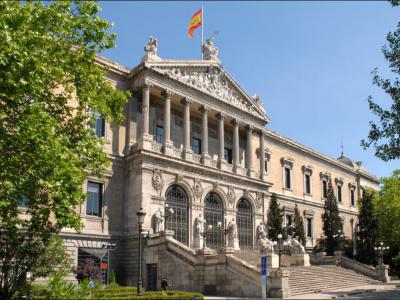
If you have a deep love for books, a visit to the expansive National Library of Spain is an absolute must. This magnificent classical building, constructed during the latter half of the 19th century, graces the southern side of Columbus Square ("Plaza de Colón").
Established in 1712 by King Philip V, the library is a treasure trove of knowledge, boasting approximately 28 million publications, along with a vast collection of audiovisual records, maps, and music scores. Since its inception, a policy has been in place requiring printers to submit a copy of every book published in Spain. Within the library's remarkable holdings, you'll find priceless gems such as the first edition of "Don Quixote" and two handwritten codes by none other than Leonardo da Vinci.
The attached museum chronicles the institution's rich history, as well as the evolution of writing, reading, and media systems. Regular exhibitions, talks, and concerts further enrich the visitor's experience.
Established in 1712 by King Philip V, the library is a treasure trove of knowledge, boasting approximately 28 million publications, along with a vast collection of audiovisual records, maps, and music scores. Since its inception, a policy has been in place requiring printers to submit a copy of every book published in Spain. Within the library's remarkable holdings, you'll find priceless gems such as the first edition of "Don Quixote" and two handwritten codes by none other than Leonardo da Vinci.
The attached museum chronicles the institution's rich history, as well as the evolution of writing, reading, and media systems. Regular exhibitions, talks, and concerts further enrich the visitor's experience.
