Custom Walk in Leipzig, Germany by conorjopreston_9f4995 created on 2026-06-25
Guide Location: Germany » Leipzig
Guide Type: Custom Walk
# of Sights: 7
Tour Duration: 2 Hour(s)
Travel Distance: 5 Km or 3.1 Miles
Share Key: QCDG2
Guide Type: Custom Walk
# of Sights: 7
Tour Duration: 2 Hour(s)
Travel Distance: 5 Km or 3.1 Miles
Share Key: QCDG2
How It Works
Please retrieve this walk in the GPSmyCity app. Once done, the app will guide you from one tour stop to the next as if you had a personal tour guide. If you created the walk on this website or come to the page via a link, please follow the instructions below to retrieve the walk in the app.
Retrieve This Walk in App
Step 1. Download the app "GPSmyCity: Walks in 1K+ Cities" on Apple App Store or Google Play Store.



Step 2. In the GPSmyCity app, download(or launch) the guide "Leipzig Map and Walking Tours".
Step 3. Tap the menu button located at upper right corner of the "Walks" screen and select "Retrieve custom walk". Enter the share key: QCDG2
1) Karl-Heine-Kanal
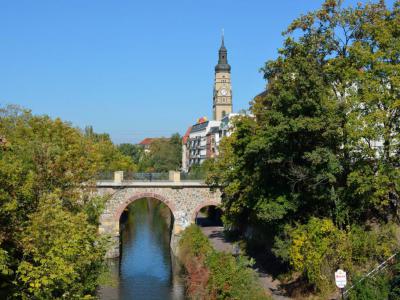
The Karl-Heine-Kanal is an approximately 3.3 kilometers long artificial watercourse located west of Leipzig. This historic canal connects the Lindenau harbor with the Weißen Elster River and is spanned by 15 bridges, making it navigable for small boats. The canal, along with its bank reinforcements and bridges, is recognized as a cultural monument in Leipzig, highlighting its significance in the city's heritage.
The canal's construction began in 1856, spearheaded by the Leipzig lawyer and industrial pioneer Carl Heine as the initial phase of a larger plan to develop a shipping route from the Weißen Elster to the Saale River. The first section was inaugurated on June 25, 1864, and by 1887, the canal had extended to reach the Zeitz railway in Lindenau. The final stretch of the canal was completed between 1890 and 1898, terminating just short of the Lindenau harbor.
In the 1990s, the Karl-Heine-Kanal underwent significant renovation, including the creation of a pedestrian and bicycle path along its northern bank, which was opened on September 16, 1996, with the then Federal Minister for the Environment, Angela Merkel, in attendance. In 2007, Leipzig's city administration took steps to plan the extension of the canal to fully connect it to the harbor, a project long in the making.
On January 29, 2015, work began to flood the 665-meter connection between the Karl-Heine-Kanal and the port of Lindenau, completing the process three weeks later as scheduled. The newly extended route was opened for boat traffic on July 2, 2015. However, to complete the full connection from the harbor to the Elster-Saale canal, a barrage needs to be built south of the Luisen Bridge to manage high and low water levels effectively.
The canal's construction began in 1856, spearheaded by the Leipzig lawyer and industrial pioneer Carl Heine as the initial phase of a larger plan to develop a shipping route from the Weißen Elster to the Saale River. The first section was inaugurated on June 25, 1864, and by 1887, the canal had extended to reach the Zeitz railway in Lindenau. The final stretch of the canal was completed between 1890 and 1898, terminating just short of the Lindenau harbor.
In the 1990s, the Karl-Heine-Kanal underwent significant renovation, including the creation of a pedestrian and bicycle path along its northern bank, which was opened on September 16, 1996, with the then Federal Minister for the Environment, Angela Merkel, in attendance. In 2007, Leipzig's city administration took steps to plan the extension of the canal to fully connect it to the harbor, a project long in the making.
On January 29, 2015, work began to flood the 665-meter connection between the Karl-Heine-Kanal and the port of Lindenau, completing the process three weeks later as scheduled. The newly extended route was opened for boat traffic on July 2, 2015. However, to complete the full connection from the harbor to the Elster-Saale canal, a barrage needs to be built south of the Luisen Bridge to manage high and low water levels effectively.
2) Alte Waage (Old Scale House)
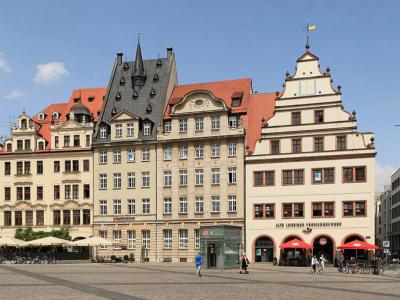
On the north side of Leipzig's Market Square on the corner of Katherine Street is Old Scale House (Alte Waage). The Council Scales (Rats Waage) was the core of the Leipzig Trade Fair in the 16th century. All goods had to be weighed here. A duty was collected to be shared by the city and the king.
The Scale House was constructed in 1555, as directed by the Mayor of Leipzig, Hieronymus Lotter. It was built in the Renaissance style by master builder Paul Speck. The front had a four-tiered voluted gable and a sundial. Below this was a stair tower. There were two upper floors, above the basement ground floor and attic floors. The basement held the council bar and a drinking room.
The Old Scale House became a commercial building. From 1590, the house was the seat of the Leipzig Council Post with the messenger room. The post office was housed here from 1661 to 1712. Weighings were transferred to a new location in 1820. In 1861, during renovations, the stair tower was removed. The building was destroyed in the air raid of December 1943 and was undeveloped for a few years.
In 1964 the Scale House was built anew as designed by Leipzig architect Wolfgang Muller. The entire structure, including the Katherine Street side facade, is new. Only the south side gable was fashioned in the Renaissance style.
The Scale House was constructed in 1555, as directed by the Mayor of Leipzig, Hieronymus Lotter. It was built in the Renaissance style by master builder Paul Speck. The front had a four-tiered voluted gable and a sundial. Below this was a stair tower. There were two upper floors, above the basement ground floor and attic floors. The basement held the council bar and a drinking room.
The Old Scale House became a commercial building. From 1590, the house was the seat of the Leipzig Council Post with the messenger room. The post office was housed here from 1661 to 1712. Weighings were transferred to a new location in 1820. In 1861, during renovations, the stair tower was removed. The building was destroyed in the air raid of December 1943 and was undeveloped for a few years.
In 1964 the Scale House was built anew as designed by Leipzig architect Wolfgang Muller. The entire structure, including the Katherine Street side facade, is new. Only the south side gable was fashioned in the Renaissance style.
3) Market Square and Old Town Hall (must see)
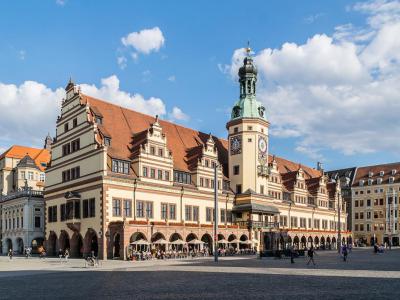
The Market Square of Leipzig is the central place of Leigzip's city center. There are arcades and courtyards well worth a visit, and the Old Town Hall housing the City History Museum is the central attraction. Saint Nicholas and Saint Thomas Churches are easily reached from here.
Throughout the year, the square is the venue of a diversity of Markets and events. There is the Easter Market, the Wine Festival, Leipzig Market Music, and the fabulous Christmas Market. Since the 13th century, Leipzig and its Markets have been the most vital centers of trade in Germany.
In 1341, Frederick II, Son of Frederick the Peaceful and Margrave of Meissen, offered the cloth merchants of Leipzig a Romanesque building of their own at the south end of the Leipzig Market Square. This building, called the Cloth Hall (Tuchhaus), shared extensions and spaces with the City Council.
The building complex grew. Two structures were added in the 15th century. A council chamber was completed in 1467. A stair tower emerged in 1476. In 1498, after all the growth and extensions, it was decided to rebuild the Town Hall.
The Old Town Hall was rebuilt in its current Saxon Renaissance style in 1557. It housed the Upper Court and the Court of Aldermen, the city magistrate, council archives, and prison cells. In 1905, it was decided to use the Old Town Hall as the Leipzig City History Museum.
The two-story building is over 300 feet long. It has a steep roof with 13 connecting row dormers and staggered gables. A stone arcade faces the square. An octagonal stair tower is next to the main entrance. The entrance is flanked by two ionic columns topped with the gaff heads of the master builders. Stone box oriels are on the gable ends.
In the large ceremonial hall is a portrait of Johann Sebastian Bach by German painter Elias Gottlob Haussmann. Haussmann also signed Bach's employment certificate as a cantor at Saint Thomas' Church. There is also a scale model of the city in 1832 made by Leipzig upholsterer and furniture maker Johann Christoph Merzdorf.
Throughout the year, the square is the venue of a diversity of Markets and events. There is the Easter Market, the Wine Festival, Leipzig Market Music, and the fabulous Christmas Market. Since the 13th century, Leipzig and its Markets have been the most vital centers of trade in Germany.
In 1341, Frederick II, Son of Frederick the Peaceful and Margrave of Meissen, offered the cloth merchants of Leipzig a Romanesque building of their own at the south end of the Leipzig Market Square. This building, called the Cloth Hall (Tuchhaus), shared extensions and spaces with the City Council.
The building complex grew. Two structures were added in the 15th century. A council chamber was completed in 1467. A stair tower emerged in 1476. In 1498, after all the growth and extensions, it was decided to rebuild the Town Hall.
The Old Town Hall was rebuilt in its current Saxon Renaissance style in 1557. It housed the Upper Court and the Court of Aldermen, the city magistrate, council archives, and prison cells. In 1905, it was decided to use the Old Town Hall as the Leipzig City History Museum.
The two-story building is over 300 feet long. It has a steep roof with 13 connecting row dormers and staggered gables. A stone arcade faces the square. An octagonal stair tower is next to the main entrance. The entrance is flanked by two ionic columns topped with the gaff heads of the master builders. Stone box oriels are on the gable ends.
In the large ceremonial hall is a portrait of Johann Sebastian Bach by German painter Elias Gottlob Haussmann. Haussmann also signed Bach's employment certificate as a cantor at Saint Thomas' Church. There is also a scale model of the city in 1832 made by Leipzig upholsterer and furniture maker Johann Christoph Merzdorf.
4) Zeitgeschichtliches Forum (Forum of Contemporary History)
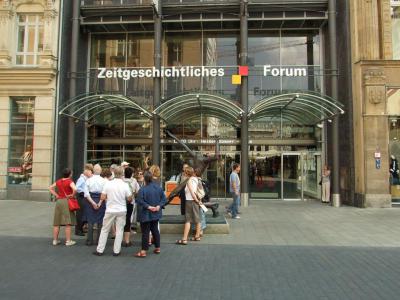
The Forum of Contemporary History (Zeitgeschichtliches Forum) in Leipzig is a museum dedicated to exploring the contemporary history of Germany, with a strong focus on the division of the country, life under the communist regime of the German Democratic Republic (GDR), and the reunification process. Opened in 1999, the museum is situated in the bustling Grimmaische Strasse in Leipzig's city center. A striking feature of the museum is the sculpture "The Step of the Century" by Wolfgang Mattheuer, prominently displayed at its entrance.
The museum's permanent exhibition offers an in-depth look at the history of opposition and civil disobedience within the repressive one-party state governed by the Socialist Unity Party of Germany (SED). It chronicles daily life in the Soviet Occupation Zone and the GDR from the end of World War II in 1945 up to the Peaceful Revolution of 1989 and the subsequent reunification of Germany. A comprehensive update to the exhibition was completed in 2018, which expanded its coverage to include the period after reunification, addressing themes such as the challenges and achievements of integration, international terrorism, digitization, and globalization. The exhibition includes around 2,000 objects, photographs, and films, along with numerous interviews with eyewitnesses, bringing to life the recent history of Germany.
In addition to its permanent exhibition, the Forum hosts several temporary exhibitions each year, along with lectures, readings, film screenings, and other events related to historical topics. Its extensive collection on GDR history includes over 200,000 items, such as the literary and artistic estate of Johannes Hegenbarth, author of the GDR comic "Mosaik."
The museum's permanent exhibition offers an in-depth look at the history of opposition and civil disobedience within the repressive one-party state governed by the Socialist Unity Party of Germany (SED). It chronicles daily life in the Soviet Occupation Zone and the GDR from the end of World War II in 1945 up to the Peaceful Revolution of 1989 and the subsequent reunification of Germany. A comprehensive update to the exhibition was completed in 2018, which expanded its coverage to include the period after reunification, addressing themes such as the challenges and achievements of integration, international terrorism, digitization, and globalization. The exhibition includes around 2,000 objects, photographs, and films, along with numerous interviews with eyewitnesses, bringing to life the recent history of Germany.
In addition to its permanent exhibition, the Forum hosts several temporary exhibitions each year, along with lectures, readings, film screenings, and other events related to historical topics. Its extensive collection on GDR history includes over 200,000 items, such as the literary and artistic estate of Johannes Hegenbarth, author of the GDR comic "Mosaik."
5) Agyptisches Museum der Universitat Leipzig (Egyptian Museum of the University of Leipzig)
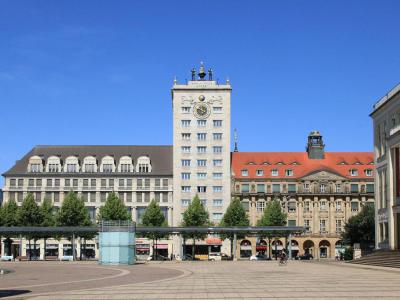
The Georg Steindorff Egyptian Museum at the University of Leipzig boasts the largest and most significant university collection of ancient Egyptian artifacts in Germany. Renowned for its unique archaeological finds, the museum is particularly notable for its items from the Lower Nubian town of Aniba. The museum's origins trace back to a fortunate purchase in 1840 when Gustav Seyffarth, a professor of archaeology at the University of Leipzig, acquired a mummy-shaped coffin in Trieste for 289 thalers. This artifact laid the foundation for what would eventually become the Egyptian Museum and remains one of its highlights today.
The museum was significantly expanded under Georg Steindorff, after whom it was named, transforming the initial collection into a comprehensive museum. Today, the museum's collection comprises approximately 7,000 objects, offering a detailed overview of four millennia of ancient Egyptian culture. The collection includes statues, reliefs, bronzes, sarcophagi, funerary figurines (shabti), and a variety of stone and clay vessels and ostraca.
Despite the loss of some exhibits during World War II, the museum was reopened in 1976, aided by funding and donations from the university and the Volkswagen Foundation, which facilitated modernization efforts. Since June 2010, the Egyptian Museum has been housed in the Kroch Tower. The museum's exhibits are spread across numerous rooms on two floors, each dedicated to a specific theme, providing visitors with a thematic exploration of ancient Egyptian culture.
In collaboration with students from the University of Leipzig, the museum has also developed an interactive 3D model of its exhibition, allowing visitors to explore the collection virtually from the comfort of their homes. This digital feature enhances accessibility, offering a unique opportunity to engage with the museum's extensive collection of ancient artifacts.
The museum was significantly expanded under Georg Steindorff, after whom it was named, transforming the initial collection into a comprehensive museum. Today, the museum's collection comprises approximately 7,000 objects, offering a detailed overview of four millennia of ancient Egyptian culture. The collection includes statues, reliefs, bronzes, sarcophagi, funerary figurines (shabti), and a variety of stone and clay vessels and ostraca.
Despite the loss of some exhibits during World War II, the museum was reopened in 1976, aided by funding and donations from the university and the Volkswagen Foundation, which facilitated modernization efforts. Since June 2010, the Egyptian Museum has been housed in the Kroch Tower. The museum's exhibits are spread across numerous rooms on two floors, each dedicated to a specific theme, providing visitors with a thematic exploration of ancient Egyptian culture.
In collaboration with students from the University of Leipzig, the museum has also developed an interactive 3D model of its exhibition, allowing visitors to explore the collection virtually from the comfort of their homes. This digital feature enhances accessibility, offering a unique opportunity to engage with the museum's extensive collection of ancient artifacts.
6) Nikolaikirche (St. Nicholas Church) (must see)
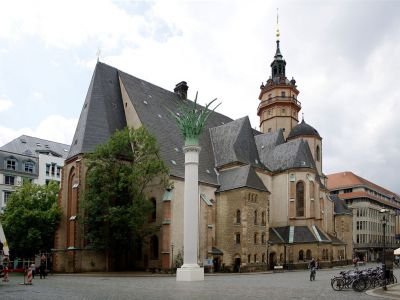
One of the most important churches of Leipzig is named for Saint Nicholas, the patron saint of travelers and merchants. The church started in 1185 as a Romanesque-style edifice with two look-alike towers. It was enlarged and redone in the 16th century in the Gothic "hall church" style, which features a nave and aisles of approximately equal height, united under a single immense roof. The Baroque-style central tower was added in 1730.
The interior was remodeled in 1797, in a Neoclassical style, by architect Johann Carl Friedrich Dauthe. Inside, the apse is semicircular with a barrel vault roof. The narrow nave is supported by graceful Egyptian-style columns, with palm-shaped capitals. The interior colors are in two pastel shades of pale green and dusty rose.
The church hosted four of the five premier performances of Johann Sebastian Bach's Passion of Saint John in 1724, 1728, 1732, and 1749. Several of his cantatas and oratorios were performed by the Saint Thomas Choir of Leipzig (Thomanerchor), a boy's choir with a tradition of more than 800 years in music and city history.
From 1989 to 1991, people would gather at Saint Nicholas every Monday evening. The meetings were not formal. They led to ad hoc protests against the Communist East German Government. Cabaret artist Bernd-Lutz Lange declared of the revolution: "The head was the Saint Nicholas Church and the body the center of the city."
The authorities were thrown off balance, as they were expecting violence. But that never occurred, violance were not in the playbook. A monumental column stands outside the church today. Close to the Neoclassical column, colored panels in the pavement light up after dark, telling the story of the Monday night marchers.
The interior was remodeled in 1797, in a Neoclassical style, by architect Johann Carl Friedrich Dauthe. Inside, the apse is semicircular with a barrel vault roof. The narrow nave is supported by graceful Egyptian-style columns, with palm-shaped capitals. The interior colors are in two pastel shades of pale green and dusty rose.
The church hosted four of the five premier performances of Johann Sebastian Bach's Passion of Saint John in 1724, 1728, 1732, and 1749. Several of his cantatas and oratorios were performed by the Saint Thomas Choir of Leipzig (Thomanerchor), a boy's choir with a tradition of more than 800 years in music and city history.
From 1989 to 1991, people would gather at Saint Nicholas every Monday evening. The meetings were not formal. They led to ad hoc protests against the Communist East German Government. Cabaret artist Bernd-Lutz Lange declared of the revolution: "The head was the Saint Nicholas Church and the body the center of the city."
The authorities were thrown off balance, as they were expecting violence. But that never occurred, violance were not in the playbook. A monumental column stands outside the church today. Close to the Neoclassical column, colored panels in the pavement light up after dark, telling the story of the Monday night marchers.
7) Stadtgeschichtliches Museum (City History Museum)
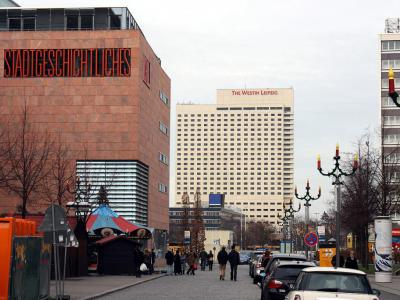
The City History Museum (Stadtgeschichtliches Museum) in Leipzig offers an expansive look at the city’s past, from the Middle Ages to modern times. Founded in 1909, the museum is part of a broader association of museums, each focusing on distinct aspects of Leipzig’s history. Collectively, they provide a comprehensive narrative of the city’s origins, evolution, and cultural spirit.
The museum is housed in the Old Town Hall, a historical building that has withstood both the ravages of war and political exploitation during Germany’s tumultuous history. In 2004, the museum expanded with the addition of a new building at Böttchergässchen House, allowing for flexible special exhibitions and a more modern approach to its presentation and outreach.
The museum’s collections are vast, encompassing around 600,000 items that span city and state history, everyday culture, arts and crafts, graphic arts, music, theatre, numismatics, militaria, and archaeology. Notable components include a photographic library with 80,000 exhibits, a library with approximately 50,000 items, and a sports history collection featuring 85,000 items.
As a classical cultural history institution, the City History Museum emphasizes professional expertise, comprehensive collection documentation, and adherence to international museum standards. Its mission includes providing an inclusive and engaging portrayal of Leipzig’s history, with a focus on critical, multi-perspective approaches and participatory engagement with the city’s community. The City History Museum continues to serve as a vital link between Leipzig’s historical heritage and its contemporary identity.
The museum is housed in the Old Town Hall, a historical building that has withstood both the ravages of war and political exploitation during Germany’s tumultuous history. In 2004, the museum expanded with the addition of a new building at Böttchergässchen House, allowing for flexible special exhibitions and a more modern approach to its presentation and outreach.
The museum’s collections are vast, encompassing around 600,000 items that span city and state history, everyday culture, arts and crafts, graphic arts, music, theatre, numismatics, militaria, and archaeology. Notable components include a photographic library with 80,000 exhibits, a library with approximately 50,000 items, and a sports history collection featuring 85,000 items.
As a classical cultural history institution, the City History Museum emphasizes professional expertise, comprehensive collection documentation, and adherence to international museum standards. Its mission includes providing an inclusive and engaging portrayal of Leipzig’s history, with a focus on critical, multi-perspective approaches and participatory engagement with the city’s community. The City History Museum continues to serve as a vital link between Leipzig’s historical heritage and its contemporary identity.
