Custom Walk in Coimbra, Portugal by jenniferbogulski_636348 created on 2026-06-26
Guide Location: Portugal » Coimbra
Guide Type: Custom Walk
# of Sights: 5
Tour Duration: 1 Hour(s)
Travel Distance: 1.6 Km or 1 Miles
Share Key: VZ7QM
Guide Type: Custom Walk
# of Sights: 5
Tour Duration: 1 Hour(s)
Travel Distance: 1.6 Km or 1 Miles
Share Key: VZ7QM
How It Works
Please retrieve this walk in the GPSmyCity app. Once done, the app will guide you from one tour stop to the next as if you had a personal tour guide. If you created the walk on this website or come to the page via a link, please follow the instructions below to retrieve the walk in the app.
Retrieve This Walk in App
Step 1. Download the app "GPSmyCity: Walks in 1K+ Cities" on Apple App Store or Google Play Store.



Step 2. In the GPSmyCity app, download(or launch) the guide "Coimbra Map and Walking Tours".
Step 3. Tap the menu button located at upper right corner of the "Walks" screen and select "Retrieve custom walk". Enter the share key: VZ7QM
1) Biblioteca Joanina (Joanina Library) (must see)
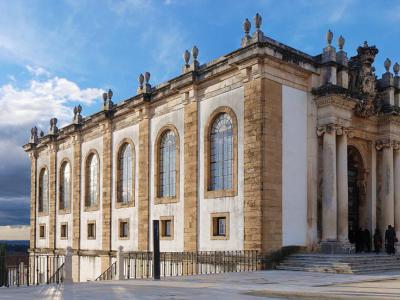
The Biblioteca Joanina is named for King John V, The king who loved books. He also loved libraries and he built them. Construction started in 1717 at the insistence of King John and the building was finished in 1728. The library collection was moved constantly before this, the collection growing and no place fit to hold it.
The reknowned architect Gaspar Ferreira is responsible for the design. The library consists of three sizable rooms lined with bookstands. Narrow corridors in the rooms carry the coats of arms of the various faculties of the University. Renovated several times, it is a Baroque creation of teams of artists working together.
The library collection has grown so much books published in the 20th century onwards are held in the Faculty of Letters building. The building was adapted as a library by Architect Albero Jose Pessoa, assisted by Horacio de Moura and Fernando Castelo Branco. The books dating from the 12th to 19th centuries remain in the Joanina Library.
The Biblioteca Joanina is the main attraction for library-loving visitors to the old campus. The interior is lavishly Baroque in style, sumptuously adorned in red and gold embellishments of arches and carvings. Painted panels on the ceilings are by Antonio Simoes Ribeiro and Vincente Nunes. Chinese elements are painted by Manuel De Silva.
Under the main floor is the "Prison" room. In days of yore offending Scholars and students were confined here. Respect for learning and study was taken seriously.
Books have enemies: humidity and insects. The Joanina library deals with these enemies in two ways. The effects of humidity are minimized by the use of hardwoods like teak and oak. These woods are not that tasty for bugs either. For those bugs and bookworms that get past the teak and the oak there are bats. Tiny bats that feed at night.
Why You Should Visit:
Don't worry about the bats. To spend some time in this beautiful place surrounded by the wisdom of the ages is a rare treat not available to everyone.
Tips:
Tours may be crowded. Come early.
The reknowned architect Gaspar Ferreira is responsible for the design. The library consists of three sizable rooms lined with bookstands. Narrow corridors in the rooms carry the coats of arms of the various faculties of the University. Renovated several times, it is a Baroque creation of teams of artists working together.
The library collection has grown so much books published in the 20th century onwards are held in the Faculty of Letters building. The building was adapted as a library by Architect Albero Jose Pessoa, assisted by Horacio de Moura and Fernando Castelo Branco. The books dating from the 12th to 19th centuries remain in the Joanina Library.
The Biblioteca Joanina is the main attraction for library-loving visitors to the old campus. The interior is lavishly Baroque in style, sumptuously adorned in red and gold embellishments of arches and carvings. Painted panels on the ceilings are by Antonio Simoes Ribeiro and Vincente Nunes. Chinese elements are painted by Manuel De Silva.
Under the main floor is the "Prison" room. In days of yore offending Scholars and students were confined here. Respect for learning and study was taken seriously.
Books have enemies: humidity and insects. The Joanina library deals with these enemies in two ways. The effects of humidity are minimized by the use of hardwoods like teak and oak. These woods are not that tasty for bugs either. For those bugs and bookworms that get past the teak and the oak there are bats. Tiny bats that feed at night.
Why You Should Visit:
Don't worry about the bats. To spend some time in this beautiful place surrounded by the wisdom of the ages is a rare treat not available to everyone.
Tips:
Tours may be crowded. Come early.
2) University of Coimbra Courtyard (must see)
Coimbra University was founded in 1290 by King Dinis. The university moved fitfully between Lisbon and Coimbra until 1537. Then, in the reign of John III, it moved permanently to Coimbra. It was housed in the Alcacova Palace. The palace was subsequently purchased from the Royal Family in 1597.
The library was a gift of King John V. King John could afford it. Gold from Brazil made him the richest king in the world. The library holds 200,000 or more books. In the library are tiny bats that feed on bookworms at night. Bat guano is swept up in the morning by library staff.
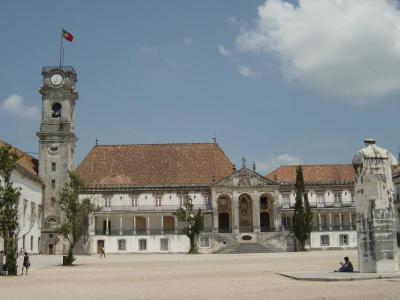
The University's crenelated clock tower is 112 feet high. It was formerly used for astronomical observations. It is roofless. Visitors are permitted at the top to get a great view of the city. The clock tower has two bells. One, called "the Goat", rings at 6 pm. The second, called "the Bitch" rings at 7:30 am, waking students for class.
Access to the University courtyard is through the Porta Ferrea ("Iron Gate"), the old gate to the palace. Before entering, one will encounter a stone pavement portrait of the goddess Minerva. She is the goddess of wisdom, medicine, commerce, artisanship, poetry and art. She looks serene, guarding piles of books. She doesn't need bats.
The courtyard, known as Courtyard of Schools, is a vast open area surrounded by buildings of the old campus. There is a statue of King John III. His back is turned to the city. He faces the university. The statues in the courtyard include King Dinis I and Denosthenes offering some words, silently.
Not all parts of the University are open to the public. No more than 60 people are allowed to visit at a time.
Why You Should Visit:
The square offers great views of the city below and access to the original historic buildings, such as the Joanina Library, the Royal Palace, the Chapel and the great Bell Tower.
Tips:
Some fees may be charged to visit the buildings. Make tour reservations early. If you climb the tower wear strong shoes.
The library was a gift of King John V. King John could afford it. Gold from Brazil made him the richest king in the world. The library holds 200,000 or more books. In the library are tiny bats that feed on bookworms at night. Bat guano is swept up in the morning by library staff.
The University's crenelated clock tower is 112 feet high. It was formerly used for astronomical observations. It is roofless. Visitors are permitted at the top to get a great view of the city. The clock tower has two bells. One, called "the Goat", rings at 6 pm. The second, called "the Bitch" rings at 7:30 am, waking students for class.
Access to the University courtyard is through the Porta Ferrea ("Iron Gate"), the old gate to the palace. Before entering, one will encounter a stone pavement portrait of the goddess Minerva. She is the goddess of wisdom, medicine, commerce, artisanship, poetry and art. She looks serene, guarding piles of books. She doesn't need bats.
The courtyard, known as Courtyard of Schools, is a vast open area surrounded by buildings of the old campus. There is a statue of King John III. His back is turned to the city. He faces the university. The statues in the courtyard include King Dinis I and Denosthenes offering some words, silently.
Not all parts of the University are open to the public. No more than 60 people are allowed to visit at a time.
Why You Should Visit:
The square offers great views of the city below and access to the original historic buildings, such as the Joanina Library, the Royal Palace, the Chapel and the great Bell Tower.
Tips:
Some fees may be charged to visit the buildings. Make tour reservations early. If you climb the tower wear strong shoes.
3) Igreja de Santa Cruz (Santa Cruz Monastery) (must see)
Saint Theotonious, Portugal's first saint, was the driving inspiration for the Monastery and church of the Holy Cross. Santa Cruz Monastery was built between 1132 and 1223. The school and library of the Monastery were esteemed throughout the middle ages by intellectuals and political figures.
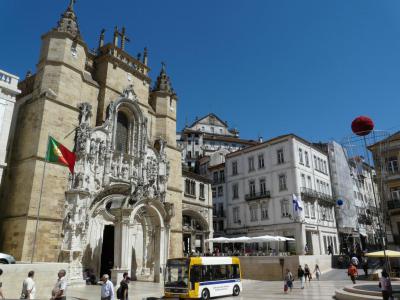
The early 16th century Romanesque monastery was completely redone by order of King Manuel. Diogo de Castilho, Machim and Jean of Rouen, Cristovao de Figureirado and Vasco Fernandes together with Chanterene, Boitaca and Diogo Pires the Younger all contributed art and labor to the rebirth of Santa Cruz Monastery.
The tombs of King Afonso Henriques and King Sancho I were transferred to the main chapel in 1530. Diogo de Boitaca created the plans for the church and the ribbed ceilings of the Chapter House. The Chapel of Saint Michael, the Cloister of Silence and the main portal complement and harmonize with the Manueline and Renaissance elements.
The carved choir stalls were installed in 1580. The stalls have a frieze of Portuguese ships in the Age of Discovery. The very complicated organ takes four people to play it. It has Japanese adornments and 4,000 pipes. Interior decorations feature Baroque azulejo tile panels.
The interior mixes Gothic and Baroque elements. A floridly sculpted arch in the facade opens to a cloister which is a perfect example of Manueline architecture.
The early 16th century Romanesque monastery was completely redone by order of King Manuel. Diogo de Castilho, Machim and Jean of Rouen, Cristovao de Figureirado and Vasco Fernandes together with Chanterene, Boitaca and Diogo Pires the Younger all contributed art and labor to the rebirth of Santa Cruz Monastery.
The tombs of King Afonso Henriques and King Sancho I were transferred to the main chapel in 1530. Diogo de Boitaca created the plans for the church and the ribbed ceilings of the Chapter House. The Chapel of Saint Michael, the Cloister of Silence and the main portal complement and harmonize with the Manueline and Renaissance elements.
The carved choir stalls were installed in 1580. The stalls have a frieze of Portuguese ships in the Age of Discovery. The very complicated organ takes four people to play it. It has Japanese adornments and 4,000 pipes. Interior decorations feature Baroque azulejo tile panels.
The interior mixes Gothic and Baroque elements. A floridly sculpted arch in the facade opens to a cloister which is a perfect example of Manueline architecture.
4) Fado ao Centro (Fado House) (must see)
Fado means "fate." It is also sad or soulful music and singing. There are two types of fado, that of Lisbon and that of Coimbra. Lisbon style is more well known, linked to working-class life and the poor. Coimbra style is traditionally that of medieval troubadours and linked to the city's university.
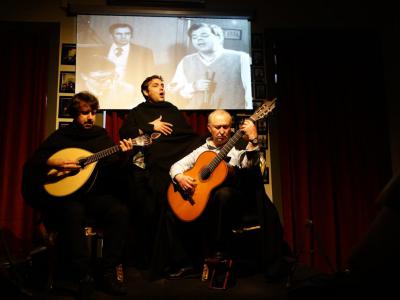
In Coimbra fado is traditionally sung by men wearing academic robes or capes. The singing is at night in the darkened squares and streets. The favorite venues are the steps of Santa Cruz Monastery and the Old Cathedral. It is also performed as a serenade beneath a lucky lady's window.
Every evening at six the Fado House has an hour long concert of fado. The venue is located on the Rua do Quebra Costas (Backbreak Street), up a little ways from the Almedina Arch. Besides the 6 pm performances, the Fado House opens daily at 10 am. It has a library of books, Cds and DVds. There are always musicians around to chat with.
Reservations are recommended for performances. No food is served but a glass of the local Port wine may be had for the concerts. Rehearsals are held between 4 pm and 5:30 pm.
In Coimbra fado is traditionally sung by men wearing academic robes or capes. The singing is at night in the darkened squares and streets. The favorite venues are the steps of Santa Cruz Monastery and the Old Cathedral. It is also performed as a serenade beneath a lucky lady's window.
Every evening at six the Fado House has an hour long concert of fado. The venue is located on the Rua do Quebra Costas (Backbreak Street), up a little ways from the Almedina Arch. Besides the 6 pm performances, the Fado House opens daily at 10 am. It has a library of books, Cds and DVds. There are always musicians around to chat with.
Reservations are recommended for performances. No food is served but a glass of the local Port wine may be had for the concerts. Rehearsals are held between 4 pm and 5:30 pm.
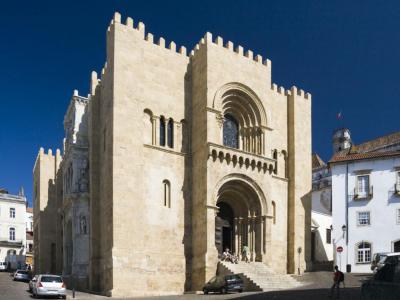
5) Sé Velha de Coimbra (Old Cathedral of Coimbra) (must see)
Old Cathedral of Coimbra is the only Portugese Romanesque cathedral which has survived intact. Construction began after the Battle of Ourique in 1139. Prince Afonso Henriques had declared himself King of Portugal. He chose Coimbra to be his capital. Sancho I, second King of Portugal was crowned in the cathedral in 1185.
Building the cathedral was slow going. The basic structure was not finished until the early 13th century. The cloisters were not begun until 1218. The plans and construction of the cathedral are generally credited to a mysterious Master Robert, a French architect. The works were directly supervised by another mysterious Master Bernard.
The Old Cathedral has the look of a little fortress. It has high crenelated walls with almost no windows. A high tower in the west facade, showing Romanesque and Arabic elements, is reinforced by heavy buttresses at the corners. The north facade has a renaissance portal by sculptor Jean of Rouen.
The capitals of the Romanesque decorations feature stone carvings of birds and four-footed creatures and birds but no human figures. Most of the artisans that worked on the Old Cathedral were mozarabic. They were Christians who had lived and worked in Arab lands. They were not used to human representations, which were banned under Islam.
Building the cathedral was slow going. The basic structure was not finished until the early 13th century. The cloisters were not begun until 1218. The plans and construction of the cathedral are generally credited to a mysterious Master Robert, a French architect. The works were directly supervised by another mysterious Master Bernard.
The Old Cathedral has the look of a little fortress. It has high crenelated walls with almost no windows. A high tower in the west facade, showing Romanesque and Arabic elements, is reinforced by heavy buttresses at the corners. The north facade has a renaissance portal by sculptor Jean of Rouen.
The capitals of the Romanesque decorations feature stone carvings of birds and four-footed creatures and birds but no human figures. Most of the artisans that worked on the Old Cathedral were mozarabic. They were Christians who had lived and worked in Arab lands. They were not used to human representations, which were banned under Islam.
