Custom Walk in Tokyo, Japan by tspade_7d286 created on 2026-06-27
Guide Location: Japan » Tokyo
Guide Type: Custom Walk
# of Sights: 10
Tour Duration: 3 Hour(s)
Travel Distance: 5.6 Km or 3.5 Miles
Share Key: XDMV6
Guide Type: Custom Walk
# of Sights: 10
Tour Duration: 3 Hour(s)
Travel Distance: 5.6 Km or 3.5 Miles
Share Key: XDMV6
How It Works
Please retrieve this walk in the GPSmyCity app. Once done, the app will guide you from one tour stop to the next as if you had a personal tour guide. If you created the walk on this website or come to the page via a link, please follow the instructions below to retrieve the walk in the app.
Retrieve This Walk in App
Step 1. Download the app "GPSmyCity: Walks in 1K+ Cities" on Apple App Store or Google Play Store.



Step 2. In the GPSmyCity app, download(or launch) the guide "Tokyo Map and Walking Tours".
Step 3. Tap the menu button located at upper right corner of the "Walks" screen and select "Retrieve custom walk". Enter the share key: XDMV6
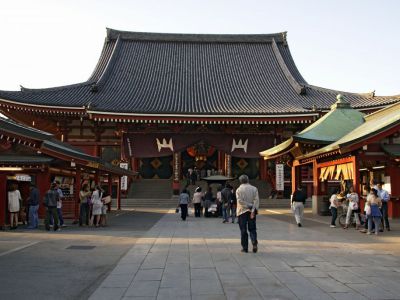
1) Senso-ji Temple (must see)
If Tokyo were a movie, Senso-ji Temple would be one of the stars-and not the flashy, one-hit-wonder type. We’re talking legendary status. Oldest temple in the city, most visited by tourists, and absolutely dripping in myth, history, and incense.
Legend has it that way back in the 7th century, two brothers were out fishing in the Sumida River when-plot twist-they pulled up a golden statue of Kannon, the Goddess of Mercy. They tried tossing her back, but she kept popping up like a divine boomerang. A local village headman got wind of this, had a spiritual epiphany, and next thing you know-bam!-temple time. That was 645 AD. Which means this place has been around longer than Tokyo itself.
Fast forward to the Edo period, and the powerful Tokugawa Shoguns swooped in with some serious upgrades and spiritual endorsements. World War II took its toll, but like any good epic, Senso-ji rose again-rebuilt by believers and still standing strong.
And yes, that original golden statue is still here. But no peeking-it's forever hidden from public view, like the temple’s best-kept secret.
Each year, over 30 million people make the pilgrimage here, not just for the views but for the vibes. Festivals are a big deal-especially Sanja Matsuri in May, when the energy is off the charts, and the Asakusa Samba Carnival in August, when Tokyo briefly turns into Rio.
Otherwise, Tokyo guests visit here for the soul of the city wrapped in centuries of history, spiritual charm, and photo ops galore.
Tip:
Wander the side streets for secret snacks and fewer crowds. And if you’re up for a little magic, come back at sundown-when the crowds fade, the lanterns glow, and the temple shows off its most photogenic side.
Legend has it that way back in the 7th century, two brothers were out fishing in the Sumida River when-plot twist-they pulled up a golden statue of Kannon, the Goddess of Mercy. They tried tossing her back, but she kept popping up like a divine boomerang. A local village headman got wind of this, had a spiritual epiphany, and next thing you know-bam!-temple time. That was 645 AD. Which means this place has been around longer than Tokyo itself.
Fast forward to the Edo period, and the powerful Tokugawa Shoguns swooped in with some serious upgrades and spiritual endorsements. World War II took its toll, but like any good epic, Senso-ji rose again-rebuilt by believers and still standing strong.
And yes, that original golden statue is still here. But no peeking-it's forever hidden from public view, like the temple’s best-kept secret.
Each year, over 30 million people make the pilgrimage here, not just for the views but for the vibes. Festivals are a big deal-especially Sanja Matsuri in May, when the energy is off the charts, and the Asakusa Samba Carnival in August, when Tokyo briefly turns into Rio.
Otherwise, Tokyo guests visit here for the soul of the city wrapped in centuries of history, spiritual charm, and photo ops galore.
Tip:
Wander the side streets for secret snacks and fewer crowds. And if you’re up for a little magic, come back at sundown-when the crowds fade, the lanterns glow, and the temple shows off its most photogenic side.
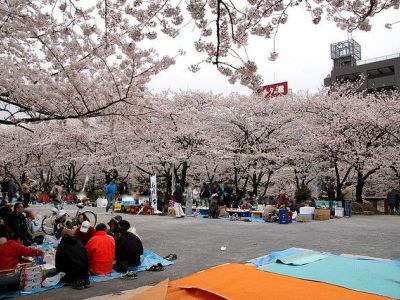
2) Sumida Park
Sumida Park, nestled in Tokyo's Asakusa district, is a spacious, verdant haven boasting picturesque landscapes, riverside walkways, and diverse communal amenities. It serves as an ideal spot for relaxation, picnics, and respite from the urban hustle, offering a breath of fresh air.
Established during Tokyo's reconstruction post the 1923 Great Kanto Earthquake, Sumida Park transitioned from private ownership to a public space in 1931, marking Japan's inaugural public riverside park. Uniquely straddling the Sumida River, it spans Taito ward in the west and Sumida ward in the east, interconnected by Kototoi and Sakurabashi Bridges.
The park is renowned for its approximately 700 cherry trees lining both riverbanks, drawing crowds for cherry blossom viewing in late March to early April. Additionally, plum blossoms and hydrangeas provide seasonal charm. On its west side, the park features various facilities including a Tully’s café near the south entrance, an extensive children's play area with swings, slides, and climbing structures, and a sports complex with tennis courts and a sizeable outdoor pool.
Sumida Park's calendar highlights include the Spring Cherry Blossom Festival and the Sumida River Fireworks Festival, celebrated on the last Saturday of July.
Established during Tokyo's reconstruction post the 1923 Great Kanto Earthquake, Sumida Park transitioned from private ownership to a public space in 1931, marking Japan's inaugural public riverside park. Uniquely straddling the Sumida River, it spans Taito ward in the west and Sumida ward in the east, interconnected by Kototoi and Sakurabashi Bridges.
The park is renowned for its approximately 700 cherry trees lining both riverbanks, drawing crowds for cherry blossom viewing in late March to early April. Additionally, plum blossoms and hydrangeas provide seasonal charm. On its west side, the park features various facilities including a Tully’s café near the south entrance, an extensive children's play area with swings, slides, and climbing structures, and a sports complex with tennis courts and a sizeable outdoor pool.
Sumida Park's calendar highlights include the Spring Cherry Blossom Festival and the Sumida River Fireworks Festival, celebrated on the last Saturday of July.
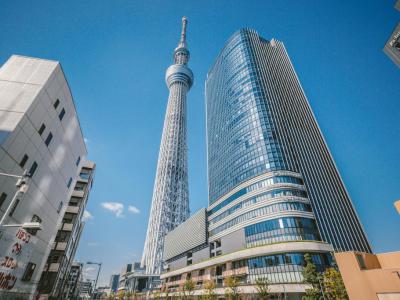
3) Tokyo Skytree (must see)
Tokyo Skytree is a multi-purpose tower located in Sumida, Tokyo, serving as a broadcasting hub, restaurant, and observation point. It gained the distinction of being the tallest structure in Japan in 2010 and attained its maximum height of 634.0 meters (2,080 feet) in March 2011. This achievement made it not only the tallest tower globally but also the second tallest man-made structure worldwide, only surpassed by the Burj Khalifa (standing at 829.8 meters/2,722 feet) at the time.
The tower's design at its base resembles a tripod, while from an altitude of around 350 meters (1,150 feet) and upwards, it adopts a cylindrical structure, allowing visitors to enjoy panoramic vistas of the river and the city. There are two observation decks, one at 350 meters (1,150 feet) with a capacity for up to 2000 visitors, and another at 450 meters (1,480 feet) accommodating around 900 people. The uppermost observation deck offers a unique feature-a spiral skywalk encased in glass, enabling visitors to ascend the last 5 meters to the highest point on the platform. Additionally, a section of glass flooring on this level provides a direct view downwards onto the streets below, offering a thrilling experience for visitors.
Why You Should Visit:
Gives you the true indication on how HUGE the city is!
Windows are clean and good for photo opportunities.
Tip:
There is an extra-price fast pass ticket for international travelers (with a passport), with no waiting time. Try to avoid weekends and holidays if you buy general admission tickets.
Make sure to go down to the 340th floor before going up to the 450th to walk and take photos on the glass bottom floor.
You can also plan a meal nearby, as many restaurants in the area have English menus and are able to speak English.
The tower's design at its base resembles a tripod, while from an altitude of around 350 meters (1,150 feet) and upwards, it adopts a cylindrical structure, allowing visitors to enjoy panoramic vistas of the river and the city. There are two observation decks, one at 350 meters (1,150 feet) with a capacity for up to 2000 visitors, and another at 450 meters (1,480 feet) accommodating around 900 people. The uppermost observation deck offers a unique feature-a spiral skywalk encased in glass, enabling visitors to ascend the last 5 meters to the highest point on the platform. Additionally, a section of glass flooring on this level provides a direct view downwards onto the streets below, offering a thrilling experience for visitors.
Why You Should Visit:
Gives you the true indication on how HUGE the city is!
Windows are clean and good for photo opportunities.
Tip:
There is an extra-price fast pass ticket for international travelers (with a passport), with no waiting time. Try to avoid weekends and holidays if you buy general admission tickets.
Make sure to go down to the 340th floor before going up to the 450th to walk and take photos on the glass bottom floor.
You can also plan a meal nearby, as many restaurants in the area have English menus and are able to speak English.
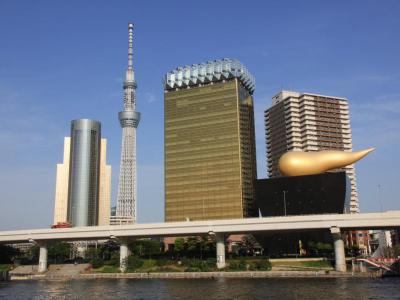
4) Asahi Beer Hall
The Asahi Beer Hall, also known as the Super Dry Hall or Flamme d'Or, is a distinctive building situated at the headquarters of Asahi Breweries on the eastern bank of the Sumida River in Sumida, Tokyo. Sporting an attention-grabbing and somewhat pretentious architectural style, the Asahi Beer Hall stands out as a significant example of contemporary architecture in Tokyo. Its most iconic feature is the Asahi Flame D'or, a massive golden structure perched atop the beer hall. This structure is said to symbolize both the passion behind Asahi beer and the frothy head that tops a freshly poured glass.
Remarkably, the 360-tonne golden flame was crafted using techniques employed in submarine construction by skilled shipbuilders. Interestingly, it is completely hollow. Informally, the Asahi Flame is affectionately referred to as "the golden turd" and the Asahi Beer Hall itself as the "poo building" by many residents of Tokyo.
The building itself is designed in the shape of a beer glass, intended to complement the adjacent golden beer mug-shaped building that houses the offices of Asahi Breweries. This architectural marvel was conceived by the renowned French designer Philippe Starck and was completed in 1989. Since then, the east bank of the Sumida River has become a popular destination for both tourists and locals who come to appreciate the unique design of the Asahi Beer Hall. It has earned its place as one of Tokyo's most iconic modern structures.
Remarkably, the 360-tonne golden flame was crafted using techniques employed in submarine construction by skilled shipbuilders. Interestingly, it is completely hollow. Informally, the Asahi Flame is affectionately referred to as "the golden turd" and the Asahi Beer Hall itself as the "poo building" by many residents of Tokyo.
The building itself is designed in the shape of a beer glass, intended to complement the adjacent golden beer mug-shaped building that houses the offices of Asahi Breweries. This architectural marvel was conceived by the renowned French designer Philippe Starck and was completed in 1989. Since then, the east bank of the Sumida River has become a popular destination for both tourists and locals who come to appreciate the unique design of the Asahi Beer Hall. It has earned its place as one of Tokyo's most iconic modern structures.
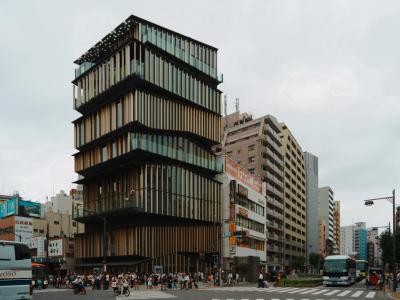
5) Asakusa Culture Tourist Information Center
If you think "tourist information center" means beige walls and dusty pamphlets, think again. The Asakusa Culture Information Center is Tokyo’s way of saying, “Let me impress you and tell you where the nearest ramen shop is.”
Indeed, this eight-story stunner, designed by architectural rockstar Kengo Kuma and unveiled in 2012, is the perfect launchpad to explore the historic Asakusa district. It blends traditional Japanese vibes with a modern edge. Think: a stack of stylish wooden townhouses (once common in the area) playing Jenga, if Jenga had an eye for design and cultural outreach.
Perched conveniently across from the iconic Kaminari-mon Gate, the center is practically impossible to miss-unless you’re walking with your eyes closed. (Please don’t.)
Inside, it's all warm wood, minimal fuss, and maximum helpfulness. The multilingual staff is ready with maps, brochures galore, travel tips, and restaurant recommendations, not to mention the occasional lifesaving restroom direction.
But wait, there’s more! Head up to the 8th floor, and you’ll be rewarded with a free-yes, completely free of charge-panoramic view of Senso-ji Temple, Nakamise Street, and the mighty Tokyo Skytree, all in one sweeping glance. It’s the perfect place to catch your breath and fill your camera roll.
And because we all love a good multitasker, this place also hooks you up with clean toilets, free Wi-Fi, and even currency exchange. It’s basically the Swiss Army knife of visitor centers-if Swiss Army knives were made of glass and timber and looked this cool.
In short: stylish, practical, photogenic, and helpful, the Asakusa Culture Information Center has your back as part travel hub, part modern art, and 100% worth the visit. Come for the info, stay for the skyline...
Indeed, this eight-story stunner, designed by architectural rockstar Kengo Kuma and unveiled in 2012, is the perfect launchpad to explore the historic Asakusa district. It blends traditional Japanese vibes with a modern edge. Think: a stack of stylish wooden townhouses (once common in the area) playing Jenga, if Jenga had an eye for design and cultural outreach.
Perched conveniently across from the iconic Kaminari-mon Gate, the center is practically impossible to miss-unless you’re walking with your eyes closed. (Please don’t.)
Inside, it's all warm wood, minimal fuss, and maximum helpfulness. The multilingual staff is ready with maps, brochures galore, travel tips, and restaurant recommendations, not to mention the occasional lifesaving restroom direction.
But wait, there’s more! Head up to the 8th floor, and you’ll be rewarded with a free-yes, completely free of charge-panoramic view of Senso-ji Temple, Nakamise Street, and the mighty Tokyo Skytree, all in one sweeping glance. It’s the perfect place to catch your breath and fill your camera roll.
And because we all love a good multitasker, this place also hooks you up with clean toilets, free Wi-Fi, and even currency exchange. It’s basically the Swiss Army knife of visitor centers-if Swiss Army knives were made of glass and timber and looked this cool.
In short: stylish, practical, photogenic, and helpful, the Asakusa Culture Information Center has your back as part travel hub, part modern art, and 100% worth the visit. Come for the info, stay for the skyline...
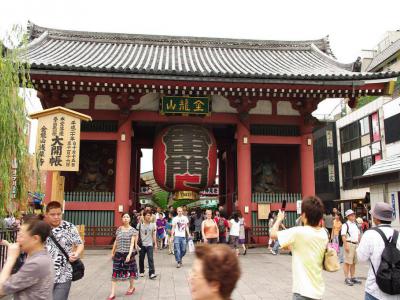
6) Kaminarimon Gate (Thunder Gate)
Behold the Kaminarimon-the dramatic, lantern-swinging, statue-guarded welcome mat to Tokyo’s Senso-ji Temple. Literally translating to “Thunder Gate”, this full-blown entrance experience is bold, iconic, and packing centuries of history under its massive red lantern.
This legendary landmark was first built way back in 942-yes, nine-freakin’-forty-two-by a samurai named Taira no Kinmasa. It had moved around a bit since then (because gates also have their dreams) before landing in its current spot in 1635. Sadly, it went up in smoke a few years later-in 1639-but was fortunately resurrected! The shogun Tokugawa Iemitsu made sure it came back better than ever. Furthermore, in 1960, it had another facelift-a sleek renovation that gave us the Kaminarimon we see today.
Standing a proud 11+ meters tall and just as many meters wide, it’s flanked by four divine bouncers. Up front: Fujin, the God of Wind, and Raijin, the God of Thunder-because “welcome” sounds more convincing if reinforced by a stare down from such a weather duo. On the flip side, you’ve got Tenryu and Kinryu, Buddhist protectors offering peace, health, and a sprinkle of good fortune.
Center stage is a giant, red paper lantern called a Chochin, so big it could probably have its own postal code. Donated by none other than the founder of Panasonic, it bears the name “Kaminarimon” on the front, while the gate’s official title, “Furaijinmon,” is inscribed on the back. Oh, and don’t miss the wooden dragon at the base. Fancy stuff.
Ultimately, this gate is an absolute must-snap photo op, especially if you're hunting for that "I went to Tokyo" kind of shot. Plus, the area around it is a treasure trove of tasty street eats and local charm.
Tip:
Catch it at night when the lantern glows gloriously, the crowd dips, and the Thunder Gate turns into a calm, magical beacon in the heart of Asakusa.
This legendary landmark was first built way back in 942-yes, nine-freakin’-forty-two-by a samurai named Taira no Kinmasa. It had moved around a bit since then (because gates also have their dreams) before landing in its current spot in 1635. Sadly, it went up in smoke a few years later-in 1639-but was fortunately resurrected! The shogun Tokugawa Iemitsu made sure it came back better than ever. Furthermore, in 1960, it had another facelift-a sleek renovation that gave us the Kaminarimon we see today.
Standing a proud 11+ meters tall and just as many meters wide, it’s flanked by four divine bouncers. Up front: Fujin, the God of Wind, and Raijin, the God of Thunder-because “welcome” sounds more convincing if reinforced by a stare down from such a weather duo. On the flip side, you’ve got Tenryu and Kinryu, Buddhist protectors offering peace, health, and a sprinkle of good fortune.
Center stage is a giant, red paper lantern called a Chochin, so big it could probably have its own postal code. Donated by none other than the founder of Panasonic, it bears the name “Kaminarimon” on the front, while the gate’s official title, “Furaijinmon,” is inscribed on the back. Oh, and don’t miss the wooden dragon at the base. Fancy stuff.
Ultimately, this gate is an absolute must-snap photo op, especially if you're hunting for that "I went to Tokyo" kind of shot. Plus, the area around it is a treasure trove of tasty street eats and local charm.
Tip:
Catch it at night when the lantern glows gloriously, the crowd dips, and the Thunder Gate turns into a calm, magical beacon in the heart of Asakusa.
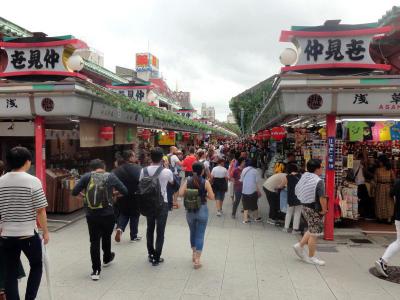
7) Nakamise Shopping Street
Step right up and take a stroll down Nakamise-dori-the grand catwalk of Asakusa’s shopping scene, where history, snacks, and souvenirs collide in the most delightful way. This lively 250-meter stretch connects the famous Kaminarimon Gate to the even more famous Senso-ji Temple, and it's been charming both locals and wide-eyed visitors since 1685. Yeah, this place has been slinging snacks and trinkets longer than most countries have been around.
Back in the day, temple affiliates were given the green light to set up shop-as long as they kept the place tidy. Think of it as early Tokyo’s homeowners association-meeting-Etsy setup. By 1885, the government decided to zhuzh things up with brick and vermilion-lacquered storefronts. Unfortunately, those didn’t survive the Great Kanto Earthquake of 1923 or World War II, but like a true Tokyo icon, Nakamise-dori rose again-stronger, snackier, and more souvenir-packed than ever.
These days, nearly 90 shops line the path, each one tempting you with something uniquely Japanese. There, you’ve got adorable little baked sweets shaped like dolls, handmade rice crackers that crackle louder than your knees, and all sorts of masks, crafts, and casual kimonos for that “just dropped into a festival” look. Even pro performers swing by to pick up their dance and theater gear-because yes, kabuki actors, like anybody else, need retail therapy.
You may want to visit here hunting for that perfect keepsake, craving some street food, or just seeking to bask in the festive vibes this street delivers. So walk, snack, shop, and repeat. Nakamise-dori isn’t just a street-it’s a whole experience with a side of history and a dusting of powdered sugar.
Tip:
Bring cash, as most of these charming shops are gloriously old-school-which means your credit card is about as useful here as a chocolate teapot.
Back in the day, temple affiliates were given the green light to set up shop-as long as they kept the place tidy. Think of it as early Tokyo’s homeowners association-meeting-Etsy setup. By 1885, the government decided to zhuzh things up with brick and vermilion-lacquered storefronts. Unfortunately, those didn’t survive the Great Kanto Earthquake of 1923 or World War II, but like a true Tokyo icon, Nakamise-dori rose again-stronger, snackier, and more souvenir-packed than ever.
These days, nearly 90 shops line the path, each one tempting you with something uniquely Japanese. There, you’ve got adorable little baked sweets shaped like dolls, handmade rice crackers that crackle louder than your knees, and all sorts of masks, crafts, and casual kimonos for that “just dropped into a festival” look. Even pro performers swing by to pick up their dance and theater gear-because yes, kabuki actors, like anybody else, need retail therapy.
You may want to visit here hunting for that perfect keepsake, craving some street food, or just seeking to bask in the festive vibes this street delivers. So walk, snack, shop, and repeat. Nakamise-dori isn’t just a street-it’s a whole experience with a side of history and a dusting of powdered sugar.
Tip:
Bring cash, as most of these charming shops are gloriously old-school-which means your credit card is about as useful here as a chocolate teapot.
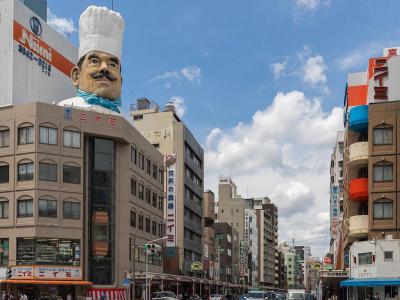
8) Kappabashi Street
Kappabashi-dori, commonly referred to as Kappabashi or Kitchen Town, is a street located in Tokyo, situated between the districts of Ueno and Asakusa. It is primarily known for its extensive array of stores catering to the restaurant industry. These establishments offer a wide variety of products, including knives, kitchen utensils, mass-produced tableware, restaurant furnishings, ovens, decorations, and even peculiar items like the lifelike plastic food displays often seen outside Japanese eateries. In addition to serving as a hub for restaurant supplies, Kappabashi-dori has also gained popularity as an unconventional tourist attraction.
The origins of this bustling commercial district date back to around 1912 when merchants initially congregated in the Kappabashi area. Initially, they traded old tools and a diverse range of implements and hardware. Spanning approximately 800 meters, equivalent to nearly half a mile, and boasting over 170 stores, Kappabashi-dori proudly holds the title of Japan's largest shopping street specializing in kitchen-related products.
The name of the street has two proposed etymological roots. One theory suggests it may have derived from the raincoats, known as "kappa," which local residents used to hang out to dry on the nearby bridge. Another possibility is that it originated from a merchant named Kihachi Kappaya, who financially supported the construction of the Shinhorikawa River for water management purposes. However, due to its homophonic resemblance to the popular mythical creature known as the "kappa," the shops along this street have officially embraced the kappa as their mascot.
The origins of this bustling commercial district date back to around 1912 when merchants initially congregated in the Kappabashi area. Initially, they traded old tools and a diverse range of implements and hardware. Spanning approximately 800 meters, equivalent to nearly half a mile, and boasting over 170 stores, Kappabashi-dori proudly holds the title of Japan's largest shopping street specializing in kitchen-related products.
The name of the street has two proposed etymological roots. One theory suggests it may have derived from the raincoats, known as "kappa," which local residents used to hang out to dry on the nearby bridge. Another possibility is that it originated from a merchant named Kihachi Kappaya, who financially supported the construction of the Shinhorikawa River for water management purposes. However, due to its homophonic resemblance to the popular mythical creature known as the "kappa," the shops along this street have officially embraced the kappa as their mascot.
9) Hanayashiki
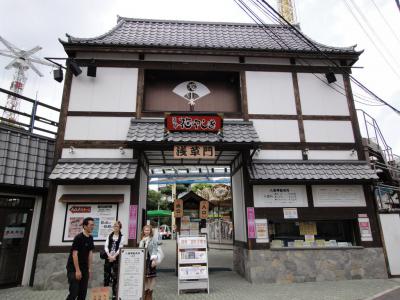
Just a short skip from the legendary Senso-ji Temple, in the retro-cool streets of Asakusa, you will find Hanayashiki Park-Japan’s oldest amusement park and a charming blend of nostalgia and quirky fun. We’re talking since-1853 kind of old. That’s right-Hanayashiki was dazzling folks back when topknots were still trending.
Originally a serene garden full of peonies and chrysanthemums, Hanayashiki slowly turned up the volume over the years. By the 1870s, it was dabbling in Western films, play gear, and even a zoo with animals so exotic, the place made national headlines. Fun fact: In 1923, five tiger cubs were born here. At once. And in 1931, Japan said hello to its first lion here.
As the country zoomed into the modern age, the flowers took a backseat, and the fun took the wheel. Post-WWII, the managing Togo Company gave the park a glow-up, adding rides, charm, and enough nostalgia to fill a time capsule.
Now, don’t let the compact size fool you-Hanayashiki packs a punch with 20+ quirky attractions. The main headliner is Japan’s oldest steel roller coaster, still click-clacking since 1953. Then there’s the haunted house that’s more delightfully weird than bone-chilling, those too-cute panda cars (for kids and adults who refuse to grow up), and good ol’ carnival classics like ring toss and shooting galleries.
Feeling snacky? Follow the scent of yakisoba, cotton candy, and soft-serve ice cream to a lineup of stalls that serve nostalgia on a stick. And when your feet need a break, head to the rooftop for chill views of Asakusa and the Tokyo Skytree. Perfect for selfies. Or existential skyline-gazing. Your call.
Who’s it for? Everyone. Families, date-night couples, curious solo wanderers-it’s a full-blown vibe. It’s not glitzy. It’s not massive. But it oozes charm, with a hint of Showa-era magic and just the right dose of kitsch.
So no, Hanayashiki isn’t trying to be Disneyland. It’s better-it’s Tokyo’s Old-Gold amusement spot, where the roller coasters are classic, the fun is heartfelt, and the smiles come with a side of sweet, old-school whimsy.
Originally a serene garden full of peonies and chrysanthemums, Hanayashiki slowly turned up the volume over the years. By the 1870s, it was dabbling in Western films, play gear, and even a zoo with animals so exotic, the place made national headlines. Fun fact: In 1923, five tiger cubs were born here. At once. And in 1931, Japan said hello to its first lion here.
As the country zoomed into the modern age, the flowers took a backseat, and the fun took the wheel. Post-WWII, the managing Togo Company gave the park a glow-up, adding rides, charm, and enough nostalgia to fill a time capsule.
Now, don’t let the compact size fool you-Hanayashiki packs a punch with 20+ quirky attractions. The main headliner is Japan’s oldest steel roller coaster, still click-clacking since 1953. Then there’s the haunted house that’s more delightfully weird than bone-chilling, those too-cute panda cars (for kids and adults who refuse to grow up), and good ol’ carnival classics like ring toss and shooting galleries.
Feeling snacky? Follow the scent of yakisoba, cotton candy, and soft-serve ice cream to a lineup of stalls that serve nostalgia on a stick. And when your feet need a break, head to the rooftop for chill views of Asakusa and the Tokyo Skytree. Perfect for selfies. Or existential skyline-gazing. Your call.
Who’s it for? Everyone. Families, date-night couples, curious solo wanderers-it’s a full-blown vibe. It’s not glitzy. It’s not massive. But it oozes charm, with a hint of Showa-era magic and just the right dose of kitsch.
So no, Hanayashiki isn’t trying to be Disneyland. It’s better-it’s Tokyo’s Old-Gold amusement spot, where the roller coasters are classic, the fun is heartfelt, and the smiles come with a side of sweet, old-school whimsy.
10) Ichikawa Danjuro IX Statue
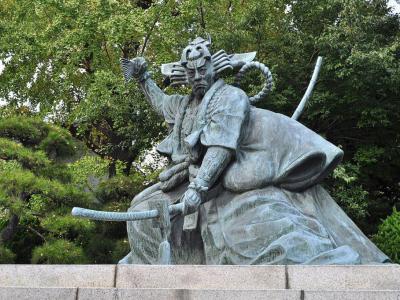
Just steps from Tokyo’s iconic Senso-ji Temple stands a sculptural tribute, or rather a standing ovation, in bronze. Meet the Ichikawa Danjūrō IX Statue, honoring one of the absolute titans of kabuki theater. And when we say titan, we mean it. If kabuki had a Hollywood Walk of Fame, Ichikawa Danjūrō would have his own boulevard.
Now, here’s the twist: “Ichikawa Danjūrō” isn’t just one guy-it’s a legacy. A theatrical title passed down like a family crown since the 1600s. But today, we’re zooming in on number nine-Ichikawa Danjūrō IX-born in 1838, kabuki superstar, Meiji-era showman, and the man who basically saved kabuki from being swept away by Western fads and factory whistles.
This wasn’t just a guy in makeup yelling dramatically on stage. Danjūrō IX was the master of aragoto-the bold, brash, hero-style of kabuki acting. Think booming voices, dramatic poses, and enough charisma to power Tokyo Tower.
While Japan was modernizing at warp speed, ditching kimonos for suits, Danjūrō fought to keep kabuki relevant without turning it into a museum piece. He fine-tuned scripts, performed for the imperial family-a big deal-and even dipped his toes into early cinema. That’s right: Kabuki went lights, camera, eyeliner.
His portrayal of the warrior monk Benkei in Kanjinchō was legendary. His leadership at the Kabuki-za Theatre was game-changing. His influence on the future of kabuki was immeasurable.
When he passed in 1903, Japan didn’t just lose an actor-it lost a cultural guardian. But thanks to his statue (and that unforgettable name), Ichikawa Danjūrō IX still holds center stage. So next time you pass by, maybe give a little bow. After all, royalty deserves applause-even in bronze.
Now, here’s the twist: “Ichikawa Danjūrō” isn’t just one guy-it’s a legacy. A theatrical title passed down like a family crown since the 1600s. But today, we’re zooming in on number nine-Ichikawa Danjūrō IX-born in 1838, kabuki superstar, Meiji-era showman, and the man who basically saved kabuki from being swept away by Western fads and factory whistles.
This wasn’t just a guy in makeup yelling dramatically on stage. Danjūrō IX was the master of aragoto-the bold, brash, hero-style of kabuki acting. Think booming voices, dramatic poses, and enough charisma to power Tokyo Tower.
While Japan was modernizing at warp speed, ditching kimonos for suits, Danjūrō fought to keep kabuki relevant without turning it into a museum piece. He fine-tuned scripts, performed for the imperial family-a big deal-and even dipped his toes into early cinema. That’s right: Kabuki went lights, camera, eyeliner.
His portrayal of the warrior monk Benkei in Kanjinchō was legendary. His leadership at the Kabuki-za Theatre was game-changing. His influence on the future of kabuki was immeasurable.
When he passed in 1903, Japan didn’t just lose an actor-it lost a cultural guardian. But thanks to his statue (and that unforgettable name), Ichikawa Danjūrō IX still holds center stage. So next time you pass by, maybe give a little bow. After all, royalty deserves applause-even in bronze.
