Custom Walk in Hague, Netherlands by fraserlewis10_f2c64a created on 2026-06-29
Guide Location: Netherlands » Hague
Guide Type: Custom Walk
# of Sights: 13
Tour Duration: 3 Hour(s)
Travel Distance: 4.1 Km or 2.5 Miles
Share Key: 7NEP4
Guide Type: Custom Walk
# of Sights: 13
Tour Duration: 3 Hour(s)
Travel Distance: 4.1 Km or 2.5 Miles
Share Key: 7NEP4
How It Works
Please retrieve this walk in the GPSmyCity app. Once done, the app will guide you from one tour stop to the next as if you had a personal tour guide. If you created the walk on this website or come to the page via a link, please follow the instructions below to retrieve the walk in the app.
Retrieve This Walk in App
Step 1. Download the app "GPSmyCity: Walks in 1K+ Cities" on Apple App Store or Google Play Store.



Step 2. In the GPSmyCity app, download(or launch) the guide "Hague Map and Walking Tours".
Step 3. Tap the menu button located at upper right corner of the "Walks" screen and select "Retrieve custom walk". Enter the share key: 7NEP4
1) Het Plein (Square)
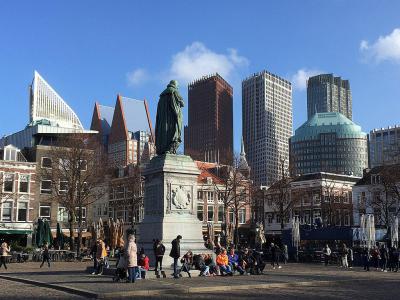
The square serves as one of the main open spaces in the center of The Hague. The site began as a garden belonging to the Inner Court, where vegetables were grown for the household of the Counts of Holland. In 1632, it was formally redesigned into a square, inspired by the layout of Square of the Vosges in Paris. Instead of a private, functional garden, the space became a planned urban square suited to a growing administrative center.
At its core stands an equestrian statue of William II of the Netherlands, installed in 1924. William II was a Dutch king associated with constitutional reform; in 1848, he accepted changes that limited royal power and strengthened parliamentary governance.
Toward the north-west corner of the square, across the street, is the Mauritshuis Royal Picture Gallery, a former 17th-century residence now housing Dutch Golden Age paintings. Standing with the Mauritshuis in front of you, the large building to your right is “De Witte Literary Society”, a historic private club tied to the city’s political and social circles. Continuing further right along the same edge are buildings used by the Dutch Parliament, including offices of the House of Representatives.
During the day, the square functions as a transition area between government buildings and commercial streets. In warmer months, outdoor terraces extend across much of the square, and temporary setups or public events are occasionally held, supported by its central location and proximity to the Dutch Parliament.
At its core stands an equestrian statue of William II of the Netherlands, installed in 1924. William II was a Dutch king associated with constitutional reform; in 1848, he accepted changes that limited royal power and strengthened parliamentary governance.
Toward the north-west corner of the square, across the street, is the Mauritshuis Royal Picture Gallery, a former 17th-century residence now housing Dutch Golden Age paintings. Standing with the Mauritshuis in front of you, the large building to your right is “De Witte Literary Society”, a historic private club tied to the city’s political and social circles. Continuing further right along the same edge are buildings used by the Dutch Parliament, including offices of the House of Representatives.
During the day, the square functions as a transition area between government buildings and commercial streets. In warmer months, outdoor terraces extend across much of the square, and temporary setups or public events are occasionally held, supported by its central location and proximity to the Dutch Parliament.
2) Ridderzaal (Knight's Hall) (must see)
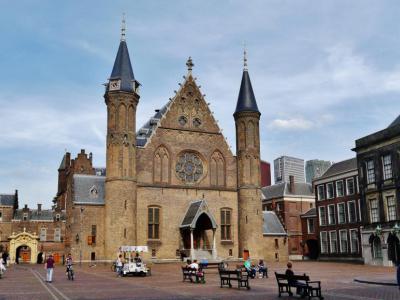
The Knight’s Hall is the central ceremonial building constructed in the 13th century under Floris V of Holland. It was designed as a grand hall for receptions, feasts, and official gatherings tied to the court of the Counts of Holland. Its role gradually shifted alongside the political development of the Netherlands, moving from a feudal setting to a center of state activity.
During the 17th and 18th centuries, the building lost its ceremonial function and was used for more practical purposes, including as storage and as the office of the state lottery. By the 19th century, it had fallen into disrepair. A major restoration completed in 1904 returned the structure to a Gothic appearance, with the interior redesigned by architect Pierre Cuypers.
The interior is defined by a large, open hall with a high wooden roof structure, often compared to the inverted hull of a ship. The timber framework spans the space without internal supports, allowing for clear sightlines across the hall. Tall stained-glass windows introduce natural light and reference key moments in Dutch history.
Today, the Knight’s Hall remains in active use for national events. It is the setting for the annual State Opening of Parliament, when the monarch delivers the Speech from the Throne on Prince’s Day. The hall is also used for official receptions, conferences, and state occasions, including royal celebrations. Administration of the building falls under the Government Buildings Agency, and access is managed through the ProDemos Center for Democracy and the Rule of Law, which organizes guided visits when the hall is not in official use.
During the 17th and 18th centuries, the building lost its ceremonial function and was used for more practical purposes, including as storage and as the office of the state lottery. By the 19th century, it had fallen into disrepair. A major restoration completed in 1904 returned the structure to a Gothic appearance, with the interior redesigned by architect Pierre Cuypers.
The interior is defined by a large, open hall with a high wooden roof structure, often compared to the inverted hull of a ship. The timber framework spans the space without internal supports, allowing for clear sightlines across the hall. Tall stained-glass windows introduce natural light and reference key moments in Dutch history.
Today, the Knight’s Hall remains in active use for national events. It is the setting for the annual State Opening of Parliament, when the monarch delivers the Speech from the Throne on Prince’s Day. The hall is also used for official receptions, conferences, and state occasions, including royal celebrations. Administration of the building falls under the Government Buildings Agency, and access is managed through the ProDemos Center for Democracy and the Rule of Law, which organizes guided visits when the hall is not in official use.
3) Binnenhof (Inner Court) (must see)
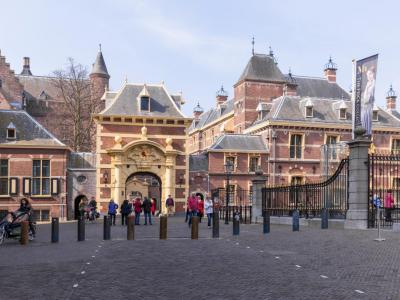
Established in the 13th century as the residence of the Counts of Holland, the Inner Court gradually evolved into the center of national administration. Unlike many former royal compounds, it has remained in continuous use, making it one of the oldest parliamentary complexes still functioning in the world. The site developed around a courtyard bordered by administrative buildings.
As you enter the courtyard, move toward the center: the Knight’s Hall stands directly ahead, easy to recognize by its two towers and pointed Gothic roof. Walk around to the far side of the complex, toward the water, and you’ll reach the edge of the lake. From here, turn slightly to your right: the small medieval Little Tower, used by the Prime Minister, sits right at the water’s edge.
Stand facing the lake with the Little Tower in front of you. Immediately to its left is the Treaty Room, used for Cabinet meetings. Continue along the same waterfront edge and you’ll pass the Senate chamber, located in the older wing facing the Hofvijver. The House of Representatives is not in the historic core but in a more modern extension connected to the complex, set slightly back from the courtyard.
Return to the courtyard and walk along its perimeter to take in the layout: cobblestone paving underfoot, modest façades enclosing the space, and narrow passages linking the different wings. Today, the Inner Court remains the political heart of The Hague. It hosts the annual Prince’s Day ceremony, when the monarch delivers the Speech from the Throne in the Knight’s Hall. The complex is currently undergoing a large-scale renovation aimed at preserving its historic structures.
As you enter the courtyard, move toward the center: the Knight’s Hall stands directly ahead, easy to recognize by its two towers and pointed Gothic roof. Walk around to the far side of the complex, toward the water, and you’ll reach the edge of the lake. From here, turn slightly to your right: the small medieval Little Tower, used by the Prime Minister, sits right at the water’s edge.
Stand facing the lake with the Little Tower in front of you. Immediately to its left is the Treaty Room, used for Cabinet meetings. Continue along the same waterfront edge and you’ll pass the Senate chamber, located in the older wing facing the Hofvijver. The House of Representatives is not in the historic core but in a more modern extension connected to the complex, set slightly back from the courtyard.
Return to the courtyard and walk along its perimeter to take in the layout: cobblestone paving underfoot, modest façades enclosing the space, and narrow passages linking the different wings. Today, the Inner Court remains the political heart of The Hague. It hosts the annual Prince’s Day ceremony, when the monarch delivers the Speech from the Throne in the Knight’s Hall. The complex is currently undergoing a large-scale renovation aimed at preserving its historic structures.
4) Grote Marktstraat (Main Market Street)
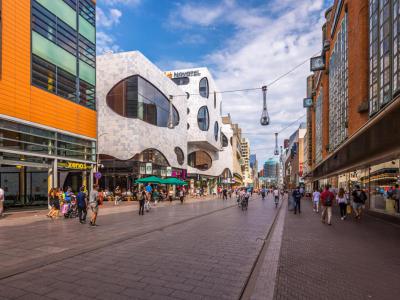
Main Market Street links the historic core with the modern retail district around the Spui area. Although its name refers to the nearby Main Market Square, the street itself is a relatively modern addition to the city. Constructed in the late 1920s, it was designed as a broad route connecting the older center with newer districts toward the south-east.
The creation of Main Market Street significantly reshaped this part of the city. Several older buildings and narrow neighborhood streets were cleared to make way for a wider thoroughfare. A small reminder of the earlier urban layout survives near Frame Street, where a row of preserved façades hints at the scale of the streets that once stood here.
Today, Main Market Street functions as one of the city’s busiest shopping routes. Large department stores, international brands, and indoor retail centres line both sides of the street. The architecture reflects several periods of redevelopment, including post-war rebuilding and more recent renovations aimed at strengthening the street’s role as a major shopping boulevard.
The creation of Main Market Street significantly reshaped this part of the city. Several older buildings and narrow neighborhood streets were cleared to make way for a wider thoroughfare. A small reminder of the earlier urban layout survives near Frame Street, where a row of preserved façades hints at the scale of the streets that once stood here.
Today, Main Market Street functions as one of the city’s busiest shopping routes. Large department stores, international brands, and indoor retail centres line both sides of the street. The architecture reflects several periods of redevelopment, including post-war rebuilding and more recent renovations aimed at strengthening the street’s role as a major shopping boulevard.
5) Grote Markt (Main Market Square)
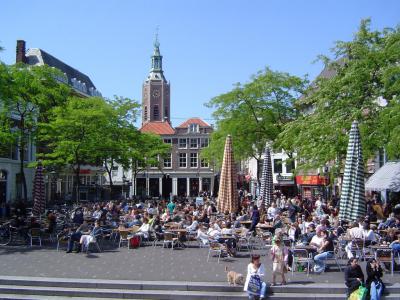
Main Market Square is one of the main public spaces in the center of The Hague. Historically, the area functioned as an open market where food, household goods, and daily trade supported local life. Its location reflects the traditional layout of Dutch towns, where commerce, religion, and administration developed side by side.
Today, the square is known more for its cafés, bars, and terraces than for market activity. Historic façades stand alongside later commercial buildings, creating a mix of old and modern architecture. Standing near the center of the square and facing east, you’ll see Café Restaurant De Zwarte Ruiter, a long-established café and live-music venue known for its informal atmosphere and concert nights. Just to its left is Zeta, a modern bar and restaurant with outdoor seating that contributes to the square’s social character. Turning in the opposite direction, you’ll find Bakplaats, a bakery and café known for bread, pastries, and casual daytime dining.
Looking north across the square, you’ll notice the statue of Standbeeld Haagse Harry. This sculpture represents Haagse Harry, a local comic-strip character created by cartoonist Marnix Rueb. Speaking in The Hague dialect and known for his direct humor, Haagse Harry became an unofficial symbol of local identity.
The square also plays an important role in The Hague’s live music and festival scene. Bars and venues around the square regularly host performances, while the open layout allows for seasonal markets, food events, and outdoor gatherings. During summer, the area often becomes part of music festivals and cultural programs, with temporary stages and public seating added to support concerts and evening events.
Today, the square is known more for its cafés, bars, and terraces than for market activity. Historic façades stand alongside later commercial buildings, creating a mix of old and modern architecture. Standing near the center of the square and facing east, you’ll see Café Restaurant De Zwarte Ruiter, a long-established café and live-music venue known for its informal atmosphere and concert nights. Just to its left is Zeta, a modern bar and restaurant with outdoor seating that contributes to the square’s social character. Turning in the opposite direction, you’ll find Bakplaats, a bakery and café known for bread, pastries, and casual daytime dining.
Looking north across the square, you’ll notice the statue of Standbeeld Haagse Harry. This sculpture represents Haagse Harry, a local comic-strip character created by cartoonist Marnix Rueb. Speaking in The Hague dialect and known for his direct humor, Haagse Harry became an unofficial symbol of local identity.
The square also plays an important role in The Hague’s live music and festival scene. Bars and venues around the square regularly host performances, while the open layout allows for seasonal markets, food events, and outdoor gatherings. During summer, the area often becomes part of music festivals and cultural programs, with temporary stages and public seating added to support concerts and evening events.
6) Grote Kerk (Great Church)
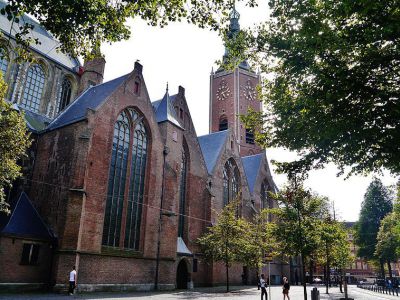
The Great Church is one of the oldest buildings, its origins dating back to the 13th century, when it began as a wooden parish church. Over the following centuries, particularly between the 14th and 16th centuries, it was gradually rebuilt in stone and expanded into a large Gothic structure. The church has long been associated with the Dutch royal family, with members of the House of Orange-Nassau traditionally baptized there.
Architecturally, the church is notable for its tall tower, which rises over 90 meters and remains a landmark in the city skyline. Inside, the space is defined by a high vaulted ceiling supported by columns that create multiple aisles. The building evolved from a traditional cruciform plan into a “hall church,” where the side aisles were raised to the same height as the central nave. Near the center of the church, look upward to see the painted wooden ceiling bosses decorated with coats of arms and symbolic motifs. Toward the eastern end stands the carved wooden pulpit, while the large organ occupies the western side above the entrance area.
As you move through the interior, several details stand out. Along the walls and between the columns are memorial plaques and tombs connected to prominent citizens and political figures from The Hague’s past. Decorative escutcheons of the Order of the Golden Fleece appear high within the nave, reflecting the church’s ties to noble and royal ceremonies. The church has served both religious and civic roles throughout its history. While it still hosts occasional services, it is now owned by the city and managed as a cultural venue. Concerts, exhibitions, and public events are regularly held inside.
Architecturally, the church is notable for its tall tower, which rises over 90 meters and remains a landmark in the city skyline. Inside, the space is defined by a high vaulted ceiling supported by columns that create multiple aisles. The building evolved from a traditional cruciform plan into a “hall church,” where the side aisles were raised to the same height as the central nave. Near the center of the church, look upward to see the painted wooden ceiling bosses decorated with coats of arms and symbolic motifs. Toward the eastern end stands the carved wooden pulpit, while the large organ occupies the western side above the entrance area.
As you move through the interior, several details stand out. Along the walls and between the columns are memorial plaques and tombs connected to prominent citizens and political figures from The Hague’s past. Decorative escutcheons of the Order of the Golden Fleece appear high within the nave, reflecting the church’s ties to noble and royal ceremonies. The church has served both religious and civic roles throughout its history. While it still hosts occasional services, it is now owned by the city and managed as a cultural venue. Concerts, exhibitions, and public events are regularly held inside.

7) Oude Stadhuis (Old City Hall)
Old City Hall dates to 1565 and was constructed as the city’s town hall during a period when The Hague was expanding as an administrative center. In the 16th century, the Italian writer Lodovico Guicciardini described The Hague as “the biggest village in Europe”, noting its lack of defensive walls. Against that backdrop, the scale and form of the city hall would have stood out as a symbol of civic organization.
The building is designed in the Renaissance style and is often compared to the city hall of Antwerp. Its façade features decorative stonework and a structured, symmetrical composition. Statues created before 1742 by sculptor Jan Baptist Xavery represent allegorical figures such as Faith, Hope, Charity, Strength, and Justice, reinforcing the civic ideals associated with the building.
Inside, the Old City Hall originally housed municipal offices, council chambers, and administrative spaces. Over time, the interior was modified and restored, with decorative elements updated across different periods. Works associated with the Confrerie Pictura, a 17th-century artists’ society, are also connected to the building.
Today, the building is no longer the main administrative center, as these functions have moved to the modern city hall. It is now primarily used for civil ceremonies, including weddings. For visitors, the Old City Hall provides a clear link between the historic market area and the city’s civic past.
The building is designed in the Renaissance style and is often compared to the city hall of Antwerp. Its façade features decorative stonework and a structured, symmetrical composition. Statues created before 1742 by sculptor Jan Baptist Xavery represent allegorical figures such as Faith, Hope, Charity, Strength, and Justice, reinforcing the civic ideals associated with the building.
Inside, the Old City Hall originally housed municipal offices, council chambers, and administrative spaces. Over time, the interior was modified and restored, with decorative elements updated across different periods. Works associated with the Confrerie Pictura, a 17th-century artists’ society, are also connected to the building.
Today, the building is no longer the main administrative center, as these functions have moved to the modern city hall. It is now primarily used for civil ceremonies, including weddings. For visitors, the Old City Hall provides a clear link between the historic market area and the city’s civic past.

8) De Passage Shopping Arcade
De Passage is a covered shopping arcade, linking Spuistraat, Venestraat, and Buitenhof streets. Opened in 1885, it is the oldest shopping arcade in the Netherlands and a designated national monument. Its construction reflects a late 19th-century trend of creating enclosed retail passages, offering a sheltered environment for shopping while connecting key streets in the city center.
The arcade is defined by its glass-covered roof and decorative iron framework, which allow natural light to fill the space. The original section retains tiled floors, detailed façades, and large display windows, while the layout guides visitors through a series of connected corridors rather than a single straight passage. The structure was restored in the early 21st century.
A newer extension, often referred to as the New Passage, continues the route toward the main shopping streets. While more modern in design, it maintains the concept of a covered arcade, with a higher and more open glass ceiling. Today, De Passage houses a mix of boutiques, specialty stores, and cafés, with a focus on smaller, independent businesses alongside selected international brands.
The arcade is defined by its glass-covered roof and decorative iron framework, which allow natural light to fill the space. The original section retains tiled floors, detailed façades, and large display windows, while the layout guides visitors through a series of connected corridors rather than a single straight passage. The structure was restored in the early 21st century.
A newer extension, often referred to as the New Passage, continues the route toward the main shopping streets. While more modern in design, it maintains the concept of a covered arcade, with a higher and more open glass ceiling. Today, De Passage houses a mix of boutiques, specialty stores, and cafés, with a focus on smaller, independent businesses alongside selected international brands.
9) Paleis Noordeinde (Noordeinde Palace)
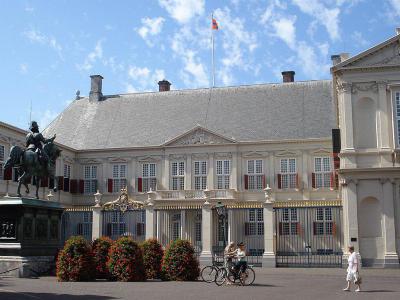
Noordeinde Palace is one of the three official palaces used by the Dutch royal family. Its origins trace back to the 16th century, when a farmhouse on the site was expanded into a residence in 1553. The property was later acquired by the States of Holland and presented to Louise de Coligny, widow of William of Orange. In the 17th century, under Frederick Henry, Prince of Orange, the residence was enlarged and redesigned by architects Pieter Post and Jacob van Campen.
The palace passed through several hands over the following centuries, including ownership by Frederick I of Prussia, before returning to Dutch control in the 18th century. After a period of limited use, it was eventually restored and repurposed. Today, it serves as the working office of Willem-Alexander, where official duties such as meetings, receptions, and the signing of state documents take place. For this reason, the interior is not open to the public.
From the outside, the palace presents a symmetrical Dutch Classical façade, with a central entrance and balanced wings extending on either side. It stands at the end of Noordeinde Street, an area known for galleries, boutiques, and cafés. Behind the building lies the Palace Garden, which is open to visitors and offers a view toward the rear of the complex. While access to the palace itself is restricted, the exterior and its setting provide insight into the role of the monarchy within the city.
The palace passed through several hands over the following centuries, including ownership by Frederick I of Prussia, before returning to Dutch control in the 18th century. After a period of limited use, it was eventually restored and repurposed. Today, it serves as the working office of Willem-Alexander, where official duties such as meetings, receptions, and the signing of state documents take place. For this reason, the interior is not open to the public.
From the outside, the palace presents a symmetrical Dutch Classical façade, with a central entrance and balanced wings extending on either side. It stands at the end of Noordeinde Street, an area known for galleries, boutiques, and cafés. Behind the building lies the Palace Garden, which is open to visitors and offers a view toward the rear of the complex. While access to the palace itself is restricted, the exterior and its setting provide insight into the role of the monarchy within the city.
10) Panorama Mesdag (must see)
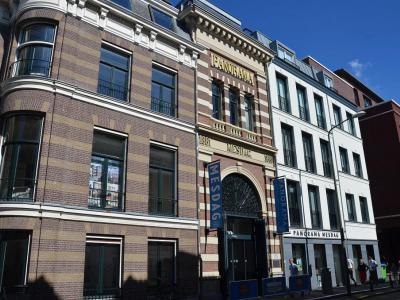
Panorama Mesdag is a purpose-built museum, created to house a large circular painting by Dutch painter Hendrik Willem Mesdag. Completed in 1881, the panorama measures about 120 meters in circumference and 14 meters in height, making it one of the largest surviving 19th-century panoramic paintings still in its original location. It depicts the coastal landscape of the Scheveningen district as it appeared in the late 19th century, when it was still a separate fishing village, with sailboats on the shore and minimal industrial presence.
The museum is designed around a central viewing platform. As you step onto it, the painting surrounds you in a full 360-degree view, creating the impression of standing on a dune above the village. This effect is reinforced by a foreground of real sand, nets, and props that blend seamlessly into the painted scene, making it difficult to distinguish between physical elements and the artwork.
Mesdag, a leading figure of the Hague School known for marine subjects, worked on the panorama with assistance from several artists, including his wife Sientje Mesdag-van Houten. The project required both artistic skill and technical planning to maintain consistent perspective across the circular surface. Although panoramas were popular forms of visual entertainment in the 19th century, their popularity declined soon after. When the company behind the project faced financial difficulties, Mesdag purchased the work himself to preserve it.
For visitors, Panorama Mesdag offers a single, focused viewing experience rather than a conventional gallery visit. The structure of the museum directs attention to the central platform, where the full effect of the painting can be understood.
The museum is designed around a central viewing platform. As you step onto it, the painting surrounds you in a full 360-degree view, creating the impression of standing on a dune above the village. This effect is reinforced by a foreground of real sand, nets, and props that blend seamlessly into the painted scene, making it difficult to distinguish between physical elements and the artwork.
Mesdag, a leading figure of the Hague School known for marine subjects, worked on the panorama with assistance from several artists, including his wife Sientje Mesdag-van Houten. The project required both artistic skill and technical planning to maintain consistent perspective across the circular surface. Although panoramas were popular forms of visual entertainment in the 19th century, their popularity declined soon after. When the company behind the project faced financial difficulties, Mesdag purchased the work himself to preserve it.
For visitors, Panorama Mesdag offers a single, focused viewing experience rather than a conventional gallery visit. The structure of the museum directs attention to the central platform, where the full effect of the painting can be understood.

11) Denneweg (Dune Road)
Dune Road is one of the older streets in The Hague, its name reflecting its origins as a winding path through sandy terrain leading toward the coast. In earlier centuries, it served as a route used by nobility and officials traveling between the political center and the surrounding landscape, before gradually becoming integrated into the city.
Over time, Dune Road developed into a refined commercial street while retaining its historic layout. The buildings lining the street are relatively narrow and closely set, with many façades dating from the 18th and 19th centuries. Despite later updates, the street maintains an intimate scale, with ground-floor storefronts and upper residential or office levels.
Today, the area is known for its concentration of independent boutiques, antique shops, galleries, and specialized stores. The street has long been associated with antiques and design, and this focus is still visible in the types of businesses found here, alongside cafés and restaurants that provide regular stopping points.
For visitors, Dune Road offers a clear contrast to the more formal, institutional spaces. It connects easily to nearby streets such as Lange Voorhout, where events like the Hague Antiques and Book Fair are occasionally held.
Over time, Dune Road developed into a refined commercial street while retaining its historic layout. The buildings lining the street are relatively narrow and closely set, with many façades dating from the 18th and 19th centuries. Despite later updates, the street maintains an intimate scale, with ground-floor storefronts and upper residential or office levels.
Today, the area is known for its concentration of independent boutiques, antique shops, galleries, and specialized stores. The street has long been associated with antiques and design, and this focus is still visible in the types of businesses found here, alongside cafés and restaurants that provide regular stopping points.
For visitors, Dune Road offers a clear contrast to the more formal, institutional spaces. It connects easily to nearby streets such as Lange Voorhout, where events like the Hague Antiques and Book Fair are occasionally held.
12) Escher in Het Paleis (Escher in The Palace) (must see)
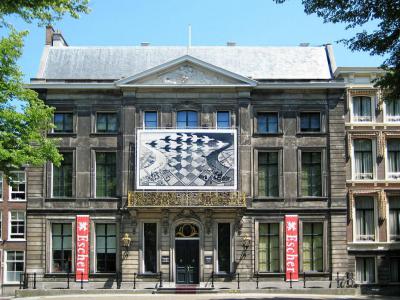
Escher in The Palace is dedicated to the work of Dutch graphic artist M. C. Escher and is housed in a former royal residence. The building was constructed in 1760, designed by architect Pieter de Swart, and later served as the winter palace of Queen Emma of the Netherlands, who used it until her death in 1934. In 1990, the palace was transferred to the city with the condition that it be used for cultural purposes, leading to its conversion into a museum dedicated to Escher’s work.
The collection focuses on Escher’s graphic art, including woodcuts, lithographs, and mezzotints. His early works often depict detailed landscapes and natural forms, while later pieces explore mathematical concepts such as symmetry, tessellation, and infinite patterns. Among the best-known works on display are Relativity, Ascending and Descending, and Day and Night, each illustrating his interest in visual paradox and spatial illusion. Escher himself once remarked on the fascination of boundaries between forms, reflecting his ongoing exploration of transformation and repetition.
Inside, the original layout of the palace has been preserved, with period features such as decorated ceilings, chandeliers, and wall finishes still visible. One unusual element is a staircase installed during Queen Emma’s time, designed in a way that creates a misleading sense of direction, aligning with the visual themes found in Escher’s work. Interactive displays are also included, allowing visitors to experiment with optical effects and better understand the techniques behind the images. For visitors, the museum offers a focused experience centered on a single artist within a manageable space.
The collection focuses on Escher’s graphic art, including woodcuts, lithographs, and mezzotints. His early works often depict detailed landscapes and natural forms, while later pieces explore mathematical concepts such as symmetry, tessellation, and infinite patterns. Among the best-known works on display are Relativity, Ascending and Descending, and Day and Night, each illustrating his interest in visual paradox and spatial illusion. Escher himself once remarked on the fascination of boundaries between forms, reflecting his ongoing exploration of transformation and repetition.
Inside, the original layout of the palace has been preserved, with period features such as decorated ceilings, chandeliers, and wall finishes still visible. One unusual element is a staircase installed during Queen Emma’s time, designed in a way that creates a misleading sense of direction, aligning with the visual themes found in Escher’s work. Interactive displays are also included, allowing visitors to experiment with optical effects and better understand the techniques behind the images. For visitors, the museum offers a focused experience centered on a single artist within a manageable space.
13) Mauritshuis Royal Picture Gallery (must see)
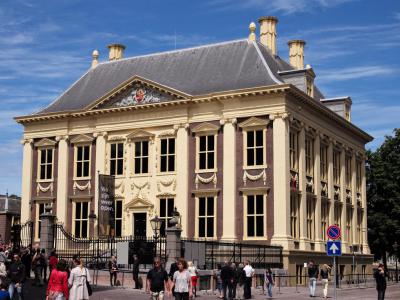
Mauritshuis Royal Picture Gallery was constructed between 1633 and 1644 and designed by architects Jacob van Campen and Pieter Post in the Dutch Classical style as a residence for Johan Maurits of Nassau-Siegen, then governor of Dutch Brazil. After passing through private and governmental use, the building was acquired by the Dutch state in 1820 and opened in 1822 as a museum for the Royal Cabinet of Paintings.
The museum’s collection has its roots in the holdings of William V, Prince of Orange, whose Royal Picture Gallery formed the core of the institution. Today, the Mauritshuis holds nearly 800 paintings, focusing on Dutch and Flemish works from the 15th to 17th centuries. Among its most recognized pieces is Girl with a Pearl Earring by Johannes Vermeer. Other key works include The Anatomy Lesson of Dr. Nicolaes Tulp by Rembrandt, alongside paintings by Peter Paul Rubens, Paulus Potter, and Rogier van der Weyden.
Inside, the museum retains the scale and character of a 17th-century residence. Rooms are arranged around a central hall and decorated with period details, including painted ceilings and silk wall coverings. In 2007, the museum expanded with an underground connection to a neighboring building, adding exhibition and visitor facilities without altering the historic structure above ground. For visitors, the Mauritshuis offers a focused introduction to Dutch Golden Age painting within a short walking distance of major landmarks.
The museum’s collection has its roots in the holdings of William V, Prince of Orange, whose Royal Picture Gallery formed the core of the institution. Today, the Mauritshuis holds nearly 800 paintings, focusing on Dutch and Flemish works from the 15th to 17th centuries. Among its most recognized pieces is Girl with a Pearl Earring by Johannes Vermeer. Other key works include The Anatomy Lesson of Dr. Nicolaes Tulp by Rembrandt, alongside paintings by Peter Paul Rubens, Paulus Potter, and Rogier van der Weyden.
Inside, the museum retains the scale and character of a 17th-century residence. Rooms are arranged around a central hall and decorated with period details, including painted ceilings and silk wall coverings. In 2007, the museum expanded with an underground connection to a neighboring building, adding exhibition and visitor facilities without altering the historic structure above ground. For visitors, the Mauritshuis offers a focused introduction to Dutch Golden Age painting within a short walking distance of major landmarks.
