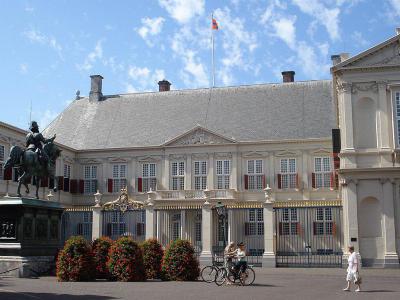


Paleis Noordeinde (Noordeinde Palace), Hague
Noordeinde Palace is one of the three official palaces used by the Dutch royal family. Its origins trace back to the 16th century, when a farmhouse on the site was expanded into a residence in 1553. The property was later acquired by the States of Holland and presented to Louise de Coligny, widow of William of Orange. In the 17th century, under Frederick Henry, Prince of Orange, the residence was enlarged and redesigned by architects Pieter Post and Jacob van Campen.
The palace passed through several hands over the following centuries, including ownership by Frederick I of Prussia, before returning to Dutch control in the 18th century. After a period of limited use, it was eventually restored and repurposed. Today, it serves as the working office of Willem-Alexander, where official duties such as meetings, receptions, and the signing of state documents take place. For this reason, the interior is not open to the public.
From the outside, the palace presents a symmetrical Dutch Classical façade, with a central entrance and balanced wings extending on either side. It stands at the end of Noordeinde Street, an area known for galleries, boutiques, and cafés. Behind the building lies the Palace Garden, which is open to visitors and offers a view toward the rear of the complex. While access to the palace itself is restricted, the exterior and its setting provide insight into the role of the monarchy within the city.
The palace passed through several hands over the following centuries, including ownership by Frederick I of Prussia, before returning to Dutch control in the 18th century. After a period of limited use, it was eventually restored and repurposed. Today, it serves as the working office of Willem-Alexander, where official duties such as meetings, receptions, and the signing of state documents take place. For this reason, the interior is not open to the public.
From the outside, the palace presents a symmetrical Dutch Classical façade, with a central entrance and balanced wings extending on either side. It stands at the end of Noordeinde Street, an area known for galleries, boutiques, and cafés. Behind the building lies the Palace Garden, which is open to visitors and offers a view toward the rear of the complex. While access to the palace itself is restricted, the exterior and its setting provide insight into the role of the monarchy within the city.
Want to visit this sight? Check out these Self-Guided Walking Tours in Hague. Alternatively, you can download the mobile app "GPSmyCity: Walks in 1K+ Cities" from Apple App Store or Google Play Store. The app turns your mobile device to a personal tour guide and it works offline, so no data plan is needed when traveling abroad.
Download The GPSmyCity App



Paleis Noordeinde (Noordeinde Palace) on Map
Sight Name: Paleis Noordeinde (Noordeinde Palace)
Sight Location: Hague, Netherlands (See walking tours in Hague)
Sight Type: Attraction/Landmark
Guide(s) Containing This Sight:
Sight Location: Hague, Netherlands (See walking tours in Hague)
Sight Type: Attraction/Landmark
Guide(s) Containing This Sight:
Nearby Sights
Walking Tours in Hague, Netherlands

Create Your Own Walk in Hague
Creating your own self-guided walk in Hague is easy and fun. Choose the city attractions that you want to see and a walk route map will be created just for you. You can even set your hotel as the start point of the walk.
Hague's Classic Architectural Jewels
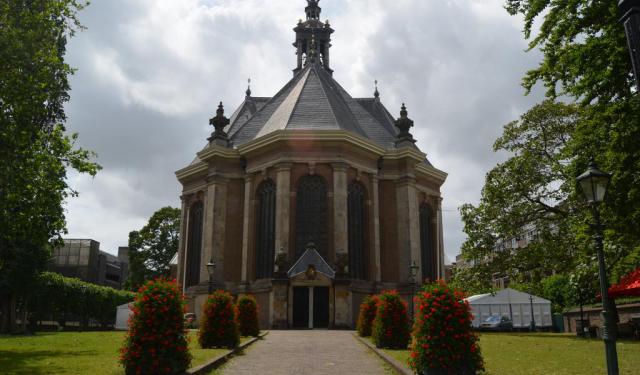
As the third largest metropolis in the Netherlands, The Hague has plenty to offer architecturally discerning travelers. The city is a living proof of a harmonious coexistence between a modern, easy on the eye skyline and a steeped in history downtown. Owing to its fascinating (political) past, The Hague has a plethora of historic buildings associated with worship, governance, royalty and... view more
Tour Duration: 2 Hours
Travel Distance: 2.9 Km or 1.8 Miles
Tour Duration: 2 Hours
Travel Distance: 2.9 Km or 1.8 Miles
Scheveningen Walking Tour
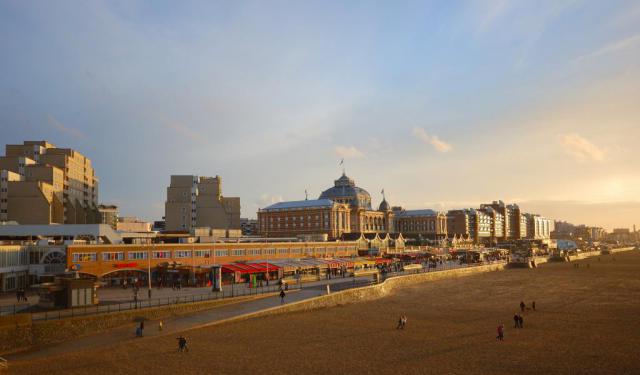
Originally an independent fishing village, today Scheveningen is one of The Hague's eight districts. With its long beaches loved by both the young and old in all seasons, Scheveningen gets particularly crowded in summer.
Modern as it is, this seaside resort, the most popular in Holland, boasts a great deal of history - stretching all the way back to 1280 - with the locals still... view more
Tour Duration: 1 Hour
Travel Distance: 2.7 Km or 1.7 Miles
Modern as it is, this seaside resort, the most popular in Holland, boasts a great deal of history - stretching all the way back to 1280 - with the locals still... view more
Tour Duration: 1 Hour
Travel Distance: 2.7 Km or 1.7 Miles
The Hague Old Town Walking Tour
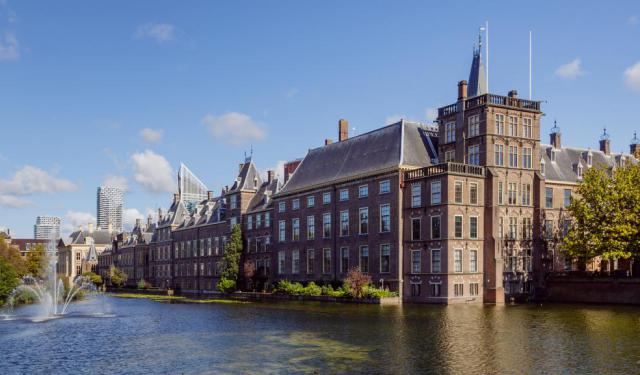
In the 16th century, Italian writer Lodovico Guicciardini described The Hague as “the most beautiful, richest, and biggest village in Europe.”
The origins of The Hague date back to around 1230, when Count Floris IV of Holland purchased land near a dune lake, later known as the Hofvijver. The city name, The Hague, traces its origin to “the Count’s hedge”, referring to a wooded hunting... view more
Tour Duration: 2 Hours
Travel Distance: 3.5 Km or 2.2 Miles
The origins of The Hague date back to around 1230, when Count Floris IV of Holland purchased land near a dune lake, later known as the Hofvijver. The city name, The Hague, traces its origin to “the Count’s hedge”, referring to a wooded hunting... view more
Tour Duration: 2 Hours
Travel Distance: 3.5 Km or 2.2 Miles