Custom Walk in Oslo, Norway by ssyskin639 created on 2026-06-30
Guide Location: Norway » Oslo
Guide Type: Custom Walk
# of Sights: 9
Tour Duration: 3 Hour(s)
Travel Distance: 7 Km or 4.3 Miles
Share Key: 8Z2V5
Guide Type: Custom Walk
# of Sights: 9
Tour Duration: 3 Hour(s)
Travel Distance: 7 Km or 4.3 Miles
Share Key: 8Z2V5
How It Works
Please retrieve this walk in the GPSmyCity app. Once done, the app will guide you from one tour stop to the next as if you had a personal tour guide. If you created the walk on this website or come to the page via a link, please follow the instructions below to retrieve the walk in the app.
Retrieve This Walk in App
Step 1. Download the app "GPSmyCity: Walks in 1K+ Cities" on Apple App Store or Google Play Store.



Step 2. In the GPSmyCity app, download(or launch) the guide "Oslo Map and Walking Tours".
Step 3. Tap the menu button located at upper right corner of the "Walks" screen and select "Retrieve custom walk". Enter the share key: 8Z2V5
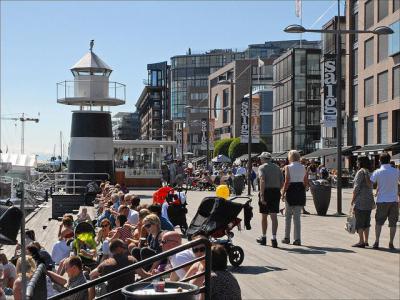
1) Aker Brygge Wharf (must see)
Aker Brygge in Oslo is a vibrant neighborhood known for its shopping, dining, and entertainment options. Once an industrial area with a shipyard that operated until 1982, it underwent significant redevelopment starting in the mid-1980s, transforming into a commercial and residential hub.
This redevelopment involved a mix of demolishing old industrial buildings and repurposing workshop halls into shopping areas, culminating in a modern district completed in 1998. The area now features shops, restaurants, a cinema, offices, residential apartments, a small boat harbor, and a ferry terminal. Further reorganization between 2010 and 2014 enhanced public spaces and added a new district.
Today, Aker Brygge attracts around 12 million visitors annually and is a leader in waterfront development in Norway. It combines public areas with cultural sites, such as the Astrup Fearnley Museum of Modern Art, and various artworks like the 'Sundial for Spatial Echoes' by Tomás Saraceno and the 'South Oslo' sculpture by Jacqueline Donachie.
The local pier is a popular spot for people-watching, dining at food trucks, and relaxing. The Aker Brygge Marina offers boat rentals, kayaking, and saunas, making it a great place to experience the Oslo Fjord.
Still, the most popular activity at Aker Brygge is strolling along the promenade, which offers abundant outdoor seating-estimated at around 2,500 seats-allowing visitors to enjoy the blend of old-world and modern architecture. The wharf frequently hosts pop-up shops, fashion shows, concerts, and art exhibits, ensuring a lively atmosphere. Aker Brygge provides enough entertainment for a visitor to easily spend an entire day enjoying the sights and activities.
This redevelopment involved a mix of demolishing old industrial buildings and repurposing workshop halls into shopping areas, culminating in a modern district completed in 1998. The area now features shops, restaurants, a cinema, offices, residential apartments, a small boat harbor, and a ferry terminal. Further reorganization between 2010 and 2014 enhanced public spaces and added a new district.
Today, Aker Brygge attracts around 12 million visitors annually and is a leader in waterfront development in Norway. It combines public areas with cultural sites, such as the Astrup Fearnley Museum of Modern Art, and various artworks like the 'Sundial for Spatial Echoes' by Tomás Saraceno and the 'South Oslo' sculpture by Jacqueline Donachie.
The local pier is a popular spot for people-watching, dining at food trucks, and relaxing. The Aker Brygge Marina offers boat rentals, kayaking, and saunas, making it a great place to experience the Oslo Fjord.
Still, the most popular activity at Aker Brygge is strolling along the promenade, which offers abundant outdoor seating-estimated at around 2,500 seats-allowing visitors to enjoy the blend of old-world and modern architecture. The wharf frequently hosts pop-up shops, fashion shows, concerts, and art exhibits, ensuring a lively atmosphere. Aker Brygge provides enough entertainment for a visitor to easily spend an entire day enjoying the sights and activities.
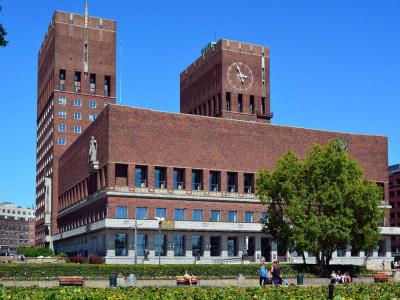
2) Oslo City Hall (must see)
Oslo City Hall (Oslo rådhus) is a mainstay of civic life in the Norwegian capital. Designed by architects Arnstein Arneberg and Magnus Poulsson, its construction took place between 1931 and 1950, with a pause during World War II. The red-brick structure features two towers – 63 and 66 meters tall. The eastern tower houses a carillon with 49 bells that chime every hour.
Historically, Oslo had different city halls, including one reportedly housing a public wine cellar. The Old City Hall (Gamle rådhus) was built near Akershus Fortress in 1641. As the city expanded, the need for a larger facility became evident by the 1800s. The idea for the current City Hall emerged in 1906 but was delayed for financial reasons.
When the building was officially opened in 1950, its brick style looked (at least to some) a bit outdated compared to the modern steel-and-glass architecture of the time. Influenced by functionalism, the design included two oblong, industrial-style office towers. The overall appearance combined modern forms and styling from the medieval era, including statues mounted on the walls and an ornate astronomical clock on the north face.
The artistic decorations, selected through contests in 1937, feature contributions from eight painters and 17 sculptors. The main hall features wall paintings by Henrik Sørensen and Alf Rolfsen, depicting Norway’s history. The City Council Hall is semi-circular, adorned with oak and tapestries, including one showing Saint Hallvard (the patron saint of Oslo) and the seven virtues, meant to inspire ethical governance.
Each year, on December 10th, the Nobel Peace Prize ceremony takes place at the Oslo City Hall, attended by the Norwegian royal family and prime minister. Barack Obama was among the first to be honored in the banqueting hall here after the ceremony was moved from the University of Oslo’s main building.
The City Hall is open to the general public. Apart from its decorated halls, visitors can enjoy a wonderful view of the harbor from the main balcony.
Tip:
Make sure to read the English captions under the wood carvings as you walk up to the City Hall.
Free guided tours in English (lasting approximately one hour) are also available, during which the guides explain the murals & artworks and their symbolism, as well as the functioning of the municipal government, in an entertaining way. Something not to be missed!
Historically, Oslo had different city halls, including one reportedly housing a public wine cellar. The Old City Hall (Gamle rådhus) was built near Akershus Fortress in 1641. As the city expanded, the need for a larger facility became evident by the 1800s. The idea for the current City Hall emerged in 1906 but was delayed for financial reasons.
When the building was officially opened in 1950, its brick style looked (at least to some) a bit outdated compared to the modern steel-and-glass architecture of the time. Influenced by functionalism, the design included two oblong, industrial-style office towers. The overall appearance combined modern forms and styling from the medieval era, including statues mounted on the walls and an ornate astronomical clock on the north face.
The artistic decorations, selected through contests in 1937, feature contributions from eight painters and 17 sculptors. The main hall features wall paintings by Henrik Sørensen and Alf Rolfsen, depicting Norway’s history. The City Council Hall is semi-circular, adorned with oak and tapestries, including one showing Saint Hallvard (the patron saint of Oslo) and the seven virtues, meant to inspire ethical governance.
Each year, on December 10th, the Nobel Peace Prize ceremony takes place at the Oslo City Hall, attended by the Norwegian royal family and prime minister. Barack Obama was among the first to be honored in the banqueting hall here after the ceremony was moved from the University of Oslo’s main building.
The City Hall is open to the general public. Apart from its decorated halls, visitors can enjoy a wonderful view of the harbor from the main balcony.
Tip:
Make sure to read the English captions under the wood carvings as you walk up to the City Hall.
Free guided tours in English (lasting approximately one hour) are also available, during which the guides explain the murals & artworks and their symbolism, as well as the functioning of the municipal government, in an entertaining way. Something not to be missed!
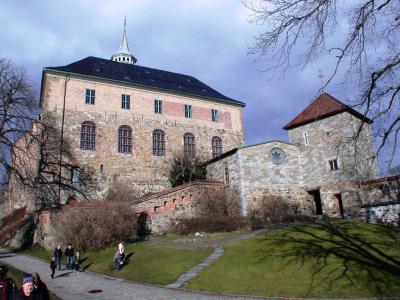
3) Akershus Fortress (must see)
Akershus Fortress (Akershus Festning), also known as Akershus Castle (Akershus Slott), is a medieval fortification in Oslo, central to the history of Norway. The exact date of its construction is unknown but is believed to have started in the late 1290s under King Haakon V. The fortress is the namesake of the county of Akershus, which used to encompass most of Eastern Norway.
Throughout its history, Akershus Fortress has withstood numerous sieges, including those by Swedish and Danish forces between 1308 and 1532. Despite these attacks, the fortress was never captured by a foreign enemy. However, during World War II, it surrendered to Nazi Germany without a fight and later became a site for executions by the German occupiers and post-war trials. The fortress was liberated in 1945 by the Norwegian resistance.
Akershus Castle also served as a royal residence during the Middle Ages, playing a key role in the shift of Norway's capital from Bergen to Oslo. Several notable Norwegian royals, including King Haakon V, resided there. After a significant fire in 1624, King Christian IV ordered the relocation of Oslo closer to the fortress, subsequently renaming the city Christiania. The fortress was modernized into a Renaissance-style castle and continued to function primarily as a palace until the 19th century.
In addition to its military and royal functions, Akershus has also been used as a prison, holding many rebels and criminals throughout its history. Some prisoners were famous, like the notorious criminal and writer Gjest Baardsen, who served there 18 years after being given a life sentence; the legendary bank robber Ole Høiland, who committed suicide at Akershus upon his second internment; and Lars Haetta, who was sentenced to death for rebellion but was later pardoned when he began translating the Christian Bible into Sami.
Today, Akershus Fortress is still a military area but is open to the public daily. Visitors can explore the castle, the Norwegian Armed Forces Museum, and Norway's Resistance Museum. The fortress also houses the Royal Mausoleum, the final resting place for several Norwegian monarchs. The Office of the Norwegian Prime Minister is temporarily located near the fortress, and the site is still guarded by His Majesty the King’s Guard.
Throughout its history, Akershus Fortress has withstood numerous sieges, including those by Swedish and Danish forces between 1308 and 1532. Despite these attacks, the fortress was never captured by a foreign enemy. However, during World War II, it surrendered to Nazi Germany without a fight and later became a site for executions by the German occupiers and post-war trials. The fortress was liberated in 1945 by the Norwegian resistance.
Akershus Castle also served as a royal residence during the Middle Ages, playing a key role in the shift of Norway's capital from Bergen to Oslo. Several notable Norwegian royals, including King Haakon V, resided there. After a significant fire in 1624, King Christian IV ordered the relocation of Oslo closer to the fortress, subsequently renaming the city Christiania. The fortress was modernized into a Renaissance-style castle and continued to function primarily as a palace until the 19th century.
In addition to its military and royal functions, Akershus has also been used as a prison, holding many rebels and criminals throughout its history. Some prisoners were famous, like the notorious criminal and writer Gjest Baardsen, who served there 18 years after being given a life sentence; the legendary bank robber Ole Høiland, who committed suicide at Akershus upon his second internment; and Lars Haetta, who was sentenced to death for rebellion but was later pardoned when he began translating the Christian Bible into Sami.
Today, Akershus Fortress is still a military area but is open to the public daily. Visitors can explore the castle, the Norwegian Armed Forces Museum, and Norway's Resistance Museum. The fortress also houses the Royal Mausoleum, the final resting place for several Norwegian monarchs. The Office of the Norwegian Prime Minister is temporarily located near the fortress, and the site is still guarded by His Majesty the King’s Guard.
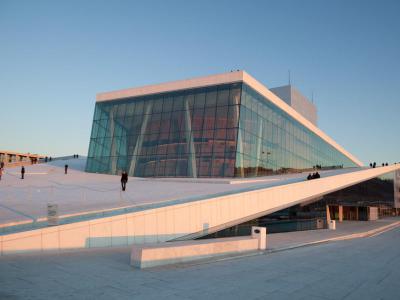
4) Oslo Opera House
The Oslo Opera House is a notable building that hosts the Norwegian National Ballet, the Opera Orchestra, and the Ballet School. Situated right by the harbour, its unique angled, white exterior looks as if it rises from the water, allowing visitors to climb the roof for stunning views of Oslo and the fjord throughout the year.
At street level, large windows offer a peek into rehearsals and workshop activities inside. The interior features mainly oak, and the main hall has a horseshoe shape, similar to traditional theatres. Designed by the Norwegian architecture firm Snøhetta, the building has won several prestigious awards.
The Norwegian National Opera & Ballet offers a diverse program from three stages: The Main House with 1369 seats, the Second House with 400 seats, and the Studio with 200 seats. Additionally, the opera roof and foyer are used for concerts. Guided tours are available in both Norwegian and English.
At street level, large windows offer a peek into rehearsals and workshop activities inside. The interior features mainly oak, and the main hall has a horseshoe shape, similar to traditional theatres. Designed by the Norwegian architecture firm Snøhetta, the building has won several prestigious awards.
The Norwegian National Opera & Ballet offers a diverse program from three stages: The Main House with 1369 seats, the Second House with 400 seats, and the Studio with 200 seats. Additionally, the opera roof and foyer are used for concerts. Guided tours are available in both Norwegian and English.
5) Karl Johans Gate (must see)
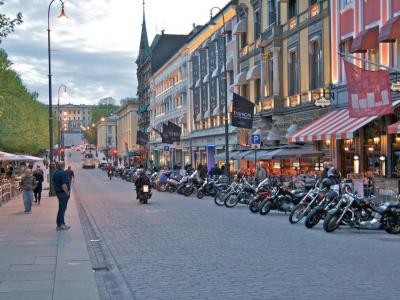
Karl Johans Gate, or simply "Karl Johan" (as the locals colloquially refer to it), is named after King Karl III Johan and is considered the main street in Oslo. Popular with tourists, it gets particularly vibrant on Norway's Constitution Day, May 17, with parades and royal appearances. Street performers, including jugglers and musicians, add to the lively atmosphere from May to October, making it a cultural hub in the city.
Karl Johans Gate stretches 1,415 meters from Oslo Central Station to the Royal Palace. A section between the station and the Storting building is fully pedestrian. Lining the street are a number of landmarks such as the Oslo Cathedral, the Bazaars, the Fire Brigade, the National Theater, the Hotel Continental, and the University of Oslo.
Palace Park (Slottsparken) at the east end of Karl Johans Gate is home to the Royal Palace (Slottet). Originally built for King Karl III Johan, the palace continues to function as a residence for the present King of Norway, Harald V.
The street is made up of two distinct sections with unique histories. The eastern section, between Egertorget to Jernbanetorget squares, was originally part of King Christian IV's old city, near the ramparts. It wasn't fully developed until the 1690s when the Oslo Cathedral was built. The western section was developed in the late 1830s, as part of an urban expansion. Designed as a parade route, it was named Karl Johans Gate in 1852 after King Karl Johan’s death. The distinctively wide western and narrow eastern sections were merged in 1860.
In 2005, to mark the centenary of the dissolution of the Union between Sweden and Norway, the western part of Karl Johans Gate was narrowed and the pavements extended, aligning with the midpoint of the Royal Palace’s facade. New lampposts (modeled after 1920s designs) were installed, and the street was repaved with large stones. Also, to honor the 100th anniversary of Henrik Ibsen’s death in 2006, quotes from his works were embedded in the pavement between Frederiks Gate and the Grand Hotel, replicating the famous writer's daily route from the 1890s.
Karl Johans Gate stretches 1,415 meters from Oslo Central Station to the Royal Palace. A section between the station and the Storting building is fully pedestrian. Lining the street are a number of landmarks such as the Oslo Cathedral, the Bazaars, the Fire Brigade, the National Theater, the Hotel Continental, and the University of Oslo.
Palace Park (Slottsparken) at the east end of Karl Johans Gate is home to the Royal Palace (Slottet). Originally built for King Karl III Johan, the palace continues to function as a residence for the present King of Norway, Harald V.
The street is made up of two distinct sections with unique histories. The eastern section, between Egertorget to Jernbanetorget squares, was originally part of King Christian IV's old city, near the ramparts. It wasn't fully developed until the 1690s when the Oslo Cathedral was built. The western section was developed in the late 1830s, as part of an urban expansion. Designed as a parade route, it was named Karl Johans Gate in 1852 after King Karl Johan’s death. The distinctively wide western and narrow eastern sections were merged in 1860.
In 2005, to mark the centenary of the dissolution of the Union between Sweden and Norway, the western part of Karl Johans Gate was narrowed and the pavements extended, aligning with the midpoint of the Royal Palace’s facade. New lampposts (modeled after 1920s designs) were installed, and the street was repaved with large stones. Also, to honor the 100th anniversary of Henrik Ibsen’s death in 2006, quotes from his works were embedded in the pavement between Frederiks Gate and the Grand Hotel, replicating the famous writer's daily route from the 1890s.
6) Royal Palace (must see)
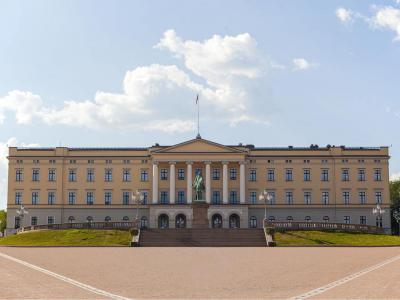
The Royal Palace (Slottet) in Oslo was constructed in the first half of the 19th century as the residence for King Karl III Johan of Norway. Originally from France, the king (also known as Karl XIV Johan of Sweden) reigned over Norway and Sweden from 1818 to 1844. Today, the palace serves as the official residence of the Norwegian monarch (whereas the Crown Prince resides at the Skaugum estate in Asker, west of Oslo).
Situated at the end of Karl Johans Gate, the palace is surrounded by Palace Park (Slottsparken) and is fronted by Palace Square (Slottsplassen). Before its completion, Norwegian royalty resided in Paléet, a grand townhouse in Christiania (now Oslo). The construction of the Royal Palace began in 1824 and lasted for nearly 25 years, based on the designs by Danish-born architect Hans Linstow.
Despite adopting a simpler three-story neo-classical design, the palace remained unfinished when King Karl passed away in 1844. His son and successor, Oscar I, and his wife, Queen Josephine, became its first residents five years later.
The Royal Palace Chapel, consecrated in 1844, is used for religious services and various events of the Norwegian royal family, such as baptisms and confirmations.
Following the dissolution of the Union with Sweden in 1905, the palace became the permanent royal residence of Norway’s new monarch, King Haakon VII. Significant renovations were undertaken during the reign of King Harald V to address structural issues and modernize the building. Public access to the palace began in 2002, and the daily changing of the guard has since become a popular attraction for visitors.
Moreover, in 2017, the former palace stables were renovated and converted into a versatile art venue called The Queen Sonja Art Stable (Dronning Sonja KunstStall). Open to the public, this building serves as an art gallery, museum, and concert hall.
Guided tours of the palace, predominantly in Norwegian, are offered throughout the afternoon during the summer months. However, English-language tours are also available daily at 12 pm, 2 pm, 2:20 pm, and 4 pm. Tickets for these guided tours can be purchased online starting from the 1st of March each year.
Tip:
Changing of the royal guards is at 1:30 pm daily. You can always politely approach one of the guard soldiers and take a nice photo or have a chat with them :)
The garden is peaceful and freely accessible – you can have a picnic there and quietly enjoy nature.
Situated at the end of Karl Johans Gate, the palace is surrounded by Palace Park (Slottsparken) and is fronted by Palace Square (Slottsplassen). Before its completion, Norwegian royalty resided in Paléet, a grand townhouse in Christiania (now Oslo). The construction of the Royal Palace began in 1824 and lasted for nearly 25 years, based on the designs by Danish-born architect Hans Linstow.
Despite adopting a simpler three-story neo-classical design, the palace remained unfinished when King Karl passed away in 1844. His son and successor, Oscar I, and his wife, Queen Josephine, became its first residents five years later.
The Royal Palace Chapel, consecrated in 1844, is used for religious services and various events of the Norwegian royal family, such as baptisms and confirmations.
Following the dissolution of the Union with Sweden in 1905, the palace became the permanent royal residence of Norway’s new monarch, King Haakon VII. Significant renovations were undertaken during the reign of King Harald V to address structural issues and modernize the building. Public access to the palace began in 2002, and the daily changing of the guard has since become a popular attraction for visitors.
Moreover, in 2017, the former palace stables were renovated and converted into a versatile art venue called The Queen Sonja Art Stable (Dronning Sonja KunstStall). Open to the public, this building serves as an art gallery, museum, and concert hall.
Guided tours of the palace, predominantly in Norwegian, are offered throughout the afternoon during the summer months. However, English-language tours are also available daily at 12 pm, 2 pm, 2:20 pm, and 4 pm. Tickets for these guided tours can be purchased online starting from the 1st of March each year.
Tip:
Changing of the royal guards is at 1:30 pm daily. You can always politely approach one of the guard soldiers and take a nice photo or have a chat with them :)
The garden is peaceful and freely accessible – you can have a picnic there and quietly enjoy nature.
7) Frogner Park (must see)
Frogner Park (Frognerparken) resides in the Frogner borough of Oslo, and holds historical ties to Frogner Manor. Situated in the southern part of the park, the manor house now hosts the Oslo City Museum. Both the park and the entire borough draw their names from the aforementioned Frogner Manor.
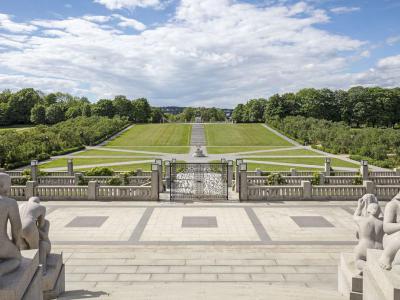
At the heart of Frogner Park stands the renowned Vigeland (Vigelandsanlegget) installation. This enduring sculpture collection was crafted by Gustav Vigeland throughout the 1920s to 1943. Despite occasional misidentification as the "Vigeland (Sculpture) Park," it's essential to clarify that the Vigeland installation isn't an independent park but rather the name attributed to the sculptures within Frogner Park. These sculptures coexist with substantial structures like bridges and fountains, forming a cohesive artistic landscape.
The earlier version of Frogner Manor's park, established in the 18th century by its proprietor, the distinguished military officer Hans Jacob Scheel, was comparatively smaller and concentrated around the manor house. This park followed baroque design principles. In addition to the sculpture collection, the area accommodates the manor house, an adjacent pavilion, Frognerbadet (the Frogner Baths), and Frogner Stadium. Dominating the park's center is the Frogner Pond.
Encompassing a sprawling 45 hectares, Frogner Park earns the distinction of being the largest park within the city. Notably, the sculpture installation within it holds the distinction of being the world's most expansive collection of sculptures crafted by a single artist. With its annual footfall ranging between 1 to 2 million visitors, Frogner Park ranks as Norway's premier tourist attraction. It remains accessible to the public throughout the year.
Why You Should Visit:
One of the most unique artistic experiences imaginable. Even if you're not into art, Vigeland's opus is amazing.
Each of the five areas offers a different experience and the walk in the park suddenly becomes something totally different and memorable.
Tip:
Check out the rose garden, and if you have time, the Oslo City Museum in the old farm buildings (also free to enter).
If the weather is suitable you could even take a swim in the open air swimming pool.
At the heart of Frogner Park stands the renowned Vigeland (Vigelandsanlegget) installation. This enduring sculpture collection was crafted by Gustav Vigeland throughout the 1920s to 1943. Despite occasional misidentification as the "Vigeland (Sculpture) Park," it's essential to clarify that the Vigeland installation isn't an independent park but rather the name attributed to the sculptures within Frogner Park. These sculptures coexist with substantial structures like bridges and fountains, forming a cohesive artistic landscape.
The earlier version of Frogner Manor's park, established in the 18th century by its proprietor, the distinguished military officer Hans Jacob Scheel, was comparatively smaller and concentrated around the manor house. This park followed baroque design principles. In addition to the sculpture collection, the area accommodates the manor house, an adjacent pavilion, Frognerbadet (the Frogner Baths), and Frogner Stadium. Dominating the park's center is the Frogner Pond.
Encompassing a sprawling 45 hectares, Frogner Park earns the distinction of being the largest park within the city. Notably, the sculpture installation within it holds the distinction of being the world's most expansive collection of sculptures crafted by a single artist. With its annual footfall ranging between 1 to 2 million visitors, Frogner Park ranks as Norway's premier tourist attraction. It remains accessible to the public throughout the year.
Why You Should Visit:
One of the most unique artistic experiences imaginable. Even if you're not into art, Vigeland's opus is amazing.
Each of the five areas offers a different experience and the walk in the park suddenly becomes something totally different and memorable.
Tip:
Check out the rose garden, and if you have time, the Oslo City Museum in the old farm buildings (also free to enter).
If the weather is suitable you could even take a swim in the open air swimming pool.
8) Vigeland Museum (must see)
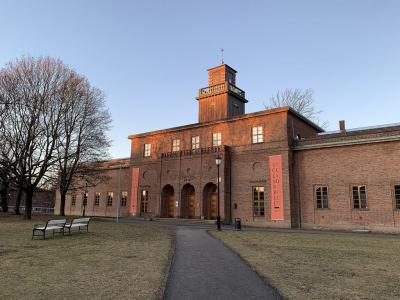
Vigeland-museet, or the Vigeland Museum, is located in the Frogner district of Oslo. It was created as a tribute to Gustav Vigeland, a renowned Norwegian sculptor. Vigeland himself first offered to donate a large portion of his works to Oslo council in 1919. Two years later, work started on a building to house Vigeland’s donated collection. It was designed in the neo-Classical style by Lorentz Ree and Carl Buch. The building was completed in 1930. Vigeland himself took up residence in one of the many studios that were rented out to artists. The museum functioned as a sculpture gallery and school.
Following Vigeland’s death in 1943, the museum was opened to the public in 1947, as a memorial to the artist. Today, it is funded and owned by the city council. The Vigeland Museum contains small sculptures, paintings and sketches by Vigeland and other Norwegian artists. Vigeland’s larger works are gathered in the Vigeland Sculpture Park, the outdoor, better-known portion of the museum. It lies to the north of the main building and is a free public park. Both attractions are within easy reach of Oslo city center by tram, and lie within a walking distance of Frogner plass station, on the Frogner line.
Why You Should Visit:
Gives you a much better understanding and appreciation for the outdoor sculpture park.
For some of Vigeland's seminal work, you'll get to see the plaster casts and the concept from paper to initial model to full-scale model.
Following Vigeland’s death in 1943, the museum was opened to the public in 1947, as a memorial to the artist. Today, it is funded and owned by the city council. The Vigeland Museum contains small sculptures, paintings and sketches by Vigeland and other Norwegian artists. Vigeland’s larger works are gathered in the Vigeland Sculpture Park, the outdoor, better-known portion of the museum. It lies to the north of the main building and is a free public park. Both attractions are within easy reach of Oslo city center by tram, and lie within a walking distance of Frogner plass station, on the Frogner line.
Why You Should Visit:
Gives you a much better understanding and appreciation for the outdoor sculpture park.
For some of Vigeland's seminal work, you'll get to see the plaster casts and the concept from paper to initial model to full-scale model.
9) Vigeland Sculpture Park
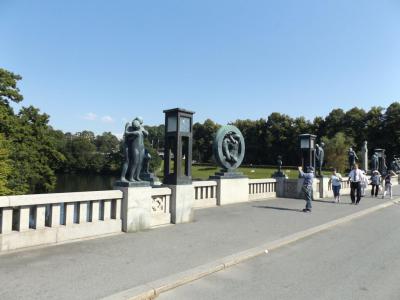
Nestled within Frogner Park, a sprawling green expanse in the western outskirts of the city, lies the Vigeland Sculpture Park. Encompassing an impressive 80 acres, this park boasts a collection of 212 statues, all masterfully crafted by the renowned Norwegian sculptor, Gustav Vigeland. Adjacent to the park is the Vigeland Museum, a repository for many of the artist’s smaller sculptures and paintings. These two attractions came into being when Vigeland generously gifted several of his works to the city of Oslo in 1919. Following meticulous planning, the park was unveiled to the public in the year 1940.
At the heart of the park takes center stage a bridge that stretches from the Main Gate to the focal point, the Fountain sculpture. Along this bridge route, a third of the park's sculptures are gracefully displayed, each adorned in striking bronze. Notably, the beloved Angry Boy sculpture can be admired here. Culminating the bridge's path is the Fountain-an elaborate bronze Gothic masterpiece originally conceived for a location outside the Norwegian Parliament. This splendid sculpture is encircled by an expansive mosaic showcasing bold black and white designs.
Crowning the highest elevation within the park is the Monolith, indisputably the most celebrated attraction. Purposefully positioned, this colossal granite tower, hewn from a singular massive rock, showcases an assembly of over one hundred intricately carved human figures. The park has served as a wellspring of inspiration for music, literature, and even made a notable appearance in the successful Norwegian independent film 'Elling'. As a welcoming gift to the public, this park remains accessible throughout daylight hours all year round.
Tip:
Combine with the Vigeland Museum located right outside the park. Do it on the same day so that you can compare what you saw in the park to what you see in the museum.
At the heart of the park takes center stage a bridge that stretches from the Main Gate to the focal point, the Fountain sculpture. Along this bridge route, a third of the park's sculptures are gracefully displayed, each adorned in striking bronze. Notably, the beloved Angry Boy sculpture can be admired here. Culminating the bridge's path is the Fountain-an elaborate bronze Gothic masterpiece originally conceived for a location outside the Norwegian Parliament. This splendid sculpture is encircled by an expansive mosaic showcasing bold black and white designs.
Crowning the highest elevation within the park is the Monolith, indisputably the most celebrated attraction. Purposefully positioned, this colossal granite tower, hewn from a singular massive rock, showcases an assembly of over one hundred intricately carved human figures. The park has served as a wellspring of inspiration for music, literature, and even made a notable appearance in the successful Norwegian independent film 'Elling'. As a welcoming gift to the public, this park remains accessible throughout daylight hours all year round.
Tip:
Combine with the Vigeland Museum located right outside the park. Do it on the same day so that you can compare what you saw in the park to what you see in the museum.
