Custom Walk in Ibiza, Spain by chia_i_9fab72 created on 2026-07-09
Guide Location: Spain » Ibiza
Guide Type: Custom Walk
# of Sights: 7
Tour Duration: 1 Hour(s)
Travel Distance: 1.3 Km or 0.8 Miles
Share Key: PZTTC
Guide Type: Custom Walk
# of Sights: 7
Tour Duration: 1 Hour(s)
Travel Distance: 1.3 Km or 0.8 Miles
Share Key: PZTTC
How It Works
Please retrieve this walk in the GPSmyCity app. Once done, the app will guide you from one tour stop to the next as if you had a personal tour guide. If you created the walk on this website or come to the page via a link, please follow the instructions below to retrieve the walk in the app.
Retrieve This Walk in App
Step 1. Download the app "GPSmyCity: Walks in 1K+ Cities" on Apple App Store or Google Play Store.



Step 2. In the GPSmyCity app, download(or launch) the guide "Ibiza Map and Walking Tours".
Step 3. Tap the menu button located at upper right corner of the "Walks" screen and select "Retrieve custom walk". Enter the share key: PZTTC
1) Puerto de Ibiza (Port of Ibiza) (must see)
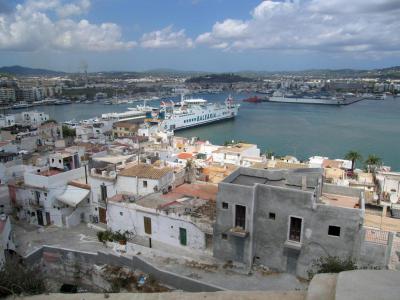
The Port of Ibiza, located on the eastern side of the island of Ibiza, is a key gateway connecting the Balearic archipelago to mainland Spain and other neighboring islands. Famous for its lively atmosphere and strategic position, the port serves as both a commercial hub and a tourist magnet, catering to ferry passengers, cruise ships, and private yachts. It provides direct ferry connections to Spanish cities such as Dénia, Valencia, Barcelona, and Gandia, as well as to the islands of Formentera and Palma de Mallorca.
Arriving by sea at the Port of Ibiza offers a breathtaking view of the historic Dalt Vila, a UNESCO World Heritage Site since 1999. The city’s silhouette, dominated by the sobriety of its cathedral and surrounded by Renaissance walls, contrasts with the cosmopolitan and vibrant ambiance of the harbor below. The port’s setting is enriched by Ibiza’s maze-like old town streets, making it a fascinating blend of history and modernity.
The port has distinct areas: the Botafoc breakwater in the north for large cruise ships and fuel tankers, and the southern and western parts for ferry terminals, fishing docks, and marinas. The main ferry station, Maritime Station (Estació Marítima), handles passenger arrivals. Nearby is the Monument to the Corsairs, honoring local sailors who defended Ibiza’s shores. The northern marinas, Eivissa Nova and Marina Botafoc, offer 1,400 moorings and attract luxury yachts, enhancing the port’s reputation.
Ibiza’s port dates back to its origins as a Carthaginian colony in 650 BC and later became a Roman confederate city. While its maritime role was recognized in antiquity, the first port facilities were recorded in the 17th century. Major modern development began in the early 20th century and has expanded significantly in recent decades.
Today, the Port of Ibiza is a cultural landmark and lively social spot. Stretching through the historic La Marina and Sa Penya neighborhoods, it’s lined with bars, restaurants, and shops that showcase the island’s eclectic vibe. A perfect blend of tradition and modern trends, the port is a must-see for visitors arriving by ferry or exploring on foot.
Arriving by sea at the Port of Ibiza offers a breathtaking view of the historic Dalt Vila, a UNESCO World Heritage Site since 1999. The city’s silhouette, dominated by the sobriety of its cathedral and surrounded by Renaissance walls, contrasts with the cosmopolitan and vibrant ambiance of the harbor below. The port’s setting is enriched by Ibiza’s maze-like old town streets, making it a fascinating blend of history and modernity.
The port has distinct areas: the Botafoc breakwater in the north for large cruise ships and fuel tankers, and the southern and western parts for ferry terminals, fishing docks, and marinas. The main ferry station, Maritime Station (Estació Marítima), handles passenger arrivals. Nearby is the Monument to the Corsairs, honoring local sailors who defended Ibiza’s shores. The northern marinas, Eivissa Nova and Marina Botafoc, offer 1,400 moorings and attract luxury yachts, enhancing the port’s reputation.
Ibiza’s port dates back to its origins as a Carthaginian colony in 650 BC and later became a Roman confederate city. While its maritime role was recognized in antiquity, the first port facilities were recorded in the 17th century. Major modern development began in the early 20th century and has expanded significantly in recent decades.
Today, the Port of Ibiza is a cultural landmark and lively social spot. Stretching through the historic La Marina and Sa Penya neighborhoods, it’s lined with bars, restaurants, and shops that showcase the island’s eclectic vibe. A perfect blend of tradition and modern trends, the port is a must-see for visitors arriving by ferry or exploring on foot.
2) Paseo de Vara del Rey (Vara del Rey Walkway)
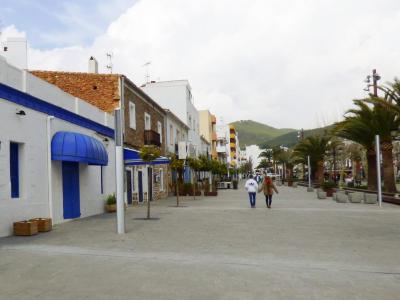
The Vara del Rey Walkway, is arguably the most famous promenade on the island of Ibiza. The walk is surrounded by much of what tourists aspire to see on their trip: Dalt Vila and the Port of Ibiza.
The highlight of the Paseo de Vara del Rey is the statue of General Joaquin Vara de Rey. Born in Ibiza, the general fought in the War of the Independence of Cuba of 1898. He is best known for leading the determined defense at the Battle of El Caney against a massively superior American force during the Spanish–American War.
Vara de Rey was mortally wounded in the battle. Impressed by his leadership, U.S. troops buried Vara de Rey with full military honors. American accounts of the battle praised the "magnificent courage" of Vara de Rey's soldiers and described the him as "an incomparable leader".
The statue shows the general on a mound holding a sword. Two female figures that represent glory and Spain are nearby. The statue was designed by architect August Font Carreras. It was created by sculptor Eduard Alentorn. This statue has stood in the promenade since 1904.
The walkway is home to a number of concerts, festivals and fairs throughout the year. many historic buildings, like the Hotel Montesol, are nearby. The promenade has been pedestrianized since 2017.
The highlight of the Paseo de Vara del Rey is the statue of General Joaquin Vara de Rey. Born in Ibiza, the general fought in the War of the Independence of Cuba of 1898. He is best known for leading the determined defense at the Battle of El Caney against a massively superior American force during the Spanish–American War.
Vara de Rey was mortally wounded in the battle. Impressed by his leadership, U.S. troops buried Vara de Rey with full military honors. American accounts of the battle praised the "magnificent courage" of Vara de Rey's soldiers and described the him as "an incomparable leader".
The statue shows the general on a mound holding a sword. Two female figures that represent glory and Spain are nearby. The statue was designed by architect August Font Carreras. It was created by sculptor Eduard Alentorn. This statue has stood in the promenade since 1904.
The walkway is home to a number of concerts, festivals and fairs throughout the year. many historic buildings, like the Hotel Montesol, are nearby. The promenade has been pedestrianized since 2017.
3) Portal de ses Taules (Ses Taules Gateway)
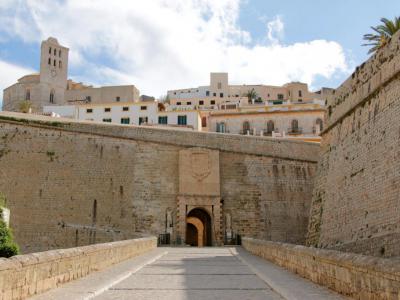
The Portal de ses Taules, built in 1585, is the main entrance to the fortified old town of Ibiza and is situated between the bastions of Sant Joan and Santa Llúcia. The entrance gate forms part of the declared UNESCO World Heritage Site of the Dalt Vila old city. The entrance is flanked on either side by headless Roman statues and above the gate is the coat of arms of Phillip II on whose orders the city walls were built.
The statues that adorn the entrance were unearthed during construction of the gates in the 16th century. These days the statues are replicas, but you can see the originals in the Ibiza Archaeological Museum in the Ibiza Old Town. A plaque beneath the Phillip II coat of arms describes his dominions and the components of his royal shield.
When you pass through the gate you will see that the walls are two meters thick. Ibiza was under constant attack by invaders and marauders and needed strong defensive support. Originally there was a moat and a drawbridge that protected the city within its walls from siege. The drawbridge was replaced with a permanent bridge at the beginning of the 20th century.
The statues that adorn the entrance were unearthed during construction of the gates in the 16th century. These days the statues are replicas, but you can see the originals in the Ibiza Archaeological Museum in the Ibiza Old Town. A plaque beneath the Phillip II coat of arms describes his dominions and the components of his royal shield.
When you pass through the gate you will see that the walls are two meters thick. Ibiza was under constant attack by invaders and marauders and needed strong defensive support. Originally there was a moat and a drawbridge that protected the city within its walls from siege. The drawbridge was replaced with a permanent bridge at the beginning of the 20th century.
4) Contemporary Art Museum of Ibiza (must see)
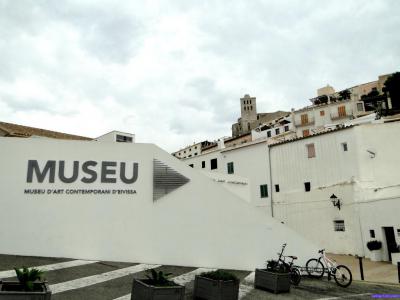
The Contemporary Art Museum of Ibiza (MACE) stands as one of Spain's oldest institutions dedicated to modern art, having first opened its doors in 1969. The museum was established by Ibiza’s City Hall, spurred by the success of the first Ibiza Biennial in 1964. It is situated in the historic Hall of Arms and Prova warehouse, an emblematic structure designed by Simón Poulet in 1727, nestled within the old town area of Dalt Vila.
The museum underwent a significant transformation over five years, reopening in 2012 with a modern glass building integrated into its original garden space. During the renovation, archaeological excavations revealed Punic dwellings dating back to the 4th century BCE, which have been incorporated into the museum's layout through a transparent floor, offering a glimpse into Ibiza's ancient past.
MACE’s permanent collection is a testament to the island’s vibrant artistic heritage, particularly highlighting works created from the 1960s onwards. It features pieces from prominent artists such as Tàpies, Will Faber, Eduard Micus, Erwin Broner, Erwin Bechtold, Gilbert Herreyns, and Rafael Tur Costa, as well as award-winning works from the Ibiza Biennial and the Ibizagráfic exhibitions. The museum is also known for its extensive collection of engravings, donated by the gallery owner Carl van der Voort.
In addition to its permanent collections, the museum hosts numerous temporary exhibitions and events, making it a dynamic cultural hub within Ibiza’s historic Dalt Vila quarter. Its unique juxtaposition of modern art housed within a historic building, combined with its archaeological treasures, offers visitors a compelling intersection of the contemporary and the ancient.
The museum underwent a significant transformation over five years, reopening in 2012 with a modern glass building integrated into its original garden space. During the renovation, archaeological excavations revealed Punic dwellings dating back to the 4th century BCE, which have been incorporated into the museum's layout through a transparent floor, offering a glimpse into Ibiza's ancient past.
MACE’s permanent collection is a testament to the island’s vibrant artistic heritage, particularly highlighting works created from the 1960s onwards. It features pieces from prominent artists such as Tàpies, Will Faber, Eduard Micus, Erwin Broner, Erwin Bechtold, Gilbert Herreyns, and Rafael Tur Costa, as well as award-winning works from the Ibiza Biennial and the Ibizagráfic exhibitions. The museum is also known for its extensive collection of engravings, donated by the gallery owner Carl van der Voort.
In addition to its permanent collections, the museum hosts numerous temporary exhibitions and events, making it a dynamic cultural hub within Ibiza’s historic Dalt Vila quarter. Its unique juxtaposition of modern art housed within a historic building, combined with its archaeological treasures, offers visitors a compelling intersection of the contemporary and the ancient.
5) Plaza del Sol (Sun Square)
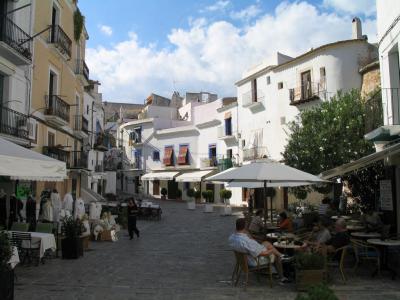
Sun Square (Plaza del Sol) is a charming plaza nestled near the historic center of Ibiza. With its cobblestone surface adorned by trees and potted plants, the square offers a serene atmosphere and a scenic viewpoint overlooking the town. Stone steps connect the plaza to the Sant Pere Bastion, a landmark that also functions as an open-air theater, adding a cultural dimension to the area.
One of the main attractions of Sun Square is the Plaza del Sol Restaurant, a favorite among both locals and tourists. The restaurant provides a choice between an indoor dining experience within an ancient stone building and outdoor seating under a sailcloth canopy. Free from the noise of traffic, as the entire square is closed to vehicles, the ambiance is perfect for a relaxing meal.
The restaurant is renowned for its Mediterranean-inspired menu, featuring fresh salads, vegetarian options, modern pasta, and traditional specialties like suckling pigs and fresh fish dishes. For dessert lovers, there’s a tempting selection of homemade sweets, complemented by a diverse wine list. Some of the must-try cocktails include the passion fruit mojito, espresso martini, and Aperol spritz.
With its prime location in the walled citadel of Dalt Vila, Sun Square provides stunning panoramic views of Park Square (Plaza del Parque), the harbor, and the rooftops of Ibiza. The colorful terrace, surrounded by fruit trees and vibrant plants, creates an ideal setting for a romantic dinner under the stars. The restaurant is also an excellent spot for breakfast or a quick coffee for early risers exploring the town before the midday heat sets in.
Managed by Michelin-trained chef Javier Roig, Plaza del Sol’s menu combines exquisite presentation and diverse flavors, making it a sought-after dining destination. Given its popularity, especially during the summer months, reserving a table in advance is highly recommended to ensure a memorable dining experience in one of Ibiza’s most enchanting locations.
One of the main attractions of Sun Square is the Plaza del Sol Restaurant, a favorite among both locals and tourists. The restaurant provides a choice between an indoor dining experience within an ancient stone building and outdoor seating under a sailcloth canopy. Free from the noise of traffic, as the entire square is closed to vehicles, the ambiance is perfect for a relaxing meal.
The restaurant is renowned for its Mediterranean-inspired menu, featuring fresh salads, vegetarian options, modern pasta, and traditional specialties like suckling pigs and fresh fish dishes. For dessert lovers, there’s a tempting selection of homemade sweets, complemented by a diverse wine list. Some of the must-try cocktails include the passion fruit mojito, espresso martini, and Aperol spritz.
With its prime location in the walled citadel of Dalt Vila, Sun Square provides stunning panoramic views of Park Square (Plaza del Parque), the harbor, and the rooftops of Ibiza. The colorful terrace, surrounded by fruit trees and vibrant plants, creates an ideal setting for a romantic dinner under the stars. The restaurant is also an excellent spot for breakfast or a quick coffee for early risers exploring the town before the midday heat sets in.
Managed by Michelin-trained chef Javier Roig, Plaza del Sol’s menu combines exquisite presentation and diverse flavors, making it a sought-after dining destination. Given its popularity, especially during the summer months, reserving a table in advance is highly recommended to ensure a memorable dining experience in one of Ibiza’s most enchanting locations.
6) Baluard de Sant Pere (St. Pere Bastion)
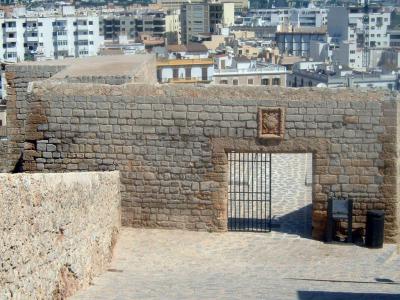
One of the defensive bastions built throughout the Renaissance period, the Baluard de Sant Pere is a UNESCO World Heritage Site found in the heart of the walled enclosure of Dalt Vila, now open to the public. Otherwise known as Portal Nou (New Gateway), this is one of the two main entrances to the Old Town of Ibiza, located next to the park of Queen Sofia.
Crowned with the coat of arms of the Crown of Aragon, the bastion links the park with Plaza del Sol through a stair-filled tunnel: 50 meters long and 3 meters high. The name Portal Nou is probably due to the fact that it replaced the old gateway of dels Aiguaders, which disappeared following the construction of the Renaissance walls. It was designed by the architect Giovanni Battista Calvi.
The Baluard de Sant Pere contains a museum with audiovisual presentations detailing the ingenious construction methods used on the city’s ramparts. Among other things here you will find the original 16th-century wooden doors, intriguing displays of ancient weaponry and other artifacts. Also, climbing to the upper terrace, will afford you an excellent view of Ibiza. The site also frequently hosts open-air concerts.
Crowned with the coat of arms of the Crown of Aragon, the bastion links the park with Plaza del Sol through a stair-filled tunnel: 50 meters long and 3 meters high. The name Portal Nou is probably due to the fact that it replaced the old gateway of dels Aiguaders, which disappeared following the construction of the Renaissance walls. It was designed by the architect Giovanni Battista Calvi.
The Baluard de Sant Pere contains a museum with audiovisual presentations detailing the ingenious construction methods used on the city’s ramparts. Among other things here you will find the original 16th-century wooden doors, intriguing displays of ancient weaponry and other artifacts. Also, climbing to the upper terrace, will afford you an excellent view of Ibiza. The site also frequently hosts open-air concerts.
7) Castle of Ibiza (must see)
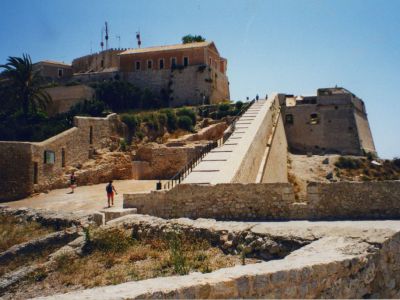
The Castle of Ibiza, or Castell d'Eivissa in Catalan, can be argued to be the heart of the island. The castle grounds are located at the top of the fortified Upper Town. The castle is comprised of numerous buildings that include the Tower of Homage, the 8th century Almudaina, the governor's home and the 18th century infantry barracks.
The original foundations of the castle were created in the 12th century, though additions and restorations were continued for hundreds of years. Unfortunately, the castle fell into extreme disrepair and is now in a partially derelict state. Recent restorations have allowed portions of the castle to be open to the public.
Reconstruction efforts have been primarily focused on the Sant Jaume Bastion and the Sant Pere Bastion. Each of these bastions offer exhibitions that are open to the public. While visitors cannot enter the main castle, it is worthwhile to tour both of these bastions and the castle grounds.
The Sant Jaume Bastion is now a military museum. It houses a weapons exhibition with a focus on military technology from the 16th and 18th centuries. Visitors are welcome to touch the items on display, which include cannons, mortar, muskets, helmets and swords.
The Sant Pere Bastion shows the history of the castle. Tourists can see how the city wall was built through an audio visual display. The exhibition includes a reproduction of Renaissance-era scaffolding. Both bastions were designed by Giovanni Battista Calvi in 1555.
The buildings are open from Tuesday through Sunday throughout the year. During the winter months, from October to March, the hours are 10 AM to 4:30 PM on weekdays and 10 AM to 2 PM on weekends. From April to September, hours are 10 AM to 2 PM Tuesday through Sunday. The buildings are closed on bank holidays and from December 10 to February 28.
The original foundations of the castle were created in the 12th century, though additions and restorations were continued for hundreds of years. Unfortunately, the castle fell into extreme disrepair and is now in a partially derelict state. Recent restorations have allowed portions of the castle to be open to the public.
Reconstruction efforts have been primarily focused on the Sant Jaume Bastion and the Sant Pere Bastion. Each of these bastions offer exhibitions that are open to the public. While visitors cannot enter the main castle, it is worthwhile to tour both of these bastions and the castle grounds.
The Sant Jaume Bastion is now a military museum. It houses a weapons exhibition with a focus on military technology from the 16th and 18th centuries. Visitors are welcome to touch the items on display, which include cannons, mortar, muskets, helmets and swords.
The Sant Pere Bastion shows the history of the castle. Tourists can see how the city wall was built through an audio visual display. The exhibition includes a reproduction of Renaissance-era scaffolding. Both bastions were designed by Giovanni Battista Calvi in 1555.
The buildings are open from Tuesday through Sunday throughout the year. During the winter months, from October to March, the hours are 10 AM to 4:30 PM on weekdays and 10 AM to 2 PM on weekends. From April to September, hours are 10 AM to 2 PM Tuesday through Sunday. The buildings are closed on bank holidays and from December 10 to February 28.
