Custom Walk in New York, New York by vpuppione_2432e5 created on 2026-07-14
Guide Location: USA » New York
Guide Type: Custom Walk
# of Sights: 6
Tour Duration: 2 Hour(s)
Travel Distance: 5.7 Km or 3.5 Miles
Share Key: BDJDW
Guide Type: Custom Walk
# of Sights: 6
Tour Duration: 2 Hour(s)
Travel Distance: 5.7 Km or 3.5 Miles
Share Key: BDJDW
How It Works
Please retrieve this walk in the GPSmyCity app. Once done, the app will guide you from one tour stop to the next as if you had a personal tour guide. If you created the walk on this website or come to the page via a link, please follow the instructions below to retrieve the walk in the app.
Retrieve This Walk in App
Step 1. Download the app "GPSmyCity: Walks in 1K+ Cities" on Apple App Store or Google Play Store.



Step 2. In the GPSmyCity app, download(or launch) the guide "New York Map and Walking Tours".
Step 3. Tap the menu button located at upper right corner of the "Walks" screen and select "Retrieve custom walk". Enter the share key: BDJDW
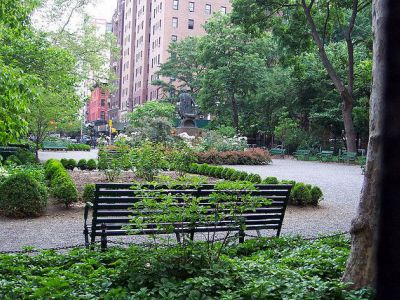
1) Gramercy Park
In the midst of New York City's bustling energy, a tranquil and serene atmosphere envelops the residential neighborhood of Gramercy Park. This peaceful enclave derives its name from the gated garden established in 1831, showcasing the city's early and exceptional urban planning. Even after nearly two centuries, Gramercy Park remains a private oasis accessible only to those with the two coveted keys issued to each original building in the area. Temporary residents have the option to rent these keys, and the locks are changed annually, ensuring the park's exclusivity.
While many of the original townhouses that once faced the park have given way to towering apartment buildings since the 1920s, the charm and prestige of Gramercy Park endure. Alongside the park, one can find the distinguished National Arts Club, a testament to the district's cultural significance, making it a worthwhile destination for art enthusiasts seeking captivating gallery exhibitions.
Throughout its history, Gramercy Park has been home to illustrious residents, including James Harper, an American publisher who served as the mayor of New York City from 1844 to 1845. The townhouse at 4 Gramercy Park W still boasts the ornate "mayor's lights" that adorned Harper's residence. Another notable figure associated with the neighborhood is Stanford White, the renowned architect responsible for the iconic triumphal arch in Washington Square.
South of the park, Irving Place stretches from 20th Street to 14th Street, paying homage to the esteemed writer Washington Irving. This short street exudes an air of exclusivity and tranquility, offering a blend of historic and contemporary establishments, including restaurants, stores, and architecturally diverse buildings.
Moreover, within this enclave lies Little India (a.k.a. Curry Hill), primarily situated around Lexington and 28th Street. The small yet vibrant community provides a delightful haven for indulging in authentic cuisine and exploring traditional clothing, plus other goods offered in a handful of charming boutiques.
While many of the original townhouses that once faced the park have given way to towering apartment buildings since the 1920s, the charm and prestige of Gramercy Park endure. Alongside the park, one can find the distinguished National Arts Club, a testament to the district's cultural significance, making it a worthwhile destination for art enthusiasts seeking captivating gallery exhibitions.
Throughout its history, Gramercy Park has been home to illustrious residents, including James Harper, an American publisher who served as the mayor of New York City from 1844 to 1845. The townhouse at 4 Gramercy Park W still boasts the ornate "mayor's lights" that adorned Harper's residence. Another notable figure associated with the neighborhood is Stanford White, the renowned architect responsible for the iconic triumphal arch in Washington Square.
South of the park, Irving Place stretches from 20th Street to 14th Street, paying homage to the esteemed writer Washington Irving. This short street exudes an air of exclusivity and tranquility, offering a blend of historic and contemporary establishments, including restaurants, stores, and architecturally diverse buildings.
Moreover, within this enclave lies Little India (a.k.a. Curry Hill), primarily situated around Lexington and 28th Street. The small yet vibrant community provides a delightful haven for indulging in authentic cuisine and exploring traditional clothing, plus other goods offered in a handful of charming boutiques.
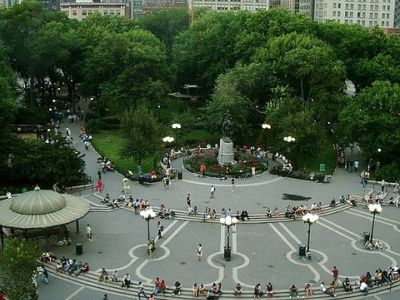
2) Union Square
Union Square derives its name from its historical significance as the intersection of two major roads in New York City-Bloomingdale Road (now Broadway) and the Eastern Post Road (now extinct). Throughout its rich history, the square has served as a gathering place for various social, political, and cultural events. Initially, it functioned as an entrance to the city and a residential neighborhood. However, following the Civil War, it transformed into a bustling commercial hub.
The square witnessed notable rallies and demonstrations that shaped American history. One such event was the patriotic rally held after the fall of Fort Sumter during the Civil War, where a quarter of a million people gathered to support Union troops. Additionally, it was the site of the historic Labor Day March, one of the earliest workers' demonstrations in the world, which served as an inspiration for labor movements worldwide. In more recent times, the square became a central gathering point for mourners in the aftermath of the 9/11 terrorist attacks.
Today, Union Square remains vibrant and bustling, particularly during the summer months. Visitors can find people relaxing on the steps, enjoying lunch, and observing captivating street performances. Adorned with remarkable statues paying homage to prominent figures such as Gandhi, Washington, and Lincoln, the space hosts a remarkable year-round farmers market, operating on Mondays, Wednesdays, Fridays, and Saturdays, which showcases the talents of local chefs and offering an abundance of fresh produce.
Exploring Union Square offers a sweet experience of leisurely strolls, shopping, and indulging in delectable meals. To make the most of your visit, plan your itinerary around a satisfying meal or multiple dining experiences. It's worth noting that weekends tend to be crowded, so for a more relaxed experience, consider visiting during weekdays when the crowds are smaller.
Why You Should Visit:
Many interesting things worth checking out here, including: the central fountain, subway kiosks, the equestrian statue of George Washington, the Abraham Lincoln statue, a sculpture of Marquis de Lafayette and another of Gandhi, plus a year-round greenmarket where you can sample goods from local farmers. It also has several playgrounds, a lively holiday market, and benches you can sit on and watch a slice of New York go by. Cafes and restaurants also abound, so no need to worry about food.
Tip:
Stop by the Union Square station to read messages on the sticky notes left by passers-by, and feel free to leave one of your own!
The square witnessed notable rallies and demonstrations that shaped American history. One such event was the patriotic rally held after the fall of Fort Sumter during the Civil War, where a quarter of a million people gathered to support Union troops. Additionally, it was the site of the historic Labor Day March, one of the earliest workers' demonstrations in the world, which served as an inspiration for labor movements worldwide. In more recent times, the square became a central gathering point for mourners in the aftermath of the 9/11 terrorist attacks.
Today, Union Square remains vibrant and bustling, particularly during the summer months. Visitors can find people relaxing on the steps, enjoying lunch, and observing captivating street performances. Adorned with remarkable statues paying homage to prominent figures such as Gandhi, Washington, and Lincoln, the space hosts a remarkable year-round farmers market, operating on Mondays, Wednesdays, Fridays, and Saturdays, which showcases the talents of local chefs and offering an abundance of fresh produce.
Exploring Union Square offers a sweet experience of leisurely strolls, shopping, and indulging in delectable meals. To make the most of your visit, plan your itinerary around a satisfying meal or multiple dining experiences. It's worth noting that weekends tend to be crowded, so for a more relaxed experience, consider visiting during weekdays when the crowds are smaller.
Why You Should Visit:
Many interesting things worth checking out here, including: the central fountain, subway kiosks, the equestrian statue of George Washington, the Abraham Lincoln statue, a sculpture of Marquis de Lafayette and another of Gandhi, plus a year-round greenmarket where you can sample goods from local farmers. It also has several playgrounds, a lively holiday market, and benches you can sit on and watch a slice of New York go by. Cafes and restaurants also abound, so no need to worry about food.
Tip:
Stop by the Union Square station to read messages on the sticky notes left by passers-by, and feel free to leave one of your own!
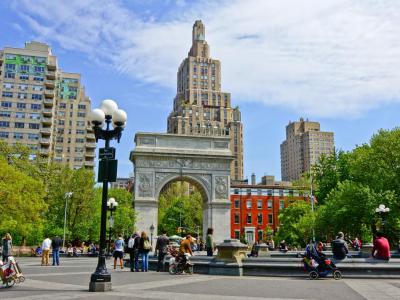
3) Washington Square Park
If you’ve ever walked into Washington Square Park and felt like you’d stepped into a living postcard-with guitar strummers on one side, chess hustlers on the other, and NYU students cutting classes everywhere in between-you’re only catching the latest chapter of a very long story. Washington Square Park has spent decades adapting to the moods and needs of the city before becoming a go-to meeting point for just about anyone looking for a slice of New York at a human scale.
Hard to believe, but this lively hangout began as a marshy river delta, the kind of soggy patch colonial New Yorkers happily ignored. By the late 1700s, it took on a far grimmer role as a potter’s field, the final resting place for the city’s poor, unnamed, and unlucky victims of yellow fever. Not exactly the picnic-friendly image it has today...
As New York crept north in the early 19th century, the cemetery closed, and the land was re-imagined as a military parade ground-flat, open, and surprisingly forward-thinking for a space that once swallowed rainwater like a sponge. Then, in 1833, the city decided to celebrate the 50th anniversary of George Washington’s inauguration by giving the area a makeover and the name Washington Square. Neat paths, tidy lawns, and new plantings drew well-to-do residents, who lined the northern edge with elegant Greek Revival townhouses. Instantly, the place gained its reputation as a cultured corner of the growing city.
Toward the late 1800s, the Village’s bohemian spirit took over. Artists, writers, and performers treated the square as an outdoor salon, and the unveiling of Stanford White’s triumphal arch in 1892 sealed its status as a civic icon.
The mid-20th century delivered a bit of drama when planners tried to ram Fifth Avenue straight through the park. Luckily, that idea didn't materialize thanks to the fierce community pushback, which saved the space and reshaped urban activism in the process.
Today, Washington Square Park is a compact but electric patch of green-fountain, lawns, and shade-packed with locals walking their dogs, and a rotating cast of social-media hopefuls striking poses like it’s a paid gig. It’s the Village’s open-air living room, surrounded by historic streets and endless spots to grab a coffee, a snack, or just catch that “authentic Village moment,” while sitting and watching the world swirl by...
Hard to believe, but this lively hangout began as a marshy river delta, the kind of soggy patch colonial New Yorkers happily ignored. By the late 1700s, it took on a far grimmer role as a potter’s field, the final resting place for the city’s poor, unnamed, and unlucky victims of yellow fever. Not exactly the picnic-friendly image it has today...
As New York crept north in the early 19th century, the cemetery closed, and the land was re-imagined as a military parade ground-flat, open, and surprisingly forward-thinking for a space that once swallowed rainwater like a sponge. Then, in 1833, the city decided to celebrate the 50th anniversary of George Washington’s inauguration by giving the area a makeover and the name Washington Square. Neat paths, tidy lawns, and new plantings drew well-to-do residents, who lined the northern edge with elegant Greek Revival townhouses. Instantly, the place gained its reputation as a cultured corner of the growing city.
Toward the late 1800s, the Village’s bohemian spirit took over. Artists, writers, and performers treated the square as an outdoor salon, and the unveiling of Stanford White’s triumphal arch in 1892 sealed its status as a civic icon.
The mid-20th century delivered a bit of drama when planners tried to ram Fifth Avenue straight through the park. Luckily, that idea didn't materialize thanks to the fierce community pushback, which saved the space and reshaped urban activism in the process.
Today, Washington Square Park is a compact but electric patch of green-fountain, lawns, and shade-packed with locals walking their dogs, and a rotating cast of social-media hopefuls striking poses like it’s a paid gig. It’s the Village’s open-air living room, surrounded by historic streets and endless spots to grab a coffee, a snack, or just catch that “authentic Village moment,” while sitting and watching the world swirl by...
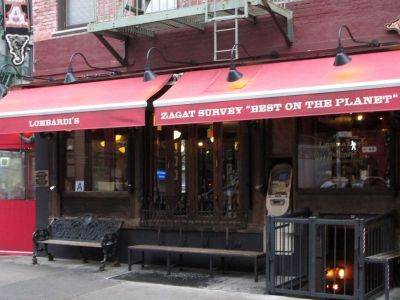
4) Lombardi's
Established in 1905, Lombardi's is widely celebrated as one of the most influential names in American pizza history. Often recognized by the Pizza Hall of Fame as the first pizzeria in the United States, Lombardi’s helped introduce Neapolitan-style pizza to New York at a time when Italian immigrants were shaping the culinary identity of the city. Its early reputation grew around simple “tomato pies,” sold to factory workers and neighborhood residents, wrapped in paper and tied with string for easy takeaway lunches.
The restaurant’s origins are closely tied to Italian immigration in Lower Manhattan. For decades, the story credited Italian immigrant Gennaro Lombardi as founder, beginning with a grocery store on Spring Street that evolved into a licensed pizzeria. More recent research, however, suggests that another Italian immigrant, Filippo Milone, may have been the original owner, while Lombardi himself likely joined the business shortly after arriving in America. Regardless of who first operated the oven, the restaurant became a landmark of early Italian-American dining culture and drew notable patrons, including famed tenor Enrico Caruso.
After closing in 1984, Lombardi’s returned a decade later just a block away, reopening at its current location under the guidance of Gennaro Lombardi III and longtime associate John Brescio. The move was partly inspired by the presence of a coal-fired oven, a defining feature that helped preserve the crisp, charred style associated with classic New York pizza. Though the business faced challenges during the COVID-19 pandemic and lost one of its historic ovens after lease changes, Lombardi’s remains an enduring symbol of New York’s pizza heritage. Over the years, the restaurant has embraced its historic identity through anniversary celebrations, including offering whole pizzas at the original 1905 price of five cents during milestone years.
The restaurant’s origins are closely tied to Italian immigration in Lower Manhattan. For decades, the story credited Italian immigrant Gennaro Lombardi as founder, beginning with a grocery store on Spring Street that evolved into a licensed pizzeria. More recent research, however, suggests that another Italian immigrant, Filippo Milone, may have been the original owner, while Lombardi himself likely joined the business shortly after arriving in America. Regardless of who first operated the oven, the restaurant became a landmark of early Italian-American dining culture and drew notable patrons, including famed tenor Enrico Caruso.
After closing in 1984, Lombardi’s returned a decade later just a block away, reopening at its current location under the guidance of Gennaro Lombardi III and longtime associate John Brescio. The move was partly inspired by the presence of a coal-fired oven, a defining feature that helped preserve the crisp, charred style associated with classic New York pizza. Though the business faced challenges during the COVID-19 pandemic and lost one of its historic ovens after lease changes, Lombardi’s remains an enduring symbol of New York’s pizza heritage. Over the years, the restaurant has embraced its historic identity through anniversary celebrations, including offering whole pizzas at the original 1905 price of five cents during milestone years.
5) Mulberry Street
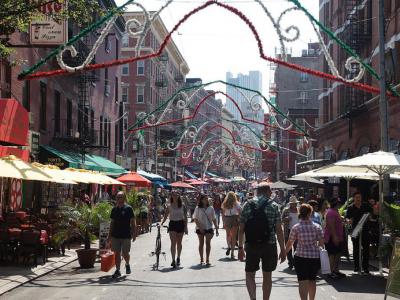
Mulberry Street, Little Italy’s main artery since the early 1900s, still feels like the neighborhood’s most relaxed stretch-a place where Italians from every corner of the city drift in for espresso, conversation, and a little people-watching. By day, it’s all cafés, social clubs, and street vendors slinging quick bites. By night, the lights flicker on, menus appear in the hands of very persuasive hosts, and suddenly the whole street acts like it’s auditioning for a movie set.
Speaking of movies, step onto the edge of the strip, and you’ll find Mulberry Street Bar, a place that’s been pouring drinks (and collecting stories) since 1908. Actors, mob bosses, and actors pretending to be mob bosses have all warmed its barstools. The wood is dark, the ceiling is tin, and the jukebox insists on Sinatra, The Four Tops, and Elvis-as it should. It’s been a backdrop for Donnie Brasco, Godfather III, The Sopranos, and other hit productions. Order a Peroni, settle in, and enjoy the atmosphere. Despite its résumé, you’re perfectly safe here-promise...
And if you prefer your dinner with a dash of mafia lore, Umberto’s Clam House is waiting. Slide into the last table in the back-the very spot where Italian-American mobster “Crazy Joe” Gallo met his fate in 1972. These days, the loudest thing in the room is the conversation, and the baked clams and linguine with white clam sauce are famous for far better reasons.
For something sweet, wander over to Caffé Roma, a cash-only institution dating back to 1891. The décor is charmingly old-school, the pastries are worth every calorie, and no one rushes you out the door. If you spot a free seat by the window, consider it an invitation from the dessert gods.
Then there’s Ferrara Bakery & Café, another Little Italy classic. Whether you’re craving a cappuccino, a cannoli, or something to smuggle home for later, you'll find it all here in abundance.
But when hunger returns, Sapori d’Italia offers cozy pasta and pizza indoors or breezy outdoor tables. And for a quick detour into Chinatown flavor, Tasty Dumpling serves some of the city’s best budget-friendly dumplings and a hot-and-sour soup that could convert anyone. Also note that, if you happen to arrive in mid-September, the 11-day Feast of San Gennaro turns Mulberry Street into a joyful festival of parades, music, rides, and food-lots of food...
Speaking of movies, step onto the edge of the strip, and you’ll find Mulberry Street Bar, a place that’s been pouring drinks (and collecting stories) since 1908. Actors, mob bosses, and actors pretending to be mob bosses have all warmed its barstools. The wood is dark, the ceiling is tin, and the jukebox insists on Sinatra, The Four Tops, and Elvis-as it should. It’s been a backdrop for Donnie Brasco, Godfather III, The Sopranos, and other hit productions. Order a Peroni, settle in, and enjoy the atmosphere. Despite its résumé, you’re perfectly safe here-promise...
And if you prefer your dinner with a dash of mafia lore, Umberto’s Clam House is waiting. Slide into the last table in the back-the very spot where Italian-American mobster “Crazy Joe” Gallo met his fate in 1972. These days, the loudest thing in the room is the conversation, and the baked clams and linguine with white clam sauce are famous for far better reasons.
For something sweet, wander over to Caffé Roma, a cash-only institution dating back to 1891. The décor is charmingly old-school, the pastries are worth every calorie, and no one rushes you out the door. If you spot a free seat by the window, consider it an invitation from the dessert gods.
Then there’s Ferrara Bakery & Café, another Little Italy classic. Whether you’re craving a cappuccino, a cannoli, or something to smuggle home for later, you'll find it all here in abundance.
But when hunger returns, Sapori d’Italia offers cozy pasta and pizza indoors or breezy outdoor tables. And for a quick detour into Chinatown flavor, Tasty Dumpling serves some of the city’s best budget-friendly dumplings and a hot-and-sour soup that could convert anyone. Also note that, if you happen to arrive in mid-September, the 11-day Feast of San Gennaro turns Mulberry Street into a joyful festival of parades, music, rides, and food-lots of food...
6) Brooklyn Bridge (must see)
Seeking the most dramatic entrance into Manhattan?-The Brooklyn Bridge is the one. Stretching across the East River like a steel-wire tightrope for giants, this is one of New York’s most recognizable silhouettes since 1883-equal parts engineering flex and architectural poetry. The country took notice of it rather early, awarding the bridge the National Historic Landmark status in 1964, following which, civil engineers gave it their own stamp of admiration (as a National Historic Civil Engineering Landmark) in 1972.
The idea of linking Brooklyn and Manhattan had been floating around since the early 1800s, but it took the engineering duo-of John Augustus Roebling with the design, and his son Washington with the execution-to actually make it happen. Construction kicked off in 1869, and after fourteen ambitious, chaotic, and occasionally hazardous years, the bridge finally opened on May 24, 1883. President Chester A. Arthur even showed up for the ceremony, thus proving that ribbon-cuttings were the hot ticket long before Instagram...
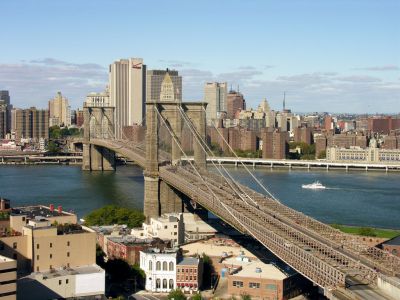
Architecturally, the bridge is a hybrid marvel: part suspension bridge, part cable-stayed experiment, all held together by an orchestra of vertical and diagonal cables. Its stone towers, crowned with Neo-Gothic arches, rise from the river like a pair of cathedral doorways, guiding a roadway that stays well above passing ships thanks to long, raised viaducts.
The structure's numbers are just as solid. The main span clocks in at nearly 2,000 feet, the bridge itself expands and contracts by up to 16 inches, depending on the weather’s mood swings, and ships can glide under it with 127 feet of clearance to spare. Six trusses run beneath the roadway, while four enormous cables hold everything aloft-convincing evidence that 19th-century engineering was not messing around...
But the bridge saves its finest touch for people on foot. Eighteen feet above the cars is the elevated promenade, a wooden boardwalk divided down the middle, so cyclists and pedestrians can coexist in relative peace. Step onto it, and the city opens around you-skyline ahead, river below, and the gentle hum of New York all around. Indeed, it’s more than just a crossing, but a small, unforgettable performance...
The idea of linking Brooklyn and Manhattan had been floating around since the early 1800s, but it took the engineering duo-of John Augustus Roebling with the design, and his son Washington with the execution-to actually make it happen. Construction kicked off in 1869, and after fourteen ambitious, chaotic, and occasionally hazardous years, the bridge finally opened on May 24, 1883. President Chester A. Arthur even showed up for the ceremony, thus proving that ribbon-cuttings were the hot ticket long before Instagram...
Architecturally, the bridge is a hybrid marvel: part suspension bridge, part cable-stayed experiment, all held together by an orchestra of vertical and diagonal cables. Its stone towers, crowned with Neo-Gothic arches, rise from the river like a pair of cathedral doorways, guiding a roadway that stays well above passing ships thanks to long, raised viaducts.
The structure's numbers are just as solid. The main span clocks in at nearly 2,000 feet, the bridge itself expands and contracts by up to 16 inches, depending on the weather’s mood swings, and ships can glide under it with 127 feet of clearance to spare. Six trusses run beneath the roadway, while four enormous cables hold everything aloft-convincing evidence that 19th-century engineering was not messing around...
But the bridge saves its finest touch for people on foot. Eighteen feet above the cars is the elevated promenade, a wooden boardwalk divided down the middle, so cyclists and pedestrians can coexist in relative peace. Step onto it, and the city opens around you-skyline ahead, river below, and the gentle hum of New York all around. Indeed, it’s more than just a crossing, but a small, unforgettable performance...
