Custom Walk in Santa Fe, New Mexico by karen_fb6837 created on 2026-07-14
Guide Location: USA » Santa Fe
Guide Type: Custom Walk
# of Sights: 9
Tour Duration: 1 Hour(s)
Travel Distance: 1.6 Km or 1 Miles
Share Key: BFUT5
Guide Type: Custom Walk
# of Sights: 9
Tour Duration: 1 Hour(s)
Travel Distance: 1.6 Km or 1 Miles
Share Key: BFUT5
How It Works
Please retrieve this walk in the GPSmyCity app. Once done, the app will guide you from one tour stop to the next as if you had a personal tour guide. If you created the walk on this website or come to the page via a link, please follow the instructions below to retrieve the walk in the app.
Retrieve This Walk in App
Step 1. Download the app "GPSmyCity: Walks in 1K+ Cities" on Apple App Store or Google Play Store.



Step 2. In the GPSmyCity app, download(or launch) the guide "Santa Fe Map and Walking Tours".
Step 3. Tap the menu button located at upper right corner of the "Walks" screen and select "Retrieve custom walk". Enter the share key: BFUT5
1) Santa Fe Plaza (must see)
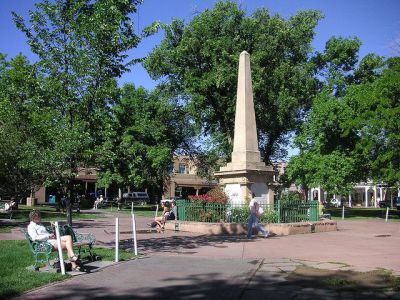
When Santa Fe was established around 1609, its layout followed Spanish laws for town planning in the colonies, resulting in a central plaza fronted by the Palace of the Governors ("Casas Reales") on its north side. This charming square, with its shady radial walkways, remains the city's social hub, surrounded by blocks rich with history. Throughout the year, it hosts many excellent arts, music, and cultural festivals, such as the Fiestas de Santa Fe, usually held during the second week of September.
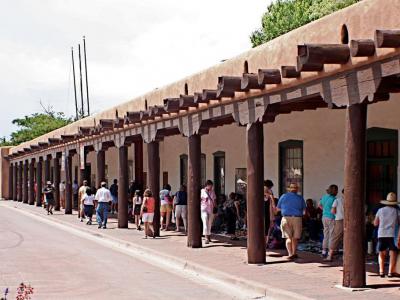
One of the most iconic sights in Santa Fe is along the north side under the portal of the Palace of the Governors: Native American Indians from all over New Mexico selling their crafts, a tradition since the 1930s. Over 500 vendors, who must pass a strict application process that evaluates their technical skills, are licensed to sell here. Each morning, the 69 spots, each 12 bricks wide, are allocated by lottery. You'll find a variety of items, from silver bracelets to pottery to "heishi" (shell bead) necklaces to freshly harvested piñon nuts. It's a fantastic opportunity to buy directly from skilled artisans and learn about the work involved in each piece.
The controversial Soldiers' Monument, known locally as "the obelisk", had occupied the center of the plaza since 1867 and was dedicated to those who died in "battles with savage Indians in the territory of New Mexico". It was pulled down by demonstrators in 2020.
One of the most iconic sights in Santa Fe is along the north side under the portal of the Palace of the Governors: Native American Indians from all over New Mexico selling their crafts, a tradition since the 1930s. Over 500 vendors, who must pass a strict application process that evaluates their technical skills, are licensed to sell here. Each morning, the 69 spots, each 12 bricks wide, are allocated by lottery. You'll find a variety of items, from silver bracelets to pottery to "heishi" (shell bead) necklaces to freshly harvested piñon nuts. It's a fantastic opportunity to buy directly from skilled artisans and learn about the work involved in each piece.
The controversial Soldiers' Monument, known locally as "the obelisk", had occupied the center of the plaza since 1867 and was dedicated to those who died in "battles with savage Indians in the territory of New Mexico". It was pulled down by demonstrators in 2020.
2) Palace of the Governors (New Mexico History Museum) (must see)
The Palace of the Governors, the former seat of Santa Fe's governance, is the oldest continuously occupied edifice in the United States erected by European settlers. This unassuming yet historically profound structure, constructed in 1610, has been the backdrop for several key events in the city's history. In 1693, Diego de Vargas valiantly battled Indian rebels within its walls when he reclaimed the city; ill-fated Mexican governor Albino Pérez met a grim fate, being beheaded in his office in 1837, and later, Governor Lew Wallace penned "Ben-Hur" (considered the most influential Christian book of the 19th century) here in the 1870s.
Inside, you'll find some of the most exquisite items in the state's collection, including trinkets and photographic prints from the 19th century alongside the stunning 18th-century Segesser hide paintings: two grand panels crafted from buffalo skin, depicting rare scenes of Spanish colonial battles. These works, along with the room they're in-decorated with 1909 murals-are truly worth the price of admission. In a couple of restored, furnished rooms, you can compare the living conditions of the Mexican leadership around 1845 to the relative comfort the U.S. governor enjoyed in 1893.
The Palace is part of the New Mexico History Museum complex, which also includes the newer building at the rear. There, you'll find more exhibits documenting the region's rich history.
Inside, you'll find some of the most exquisite items in the state's collection, including trinkets and photographic prints from the 19th century alongside the stunning 18th-century Segesser hide paintings: two grand panels crafted from buffalo skin, depicting rare scenes of Spanish colonial battles. These works, along with the room they're in-decorated with 1909 murals-are truly worth the price of admission. In a couple of restored, furnished rooms, you can compare the living conditions of the Mexican leadership around 1845 to the relative comfort the U.S. governor enjoyed in 1893.
The Palace is part of the New Mexico History Museum complex, which also includes the newer building at the rear. There, you'll find more exhibits documenting the region's rich history.
3) Georgia O'Keeffe Museum (must see)
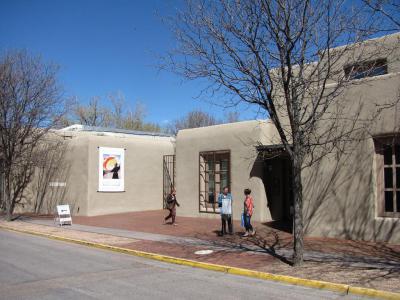
Since 1997, this museum, just a skip northwest of the Santa Fe Plaza, has been paying homage to the artist who's practically part of New Mexico's DNA. O'Keeffe, the rebel of the New York art scene, often credited as the "Mother of American modernism", fell in love with the Land of Enchantment back in the roaring '20s and eventually settled in Abiquiu full-time in 1949 after her husband's demise.
Sure, a lot of O'Keeffe's greatest hits-those sensual, almost abstract flower blossoms-are hanging out in other big-name museums, but don't let that dampen your spirits. The exhibits here give you the backstage pass into O'Keeffe's world, showcasing not just her the works she has kept but also the odds and ends her foundation has been stockpiling since she passed in 1986. And sometimes, they toss in some side acts-her contemporaries or those whose work she influenced or admired.
If you're up for it, they've also got tours you can join in on. The Walk & Talk tour is pretty popular, and there's a deep dive into O'Keeffe's studio at Ghost Ranch in Abiquiu if you're inspired to learn more. Oh, and heads up, they're planning to move to a new spot on Grant Avenue in 2025. It's going to have a community garden and an increased focus on stewardship, so keep those calendars marked!
Sure, a lot of O'Keeffe's greatest hits-those sensual, almost abstract flower blossoms-are hanging out in other big-name museums, but don't let that dampen your spirits. The exhibits here give you the backstage pass into O'Keeffe's world, showcasing not just her the works she has kept but also the odds and ends her foundation has been stockpiling since she passed in 1986. And sometimes, they toss in some side acts-her contemporaries or those whose work she influenced or admired.
If you're up for it, they've also got tours you can join in on. The Walk & Talk tour is pretty popular, and there's a deep dive into O'Keeffe's studio at Ghost Ranch in Abiquiu if you're inspired to learn more. Oh, and heads up, they're planning to move to a new spot on Grant Avenue in 2025. It's going to have a community garden and an increased focus on stewardship, so keep those calendars marked!
4) The Original Trading Post
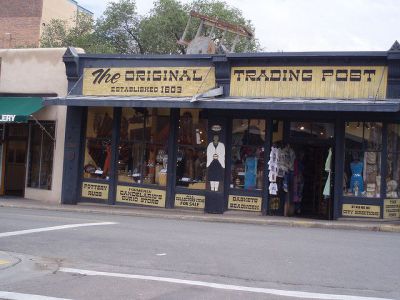
The Original Trading Post stands as a living link to the city’s storied past. Established in the early 1600s, it is often recognized as the oldest store in the United States still in operation. Located on the historic Santa Fe Plaza, the Trading Post recalls the city’s early days as a bustling hub of commerce and cultural exchange. For centuries, this was the site where Native American artisans, Spanish settlers, and traders from across the frontier came together to barter and sell their goods, laying the foundations for Santa Fe’s enduring reputation as a crossroads of cultures.
Today, visitors will find the shop brimming with Southwestern character and charm. Inside, shelves are filled with Native American jewelry, handcrafted pottery, woven textiles, and other regional arts that continue the traditions of local craftsmanship. Alongside these unique pieces are playful curios, souvenirs, and gifts that reflect the spirit of Santa Fe, making the Trading Post a place where history and everyday discovery meet.
Beyond shopping, stepping into the Original Trading Post offers a chance to experience the atmosphere of an authentic trading environment preserved for more than four centuries. The adobe-style building, with its thick walls and classic wooden beams, provides a tangible connection to the city’s colonial past. Whether you are browsing for a keepsake, learning about local artisans, or simply soaking in the ambience, the Trading Post offers a meaningful stop in exploring the Plaza.
Today, visitors will find the shop brimming with Southwestern character and charm. Inside, shelves are filled with Native American jewelry, handcrafted pottery, woven textiles, and other regional arts that continue the traditions of local craftsmanship. Alongside these unique pieces are playful curios, souvenirs, and gifts that reflect the spirit of Santa Fe, making the Trading Post a place where history and everyday discovery meet.
Beyond shopping, stepping into the Original Trading Post offers a chance to experience the atmosphere of an authentic trading environment preserved for more than four centuries. The adobe-style building, with its thick walls and classic wooden beams, provides a tangible connection to the city’s colonial past. Whether you are browsing for a keepsake, learning about local artisans, or simply soaking in the ambience, the Trading Post offers a meaningful stop in exploring the Plaza.

5) Doodlet's (gift shop)
Doodlet’s is more than a gift shop-it’s a local institution that has been delighting visitors and residents since 1955. Known for its whimsical charm, the shop occupies a historic adobe building just off the Santa Fe Plaza, making it a convenient stop while exploring the heart of the city. From the moment you step inside, the atmosphere feels both playful and nostalgic, filled with treasures that range from practical to delightfully quirky.
The store’s eclectic selection has earned it a reputation as a “toy store for grownups.” Shelves are packed with folk art, handmade crafts, books, cards, puzzles, and curiosities that you won’t easily find elsewhere. Local artists are well represented, so the shop is also a good place to pick up a piece of Santa Fe’s creative spirit to bring home. For younger visitors, the toy section offers a colorful escape, while adults are often drawn to the offbeat and humorous items that make browsing an adventure in itself.
Over the decades, Doodlet’s has remained a favorite stop for those looking to avoid mass-produced souvenirs in favor of something more personal and imaginative. Whether you’re searching for a thoughtful gift, a playful keepsake, or simply want to enjoy the shop’s quirky displays, Doodlet’s embodies the creative and unconventional character that makes Santa Fe such a distinctive destination.
The store’s eclectic selection has earned it a reputation as a “toy store for grownups.” Shelves are packed with folk art, handmade crafts, books, cards, puzzles, and curiosities that you won’t easily find elsewhere. Local artists are well represented, so the shop is also a good place to pick up a piece of Santa Fe’s creative spirit to bring home. For younger visitors, the toy section offers a colorful escape, while adults are often drawn to the offbeat and humorous items that make browsing an adventure in itself.
Over the decades, Doodlet’s has remained a favorite stop for those looking to avoid mass-produced souvenirs in favor of something more personal and imaginative. Whether you’re searching for a thoughtful gift, a playful keepsake, or simply want to enjoy the shop’s quirky displays, Doodlet’s embodies the creative and unconventional character that makes Santa Fe such a distinctive destination.
6) Loretto Chapel (must see)
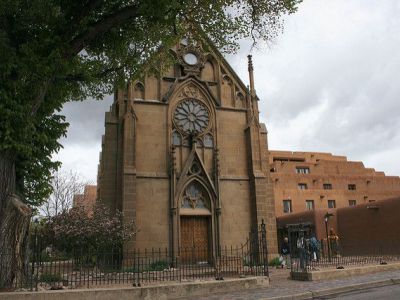
Loretto Chapel, the first Gothic-style building west of the Mississippi, was constructed alongside the Cathedral Basilica of Saint Francis of Assisi for the Sisters of Loretto, New Mexico's pioneering nuns. Originally named the Chapel of Our Lady of Light, this project kicked off in 1873 with the aim of mirroring the grandeur of Sainte-Chapelle in Paris, France. The Chapel's materials, including stones from quarries 200 miles south, and the expertise of French architects and Italian stonemasons were shared with the Cathedral Basilica. With its spires, buttresses, and imported harmonium and stained-glass windows from France, Loretto exudes architectural splendor.
But what truly draws the eye is the exquisite spiral staircase, dubbed the "Miraculous Stairs", leading to the choir loft. Crafted entirely from wood, this marvel winds gracefully without any central support pole, defying gravity like it's no big deal. Legend has it that in 1878, a mysterious carpenter, seemingly guided by the Sisters of Loretto's spiritual call, silently toiled for six months flat to create this masterpiece. And then, like a true mystery man, he vanished into thin air, leaving behind nothing but whispers of his craftiness. These fascinating tales, along with other historical nuggets, are shared on a looped recording inside the chapel.
But what truly draws the eye is the exquisite spiral staircase, dubbed the "Miraculous Stairs", leading to the choir loft. Crafted entirely from wood, this marvel winds gracefully without any central support pole, defying gravity like it's no big deal. Legend has it that in 1878, a mysterious carpenter, seemingly guided by the Sisters of Loretto's spiritual call, silently toiled for six months flat to create this masterpiece. And then, like a true mystery man, he vanished into thin air, leaving behind nothing but whispers of his craftiness. These fascinating tales, along with other historical nuggets, are shared on a looped recording inside the chapel.
7) La Fonda Hotel
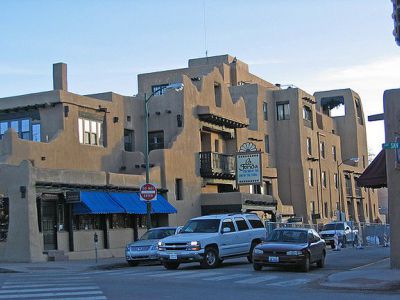
La Fonda on the Plaza, often simply called La Fonda Hotel, is one of Santa Fe’s most celebrated landmarks, blending history, art, and hospitality under one roof. Standing at the end of the Santa Fe Trail, the site has hosted travelers since the city’s early days in the 17th century, when a modest inn served merchants and explorers. The current hotel, built in 1922, was designed in Pueblo Revival style, reflecting the adobe traditions of the region. Its thick walls, hand-carved beams, and decorative tiles give guests a sense of stepping into Santa Fe’s past while enjoying modern comforts.
The hotel’s interior doubles as an art gallery, filled with hand-painted furniture, local folk art, and murals created by artists of the early 20th-century Santa Fe Art Colony. One of its most famous contributors was artist Ernest Martinez, whose work can still be seen on walls and ceilings throughout the building. This artistic flair, paired with architectural details like kiva fireplaces and colorful tilework, makes La Fonda not just a place to stay but an experience of Santa Fe’s unique cultural identity.
Over the years, La Fonda has attracted a diverse array of guests, from traders and cattlemen to politicians, artists, and celebrities. Its rooftop bar and restaurant provide sweeping views of the Sangre de Cristo Mountains and the historic Plaza below, making it a favorite spot for both visitors and locals. Today, La Fonda continues its legacy as a living symbol of Santa Fe-where history, art, and community converge in one remarkable setting.
The hotel’s interior doubles as an art gallery, filled with hand-painted furniture, local folk art, and murals created by artists of the early 20th-century Santa Fe Art Colony. One of its most famous contributors was artist Ernest Martinez, whose work can still be seen on walls and ceilings throughout the building. This artistic flair, paired with architectural details like kiva fireplaces and colorful tilework, makes La Fonda not just a place to stay but an experience of Santa Fe’s unique cultural identity.
Over the years, La Fonda has attracted a diverse array of guests, from traders and cattlemen to politicians, artists, and celebrities. Its rooftop bar and restaurant provide sweeping views of the Sangre de Cristo Mountains and the historic Plaza below, making it a favorite spot for both visitors and locals. Today, La Fonda continues its legacy as a living symbol of Santa Fe-where history, art, and community converge in one remarkable setting.
8) Cathedral Basilica of St. Francis of Assisi (must see)
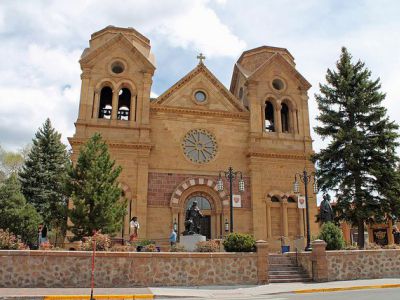
Santa Fe's majestic Cathedral Basilica of Saint Francis of Assisi, at the end of East San Francisco Street, is a testament to the vision of Bishop Jean-Baptiste Lamy, who oversaw its construction over a span of 15 years in the late 19th century. Known for his determination to "elevate" the city to European standards, Lamy's ambitious project resulted in this grandiose cathedral, towering over the landscape.
Lamy's disdain for the local religious customs, including the cult of the Virgin of Guadalupe and the Penitente brotherhood's practices, drove him to build a cathedral that surpassed the aesthetics and standards of the existing adobe structures. The original tiny adobe church dedicated to Saint Francis of Assisi, standing for 170 years, served as the framework for the new stone cathedral, constructed in Romanesque Revival style. However, due to financial constraints, Lamy's dream of domed towers atop the facade remained unfulfilled.
Inside, visitors are greeted by Gothic-inspired architecture, flooded with light from glowing stained-glass windows. A striking gilt altar screen, installed in 1987 for the building's centennial dedication, showcases primarily New World saints, including Kateri Tekakwitha, a 17th-century Mohawk woman canonized in 2012. Adjacent to the main altar stands the salvaged adobe chapel dedicated to La Conquistadora, a revered Native American statue with a storied history dating back to the 17th century.
As you make your grand exit, take a moment to appreciate the great cast-bronze doors, each panel telling a tale of New Mexico's Catholic history. These doors offer glimpses into the cathedral's past, including scenes of Italian stoneworkers constructing the edifice and families fleeing during the 1680 Pueblo Revolt-a rare depiction sympathetic to the Spanish perspective.
Lamy's disdain for the local religious customs, including the cult of the Virgin of Guadalupe and the Penitente brotherhood's practices, drove him to build a cathedral that surpassed the aesthetics and standards of the existing adobe structures. The original tiny adobe church dedicated to Saint Francis of Assisi, standing for 170 years, served as the framework for the new stone cathedral, constructed in Romanesque Revival style. However, due to financial constraints, Lamy's dream of domed towers atop the facade remained unfulfilled.
Inside, visitors are greeted by Gothic-inspired architecture, flooded with light from glowing stained-glass windows. A striking gilt altar screen, installed in 1987 for the building's centennial dedication, showcases primarily New World saints, including Kateri Tekakwitha, a 17th-century Mohawk woman canonized in 2012. Adjacent to the main altar stands the salvaged adobe chapel dedicated to La Conquistadora, a revered Native American statue with a storied history dating back to the 17th century.
As you make your grand exit, take a moment to appreciate the great cast-bronze doors, each panel telling a tale of New Mexico's Catholic history. These doors offer glimpses into the cathedral's past, including scenes of Italian stoneworkers constructing the edifice and families fleeing during the 1680 Pueblo Revolt-a rare depiction sympathetic to the Spanish perspective.
9) Senor Murphy Candymaker
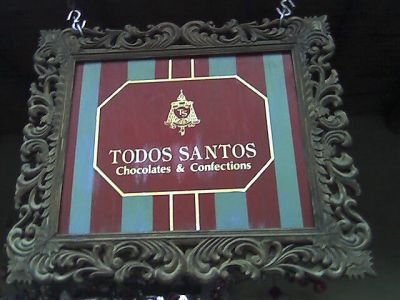
Senor Murphy Candymaker is a Santa Fe institution that has been delighting visitors with handmade sweets since 1971. Rooted in the city’s rich Southwestern culture, the shop is known for blending traditional candy-making techniques with regional flavors. Located just off the historic Santa Fe Plaza, it’s the kind of place where the aroma of fresh caramel and roasting nuts immediately greets you, setting the tone for an indulgent stop during your visit.
What sets Senor Murphy apart is its dedication to small-batch creations crafted with quality ingredients. You’ll find an array of chocolates, brittles, toffees, and fudge, but the real highlight is the shop’s specialty treats that draw on local influences. Their piñon nut confections are especially popular, capturing the essence of New Mexico’s iconic pine nut, while red and green chile caramels offer a playful nod to the state’s famous flavors. Each piece is handmade, making it as much a part of Santa Fe’s artisanal tradition as its pottery or weaving.
The shop itself has a welcoming, old-fashioned charm that makes browsing part of the experience. Bright displays showcase colorful candies, gift boxes, and seasonal specialties, all arranged to tempt the eye as much as the palate. Many visitors stop in to pick up unique gifts to take home, from pinon turtles to chile chocolate bars, which are neatly packaged for travel.
Whether you’re seeking a sweet souvenir or simply craving something decadent after exploring the city’s galleries and museums, Senor Murphy Candymaker is a stop that blends flavor with tradition. It’s not just candy-it’s a taste of Santa Fe’s character in every bite.
What sets Senor Murphy apart is its dedication to small-batch creations crafted with quality ingredients. You’ll find an array of chocolates, brittles, toffees, and fudge, but the real highlight is the shop’s specialty treats that draw on local influences. Their piñon nut confections are especially popular, capturing the essence of New Mexico’s iconic pine nut, while red and green chile caramels offer a playful nod to the state’s famous flavors. Each piece is handmade, making it as much a part of Santa Fe’s artisanal tradition as its pottery or weaving.
The shop itself has a welcoming, old-fashioned charm that makes browsing part of the experience. Bright displays showcase colorful candies, gift boxes, and seasonal specialties, all arranged to tempt the eye as much as the palate. Many visitors stop in to pick up unique gifts to take home, from pinon turtles to chile chocolate bars, which are neatly packaged for travel.
Whether you’re seeking a sweet souvenir or simply craving something decadent after exploring the city’s galleries and museums, Senor Murphy Candymaker is a stop that blends flavor with tradition. It’s not just candy-it’s a taste of Santa Fe’s character in every bite.
