Custom Walk in Cologne, Germany by sazabiega391_df4433 created on 2026-07-16
Guide Location: Germany » Cologne
Guide Type: Custom Walk
# of Sights: 15
Tour Duration: 4 Hour(s)
Travel Distance: 8.3 Km or 5.2 Miles
Share Key: HVJT7
Guide Type: Custom Walk
# of Sights: 15
Tour Duration: 4 Hour(s)
Travel Distance: 8.3 Km or 5.2 Miles
Share Key: HVJT7
How It Works
Please retrieve this walk in the GPSmyCity app. Once done, the app will guide you from one tour stop to the next as if you had a personal tour guide. If you created the walk on this website or come to the page via a link, please follow the instructions below to retrieve the walk in the app.
Retrieve This Walk in App
Step 1. Download the app "GPSmyCity: Walks in 1K+ Cities" on Apple App Store or Google Play Store.



Step 2. In the GPSmyCity app, download(or launch) the guide "Cologne Map and Walking Tours".
Step 3. Tap the menu button located at upper right corner of the "Walks" screen and select "Retrieve custom walk". Enter the share key: HVJT7
1) Kölner Dom (Cologne Cathedral) (must see)
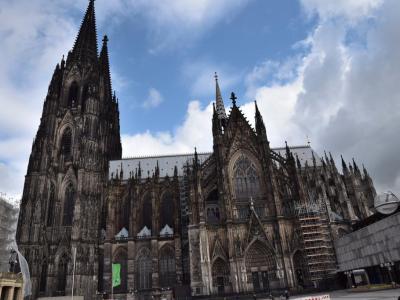
The Cologne Cathedral - a place where Gothic ambition met a 600-year-long construction delay and still came out looking fabulous... Indeed, the magnitude of this building dwarfs your expectations and your camera’s field of view.
This towering masterpiece is Germany’s most visited landmark, with 20,000 people dropping by daily - not bad for a church that took over six centuries to finish. At 157 meters (that’s 515 feet for those who still think in feet), it’s the tallest twin-spired church on Earth, the second-tallest church in Europe, and the third tallest in the world. Clearly, Cologne doesn’t do things halfway...
Construction began in 1248, then took a casual break around 1560. The west tower wasn't completed until 1880, when 19th-century officials unearthed the original blueprints and reasoned, “Why not finish it?”
But the site’s sacred history runs much deeper than that. Since the 4th century, Christians have been building here. The "Old Cathedral" stood from 818 to 1248, and even earlier, a baptistery once graced the eastern end.
So, what kicked off this giant Gothic project? A golden box. Specifically, the Shrine of the Three Kings, believed to hold relics of the Three Wise Men (also known as the Magi - the ones who visited baby Jesus and offered him gifts). Its construction started at the eastern arm to house the shrine, then the west front followed - until everything just kind of stopped in 1473. The work-in-progress look lasted for centuries, complete with a giant crane stuck on top for 400 years. Talk about an eternal fixer-upper...
The cathedral's highlights include the 1322 black marble High Altar and that aforementioned blingy shrine, which began in 1190 and shines brighter than a royal wedding. There's also the 10th-century Gero Crucifix, the 1290 Milan Madonna, and a legal twist - a 13th-century stone tablet that once granted rights to Cologne’s Jewish residents.
And, of course, there are bells - eleven in total. The Saint Peter Bell, cast in 1922, was once the biggest free-swinging bell in the world. You’ll feel it before you hear it...
Insider Tip:
Don’t skip the rear mosaics - they're stunning. Brave the climb for sky-high views, or sneak into the underground parking to see the cathedral’s ancient roots... literally.
This towering masterpiece is Germany’s most visited landmark, with 20,000 people dropping by daily - not bad for a church that took over six centuries to finish. At 157 meters (that’s 515 feet for those who still think in feet), it’s the tallest twin-spired church on Earth, the second-tallest church in Europe, and the third tallest in the world. Clearly, Cologne doesn’t do things halfway...
Construction began in 1248, then took a casual break around 1560. The west tower wasn't completed until 1880, when 19th-century officials unearthed the original blueprints and reasoned, “Why not finish it?”
But the site’s sacred history runs much deeper than that. Since the 4th century, Christians have been building here. The "Old Cathedral" stood from 818 to 1248, and even earlier, a baptistery once graced the eastern end.
So, what kicked off this giant Gothic project? A golden box. Specifically, the Shrine of the Three Kings, believed to hold relics of the Three Wise Men (also known as the Magi - the ones who visited baby Jesus and offered him gifts). Its construction started at the eastern arm to house the shrine, then the west front followed - until everything just kind of stopped in 1473. The work-in-progress look lasted for centuries, complete with a giant crane stuck on top for 400 years. Talk about an eternal fixer-upper...
The cathedral's highlights include the 1322 black marble High Altar and that aforementioned blingy shrine, which began in 1190 and shines brighter than a royal wedding. There's also the 10th-century Gero Crucifix, the 1290 Milan Madonna, and a legal twist - a 13th-century stone tablet that once granted rights to Cologne’s Jewish residents.
And, of course, there are bells - eleven in total. The Saint Peter Bell, cast in 1922, was once the biggest free-swinging bell in the world. You’ll feel it before you hear it...
Insider Tip:
Don’t skip the rear mosaics - they're stunning. Brave the climb for sky-high views, or sneak into the underground parking to see the cathedral’s ancient roots... literally.
2) Roman Gate
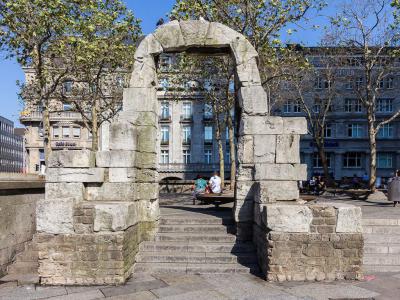
On the side of Domplatz [Cathedral Square] there is an ancient structure vaguely reminiscent of what was once a Roman wall. Built in the days of the Roman Empire, a symbolic gate now stands in its place.
3) Roman-German Museum
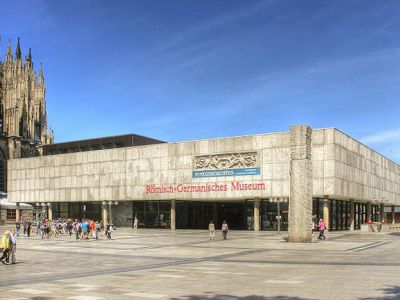
If you have been to Cologne, you would certainly have visited the Roman-German Museum, an important archaeological museum that has a large collection of Roman artifacts from the Roman settlement of Colonia Claudia Ara Agrippinensium, on which modern Cologne is built.
The Römisch-Germanisches Museum, which opened in 1974, is near the Cologne Cathedral on the site of a 3rd-century villa. The villa was discovered in 1941 during the construction of an air-raid shelter. On the floor of the main room of the villa is the renowned Dionysus mosaic. Since the mosaic could not be moved easily, the architects Klaus Renner and Heinz Röcke designed the museum around the mosaic.
The inner courtyards of the museum mimic the layout of the ancient villa. The mosaic covers an area of 70 square meters and is made of millions of ceramic, limestone and glass pieces. This exquisite mosaic skillfully depicts the Greek God of wine Dionysus surrounded by dancers, Pan, Cupid, satyrs at a delightful table scene. The mosaic is in a good condition preserved by the remains of the building that fell on it during the fourth century Germanic raids.
Do not miss out the reconstructed Tomb of Poblicius, a veteran who served in the Fifth Legion. This tomb stands above the mosaic and is a major attraction here. It is 15 meters high and dates back to 40 AD. Another attraction you must not miss here is the Practorium. Ruins of this palace were found recently located close to the cathedral. This palace belonged to the Lower Germania Roman governors. All other exhibits are skillfully arranged based on themes and categories. Rhine valley Roman antiquities can be found on the second floor of the museum.
Why You Should Visit:
Really worth stopping by for an hour or two if you're into Roman artifacts, as there are three floors full of things to see and entry is very affordable.
Tip:
Check out the fine mosaics dotted throughout, as well as some highly interesting decorative pieces in the cabinets.
The Römisch-Germanisches Museum, which opened in 1974, is near the Cologne Cathedral on the site of a 3rd-century villa. The villa was discovered in 1941 during the construction of an air-raid shelter. On the floor of the main room of the villa is the renowned Dionysus mosaic. Since the mosaic could not be moved easily, the architects Klaus Renner and Heinz Röcke designed the museum around the mosaic.
The inner courtyards of the museum mimic the layout of the ancient villa. The mosaic covers an area of 70 square meters and is made of millions of ceramic, limestone and glass pieces. This exquisite mosaic skillfully depicts the Greek God of wine Dionysus surrounded by dancers, Pan, Cupid, satyrs at a delightful table scene. The mosaic is in a good condition preserved by the remains of the building that fell on it during the fourth century Germanic raids.
Do not miss out the reconstructed Tomb of Poblicius, a veteran who served in the Fifth Legion. This tomb stands above the mosaic and is a major attraction here. It is 15 meters high and dates back to 40 AD. Another attraction you must not miss here is the Practorium. Ruins of this palace were found recently located close to the cathedral. This palace belonged to the Lower Germania Roman governors. All other exhibits are skillfully arranged based on themes and categories. Rhine valley Roman antiquities can be found on the second floor of the museum.
Why You Should Visit:
Really worth stopping by for an hour or two if you're into Roman artifacts, as there are three floors full of things to see and entry is very affordable.
Tip:
Check out the fine mosaics dotted throughout, as well as some highly interesting decorative pieces in the cabinets.
4) St. Andreas Church
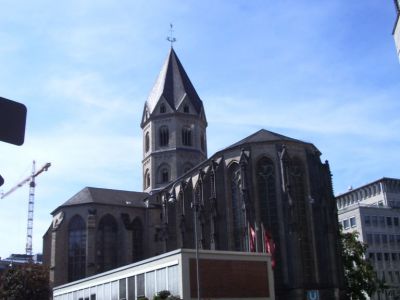
Saint Andrew's Church (German: Saint Andreas) is one of twelve churches built in Cologne in that period. Archbishop Gero consecrated the church in 974, dedicating it to Saint Andrew, although an earlier church at the site was dedicated to Saint Matthew. In the 12th century, the church was rebuilt in the Romanesque style and was probably completed after the great fire of Cologne in 1220. This church also features a number of attractive middle age sculptures, paintings, and murals. In the crypt of the church lies a Roman sarcophagus from the 3rd century, which holds the remains of the 13th-century theologian and natural philosopher Saint Albertus Magnus. Remains of murals can be found at the nave show’s side chapels. In the 2nd century BC, Maccabeus brothers and their mother were martyred for their faith. You can find all three of them in the Maccabeus shrine that dates back to 1527.
One of the most striking features of this church is its exquisite combination of Gothic and Romanesque styles. It also has an impressive octagonal tower. Enter the gracefully elegant late Gothic choir hall and you will be floored by its sophistication and grandeur. Rich ornamental elements are expertly displayed in the Romanesque section. Do not miss out the late 19th-century dark chancel window additions. The subterranean room is artificially illuminated for a stunning effect. Extremely thin pillars support flat light domes that distribute indirect light.
Why You Should Visit:
Very photographic and a great place to unwind after the hustle and bustle of the train station & the Dom.
Tip:
You can pop into one of the innumerable bars, restaurants and pubs close-by after visiting...
One of the most striking features of this church is its exquisite combination of Gothic and Romanesque styles. It also has an impressive octagonal tower. Enter the gracefully elegant late Gothic choir hall and you will be floored by its sophistication and grandeur. Rich ornamental elements are expertly displayed in the Romanesque section. Do not miss out the late 19th-century dark chancel window additions. The subterranean room is artificially illuminated for a stunning effect. Extremely thin pillars support flat light domes that distribute indirect light.
Why You Should Visit:
Very photographic and a great place to unwind after the hustle and bustle of the train station & the Dom.
Tip:
You can pop into one of the innumerable bars, restaurants and pubs close-by after visiting...
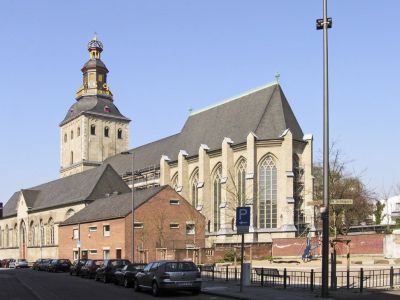
5) Basilica Church of St. Ursula
The Basilica Church of Saint Ursula is a historic and religious site located in Cologne. Its origins can be traced back to the late antiquity period, as it was built on the property of a Roman graveyard. The church was named after Ursula, a Breton princess who, according to legend, suffered martyrdom in Cologne with 11,000 female companions.
Originally dedicated to the Holy Virgin, the church underwent several rounds of construction, and during these building works, numerous mortal remains were found. These remains were believed to be those of the female martyrs, and they were incorporated into the church. The gallery basilica was constructed in the early 12th century, and it was designed to accommodate the numerous relics that had been discovered.
In the 13th century, the choir chancel was rebuilt in Gothic style, and this further emphasized the importance of presenting the relics. The walls of the church were designed with dual shells to create space for the relics while also displaying them behind bars. During the Baroque era, a chapel annex known as the Golden Chamber was built to provide visitors with direct access to the relics. Today, the Golden Chamber is filled with relics from top to bottom and remains a popular attraction for visitors to the church.
The Basilica Church of Saint Ursula boasts rich furnishings from various centuries. The late antiquity “Clematius inscription” and the baroque Grave of the Holy Ursula are two objects that are entirely related to the site's location. The church also features two shrines located behind the high altar and a collection of relic busts with the smiling faces of the Virgins. These artifacts are just a few examples of the church's rich history and cultural significance.
Originally dedicated to the Holy Virgin, the church underwent several rounds of construction, and during these building works, numerous mortal remains were found. These remains were believed to be those of the female martyrs, and they were incorporated into the church. The gallery basilica was constructed in the early 12th century, and it was designed to accommodate the numerous relics that had been discovered.
In the 13th century, the choir chancel was rebuilt in Gothic style, and this further emphasized the importance of presenting the relics. The walls of the church were designed with dual shells to create space for the relics while also displaying them behind bars. During the Baroque era, a chapel annex known as the Golden Chamber was built to provide visitors with direct access to the relics. Today, the Golden Chamber is filled with relics from top to bottom and remains a popular attraction for visitors to the church.
The Basilica Church of Saint Ursula boasts rich furnishings from various centuries. The late antiquity “Clematius inscription” and the baroque Grave of the Holy Ursula are two objects that are entirely related to the site's location. The church also features two shrines located behind the high altar and a collection of relic busts with the smiling faces of the Virgins. These artifacts are just a few examples of the church's rich history and cultural significance.
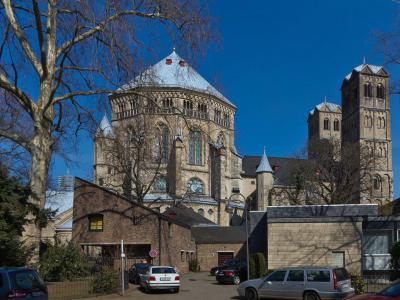
6) St. Gereon's Basilica
Out of the 12 Romanesque Churches in Cologne, Saint Gereon Church is very unique. This church dates back to the period between the 11th and 13th centuries. The nave in Saint Gereon’s Basilica is decagonal shaped and has a dome on top. Inside the church, you will find a variety of medieval mosaics, murals, and precious ancient relics. Historically this site is where a Roman soldier from Egypt, Saint Gereon was beheaded in the third century for his faith. It was in 380 AD that the Church of Saint Gereon was first constructed. This oval shaped church is designed similar to a church in Rome called Minerva Medica.
In the year 1920, the pope elevated Saint Gereon’s status to a Minor Basilica. Partially destroyed during World War II, this church was restored to its original glory like all the other churches in Cologne. The exterior of Saint Gereon Church at the east features an apse and two east towers that are square shaped. This side overlooks a small park and a busy street. From here, do not miss out the view of Saint Gereon’s sculpted head in the park. This sculpture was carved by Iskender Yediler in the year 2002. The western end of the church overlooks a plaza. At the northern porch from where you enter the church, there are two side chapels. Centered on a Pieta sculpture, the chapel on the right dates back to 1897 and features an apse vault. On this vault, you will find exquisite paintings of vines and cross. This is one of the ancient Romanesque churches in Cologne you must not miss on your trip to this city.
Why You Should Visit:
A wonderfully evocative church that looks awesome, especially when viewed for the first time.
It also makes a nice contrast architecturally to the Dom.
In the year 1920, the pope elevated Saint Gereon’s status to a Minor Basilica. Partially destroyed during World War II, this church was restored to its original glory like all the other churches in Cologne. The exterior of Saint Gereon Church at the east features an apse and two east towers that are square shaped. This side overlooks a small park and a busy street. From here, do not miss out the view of Saint Gereon’s sculpted head in the park. This sculpture was carved by Iskender Yediler in the year 2002. The western end of the church overlooks a plaza. At the northern porch from where you enter the church, there are two side chapels. Centered on a Pieta sculpture, the chapel on the right dates back to 1897 and features an apse vault. On this vault, you will find exquisite paintings of vines and cross. This is one of the ancient Romanesque churches in Cologne you must not miss on your trip to this city.
Why You Should Visit:
A wonderfully evocative church that looks awesome, especially when viewed for the first time.
It also makes a nice contrast architecturally to the Dom.
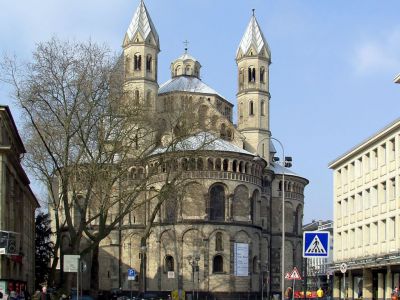
7) Basilika St. Aposteln (Basilica of the Holy Apostles)
Basilika Saint Aposteln (Basilica of the Holy Apostles) is a magnificent Romanesque church. It was constructed during the 11th century and is one of the twelve Romanesque churches built in Cologne during that time. The church has a basilical plan of nave and aisles, and like Groß Saint Martin and Saint Maria im Kapitol, has three apses at the east end making a trefoil plan.
One of the main features of the church is the domed clover leaf chancel, which was built around 1200 and is a true gem of Romanesque architecture. The chancel is located at the east end of the church, and its shape is reminiscent of a clover leaf, with three semicircular apses arranged in a trefoil plan. The chancel is covered by a stunning dome that gives the church a monumental and almost Byzantine appearance.
The church was significantly enlarged in the 13th century, and an octagonal dome was added above the crossing. This new addition further enhanced the grandeur of the church, and it is now one of the most remarkable examples of Romanesque architecture in Germany. Despite the building modifications, the old structures were retained and copied, and integrated into the new construction project.
One of the main features of the church is the domed clover leaf chancel, which was built around 1200 and is a true gem of Romanesque architecture. The chancel is located at the east end of the church, and its shape is reminiscent of a clover leaf, with three semicircular apses arranged in a trefoil plan. The chancel is covered by a stunning dome that gives the church a monumental and almost Byzantine appearance.
The church was significantly enlarged in the 13th century, and an octagonal dome was added above the crossing. This new addition further enhanced the grandeur of the church, and it is now one of the most remarkable examples of Romanesque architecture in Germany. Despite the building modifications, the old structures were retained and copied, and integrated into the new construction project.
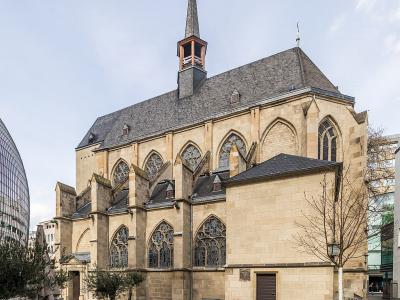
8) Antoniterkirche (St. Anthony Church)
Cologne is a city that every avid tourist must visit at least once. This city has a unique charm and warm atmosphere that entices tourists to come back repeatedly. Cologne is known for its Gothic and Romanesque churches. Among the Gothic churches, the Antoniterkirche holds a special place. Located close to the main shopping street of the city, this Protestant church is frequented by those who wish to pray in absolute peace and quiet.
Antoniterkirche is a very peaceful church built around 1350 to 1380. It boasts a simple, yet elegant architecture. Step inside the church and you cannot miss the Barlach’s Memorial Angel. This cast also known as the Angel of Death is made from the original cast. As the original was destroyed during WWII by the Nazis, this is the only remaining cast today preserved in this church.
You will also be struck by the oasis of peace inside the church in spite of the bustling, noisy Schildergasse outside. Schildergasse is incidentally one of Cologne’s busiest, main shopping streets. Antoniterkirche has three wings even though the church seems more of a chapel due to its small size. On your trip to Cologne, pay a visit to this charming church to enjoy its unique architecture and period art.
Antoniterkirche is a very peaceful church built around 1350 to 1380. It boasts a simple, yet elegant architecture. Step inside the church and you cannot miss the Barlach’s Memorial Angel. This cast also known as the Angel of Death is made from the original cast. As the original was destroyed during WWII by the Nazis, this is the only remaining cast today preserved in this church.
You will also be struck by the oasis of peace inside the church in spite of the bustling, noisy Schildergasse outside. Schildergasse is incidentally one of Cologne’s busiest, main shopping streets. Antoniterkirche has three wings even though the church seems more of a chapel due to its small size. On your trip to Cologne, pay a visit to this charming church to enjoy its unique architecture and period art.
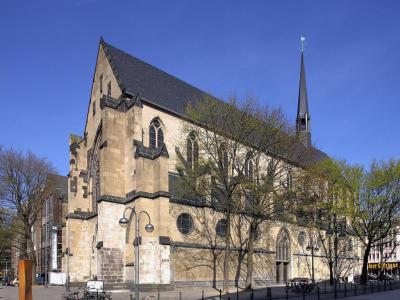
9) Minoritenkirche (Church of the Immaculate Conception)
Cologne is a city of exquisite churches. Visitors from around the world throng this city to enjoy the unique atmosphere, ambience and beauty of these Romanesque and Gothic churches. Minoritenkirche is one of the popular churches here, a must visit tourist attraction.
The Dom Cathedral and Minoritenkirche Saint Maria Empfangnis were constructed around the same time in Cologne. Minoritenkirche is a huge Gothic church built by Franciscans in the 1200s. As compared to the other churches in the city, you will find the architecture here refreshingly simple. It took from 1245 to about 1260 to build its early-Gothic choir, with a three-aisle nave added in the 14th century. As the Franciscans are a mendicant order, they built a ridge turret but no bell tower, indications of the poverty adopted by the order. When the French Revolution spread to Cologne in 1794, the Franciscans were expelled from the church and the adjoining monastery.
Inside the church is John Duns Scotus’ tomb. He was a strong defender of orthodox religion and was a popular theologian. His orthodoxy did not go down well with many during that period. This triple-nave Gothic basilica located in Minoritenstreet houses the gravestone of the “father of journeymen” Adolf Kolping. Kolping and Scotus both were beatified by Pope John Paul II and were feature on the new west doors designed by Paul Nagel in 2006.
Just like the other churches in Cologne, this church too was damaged badly during World War II. In the following years, it was reconstructed, modified and enhanced many times. On your trip to Cologne, visit this beautiful church that reflects glory in stark simplicity. The architecture mirrors the essential Franciscan values. Include this unique church in your itinerary on your next visit to Cologne.
The Dom Cathedral and Minoritenkirche Saint Maria Empfangnis were constructed around the same time in Cologne. Minoritenkirche is a huge Gothic church built by Franciscans in the 1200s. As compared to the other churches in the city, you will find the architecture here refreshingly simple. It took from 1245 to about 1260 to build its early-Gothic choir, with a three-aisle nave added in the 14th century. As the Franciscans are a mendicant order, they built a ridge turret but no bell tower, indications of the poverty adopted by the order. When the French Revolution spread to Cologne in 1794, the Franciscans were expelled from the church and the adjoining monastery.
Inside the church is John Duns Scotus’ tomb. He was a strong defender of orthodox religion and was a popular theologian. His orthodoxy did not go down well with many during that period. This triple-nave Gothic basilica located in Minoritenstreet houses the gravestone of the “father of journeymen” Adolf Kolping. Kolping and Scotus both were beatified by Pope John Paul II and were feature on the new west doors designed by Paul Nagel in 2006.
Just like the other churches in Cologne, this church too was damaged badly during World War II. In the following years, it was reconstructed, modified and enhanced many times. On your trip to Cologne, visit this beautiful church that reflects glory in stark simplicity. The architecture mirrors the essential Franciscan values. Include this unique church in your itinerary on your next visit to Cologne.
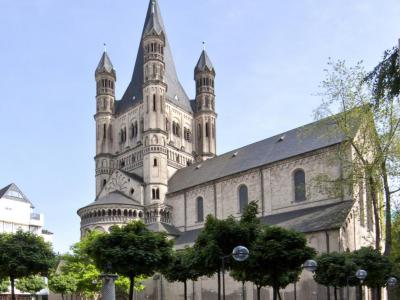
10) Groß St. Martin (Great St. Martin Church) (must see)
Ah, the Great Saint Martin Church-this seriously good-looking temple with a riverside address and medieval drama to spare is proof that if a building can survive fire, war, and questionable Baroque interior design choices, it deserves your full attention.
This Romanesque heavyweight was built between 1150 and 1250, and its iconic tower has been photobombing Old Town’s skyline ever since. But the site’s résumé goes way back. In Roman times, this spot was actually an island in the Rhine, where they built a humble chapel-probably to appease both the gods and the weather.
In the 10th century, a new church was built. In 1150: Boom. Fire. Ashes. Time to build again! By 1172, they’d got a fancy tri-apsidal structure. It survived another fire in 1185. But in 1378, the towers' roofs caught fire again, and by 1434, a storm decided to finish the job and blew them clean off. Truly, the medieval weather had no chill...
In the 1700s, someone got ambitious with the interior, adding Baroque decorations. Not everyone was thrilled. Some clergy officials thought it looked more Versailles than virtue, and out came the paintbrushes.
Then came the French in 1794. They stuck around for 20 years, turned the abbey into barracks, and eventually pulled the plug on the monastery altogether. Monks out, soldiers in. Not exactly a spiritual upgrade...
By 1847, restoration kicked off, and not a moment too soon. Because in World War II, the church took a beating-fires again, naturally-but was lovingly rebuilt between 1948 and 1985. Now, that’s what we call long-term commitment...
Pro tip:
The entrance plays hard to get-it’s tucked away at the back. And if you fancy ancient basements, head downstairs to see the Roman foundations. Because nothing says timeless like a church that’s literally built on history.
This Romanesque heavyweight was built between 1150 and 1250, and its iconic tower has been photobombing Old Town’s skyline ever since. But the site’s résumé goes way back. In Roman times, this spot was actually an island in the Rhine, where they built a humble chapel-probably to appease both the gods and the weather.
In the 10th century, a new church was built. In 1150: Boom. Fire. Ashes. Time to build again! By 1172, they’d got a fancy tri-apsidal structure. It survived another fire in 1185. But in 1378, the towers' roofs caught fire again, and by 1434, a storm decided to finish the job and blew them clean off. Truly, the medieval weather had no chill...
In the 1700s, someone got ambitious with the interior, adding Baroque decorations. Not everyone was thrilled. Some clergy officials thought it looked more Versailles than virtue, and out came the paintbrushes.
Then came the French in 1794. They stuck around for 20 years, turned the abbey into barracks, and eventually pulled the plug on the monastery altogether. Monks out, soldiers in. Not exactly a spiritual upgrade...
By 1847, restoration kicked off, and not a moment too soon. Because in World War II, the church took a beating-fires again, naturally-but was lovingly rebuilt between 1948 and 1985. Now, that’s what we call long-term commitment...
Pro tip:
The entrance plays hard to get-it’s tucked away at the back. And if you fancy ancient basements, head downstairs to see the Roman foundations. Because nothing says timeless like a church that’s literally built on history.
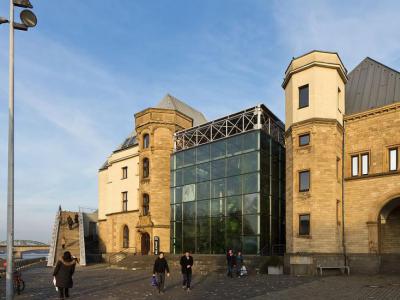
11) Chocolate Museum (must see)
The Imhoff-Schokoladenmuseum was opened by Hans Imhoff on 31 October 1993. It is situated in the Cologne quarter Altstadt-Süd on the Rheinauhafen-peninsula. The exhibition shows the whole history of chocolate, from the beginning at the Olmecs, Maya and Aztecs until the contemporary products and their production methods. The museum belongs to the Top Ten of German museums with 5,000 guidances and 600,000 visitors a year.
A special attraction is the three-meter-high chocolate fountain, at which a woman dips wafers in the liquid chocolate and distributes them to visitors. Another interesting thing for visitors is the small tropiarium consisting of a glass cube with 10-meter edge length showing cacao trees of the species Theobroma cacao and Theobroma grandiflorum. Several production machineries were built as miniatures so that you can have a look at the production process of the small chocolate bars, which are given to the visitors at the entrance of the museum.
Why You Should Visit:
Gives a brief history of chocolate as well as more esoteric things like the religion & culture related to it. Great spot to view the Rhine river, too.
Tip:
Lots of free samples during visits and you can have your own personalized chocolate made.
A special attraction is the three-meter-high chocolate fountain, at which a woman dips wafers in the liquid chocolate and distributes them to visitors. Another interesting thing for visitors is the small tropiarium consisting of a glass cube with 10-meter edge length showing cacao trees of the species Theobroma cacao and Theobroma grandiflorum. Several production machineries were built as miniatures so that you can have a look at the production process of the small chocolate bars, which are given to the visitors at the entrance of the museum.
Why You Should Visit:
Gives a brief history of chocolate as well as more esoteric things like the religion & culture related to it. Great spot to view the Rhine river, too.
Tip:
Lots of free samples during visits and you can have your own personalized chocolate made.
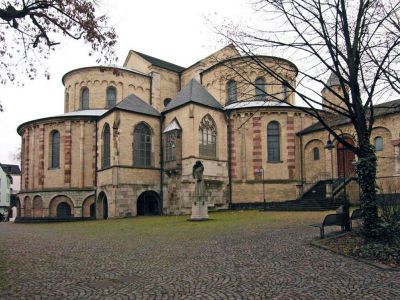
12) St. Maria im Kapitol (St. Mary's in the Capitol)
Saint Maria im Kapitol (english: Saint Mary's in the Capitol) is a magnificent 11th-century Romanesque church located in the Kapitol-Viertel. Its name “im Kapitol” refers to the Roman temple for the Capitoline Triad that was built on today’s site of the church in the first century. The church was dedicated to Saint Mary and built between 1040 and 1065, based on the Church of the Nativity in Bethlehem.
The church is one of twelve Romanesque churches built in Cologne during this period, and it is considered the most important work of German church architecture of the Salian dynasty. Saint Mary's in the Capitol is the largest of the Romanesque churches in Cologne. It has a nave and aisles and three towers to the west. The east end of the church is trefoil in shape, with three apses.
Saint Mary's in the Capitol's foundation was built on the walls of the Roman temple, which measured 33 m x 29.5 m and was surrounded by a 97 m x 69 m courtyard. Inside of the temple, three cellae – one for each of the worshipped gods – were built. After the Franks conquered Cologne in the fifth century, the Frankish mayors of the palace resided around the Capitoline hill, and Pepin of Herstal lived in Cologne for a period of time. His wife Plectrude had a proprietary church built on the ruins of the capitol before her death, and she was buried in this aisleless church.
In the middle of the eleventh century, the archbishop of Cologne Hermann II and his sister Ida, abbess of Saint Maria im Kapitol, initiated construction of a new church. The altar and the nave were consecrated by Pope Leo IX. During World War II, the church was heavily damaged, and until 1956, only the closed-off western part of the church could be used. In 1984, the eastern part was reopened and could also be used.
The church is one of twelve Romanesque churches built in Cologne during this period, and it is considered the most important work of German church architecture of the Salian dynasty. Saint Mary's in the Capitol is the largest of the Romanesque churches in Cologne. It has a nave and aisles and three towers to the west. The east end of the church is trefoil in shape, with three apses.
Saint Mary's in the Capitol's foundation was built on the walls of the Roman temple, which measured 33 m x 29.5 m and was surrounded by a 97 m x 69 m courtyard. Inside of the temple, three cellae – one for each of the worshipped gods – were built. After the Franks conquered Cologne in the fifth century, the Frankish mayors of the palace resided around the Capitoline hill, and Pepin of Herstal lived in Cologne for a period of time. His wife Plectrude had a proprietary church built on the ruins of the capitol before her death, and she was buried in this aisleless church.
In the middle of the eleventh century, the archbishop of Cologne Hermann II and his sister Ida, abbess of Saint Maria im Kapitol, initiated construction of a new church. The altar and the nave were consecrated by Pope Leo IX. During World War II, the church was heavily damaged, and until 1956, only the closed-off western part of the church could be used. In 1984, the eastern part was reopened and could also be used.
13) St. Cäcilien (St. Cecilia's Church)
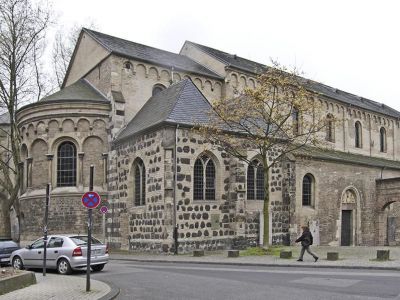
Saint Cecilia's Church is one of the twelve Romanesque churches in Cologne's old city. The church, maintained by the Foundation of Romanesque Churches in Cologne, has remained almost unchanged since its inception, which dates back to 1130-60.
The church has a simple three-aisled floor plan without towers or transepts. The southernmost aisle and the center of the nave end in a rounded apse. Meanwhile, the northern aisle ends in an apse that was built in 1479 and is currently used as a sacristy.
The church's middle aisle features frescoes on the upper choir, which were damaged during World War II. Although they are difficult to see clearly, the original arched wooden roof still remains. The tympanum, which dates back to 1160, is part of the museum's collection and can be viewed from the north entrance.
The history of the Saint Cecilia's Church dates back to the 9th century when a women's home of the same name was founded on the site during the reign of Archbishop Willibert in 870-888. The original church was built on the ruins of a prior Roman bath. The church was later renovated in the 12th century to suit a Romanesque style.
In the late 15th century, the church's interior was renovated using resources originally designated for another church. During the 19th century, the main entrance was changed and given a new entry in the Neo-Romantic style. Although it remains on site, it is now walled up to accommodate the Schnütgen Museum, which is currently housed in the church.
For a time, the Saint Cecilia's Church was also adjacent to the first hospital in Cologne, where it served as a chapel. The hospital is no longer present, and the church now stands next to the Rautenstrauch-Joest Museum.
Although the church is now mainly used as a museum of medieval art, it still celebrates two masses each year, one at Christmas and the other on the feast day of Saint Cecilia.
The church has a simple three-aisled floor plan without towers or transepts. The southernmost aisle and the center of the nave end in a rounded apse. Meanwhile, the northern aisle ends in an apse that was built in 1479 and is currently used as a sacristy.
The church's middle aisle features frescoes on the upper choir, which were damaged during World War II. Although they are difficult to see clearly, the original arched wooden roof still remains. The tympanum, which dates back to 1160, is part of the museum's collection and can be viewed from the north entrance.
The history of the Saint Cecilia's Church dates back to the 9th century when a women's home of the same name was founded on the site during the reign of Archbishop Willibert in 870-888. The original church was built on the ruins of a prior Roman bath. The church was later renovated in the 12th century to suit a Romanesque style.
In the late 15th century, the church's interior was renovated using resources originally designated for another church. During the 19th century, the main entrance was changed and given a new entry in the Neo-Romantic style. Although it remains on site, it is now walled up to accommodate the Schnütgen Museum, which is currently housed in the church.
For a time, the Saint Cecilia's Church was also adjacent to the first hospital in Cologne, where it served as a chapel. The hospital is no longer present, and the church now stands next to the Rautenstrauch-Joest Museum.
Although the church is now mainly used as a museum of medieval art, it still celebrates two masses each year, one at Christmas and the other on the feast day of Saint Cecilia.
14) Church of St. Pantaleon
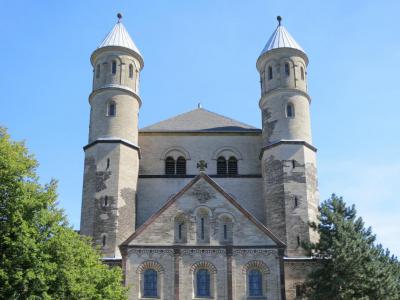
The Church of Saint Pantaleon is one of the twelve Romanesque churches in the city and was built in the 10th century on the site of a Roman villa. The church was consecrated to Saint Pantaleon and the Saints Cosmas and Damian and is the oldest church of the cult of Saint Pantaleon west of Byzantium.
The church was expanded over time, and in 955, Archbishop Bruno the Great added a Benedictine abbey. Here, Bruno was buried after his death. The current facade of the church was constructed in the 10th century by Holy Roman Empress Theophanu, who was also buried in the church at her own request.
Saint Pantaleon played an important role in the earliest stage of German Old Catholicism. In February 1872, the government authorized Old Catholics to celebrate mass there, but Roman Catholic Bishop Franz Adolf Namszanowski was enraged that the space was now "polluted."
During the Second World War, the church was heavily damaged, but it was restored after the war. An archeological survey was conducted during the restoration, and new church bells and a new organ were installed. The church underwent further restoration in the 1950s and 1960s, during which time the coffered ceiling in the nave was designed and constructed by artist Dieter Hartmann.
Pope Benedict XVI visited the church in 2005, and in 2006, a new chapel dedicated to Saint Josemaría Escrivá was blessed by Cardinal Joachim Meisner.
The church was expanded over time, and in 955, Archbishop Bruno the Great added a Benedictine abbey. Here, Bruno was buried after his death. The current facade of the church was constructed in the 10th century by Holy Roman Empress Theophanu, who was also buried in the church at her own request.
Saint Pantaleon played an important role in the earliest stage of German Old Catholicism. In February 1872, the government authorized Old Catholics to celebrate mass there, but Roman Catholic Bishop Franz Adolf Namszanowski was enraged that the space was now "polluted."
During the Second World War, the church was heavily damaged, but it was restored after the war. An archeological survey was conducted during the restoration, and new church bells and a new organ were installed. The church underwent further restoration in the 1950s and 1960s, during which time the coffered ceiling in the nave was designed and constructed by artist Dieter Hartmann.
Pope Benedict XVI visited the church in 2005, and in 2006, a new chapel dedicated to Saint Josemaría Escrivá was blessed by Cardinal Joachim Meisner.
15) Church of St. Severin
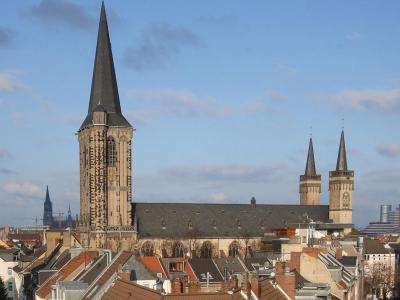
The Church of Saint Severin is one of the twelve Romanesque churches of Cologne. This early Romanesque basilica church was originally established as a memorial chapel for Saint Severin of Cologne in the late 4th century and has undergone several extensions and enlargements over the centuries.
The oldest parts of the current building date back to the 10th century, and the church was designated a Basilica Minor by Pope Pius XII in 1953. Visitors can also explore the passable archaeological dig area beneath the church, where the foundation remains of the original building can be viewed.
The church boasts a rich collection of furnishings, including the murals in the crypta, the choral equipment, and a part of the medieval floor. The original choir seating and high altar, behind which the Shrine to the Holy Severin is displayed, is another highlight. The forked crucifix from the 14th century and the late Gothic glass paintings in the long nave are also remarkable.
Despite its many changes and renovations over the years, the Church of Saint Severin has managed to maintain its unique character and charm. Although the external impression is primarily Gothic, the choir chancel remains Romanesque.
The oldest parts of the current building date back to the 10th century, and the church was designated a Basilica Minor by Pope Pius XII in 1953. Visitors can also explore the passable archaeological dig area beneath the church, where the foundation remains of the original building can be viewed.
The church boasts a rich collection of furnishings, including the murals in the crypta, the choral equipment, and a part of the medieval floor. The original choir seating and high altar, behind which the Shrine to the Holy Severin is displayed, is another highlight. The forked crucifix from the 14th century and the late Gothic glass paintings in the long nave are also remarkable.
Despite its many changes and renovations over the years, the Church of Saint Severin has managed to maintain its unique character and charm. Although the external impression is primarily Gothic, the choir chancel remains Romanesque.
