Custom Walk in Montreal, Canada by coolvrp1_4b9794 created on 2026-07-19
Guide Location: Canada » Montreal
Guide Type: Custom Walk
# of Sights: 10
Tour Duration: 3 Hour(s)
Travel Distance: 5.9 Km or 3.7 Miles
Share Key: HFJXZ
Guide Type: Custom Walk
# of Sights: 10
Tour Duration: 3 Hour(s)
Travel Distance: 5.9 Km or 3.7 Miles
Share Key: HFJXZ
How It Works
Please retrieve this walk in the GPSmyCity app. Once done, the app will guide you from one tour stop to the next as if you had a personal tour guide. If you created the walk on this website or come to the page via a link, please follow the instructions below to retrieve the walk in the app.
Retrieve This Walk in App
Step 1. Download the app "GPSmyCity: Walks in 1K+ Cities" on Apple App Store or Google Play Store.



Step 2. In the GPSmyCity app, download(or launch) the guide "Montreal Map and Walking Tours".
Step 3. Tap the menu button located at upper right corner of the "Walks" screen and select "Retrieve custom walk". Enter the share key: HFJXZ
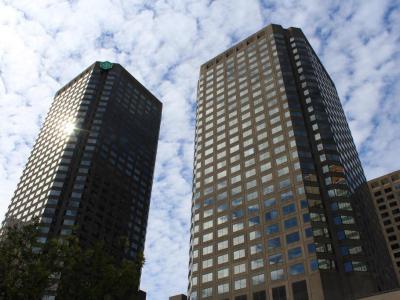
1) Complexe Desjardins
Complexe Desjardins, situated in Montreal within the Quartier des spectacles area of Saint Catherine Street, is a multifunctional complex that incorporates offices, a hotel, and a shopping mall. Its development aimed to enhance the eastern end of downtown Montreal and is strategically positioned within the quadrilateral formed by Saint Catherine, Saint-Urbain, Jeanne Mance, and René Lévesque Boulevard.
The architectural composition of Complexe Desjardins comprises multiple towers housing Desjardins Group offices, Quebec Government offices, various companies, and a hotel. These structures are interconnected by an atrium shopping center, which serves as the core and creates an enclosed square-like ambiance. Remarkably, it stands out as one of the few buildings in Canada to possess its own unique postal code prefix, H5B.
This complex benefits from its integration into the underground city network, connecting it to notable destinations such as Place des Arts and the Place-des-Arts Metro station to the north, as well as the Complexe Guy-Favreau, the Palais des congrès de Montréal, and Place-d'Armes Metro station to the south.
Initially inaugurated as the Hotel Meridien Montreal in April 1976, the hotel within the complex underwent subsequent name changes, becoming the Wyndham Montreal, then the Hyatt Regency Montreal in 2003, and finally adopting its current name, the DoubleTree by Hilton Montreal, in December 2018.
The architectural composition of Complexe Desjardins comprises multiple towers housing Desjardins Group offices, Quebec Government offices, various companies, and a hotel. These structures are interconnected by an atrium shopping center, which serves as the core and creates an enclosed square-like ambiance. Remarkably, it stands out as one of the few buildings in Canada to possess its own unique postal code prefix, H5B.
This complex benefits from its integration into the underground city network, connecting it to notable destinations such as Place des Arts and the Place-des-Arts Metro station to the north, as well as the Complexe Guy-Favreau, the Palais des congrès de Montréal, and Place-d'Armes Metro station to the south.
Initially inaugurated as the Hotel Meridien Montreal in April 1976, the hotel within the complex underwent subsequent name changes, becoming the Wyndham Montreal, then the Hyatt Regency Montreal in 2003, and finally adopting its current name, the DoubleTree by Hilton Montreal, in December 2018.
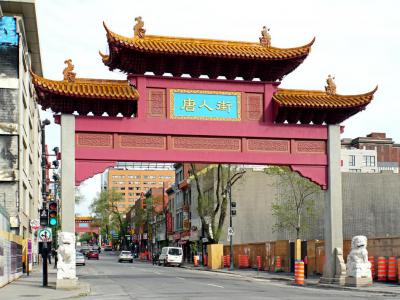
2) Chinatown
Dating back to the 1860s, Montreal’s Chinatown may not sprawl for blocks and blocks like some of its U.S. cousins, but what it lacks in size, it makes up for in flavour. Its borders are proudly marked by traditional guardian lions, as if to say: “Yes, it’s compact, but it’s mighty!”
You can wander through it in about an hour, soaking up the red lanterns, bilingual signs, festival banners, and that unmistakable perfume of roasting duck and simmering broth drifting through the air. But here’s the thing—this is not a neighbourhood you simply look at. To truly understand it, you have to eat it.
Short on time or budget? Slide into Pâtisserie Harmonie for fluffy savoury buns or a Vietnamese bánh mì that refuses to be modest. If you’re ready to commit more seriously, then hand-pulled noodles, soup dumplings, dim sum carts, and lacquered Peking duck are waiting to change your afternoon plans.
For hand-stretched noodle theatrics, try Nouilles de Lan Zhou. For classic dim sum done properly, head to Kim Fung. Dumpling devotees debate between Mai Xiang Yuan and Bien Maison. Craving pho? Pho Bac has you covered.
Korean comfort food lives at Chez Bong, while Orange Rouge adds a polished, fusion twist. Ramen fans line up at Sumo Ramen, and for cocktails with attitude, there’s Le Mal Nécessaire. Peking duck loyalists swear by Beijing or Mon Nan. And just to keep you guessing, La Capital Tacos serves bold Mexican flavours on Chinese dinnerware—because why not?
For sweet drama, pick up Dragon’s Beard candy at Bonbons à la Barbe de Dragon—a confection pulled into thousands of silky strands before your eyes. Or grab crispy roast duck, pork, or chicken to go from Lam Kee.
Small? Yes. Skippable? Not a chance...
You can wander through it in about an hour, soaking up the red lanterns, bilingual signs, festival banners, and that unmistakable perfume of roasting duck and simmering broth drifting through the air. But here’s the thing—this is not a neighbourhood you simply look at. To truly understand it, you have to eat it.
Short on time or budget? Slide into Pâtisserie Harmonie for fluffy savoury buns or a Vietnamese bánh mì that refuses to be modest. If you’re ready to commit more seriously, then hand-pulled noodles, soup dumplings, dim sum carts, and lacquered Peking duck are waiting to change your afternoon plans.
For hand-stretched noodle theatrics, try Nouilles de Lan Zhou. For classic dim sum done properly, head to Kim Fung. Dumpling devotees debate between Mai Xiang Yuan and Bien Maison. Craving pho? Pho Bac has you covered.
Korean comfort food lives at Chez Bong, while Orange Rouge adds a polished, fusion twist. Ramen fans line up at Sumo Ramen, and for cocktails with attitude, there’s Le Mal Nécessaire. Peking duck loyalists swear by Beijing or Mon Nan. And just to keep you guessing, La Capital Tacos serves bold Mexican flavours on Chinese dinnerware—because why not?
For sweet drama, pick up Dragon’s Beard candy at Bonbons à la Barbe de Dragon—a confection pulled into thousands of silky strands before your eyes. Or grab crispy roast duck, pork, or chicken to go from Lam Kee.
Small? Yes. Skippable? Not a chance...
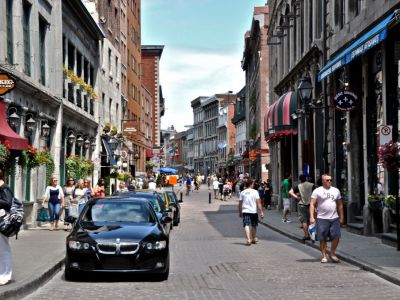
3) Old Montreal (must see)
Transporting you back to the era of New France, Old Montreal stands as one of the most ancient districts frequented by tourists. Positioned ideally within Ville-Marie's borough, this neighborhood is bordered by Ruelle des Fortifications to the north, McGill Street to the west, the majestic Saint Lawrence River to the south, and Berri Street to the east.
Ville-Marie borough remains vibrant and dynamic, fueled by its perpetually lively neighborhoods, including the bustling downtown core, McGill Ghetto, Latin Quarter, Chinatown, Gay Village, and Old Montreal. Visitors revel in exploring this area using public transportation, indulging in shopping, dining at exquisite restaurants, and exploring renowned museums within Ville-Marie.
Should you find yourself in Old Montreal between July and October, an enthralling experience awaits you-the renowned Montreal Ghost Walks. Led by a local storyteller, this captivating journey uncovers the darker aspects of the area's history, guiding you through haunted locations that will send chills down your spine. You have the option to embark on either the west or east side walking tour. Undoubtedly, Old Montreal offers an unparalleled visitor experience, leaving a lasting impression.
Why You Should Visit:
A stroll through Old Montreal will give you a feel of European charm in North America. The cobblestone streets, the architecture, the restaurants and art galleries – all make an irresistible combination.
Tip:
You can walk from one end to the other of what is Old Montreal in 15-20 minutes, but there is a lot packed into that small section so you can easily spend 2 to 3 days exploring it.
Ville-Marie borough remains vibrant and dynamic, fueled by its perpetually lively neighborhoods, including the bustling downtown core, McGill Ghetto, Latin Quarter, Chinatown, Gay Village, and Old Montreal. Visitors revel in exploring this area using public transportation, indulging in shopping, dining at exquisite restaurants, and exploring renowned museums within Ville-Marie.
Should you find yourself in Old Montreal between July and October, an enthralling experience awaits you-the renowned Montreal Ghost Walks. Led by a local storyteller, this captivating journey uncovers the darker aspects of the area's history, guiding you through haunted locations that will send chills down your spine. You have the option to embark on either the west or east side walking tour. Undoubtedly, Old Montreal offers an unparalleled visitor experience, leaving a lasting impression.
Why You Should Visit:
A stroll through Old Montreal will give you a feel of European charm in North America. The cobblestone streets, the architecture, the restaurants and art galleries – all make an irresistible combination.
Tip:
You can walk from one end to the other of what is Old Montreal in 15-20 minutes, but there is a lot packed into that small section so you can easily spend 2 to 3 days exploring it.
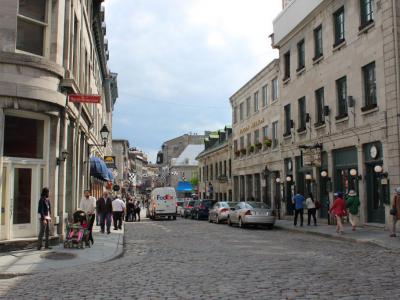
4) Saint-Paul Street (Rue St-Paul) (must see)
Saint-Paul (Rue Saint-Paul) is the oldest street in Montreal, laid out in 1673 according to a plan by François Dollier de Casson. It follows the path that once bordered the northern edge of the former Fort Ville-Marie and is named after Paul de Chomedey de Maisonneuve, founder of the fort and the first governor of Montreal, who built a home for himself in this area in 1650.
Unlike other – straight – streets drawn by Dollier de Casson, the cavernous cobblestone Saint-Paul is a bit winding. Centered on Royal Square (Place Royale), a major marketplace until 1803, it was destined to become, for many years, the city's main thoroughfare. In the 19th century, Old Montreal was the cradle of the local press, making Saint Paul home to a multitude of French- and English-language newspapers and journals. Busy day and night, the street was the first in the city to benefit from oil lighting.
There are several historic buildings lining Saint-Paul such as the Intendance Palace of 1698 and the Vaudreuil Castle (Château de Vaudreuil) of 1724. The street is also home to such prominent landmarks as the Bonsecours Market and the Chapel of Our Lady of Good Help (Notre-Dame-de-Bon-Secours). It also boasts perhaps the highest in the city concentration of tourist-themed souvenir shops, art galleries, boutique hotels, lively rooftop terraces, cafés, and eateries with international cuisine.
Tip:
In case you are budget-conscious, remember that the prices in this area are a bit higher than usual.
Unlike other – straight – streets drawn by Dollier de Casson, the cavernous cobblestone Saint-Paul is a bit winding. Centered on Royal Square (Place Royale), a major marketplace until 1803, it was destined to become, for many years, the city's main thoroughfare. In the 19th century, Old Montreal was the cradle of the local press, making Saint Paul home to a multitude of French- and English-language newspapers and journals. Busy day and night, the street was the first in the city to benefit from oil lighting.
There are several historic buildings lining Saint-Paul such as the Intendance Palace of 1698 and the Vaudreuil Castle (Château de Vaudreuil) of 1724. The street is also home to such prominent landmarks as the Bonsecours Market and the Chapel of Our Lady of Good Help (Notre-Dame-de-Bon-Secours). It also boasts perhaps the highest in the city concentration of tourist-themed souvenir shops, art galleries, boutique hotels, lively rooftop terraces, cafés, and eateries with international cuisine.
Tip:
In case you are budget-conscious, remember that the prices in this area are a bit higher than usual.
5) Old Port (Vieux-Port) (must see)
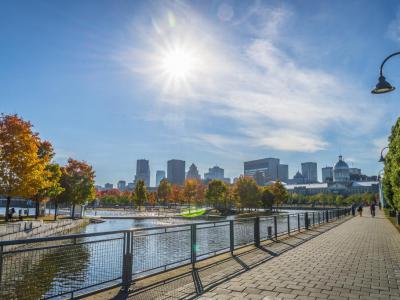
Located on the north bank of the Saint Lawrence River, the historic Old Port of Montreal (Vieux-Port de Montréal) stretches for over two kilometers (1.2 miles) south of Old Montreal, in a natural harbor that was once frequented by Amerindian canoes and then by barges and ships of French fur traders and others.
In service from as early as 1611, the port bore witness to the economic and cultural development of Montreal and remained in use until 1976, when the present Port of Montreal was launched further east. In the early 1990s, the territory was redeveloped and in 2005 changed its name to The Quays of the Old Port of Montreal. Today, it serves as a recreational and historical area, attracting annually over six million visitors.
A place for all seasons, there's always something happening here! Summer is great for all sorts of riverfront activities such as rollerblading, cycling, quadricycling, and pleasure boating. Taking a boat cruise on the Saint Lawrence river, or renting a pedal boat for a trip around Bonsecours Basin is also available. A thin park, running the entire length of the Old Port Promenade, offers tourists and locals an ideal spot to relax and catch a cool breeze off the water.
Winter is ideal for skating on the outdoor rink or just playing in the snow. At all times of the year, the Saint Lawrence river is awe-inspiring and powerful.
The on-site attractions include a "labyrinth" in Shed 16 (which is a maze of alleys and obstacles built inside an old waterfront warehouse), the Montreal Science Centre (complete with an IMAX Theatre) on King Edward Pier, and the Montreal Clock Tower.
One of the Port's gems is the Montreal-based Cirque du Soleil which approximately every two years, in spring, launches a new show from the Jacques Cartier Quay by setting up its signature blue-and-yellow-striped tents. In June 2012, an urban beach, called the Clock Tower Beach (Plage de l'Horloge), was opened adjacent to the Clock Tower.
Cultural events in the area include the Montreal High Lights Festival (Festival Montréal en lumière), Igloofest, and the Matsuri Japon festival.
If you have a couple of hours to kill in Montreal, wandering around the Old Port is worth considering.
In service from as early as 1611, the port bore witness to the economic and cultural development of Montreal and remained in use until 1976, when the present Port of Montreal was launched further east. In the early 1990s, the territory was redeveloped and in 2005 changed its name to The Quays of the Old Port of Montreal. Today, it serves as a recreational and historical area, attracting annually over six million visitors.
A place for all seasons, there's always something happening here! Summer is great for all sorts of riverfront activities such as rollerblading, cycling, quadricycling, and pleasure boating. Taking a boat cruise on the Saint Lawrence river, or renting a pedal boat for a trip around Bonsecours Basin is also available. A thin park, running the entire length of the Old Port Promenade, offers tourists and locals an ideal spot to relax and catch a cool breeze off the water.
Winter is ideal for skating on the outdoor rink or just playing in the snow. At all times of the year, the Saint Lawrence river is awe-inspiring and powerful.
The on-site attractions include a "labyrinth" in Shed 16 (which is a maze of alleys and obstacles built inside an old waterfront warehouse), the Montreal Science Centre (complete with an IMAX Theatre) on King Edward Pier, and the Montreal Clock Tower.
One of the Port's gems is the Montreal-based Cirque du Soleil which approximately every two years, in spring, launches a new show from the Jacques Cartier Quay by setting up its signature blue-and-yellow-striped tents. In June 2012, an urban beach, called the Clock Tower Beach (Plage de l'Horloge), was opened adjacent to the Clock Tower.
Cultural events in the area include the Montreal High Lights Festival (Festival Montréal en lumière), Igloofest, and the Matsuri Japon festival.
If you have a couple of hours to kill in Montreal, wandering around the Old Port is worth considering.
6) Pointe-a-Calliere Museum (must see)
Old Montreal is, indeed, old. Walking through it, you will pass along narrow streets lined with buildings that, in some cases, predate Canada as an independent nation. But stepping inside the Pointe-a-Calliere museum will make you see things that are even older – right from the Natives era.
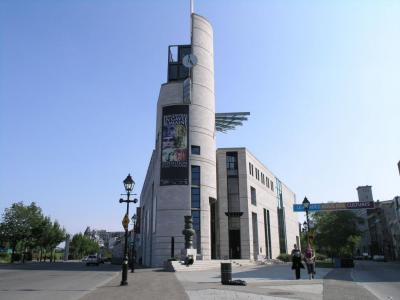
Dedicated to the history and archaeology of Montreal, this museum was founded in 1992, and named after the site of the original settlement of Fort Ville-Marie (precursor of Montreal) – Pointe-a-Calliere.
The museum complex consists of several locations, connected by underground passages, among which are the Mariners' House, the Youville Pumping Station, and the Éperon Building housing the main exhibition spaces.
The museum's exhibits cover a wide range of topics, such as the First Nations heritage, the French colonial period, the British colonial period, and the city's industrialization and modernization. There are also exhibits dedicated to specific topics, such as the history of the Montreal Canadiens hockey team, the archaeology of the city's sewers, and the role of Montreal in the Underground Railroad.
One of the highlights of the complex is the Archaeological Crypt, located beneath the Éperon Building. The crypt contains the ruins of some of Montreal's earliest buildings, including its first Catholic cemetery and the old city hall. Another notable exhibit is the Multimedia Show, which is held in the Mariners' House and uses a combination of sound, light, and video to tell the story of Montreal from its earliest days to the present.
The museum also houses a variety of permanent and temporary exhibitions that showcase different aspects of Montreal's history, such as the city's role in the fur trade, its importance as a port city, and its cultural diversity. One of the most popular exhibits is called "Building Montreal", exploring the city's architectural heritage through the centuries.
In addition to the exhibits, the Pointe-a-Calliere Museum has a restaurant and a gift shop, which sells souvenirs, books, and other items related to Montreal's history and culture.
Tip:
If you have kids, it's worth checking the museum website to see what's going on for the little ones.
Dedicated to the history and archaeology of Montreal, this museum was founded in 1992, and named after the site of the original settlement of Fort Ville-Marie (precursor of Montreal) – Pointe-a-Calliere.
The museum complex consists of several locations, connected by underground passages, among which are the Mariners' House, the Youville Pumping Station, and the Éperon Building housing the main exhibition spaces.
The museum's exhibits cover a wide range of topics, such as the First Nations heritage, the French colonial period, the British colonial period, and the city's industrialization and modernization. There are also exhibits dedicated to specific topics, such as the history of the Montreal Canadiens hockey team, the archaeology of the city's sewers, and the role of Montreal in the Underground Railroad.
One of the highlights of the complex is the Archaeological Crypt, located beneath the Éperon Building. The crypt contains the ruins of some of Montreal's earliest buildings, including its first Catholic cemetery and the old city hall. Another notable exhibit is the Multimedia Show, which is held in the Mariners' House and uses a combination of sound, light, and video to tell the story of Montreal from its earliest days to the present.
The museum also houses a variety of permanent and temporary exhibitions that showcase different aspects of Montreal's history, such as the city's role in the fur trade, its importance as a port city, and its cultural diversity. One of the most popular exhibits is called "Building Montreal", exploring the city's architectural heritage through the centuries.
In addition to the exhibits, the Pointe-a-Calliere Museum has a restaurant and a gift shop, which sells souvenirs, books, and other items related to Montreal's history and culture.
Tip:
If you have kids, it's worth checking the museum website to see what's going on for the little ones.
7) Notre-Dame Basilica (must see)
Notre-Dame Basilica of Montreal is a church that doesn’t whisper modestly from the sidelines. It steps confidently into the spotlight as one of the grand showpieces of Gothic Revival architecture in North America. Designed by Irish-American architect James O'Donnell and largely completed in 1829, this temple proves that Montreal doesn’t do subtle when it comes to sacred spaces.
Its sanctuary was constructed a year later, and then came the towers—because, apparently, one dramatic silhouette wasn’t enough. The West Tower, known as La Persévérance, houses a bourdon bell affectionately called Jean-Baptiste. Cast in 1848 and weighing a polite 10,900 kilograms, it doesn’t ring for just anything. Funerals, major religious festivals, Christmas Eve—Jean-Baptiste has standards. Across the façade, the East Tower, called La Tempérance, contains a ten-bell carillon, also from the 1840s, ready to chime with considerably more enthusiasm.
By 1865, the façade was complete, crowned with three statues—of the Virgin Mary for Montreal, Saint John the Baptist for Quebec, and Saint Joseph for Canada—created by French sculptor Henri Bouriché. It’s practically a stone family portrait of the nation...
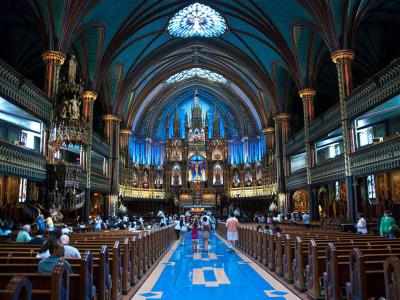
Once inside, any expectation of restraint disappears. The interior is a riot of colour, carved wood, painted columns, statues, and stained glass. And here’s the twist: the windows don’t focus on biblical scenes. Instead, they tell stories from Montreal’s own history. It’s less “Old Testament” and more “local greatest hits.”
Then, there’s the magnificent pipe organ by Casavant Frères, installed in 1891. Four keyboards. Around 7,000 pipes. It doesn’t accompany music—it commands it.
In 1982, Pope John Paul II elevated the church to minor basilica status, and in 1989, it became a National Historic Site of Canada. Today, more than 11 million visitors pass through its doors each year. Even the ten-dollar admission fee fails to discourage the crowds—because grandeur, apparently, is recession-proof.
This basilica has also seen its share of headline moments: Céline Dion married here in 1994, and former Prime Minister Pierre Trudeau was honoured here in 2000. From pop royalty to political royalty, the guest list is impressive...
If you enjoy choral and organ music, keep an ear out for performances—including Handel’s Messiah at Christmas. The on-site brochure doubles as a handy self-guide, and there’s a free 20-minute English or French tour at entry. And if you can, book ahead for the “AURA” light show. Sit somewhere in the middle. Rest assured—when 7,000 pipes meet immersive light, you’ll want the full effect...
Its sanctuary was constructed a year later, and then came the towers—because, apparently, one dramatic silhouette wasn’t enough. The West Tower, known as La Persévérance, houses a bourdon bell affectionately called Jean-Baptiste. Cast in 1848 and weighing a polite 10,900 kilograms, it doesn’t ring for just anything. Funerals, major religious festivals, Christmas Eve—Jean-Baptiste has standards. Across the façade, the East Tower, called La Tempérance, contains a ten-bell carillon, also from the 1840s, ready to chime with considerably more enthusiasm.
By 1865, the façade was complete, crowned with three statues—of the Virgin Mary for Montreal, Saint John the Baptist for Quebec, and Saint Joseph for Canada—created by French sculptor Henri Bouriché. It’s practically a stone family portrait of the nation...
Once inside, any expectation of restraint disappears. The interior is a riot of colour, carved wood, painted columns, statues, and stained glass. And here’s the twist: the windows don’t focus on biblical scenes. Instead, they tell stories from Montreal’s own history. It’s less “Old Testament” and more “local greatest hits.”
Then, there’s the magnificent pipe organ by Casavant Frères, installed in 1891. Four keyboards. Around 7,000 pipes. It doesn’t accompany music—it commands it.
In 1982, Pope John Paul II elevated the church to minor basilica status, and in 1989, it became a National Historic Site of Canada. Today, more than 11 million visitors pass through its doors each year. Even the ten-dollar admission fee fails to discourage the crowds—because grandeur, apparently, is recession-proof.
This basilica has also seen its share of headline moments: Céline Dion married here in 1994, and former Prime Minister Pierre Trudeau was honoured here in 2000. From pop royalty to political royalty, the guest list is impressive...
If you enjoy choral and organ music, keep an ear out for performances—including Handel’s Messiah at Christmas. The on-site brochure doubles as a handy self-guide, and there’s a free 20-minute English or French tour at entry. And if you can, book ahead for the “AURA” light show. Sit somewhere in the middle. Rest assured—when 7,000 pipes meet immersive light, you’ll want the full effect...
8) Cathedrale Marie-Reine-du-Monde (Mary, Queen of the World Cathedral) (must see)
If you think skyscrapers have the last word in downtown Montreal, look up. Rising confidently among the glass and steel is a dome that feels suspiciously Roman.
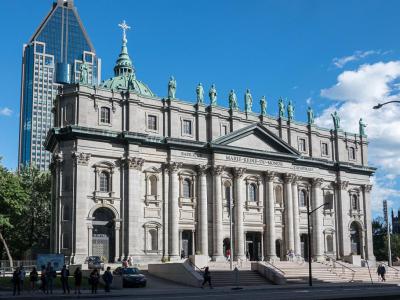
This is Mary, Queen of the World Cathedral, and yes, that dome is modeled on Saint Peter's Basilica. Think of it as Rome’s greatest architectural hit—re-recorded in Québec. Slightly scaled down, perhaps, but impressively faithful, right down to the red copper baldachin above the altar, hand-carved in Rome itself. No shortcuts here...
Completed in the 1890s, the cathedral somehow manages to look older than it is, while also feeling more streamlined than many of its European cousins. Compared to Notre-Dame Basilica of Montreal, its interior feels lighter, calmer, and almost minimalist.
The design is clean, the lines are clear, and the colours lean toward soft pastels rather than dramatic flourishes. On a sunny day, the stained glass comes alive, casting shifting light across the ceiling, the altar, and the organ pipes at the rear. It's the kind of place where you instinctively lower your voice.
Take a moment near the baptismal font and look up: a striking stucco crucifix crowns it—one of Québec’s most significant religious sculptures. Around you, Italian marble stretches across floors and walls, adding a quiet sense of grandeur. The artwork pays tribute not just to biblical figures but to Montreal’s own spiritual history, including Marguerite Bourgeoys and Marguerite d’Youville, founder of the Grey Nuns. This cathedral tells the city’s story as much as it echoes Rome’s.
Step outside and glance at the façade. You’ll notice 13 statues—just like at Saint Peter’s—but with a local twist. Instead of Jesus and the 12 apostles, these figures represent patron saints from parishes that supported the diocese, including Saint Hyacinthe, Saint Francis of Assisi, and Saint John the Baptist. A European silhouette, a distinctly Canadian cast...
The overall effect is peaceful, dignified, and unexpectedly transportive. For a moment, downtown Montreal fades away, and you could almost believe you’ve wandered into an old basilica somewhere in Europe—just with better maple syrup nearby...
And before you leave, have a look at the gift shop. It carries distinctive jewellery and religious keepsakes—small reminders that Rome may be far away, but its architectural spirit has clearly made itself at home here.
This is Mary, Queen of the World Cathedral, and yes, that dome is modeled on Saint Peter's Basilica. Think of it as Rome’s greatest architectural hit—re-recorded in Québec. Slightly scaled down, perhaps, but impressively faithful, right down to the red copper baldachin above the altar, hand-carved in Rome itself. No shortcuts here...
Completed in the 1890s, the cathedral somehow manages to look older than it is, while also feeling more streamlined than many of its European cousins. Compared to Notre-Dame Basilica of Montreal, its interior feels lighter, calmer, and almost minimalist.
The design is clean, the lines are clear, and the colours lean toward soft pastels rather than dramatic flourishes. On a sunny day, the stained glass comes alive, casting shifting light across the ceiling, the altar, and the organ pipes at the rear. It's the kind of place where you instinctively lower your voice.
Take a moment near the baptismal font and look up: a striking stucco crucifix crowns it—one of Québec’s most significant religious sculptures. Around you, Italian marble stretches across floors and walls, adding a quiet sense of grandeur. The artwork pays tribute not just to biblical figures but to Montreal’s own spiritual history, including Marguerite Bourgeoys and Marguerite d’Youville, founder of the Grey Nuns. This cathedral tells the city’s story as much as it echoes Rome’s.
Step outside and glance at the façade. You’ll notice 13 statues—just like at Saint Peter’s—but with a local twist. Instead of Jesus and the 12 apostles, these figures represent patron saints from parishes that supported the diocese, including Saint Hyacinthe, Saint Francis of Assisi, and Saint John the Baptist. A European silhouette, a distinctly Canadian cast...
The overall effect is peaceful, dignified, and unexpectedly transportive. For a moment, downtown Montreal fades away, and you could almost believe you’ve wandered into an old basilica somewhere in Europe—just with better maple syrup nearby...
And before you leave, have a look at the gift shop. It carries distinctive jewellery and religious keepsakes—small reminders that Rome may be far away, but its architectural spirit has clearly made itself at home here.
9) St. Patrick's Basilica (must see)
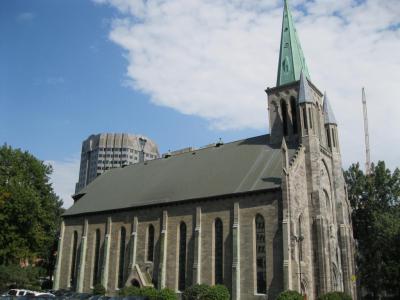
Completed in 1847, in the thick of the Irish Famine migration, Saint Patrick’s rose as a spiritual anchor for Montreal’s English-speaking Catholics — much as Notre-Dame Basilica serves the city’s French-speaking faithful. It stands as one of Canada’s purest expressions of the Gothic Revival style, later recognized as both a historic monument and a National Historic Site. In other words, this isn’t just another church. It’s a statement in stone.
Now, if you’re expecting the gilded drama of Notre-Dame, adjust your expectations. Saint Patrick’s is lighter, brighter, and more restrained. The woodwork is rich without being overwhelming, the Gothic lines clean and confident.
On a clear afternoon, the interior doesn’t merely glow — it performs. Golden light filters through stained-glass windows that line the walls like pages in an illuminated manuscript. Colour spills across the floor, climbs the columns, and settles into every carved detail. And those tall, slender columns — they may look like marble, but are actually pine logs bound together and carefully finished to create the illusion of stone. A little architectural theatre, executed beautifully...
Then there’s the showstopper overhead: a hanging sanctuary lamp weighing in at 1,800 pounds. Suspended high above, ringed by six angels, it’s less a fixture and more a floating sculpture. It commands attention without saying a word — which, in a church, feels appropriate.
Drop by after lunch, and you might hear the organist rehearsing, the notes rolling through the nave long before a service begins. And if the main doors are closed, try a side entrance — one is often left open, as if the building itself prefers to keep things welcoming rather than grand.
There’s also a quiet benefit: it’s free to enter, and chances are you won’t be elbowing through crowds either. You may even find yourself alone, with time to sit, breathe, and let the colours settle.
Now, if you’re expecting the gilded drama of Notre-Dame, adjust your expectations. Saint Patrick’s is lighter, brighter, and more restrained. The woodwork is rich without being overwhelming, the Gothic lines clean and confident.
On a clear afternoon, the interior doesn’t merely glow — it performs. Golden light filters through stained-glass windows that line the walls like pages in an illuminated manuscript. Colour spills across the floor, climbs the columns, and settles into every carved detail. And those tall, slender columns — they may look like marble, but are actually pine logs bound together and carefully finished to create the illusion of stone. A little architectural theatre, executed beautifully...
Then there’s the showstopper overhead: a hanging sanctuary lamp weighing in at 1,800 pounds. Suspended high above, ringed by six angels, it’s less a fixture and more a floating sculpture. It commands attention without saying a word — which, in a church, feels appropriate.
Drop by after lunch, and you might hear the organist rehearsing, the notes rolling through the nave long before a service begins. And if the main doors are closed, try a side entrance — one is often left open, as if the building itself prefers to keep things welcoming rather than grand.
There’s also a quiet benefit: it’s free to enter, and chances are you won’t be elbowing through crowds either. You may even find yourself alone, with time to sit, breathe, and let the colours settle.
10) Rue Ste-Catherine (St. Catherine Street) (must see)
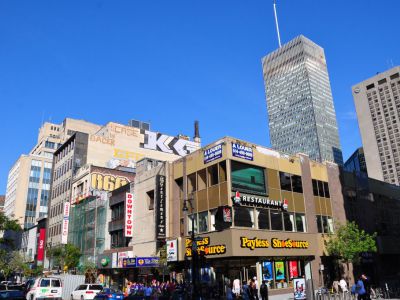
St. Catherine Street is Montreal’s main artery of motion — the place where shopping bags swing, buskers compete with traffic lights, and the scent of espresso collides with perfume and street food. If you want to understand the city centre without opening a history book, stand here for five minutes. It’s a living documentary. Sociologists could write theses on it. The rest of us just people-watch and call it a great afternoon.
The street stretches an impressive 15 kilometres — or about nine miles — slicing east to west across the city like a commercial spine. Head west, and you’ll find fashion boutiques, cafés, big-name brands, and the occasional independent shop bravely holding its ground. Slide east, and you reach the Gay Village, where those famous pink balls — first strung up in 2016 — float overhead each summer like a cheerful urban art installation that decided to stay for the party.
When summer arrives, St. Catherine shifts gears. Parts of it get closed for traffic and turned into a broad pedestrian promenade. By the first weekend of June, the street feels like Montreal has collectively decided to step outside. Festivals spill into the roadway. Terraces expand. Music drifts through warm air. People linger because they can — and because winter memories are still fresh enough to make sunshine feel precious.
And yes, winter. When the cold settles in, the wind barrels through the corridor with impressive determination. It’s less café terrace and more urban wind tunnel. But even then, the street keeps moving. Shoppers hustle. Lights glow against grey skies. Montreal doesn’t really hibernate — it just adds layers.
Whenever you visit, St. Catherine offers options. Eat. Browse. Pause. Observe. It’s not a quiet street, and it’s not meant to be. It’s Montreal at full throttle — and that’s exactly the point.
The street stretches an impressive 15 kilometres — or about nine miles — slicing east to west across the city like a commercial spine. Head west, and you’ll find fashion boutiques, cafés, big-name brands, and the occasional independent shop bravely holding its ground. Slide east, and you reach the Gay Village, where those famous pink balls — first strung up in 2016 — float overhead each summer like a cheerful urban art installation that decided to stay for the party.
When summer arrives, St. Catherine shifts gears. Parts of it get closed for traffic and turned into a broad pedestrian promenade. By the first weekend of June, the street feels like Montreal has collectively decided to step outside. Festivals spill into the roadway. Terraces expand. Music drifts through warm air. People linger because they can — and because winter memories are still fresh enough to make sunshine feel precious.
And yes, winter. When the cold settles in, the wind barrels through the corridor with impressive determination. It’s less café terrace and more urban wind tunnel. But even then, the street keeps moving. Shoppers hustle. Lights glow against grey skies. Montreal doesn’t really hibernate — it just adds layers.
Whenever you visit, St. Catherine offers options. Eat. Browse. Pause. Observe. It’s not a quiet street, and it’s not meant to be. It’s Montreal at full throttle — and that’s exactly the point.
