Custom Walk in Tirana, Albania by abdcelik_8f77f8 created on 2026-07-22
Guide Location: Albania » Tirana
Guide Type: Custom Walk
# of Sights: 12
Tour Duration: 2 Hour(s)
Travel Distance: 2.7 Km or 1.7 Miles
Share Key: KRUQP
Guide Type: Custom Walk
# of Sights: 12
Tour Duration: 2 Hour(s)
Travel Distance: 2.7 Km or 1.7 Miles
Share Key: KRUQP
How It Works
Please retrieve this walk in the GPSmyCity app. Once done, the app will guide you from one tour stop to the next as if you had a personal tour guide. If you created the walk on this website or come to the page via a link, please follow the instructions below to retrieve the walk in the app.
Retrieve This Walk in App
Step 1. Download the app "GPSmyCity: Walks in 1K+ Cities" on Apple App Store or Google Play Store.



Step 2. In the GPSmyCity app, download(or launch) the guide "Tirana Map and Walking Tours".
Step 3. Tap the menu button located at upper right corner of the "Walks" screen and select "Retrieve custom walk". Enter the share key: KRUQP

1) BunkArt 2 (must see)
Bunk’Art 2 is one of Tirana’s most direct and unsettling encounters with Albania’s communist past. It occupies an underground anti-nuclear shelter built between 1981 and 1986. Code-named ‘Pillar Object,’ the bunker was intended for the Ministry of Internal Affairs and reflected the regime’s fear of foreign invasion.
The museum opened to the public in 2016 and reconstructs the history of Albania’s Ministry of Internal Affairs from 1912 to 1991. Its strongest focus is the communist period, especially the work of the Sigurimi, the political police used by the regime to monitor, intimidate, imprison, and persecute those considered enemies of the state. The exhibition is arranged through historical sections covering 1912–1939, 1939–1944, and 1944–1991, combining documents, photographs, equipment, video material, and artistic installations.
The building itself is part of the experience. The bunker contains 24 rooms, an apartment reserved for the Minister of Internal Affairs, and a large hall originally linked to communications. Visitors pass through narrow corridors and underground spaces that reinforce the themes of secrecy, surveillance, and control. Rooms dedicated to investigation, interrogation, border control, and political persecution show how fear became part of daily life under the dictatorship.
One detail worth noticing is the entrance itself: the large concrete dome above ground was added as part of the museum project and has become one of Bunk’Art 2’s most recognizable visual features. Its heavy, bunker-like form prepares visitors for the underground exhibition before they even enter. Inside, the experience is also shaped by sound; the entrance area includes recordings that recall the names and stories of people persecuted under the regime.
The museum opened to the public in 2016 and reconstructs the history of Albania’s Ministry of Internal Affairs from 1912 to 1991. Its strongest focus is the communist period, especially the work of the Sigurimi, the political police used by the regime to monitor, intimidate, imprison, and persecute those considered enemies of the state. The exhibition is arranged through historical sections covering 1912–1939, 1939–1944, and 1944–1991, combining documents, photographs, equipment, video material, and artistic installations.
The building itself is part of the experience. The bunker contains 24 rooms, an apartment reserved for the Minister of Internal Affairs, and a large hall originally linked to communications. Visitors pass through narrow corridors and underground spaces that reinforce the themes of secrecy, surveillance, and control. Rooms dedicated to investigation, interrogation, border control, and political persecution show how fear became part of daily life under the dictatorship.
One detail worth noticing is the entrance itself: the large concrete dome above ground was added as part of the museum project and has become one of Bunk’Art 2’s most recognizable visual features. Its heavy, bunker-like form prepares visitors for the underground exhibition before they even enter. Inside, the experience is also shaped by sound; the entrance area includes recordings that recall the names and stories of people persecuted under the regime.
2) Clock Tower of Tirana
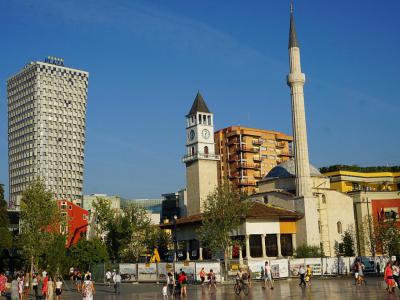
The Clock Tower of Tirana was built in 1822 by Haxhi Et’hem Bey, the same figure associated with the completion of the neighboring mosque. At the time of its construction, the tower was not just decorative; it helped mark the hours for public life in a much smaller Ottoman-era town. Rising to about 115 feet, the tower was once among the tallest structures in Tirana.
Its appearance changed notably in 1928, when the upper section was altered to accommodate a larger clock mechanism and clock faces. The first clock mechanism is associated with watchmaker Ismail Tufina, and the Tufina family remained connected with the tower’s clock for many years. Later replacements followed, including a Chinese-made clock installed in 1970.
For visitors, the tower is best understood together with the Et’hem Bey Mosque. Its stone lower section, lighter upper part, clock faces, balcony, and roof show how the structure has been repaired and adapted over time. When access is available, visitors can climb the narrow interior staircase of about 90 steps to reach the viewing platform. From the top, the view opens over Skanderbeg Square.
Its appearance changed notably in 1928, when the upper section was altered to accommodate a larger clock mechanism and clock faces. The first clock mechanism is associated with watchmaker Ismail Tufina, and the Tufina family remained connected with the tower’s clock for many years. Later replacements followed, including a Chinese-made clock installed in 1970.
For visitors, the tower is best understood together with the Et’hem Bey Mosque. Its stone lower section, lighter upper part, clock faces, balcony, and roof show how the structure has been repaired and adapted over time. When access is available, visitors can climb the narrow interior staircase of about 90 steps to reach the viewing platform. From the top, the view opens over Skanderbeg Square.

3) Et'hem Bey Mosque (must see)
The Et’hem Bey Mosque is one of the most important surviving monuments of Ottoman Tirana. Construction began in the late 18th century under Molla Bey of Petrela and was completed in 1821 by his son, Haxhi Et’hem Bey. At the time, it formed part of Tirana’s historic center, close to the Old Bazaar and other religious buildings that once shaped the city’s Ottoman core.
The mosque is especially known for its painted decoration, which appears both inside and on the exterior portico. Its frescoes include trees, waterfalls, bridges, and architectural views, subjects not commonly associated with mosque decoration and therefore especially notable. These delicate landscapes give the building a distinctive character, softening its modest scale and making it one of Tirana’s most visually memorable historic sites. The northern wall and portico are particularly worth observing for these details.
Et’hem Bey Mosque also carries strong symbolic meaning in modern Albanian history. Under the communist regime, religion was banned and the mosque was closed, although it survived as a protected monument. On January 18, 1991, thousands of people gathered there for public prayer despite official restrictions, an event remembered as a major moment in the return of religious freedom in Albania. The mosque later underwent a major restoration supported by TİKA and reopened for worship after the work was completed.
For visitors, the mosque is worth seeing not only as a place of worship but also as part of the wider story of Skanderbeg Square. Visitors may enter when access is permitted outside prayer times, but even from the square, its minaret, portico, and painted details make it one of the capital’s most meaningful landmarks.
The mosque is especially known for its painted decoration, which appears both inside and on the exterior portico. Its frescoes include trees, waterfalls, bridges, and architectural views, subjects not commonly associated with mosque decoration and therefore especially notable. These delicate landscapes give the building a distinctive character, softening its modest scale and making it one of Tirana’s most visually memorable historic sites. The northern wall and portico are particularly worth observing for these details.
Et’hem Bey Mosque also carries strong symbolic meaning in modern Albanian history. Under the communist regime, religion was banned and the mosque was closed, although it survived as a protected monument. On January 18, 1991, thousands of people gathered there for public prayer despite official restrictions, an event remembered as a major moment in the return of religious freedom in Albania. The mosque later underwent a major restoration supported by TİKA and reopened for worship after the work was completed.
For visitors, the mosque is worth seeing not only as a place of worship but also as part of the wider story of Skanderbeg Square. Visitors may enter when access is permitted outside prayer times, but even from the square, its minaret, portico, and painted details make it one of the capital’s most meaningful landmarks.
4) Palace of Culture of Tirana
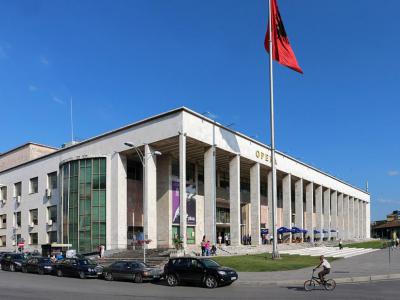
The Palace of Culture is an important symbol of the city's communist-era transformation. Construction began in the late 1950s as a Soviet-backed project, with Soviet leader Nikita Khrushchev symbolically laying the first brick. Completed in 1966, the building rose on a site that had once been home to Tirana's Old Bazaar and the Mahmud Muhsin Bey Stërmasi Mosque, both demolished during the communist government's efforts to reshape the capital according to socialist ideals and state atheism.
The palace is a good example of Stalinist architecture, a style widely used throughout the Eastern Bloc during the mid-20th century. Its imposing scale, long colonnades, and restrained decorative details were designed to project strength, order, and collective purpose. Unlike many similar buildings elsewhere in Eastern Europe, much of the Palace of Culture has remained largely unchanged, allowing visitors to experience architectural features that closely reflect the aesthetics and ambitions of Albania's communist period.
Today, the complex remains one of the country's most important cultural institutions. It houses the National Library of Albania, which contains millions of books, manuscripts, and historical documents, as well as the National Theater of Opera and Ballet, the nation's premier venue for opera, ballet, and classical music performances. Shops, cafés, and exhibition spaces also occupy parts of the building, ensuring that it remains a lively destination throughout the day.
The palace is a good example of Stalinist architecture, a style widely used throughout the Eastern Bloc during the mid-20th century. Its imposing scale, long colonnades, and restrained decorative details were designed to project strength, order, and collective purpose. Unlike many similar buildings elsewhere in Eastern Europe, much of the Palace of Culture has remained largely unchanged, allowing visitors to experience architectural features that closely reflect the aesthetics and ambitions of Albania's communist period.
Today, the complex remains one of the country's most important cultural institutions. It houses the National Library of Albania, which contains millions of books, manuscripts, and historical documents, as well as the National Theater of Opera and Ballet, the nation's premier venue for opera, ballet, and classical music performances. Shops, cafés, and exhibition spaces also occupy parts of the building, ensuring that it remains a lively destination throughout the day.
5) Skanderbeg Square (must see)
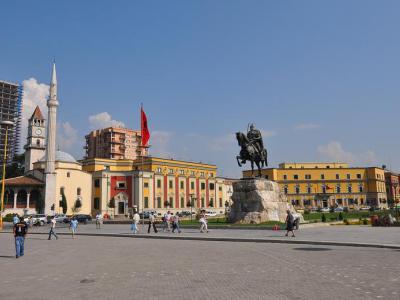
Skanderbeg Square is one of the best places to begin understanding the Albanian capital. Named after Gjergj Kastrioti Skanderbeg, the 15th-century military leader who resisted Ottoman rule and became Albania’s national hero, the square serves as both a civic gathering place and a visual summary of the country’s history. Its wide open space is anchored by the equestrian Skanderbeg Monument, which gives the square its main historical and symbolic focus.
The square first took shape in the early 20th century and has changed repeatedly along with the city around it. Earlier versions were surrounded by landmarks such as the Old Bazaar, City Hall, and religious buildings, while the communist period brought a more formal, monumental character. Today, the surrounding architecture reflects several eras at once.
The Skanderbeg Monument stands on the southern side of the square, while the Et’hem Bey Mosque is to the left of the statue, as you face it, near the corner of the square. The Clock Tower stands close behind the mosque. Across the square, on the northern side, the National History Museum is easy to identify by the large mosaic on its façade. Other major buildings show Tirana’s 20th-century development. The Palace of Culture occupies the eastern side of the square and includes the National Opera and Ballet, making it one of the city’s main cultural institutions.
In recent years, Skanderbeg Square has been transformed into a broad pedestrian space, with stone paving, open sightlines, and green areas around the edges.
The square first took shape in the early 20th century and has changed repeatedly along with the city around it. Earlier versions were surrounded by landmarks such as the Old Bazaar, City Hall, and religious buildings, while the communist period brought a more formal, monumental character. Today, the surrounding architecture reflects several eras at once.
The Skanderbeg Monument stands on the southern side of the square, while the Et’hem Bey Mosque is to the left of the statue, as you face it, near the corner of the square. The Clock Tower stands close behind the mosque. Across the square, on the northern side, the National History Museum is easy to identify by the large mosaic on its façade. Other major buildings show Tirana’s 20th-century development. The Palace of Culture occupies the eastern side of the square and includes the National Opera and Ballet, making it one of the city’s main cultural institutions.
In recent years, Skanderbeg Square has been transformed into a broad pedestrian space, with stone paving, open sightlines, and green areas around the edges.
6) National History Museum (must see)
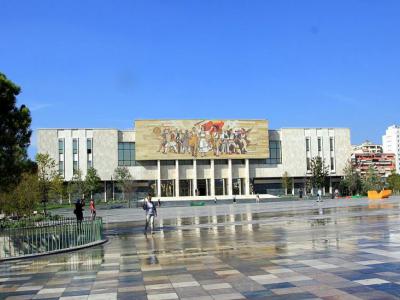
Opened on October 28, 1981, the National History Museum was created as Albania’s main historical museum, presenting the country’s story from antiquity to the modern period. Its broad façade is best known for the monumental mosaic “The Albanians,” a Socialist Realist composition showing figures from different stages of Albanian history. The building itself reflects the communist period’s taste for large public institutions.
The museum’s permanent exhibitions include thousands of objects arranged across major historical sections. These cover Antiquity, the Middle Ages, the National Renaissance, Independence, Iconography, the National Liberation Antifascist War, Communist Terror, and Mother Teresa. The Pavilion of Antiquity is among the museum’s most important areas, with objects dating from the 4th century BC through the early Middle Ages. Notable exhibits include sculptures such as Apollo and the head of Artemis, finds from the Monumental Tomb of Lower Selca, and the famous mosaic known as the Beauty of Durrës.
The museum also introduces visitors to Albania’s modern history, including the period after the Declaration of Independence in 1912, World War II, and the decades of communist rule. The sections on the National Liberation Antifascist War and Communist Terror used documents, photographs, relics, and film material to explore conflict, persecution, resistance, and state power in the 20th century. Another section is dedicated to Mother Teresa, presenting photographs and personal objects connected with her life and humanitarian work.
At present, tourists should note that the museum is closed to visitors for a major restoration and reconstruction project, announced for the period from March 15, 2024, to March 15, 2028. Even so, the building remains worth a pause.
The museum’s permanent exhibitions include thousands of objects arranged across major historical sections. These cover Antiquity, the Middle Ages, the National Renaissance, Independence, Iconography, the National Liberation Antifascist War, Communist Terror, and Mother Teresa. The Pavilion of Antiquity is among the museum’s most important areas, with objects dating from the 4th century BC through the early Middle Ages. Notable exhibits include sculptures such as Apollo and the head of Artemis, finds from the Monumental Tomb of Lower Selca, and the famous mosaic known as the Beauty of Durrës.
The museum also introduces visitors to Albania’s modern history, including the period after the Declaration of Independence in 1912, World War II, and the decades of communist rule. The sections on the National Liberation Antifascist War and Communist Terror used documents, photographs, relics, and film material to explore conflict, persecution, resistance, and state power in the 20th century. Another section is dedicated to Mother Teresa, presenting photographs and personal objects connected with her life and humanitarian work.
At present, tourists should note that the museum is closed to visitors for a major restoration and reconstruction project, announced for the period from March 15, 2024, to March 15, 2028. Even so, the building remains worth a pause.

7) Skanderbeg Monument
The Skanderbeg Monument honors Gjergj Kastrioti Skanderbeg, the 15th-century Albanian nobleman and military leader remembered for resisting Ottoman expansion. Cast in bronze and set on a stone pedestal, the monument shows Skanderbeg on horseback, with a commanding posture that gives the square its main historical focus.
The statue was inaugurated in 1968, on the 500th anniversary of Skanderbeg’s death. It was created by Albanian sculptors Odhise Paskali, Andrea Mano, and Janaq Paço and stands about 11 meters, or 36 feet, high. Its placement was also symbolic: the monument took the place of an earlier statue of Joseph Stalin, marking a shift from Soviet-style political imagery toward a national hero deeply rooted in Albanian memory.
Today, the Skanderbeg Monument remains a popular meeting point and photo stop, but its importance goes beyond its size or location. In a square that has been redesigned many times, Skanderbeg still holds the center as a figure of resistance, independence, and national identity.
The statue was inaugurated in 1968, on the 500th anniversary of Skanderbeg’s death. It was created by Albanian sculptors Odhise Paskali, Andrea Mano, and Janaq Paço and stands about 11 meters, or 36 feet, high. Its placement was also symbolic: the monument took the place of an earlier statue of Joseph Stalin, marking a shift from Soviet-style political imagery toward a national hero deeply rooted in Albanian memory.
Today, the Skanderbeg Monument remains a popular meeting point and photo stop, but its importance goes beyond its size or location. In a square that has been redesigned many times, Skanderbeg still holds the center as a figure of resistance, independence, and national identity.
8) New Bazaar
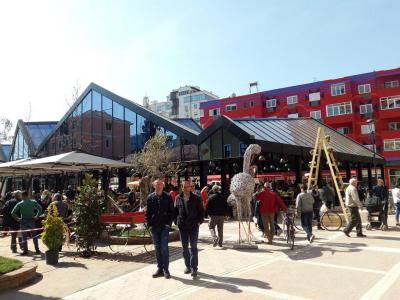
The New Bazaar is a vibrant and historic neighbourhood located in the heart of Tirana. This area, known for its bustling groceries marketplace, is situated east of the central boulevard and is an integral part of Tirana's Old Town, alongside the Mujos area. It stands as one of the oldest sections of the city, rich in history and culture. The New Bazaar's significance is further accentuated by the presence of the Kokonozi Mosque, an old historic mosque dating back to Ottoman times, adding a layer of historical depth to the area.
Originally built in 1931 on the same grounds as the historic Old Bazaar, which stretched all the way to what is now Skanderbeg Square, the New Bazaar has long been a focal point of commerce and daily life in Tirana. Before its reconstruction in 2016, the bazaar served as a testament to the city's evolving nature while retaining its historic roots. The renovation and reconstruction efforts in 2017 have rejuvenated the area, making it not only a place for locals to shop for daily necessities but also a potential tourist attraction, blending the old with the new in a dynamic urban setting.
The market within the New Bazaar is a treasure trove of local produce and goods. It offers a wide array of fresh fruits and vegetables grown in the surrounding regions of Tirana, alongside fish, meat, and a selection of regional Albanian wine and raki. The bazaar is enveloped by colorful buildings, restaurants, and bakeries, creating a lively and inviting atmosphere for both residents and visitors alike. This recent push to enhance the bazaar's appeal to tourists reflects a broader interest in celebrating and sharing the rich cultural and historical heritage of Tirana.
Originally built in 1931 on the same grounds as the historic Old Bazaar, which stretched all the way to what is now Skanderbeg Square, the New Bazaar has long been a focal point of commerce and daily life in Tirana. Before its reconstruction in 2016, the bazaar served as a testament to the city's evolving nature while retaining its historic roots. The renovation and reconstruction efforts in 2017 have rejuvenated the area, making it not only a place for locals to shop for daily necessities but also a potential tourist attraction, blending the old with the new in a dynamic urban setting.
The market within the New Bazaar is a treasure trove of local produce and goods. It offers a wide array of fresh fruits and vegetables grown in the surrounding regions of Tirana, alongside fish, meat, and a selection of regional Albanian wine and raki. The bazaar is enveloped by colorful buildings, restaurants, and bakeries, creating a lively and inviting atmosphere for both residents and visitors alike. This recent push to enhance the bazaar's appeal to tourists reflects a broader interest in celebrating and sharing the rich cultural and historical heritage of Tirana.
9) Tirana Castle
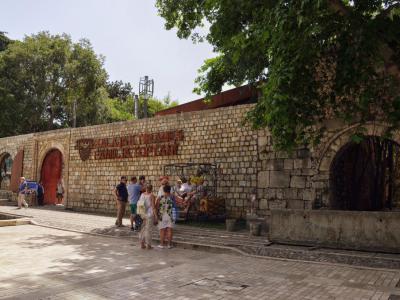
Tirana Castle is best understood not as a complete castle, but as a surviving fragment of Tirana’s old fortified core. Its history dates back to at least the medieval period, with the site often associated with the Byzantine era and the fortifications of Emperor Justinian. The fortress stood near the point where important east–west and north–south routes crossed.
Today, the most visible remains are sections of wall, including a roughly 20-foot wall along Murat Toptani Road, often referred to as the Justinian Fortress Wall. Other wall foundations uncovered in recent years have been incorporated into the surrounding pedestrian area. Tirana Castle was declared a first-category cultural monument in 1973, while the newly preserved wall sections received cultural monument status in 2008.
For visitors, the castle area now functions as a compact cultural, dining, and shopping quarter rather than a traditional ruin. Inside and around the restored walls are cafés, restaurants, souvenir shops, and spaces connected with local history and art. A newer bazaar-style area evokes the atmosphere of older trading quarters.
The appeal of Tirana Castle lies in this blend of old stone and present-day city life. It does not offer towers, battlements, or a defensive panorama; instead, it gives a quieter glimpse of Tirana before it became a modern capital.
Today, the most visible remains are sections of wall, including a roughly 20-foot wall along Murat Toptani Road, often referred to as the Justinian Fortress Wall. Other wall foundations uncovered in recent years have been incorporated into the surrounding pedestrian area. Tirana Castle was declared a first-category cultural monument in 1973, while the newly preserved wall sections received cultural monument status in 2008.
For visitors, the castle area now functions as a compact cultural, dining, and shopping quarter rather than a traditional ruin. Inside and around the restored walls are cafés, restaurants, souvenir shops, and spaces connected with local history and art. A newer bazaar-style area evokes the atmosphere of older trading quarters.
The appeal of Tirana Castle lies in this blend of old stone and present-day city life. It does not offer towers, battlements, or a defensive panorama; instead, it gives a quieter glimpse of Tirana before it became a modern capital.
10) Murat Toptani Road
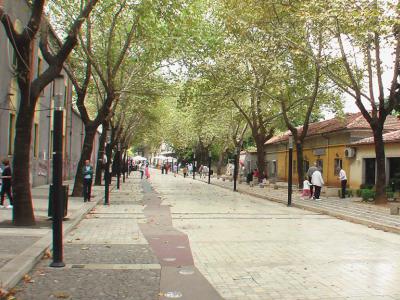
Murat Toptani Road was converted into a pedestrian zone in 2011. It is stone-paved, shaded by trees, and lined with cafés, terraces, and places to pause between major sights. Rather than functioning as a single monument, the street works as a short urban promenade through a historic part of the city center.
The street is named after Murat Toptani, a member of the influential Toptani family and an Albanian patriot, poet, sculptor, and signatory of the Declaration of Independence in 1912. The Toptani family was one of Tirana’s prominent families during the Ottoman period, and its name remains attached to several places in the city. This gives the road a historical layer beyond its present-day role as a pleasant walking route.
For visitors, the main interest lies in how much the street gathers into a compact space. The route is easiest to follow from the point where Murat Toptani Road meets the small street marked Rruga Sermedin Said Toptani, just south of Bunk’Art 2. From this point, face south and you will see the open-air installation Reja, or The Cloud, beside the National Gallery area.
Continue along the eastern side of the street. Ahead, the route leads toward the surviving walls of Tirana Castle. The old wall sections are not a separate hilltop ruin, so visitors should look for historic masonry built directly into the modern walking and dining area. At the far end of this stretch, Toptani Shopping Center is the clearest modern landmark. The castle walls and bazaar-style courtyard are beside this shopping and dining area, while the mall itself helps orient visitors who might otherwise miss the historic remains.
The street is named after Murat Toptani, a member of the influential Toptani family and an Albanian patriot, poet, sculptor, and signatory of the Declaration of Independence in 1912. The Toptani family was one of Tirana’s prominent families during the Ottoman period, and its name remains attached to several places in the city. This gives the road a historical layer beyond its present-day role as a pleasant walking route.
For visitors, the main interest lies in how much the street gathers into a compact space. The route is easiest to follow from the point where Murat Toptani Road meets the small street marked Rruga Sermedin Said Toptani, just south of Bunk’Art 2. From this point, face south and you will see the open-air installation Reja, or The Cloud, beside the National Gallery area.
Continue along the eastern side of the street. Ahead, the route leads toward the surviving walls of Tirana Castle. The old wall sections are not a separate hilltop ruin, so visitors should look for historic masonry built directly into the modern walking and dining area. At the far end of this stretch, Toptani Shopping Center is the clearest modern landmark. The castle walls and bazaar-style courtyard are beside this shopping and dining area, while the mall itself helps orient visitors who might otherwise miss the historic remains.
11) Ministry of Internal Affairs
The Ministry of Internal Affairs in Tirana represents a pivotal element of the Albanian Government's infrastructure, primarily focused on safeguarding the rights and liberties of its citizens. This department is instrumental in the regulation and enforcement of laws that are vital for the maintenance of social and state interests. Through a collaborative effort with the State Police, the Ministry is deeply involved in investigating unlawful activities that pose threats to society and the state, combating crime, ensuring civil order, and maintaining civil security. Additionally, it plays a significant role in traffic safety and the protection of high-profile individuals, highlighting its comprehensive approach to internal security and public safety.
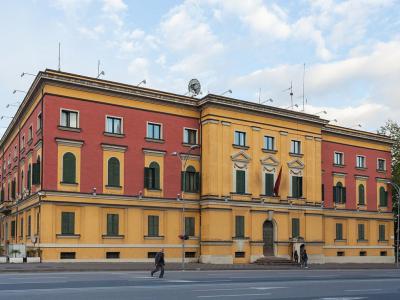
Architecturally, the Ministry of Internal Affairs building is a notable landmark in Tirana, reflecting the city's characteristic fusion of historical influences and modern aspirations. Dating back to the fascist era, the structure stands out for its elegant architecture and the use of pleasant pastel colors, which are a hallmark of Tirana's architectural identity. The liberal application of color not only enhances the building's aesthetic appeal but also embodies the vibrant and dynamic spirit of the city. This architectural feature contributes significantly to the cultural and visual landscape of Tirana, making the Ministry of Internal Affairs building a symbol of the city's rich history and its ongoing journey towards modernization and growth.
Architecturally, the Ministry of Internal Affairs building is a notable landmark in Tirana, reflecting the city's characteristic fusion of historical influences and modern aspirations. Dating back to the fascist era, the structure stands out for its elegant architecture and the use of pleasant pastel colors, which are a hallmark of Tirana's architectural identity. The liberal application of color not only enhances the building's aesthetic appeal but also embodies the vibrant and dynamic spirit of the city. This architectural feature contributes significantly to the cultural and visual landscape of Tirana, making the Ministry of Internal Affairs building a symbol of the city's rich history and its ongoing journey towards modernization and growth.
12) Colorful Painted Building in Bllok
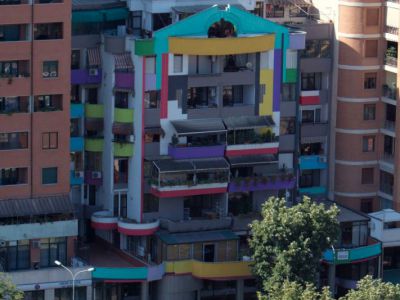
Tirana has experienced a significant makeover, evolving into a vibrant display of bright colors and daring designs, all thanks to the creative vision of its former mayor, Edi Rama. Before his tenure as mayor began in 2000, Rama gained international recognition for his artistic talents, which he skillfully applied to rejuvenate Tirana's urban environment. Once known for its dull and uniform architecture typical of former Communist states in Eastern Europe, Tirana now stands out with its lively and colorful facades.
The decision to paint Tirana's buildings with vivid colors was more than just about appearance; it was a strategic effort to imbue the city with a sense of warmth and hospitality. Rama, drawing on his artistic instincts, opted for a palette of vibrant hues such as blue, green, orange, purple, red, and yellow to breathe new life into the city's aging apartment buildings and Soviet-style structures. This choice not only enhanced Tirana's visual appeal but also symbolized a departure from its dreary and oppressive history.
One striking example of this transformation is the painted building in Bllok, hailed as Rama's masterpiece, which epitomizes his vision of the city as a canvas for artistic expression. Bllok, once off-limits to the general public and reserved for the Communist elite, now serves as a showcase for Tirana's urban revitalization.
Rama's initiatives extended beyond mere painting. Shortly after taking office, he launched a comprehensive urban renewal campaign that involved removing illegal constructions, establishing new public parks, and notably, embellishing the city's buildings with colorful designs.
The decision to paint Tirana's buildings with vivid colors was more than just about appearance; it was a strategic effort to imbue the city with a sense of warmth and hospitality. Rama, drawing on his artistic instincts, opted for a palette of vibrant hues such as blue, green, orange, purple, red, and yellow to breathe new life into the city's aging apartment buildings and Soviet-style structures. This choice not only enhanced Tirana's visual appeal but also symbolized a departure from its dreary and oppressive history.
One striking example of this transformation is the painted building in Bllok, hailed as Rama's masterpiece, which epitomizes his vision of the city as a canvas for artistic expression. Bllok, once off-limits to the general public and reserved for the Communist elite, now serves as a showcase for Tirana's urban revitalization.
Rama's initiatives extended beyond mere painting. Shortly after taking office, he launched a comprehensive urban renewal campaign that involved removing illegal constructions, establishing new public parks, and notably, embellishing the city's buildings with colorful designs.
