Custom Walk in Rome, Italy by kelrevelle_699e48 created on 2026-07-23
Guide Location: Italy » Rome
Guide Type: Custom Walk
# of Sights: 15
Tour Duration: 5 Hour(s)
Travel Distance: 10.1 Km or 6.3 Miles
Share Key: ARNUV
Guide Type: Custom Walk
# of Sights: 15
Tour Duration: 5 Hour(s)
Travel Distance: 10.1 Km or 6.3 Miles
Share Key: ARNUV
How It Works
Please retrieve this walk in the GPSmyCity app. Once done, the app will guide you from one tour stop to the next as if you had a personal tour guide. If you created the walk on this website or come to the page via a link, please follow the instructions below to retrieve the walk in the app.
Retrieve This Walk in App
Step 1. Download the app "GPSmyCity: Walks in 1K+ Cities" on Apple App Store or Google Play Store.



Step 2. In the GPSmyCity app, download(or launch) the guide "Rome Map and Walking Tours".
Step 3. Tap the menu button located at upper right corner of the "Walks" screen and select "Retrieve custom walk". Enter the share key: ARNUV

1) Roma Termini
This custom location is created on gpsmycity.com website.
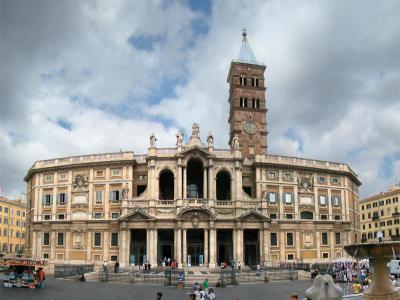
2) Basilica di Santa Maria Maggiore (Basilica of Saint Mary Major) (must see)
As the largest among the 26 churches in Rome dedicated to the Virgin Mary, the Basilica of Saint Mary Major holds a significant place in history. Originally constructed by Pope Liberius in the 4th century, the grandiose church has undergone renovations and enhancements by successive popes while still retaining its early medieval structure. The colonnaded nave, an integral part of the original 5th-century building, offers a glimpse into its ancient origins. The medieval era contributed the captivating Cosmatesque marble floor and the delightful Romanesque bell tower adorned with intricate blue ceramic roundels. During the Renaissance, a new coffered ceiling was introduced, while the Baroque period left its imprint with twin domes and grand facades at the front and rear. All in all, it’s a most successful blend of different architectural styles.
However, the true splendor of Saint Mary Major lies in its mosaics, which are among the oldest in Rome. The biblical scenes adorning the aisles date back to the 5th century, captivating visitors with their artistic depiction. The mosaics on the triumphal arch are particularly breathtaking, showcasing the skill and craftsmanship of the time. Among other medieval highlights is a magnificent 13th-century mosaic featuring an enthroned Christ in the loggia, adding to the artistic treasures within.
In 2001, Pope John Paul II inaugurated the Basilica Museum, dedicated to the church's history and the spread of Catholicism throughout the world. Here you will see ecclesiastical paintings, ritual vestments, scores from the choir and various manuscripts.
Tips: When visiting, be sure to take advantage of the small tours available to explore the church's hidden treasures. Additionally, don't miss the opportunity to visit the balcony loggia, which offers a unique perspective and allows you to admire more of the church's architecture. As evening sets in, find a serene spot by the fountain and marvel at the illuminated beauty of the building.
However, the true splendor of Saint Mary Major lies in its mosaics, which are among the oldest in Rome. The biblical scenes adorning the aisles date back to the 5th century, captivating visitors with their artistic depiction. The mosaics on the triumphal arch are particularly breathtaking, showcasing the skill and craftsmanship of the time. Among other medieval highlights is a magnificent 13th-century mosaic featuring an enthroned Christ in the loggia, adding to the artistic treasures within.
In 2001, Pope John Paul II inaugurated the Basilica Museum, dedicated to the church's history and the spread of Catholicism throughout the world. Here you will see ecclesiastical paintings, ritual vestments, scores from the choir and various manuscripts.
Tips: When visiting, be sure to take advantage of the small tours available to explore the church's hidden treasures. Additionally, don't miss the opportunity to visit the balcony loggia, which offers a unique perspective and allows you to admire more of the church's architecture. As evening sets in, find a serene spot by the fountain and marvel at the illuminated beauty of the building.
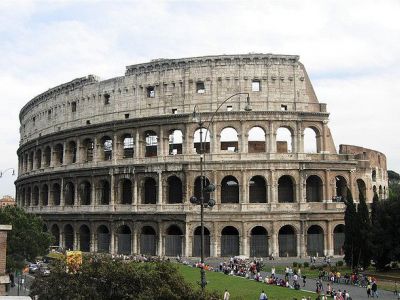
3) Colosseo (Colosseum) (must see)
The Colosseum, Rome’s iconic elliptical amphitheater, is the largest ancient amphitheater ever built, covering 24,000 square meters. Constructed between 69 and 80 AD by the Flavian dynasty, it was initially called the Flavian Amphitheater. Its modern name stems from the Colossus of Nero statue that once stood nearby, with the term "Colosseum" emerging during the medieval period.
Built on the land reclaimed from Emperor Nero’s landscaped Domus Aurea complex after the Great Fire of 64 AD, the Colosseum represented a gift to the Roman people under Emperor Vespasian. It was constructed using travertine, tuff, and concrete and was funded by spoils from the Jewish War. The latter, fought in 70 AD, led to the Siege of Jerusalem and brought back numerous prisoners who largely contributed to the massive workforce needed for the construction. The amphitheater comprised four tiers that could hold between 50,000 and 80,000 spectators at a time. Its free-standing structure features three architectural orders – Doric, Ionic, and Corinthian.
The lowest tier was for the emperor and the royal family, the two middle ones were for the noble Romans and members of government, while the highest tier was for the ordinary citizens. The elaborate system included 80 entrances, passageways for crowd control, and numbered pottery tickets for seating. Admission was free and the main sponsor was the emperor himself.
The Colosseum hosted gladiatorial contests, animal hunts, and mythological reenactments. Events often featured exotic animals imported from Africa and the Middle East. Emperor Trajan's games, for example, involved over 11,000 animals and 10,000 gladiators over 123 days! The below-ground passages were used to bring men and animals into the arena, which was separated from the audience by a ditch. Occasionally, it was reportedly even flooded for naval battles. Executions were common during intervals, with the condemned facing wild beasts or acting out tragic myths.
During the medieval period, the Colosseum served as a fortress and even a stone quarry. Passers-by habitually chipped off pieces of it for souvenirs which, together with some natural causes like earthquakes, led to its partial destruction.
Despite popular belief that the early Christians were martyred here in numbers, evidence suggests that most executions occurred elsewhere. By the 17th century, the Colosseum became recognized as a sacred site. Today, it hosts the Pope’s Good Friday “Way of the Cross” procession.
Only the north side of the building, as well as the underground passages, have survived intact. The arena floor is totally gone. Inside the Colosseum, there's a historical exhibition with both permanent and changing displays.
Tips:
Visit early in the morning or late in the evening to avoid long queues and heat. The ground and first floors are open to visitors without a special ticket, while the subterranean part and the third floor are accessed on pre-booked tours only. Opt for a guided tour to skip lines and access the Forum area. Alternatively, buy tickets in advance or at the Roman Forum. Enhance your experience with an audio guide for detailed historical insights.
Built on the land reclaimed from Emperor Nero’s landscaped Domus Aurea complex after the Great Fire of 64 AD, the Colosseum represented a gift to the Roman people under Emperor Vespasian. It was constructed using travertine, tuff, and concrete and was funded by spoils from the Jewish War. The latter, fought in 70 AD, led to the Siege of Jerusalem and brought back numerous prisoners who largely contributed to the massive workforce needed for the construction. The amphitheater comprised four tiers that could hold between 50,000 and 80,000 spectators at a time. Its free-standing structure features three architectural orders – Doric, Ionic, and Corinthian.
The lowest tier was for the emperor and the royal family, the two middle ones were for the noble Romans and members of government, while the highest tier was for the ordinary citizens. The elaborate system included 80 entrances, passageways for crowd control, and numbered pottery tickets for seating. Admission was free and the main sponsor was the emperor himself.
The Colosseum hosted gladiatorial contests, animal hunts, and mythological reenactments. Events often featured exotic animals imported from Africa and the Middle East. Emperor Trajan's games, for example, involved over 11,000 animals and 10,000 gladiators over 123 days! The below-ground passages were used to bring men and animals into the arena, which was separated from the audience by a ditch. Occasionally, it was reportedly even flooded for naval battles. Executions were common during intervals, with the condemned facing wild beasts or acting out tragic myths.
During the medieval period, the Colosseum served as a fortress and even a stone quarry. Passers-by habitually chipped off pieces of it for souvenirs which, together with some natural causes like earthquakes, led to its partial destruction.
Despite popular belief that the early Christians were martyred here in numbers, evidence suggests that most executions occurred elsewhere. By the 17th century, the Colosseum became recognized as a sacred site. Today, it hosts the Pope’s Good Friday “Way of the Cross” procession.
Only the north side of the building, as well as the underground passages, have survived intact. The arena floor is totally gone. Inside the Colosseum, there's a historical exhibition with both permanent and changing displays.
Tips:
Visit early in the morning or late in the evening to avoid long queues and heat. The ground and first floors are open to visitors without a special ticket, while the subterranean part and the third floor are accessed on pre-booked tours only. Opt for a guided tour to skip lines and access the Forum area. Alternatively, buy tickets in advance or at the Roman Forum. Enhance your experience with an audio guide for detailed historical insights.
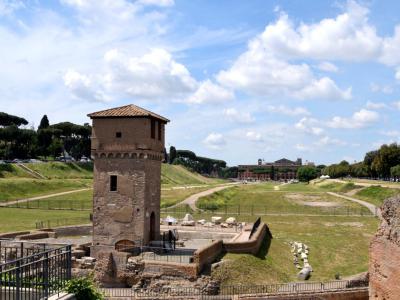
4) Circo Massimo (Circus Maximus)
Set in the valley between the Palatine and Aventine hills, the Circus Maximus is the oldest and largest racetrack in ancient Rome. This colossal space, once capable of accommodating over 300,000 spectators, witnessed thrilling chariot races while the emperor looked on. From the 4th century BC until AD 549, the Circus Maximus underwent continuous embellishment and expansion, culminating in its final races.
The oval course spans approximately 650 yards from end to end. On certain occasions, as many as 24 chariot races were held in a single day, and competitions could extend for up to 15 days. Much like modern sports stars, charioteers could accumulate vast fortunes. Diocles, a renowned Portuguese charioteer, reportedly won an astounding 35 million sestertii. The atmosphere within the Circus Maximus must have been electrifying as charioteers competed in teams, each representing their own colors such as the Reds, the Blues, and others. Betting on the races also provided a potentially lucrative occupation for the majority of unemployed citizens in Rome.
The Circus Maximus featured a central dividing barrier known as the spina, adorned with seven large egg-shaped objects used to count laps during a race. In 33 BC, seven bronze dolphins were added to the spina for the same purpose. In 10 BC, Augustus constructed the Imperial box beneath the Palatine Hill and adorned the spina with an obelisk, which now stands at the center of Piazza del Popolo. Another obelisk, added in the 4th century by Constantine II, now stands in Piazza di San Giovanni in Laterano.
Today, the long grassy expanse of the Circus Maximus still retains hints of its original purpose and occasionally serves as a venue for festivals and concerts. However, during the recent remake of "Ben Hur", archaeological authorities denied permission to film chariot-racing scenes in this historical location.
The oval course spans approximately 650 yards from end to end. On certain occasions, as many as 24 chariot races were held in a single day, and competitions could extend for up to 15 days. Much like modern sports stars, charioteers could accumulate vast fortunes. Diocles, a renowned Portuguese charioteer, reportedly won an astounding 35 million sestertii. The atmosphere within the Circus Maximus must have been electrifying as charioteers competed in teams, each representing their own colors such as the Reds, the Blues, and others. Betting on the races also provided a potentially lucrative occupation for the majority of unemployed citizens in Rome.
The Circus Maximus featured a central dividing barrier known as the spina, adorned with seven large egg-shaped objects used to count laps during a race. In 33 BC, seven bronze dolphins were added to the spina for the same purpose. In 10 BC, Augustus constructed the Imperial box beneath the Palatine Hill and adorned the spina with an obelisk, which now stands at the center of Piazza del Popolo. Another obelisk, added in the 4th century by Constantine II, now stands in Piazza di San Giovanni in Laterano.
Today, the long grassy expanse of the Circus Maximus still retains hints of its original purpose and occasionally serves as a venue for festivals and concerts. However, during the recent remake of "Ben Hur", archaeological authorities denied permission to film chariot-racing scenes in this historical location.
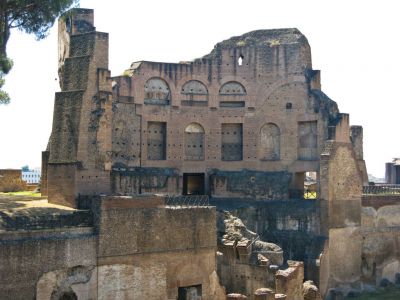
5) Palatino (Palatine Hill) (must see)
The Palatine Hill, centrally located among Rome’s seven hills, is one of the city’s oldest and most historically significant areas. Often referred to as "the first nucleus of the Roman Empire," it is now a vast open-air museum.
Overlooking the Roman Forum and Circus Maximus, Palatine Hill became the desirable location for the homes of Rome's wealthiest citizens during the Republican era. During the Imperial era, starting from the reign of Augustus, it was an exclusive domain of emperors, featuring luxurious palaces like those of Augustus, Tiberius, and Domitian. Before imperial development, the hill had two summits, Palatium and Germalus, separated by a depression. Over time, the Palatine played a central role in Rome’s evolution, with continuous habitation traced back to the 10th century BC. Excavations reveal funerary huts from the 9th–7th centuries BC, aligning with the city’s mythological founding period.
The modern-day word “palace” is derived from the word “Palatine”.
Roman mythology enriches its legacy, as the hill was believed to be the site where Rome was reportedly founded. According to legend, it was on this hill that the twins Romulus and Remus, the legendary founders of Rome, were discovered by a she-wolf who raised them. When they grew up, the twins set out to build a city of their own. While Remus wanted to build it on Aventine Hill, Romulus had his mind set firmly on Palatine Hill. The brothers argued fiercely, and during the fight, Romulus killed Remus. He went on to build the city in 753 BC, calling it Rome, and reigned as its first king.
Monumental structures dominate the site, including the Palace of Domitian and the House of Livia, the latter renowned for its well-preserved frescoes. The House of Tiberius partially survives within the Farnese Gardens.
Extensive archaeological excavations, dating back to Augustus’ time, have uncovered significant finds, including Bronze Age artifacts and the Palatine House, thought to be the birthplace of Emperor Augustus. Modern investigations have revealed frescoed walls and mosaics, along with the Lupercal, the cave at the southwest foot of the Palatine Hill, where Romulus and Remus were suckled by the she-wolf.
Tip:
"Super" tickets provide access to the key attractions on the Hill, including the Roman Forum and Colosseum. Prepare with water, snacks, sunscreen, a hat, and sturdy shoes, as the steep paths and lack of vending machines can be challenging.
Overlooking the Roman Forum and Circus Maximus, Palatine Hill became the desirable location for the homes of Rome's wealthiest citizens during the Republican era. During the Imperial era, starting from the reign of Augustus, it was an exclusive domain of emperors, featuring luxurious palaces like those of Augustus, Tiberius, and Domitian. Before imperial development, the hill had two summits, Palatium and Germalus, separated by a depression. Over time, the Palatine played a central role in Rome’s evolution, with continuous habitation traced back to the 10th century BC. Excavations reveal funerary huts from the 9th–7th centuries BC, aligning with the city’s mythological founding period.
The modern-day word “palace” is derived from the word “Palatine”.
Roman mythology enriches its legacy, as the hill was believed to be the site where Rome was reportedly founded. According to legend, it was on this hill that the twins Romulus and Remus, the legendary founders of Rome, were discovered by a she-wolf who raised them. When they grew up, the twins set out to build a city of their own. While Remus wanted to build it on Aventine Hill, Romulus had his mind set firmly on Palatine Hill. The brothers argued fiercely, and during the fight, Romulus killed Remus. He went on to build the city in 753 BC, calling it Rome, and reigned as its first king.
Monumental structures dominate the site, including the Palace of Domitian and the House of Livia, the latter renowned for its well-preserved frescoes. The House of Tiberius partially survives within the Farnese Gardens.
Extensive archaeological excavations, dating back to Augustus’ time, have uncovered significant finds, including Bronze Age artifacts and the Palatine House, thought to be the birthplace of Emperor Augustus. Modern investigations have revealed frescoed walls and mosaics, along with the Lupercal, the cave at the southwest foot of the Palatine Hill, where Romulus and Remus were suckled by the she-wolf.
Tip:
"Super" tickets provide access to the key attractions on the Hill, including the Roman Forum and Colosseum. Prepare with water, snacks, sunscreen, a hat, and sturdy shoes, as the steep paths and lack of vending machines can be challenging.
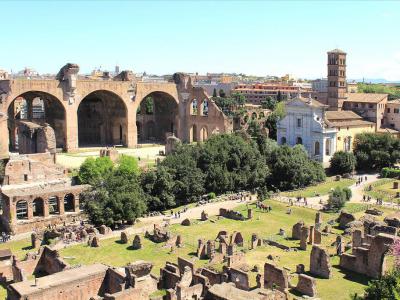
6) Foro Romano (Roman Forum) (must see)
The Roman Forum, once the pulsating heart of ancient Rome's public life, evolved from a simple marketplace around 500 BC into the epicenter of Roman political, social, and religious activity. Known as the Forum Magnum, it became a hub for triumphal processions, public speeches, elections, criminal trials, gladiatorial matches, and commerce. Statues and monuments celebrating Roman leaders solidified its status as one of history’s most significant meeting places.
Initially featuring early structures like the Regia (a royal residence) and the Temple of Vesta, the Forum developed into a formal assembly area called the Comitium, where the Senate and government convened. Over centuries, temples, tribunals, and public buildings, such as the Senate House and the Temple of Saturn, transformed the Forum into a multifunctional hub. The Basilica Aemilia, built in 179 BC, expanded judicial activities, while Julius Caesar’s enhancements, including the Basilica Julia and Curia Julia, underscored its role as a center for politics, commerce, and religion.
Despite its prominence, the Forum’s importance began to decline with the emergence of grander structures, such as Trajan's Forum and the Basilica Ulpia, to the north. Unlike the more planned Imperial Forums, the Roman Forum grew organically, reflecting a mix of architectural styles across periods. Constantine the Great’s construction of the Maxentius Basilica in 312 AD marked its final significant addition, temporarily restoring its political centrality. However, the fall of the Western Roman Empire in the 5th century AD led to the Forum's destruction and decline.
Today, the Roman Forum is a sprawling ruin but remains a priceless historical treasure. Though reduced to crumbling remains, it continues to captivate visitors, drawing nearly five million annually. Highlights of the site include the Sacred Street, the Arch of Titus, and remnants of iconic buildings like the Temple of Castor and Pollux.
Initially featuring early structures like the Regia (a royal residence) and the Temple of Vesta, the Forum developed into a formal assembly area called the Comitium, where the Senate and government convened. Over centuries, temples, tribunals, and public buildings, such as the Senate House and the Temple of Saturn, transformed the Forum into a multifunctional hub. The Basilica Aemilia, built in 179 BC, expanded judicial activities, while Julius Caesar’s enhancements, including the Basilica Julia and Curia Julia, underscored its role as a center for politics, commerce, and religion.
Despite its prominence, the Forum’s importance began to decline with the emergence of grander structures, such as Trajan's Forum and the Basilica Ulpia, to the north. Unlike the more planned Imperial Forums, the Roman Forum grew organically, reflecting a mix of architectural styles across periods. Constantine the Great’s construction of the Maxentius Basilica in 312 AD marked its final significant addition, temporarily restoring its political centrality. However, the fall of the Western Roman Empire in the 5th century AD led to the Forum's destruction and decline.
Today, the Roman Forum is a sprawling ruin but remains a priceless historical treasure. Though reduced to crumbling remains, it continues to captivate visitors, drawing nearly five million annually. Highlights of the site include the Sacred Street, the Arch of Titus, and remnants of iconic buildings like the Temple of Castor and Pollux.
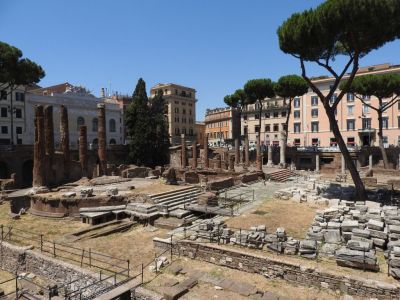
7) Largo di Torre Argentina (Silver Tower Square)
Largo di Torre Argentina (literally “Silver Tower Square”) is a striking archaeological site in the heart of Rome’s ancient Field of Mars. This large open space contains the remains of four Roman Republican temples, dating from the 4th to 2nd centuries BC, as well as part of Pompey’s Theatre complex. Historically, the square was also a hub for the argentarii-Rome’s money men and bankers-who conducted their business here. The name itself comes from a Renaissance-era tower built in the 16th century and linked to Strasbourg, once called Argentoratum in Latin.
Perhaps the most famous event tied to Silver Tower Square is the assassination of Julius Caesar. In 44 BC, the Roman Senate was temporarily meeting in the Senate House of Pompey, a hall attached to Pompey’s grand theater complex, because restoration work was being done on the regular Senate House in the Forum. It was here, on the March 15, that Caesar was surrounded by a group of senators-many of them former allies-who feared he had grown too powerful and sought to restore the Republic by ending his rule.
Led by Brutus, Cassius, and other conspirators, they stabbed him twenty-three times. Ancient sources describe Caesar initially trying to resist, but when he saw Brutus among the attackers, he is said to have drawn his toga over his head in despair. The very spot where this dramatic and world-changing event occurred is now marked within the ruins of the square, offering visitors a rare chance to stand at the place where the course of Roman history was forever altered.
The four temples of the square, labeled A through D by archaeologists, provide insight into the religious life of the Republic. Though only fragments remain, including columns, altars, and stairways, they allow a glimpse of the grandeur that once filled the Field of Mars. These sanctuaries were central to Rome’s civic and spiritual life, and today they remain a rare cluster of Republican architecture visible in the modern cityscape.
Adding to its unique appeal, Silver Tower Square is also home to Rome’s most beloved cat sanctuary. Since the 1990s, volunteers have cared for hundreds of stray and abandoned cats who now roam freely among the ancient stones. Tourists often find themselves just as enchanted by the sight of cats lounging on marble blocks as they are by the history of Caesar’s assassination. This unusual coexistence of archaeology and animal rescue makes Largo di Torre Argentina one of the most memorable stops in Rome.
Perhaps the most famous event tied to Silver Tower Square is the assassination of Julius Caesar. In 44 BC, the Roman Senate was temporarily meeting in the Senate House of Pompey, a hall attached to Pompey’s grand theater complex, because restoration work was being done on the regular Senate House in the Forum. It was here, on the March 15, that Caesar was surrounded by a group of senators-many of them former allies-who feared he had grown too powerful and sought to restore the Republic by ending his rule.
Led by Brutus, Cassius, and other conspirators, they stabbed him twenty-three times. Ancient sources describe Caesar initially trying to resist, but when he saw Brutus among the attackers, he is said to have drawn his toga over his head in despair. The very spot where this dramatic and world-changing event occurred is now marked within the ruins of the square, offering visitors a rare chance to stand at the place where the course of Roman history was forever altered.
The four temples of the square, labeled A through D by archaeologists, provide insight into the religious life of the Republic. Though only fragments remain, including columns, altars, and stairways, they allow a glimpse of the grandeur that once filled the Field of Mars. These sanctuaries were central to Rome’s civic and spiritual life, and today they remain a rare cluster of Republican architecture visible in the modern cityscape.
Adding to its unique appeal, Silver Tower Square is also home to Rome’s most beloved cat sanctuary. Since the 1990s, volunteers have cared for hundreds of stray and abandoned cats who now roam freely among the ancient stones. Tourists often find themselves just as enchanted by the sight of cats lounging on marble blocks as they are by the history of Caesar’s assassination. This unusual coexistence of archaeology and animal rescue makes Largo di Torre Argentina one of the most memorable stops in Rome.
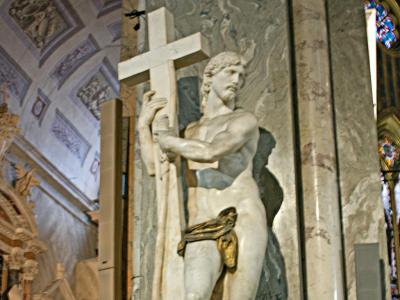
8) Basilica di Santa Maria sopra Minerva (Basilica of Saint Mary above Minerva) (must see)
Tucked away just behind the Pantheon in Minerva Square, Santa Maria above Minerva is a Dominican church and a hidden gem of both religious and architectural importance. This is the only surviving example of original Gothic religious architecture in Rome, as most medieval churches were modified with Baroque designs.
Despite its somewhat unassuming facade, the Santa Maria above Minerva – formerly the Dominican order's headquarters – also boasts an intriguing history and some truly magnificent artistic treasures. Chief among them are Michelangelo’s Christ the Redeemer sculpture and the Carafa Chapel's frescoes.
The former is found to the left of the main altar. The sculpture's first version, begun in 1515, was abandoned due to a flaw in the marble. The one we see today, completed in 1521, received acclaim for its artistry, particularly its lifelike knees. Originally, Michelangelo depicted Christ unclothed to symbolize his triumph over sin, however, a bronze loincloth was added in 1546.
The Carafa Chapel, commissioned by Cardinal Oliviero Carafa in honor of Saint Thomas Aquinas, was inaugurated in 1493. Lavishly adorned with frescoes by Florentine painter Filippino Lippi, it shows the scenes of Saint Thomas's life, including him debating with heretics, as well as some allegorical ones like him presenting Cardinal Carafa to the Virgin Mary. These frescoes are widely recognized as the best Renaissance painting in Rome outside the Sistine Chapel.
Looking up, you can't fail to notice the stunning deep blue painted ceiling and the round stained glass windows, rightfully regarded as the finest in the city.
The basilica also holds the remains of the Saint Catherine of Siena and early Renaissance painter Fra Angelico.
In 1628, the Convent of Minerva became the seat of the Congregation of the Holy Office, where the Roman Inquisition held trials, including that of Galileo Galilei. In 1633, Galileo was tried for heresy for supporting the theory that the Earth revolves around the Sun. Facing interrogation under threat of torture, he was found "vehemently suspect of heresy" and forced to recant. Galileo was sentenced to house arrest for life, and his works were banned. His trial marked a defining moment in the conflict between science and religion. Legend claims that, after his abjuration, Galileo allegedly muttered the rebellious phrase: "and yet it moves..."
Despite its somewhat unassuming facade, the Santa Maria above Minerva – formerly the Dominican order's headquarters – also boasts an intriguing history and some truly magnificent artistic treasures. Chief among them are Michelangelo’s Christ the Redeemer sculpture and the Carafa Chapel's frescoes.
The former is found to the left of the main altar. The sculpture's first version, begun in 1515, was abandoned due to a flaw in the marble. The one we see today, completed in 1521, received acclaim for its artistry, particularly its lifelike knees. Originally, Michelangelo depicted Christ unclothed to symbolize his triumph over sin, however, a bronze loincloth was added in 1546.
The Carafa Chapel, commissioned by Cardinal Oliviero Carafa in honor of Saint Thomas Aquinas, was inaugurated in 1493. Lavishly adorned with frescoes by Florentine painter Filippino Lippi, it shows the scenes of Saint Thomas's life, including him debating with heretics, as well as some allegorical ones like him presenting Cardinal Carafa to the Virgin Mary. These frescoes are widely recognized as the best Renaissance painting in Rome outside the Sistine Chapel.
Looking up, you can't fail to notice the stunning deep blue painted ceiling and the round stained glass windows, rightfully regarded as the finest in the city.
The basilica also holds the remains of the Saint Catherine of Siena and early Renaissance painter Fra Angelico.
In 1628, the Convent of Minerva became the seat of the Congregation of the Holy Office, where the Roman Inquisition held trials, including that of Galileo Galilei. In 1633, Galileo was tried for heresy for supporting the theory that the Earth revolves around the Sun. Facing interrogation under threat of torture, he was found "vehemently suspect of heresy" and forced to recant. Galileo was sentenced to house arrest for life, and his works were banned. His trial marked a defining moment in the conflict between science and religion. Legend claims that, after his abjuration, Galileo allegedly muttered the rebellious phrase: "and yet it moves..."
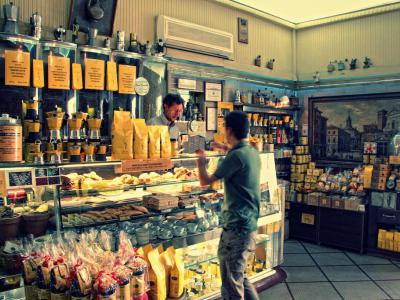
9) Sant' Eustachio Il Caffe
The secret to success at this celebrated espresso bar appears to lie in the water, sourced from a 2,000-year-old aqueduct, and the wood-roasted Sant'Eustachio coffee blends. Established in 1938, it continues to be a popular meeting place for locals in Rome, where they can be certain of enjoying a great cup of coffee in an atmosphere that still echoes its glorious past when it frequently made headlines, even worldwide.
Although unassuming, this place tends to get busy, so expect to wait in line. However, the queue usually moves swiftly, and the service is efficient. Like most caffès in Italy, you place your order at the register, hand in your receipt (if it's busy, you can try leaving your receipt on the counter with a coin tip on top), and then savor your coffee and pastry while standing at the counter (the recommended and traditional way) or sit at a table (though these tend to fill up and may incur an additional fee).
You can't go wrong with any type of coffee creation here, whether it's the classic cappuccino, shots of espresso, the delightful "gran caffè" (which combines the best of both worlds), or the heavenly "granita" (a frozen coffee treat with layers of whipped cream) and "monachella" (espresso, coffee, and cream).
Each espresso shot is pulled behind a metal partition, so the secret to the extra-thick, flavorful "crema" remains a mystery.
Tip:
Sugar is added to the coffee beforehand so make sure that you ask for "senza zucchero" (no sugar) before ordering if you don't want any.
Although unassuming, this place tends to get busy, so expect to wait in line. However, the queue usually moves swiftly, and the service is efficient. Like most caffès in Italy, you place your order at the register, hand in your receipt (if it's busy, you can try leaving your receipt on the counter with a coin tip on top), and then savor your coffee and pastry while standing at the counter (the recommended and traditional way) or sit at a table (though these tend to fill up and may incur an additional fee).
You can't go wrong with any type of coffee creation here, whether it's the classic cappuccino, shots of espresso, the delightful "gran caffè" (which combines the best of both worlds), or the heavenly "granita" (a frozen coffee treat with layers of whipped cream) and "monachella" (espresso, coffee, and cream).
Each espresso shot is pulled behind a metal partition, so the secret to the extra-thick, flavorful "crema" remains a mystery.
Tip:
Sugar is added to the coffee beforehand so make sure that you ask for "senza zucchero" (no sugar) before ordering if you don't want any.
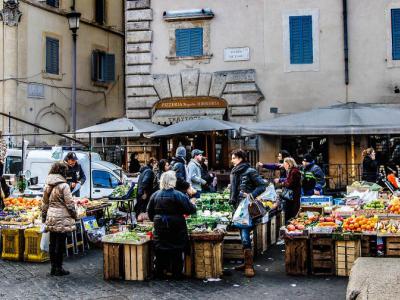
10) Campo de' Fiori Market
In the morning and noon hours, head to one of the most beautiful and colorful open-air markets in Rome – the main attraction of the Campo de' Fiori area. This market is primarily for fresh fruit and vegetables, but you will also find other goodies such as olive oil, balsamic vinegar, honey, vegetable pâté (pesto, artichoke, etc.), liquors, spices, cheeses, flowers, souvenirs, and flea-market-type things. Some vendors sell small products you can take home, and also give free samples, so this can be a pleasant way to try local specialties. With so much fresh fruit, some will happily make most of it into a juice for you – try the pomegranate for some intense goodness!
There also are many great restaurants and cafés laying around, with a view on the market, so you can try some handmade pizza or some carbonara if you're peckish. In the late afternoon and evening, the square turns into terraces for the restaurants and cafés, gradually becoming a nightlife hotspot with lots of street artists and performers who entertain the crowds.
Tip:
Please follow European tradition and don't touch the produce unless vendors tell you to "pick". They're happy to give advice and share recipes but, as anywhere in Rome, don't really bargain much (unless you're buying more than one of somethings at a time).
There also are many great restaurants and cafés laying around, with a view on the market, so you can try some handmade pizza or some carbonara if you're peckish. In the late afternoon and evening, the square turns into terraces for the restaurants and cafés, gradually becoming a nightlife hotspot with lots of street artists and performers who entertain the crowds.
Tip:
Please follow European tradition and don't touch the produce unless vendors tell you to "pick". They're happy to give advice and share recipes but, as anywhere in Rome, don't really bargain much (unless you're buying more than one of somethings at a time).
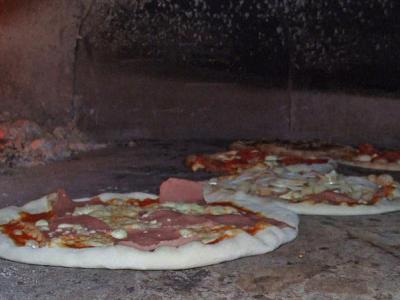
11) Forno Campo de Fiori
The pizza and baked goods at this small bakery are outstanding. As you enter, be prepared for a lineup, and on your right, you'll find a display of mouthwatering pizzas. They offer a variety of toppings such as potatoes, mushrooms, and shredded zucchini. The unique part is that you get to choose the size of your slice, which is then cut, wrapped in paper, weighed, and handed to you along with a receipt (cash only, to be paid at the register).
Their "pizza bianca" is particularly famous and has achieved legendary status. It is a flatbread made with a no-knead dough that is incredibly soft and seasoned with sea salt and olive oil. The secret to its extraordinary taste lies in the long fermentation process. Another delicious option is the "pizza rossa," a thin-crusted pizza topped with red tomato sauce. Both varieties are served fresh and crispy, usually available in the late morning and during lunchtime. Try them – you will lick your fingers. A big square stuck in your bag is the perfect packed lunch (ask for napkins at the food counter), and is good all day long – but you could also eat it while perching yourself on the fountain out front and observing the bustling outdoor market.
The bakery also uses the same delightful dough to make their tasty and reasonably priced Mortadella sandwiches. Alternatively, you can explore their freshly-baked selection of cakes and biscuits (make sure to try a mix of the almond and hazelnut biscotti!).
If you're not in the mood for pasta or a sit-down lunch, Forno Campo de' Fiori comes highly recommended. The fact that many local working people frequent this bakery is always a positive sign of its quality and popularity!
Their "pizza bianca" is particularly famous and has achieved legendary status. It is a flatbread made with a no-knead dough that is incredibly soft and seasoned with sea salt and olive oil. The secret to its extraordinary taste lies in the long fermentation process. Another delicious option is the "pizza rossa," a thin-crusted pizza topped with red tomato sauce. Both varieties are served fresh and crispy, usually available in the late morning and during lunchtime. Try them – you will lick your fingers. A big square stuck in your bag is the perfect packed lunch (ask for napkins at the food counter), and is good all day long – but you could also eat it while perching yourself on the fountain out front and observing the bustling outdoor market.
The bakery also uses the same delightful dough to make their tasty and reasonably priced Mortadella sandwiches. Alternatively, you can explore their freshly-baked selection of cakes and biscuits (make sure to try a mix of the almond and hazelnut biscotti!).
If you're not in the mood for pasta or a sit-down lunch, Forno Campo de' Fiori comes highly recommended. The fact that many local working people frequent this bakery is always a positive sign of its quality and popularity!
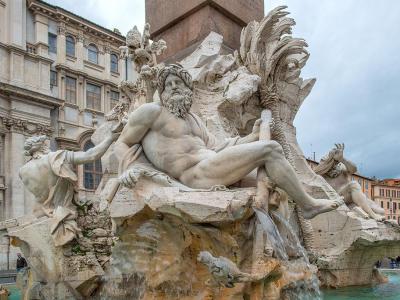
12) Fontana dei Quattro Fiumi (Fountain of the Four Rivers) (must see)
The focal point of Navona Square, the Fountain of the Four Rivers has been in place since the 17th century. While Rome has a longstanding affinity for fountains, dating back to antiquity, the Baroque era brought a new dimension to these water features, showcasing the generosity of the papacy.
In the case of the Fountain of the Four Rivers, Pope Innocent X, whose family seat – the Pamphili Palace – overlooks the square, entrusted the task to one of the most groundbreaking artists of the time, Gian Lorenzo Bernini. Created in 1651, the fountain was Rome's pinnacle achievement in fountain design, a symbolic masterpiece brimming with the dynamic and dramatic elements sought after by Baroque artists. Its central Egyptian obelisk is crowned with the Pamphili emblem, a dove with an olive twig.
Pope Innocent X chose Bernini after being secretly shown his model. The fountain was innovative, combining sculpture and architecture in a way unmatched by previous Roman fountains.
Here, the travertine base supports sculptures of four river gods, representing the major rivers of the continents over which papal authority had extended at that time. These include the Nile (for Africa), the Danube (for Europe), the Ganges (for Asia), and the Plate (for the Americas). Each figure conveys symbolic details: the Ganges is depicted holding a long oar, symbolizing the river's navigability; the Nile's veiled head signifies its unknown source; the Danube, the largest river near Rome touches the Pope's coat of arms; and the Plate sits atop a pile of coins, reflecting America’s wealth.
The fountain's unveiling on June 12, 1651, was marked by grand celebrations orchestrated by the Pamphili family. Allegorical figures of Fame and Curiosity paraded the streets, urging Romans to witness the reveal. The crowd marveled at the lifelike sculptures and water features, described as naturalistic and astonishing.
However, the project faced significant public opposition. Critics condemned its expense during the famine of 1646 to 1648, expressing their discontent through pasquinades demanding "Bread, not fountains." Street vendors and Roman Jews lamented their displacement from the square's market, which was closed to enhance its splendor.
Despite the controversy, the Fountain of the Four Rivers remains a cornerstone of Rome’s cultural and architectural legacy, blending mythology, artistry, and geographical narratives.
Tip:
To capture the essence of this fountain in photographs, it is recommended to shoot from various angles and positions, so as to get as much detail as possible. With ample space surrounding the fountain, take your time to find the perfect shot-or perhaps even multiple perfect shots.
In the case of the Fountain of the Four Rivers, Pope Innocent X, whose family seat – the Pamphili Palace – overlooks the square, entrusted the task to one of the most groundbreaking artists of the time, Gian Lorenzo Bernini. Created in 1651, the fountain was Rome's pinnacle achievement in fountain design, a symbolic masterpiece brimming with the dynamic and dramatic elements sought after by Baroque artists. Its central Egyptian obelisk is crowned with the Pamphili emblem, a dove with an olive twig.
Pope Innocent X chose Bernini after being secretly shown his model. The fountain was innovative, combining sculpture and architecture in a way unmatched by previous Roman fountains.
Here, the travertine base supports sculptures of four river gods, representing the major rivers of the continents over which papal authority had extended at that time. These include the Nile (for Africa), the Danube (for Europe), the Ganges (for Asia), and the Plate (for the Americas). Each figure conveys symbolic details: the Ganges is depicted holding a long oar, symbolizing the river's navigability; the Nile's veiled head signifies its unknown source; the Danube, the largest river near Rome touches the Pope's coat of arms; and the Plate sits atop a pile of coins, reflecting America’s wealth.
The fountain's unveiling on June 12, 1651, was marked by grand celebrations orchestrated by the Pamphili family. Allegorical figures of Fame and Curiosity paraded the streets, urging Romans to witness the reveal. The crowd marveled at the lifelike sculptures and water features, described as naturalistic and astonishing.
However, the project faced significant public opposition. Critics condemned its expense during the famine of 1646 to 1648, expressing their discontent through pasquinades demanding "Bread, not fountains." Street vendors and Roman Jews lamented their displacement from the square's market, which was closed to enhance its splendor.
Despite the controversy, the Fountain of the Four Rivers remains a cornerstone of Rome’s cultural and architectural legacy, blending mythology, artistry, and geographical narratives.
Tip:
To capture the essence of this fountain in photographs, it is recommended to shoot from various angles and positions, so as to get as much detail as possible. With ample space surrounding the fountain, take your time to find the perfect shot-or perhaps even multiple perfect shots.
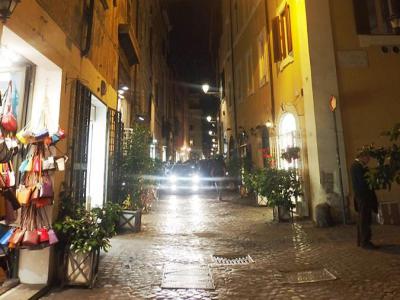
13) Via dei Coronari (Street of the Coronaries)
In ancient times, Via dei Coronari was a significant path for medieval pilgrims on their way to St Peter's, leading them across the Tiber via Ponte Sant'Angelo. The street owes its name to the rosary sellers (coronari) who populated it during medieval times.
Traversing the bustling Via dei Coronari was not without risks, especially during the Holy Year of 1450 when large crowds gathered. Tragically, around 200 pilgrims lost their lives due to the crush of people or by drowning in the Tiber. While the rosary sellers have been succeeded by antique dealers, the street still preserves its charm with original buildings from the 15th and 16th centuries. Notably, the House of Fiammetta, located at Nos. 156-157, is a remarkable structure associated with Cesare Borgia's mistress.
While the prices may match the expectations for a prime location, Via dei Coronari is teeming with a multitude of shops that offer a wide array of items. In fact, the street is predominantly dedicated to these delightful shops, making it a must-visit destination for an engrossing sightseeing experience.
Tip:
If you're a fan of authentic Roman gelato, don't miss Gelateria del Teatro. Watch through the window near the entrance as they use fresh fruits to create their daily flavors, showcasing the best of Italy, including Amalfi lemons and Alba hazelnuts. Alongside traditional options, indulge in their intriguing combinations such as raspberry and sage or white chocolate with basil.
Traversing the bustling Via dei Coronari was not without risks, especially during the Holy Year of 1450 when large crowds gathered. Tragically, around 200 pilgrims lost their lives due to the crush of people or by drowning in the Tiber. While the rosary sellers have been succeeded by antique dealers, the street still preserves its charm with original buildings from the 15th and 16th centuries. Notably, the House of Fiammetta, located at Nos. 156-157, is a remarkable structure associated with Cesare Borgia's mistress.
While the prices may match the expectations for a prime location, Via dei Coronari is teeming with a multitude of shops that offer a wide array of items. In fact, the street is predominantly dedicated to these delightful shops, making it a must-visit destination for an engrossing sightseeing experience.
Tip:
If you're a fan of authentic Roman gelato, don't miss Gelateria del Teatro. Watch through the window near the entrance as they use fresh fruits to create their daily flavors, showcasing the best of Italy, including Amalfi lemons and Alba hazelnuts. Alongside traditional options, indulge in their intriguing combinations such as raspberry and sage or white chocolate with basil.
14) Giolitti
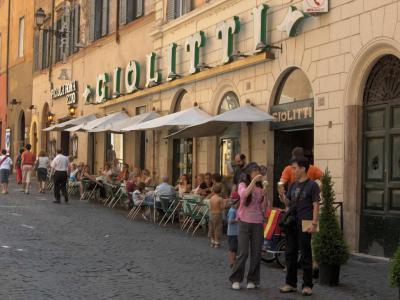
Opened over a century ago, the Giolitti shop nestled on the side of Piazza di Monte Citorio has retained its historic allure and charming features. This delightful café offers a cozy spot for breakfast, coffee, and, most notably, a remarkable gelato experience that comes highly recommended! Undoubtedly, Giolitti stands as one of the most beloved gelaterias in Rome, attracting both locals and vacationing visitors seeking a quick frozen treat-just as Gregory Peck and Audrey Hepburn did in the iconic film "Roman Holiday."
With a selection of over a hundred flavors of ice cream, ranging from traditional to exotic, Giolitti spoils its patrons with choices. Indulge in refreshing delights like ice cream-stuffed biscuits or decadent sundaes such as the "coppa giolitti," featuring chocolate, cream, zabaglione, whipped cream, and hazelnut. The gelateria caters to lactose-intolerant individuals as well, offering numerous sorbet options.
At Giolitti, the strict observance of traditional Italian bar etiquette is still cherished. Start by paying at the register near the entrance, where you can choose between a cup or a cone (although the cone may be tempting, a cup is often easier to handle, especially in hot weather). Then, armed with your receipt, make your way to the back of the shop and join the line to be served. The key is to establish eye contact with the gelato server. Use your maneuvering time to decide on your desired flavor and confidently place your order once eye contact is established. If you desire an extra touch of indulgence, you can request your gelato "con panna," which means it will be topped with a generous dollop of whipped cream.
If the bustling atmosphere feels a bit overwhelming, you can request to be seated on the other side of the shop, albeit at a slightly higher cost. Consider this a worthwhile investment in tranquility, as you will be served promptly and avoid the lines and crowds near the serving bar. As an added perk, you'll have access to free WiFi. So, sit back, relax, and savor your gelato in peace!
With a selection of over a hundred flavors of ice cream, ranging from traditional to exotic, Giolitti spoils its patrons with choices. Indulge in refreshing delights like ice cream-stuffed biscuits or decadent sundaes such as the "coppa giolitti," featuring chocolate, cream, zabaglione, whipped cream, and hazelnut. The gelateria caters to lactose-intolerant individuals as well, offering numerous sorbet options.
At Giolitti, the strict observance of traditional Italian bar etiquette is still cherished. Start by paying at the register near the entrance, where you can choose between a cup or a cone (although the cone may be tempting, a cup is often easier to handle, especially in hot weather). Then, armed with your receipt, make your way to the back of the shop and join the line to be served. The key is to establish eye contact with the gelato server. Use your maneuvering time to decide on your desired flavor and confidently place your order once eye contact is established. If you desire an extra touch of indulgence, you can request your gelato "con panna," which means it will be topped with a generous dollop of whipped cream.
If the bustling atmosphere feels a bit overwhelming, you can request to be seated on the other side of the shop, albeit at a slightly higher cost. Consider this a worthwhile investment in tranquility, as you will be served promptly and avoid the lines and crowds near the serving bar. As an added perk, you'll have access to free WiFi. So, sit back, relax, and savor your gelato in peace!
15) Gelato di San Crispino
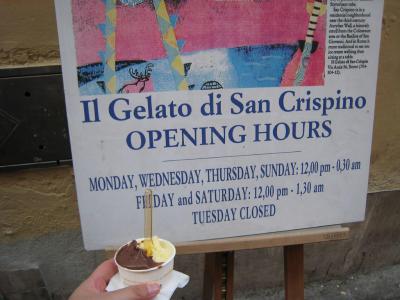
One of the premier ice cream shops in Rome, Gelato di San Crispino offers an extensive array of flavors that vary with the seasons. The shop takes great pride in the purity of its gelato, utilizing high-quality ingredients while abstaining from artificial preservatives, chemical emulsifiers, and pre-prepared or frozen foods. Engage in conversation with the knowledgeable staff, and you'll discover that each individually sealed container of gelato is stored at the ideal temperature, depending on whether it contains fruit, spices, or chocolate. With a polite request, you may even have the opportunity to sample some unique and unconventional flavors.
Situated just a few blocks away from the renowned Trevi Fountain, Gelato di San Crispino is a convenient stop during your visit, as the service is prompt. For some, the added allure lies in the fact that the shop was featured in the 2010 Hollywood movie "Eat, Pray, Love" starring Julia Roberts.
Tip:
Given the wide selection of gelatos available, take your time in choosing a flavor that suits your preferences. Additionally, be sure to explore the delightful sorbets on offer, such as the grapefruit flavor, which strikes the perfect balance between sweetness and tanginess.
Situated just a few blocks away from the renowned Trevi Fountain, Gelato di San Crispino is a convenient stop during your visit, as the service is prompt. For some, the added allure lies in the fact that the shop was featured in the 2010 Hollywood movie "Eat, Pray, Love" starring Julia Roberts.
Tip:
Given the wide selection of gelatos available, take your time in choosing a flavor that suits your preferences. Additionally, be sure to explore the delightful sorbets on offer, such as the grapefruit flavor, which strikes the perfect balance between sweetness and tanginess.
