Custom Walk in Porto, Portugal by tom_o_972dc2 created on 2026-07-24
Guide Location: Portugal » Porto
Guide Type: Custom Walk
# of Sights: 6
Tour Duration: 2 Hour(s)
Travel Distance: 3.3 Km or 2.1 Miles
Share Key: 2FNRG
Guide Type: Custom Walk
# of Sights: 6
Tour Duration: 2 Hour(s)
Travel Distance: 3.3 Km or 2.1 Miles
Share Key: 2FNRG
How It Works
Please retrieve this walk in the GPSmyCity app. Once done, the app will guide you from one tour stop to the next as if you had a personal tour guide. If you created the walk on this website or come to the page via a link, please follow the instructions below to retrieve the walk in the app.
Retrieve This Walk in App
Step 1. Download the app "GPSmyCity: Walks in 1K+ Cities" on Apple App Store or Google Play Store.



Step 2. In the GPSmyCity app, download(or launch) the guide "Porto Map and Walking Tours".
Step 3. Tap the menu button located at upper right corner of the "Walks" screen and select "Retrieve custom walk". Enter the share key: 2FNRG
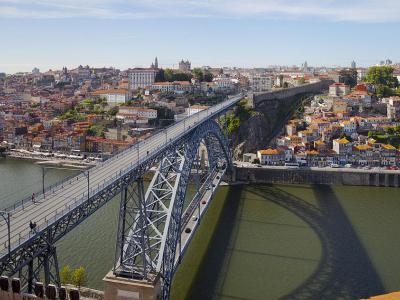
1) Ponte de Dom Luís I (Luís I Bridge) (must see)
The Douro river doesn’t do soft edges—its banks are carved in granite, and the bridges that cross it seem to rise straight out of that stone. Within less than a mile, you’ll spot two iron giants: the Dom Luís I Bridge and its close relative, the Dona Maria Pia Bridge. At first glance, they look almost like twins—same sweeping arches, same intricate ironwork stretched across the river like a web.
That resemblance isn’t a coincidence. The Dona Maria Pia Bridge was designed by Gustave Eiffel, the very same mind behind the Eiffel Tower in Paris. The Dom Luís I Bridge came from Teophile Seyrig, who had worked alongside Eiffel before going solo. So, what you’re looking at here is less of a copy and more of a friendly rivalry in iron. The Dom Luís I stretches 564 feet across and rises about 146 feet above the river, holding its own with quiet confidence.
Now here’s where things get interesting. This isn’t just a bridge but a two-tier experience. One level runs high across the top of the arch, while the other hangs below it. Originally, both were built for road traffic. Today, the upper deck belongs to the metro and pedestrians, while the lower level handles cars. And if you’re deciding where to walk, there’s really no debate—the top is where the magic happens.
Up there, the city opens up. The skyline of old Porto spreads out in front of you, with the cathedral and the Clergymen’s Tower rising above the rooftops like they’re keeping watch. The river curves below, boats drifting past, and for a moment, you’re not just crossing a bridge—you’re suspended between two sides of the city and two centuries of engineering ambition.
So, yes, Porto has more than one bridge. But if you’re picking just one to walk, make it this one. Come for the structure, stay for the view—and leave with just enough adrenaline to say you’ve done it properly.
That resemblance isn’t a coincidence. The Dona Maria Pia Bridge was designed by Gustave Eiffel, the very same mind behind the Eiffel Tower in Paris. The Dom Luís I Bridge came from Teophile Seyrig, who had worked alongside Eiffel before going solo. So, what you’re looking at here is less of a copy and more of a friendly rivalry in iron. The Dom Luís I stretches 564 feet across and rises about 146 feet above the river, holding its own with quiet confidence.
Now here’s where things get interesting. This isn’t just a bridge but a two-tier experience. One level runs high across the top of the arch, while the other hangs below it. Originally, both were built for road traffic. Today, the upper deck belongs to the metro and pedestrians, while the lower level handles cars. And if you’re deciding where to walk, there’s really no debate—the top is where the magic happens.
Up there, the city opens up. The skyline of old Porto spreads out in front of you, with the cathedral and the Clergymen’s Tower rising above the rooftops like they’re keeping watch. The river curves below, boats drifting past, and for a moment, you’re not just crossing a bridge—you’re suspended between two sides of the city and two centuries of engineering ambition.
So, yes, Porto has more than one bridge. But if you’re picking just one to walk, make it this one. Come for the structure, stay for the view—and leave with just enough adrenaline to say you’ve done it properly.
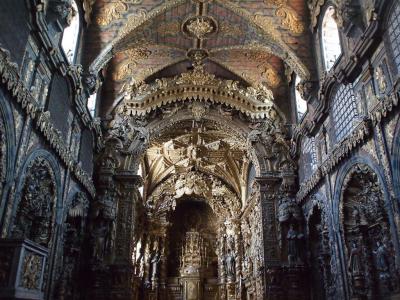
2) Igreja de Santa Clara (St. Clara Church)
Santa Clara's structure dates back to the 1400s and is an excellent example of Baroque architecture. The building was constructed for the Roman Catholic Church. The interior holds a vast selection of some of the best gilded Baroque woodwork in all of Porto. Originally it housed both a monastery and convent and continued to be used in this fashion until the 19th century.
The entrance of the structure has a large Baroque door which is flanked by Renaissance characteristics, including Solomonic columns with Corinthian capitals. These were added during one of the several renovations which took place over its lifetime. Solomonic columns typically can be described as having a twisted corkscrew shape which cannot be mistaken with other column designs. Corinthian capitals are usually seen embellished with scrolls and acanthus leaves.
The interior of the church is definitely the place a guest to the city who is fascinated with elaborate décor will want to explore. The interior of this facility has elaborate wood carvings throughout it with many of them gilded in real gold. The portico, which was created by famed artist, Miguel Francisco da Silva, is something special to admire.
Tip:
You should expedite your visit as they should close soon (5/2019) for 2 to 3 years of rehabilitation works.
The entrance of the structure has a large Baroque door which is flanked by Renaissance characteristics, including Solomonic columns with Corinthian capitals. These were added during one of the several renovations which took place over its lifetime. Solomonic columns typically can be described as having a twisted corkscrew shape which cannot be mistaken with other column designs. Corinthian capitals are usually seen embellished with scrolls and acanthus leaves.
The interior of the church is definitely the place a guest to the city who is fascinated with elaborate décor will want to explore. The interior of this facility has elaborate wood carvings throughout it with many of them gilded in real gold. The portico, which was created by famed artist, Miguel Francisco da Silva, is something special to admire.
Tip:
You should expedite your visit as they should close soon (5/2019) for 2 to 3 years of rehabilitation works.
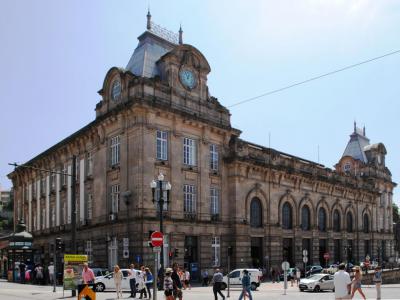
3) São Bento Railway Station
The São Bento Railway Station is a place where catching a train comes with a side of history, art, and just a hint of architectural drama.
Opened in the early 20th century, this grand station takes its name from Saint Benedict, because long before trains rolled in, this was the site of a Benedictine convent. The convent was cleared in 1892, making way for something a bit louder and considerably more punctual. The idea for a central station had been floating around since 1864, but like many good plans, it took a while to get moving.
Construction began in earnest in the 1890s, with the first train arriving in 1896—though not without setbacks, including a landslide that slowed things down. Eventually, architect José Marques da Silva stepped in, bringing with him a refined Beaux-Arts vision, and by the early 1900s, São Bento began to take the form you see today.
From the outside, the station keeps things composed: a symmetrical, U-shaped granite structure with three levels, clean lines, and just enough decorative detail to remind you it has standards. It’s elegant, balanced, and quietly confident—like it knows it doesn’t need to shout.
But step inside, and that restraint disappears entirely.
The entrance hall is wrapped in over 20,000 azulejo tiles, covering more than 500 square meters, all created by artist Jorge Colaço. These blue-and-white panels don’t just decorate the space—they narrate it. Scenes from Portugal’s history unfold across the walls, from royal ceremonies to rural life, while friezes trace the evolution of transportation. It’s part gallery, part waiting room, and entirely unforgettable.
Declared a national monument in 1988, São Bento has been carefully preserved, with parts of the building even adapted for modern use, including a small hostel tucked within its historic walls.
So, before you rush off to your next destination, pause for a moment here—because at São Bento, the journey doesn’t begin on the tracks, it begins on the walls...
Opened in the early 20th century, this grand station takes its name from Saint Benedict, because long before trains rolled in, this was the site of a Benedictine convent. The convent was cleared in 1892, making way for something a bit louder and considerably more punctual. The idea for a central station had been floating around since 1864, but like many good plans, it took a while to get moving.
Construction began in earnest in the 1890s, with the first train arriving in 1896—though not without setbacks, including a landslide that slowed things down. Eventually, architect José Marques da Silva stepped in, bringing with him a refined Beaux-Arts vision, and by the early 1900s, São Bento began to take the form you see today.
From the outside, the station keeps things composed: a symmetrical, U-shaped granite structure with three levels, clean lines, and just enough decorative detail to remind you it has standards. It’s elegant, balanced, and quietly confident—like it knows it doesn’t need to shout.
But step inside, and that restraint disappears entirely.
The entrance hall is wrapped in over 20,000 azulejo tiles, covering more than 500 square meters, all created by artist Jorge Colaço. These blue-and-white panels don’t just decorate the space—they narrate it. Scenes from Portugal’s history unfold across the walls, from royal ceremonies to rural life, while friezes trace the evolution of transportation. It’s part gallery, part waiting room, and entirely unforgettable.
Declared a national monument in 1988, São Bento has been carefully preserved, with parts of the building even adapted for modern use, including a small hostel tucked within its historic walls.
So, before you rush off to your next destination, pause for a moment here—because at São Bento, the journey doesn’t begin on the tracks, it begins on the walls...
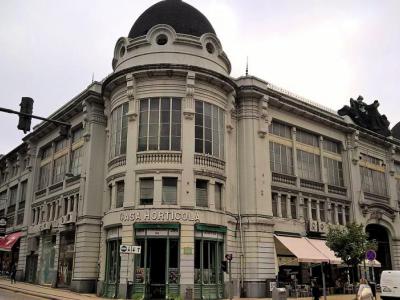
4) Mercado do Bolhao (Bolhao Market)
The Bolhão Market in Porto is a beloved and emblematic marketplace that stands as a hallmark of the city’s traditional commerce. This iconic market is situated in the parish of Santo Ildefonso in downtown Porto. It serves as a bustling hub primarily for fresh products, featuring specialized sections for fishmongers, butchers, vegetable vendors, and florists, alongside a variety of shops offering everything from clothing to cafes and perfumeries.
The market’s roots date back to 1839 when the Porto city council transformed a meadow with a stream, which formed a bubble or "bolhão" in Portuguese, into a bustling square with wooden stalls. The current Neoclassical market building, designed by architect Correia da Silva, was constructed in 1914, featuring a robust blend of reinforced concrete, metal structures, wooden roofs, and granite stonework. Over the years, it underwent several modifications, including notable changes in the 1940s.
Recognized for its architectural and cultural significance, Bolhão Market was declared a Property of Public Interest in 2006 and a monument of public interest in 2013. After a significant four-year renovation, the market reopened on September 15, 2022, with modern enhancements such as direct metro access and improved logistics with a newly built basement to handle deliveries efficiently and eliminate street congestion. The renovation preserved the market’s original charm, including the restoration of original tiles and thoughtful touches inspired by the vendors’ preferences.
Today, Bolhão Market spans an impressive façade of over eight thousand square meters and a roof area exceeding five thousand square meters. It boasts 81 stalls, 38 street-facing shops, and 10 restaurants that proudly source their ingredients from the market itself. This blend of historic charm and modern amenities makes Bolhão Market not just a shopping destination but a living monument to Porto’s vibrant culture and heritage.
The market’s roots date back to 1839 when the Porto city council transformed a meadow with a stream, which formed a bubble or "bolhão" in Portuguese, into a bustling square with wooden stalls. The current Neoclassical market building, designed by architect Correia da Silva, was constructed in 1914, featuring a robust blend of reinforced concrete, metal structures, wooden roofs, and granite stonework. Over the years, it underwent several modifications, including notable changes in the 1940s.
Recognized for its architectural and cultural significance, Bolhão Market was declared a Property of Public Interest in 2006 and a monument of public interest in 2013. After a significant four-year renovation, the market reopened on September 15, 2022, with modern enhancements such as direct metro access and improved logistics with a newly built basement to handle deliveries efficiently and eliminate street congestion. The renovation preserved the market’s original charm, including the restoration of original tiles and thoughtful touches inspired by the vendors’ preferences.
Today, Bolhão Market spans an impressive façade of over eight thousand square meters and a roof area exceeding five thousand square meters. It boasts 81 stalls, 38 street-facing shops, and 10 restaurants that proudly source their ingredients from the market itself. This blend of historic charm and modern amenities makes Bolhão Market not just a shopping destination but a living monument to Porto’s vibrant culture and heritage.
5) Livraria Lello (Lello Bookstore)
Right in the heart of Porto, along the historic Rua dos Clérigos, stands Livraria Lello—a bookstore that regularly earns the title of one of the most beautiful in the world… and for once, the hype holds up.
Opened in 1906 and still managed by the same company, the shop feels more like a carefully staged piece of theater than a retail space. The design leans into Art Deco’s love of symmetry and clean lines—an aesthetic that quietly borrows from ancient Egyptian motifs—while the façade mixes in touches of Art Nouveau and Gothic Revival, just to keep things interesting. The result is a building that doesn’t quite sit still stylistically, but somehow makes perfect sense once you step inside.
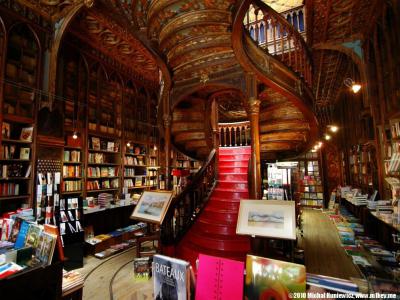
And stepping inside is the real moment. The shelves climb from floor to ceiling, wrapped in richly carved wood that seems to have been shaped with more patience than urgency. At the center, a sweeping wooden staircase curves upward like it knows it’s being watched—and it usually is. Above it all, a stained-glass ceiling filters the daylight into a soft, amber glow, giving the space a slightly unreal, almost cinematic quality.
Designed by architect and engineer Xavier Esteves, the structure was built to endure, but it’s the details that keep people lingering. Every surface invites a second look, every angle seems composed rather than accidental. It’s the kind of place where you might come in for a quick visit… and leave wondering how long you’ve actually been standing there.
Opened in 1906 and still managed by the same company, the shop feels more like a carefully staged piece of theater than a retail space. The design leans into Art Deco’s love of symmetry and clean lines—an aesthetic that quietly borrows from ancient Egyptian motifs—while the façade mixes in touches of Art Nouveau and Gothic Revival, just to keep things interesting. The result is a building that doesn’t quite sit still stylistically, but somehow makes perfect sense once you step inside.
And stepping inside is the real moment. The shelves climb from floor to ceiling, wrapped in richly carved wood that seems to have been shaped with more patience than urgency. At the center, a sweeping wooden staircase curves upward like it knows it’s being watched—and it usually is. Above it all, a stained-glass ceiling filters the daylight into a soft, amber glow, giving the space a slightly unreal, almost cinematic quality.
Designed by architect and engineer Xavier Esteves, the structure was built to endure, but it’s the details that keep people lingering. Every surface invites a second look, every angle seems composed rather than accidental. It’s the kind of place where you might come in for a quick visit… and leave wondering how long you’ve actually been standing there.
6) Sé Catedral do Porto (Porto Cathedral) (must see)
Back in the year 868, a nobleman from Asturias, Vímara Peres, arrived in the north of what is now Portugal and began reclaiming land from Moorish control. Among the places he took was a settlement called Portus Cale. The name eventually shifted to Portucale for the county he went on to rule, and gave rise to both Porto and Portugal. At the top of this early settlement was Penaventosa Hill—the highest point—where the city’s cathedral would later rise.
Before the cathedral, this hill had already held religious importance as a home to a Suebian church. Construction of the Porto Cathedral began in the 12th century and, like many long-lived projects, moved forward in stages. By 1737, it was finally considered complete. What stands today is a solid, fortress-like structure—less delicate ornament, more defensive confidence—looking out over the city below.
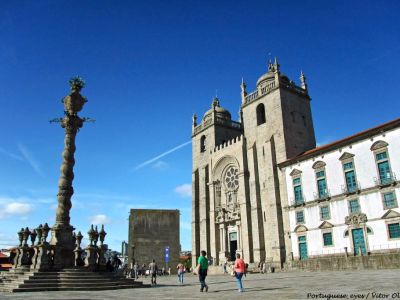
Take your time to observe the exterior. Two square towers frame the façade, sturdy and slightly severe, each topped with a cupola. Gothic details from the 15th century soften the front just enough, while the cloister—added in 1736 by the Italian architect Nicolau Nasoni—brings a more refined, decorative touch. Walk around to the northern side, and you’ll notice a mix of styles: a Baroque porch, a Romanesque rose window, and crenellated walls that make the whole place feel like it could withstand a siege, if needed.
Enter the building, and the mood shifts again. The nave is relatively narrow, covered by a barrel vault that draws your eyes forward. The Baroque apse is richly decorated with paintings by Nasoni, while the altarpiece, designed by Santos Pacheco, adds another layer of artistic detail. In the south transept, blue azulejo tiles introduce a familiar Portuguese element, telling stories through pattern and color.
Mass is still held here daily at 11 am, a quiet reminder that this is not only a historic monument but a living place of worship. Entry to the cathedral itself is free, while a small fee grants access to the Gothic cloisters and the Sacred Art Museum. If you have the energy, the tower climb is demanding but rewarding, offering views not only over Porto, but also of architectural details you simply can’t see from below.
Before the cathedral, this hill had already held religious importance as a home to a Suebian church. Construction of the Porto Cathedral began in the 12th century and, like many long-lived projects, moved forward in stages. By 1737, it was finally considered complete. What stands today is a solid, fortress-like structure—less delicate ornament, more defensive confidence—looking out over the city below.
Take your time to observe the exterior. Two square towers frame the façade, sturdy and slightly severe, each topped with a cupola. Gothic details from the 15th century soften the front just enough, while the cloister—added in 1736 by the Italian architect Nicolau Nasoni—brings a more refined, decorative touch. Walk around to the northern side, and you’ll notice a mix of styles: a Baroque porch, a Romanesque rose window, and crenellated walls that make the whole place feel like it could withstand a siege, if needed.
Enter the building, and the mood shifts again. The nave is relatively narrow, covered by a barrel vault that draws your eyes forward. The Baroque apse is richly decorated with paintings by Nasoni, while the altarpiece, designed by Santos Pacheco, adds another layer of artistic detail. In the south transept, blue azulejo tiles introduce a familiar Portuguese element, telling stories through pattern and color.
Mass is still held here daily at 11 am, a quiet reminder that this is not only a historic monument but a living place of worship. Entry to the cathedral itself is free, while a small fee grants access to the Gothic cloisters and the Sacred Art Museum. If you have the energy, the tower climb is demanding but rewarding, offering views not only over Porto, but also of architectural details you simply can’t see from below.
