

Burns Commons Park, Milwaukee
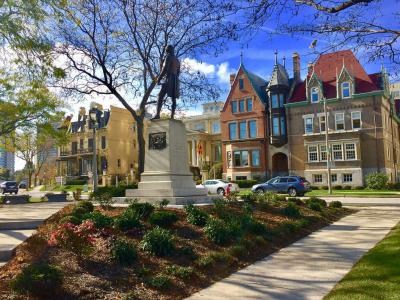
Burns Commons is a historic urban park located on Milwaukee’s East Side, bounded by Franklin Place, Prospect Avenue, and Ogden Avenue. Divided by Knapp Street into two distinct sections, the park blends leafy calm with cultural charm. The larger northern section features walkways, lawns, and public art, while the smaller southern portion is home to a striking statue of Scottish poet Robert Burns.
The park traces its roots to 1847 when local developer James H. Rogers donated the land, making it one of Milwaukee’s first public parks. Initially known as First Ward Park, it was later renamed Franklin Square as elegant residences cropped up around it. Wealthy neighbors even assumed responsibility for its maintenance, adding landscaping and a fountain. By the early 1900s, the park earned the nickname “Baby Park,” thanks to the neighborhood’s nursemaids who frequented it with children.
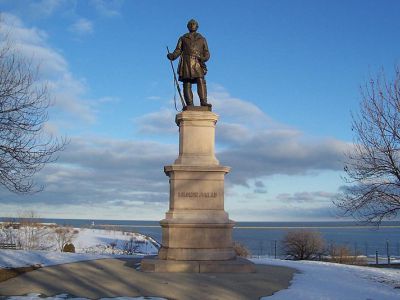
In 1909, the park gained its defining monument: a bronze statue of Robert Burns, donated by Scottish immigrant James Anderson Bryden. Designed by William Grant Stevenson and set atop Nova Scotia granite, the statue marked a cultural milestone for Milwaukee’s Scottish community. Though briefly known as Robert Burns Triangle after the 1937 parks consolidation, the park retained its original name due to deed restrictions-until 1994, when it was officially renamed Burns Commons.
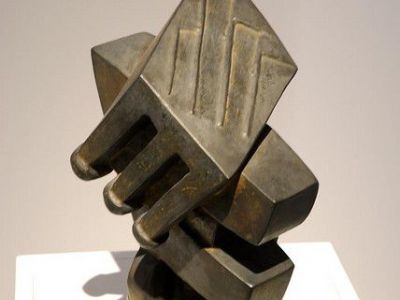
Today, the park is an oasis framed by modern condos and a city bustle. Alongside the Burns statue stands Cleopatra’s Wedge, a notable piece of public sculpture. It also serves as a transportation hub: the Hop M-Line streetcar begins and ends just steps away, connecting history and the present in one of Milwaukee’s oldest green spaces.
The park traces its roots to 1847 when local developer James H. Rogers donated the land, making it one of Milwaukee’s first public parks. Initially known as First Ward Park, it was later renamed Franklin Square as elegant residences cropped up around it. Wealthy neighbors even assumed responsibility for its maintenance, adding landscaping and a fountain. By the early 1900s, the park earned the nickname “Baby Park,” thanks to the neighborhood’s nursemaids who frequented it with children.
In 1909, the park gained its defining monument: a bronze statue of Robert Burns, donated by Scottish immigrant James Anderson Bryden. Designed by William Grant Stevenson and set atop Nova Scotia granite, the statue marked a cultural milestone for Milwaukee’s Scottish community. Though briefly known as Robert Burns Triangle after the 1937 parks consolidation, the park retained its original name due to deed restrictions-until 1994, when it was officially renamed Burns Commons.
Today, the park is an oasis framed by modern condos and a city bustle. Alongside the Burns statue stands Cleopatra’s Wedge, a notable piece of public sculpture. It also serves as a transportation hub: the Hop M-Line streetcar begins and ends just steps away, connecting history and the present in one of Milwaukee’s oldest green spaces.
Want to visit this sight? Check out these Self-Guided Walking Tours in Milwaukee. Alternatively, you can download the mobile app "GPSmyCity: Walks in 1K+ Cities" from Apple App Store or Google Play Store. The app turns your mobile device to a personal tour guide and it works offline, so no data plan is needed when traveling abroad.
Download The GPSmyCity App



Burns Commons Park on Map
Sight Name: Burns Commons Park
Sight Location: Milwaukee, USA (See walking tours in Milwaukee)
Sight Type: Attraction/Landmark
Sight Location: Milwaukee, USA (See walking tours in Milwaukee)
Sight Type: Attraction/Landmark
Nearby Sights

Walking Tours in Milwaukee, Wisconsin

Create Your Own Walk in Milwaukee
Creating your own self-guided walk in Milwaukee is easy and fun. Choose the city attractions that you want to see and a walk route map will be created just for you. You can even set your hotel as the start point of the walk.
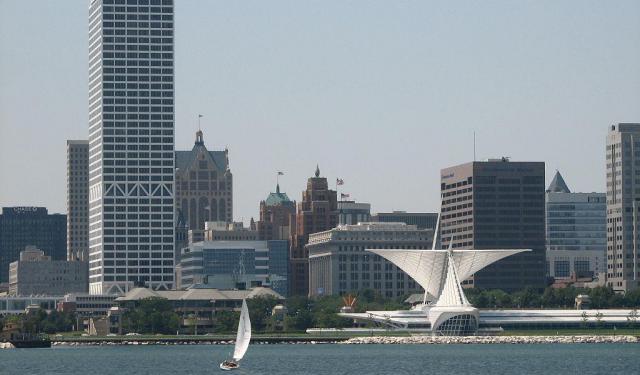
Milwaukee Downtown Walking Tour
Mark Twain is said to have once humorously remarked on Milwaukee's pronunciation, saying: "Milwaukee is a beauty; I presume it is the largest in the world. They spell it Milwaukie and pronounce it Mlwaukay. Thus they have a rhyme in the middle of a word."
The city's name is derived from an Algonquian word "Millioke," which roughly translates to "Good or... view more
Tour Duration: 1 Hour(s)
Travel Distance: 2.1 Km or 1.3 Miles
The city's name is derived from an Algonquian word "Millioke," which roughly translates to "Good or... view more
Tour Duration: 1 Hour(s)
Travel Distance: 2.1 Km or 1.3 Miles
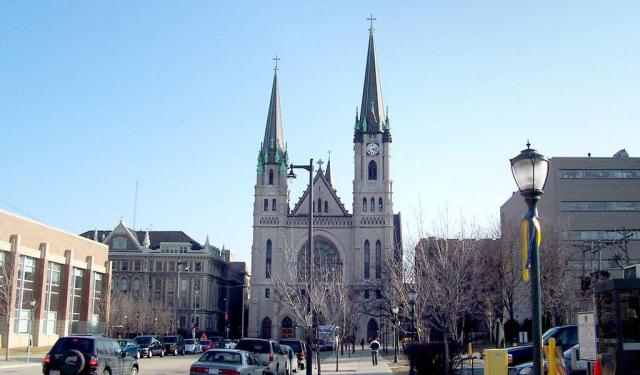
Historical Churches Walking Tour
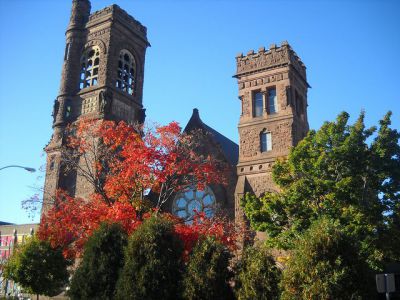
A comprehensive exploration of the spiritual side of Milwaukee's historical landscape will open your eyes to the number of beautiful historic temples, many of which are listed on the National Register of Historic Places. The city's religious makeup is diverse, from Catholic to Jesuit, and there is a multitude of architectural marvels – churches and cathedrals – matching this variety.... view more
Tour Duration: 2 Hour(s)
Travel Distance: 4.1 Km or 2.5 Miles
Tour Duration: 2 Hour(s)
Travel Distance: 4.1 Km or 2.5 Miles
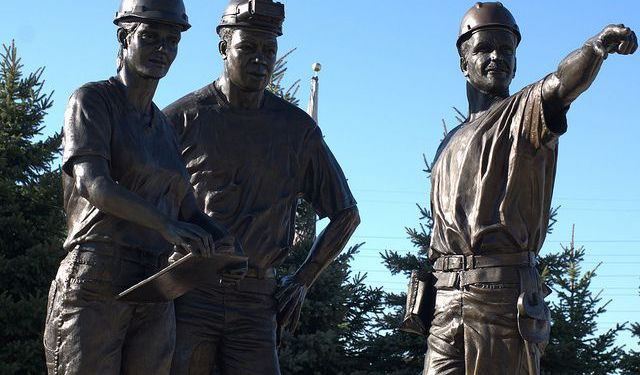
Monuments and Statues Walking Tour
Once in Milwaukee, you may be surprised by the diverse array of monuments and statues dotting the city. Indeed, Milwaukee is home to a multitude of sculptures of different purposes, from those honoring historic figures to entertaining ones to the memorials commemorating war and its heroes.
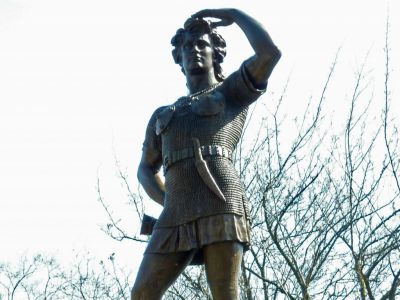
The Leif Eriksson Statue, a striking representation of the Norse explorer, stands as a symbol of... view more
Tour Duration: 2 Hour(s)
Travel Distance: 3.4 Km or 2.1 Miles
The Leif Eriksson Statue, a striking representation of the Norse explorer, stands as a symbol of... view more
Tour Duration: 2 Hour(s)
Travel Distance: 3.4 Km or 2.1 Miles
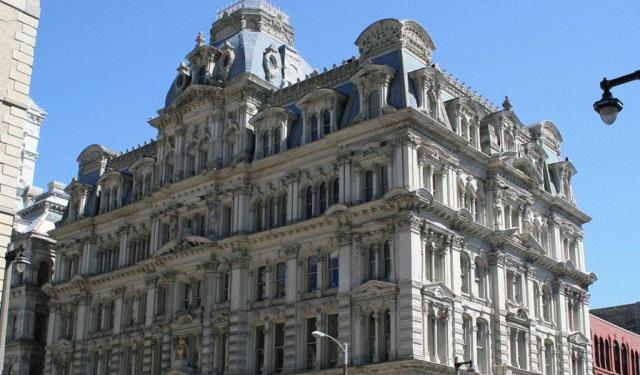
Milwaukee's Historical Buildings Tour
Milwaukee's cityscape is richly adorned with an array of historical architecture, showcasing various styles and periods that have shaped its identity. These buildings represent remarkable achievements of craftsmanship and design, reflecting the skills of their creators and the eras in which they emerged. Here, the grandeur of Richardsonian Romanesque, the opulence of Beaux-Arts, and the... view more
Tour Duration: 1 Hour(s)
Travel Distance: 1.1 Km or 0.7 Miles
Tour Duration: 1 Hour(s)
Travel Distance: 1.1 Km or 0.7 Miles