

Church of Saint Chiara, Catania
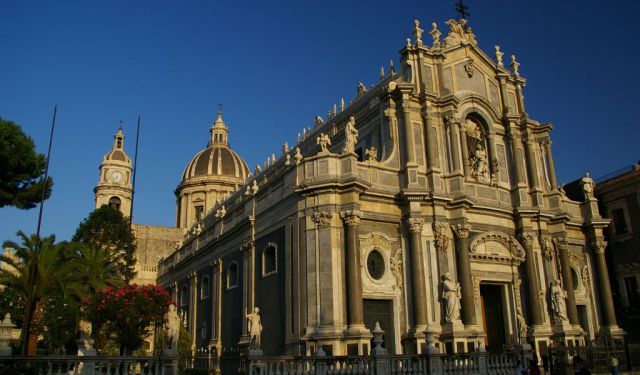
The Church of Santa Chiara, located in the heart of Catania, is a Roman Catholic gem that seamlessly blends historical significance and artistic splendor. Originally established as a convent for the Poor Clares in 1563 through donations by Baron Antonio Paternò and Chiara Statella, the site underwent a complete transformation following the devastating 1693 earthquake. The reconstruction, based on designs by Giuseppe Palazzotto, culminated in 1760.
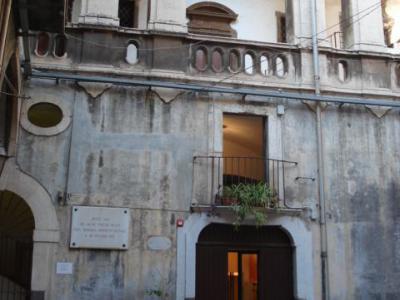
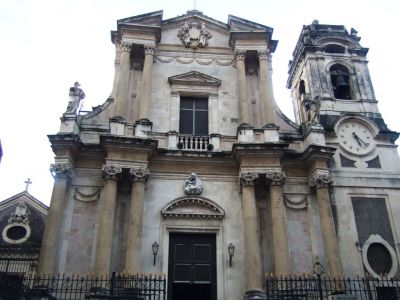
The three-story façade of the church is modest yet elegant, with its defining feature being a loggia with three arches on the third floor. This unique architectural element allowed the nuns to observe the grand annual Procession of Sant'Agata from Sant'Agata alla Fornace to the Cathedral of Catania. The church’s interiors, however, are anything but modest. The polychrome marble flooring and a gilded choir stall above the vestibule showcase the opulence of its design.
Inside, the church houses five richly adorned altars, including the main altar featuring statues of Saint Clare and Saint Francis, along with others dedicated to the Immaculate Conception, San Lorenzo, and the Holy Crucifix. The centerpiece of the octagonal nave is a grand fresco on the ceiling titled Triumph of the Poor Clares (1766), painted by Olivio Sozzi, a masterpiece that adds a celestial touch to the space.
Adjacent to the church is the former monastery, now repurposed as a modern art gallery. Together, the Church of Santa Chiara and its monastery stand as a testament to resilience and artistic ingenuity, offering visitors a unique glimpse into the religious and cultural fabric of 18th-century Catania.
The three-story façade of the church is modest yet elegant, with its defining feature being a loggia with three arches on the third floor. This unique architectural element allowed the nuns to observe the grand annual Procession of Sant'Agata from Sant'Agata alla Fornace to the Cathedral of Catania. The church’s interiors, however, are anything but modest. The polychrome marble flooring and a gilded choir stall above the vestibule showcase the opulence of its design.
Inside, the church houses five richly adorned altars, including the main altar featuring statues of Saint Clare and Saint Francis, along with others dedicated to the Immaculate Conception, San Lorenzo, and the Holy Crucifix. The centerpiece of the octagonal nave is a grand fresco on the ceiling titled Triumph of the Poor Clares (1766), painted by Olivio Sozzi, a masterpiece that adds a celestial touch to the space.
Adjacent to the church is the former monastery, now repurposed as a modern art gallery. Together, the Church of Santa Chiara and its monastery stand as a testament to resilience and artistic ingenuity, offering visitors a unique glimpse into the religious and cultural fabric of 18th-century Catania.
Want to visit this sight? Check out these Self-Guided Walking Tours in Catania. Alternatively, you can download the mobile app "GPSmyCity: Walks in 1K+ Cities" from Apple App Store or Google Play Store. The app turns your mobile device to a personal tour guide and it works offline, so no data plan is needed when traveling abroad.
Download The GPSmyCity App



Church of Saint Chiara on Map
Sight Name: Church of Saint Chiara
Sight Location: Catania, Italy (See walking tours in Catania)
Sight Type: Religious
Sight Location: Catania, Italy (See walking tours in Catania)
Sight Type: Religious
Nearby Sights

Walking Tours in Catania, Italy

Create Your Own Walk in Catania
Creating your own self-guided walk in Catania is easy and fun. Choose the city attractions that you want to see and a walk route map will be created just for you. You can even set your hotel as the start point of the walk.
Discover Catania's Historical Churches on Foot
Just as many other Italian destinations, the Sicilian city of Catania is full of churches, especially in the historic center, where the presence of religious sites is particularly high! A good number of local churches date back centuries, and as such represent marvelous pieces of architecture, adding much character to the area. It is also commonplace to find inside most of them, be it a duomo,... view more
Tour Duration: 1 Hour(s)
Travel Distance: 1.6 Km or 1 Miles
Tour Duration: 1 Hour(s)
Travel Distance: 1.6 Km or 1 Miles
A Walk Through Catania’s Baroque Old Town
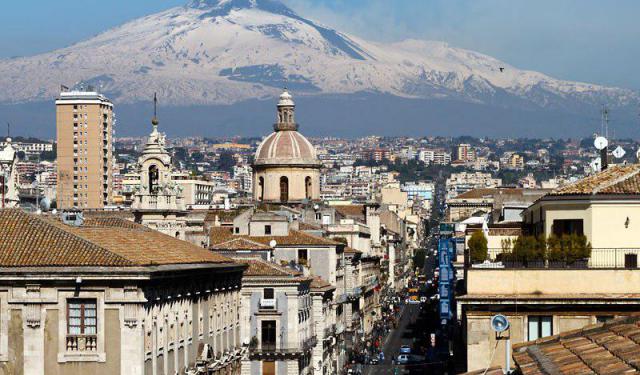
Most cities avoid danger. But here, the danger is part of the experience. Catania settled beside a volcano and stayed. Lava flows, earthquakes, and ash are a living memory here, shaping everything from building materials to local legends.
Catania is one of Sicily’s oldest cities, with a history shaped by colonization, conquest, natural disaster, and repeated renewal. It was founded in 729 BC... view more
Tour Duration: 2 Hour(s)
Travel Distance: 3.8 Km or 2.4 Miles
Catania is one of Sicily’s oldest cities, with a history shaped by colonization, conquest, natural disaster, and repeated renewal. It was founded in 729 BC... view more
Tour Duration: 2 Hour(s)
Travel Distance: 3.8 Km or 2.4 Miles