

Church of Transfiguration, Lviv (must see)
The Church of the Transfiguration in Lviv is one of the most historically layered sacred sites in the Old Town, reflecting centuries of religious change, architectural evolution, and cultural resilience. The church stands on the site of an earlier Roman Catholic church built for the Trinitarian Order between 1703 and 1731. That original structure, designed in a French classicist style with a richly Baroque interior, served the order until 1783, when Emperor Joseph II dissolved the monastery and converted the building into the Lviv University Library.
Its story took a dramatic turn in 1848 during the Spring of Nations, when Austrian artillery fire almost completely destroyed the library and the church that preceded it. The ruins remained for decades until they were given to the Greek Catholic community in 1875. Reconstruction began shortly after, and the new church was completed in 1898. In 1906, Metropolitan Andrey Sheptytsky consecrated the renewed Church of the Transfiguration, establishing it as a major spiritual centre for the Ukrainian Greek Catholic Church.
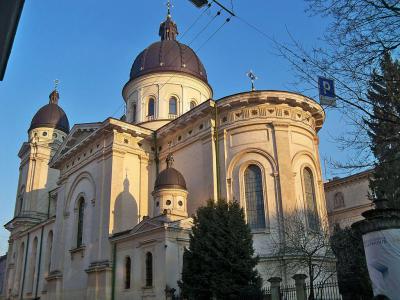
Architecturally, the current building is a three-nave basilica designed by Sylvester Havryshkevych in a Historicist style that merges classical forms with motifs drawn from Ukrainian ecclesiastical tradition. Its façade, framed by two towers and a graceful central dome, gives the church a distinct presence within Lviv’s dense historic fabric. The dome, visible from the interior, creates a bright vertical accent to the otherwise balanced basilica plan.
Inside, the church is richly decorated in accordance with Eastern Rite traditions. The gold iconostasis, crafted by Tadeusz Popiel between 1900 and 1901, dominates the sanctuary. Popiel and Kornylo Ustiyanovych contributed numerous paintings, including the prominent image of the Transfiguration behind the altar. Sculptor Leonard Marconi created twelve expressive statues of the apostles, while the cupola frescoes depict the four evangelists, adding depth and colour to the lofty interior.
The church also holds great symbolic importance: in October 1989, after decades of Soviet repression, it became the first parish in Lviv to return to the Greek Catholic community. Today, it stands not only as an architectural treasure but as a testament to the city’s enduring spiritual heritage.
Its story took a dramatic turn in 1848 during the Spring of Nations, when Austrian artillery fire almost completely destroyed the library and the church that preceded it. The ruins remained for decades until they were given to the Greek Catholic community in 1875. Reconstruction began shortly after, and the new church was completed in 1898. In 1906, Metropolitan Andrey Sheptytsky consecrated the renewed Church of the Transfiguration, establishing it as a major spiritual centre for the Ukrainian Greek Catholic Church.
Architecturally, the current building is a three-nave basilica designed by Sylvester Havryshkevych in a Historicist style that merges classical forms with motifs drawn from Ukrainian ecclesiastical tradition. Its façade, framed by two towers and a graceful central dome, gives the church a distinct presence within Lviv’s dense historic fabric. The dome, visible from the interior, creates a bright vertical accent to the otherwise balanced basilica plan.
Inside, the church is richly decorated in accordance with Eastern Rite traditions. The gold iconostasis, crafted by Tadeusz Popiel between 1900 and 1901, dominates the sanctuary. Popiel and Kornylo Ustiyanovych contributed numerous paintings, including the prominent image of the Transfiguration behind the altar. Sculptor Leonard Marconi created twelve expressive statues of the apostles, while the cupola frescoes depict the four evangelists, adding depth and colour to the lofty interior.
The church also holds great symbolic importance: in October 1989, after decades of Soviet repression, it became the first parish in Lviv to return to the Greek Catholic community. Today, it stands not only as an architectural treasure but as a testament to the city’s enduring spiritual heritage.
Want to visit this sight? Check out these Self-Guided Walking Tours in Lviv. Alternatively, you can download the mobile app "GPSmyCity: Walks in 1K+ Cities" from Apple App Store or Google Play Store. The app turns your mobile device to a personal tour guide and it works offline, so no data plan is needed when traveling abroad.
Download The GPSmyCity App



Church of Transfiguration on Map
Sight Name: Church of Transfiguration
Sight Location: Lviv, Ukraine (See walking tours in Lviv)
Sight Type: Religious
Guide(s) Containing This Sight:
Sight Location: Lviv, Ukraine (See walking tours in Lviv)
Sight Type: Religious
Guide(s) Containing This Sight:
Nearby Sights

Walking Tours in Lviv, Ukraine

Create Your Own Walk in Lviv
Creating your own self-guided walk in Lviv is easy and fun. Choose the city attractions that you want to see and a walk route map will be created just for you. You can even set your hotel as the start point of the walk.
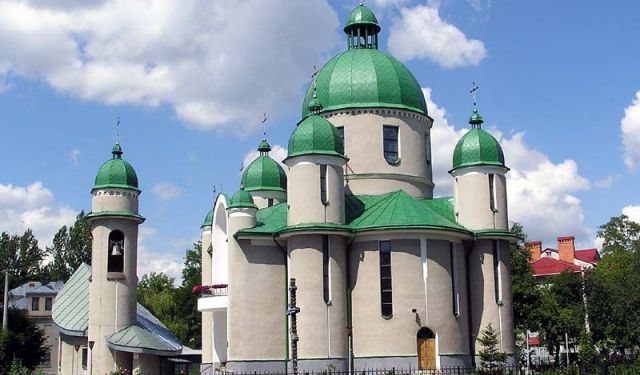
Historical Churches
Lviv is an old beautiful city with many churches in impressive buildings with majestic interiors. Some of the churches are architectural monuments listed as UNESCO World Heritage Site. Take this self-guided tour to see the most beautiful churches of Lviv.
Tour Duration: 1 Hour
Travel Distance: 1.7 Km or 1.1 Miles
Tour Duration: 1 Hour
Travel Distance: 1.7 Km or 1.1 Miles
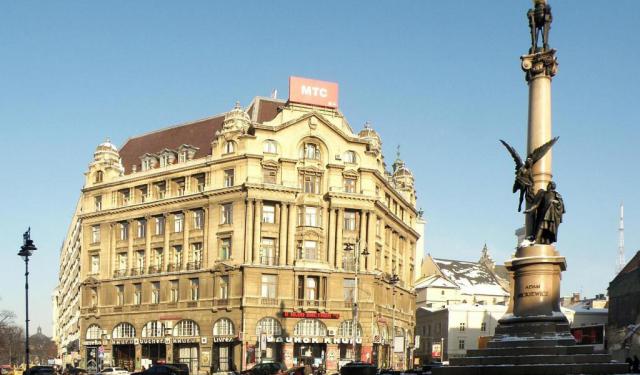
Lviv's Monuments and Statues
The city of Lviv has many historical monuments that make it a living history. Monuments and statues are dedicated to outstanding Ukrainians that contributed to the cultural development of Lviv and played important roles in its history. Take this self-guided tour to discover the rich history of Lviv through its great monuments and statues.
Tour Duration: 2 Hours
Travel Distance: 4.3 Km or 2.7 Miles
Tour Duration: 2 Hours
Travel Distance: 4.3 Km or 2.7 Miles
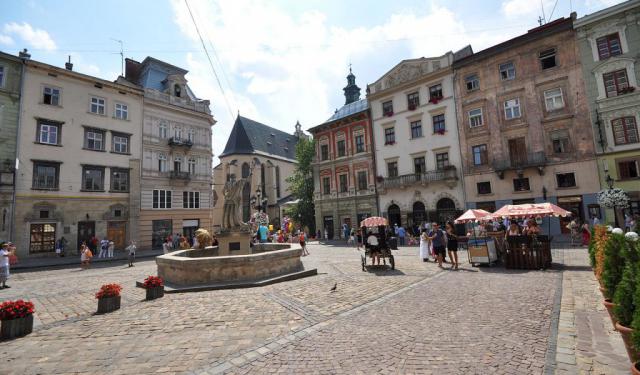
Lviv Old Town Walking Tour
The largest city in the western part of Ukraine, Lviv stands out in its historic beauty and deservedly holds a place on the UNESCO World Heritage List. To find out exactly why, follow this self-guided tour and discover the most notable historic and architectural sights of the city.
Tour Duration: 3 Hours
Travel Distance: 3.6 Km or 2.2 Miles
Tour Duration: 3 Hours
Travel Distance: 3.6 Km or 2.2 Miles
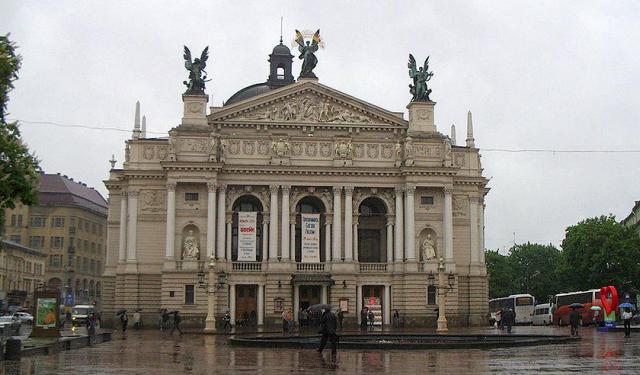
Lviv's Architectural Jewels
Lviv has many historical buildings, such as churches and palaces. The city's architecture will show you the best of European styles from various periods. While walking through the streets of Lviv you will see baroque, renaissance and classic architecture. Take this self-guided tour to explore the majestic architecture of Lviv.
Tour Duration: 2 Hours
Travel Distance: 2.8 Km or 1.7 Miles
Tour Duration: 2 Hours
Travel Distance: 2.8 Km or 1.7 Miles