

Lviv Introduction Walking Tour (Self Guided), Lviv
The largest city in the western part of Ukraine, Lviv stands out in its historic beauty and deservedly holds a place on the UNESCO World Heritage List. To find out exactly why, follow this self-guided tour and discover the most notable historic and architectural sights of the city.
How it works: Download the app "GPSmyCity: Walks in 1K+ Cities" from Apple App Store or Google Play Store to your mobile phone or tablet. The app turns your mobile device into a personal tour guide and its built-in GPS navigation functions guide you from one tour stop to next. The app works offline, so no data plan is needed when traveling abroad.
Lviv Introduction Walking Tour Map
Guide Name: Lviv Introduction Walking Tour
Guide Location: Ukraine » Lviv (See other walking tours in Lviv)
Guide Type: Self-guided Walking Tour (Sightseeing)
# of Attractions: 17
Tour Duration: 3 Hour(s)
Travel Distance: 3.6 Km or 2.2 Miles
Author: vickyc
Sight(s) Featured in This Guide:
Guide Location: Ukraine » Lviv (See other walking tours in Lviv)
Guide Type: Self-guided Walking Tour (Sightseeing)
# of Attractions: 17
Tour Duration: 3 Hour(s)
Travel Distance: 3.6 Km or 2.2 Miles
Author: vickyc
Sight(s) Featured in This Guide:
- Market Square
- City Hall
- Boim Chapel
- Monument to King Danylo
- Bernardine Cathedral and Monastery
- Hlyniany Gate
- Johann Georg Pinsel Museum
- Arsenal Museum
- Dominican Church
- Pharmacy Museum
- Virmens'ka (Armenian) Street
- Armenian Cathedral of Lviv
- Outdoor Arts and Crafts Market (Vernissage)
- Lviv Theatre of Opera and Ballet
- Saint George Monument
- House of Scientists
- Potocki Palace
1) Market Square (must see)
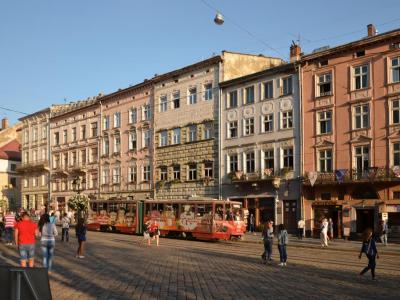
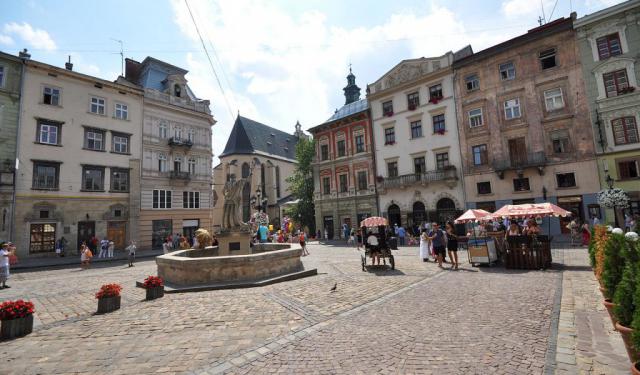
Market Square, known locally as Rynok Square, is the historic heart of Lviv and one of the city’s most atmospheric public spaces. Established in the late 13th century during Lviv’s early development as a major trading hub, it quickly became the centre of commerce, administration, and social life. Over the centuries, the square has witnessed royal visits, merchant gatherings, political events, and everyday market bustle, creating a layered environment where the city’s multicultural past remains visible at every turn.
The square is framed by more than forty townhouses, each with its own architectural character. These façades reflect the influences that shaped Lviv—Gothic, Renaissance, Baroque, and Classicist styles stand side by side. Many of the buildings once belonged to wealthy merchants and noble families, and several have retained their original decorative details, including carved portals, stone reliefs, and distinctive colour schemes. Rynok Square was inscribed on the UNESCO World Heritage List as part of Lviv’s Historic Centre, highlighting its exceptional preservation and cultural significance.
At the centre of the square stands the Lviv City Hall, a landmark with roots dating back to the 14th century. The current building, completed in the 19th century, features a tall observation tower that offers panoramic views of the city’s rooftops and surrounding hills. Four fountains, each depicting a mythological figure—Neptune, Diana, Amphitrite, and Adonis—anchor the corners of the square and add to its historic charm.
Today, Market Square is a lively place where past and present blend seamlessly. Cafés, galleries, and museums occupy the historic townhouses, while seasonal events and street performers bring additional colour to the area. For visitors, it offers a welcoming introduction to Lviv’s heritage, providing a setting that feels both vibrant and timeless.
The square is framed by more than forty townhouses, each with its own architectural character. These façades reflect the influences that shaped Lviv—Gothic, Renaissance, Baroque, and Classicist styles stand side by side. Many of the buildings once belonged to wealthy merchants and noble families, and several have retained their original decorative details, including carved portals, stone reliefs, and distinctive colour schemes. Rynok Square was inscribed on the UNESCO World Heritage List as part of Lviv’s Historic Centre, highlighting its exceptional preservation and cultural significance.
At the centre of the square stands the Lviv City Hall, a landmark with roots dating back to the 14th century. The current building, completed in the 19th century, features a tall observation tower that offers panoramic views of the city’s rooftops and surrounding hills. Four fountains, each depicting a mythological figure—Neptune, Diana, Amphitrite, and Adonis—anchor the corners of the square and add to its historic charm.
Today, Market Square is a lively place where past and present blend seamlessly. Cafés, galleries, and museums occupy the historic townhouses, while seasonal events and street performers bring additional colour to the area. For visitors, it offers a welcoming introduction to Lviv’s heritage, providing a setting that feels both vibrant and timeless.
2) City Hall (must see)
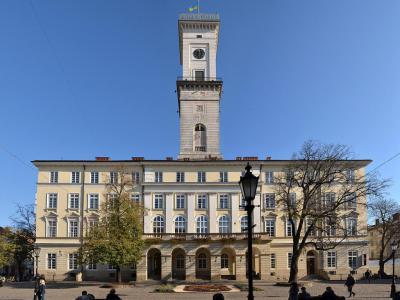
The City Hall in Lviv stands at the heart of Market Square, serving as both an active administrative building and a landmark that reflects centuries of civic life. Its history reaches back to the medieval period, when earlier town halls occupied the same location. The current structure took shape in the early 19th century after a series of reconstructions, adopting a restrained Classicist appearance that contrasted with the richly decorated townhouses surrounding the square. Its four wings frame an inner courtyard, creating a compact ensemble that anchors the historic centre.
One of the hall’s defining features is its 65-metre tower, completed in 1835. The tower’s balanced design and pale stonework make it stand out among the surrounding facades, while its large clock has long served as a reference point for the city. The tower has been restored multiple times, most notably after damage during the 1848 revolutionary events, yet it retains the proportions and character of its original design. Today, it continues to function as a visual symbol of Lviv’s municipal identity.
Inside, the building hosts the Lviv City Council and the mayor’s offices, preserving its role as the core of local governance. Corridors and chambers reflect the administrative function rather than ornate display, offering a contrast to the more decorative public buildings found elsewhere in the city. Despite its working nature, the atmosphere remains linked to the city’s history, with details such as staircases and vaulted passages hinting at earlier architectural layers.
Visitors often come for the climb to the tower’s viewing platform, reached by a long staircase that rewards the effort with sweeping views of the Old Town. From the top, the patchwork of rooftops, church domes, and narrow streets unfolds in every direction, offering one of the most complete panoramas of Lviv. The experience highlights the City Hall’s enduring place at the centre of urban life.
One of the hall’s defining features is its 65-metre tower, completed in 1835. The tower’s balanced design and pale stonework make it stand out among the surrounding facades, while its large clock has long served as a reference point for the city. The tower has been restored multiple times, most notably after damage during the 1848 revolutionary events, yet it retains the proportions and character of its original design. Today, it continues to function as a visual symbol of Lviv’s municipal identity.
Inside, the building hosts the Lviv City Council and the mayor’s offices, preserving its role as the core of local governance. Corridors and chambers reflect the administrative function rather than ornate display, offering a contrast to the more decorative public buildings found elsewhere in the city. Despite its working nature, the atmosphere remains linked to the city’s history, with details such as staircases and vaulted passages hinting at earlier architectural layers.
Visitors often come for the climb to the tower’s viewing platform, reached by a long staircase that rewards the effort with sweeping views of the Old Town. From the top, the patchwork of rooftops, church domes, and narrow streets unfolds in every direction, offering one of the most complete panoramas of Lviv. The experience highlights the City Hall’s enduring place at the centre of urban life.
3) Boim Chapel (must see)
The Boim Chapel in Lviv stands as one of the city’s most distinctive architectural landmarks, offering a striking example of early 17th-century funerary art. Commissioned by the wealthy merchant family of Hungarian origin, the Boims, the chapel was built between 1609 and 1615 as a private mausoleum beside the Latin Cathedral. Its creation coincided with a period when Lviv was a thriving multicultural hub within the Polish-Lithuanian Commonwealth, and its design reflects the artistic influences circulating through the region at the time. Today, the chapel is admired not only for its craftsmanship but also for its role in illustrating the city’s layered past.
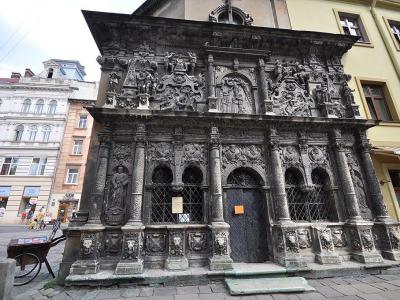
The exterior immediately captures attention with its dark, almost sculptural façade, richly decorated with biblical reliefs, ornamental motifs, and expressive figures. This elaborate stonework, carved by masters believed to be associated with the workshop of Andrzej Bemer, blends Renaissance principles with Mannerist detail. The dominant image of Christ above the entrance, framed by dense iconography, gives the façade its memorable, almost theatrical character. Over the centuries, the stone has darkened naturally, making its intricate carvings even more visually dramatic.
Inside, visitors encounter a more intimate setting, where vibrant frescoes and carved altarpieces illuminate the Boim family’s religious devotion. The interior dome, decorated with detailed scenes and ornamental patterns, draws the eye upward, offering a contrast to the darker tones of the exterior. Many of the interior elements have undergone careful restoration to preserve their original colour and clarity, allowing today’s visitors to appreciate the chapel’s artistic richness.
The chapel’s central figure is George Boim, whose effigy appears in a kneeling position before the altar. His presence reinforces the building’s purpose as both a family mausoleum and a statement of status, typical of the era’s affluent merchant class. As Lviv developed around it, the chapel retained its intimate scale and solemn atmosphere, becoming a familiar landmark for generations.
Today, the Boim Chapel stands as a compact yet powerful testament to Lviv’s Renaissance heritage. Its extraordinary façade and carefully preserved interior make it a highlight for visitors exploring the city’s historic centre, offering a glimpse into the artistic traditions and social history that shaped early modern Lviv.
The exterior immediately captures attention with its dark, almost sculptural façade, richly decorated with biblical reliefs, ornamental motifs, and expressive figures. This elaborate stonework, carved by masters believed to be associated with the workshop of Andrzej Bemer, blends Renaissance principles with Mannerist detail. The dominant image of Christ above the entrance, framed by dense iconography, gives the façade its memorable, almost theatrical character. Over the centuries, the stone has darkened naturally, making its intricate carvings even more visually dramatic.
Inside, visitors encounter a more intimate setting, where vibrant frescoes and carved altarpieces illuminate the Boim family’s religious devotion. The interior dome, decorated with detailed scenes and ornamental patterns, draws the eye upward, offering a contrast to the darker tones of the exterior. Many of the interior elements have undergone careful restoration to preserve their original colour and clarity, allowing today’s visitors to appreciate the chapel’s artistic richness.
The chapel’s central figure is George Boim, whose effigy appears in a kneeling position before the altar. His presence reinforces the building’s purpose as both a family mausoleum and a statement of status, typical of the era’s affluent merchant class. As Lviv developed around it, the chapel retained its intimate scale and solemn atmosphere, becoming a familiar landmark for generations.
Today, the Boim Chapel stands as a compact yet powerful testament to Lviv’s Renaissance heritage. Its extraordinary façade and carefully preserved interior make it a highlight for visitors exploring the city’s historic centre, offering a glimpse into the artistic traditions and social history that shaped early modern Lviv.
4) Monument to King Danylo
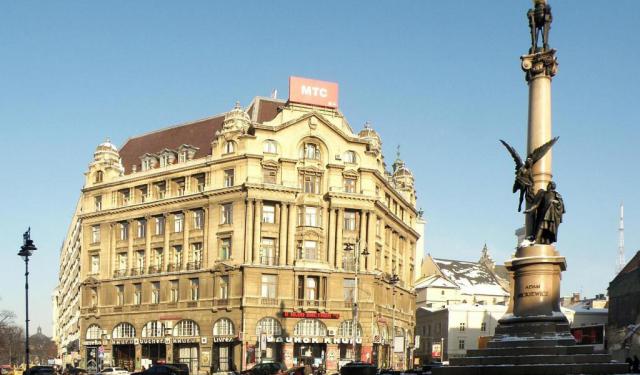
The Monument to King Danylo stands as a prominent landmark in central Lviv, honouring one of the most influential rulers in Ukrainian history. Danylo Romanovych, also known as King Daniel of Galicia, founded the city in the 13th century and later became the first and only crowned King of Rus’. His leadership shaped the political and cultural identity of the region, and the monument serves as a reminder of the city’s medieval origins and its early ambitions.
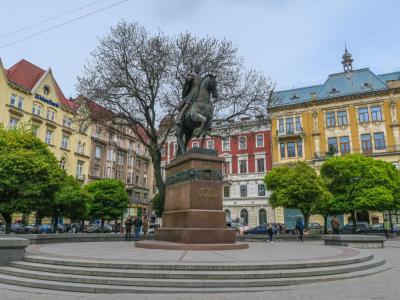
Created by sculptors Vasyl Yarych and Roman Romanovych, and architect Yarema Churylyk, the bronze statue was unveiled in 2001 as part of Lviv’s revitalization efforts. The monument presents King Danylo on horseback, depicted with a steady, commanding posture that reflects his role as both a state-builder and a defender of his lands. The composition balances movement with restraint, giving visitors a sense of the authority and stability the king brought to the region during a turbulent era.
The monument is located near Halytska Square, close to the historic heart of Lviv. Its placement highlights Danylo’s connection to the founding of the city, while the surrounding area—filled with cafés, shops, and historic streets—creates a lively setting for reflection and sightseeing. The statue’s elevated position ensures that it remains a focal point for both residents and visitors passing through the area.
Today, the Monument to King Danylo serves not only as a historical tribute but also as a gathering point within the city. It offers a clear visual link between Lviv’s medieval past and its modern cultural life, making it a meaningful stop for anyone exploring the city’s heritage.
Created by sculptors Vasyl Yarych and Roman Romanovych, and architect Yarema Churylyk, the bronze statue was unveiled in 2001 as part of Lviv’s revitalization efforts. The monument presents King Danylo on horseback, depicted with a steady, commanding posture that reflects his role as both a state-builder and a defender of his lands. The composition balances movement with restraint, giving visitors a sense of the authority and stability the king brought to the region during a turbulent era.
The monument is located near Halytska Square, close to the historic heart of Lviv. Its placement highlights Danylo’s connection to the founding of the city, while the surrounding area—filled with cafés, shops, and historic streets—creates a lively setting for reflection and sightseeing. The statue’s elevated position ensures that it remains a focal point for both residents and visitors passing through the area.
Today, the Monument to King Danylo serves not only as a historical tribute but also as a gathering point within the city. It offers a clear visual link between Lviv’s medieval past and its modern cultural life, making it a meaningful stop for anyone exploring the city’s heritage.
5) Bernardine Cathedral and Monastery (must see)
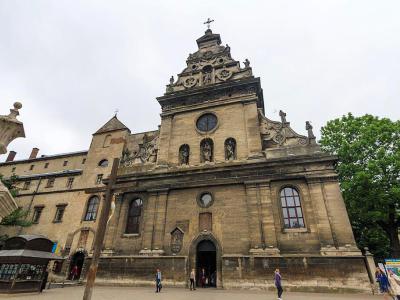
The Bernardine Cathedral and Monastery in Lviv stands as one of the city’s most striking architectural ensembles, shaped by centuries of religious life and cultural exchange. Founded in the early 17th century by the Bernardine monks, the complex reflects Lviv’s position as a crossroads of European influences. Its construction began after earlier wooden structures were destroyed, and the new stone complex was designed to withstand conflicts and fires—an approach that gives the site its fortress-like character. Over time, it became an important spiritual centre, closely connected to the city’s religious communities and traditions.
Architecturally, the cathedral blends Mannerist and early Baroque styles, with a façade rich in sculptural decoration and symbolic motifs. Stone figures of saints, intricate reliefs, and ornamental details introduce visitors to the craftsmanship of Lviv’s artists during its Renaissance and Baroque periods. Inside, the cathedral reveals an atmosphere shaped by dark wooden altars, gilded ornamentation, and frescoes that highlight the artistic sophistication of the monastic workshops. The contrast between the austere exterior and the warm, elaborate interior offers a sense of the spiritual life that once thrived here.
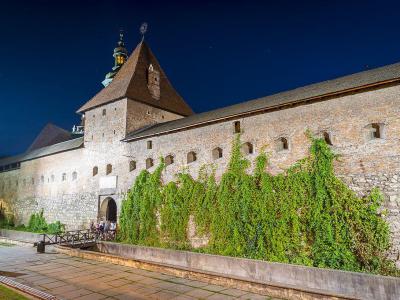
The adjoining monastery, surrounded by high defensive walls and a tower, reinforces the site’s historical role as both a religious house and a place of refuge. Over the centuries, the complex hosted monastic life, scholarly activity, and charitable work, contributing to the cultural development of the surrounding district. Although the monks were forced to leave during the Soviet era, the buildings endured and later reopened to the public.
Today, the cathedral—dedicated to Saint Andrew—and the former monastery form a key landmark in Lviv’s historic centre. Visitors can admire its architectural details, explore the courtyard, and take in the atmosphere of a place that reflects both the resilience and layered history of the city. The complex remains an essential stop for those interested in Lviv’s architectural heritage and religious past.
Architecturally, the cathedral blends Mannerist and early Baroque styles, with a façade rich in sculptural decoration and symbolic motifs. Stone figures of saints, intricate reliefs, and ornamental details introduce visitors to the craftsmanship of Lviv’s artists during its Renaissance and Baroque periods. Inside, the cathedral reveals an atmosphere shaped by dark wooden altars, gilded ornamentation, and frescoes that highlight the artistic sophistication of the monastic workshops. The contrast between the austere exterior and the warm, elaborate interior offers a sense of the spiritual life that once thrived here.
The adjoining monastery, surrounded by high defensive walls and a tower, reinforces the site’s historical role as both a religious house and a place of refuge. Over the centuries, the complex hosted monastic life, scholarly activity, and charitable work, contributing to the cultural development of the surrounding district. Although the monks were forced to leave during the Soviet era, the buildings endured and later reopened to the public.
Today, the cathedral—dedicated to Saint Andrew—and the former monastery form a key landmark in Lviv’s historic centre. Visitors can admire its architectural details, explore the courtyard, and take in the atmosphere of a place that reflects both the resilience and layered history of the city. The complex remains an essential stop for those interested in Lviv’s architectural heritage and religious past.
6) Hlyniany Gate
Hlyniany Gate stands as one of the last surviving pieces of Lviv’s once-formidable defensive network, offering a clear look into the city’s medieval past. Located at the entrance to the Bernardine Monastery complex in the heart of the Old Town, it originally served as a key checkpoint on the eastern side of Lviv. Its presence today helps illustrate how closely religious, civic, and military functions were intertwined in earlier centuries.
Although the first gate on this site dates back to the 15th century, the structure visitors see now reflects a redesign completed in 1618. This late Renaissance iteration strengthened Lviv’s defensive line at a time when the city faced repeated threats from Western European armies. Its solid walls, controlled entryway, and strategic placement highlight the practical demands of early modern urban fortification.
The gate’s current appearance is shaped by extensive reconstruction carried out between 1967 and 1977. During this project, architectural elements were carefully restored, and features such as an outer moat and wooden galleries were added to recreate the site’s historic character. These additions help visitors better imagine the gate as it once functioned within Lviv’s broader system of walls and defensive outposts.
Today, Hlyniany Gate is not only a historical reminder but also a charming visual landmark, often decorated with a seasonal floral clock that draws photographers and passersby. Walking through the gate and across the reconstructed moat provides a brief but atmospheric encounter with Lviv’s layered past. As an open-air site, it can be freely visited at any time, making it an easy and rewarding stop for anyone exploring the Old Town.
Although the first gate on this site dates back to the 15th century, the structure visitors see now reflects a redesign completed in 1618. This late Renaissance iteration strengthened Lviv’s defensive line at a time when the city faced repeated threats from Western European armies. Its solid walls, controlled entryway, and strategic placement highlight the practical demands of early modern urban fortification.
The gate’s current appearance is shaped by extensive reconstruction carried out between 1967 and 1977. During this project, architectural elements were carefully restored, and features such as an outer moat and wooden galleries were added to recreate the site’s historic character. These additions help visitors better imagine the gate as it once functioned within Lviv’s broader system of walls and defensive outposts.
Today, Hlyniany Gate is not only a historical reminder but also a charming visual landmark, often decorated with a seasonal floral clock that draws photographers and passersby. Walking through the gate and across the reconstructed moat provides a brief but atmospheric encounter with Lviv’s layered past. As an open-air site, it can be freely visited at any time, making it an easy and rewarding stop for anyone exploring the Old Town.
7) Johann Georg Pinsel Museum (must see)
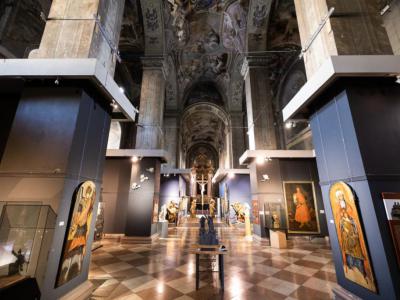
Housed in the former Church of the Clarissine Sisters, the Johann Georg Pinsel Museum presents the work of one of the most distinguished sculptors of 18th-century Galicia. Johann Georg Pinsel, active in the mid-1700s, is celebrated for an expressive Baroque style defined by elongated figures, dramatic movement, and powerful emotional depth. Although his biography remains largely unknown, his surviving sculptures showcase a level of mastery that influenced the region's artistic character. The museum was created to preserve this legacy, assembling pieces that once adorned churches and monasteries across Western Ukraine.
The building itself enriches the visit. Built in the early 1600s as part of the Clarissine convent, the former church reflects the architectural sensibilities of the period, with a simple façade and restrained interior. This understated backdrop creates an effective contrast with Pinsel’s energetic carvings, allowing visitors to view the works in an atmosphere that echoes their original sacred settings.
Inside, visitors encounter a striking collection of wooden sculptures, many originally crafted for church altars. These works highlight Pinsel’s hallmark features: twisting silhouettes, deeply cut drapery, and a vivid emotional intensity that conveys moments of spiritual drama. The museum’s conservation efforts make it possible to appreciate the fine craftsmanship, from subtle detailing to dynamic, sweeping forms.
The museum also plays a key role in renewing international interest in Pinsel. Recent exhibitions in prominent European institutions have brought wider recognition to his contribution to late Baroque art. Experiencing his sculptures in Lviv offers an essential connection to their historical and cultural roots.
A visit to the Johann Georg Pinsel Museum provides a focused introduction to a unique artistic tradition within Ukrainian heritage, combining historical context, masterful sculpture, and a thoughtfully preserved setting.
The building itself enriches the visit. Built in the early 1600s as part of the Clarissine convent, the former church reflects the architectural sensibilities of the period, with a simple façade and restrained interior. This understated backdrop creates an effective contrast with Pinsel’s energetic carvings, allowing visitors to view the works in an atmosphere that echoes their original sacred settings.
Inside, visitors encounter a striking collection of wooden sculptures, many originally crafted for church altars. These works highlight Pinsel’s hallmark features: twisting silhouettes, deeply cut drapery, and a vivid emotional intensity that conveys moments of spiritual drama. The museum’s conservation efforts make it possible to appreciate the fine craftsmanship, from subtle detailing to dynamic, sweeping forms.
The museum also plays a key role in renewing international interest in Pinsel. Recent exhibitions in prominent European institutions have brought wider recognition to his contribution to late Baroque art. Experiencing his sculptures in Lviv offers an essential connection to their historical and cultural roots.
A visit to the Johann Georg Pinsel Museum provides a focused introduction to a unique artistic tradition within Ukrainian heritage, combining historical context, masterful sculpture, and a thoughtfully preserved setting.
8) Arsenal Museum
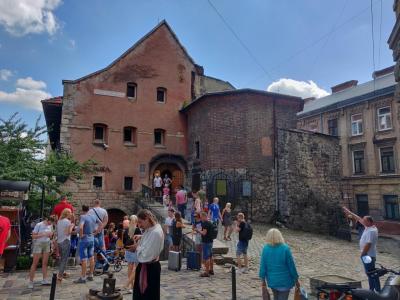
The Arsenal Museum, located in Lviv’s historic centre, presents a focused look at the city’s long relationship with warfare, craftsmanship, and defence. Housed in a 16th-century arsenal building, it originally served as part of Lviv’s fortified system, where weapons were produced, stored, and repaired. Its thick stone walls and simple exterior reflect the practical needs of the era, when the city faced constant military pressure from regional powers. Over the centuries, the structure endured fires, reconstructions, and changing political circumstances, yet it retained its role as a key defensive facility until the end of the 18th century.
Inside, the museum highlights weaponry from different periods, offering a concise survey of European and Asian arms. Visitors encounter swords, crossbows, early firearms, and pieces of armour that illustrate how military technology evolved across centuries. The displays also underline the city’s multicultural past, showing items connected to Polish, Ukrainian, Ottoman, and Austrian traditions. These objects contextualise Lviv’s strategic position on important trade and military routes.
Another section explores the role of local craftsmen, who played a major part in producing weapons and protective gear. The detail visible in the metalwork and decorative elements shows that even utilitarian objects bore artistic value. This blend of function and design helps visitors appreciate the skills that supported the city’s defence and contributed to its economic life.
The museum’s compact layout allows for a clear narrative, making it easy to follow the chronological development of arms and armour. While the subject matter is centred on conflict, the presentation emphasises history rather than spectacle. For visitors interested in Lviv’s military heritage or the broader story of European fortifications, the Arsenal Museum offers a concise, well-structured introduction to the city’s defensive past.
Inside, the museum highlights weaponry from different periods, offering a concise survey of European and Asian arms. Visitors encounter swords, crossbows, early firearms, and pieces of armour that illustrate how military technology evolved across centuries. The displays also underline the city’s multicultural past, showing items connected to Polish, Ukrainian, Ottoman, and Austrian traditions. These objects contextualise Lviv’s strategic position on important trade and military routes.
Another section explores the role of local craftsmen, who played a major part in producing weapons and protective gear. The detail visible in the metalwork and decorative elements shows that even utilitarian objects bore artistic value. This blend of function and design helps visitors appreciate the skills that supported the city’s defence and contributed to its economic life.
The museum’s compact layout allows for a clear narrative, making it easy to follow the chronological development of arms and armour. While the subject matter is centred on conflict, the presentation emphasises history rather than spectacle. For visitors interested in Lviv’s military heritage or the broader story of European fortifications, the Arsenal Museum offers a concise, well-structured introduction to the city’s defensive past.
9) Dominican Church (must see)
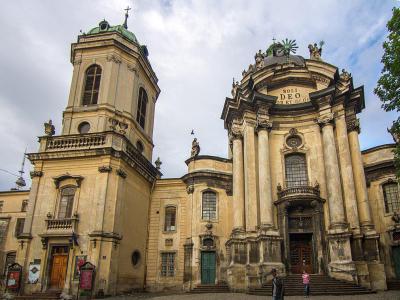
The Dominican Church in Lviv, officially known as the Church of the Holy Eucharist, is one of the city’s most recognisable Baroque landmarks. Its origins trace back to the 13th century, when the first wooden Dominican monastery was founded under the protection of King Lev. That early structure evolved over time, but the present church emerged in the mid-18th century, built between 1749 and 1764. Designed by architect Jan de Witte, its sweeping curves and monumental dome reflect the influence of Central European Baroque, giving the building a commanding presence within Lviv’s historic centre.
The church’s defining feature is its grand elliptical shape, crowned by a high dome that rises above the old town rooftops. A dramatic façade, accented with columns and sculptural details by Sebastian Fesinger, introduces visitors to an interior known for its spaciousness and balanced proportions. The play of light against pale walls and gilded accents creates a calm, contemplative atmosphere, aligning with the church’s long liturgical tradition.
Over the centuries, the Dominican Church has shifted roles, mirroring Lviv’s complex history. It functioned as a Roman Catholic sanctuary for generations, survived political transitions, and was converted into a Museum of Religion during the Soviet era. After Ukraine regained independence, the building resumed its religious purpose, becoming the Church of the Holy Eucharist under the Ukrainian Greek Catholic Church.
Today, the church attracts visitors who appreciate both its architecture and its layered past. Its large dome offers excellent acoustics for concerts and cultural events, while its location within Lviv’s UNESCO-listed historic area makes it an essential stop for those exploring the city’s diverse architectural heritage.
The church’s defining feature is its grand elliptical shape, crowned by a high dome that rises above the old town rooftops. A dramatic façade, accented with columns and sculptural details by Sebastian Fesinger, introduces visitors to an interior known for its spaciousness and balanced proportions. The play of light against pale walls and gilded accents creates a calm, contemplative atmosphere, aligning with the church’s long liturgical tradition.
Over the centuries, the Dominican Church has shifted roles, mirroring Lviv’s complex history. It functioned as a Roman Catholic sanctuary for generations, survived political transitions, and was converted into a Museum of Religion during the Soviet era. After Ukraine regained independence, the building resumed its religious purpose, becoming the Church of the Holy Eucharist under the Ukrainian Greek Catholic Church.
Today, the church attracts visitors who appreciate both its architecture and its layered past. Its large dome offers excellent acoustics for concerts and cultural events, while its location within Lviv’s UNESCO-listed historic area makes it an essential stop for those exploring the city’s diverse architectural heritage.
10) Pharmacy Museum (must see)
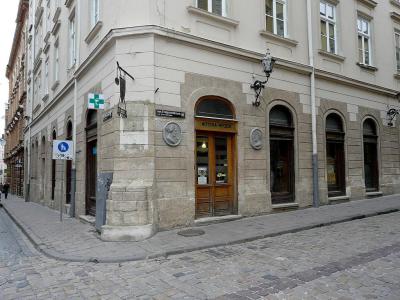
The Pharmacy Museum in Lviv offers an engaging look at the history of medical practice in a city long known for its intellectual and commercial traditions. Established in 1966 inside an 18th-century apothecary, it occupies a building that has functioned as a working pharmacy since 1735. This continuity gives the museum a distinctive atmosphere, where the past feels closely connected to the routines of daily life that once unfolded behind its counters.
Inside, visitors find a series of carefully arranged rooms that trace the evolution of pharmaceutical work in Galicia. Original shelves, jars, mortars, and scales illustrate how medicines were prepared before industrial production became widespread. The historic laboratory, preserved with its wooden furnishings and equipment, reveals the precise and often labor-intensive methods used by early pharmacists. These displays highlight both the scientific and artisanal aspects of the profession, showing how remedies were crafted from herbs, minerals, and imported ingredients.
Another part of the museum explores the commercial side of pharmacy, presenting rare books, trade records, and decorative containers. These objects help explain the importance of Lviv as a centre of medical knowledge and trade within the Polish–Lithuanian Commonwealth and later under the Habsburgs. The collection also includes examples of pharmaceutical symbolism—such as serpents, cups, and allegorical figures—that once signaled trust and expertise to customers.
A visit concludes in the building’s cellar, where vaulted rooms and reconstructed storage spaces offer a quiet contrast to the main exhibition halls. Here, visitors can see how valuable ingredients were kept secure and stable before refrigeration. Together, these spaces create a clear and accessible narrative of the apothecary’s role in Lviv’s cultural and scientific life, making the museum a thoughtful stop for anyone interested in the city’s layered past.
Inside, visitors find a series of carefully arranged rooms that trace the evolution of pharmaceutical work in Galicia. Original shelves, jars, mortars, and scales illustrate how medicines were prepared before industrial production became widespread. The historic laboratory, preserved with its wooden furnishings and equipment, reveals the precise and often labor-intensive methods used by early pharmacists. These displays highlight both the scientific and artisanal aspects of the profession, showing how remedies were crafted from herbs, minerals, and imported ingredients.
Another part of the museum explores the commercial side of pharmacy, presenting rare books, trade records, and decorative containers. These objects help explain the importance of Lviv as a centre of medical knowledge and trade within the Polish–Lithuanian Commonwealth and later under the Habsburgs. The collection also includes examples of pharmaceutical symbolism—such as serpents, cups, and allegorical figures—that once signaled trust and expertise to customers.
A visit concludes in the building’s cellar, where vaulted rooms and reconstructed storage spaces offer a quiet contrast to the main exhibition halls. Here, visitors can see how valuable ingredients were kept secure and stable before refrigeration. Together, these spaces create a clear and accessible narrative of the apothecary’s role in Lviv’s cultural and scientific life, making the museum a thoughtful stop for anyone interested in the city’s layered past.
11) Virmens'ka (Armenian) Street
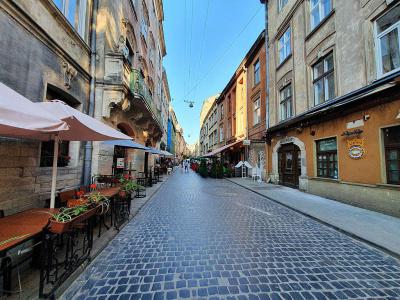
Virmens’ka Street is one of the most atmospheric lanes in Lviv’s Old Town, known for its strong Armenian heritage and its layered cultural history. The street developed around the Armenian community, which settled here in the 14th century and played an important role in the city’s trade and civic life. Many of the buildings still preserve elements of this early period, giving the area a distinctive character that sets it apart from surrounding neighbourhoods.
The architectural landscape along Virmens’ka Street reflects centuries of artistic influence. Renaissance and Baroque façades stand alongside older Gothic fragments, while courtyards and arcades hint at the street’s medieval urban plan. Much of this heritage centres on the Armenian Cathedral complex, one of Lviv’s oldest surviving sacred sites and a landmark known for its stone carvings and quiet cloisters. Nearby houses, some dating to the 16th and 17th centuries, retain original details that illustrate the craftsmanship of the city’s multicultural guilds.
Today, Virmens’ka Street is a lively destination where historical depth blends with modern activity. Cafés, small galleries, and artisan shops fill the ground floors of historic buildings, creating a setting where visitors can experience Lviv’s past without stepping away from its contemporary culture. The street’s narrow width and preserved architecture also contribute to its intimate, pedestrian-friendly atmosphere.
As visitors follow Virmens’ka Street toward the heart of the Old Town, they encounter a series of small courtyards and passages that reveal the district’s layered history. These spaces offer a quieter perspective on the Armenian quarter, encouraging exploration beyond the main path. The combination of architectural heritage, cultural significance, and everyday life makes Virmens’ka Street a memorable part of any visit to Lviv.
The architectural landscape along Virmens’ka Street reflects centuries of artistic influence. Renaissance and Baroque façades stand alongside older Gothic fragments, while courtyards and arcades hint at the street’s medieval urban plan. Much of this heritage centres on the Armenian Cathedral complex, one of Lviv’s oldest surviving sacred sites and a landmark known for its stone carvings and quiet cloisters. Nearby houses, some dating to the 16th and 17th centuries, retain original details that illustrate the craftsmanship of the city’s multicultural guilds.
Today, Virmens’ka Street is a lively destination where historical depth blends with modern activity. Cafés, small galleries, and artisan shops fill the ground floors of historic buildings, creating a setting where visitors can experience Lviv’s past without stepping away from its contemporary culture. The street’s narrow width and preserved architecture also contribute to its intimate, pedestrian-friendly atmosphere.
As visitors follow Virmens’ka Street toward the heart of the Old Town, they encounter a series of small courtyards and passages that reveal the district’s layered history. These spaces offer a quieter perspective on the Armenian quarter, encouraging exploration beyond the main path. The combination of architectural heritage, cultural significance, and everyday life makes Virmens’ka Street a memorable part of any visit to Lviv.
12) Armenian Cathedral of Lviv (must see)
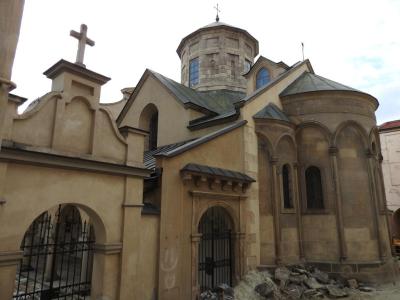
The Armenian Cathedral of Lviv stands among the city’s oldest and most atmospheric religious landmarks, reflecting the deep-rooted presence of the Armenian community that settled in the city in the 13th century. Completed in the 1360s, the cathedral originally served as the spiritual centre of Armenians who played a significant role in Lviv’s trade networks and urban life. Its early foundation, medieval layout, and long continuity of worship make it one of the few places in the city where visitors can still sense the layered history of a multicultural past.
Architecturally, the cathedral seamlessly blends influences from across continents. Its oldest section, the northern nave, draws inspiration from Armenian churches of Crimea and the Caucasus, giving it a compact, fortress-like appearance. Later additions—particularly the 15th-century southern nave and the Renaissance-era sacristy—introduced European elements while preserving the site’s distinctive identity. Fragile frescoes painted by Jan Henryk Rosen in the early 20th century add another chapter to its evolving character, known for their expressive colours and dramatic symbolism.
The courtyard and surrounding complex contribute to the cathedral’s quiet, enclosed atmosphere. The arcaded gallery, dating from the 17th century, frames a small space where stone crosses, memorial slabs, and fragments of earlier structures offer glimpses into generations of community life. Nearby, the former Armenian Archbishop’s Palace and bell tower broaden the picture of a once-thriving quarter centred on faith, learning, and craftsmanship.
Today, the Armenian Cathedral remains an active place of worship for the Armenian Apostolic Church, and its doors are open to visitors interested in Lviv’s cultural mosaic. The mix of medieval architecture, artistic layers, and living tradition provides insight into the city’s historical openness, making the cathedral a rewarding stop for anyone exploring Lviv’s diverse heritage.
Architecturally, the cathedral seamlessly blends influences from across continents. Its oldest section, the northern nave, draws inspiration from Armenian churches of Crimea and the Caucasus, giving it a compact, fortress-like appearance. Later additions—particularly the 15th-century southern nave and the Renaissance-era sacristy—introduced European elements while preserving the site’s distinctive identity. Fragile frescoes painted by Jan Henryk Rosen in the early 20th century add another chapter to its evolving character, known for their expressive colours and dramatic symbolism.
The courtyard and surrounding complex contribute to the cathedral’s quiet, enclosed atmosphere. The arcaded gallery, dating from the 17th century, frames a small space where stone crosses, memorial slabs, and fragments of earlier structures offer glimpses into generations of community life. Nearby, the former Armenian Archbishop’s Palace and bell tower broaden the picture of a once-thriving quarter centred on faith, learning, and craftsmanship.
Today, the Armenian Cathedral remains an active place of worship for the Armenian Apostolic Church, and its doors are open to visitors interested in Lviv’s cultural mosaic. The mix of medieval architecture, artistic layers, and living tradition provides insight into the city’s historical openness, making the cathedral a rewarding stop for anyone exploring Lviv’s diverse heritage.
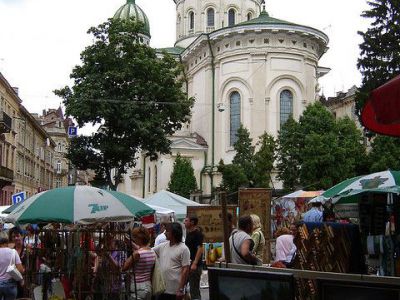
13) Outdoor Arts and Crafts Market (Vernissage)
The Vernissage in Lviv is an open-air arts and crafts market that reflects the city’s long tradition of craftsmanship and cultural exchange. Located near the historic Old Town, it developed in the late Soviet period as an informal gathering place for local artisans and quickly evolved into a recognised marketplace. Today, it remains one of the most characteristic spots in the city, offering visitors an opportunity to experience Lviv’s creative spirit in a lively, outdoor setting.
The market is known for its wide variety of handmade items, ranging from traditional embroidery and woodcarving to ceramics, leather goods, and contemporary crafts. Many of the vendors are artisans who continue family traditions, bringing techniques passed down through generations. Their stalls showcase both classic motifs and modern interpretations, illustrating how local craftsmanship has adapted over time while staying rooted in regional identity. This combination of heritage and innovation gives the Vernissage its distinctive atmosphere.
Visitors will also find an assortment of paintings, prints, and small artworks created by local painters and designers. These pieces often feature scenes of Lviv’s architecture, landscapes, and folklore, offering travellers a way to take home a visual memory of the city. The open-air setting adds to the experience, as artists often work on site, allowing passersby to observe the creative process.
Beyond shopping, the Vernissage serves as a social space where residents and visitors mingle. The market’s location near major attractions makes it a natural stop during a walk through the centre, and its vibrant atmosphere encourages visitors to browse at a relaxed pace. For those interested in local craftsmanship, the Vernissage offers a straightforward and engaging introduction to Lviv’s artistic traditions.
The market is known for its wide variety of handmade items, ranging from traditional embroidery and woodcarving to ceramics, leather goods, and contemporary crafts. Many of the vendors are artisans who continue family traditions, bringing techniques passed down through generations. Their stalls showcase both classic motifs and modern interpretations, illustrating how local craftsmanship has adapted over time while staying rooted in regional identity. This combination of heritage and innovation gives the Vernissage its distinctive atmosphere.
Visitors will also find an assortment of paintings, prints, and small artworks created by local painters and designers. These pieces often feature scenes of Lviv’s architecture, landscapes, and folklore, offering travellers a way to take home a visual memory of the city. The open-air setting adds to the experience, as artists often work on site, allowing passersby to observe the creative process.
Beyond shopping, the Vernissage serves as a social space where residents and visitors mingle. The market’s location near major attractions makes it a natural stop during a walk through the centre, and its vibrant atmosphere encourages visitors to browse at a relaxed pace. For those interested in local craftsmanship, the Vernissage offers a straightforward and engaging introduction to Lviv’s artistic traditions.
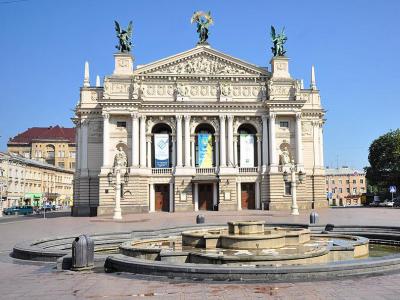
14) Lviv Theatre of Opera and Ballet (must see)
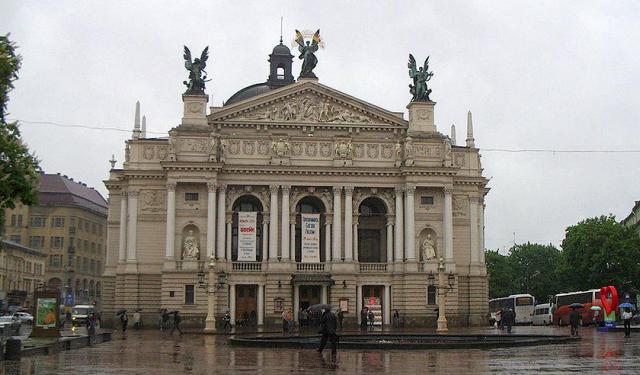
The Lviv Theatre of Opera and Ballet stands as one of the city’s most distinguished landmarks, celebrated for its architectural beauty and its long tradition of performing arts. Completed in 1900, the building was designed by architect Zygmunt Gorgolewski during a period when Lviv was part of the Austro-Hungarian Empire, and it quickly became a cultural emblem. Its placement on what is now Svobody Avenue created a prominent focal point for the city, reflecting Lviv’s ambition to establish itself as a major artistic centre in Eastern Europe.
The theatre’s exterior blends Neo-Renaissance and Neo-Baroque influences, expressed through sculptural decoration, columns, and allegorical figures representing themes such as drama, music, and glory. Bronze statues crown the roofline, adding to the sense of grandeur. Inside, visitors encounter an equally impressive interior marked by marble, gilded details, and frescoes. The main hall, with its red-and-gold palette and opulent chandelier, is designed to enhance acoustics and create a refined atmosphere for performances.
As the home of the Lviv Opera, the building has hosted countless productions, from classical operas and ballets to contemporary works. It has long served as a defining musical institution in the region, nurturing local talent and welcoming international performers. The theatre also contributes to Lviv’s broader artistic identity, drawing audiences who appreciate both its architectural heritage and its performance traditions.
Today, the Lviv Theatre of Opera and Ballet remains a highlight for visitors exploring the city’s historical core. Even without attending a performance, travellers can admire the façade, explore nearby squares, and experience the lively atmosphere of Svobody Avenue. For those who do choose to attend a show, the theatre offers a memorable blend of history, craftsmanship, and cultural expression.
The theatre’s exterior blends Neo-Renaissance and Neo-Baroque influences, expressed through sculptural decoration, columns, and allegorical figures representing themes such as drama, music, and glory. Bronze statues crown the roofline, adding to the sense of grandeur. Inside, visitors encounter an equally impressive interior marked by marble, gilded details, and frescoes. The main hall, with its red-and-gold palette and opulent chandelier, is designed to enhance acoustics and create a refined atmosphere for performances.
As the home of the Lviv Opera, the building has hosted countless productions, from classical operas and ballets to contemporary works. It has long served as a defining musical institution in the region, nurturing local talent and welcoming international performers. The theatre also contributes to Lviv’s broader artistic identity, drawing audiences who appreciate both its architectural heritage and its performance traditions.
Today, the Lviv Theatre of Opera and Ballet remains a highlight for visitors exploring the city’s historical core. Even without attending a performance, travellers can admire the façade, explore nearby squares, and experience the lively atmosphere of Svobody Avenue. For those who do choose to attend a show, the theatre offers a memorable blend of history, craftsmanship, and cultural expression.
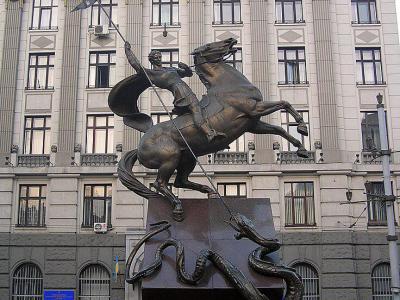
15) Saint George Monument
The Monument to Saint George the Dragon Slayer on Hryhorenka Square brings a bold and modern interpretation of the legendary tale to one of Lviv’s busiest public spaces. Installed in 1999, the sculpture quickly became a local landmark, adding a dynamic focal point to the square and offering a contemporary counterpoint to the city’s older religious and historical monuments. Its central location makes it easy to notice, and many visitors pass through the area on their way to nearby shops, cafés, and transit points.
The monument portrays Saint George in a moment of intense motion, capturing the instant in which he conquers the dragon. Unlike more traditional depictions found in churches or older memorials, this work uses expressive, angular forms and a strong sense of movement to retell the familiar legend in a modern artistic language. The sculptors, Andriy and Volodymyr Sukhorski, created the piece using bronze, giving it a dark, textured surface that emphasizes the contrast between the saint’s poised figure and the twisting form of the dragon.
Its placement on Hryhorenka Square allows the monument to be viewed from many angles, and its sculptural lines gain a different character depending on the light. The square’s open layout helps highlight the monument’s striking silhouette, turning it into a natural visual anchor in an otherwise contemporary urban setting. Visitors often stop to observe the monument up close, drawn by its energetic design.
Today, the Monument to Saint George the Dragon Slayer serves as a reminder of enduring themes—courage, justice, and protection—presented through modern artistry. It adds both cultural depth and visual interest to Hryhorenka Square, making it a worthwhile stop for those exploring Lviv’s diverse public art.
The monument portrays Saint George in a moment of intense motion, capturing the instant in which he conquers the dragon. Unlike more traditional depictions found in churches or older memorials, this work uses expressive, angular forms and a strong sense of movement to retell the familiar legend in a modern artistic language. The sculptors, Andriy and Volodymyr Sukhorski, created the piece using bronze, giving it a dark, textured surface that emphasizes the contrast between the saint’s poised figure and the twisting form of the dragon.
Its placement on Hryhorenka Square allows the monument to be viewed from many angles, and its sculptural lines gain a different character depending on the light. The square’s open layout helps highlight the monument’s striking silhouette, turning it into a natural visual anchor in an otherwise contemporary urban setting. Visitors often stop to observe the monument up close, drawn by its energetic design.
Today, the Monument to Saint George the Dragon Slayer serves as a reminder of enduring themes—courage, justice, and protection—presented through modern artistry. It adds both cultural depth and visual interest to Hryhorenka Square, making it a worthwhile stop for those exploring Lviv’s diverse public art.
16) House of Scientists
The House of Scientists is one of the city’s most distinguished 19th-century landmarks, known for its refined interiors and long association with Lviv’s academic and cultural community. Completed in the early 1890s, it was originally built as a meeting place for the local noble casino and was later adopted by the city’s scientific societies, giving the building its present name. Today, it stands just off Lystopadovoho Chynu Street and remains a favourite stop for visitors drawn to its blend of historic elegance and lively cultural atmosphere.
Designed by the Austrian architectural firm Fellner & Helmer, the building reflects the style and sophistication that defined many of their theatre and civic projects across Central Europe. Its façade combines Neo-Baroque and Neo-Renaissance features, but it is the interior that leaves the strongest impression. Ornate woodwork, sweeping staircases, and richly decorated halls create a setting that once hosted aristocratic gatherings and later scientific lectures, concerts, and social events.
One of the highlights is the grand wooden staircase, famous for its carved balustrades and warm, polished surface that catches the light from the hall’s tall windows. The surrounding rooms—each differently styled—showcase detailed stucco work, decorative fireplaces, and chandeliers that evoke the building’s late 19th-century character. These interiors often serve as filming and photography locations, adding to the site’s contemporary relevance.
Visitors today can explore the main halls and enjoy the quiet elegance that has been carefully preserved over the decades. Occasional exhibitions, concerts, and cultural programmes are held inside, while the building’s central location makes it easy to include in a wider tour of Lviv’s architectural and historical sites. The House of Scientists offers a close look at the city’s former social life and remains an inviting stop for those interested in culture, craftsmanship, and the ambience of Lviv’s past.
Designed by the Austrian architectural firm Fellner & Helmer, the building reflects the style and sophistication that defined many of their theatre and civic projects across Central Europe. Its façade combines Neo-Baroque and Neo-Renaissance features, but it is the interior that leaves the strongest impression. Ornate woodwork, sweeping staircases, and richly decorated halls create a setting that once hosted aristocratic gatherings and later scientific lectures, concerts, and social events.
One of the highlights is the grand wooden staircase, famous for its carved balustrades and warm, polished surface that catches the light from the hall’s tall windows. The surrounding rooms—each differently styled—showcase detailed stucco work, decorative fireplaces, and chandeliers that evoke the building’s late 19th-century character. These interiors often serve as filming and photography locations, adding to the site’s contemporary relevance.
Visitors today can explore the main halls and enjoy the quiet elegance that has been carefully preserved over the decades. Occasional exhibitions, concerts, and cultural programmes are held inside, while the building’s central location makes it easy to include in a wider tour of Lviv’s architectural and historical sites. The House of Scientists offers a close look at the city’s former social life and remains an inviting stop for those interested in culture, craftsmanship, and the ambience of Lviv’s past.
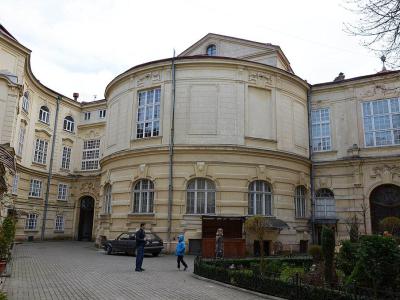
17) Potocki Palace (must see)
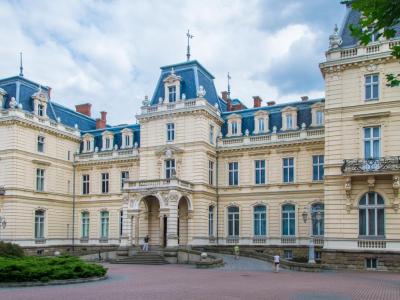
The Potocki Palace is one of Lviv’s most distinguished aristocratic residences, reflecting the wealth and ambition of the influential Potocki family in the 19th century. Commissioned by Count Alfred II Potocki, the building was designed in the French Neo-Renaissance style, drawing inspiration from grand urban palaces of Paris. Construction began in the late 1880s under architect Julian Cybulski, with contributions from French architect Louis Dauvergne, who helped shape its elegant façade, mansard roof, and refined decorative program. From the start, the palace was intended not as a country estate but as an opulent city residence suitable for hosting major social and political gatherings.
The exterior is dominated by symmetrical forms and sculptural details, including pilasters, cartouches, and ornate window frames. A ceremonial courtyard leads to the main entrance, where visiting dignitaries once arrived by carriage. The palace stands out in Lviv’s architectural landscape for its distinctly French character, offering a contrast to the city’s Baroque churches and Austro-Hungarian public buildings. Its construction marked a moment when Lviv’s elite sought to align the city with European cultural trends.
Inside, the palace originally featured richly decorated salons, ballrooms, and reception halls adorned with stucco, gilding, and large mirrors. While some interiors were altered over time, several historic rooms have been preserved, offering a glimpse into late-19th-century aristocratic life. Oil paintings, carved woodwork, and decorative fireplaces help retain the atmosphere of a grand private residence.
Today, the Potocki Palace houses part of the Lviv Art Gallery’s collection, showcasing European art from various periods. Temporary exhibitions and cultural events frequently take place here, adding a contemporary dimension to the historic setting. Visitors can explore both the art and the refined architecture, experiencing one of Lviv’s most elegant landmarks in a setting that blends heritage with active cultural use.
The exterior is dominated by symmetrical forms and sculptural details, including pilasters, cartouches, and ornate window frames. A ceremonial courtyard leads to the main entrance, where visiting dignitaries once arrived by carriage. The palace stands out in Lviv’s architectural landscape for its distinctly French character, offering a contrast to the city’s Baroque churches and Austro-Hungarian public buildings. Its construction marked a moment when Lviv’s elite sought to align the city with European cultural trends.
Inside, the palace originally featured richly decorated salons, ballrooms, and reception halls adorned with stucco, gilding, and large mirrors. While some interiors were altered over time, several historic rooms have been preserved, offering a glimpse into late-19th-century aristocratic life. Oil paintings, carved woodwork, and decorative fireplaces help retain the atmosphere of a grand private residence.
Today, the Potocki Palace houses part of the Lviv Art Gallery’s collection, showcasing European art from various periods. Temporary exhibitions and cultural events frequently take place here, adding a contemporary dimension to the historic setting. Visitors can explore both the art and the refined architecture, experiencing one of Lviv’s most elegant landmarks in a setting that blends heritage with active cultural use.
Walking Tours in Lviv, Ukraine
Create Your Own Walk in Lviv
Creating your own self-guided walk in Lviv is easy and fun. Choose the city attractions that you want to see and a walk route map will be created just for you. You can even set your hotel as the start point of the walk.
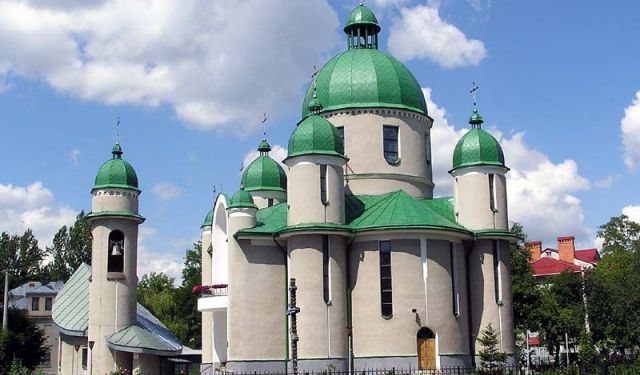
Historical Churches
Lviv is an old beautiful city with many churches in impressive buildings with majestic interiors. Some of the churches are architectural monuments listed as UNESCO World Heritage Site. Take this self-guided tour to see the most beautiful churches of Lviv.
Tour Duration: 1 Hour(s)
Travel Distance: 1.7 Km or 1.1 Miles
Tour Duration: 1 Hour(s)
Travel Distance: 1.7 Km or 1.1 Miles
Lviv's Monuments and Statues
The city of Lviv has many historical monuments that make it a living history. Monuments and statues are dedicated to outstanding Ukrainians that contributed to the cultural development of Lviv and played important roles in its history. Take this self-guided tour to discover the rich history of Lviv through its great monuments and statues.
Tour Duration: 2 Hour(s)
Travel Distance: 4.3 Km or 2.7 Miles
Tour Duration: 2 Hour(s)
Travel Distance: 4.3 Km or 2.7 Miles
Lviv's Architectural Jewels
Lviv has many historical buildings, such as churches and palaces. The city's architecture will show you the best of European styles from various periods. While walking through the streets of Lviv you will see baroque, renaissance and classic architecture. Take this self-guided tour to explore the majestic architecture of Lviv.
Tour Duration: 2 Hour(s)
Travel Distance: 2.8 Km or 1.7 Miles
Tour Duration: 2 Hour(s)
Travel Distance: 2.8 Km or 1.7 Miles
The Most Popular Cities
/ view all