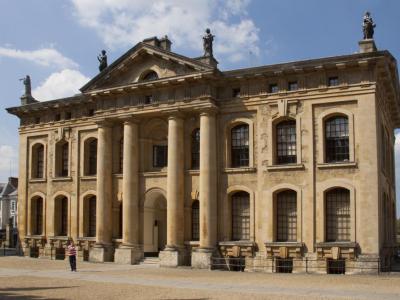


Clarendon Building, Oxford
You will find the Clarendon Building on Broad Street. It is part of the Bodleian Library and students often use its steps as a rallying point for protests and demonstrations.
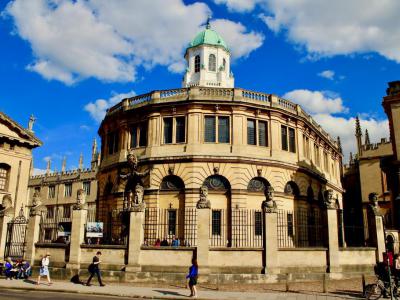
It was built in 1715 by Nicholas Hawksmoor, who also designed six of London’s famous churches. Its main purpose was to house the Oxford University Press and was paid for out of the proceeds from Lord Clarendon’s classic “History of the Rebellion and Civil Wars in England”.
The building is rectangular in shape and built in the Classical style with the portico supported by four Tuscan pillars. The main entrance is arched with an arched niche above it, where there was once a statue of Lord Clarendon by Francis Bird. The statue now stands in a niche on the west side of the building, while the entrance niche is now a window.
The figures around the roof are by Sir James Thornhill. They are lead statues representing the nine Muses: Calliope (epic poetry) carrying a writing tablet; Clio (History) bearing scrolls; Erato (love poetry) playing a cithara; Euterpe (song) playing a flute; Melpomene (tragedy) with a tragic mask; Thalia (comedy) with a comic mask; Polyhymnia (hymns) with her veil; Terpsichore (dance) strumming a lyre and Urania (astronomy) holding a globe and a compass.
It was built in 1715 by Nicholas Hawksmoor, who also designed six of London’s famous churches. Its main purpose was to house the Oxford University Press and was paid for out of the proceeds from Lord Clarendon’s classic “History of the Rebellion and Civil Wars in England”.
The building is rectangular in shape and built in the Classical style with the portico supported by four Tuscan pillars. The main entrance is arched with an arched niche above it, where there was once a statue of Lord Clarendon by Francis Bird. The statue now stands in a niche on the west side of the building, while the entrance niche is now a window.
The figures around the roof are by Sir James Thornhill. They are lead statues representing the nine Muses: Calliope (epic poetry) carrying a writing tablet; Clio (History) bearing scrolls; Erato (love poetry) playing a cithara; Euterpe (song) playing a flute; Melpomene (tragedy) with a tragic mask; Thalia (comedy) with a comic mask; Polyhymnia (hymns) with her veil; Terpsichore (dance) strumming a lyre and Urania (astronomy) holding a globe and a compass.
Want to visit this sight? Check out these Self-Guided Walking Tours in Oxford. Alternatively, you can download the mobile app "GPSmyCity: Walks in 1K+ Cities" from Apple App Store or Google Play Store. The app turns your mobile device to a personal tour guide and it works offline, so no data plan is needed when traveling abroad.
Download The GPSmyCity App



Clarendon Building on Map
Sight Name: Clarendon Building
Sight Location: Oxford, England (See walking tours in Oxford)
Sight Type: Attraction/Landmark
Sight Location: Oxford, England (See walking tours in Oxford)
Sight Type: Attraction/Landmark
Nearby Sights

Walking Tours in Oxford, England

Create Your Own Walk in Oxford
Creating your own self-guided walk in Oxford is easy and fun. Choose the city attractions that you want to see and a walk route map will be created just for you. You can even set your hotel as the start point of the walk.

Harry Potter Walk in Oxford
Oxford’s connection with Harry Potter rests on a simple fact: the city already looked like Hogwarts before the cameras arrived. Long before it became associated with wands, robes, and moving staircases, Oxford was known for its medieval colleges, vaulted halls, cloisters, libraries, and enclosed quadrangles. For the filmmakers, it offered a real academic setting that needed little alteration to... view more
Tour Duration: 1 Hour
Travel Distance: 1 Km or 0.6 Miles
Tour Duration: 1 Hour
Travel Distance: 1 Km or 0.6 Miles
Colleges of Oxford University
During an 1862 summer boat ride along the River Thames, Oxford writer Lewis Carroll invented a fantastical story for Alice, the daughter of the dean of Christ Church, Oxford. That tale would later become Alice's Adventures in Wonderland.
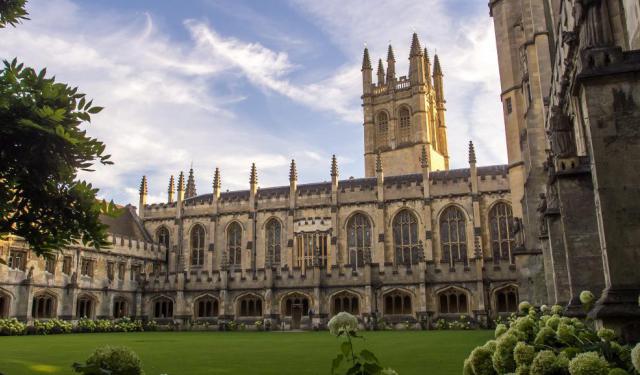
Oxford’s colleges are the heart of the city’s identity, forming one of the oldest and most influential university communities in the world. Their... view more
Tour Duration: 1 Hour
Travel Distance: 1.5 Km or 0.9 Miles
Oxford’s colleges are the heart of the city’s identity, forming one of the oldest and most influential university communities in the world. Their... view more
Tour Duration: 1 Hour
Travel Distance: 1.5 Km or 0.9 Miles
Oxford Downtown Walking Tour
Writer Oscar Wilde, who studied at Magdalen College, Oxford, once remarked that Oxford gave him “the most wonderful years” of his youth.
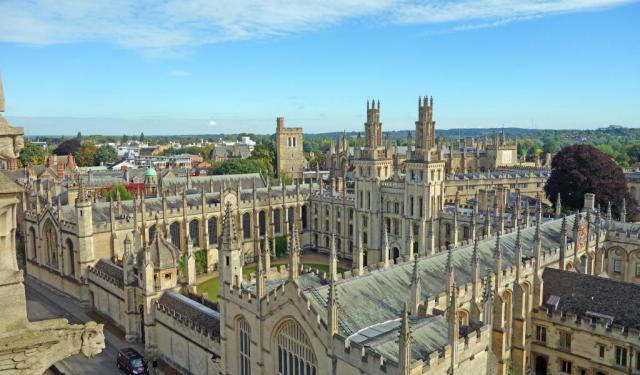
The city of Oxford has one of the longest and most layered histories in England. Its name comes from the Old English Oxenaforda, meaning “ford of the oxen,” referring to a shallow river crossing where cattle could pass through the water. This crossing... view more
Tour Duration: 2 Hours
Travel Distance: 3.5 Km or 2.2 Miles
The city of Oxford has one of the longest and most layered histories in England. Its name comes from the Old English Oxenaforda, meaning “ford of the oxen,” referring to a shallow river crossing where cattle could pass through the water. This crossing... view more
Tour Duration: 2 Hours
Travel Distance: 3.5 Km or 2.2 Miles
City Walks Overview
