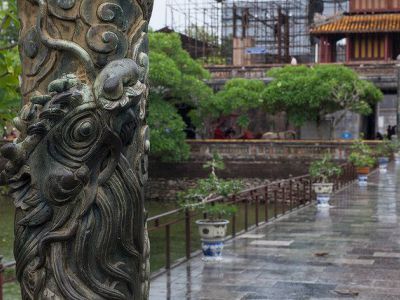


Cửa Hòa Bình (Peace Gate), Hue
Peace Gate, at the northern end of Hue’s Imperial City, is one of the four main entrances to the former royal enclosure. Although less elaborate than the famous Meridian Gate to the south, this historic gateway has its own interesting story, dating back to the early days of the Nguyen Dynasty.
The gate was built during the reign of Emperor Gia Long, around 1804, when construction of the Imperial City began. Originally known as the Gate of Offerings to the Deities, it was renamed the Gate of Level Ground in 1821, before receiving its present name, Peace Gate, in 1833 under Emperor Minh Mang.
Unlike the grand southern entrance, which was reserved for important ceremonies, Peace Gate served a more practical purpose. It was traditionally used by the emperor when leaving the palace grounds for outings, earning it the nickname "Back Gate."
Take a closer look at its architecture. The brick structure features three arched entrances beneath a single-storey pavilion with a traditional tiled roof. Interestingly, the upper portion was reduced in height in 1839, during Emperor Minh Mang's reign, and the gate was later restored in 1894.
Beyond the gate, a covered bridge once crossed the inner Kim Thuy waterway, leading toward Tuong Loan Gate and the Forbidden Purple City, where the emperor and his family lived. Although the bridge has lost its original roof, its historical connection offers an interesting glimpse into the layout of the royal complex.
Peace Gate also played a small but intriguing role in Vietnam's political history. In 1916, revolutionaries reportedly met Emperor Duy Tan here while planning an uprising against French colonial rule.
Today, Peace Gate offers visitors an opportunity to appreciate a quieter, less ceremonial side of Hue's imperial heritage, while discovering how the royal complex functioned beyond its grand halls and elaborate courtyards.
Want to visit this sight? Check out these Self-Guided Walking Tours in Hue. Alternatively, you can download the mobile app "GPSmyCity: Walks in 1K+ Cities" from Apple App Store or Google Play Store. The app turns your mobile device to a personal tour guide and it works offline, so no data plan is needed when traveling abroad.
Download The GPSmyCity App



Cửa Hòa Bình (Peace Gate) on Map
Sight Name: Cửa Hòa Bình (Peace Gate)
Sight Location: Hue, Vietnam (See walking tours in Hue)
Sight Type: Attraction/Landmark
Guide(s) Containing This Sight:
Sight Location: Hue, Vietnam (See walking tours in Hue)
Sight Type: Attraction/Landmark
Guide(s) Containing This Sight:
Nearby Sights
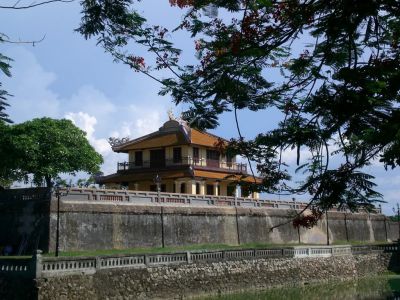
Lầu Tứ Phương Vô Sự (Tu Phuong Vo Su Floor)
Image by Trần Anh Đức per CC PD, adapted.
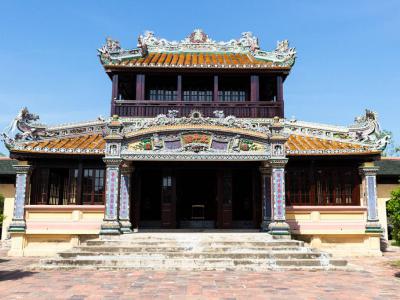
Thái Bình Lâu (Royal Reading Pavilion)
Image by Vinhtantran per CC BY-SA, adapted.

Cung Trường Sanh (Grand Queen Mother’s Residence)
Image by Vinhtantran per CC BY-SA, adapted.
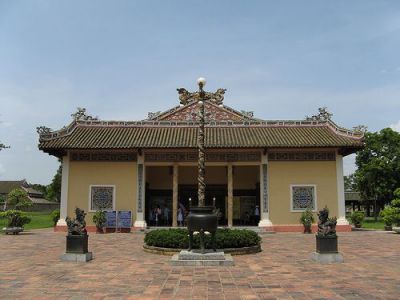
Duyệt Thị Đường (Royal Theater)
Image by wwhyte1968 per CC BY-SA, adapted.
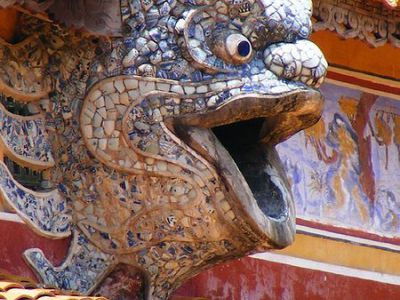
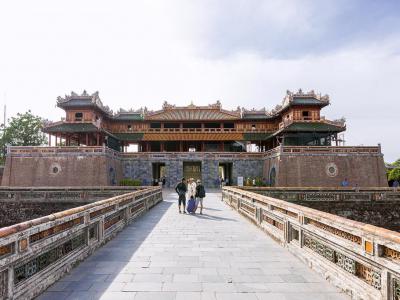
Imperial City of Hue (must see)
Image by Supanut Arunoprayote. per CC BY, adapted.
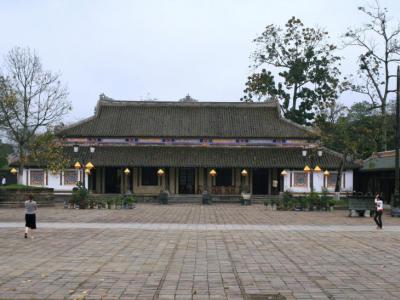
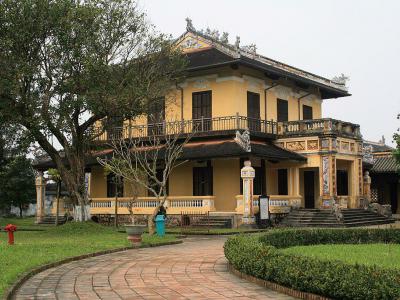
Cung Diên Thọ (Dien Tho Palace)
Image by Lưu Ly (thảo luận) per CC PD, adapted.
Walking Tours in Hue, Vietnam
Create Your Own Walk in Hue
Creating your own self-guided walk in Hue is easy and fun. Choose the city attractions that you want to see and a walk route map will be created just for you. You can even set your hotel as the start point of the walk.
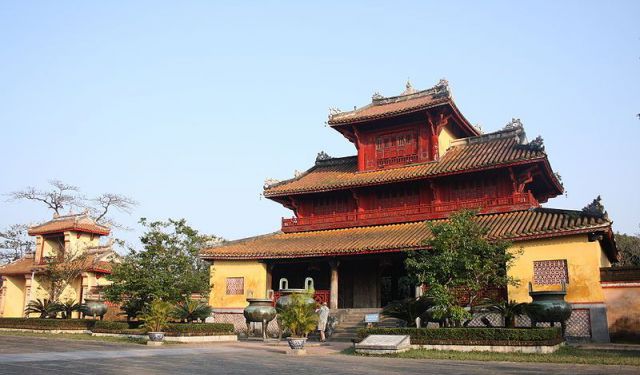
Imperial City Walking Tour
The Kings of the Nguyen Dynasty built their feudal capital along the fertile banks of the Perfume River, whose steady flow, centuries on, still sets up a languid pace that the rest of the city is happy to follow.
Situated within the walls of the Royal Citadel, The Imperial City in Hue is one of, if not the most prominent landmark in Vietnam, renowned for its wonderful collection of oriental... view more
Tour Duration: 2 Hours
Travel Distance: 2.9 Km or 1.8 Miles
Situated within the walls of the Royal Citadel, The Imperial City in Hue is one of, if not the most prominent landmark in Vietnam, renowned for its wonderful collection of oriental... view more
Tour Duration: 2 Hours
Travel Distance: 2.9 Km or 1.8 Miles
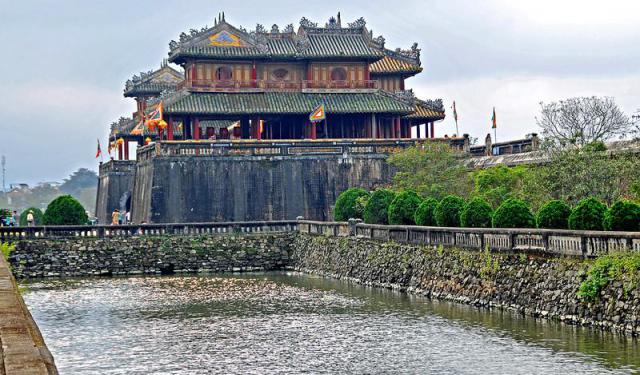
Hue Introduction Walking Tour
Once the seat of the imperial dynasty in the heart of Vietnam, Hue is chock-full of stories. During feudal times, for nearly 150 years - from 1802 to 1945, the city served as the national capital. The royal lifestyle and customs have had a strong impact on the lifestyle of locals, and this impact can still be felt today.
First cited about 200 BCE as the seat of the Chinese military authority in... view more
Tour Duration: 2 Hours
Travel Distance: 3.5 Km or 2.2 Miles
First cited about 200 BCE as the seat of the Chinese military authority in... view more
Tour Duration: 2 Hours
Travel Distance: 3.5 Km or 2.2 Miles
City Walks Overview
