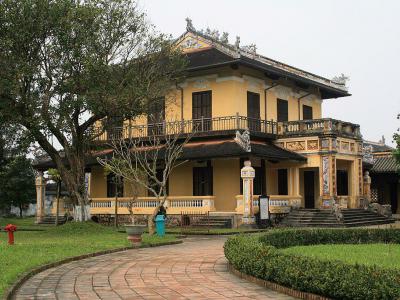


Cung Diên Thọ (Dien Tho Palace), Hue
Located within the Imperial City of Hue, Dien Tho Palace served as the principal residence of the empress dowagers during the Nguyen dynasty. Established in 1804 under Emperor Gia Long, the palace complex was designed to provide the royal matriarchs with a dignified and comfortable residence while keeping them within the carefully ordered world of the Imperial City. Connected by covered corridors to the Forbidden Purple City, the complex was expanded and renovated by successive emperors, becoming one of the most tranquil and refined areas of the former royal capital.
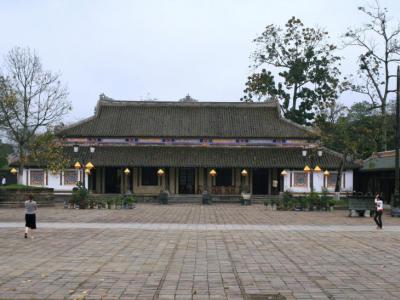
The palace grounds include a main hall, subsidiary buildings, gardens, courtyards, and ponds that reflect the Confucian ideals of respect for elders and filial piety. The principal building, Dien Tho Main Hall, features wooden columns, decorative carvings, and a traditional tiled roof. Its architecture combines symmetry and elegance, creating a peaceful atmosphere that contrasts with the more formal ceremonial spaces of the Imperial City.
Notable elements include Tinh Minh Pavilion, a European-influenced building constructed in the early 20th century, and Ta Truong Du Pavilion, an elegant wooden structure overlooking a lotus pond. These buildings, together with the covered corridors, landscaped courtyards, and tranquil ponds, allow visitors to experience the more intimate and contemplative side of life within the Nguyen imperial court.
Want to visit this sight? Check out these Self-Guided Walking Tours in Hue. Alternatively, you can download the mobile app "GPSmyCity: Walks in 1K+ Cities" from Apple App Store or Google Play Store. The app turns your mobile device to a personal tour guide and it works offline, so no data plan is needed when traveling abroad.
Download The GPSmyCity App



Cung Diên Thọ (Dien Tho Palace) on Map
Sight Name: Cung Diên Thọ (Dien Tho Palace)
Sight Location: Hue, Vietnam (See walking tours in Hue)
Sight Type: Attraction/Landmark
Guide(s) Containing This Sight:
Sight Location: Hue, Vietnam (See walking tours in Hue)
Sight Type: Attraction/Landmark
Guide(s) Containing This Sight:
Nearby Sights


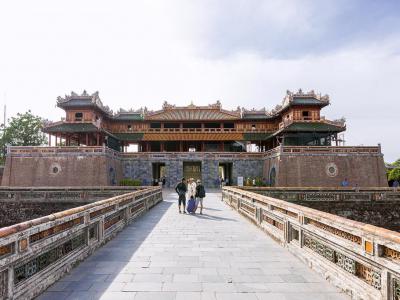
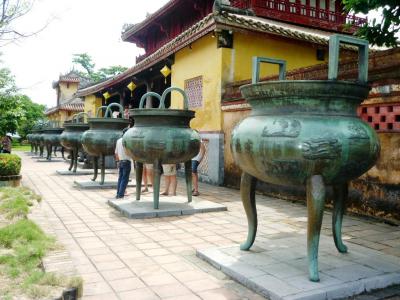
Walking Tours in Hue, Vietnam
Create Your Own Walk in Hue
Creating your own self-guided walk in Hue is easy and fun. Choose the city attractions that you want to see and a walk route map will be created just for you. You can even set your hotel as the start point of the walk.
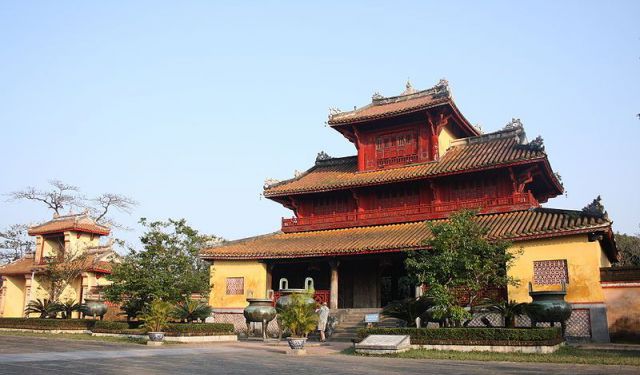
Imperial City Walking Tour
The Kings of the Nguyen Dynasty built their feudal capital along the fertile banks of the Perfume River, whose steady flow, centuries on, still sets up a languid pace that the rest of the city is happy to follow.
Situated within the walls of the Royal Citadel, The Imperial City in Hue is one of, if not the most prominent landmark in Vietnam, renowned for its wonderful collection of oriental... view more
Tour Duration: 2 Hours
Travel Distance: 2.9 Km or 1.8 Miles
Situated within the walls of the Royal Citadel, The Imperial City in Hue is one of, if not the most prominent landmark in Vietnam, renowned for its wonderful collection of oriental... view more
Tour Duration: 2 Hours
Travel Distance: 2.9 Km or 1.8 Miles
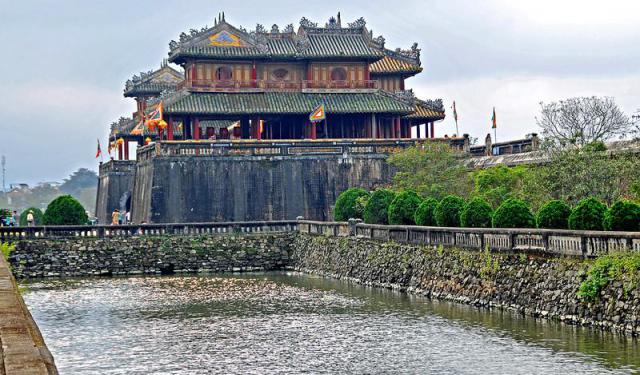
Hue Introduction Walking Tour
Once the seat of the imperial dynasty in the heart of Vietnam, Hue is chock-full of stories. During feudal times, for nearly 150 years - from 1802 to 1945, the city served as the national capital. The royal lifestyle and customs have had a strong impact on the lifestyle of locals, and this impact can still be felt today.
First cited about 200 BCE as the seat of the Chinese military authority in... view more
Tour Duration: 2 Hours
Travel Distance: 3.5 Km or 2.2 Miles
First cited about 200 BCE as the seat of the Chinese military authority in... view more
Tour Duration: 2 Hours
Travel Distance: 3.5 Km or 2.2 Miles
City Walks Overview
