


Fiaker Museum, Vienna
Even today, you can still find horse-drawn carriages in the heart of Vienna's city center, particularly in the streets of the first district. This mode of transportation is known for its exclusivity and comes with a hefty price tag.
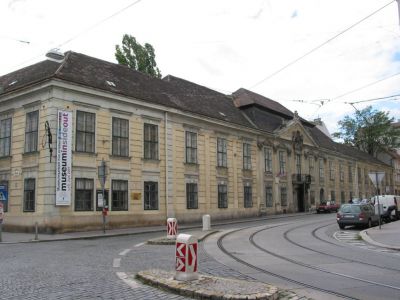
In 1863, the Vienna Fiaker Cooperative acquired a building constructed in 1852. This building would later house the Fiaker Museum, established by the specialized group dedicated to the passenger carriage industry in 1968. The Fiaker Museum is a place where you can experience a piece of Viennese nostalgia. It provides a comprehensive account of the 300-year history of horse-drawn carriages and their owners through various forms of documentation, including documents, paintings, graphics, engravings, and photographs.
In Vienna, we can trace back a 300-year history of the Fiaker, which holds a significance similar to what gondolas represent for Venice. The Fiaker consists of three key components: the horses, the carriage, and the coachman.
The term "Fiaker" originally derives from the French language, and it was first associated with the Rue de Saint Fiacre in Paris, where the first pay-carriage stand was established. This concept dates back to as early as 1662 when a merchant began using carriages for hire. Interestingly, the name "Fiaker" was linked to an Irish monk named Fiacrius. Saint Fiacrius became the heavenly patron of this emerging profession.
In Vienna, the first Fiaker license was granted approximately 30 years later. During the 19th century, Vienna boasted about 1,000 Fiakers. However, since the First World War, Fiakers in Vienna have primarily been used for city tours, visits to the Prater (especially popular for confirmations), and special occasions like weddings.
In 1863, the Vienna Fiaker Cooperative acquired a building constructed in 1852. This building would later house the Fiaker Museum, established by the specialized group dedicated to the passenger carriage industry in 1968. The Fiaker Museum is a place where you can experience a piece of Viennese nostalgia. It provides a comprehensive account of the 300-year history of horse-drawn carriages and their owners through various forms of documentation, including documents, paintings, graphics, engravings, and photographs.
In Vienna, we can trace back a 300-year history of the Fiaker, which holds a significance similar to what gondolas represent for Venice. The Fiaker consists of three key components: the horses, the carriage, and the coachman.
The term "Fiaker" originally derives from the French language, and it was first associated with the Rue de Saint Fiacre in Paris, where the first pay-carriage stand was established. This concept dates back to as early as 1662 when a merchant began using carriages for hire. Interestingly, the name "Fiaker" was linked to an Irish monk named Fiacrius. Saint Fiacrius became the heavenly patron of this emerging profession.
In Vienna, the first Fiaker license was granted approximately 30 years later. During the 19th century, Vienna boasted about 1,000 Fiakers. However, since the First World War, Fiakers in Vienna have primarily been used for city tours, visits to the Prater (especially popular for confirmations), and special occasions like weddings.
Want to visit this sight? Check out these Self-Guided Walking Tours in Vienna. Alternatively, you can download the mobile app "GPSmyCity: Walks in 1K+ Cities" from Apple App Store or Google Play Store. The app turns your mobile device to a personal tour guide and it works offline, so no data plan is needed when traveling abroad.
Download The GPSmyCity App



Fiaker Museum on Map
Sight Name: Fiaker Museum
Sight Location: Vienna, Austria (See walking tours in Vienna)
Sight Type: Museum/Gallery
Sight Location: Vienna, Austria (See walking tours in Vienna)
Sight Type: Museum/Gallery
Nearby Sights
Walking Tours in Vienna, Austria

Create Your Own Walk in Vienna
Creating your own self-guided walk in Vienna is easy and fun. Choose the city attractions that you want to see and a walk route map will be created just for you. You can even set your hotel as the start point of the walk.
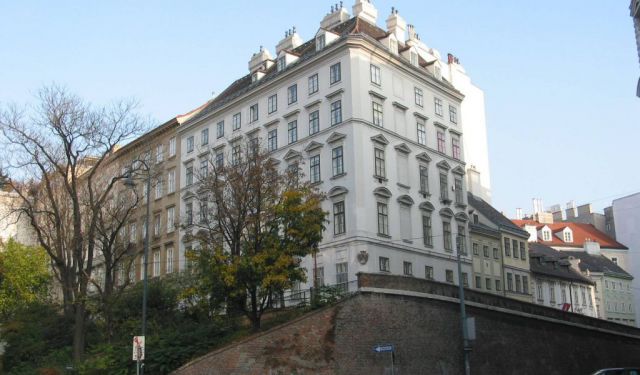
Famous Homes of Vienna
Throughout centuries, the Austrian capital has been home to numerous famous individuals, from creative people of arts to thinkers, scientists, and politicians. Vienna's illustrious history is closely intertwined with the abodes of its celebrated residents, where artistic virtuosos and luminaries of their time found solace and inspiration.
The often modest apartments of Vienna's famous... view more
Tour Duration: 2 Hours
Travel Distance: 3.9 Km or 2.4 Miles
The often modest apartments of Vienna's famous... view more
Tour Duration: 2 Hours
Travel Distance: 3.9 Km or 2.4 Miles
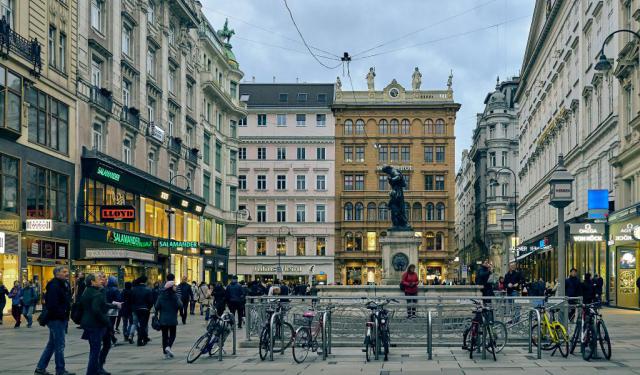
Vienna Old Town Walking Tour
Vienna’s Old Town-the historic core of Austria’s capital and a UNESCO World Heritage Site-is where cobblestones gossip, rooftops sparkle, and emperors still seem to whisper from the walls. Indeed, this is the kind of place where every alley seems to have a PhD in European history.
Once wrapped in medieval walls-before they rolled out the grand Ringstrasse boulevard in the 19th century-this... view more
Tour Duration: 2 Hours
Travel Distance: 2.9 Km or 1.8 Miles
Once wrapped in medieval walls-before they rolled out the grand Ringstrasse boulevard in the 19th century-this... view more
Tour Duration: 2 Hours
Travel Distance: 2.9 Km or 1.8 Miles
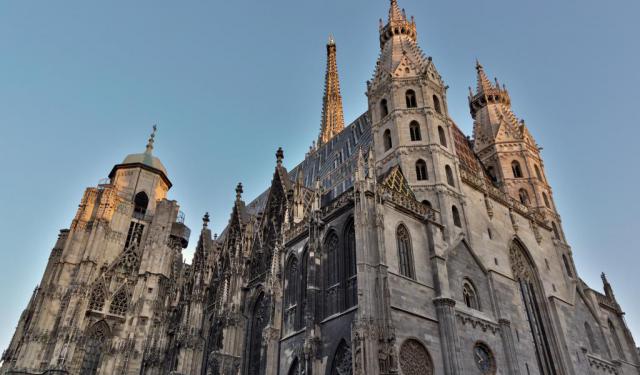
Old Town Churches Walking Tour
"Vienna is the city of miracles and music" - Whoever said that must have emphasized Vienna's close association with the Christian faith. The intertwining of Christian heritage and artistry in the Austrian capital finds expression primarily in its magnificent churches.
Sitting at "the crossroads of Christian traditions", Vienna is home to various Christian... view more
Tour Duration: 2 Hours
Travel Distance: 3.9 Km or 2.4 Miles
Sitting at "the crossroads of Christian traditions", Vienna is home to various Christian... view more
Tour Duration: 2 Hours
Travel Distance: 3.9 Km or 2.4 Miles
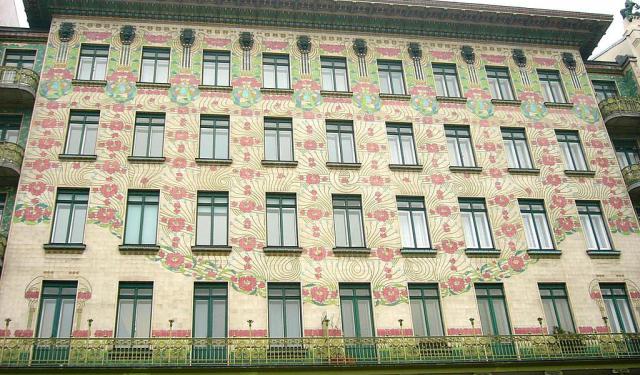
Vienna's Art Nouveau Architecture Tour II
If there are cities that flirt, Vienna is definitely the one. Here, even the buildings know how to do it.
Around the turn of the 20th century, the Austrian capital caught the Art Nouveau fever and decided that straight lines, drab walls, and historical imitation simply wouldn’t do anymore. Instead, it took to ornamental swirls, flowing curves, floral flourishes, and enough decorative detail... view more
Tour Duration: 1 Hour
Travel Distance: 2 Km or 1.2 Miles
Around the turn of the 20th century, the Austrian capital caught the Art Nouveau fever and decided that straight lines, drab walls, and historical imitation simply wouldn’t do anymore. Instead, it took to ornamental swirls, flowing curves, floral flourishes, and enough decorative detail... view more
Tour Duration: 1 Hour
Travel Distance: 2 Km or 1.2 Miles
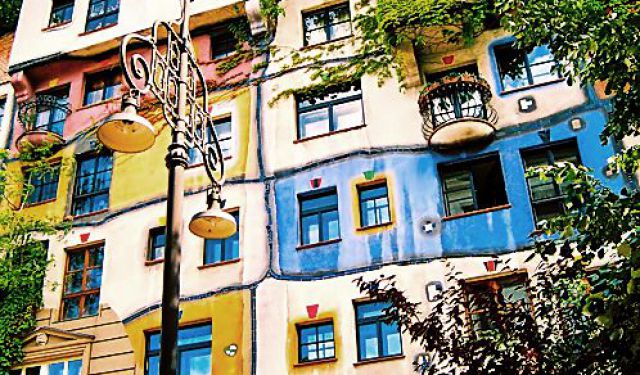
Vienna's Art Nouveau Architecture Tour I
Vienna’s flirtation with Art Nouveau-known locally as Jugendstil-unfolded in the late 19th, early 20th centuries. The so-called Vienna Secession movement, which emerged in 1897, was led by a group of rebellious artists and architects like Otto Wagner, Gustav Klimt, and Koloman Moser, who turned their backs on historicism in favor of bold, modern aesthetics. As the new language for buildings,... view more
Tour Duration: 2 Hours
Travel Distance: 3.4 Km or 2.1 Miles
Tour Duration: 2 Hours
Travel Distance: 3.4 Km or 2.1 Miles
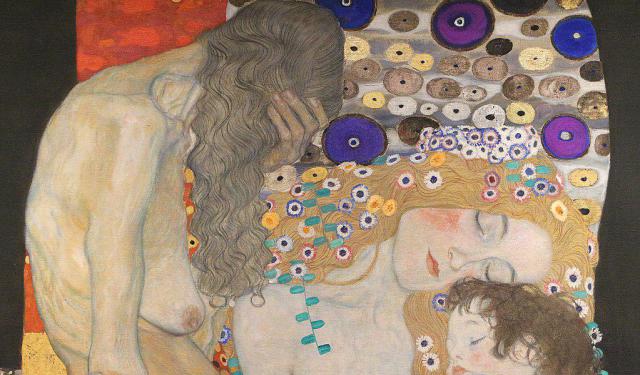
Klimt Paintings Tour
"I have the gift of neither the spoken nor the written word, especially if I have to say something about myself or my work. Whoever wants to know something about me - as an artist, the only notable thing - ought to look carefully at my pictures" - Gustav Klimt.
Klimt's name is indelibly linked to Vienna. The renowned symbolist painter was a prominent figure in the city. As a... view more
Tour Duration: 2 Hours
Travel Distance: 3.7 Km or 2.3 Miles
Klimt's name is indelibly linked to Vienna. The renowned symbolist painter was a prominent figure in the city. As a... view more
Tour Duration: 2 Hours
Travel Distance: 3.7 Km or 2.3 Miles
Useful Travel Guides for Planning Your Trip
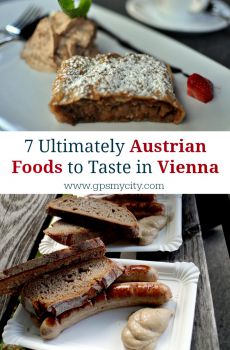
7 Ultimately Austrian Foods to Taste in Vienna
Once the center of the vast Hapsburg Empire, stretched from France in the West to Russia in the East, Austria has embraced many ethnic influences in its cuisine over the course of centuries. Many of the country's distinctive dishes reflect its multinational heritage. Coffee culture, for...
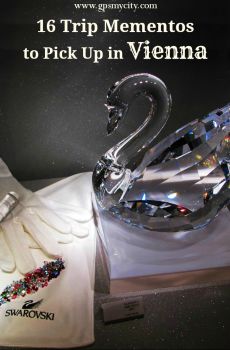
Top 15 Austrian Things to Buy in Vienna
Vienna stool, Viennese schnitzel, Viennese waltz, Vienna sausage, Viennese apple strudel... There's so much Vienna to it, that you might think you've heard it all. Luckily, chances are that you haven't and there's much more in store left to be discovered about this fascinating...
City Walks Overview
