


Kreislauf des Geldes ("Money Cycle" Fountain), Aachen
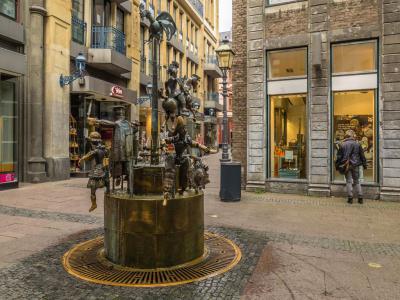
Kreislauf des Geldes was created in 1976 by sculptor Karl-Henning Seemann. The fountain uses bronze figures to show how money moves through society. They are placed around a round basin, with water flowing steadily in a circle. The scene does not rely on text or explanation. Instead, the figures and their gestures make the idea easy to understand at a glance.
Each figure shows a different way people relate to money. There is a figure holding money tightly to show greed, another guarding a purse to suggest stinginess, and one giving money away as a sign of patronage. A beggar represents poverty, while a father talking to his son shows how ideas about money are passed on. All figures reach toward the next, so money moves from hand to hand, highlighting that it changes owners through human interaction.
The water in the basin flows constantly, reinforcing the idea of a continuous cycle. Even in winter, it does not freeze, as the water is warmed using waste heat from the nearby Sparkasse building. Visitors often walk around the fountain to follow the figures in order, which supports the idea of money constantly moving through different hands.
Each figure shows a different way people relate to money. There is a figure holding money tightly to show greed, another guarding a purse to suggest stinginess, and one giving money away as a sign of patronage. A beggar represents poverty, while a father talking to his son shows how ideas about money are passed on. All figures reach toward the next, so money moves from hand to hand, highlighting that it changes owners through human interaction.
The water in the basin flows constantly, reinforcing the idea of a continuous cycle. Even in winter, it does not freeze, as the water is warmed using waste heat from the nearby Sparkasse building. Visitors often walk around the fountain to follow the figures in order, which supports the idea of money constantly moving through different hands.
Want to visit this sight? Check out these Self-Guided Walking Tours in Aachen. Alternatively, you can download the mobile app "GPSmyCity: Walks in 1K+ Cities" from Apple App Store or Google Play Store. The app turns your mobile device to a personal tour guide and it works offline, so no data plan is needed when traveling abroad.
Download The GPSmyCity App



Kreislauf des Geldes ("Money Cycle" Fountain) on Map
Sight Name: Kreislauf des Geldes ("Money Cycle" Fountain)
Sight Location: Aachen, Germany (See walking tours in Aachen)
Sight Type: Attraction/Landmark
Sight Location: Aachen, Germany (See walking tours in Aachen)
Sight Type: Attraction/Landmark
Nearby Sights
Walking Tours in Aachen, Germany

Create Your Own Walk in Aachen
Creating your own self-guided walk in Aachen is easy and fun. Choose the city attractions that you want to see and a walk route map will be created just for you. You can even set your hotel as the start point of the walk.
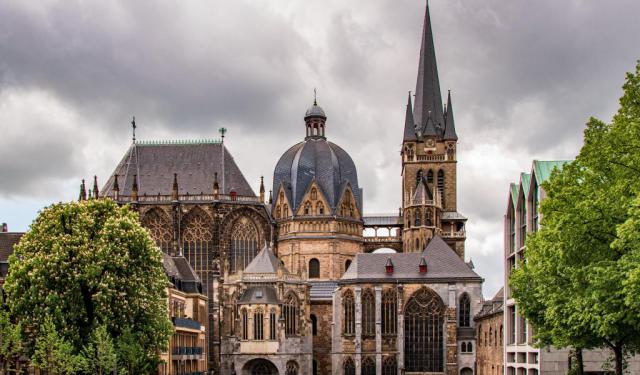
Aachen's Historical Buildings Tour
Evolved from an ancient Roman settlement, Aachen is one of the oldest and most historic cities in Germany. At one time it served as the capital of Holy Roman Empire. Today's Aachen is just a small city yet with a very rich history and stunning architecture. Despite being heavily damaged during World War II, some of its historical buildings have survived to our days courtesy of the strenuous... view more
Tour Duration: 1 Hour
Travel Distance: 1.7 Km or 1.1 Miles
Tour Duration: 1 Hour
Travel Distance: 1.7 Km or 1.1 Miles
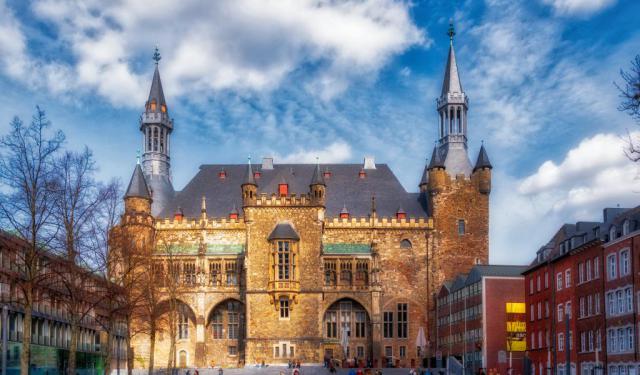
A Walking Tour of Aachen's Historic Old Town
Welcome to Aachen, a city with roots stretching back to Neolithic times. For thousands of years, people have been drawn here by its mineral springs. Archaeologists have uncovered evidence of settlements dating back to the Bronze and Iron Ages. In those ancient days, the Celts made their home here, likely to worship Grannus, the god of light and healing.
By the second century, the Romans had... view more
Tour Duration: 1 Hour
Travel Distance: 1.4 Km or 0.9 Miles
By the second century, the Romans had... view more
Tour Duration: 1 Hour
Travel Distance: 1.4 Km or 0.9 Miles
City Walks Overview
